| Welcome, Guest |
You have to register before you can post on our site.
|
| Online Users |
There are currently 151 online users.
» 0 Member(s) | 141 Guest(s)
Ahrefs, Amazon, Applebot, Bing, Claude, Facebook, Google, Semrush, Twitter
|
| Latest Threads |
Identifying and Sourcing ...
Forum: Parts , Attachments & Tools
Last Post: MikePhua
01-07-2026, 06:29 PM
» Replies: 0
» Views: 527
|
Cat 931B Brake Parts
Forum: Parts , Attachments & Tools
Last Post: MikePhua
01-07-2026, 06:29 PM
» Replies: 0
» Views: 283
|
Choosing Between Cat 228,...
Forum: General Discussion
Last Post: MikePhua
01-07-2026, 06:28 PM
» Replies: 0
» Views: 559
|
Hydraulic Delay When Lowe...
Forum: Troubleshooting & Diagnosing
Last Post: MikePhua
01-07-2026, 06:27 PM
» Replies: 0
» Views: 446
|
Bale Chopper and Mulcher ...
Forum: General Discussion
Last Post: MikePhua
01-07-2026, 06:26 PM
» Replies: 0
» Views: 323
|
Mini UC Maintenance
Forum: General Discussion
Last Post: MikePhua
01-07-2026, 06:25 PM
» Replies: 0
» Views: 314
|
Locating Wiring Informati...
Forum: General Discussion
Last Post: MikePhua
01-07-2026, 06:24 PM
» Replies: 0
» Views: 346
|
Case Industrial Brown Sub...
Forum: Parts , Attachments & Tools
Last Post: MikePhua
01-07-2026, 06:23 PM
» Replies: 0
» Views: 275
|
Dirt Work in West Virgini...
Forum: Construction & Urban Infrastructure Forum
Last Post: MikePhua
01-07-2026, 06:23 PM
» Replies: 0
» Views: 374
|
D207 P Hydraulic Steering...
Forum: Parts , Attachments & Tools
Last Post: MikePhua
01-07-2026, 06:22 PM
» Replies: 0
» Views: 303
|
|
|
| Multi-Purpose Track Loader-Hoe: The Versatile Workhorse |
|
Posted by: MikePhua - 08-13-2025, 11:23 AM - Forum: General Discussion
- No Replies
|
 |
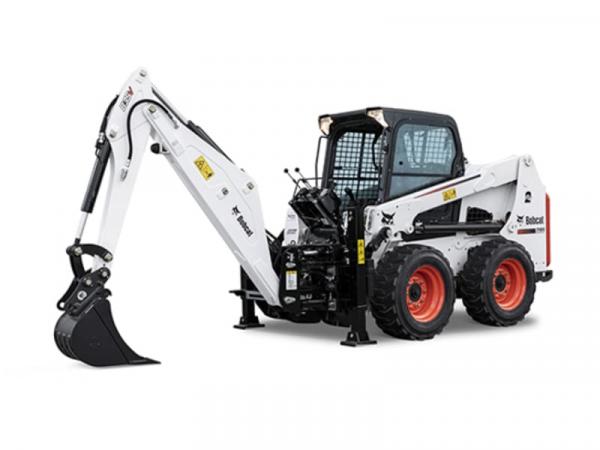
Introduction to the Concept
A multi-purpose track loader-hoe combines the agility of a compact track loader with the digging capability of a backhoe attachment. This fusion creates a machine capable of both nimble material handling and powerful excavation—perfect for job sites where few machines must do a lot of work.
Think of it as a Swiss Army knife on tracks: the loader offers strength and scoop, the backhoe gives you reach and dig—and the tracks ensure traction on soft, uneven ground without sinking in.
What Makes It So Functional? - Dual roles in a single chassis: The front-end loader handles loading, grading, and pushing, while the rear-mounted backhoe arm digs trenches and moves earth.
- Tracked traction: Tracks distribute weight across more surface area, making the machine excel on mud, sand, snow, or rough terrain—far better than wheeled machines in tricky ground conditions .
- Single-operator productivity: The operator can transition from loading to digging with minimal fuss, reducing machine switching and downtime.
- Cost and fleet flexibility: One machine does what traditionally required two—backhoe and loader—saving both capital and storage space.
Key Terminology- Compact track loader: A skid-steer-like machine with tracks instead of wheels; excels on soft or uneven terrain due to lower ground pressure .
- Backhoe attachment/arm: A rear-mounted digging arm composed of boom, stick, and bucket, often with stabilizers for safe excavation .
- Multi-purpose loader-hoe: The integrated form—loader in front, backhoe in rear—on a tracked platform, delivering both excavation and handling in one machine.
Use Cases and Real-World Value
A road construction crew once encountered constant delays when switching between their loader and backhoe during trenching tasks. After switching to a multi-purpose track loader-hoe, they cut equipment change time by half, meaning more trenches dug and less interference with traffic. One operator noted—“No more parking machines, walking around, swapping; now it’s dig, push, grade, repeat—all with one seat to swivel.”
Applications Across Industries- General construction: Trenching for utilities, backfilling, grading and loading—one machine handles all.
- Landscaping: Precise excavations alongside grading and material placement.
- Agriculture and rural work: Creating drainage ditches, moving soil, clearing debris—valuable for farm versatility.
- Municipal maintenance: Street repair, sidewalk prep, utility digs, and snow clearing.
Advantages & Challenges List
Advantages- Excellent on soft or uneven terrain
- Reduces fleet size and rental costs
- Quick role switching for operator efficiency
- Lower ground impact than wheeled machines
Challenges- Tracks wear faster on paved surfaces
- Backhoe reach is shorter than full-size excavators
- Higher maintenance complexity than single-purpose machines
Recommendations & Enhancements- Choose correct track type: Opt for rubber tracks with suitable tread patterns for your terrain; some tread designs last over 1,000 hours and reduce surface damage .
- Invest in a swivel operator seat: Facilitates quick switching between loader and backhoe controls—boosts productivity.
- Use stabilizers wisely: When digging, deploy them to enhance stability and digging accuracy.
- Adopt proper attachments: Consider buckets with thumbs, grading attachments, or augers—many companies offer modular kits .
- Maintenance plan: Regular undercarriage cleaning, track tensioning, and grease points extend service life.
Mini-Case Study
A utility contractor in northern climates shared this: “We put an auger attachment on our multi-purpose loader-hoe to install fence posts in frozen ground. The tracks kept us mobile on icy soil, and the digger let us bore quickly without bringing a separate drill rig. It was our fastest winter job yet.”
Detailed Parameter Considerations- Operating weight: Typically between 1,000–3,000 kg for mini units—compact yet powerful enough for heavy digging movements .
- Engine power: Often in the 20–50 hp range; enough for loader and backhoe demands, without overkill.
- Loader bucket capacity: Around 0.15–0.3 m³ for mini versions—ideal for small batches of material .
- Tracks width options: Narrow to fit through gates or wide for stability on uneven ground.
Storytelling Insight
Back in the 1980s, a municipality purchased a tracked loader-hoe, and a winter storm struck. Roads were blocked, and access was hampered. The machine, with its dig and push features and track traction, cleared roads faster than snowplows stuck in drifts. That winter tale spread, and it remains a proud example of adaptability in adverse conditions.
Conclusion
A multi-purpose track loader-hoe is not just a hybrid; it’s a smart investment. It brings together the best of digging, loading, and terrain navigation in one compact, efficient platform. Ideal for mixed-use sites and operators looking to streamline their fleet without sacrificing capability.
Couple it with proper attachments, good maintenance, and operators will routinely outperform expectations—whether trenching, loading, or clearing—in just one swivel seat.
|

|
|
| Hitachi DR-ZX PC Diagnostic Tool: Expert Overview, Functionality, and Practical Use |
|
Posted by: MikePhua - 08-13-2025, 11:15 AM - Forum: Parts , Attachments & Tools
- No Replies
|
|
Introduction to Hitachi DR-ZX Diagnostic Software
The Hitachi DR-ZX is a specialized diagnostic and fault detection tool purpose-built for Hitachi excavators and construction equipment equipped with advanced electronic engine controls. It enables technicians and operators to perform comprehensive system checks, troubleshoot faults, and manage sophisticated hydraulic, electronic, and engine parameters directly from a computer interface. Its adoption has significantly streamlined repairs and maintenance, reducing machine downtime and improving service accuracy in the field.
Core Features and System Components - Functions Supported:
- Real-time monitoring of engine speed, hydraulic pressure, pump displacement, temperature, and electronic signals.
- System self-diagnostics, allowing quick scanning for stored or active fault codes.
- Live data recording and playback for analyzing machine behavior over time or under load.
- Specialized functions such as parameter adjustment (engine RPM, auto-lube intervals, pump settings), password changes, and recorded monitoring data replay.
- Support for coding and adaptation—introducing new or replaced components (like injectors) to the machine via electronic handshake.
- Main Components:
- DR-ZX Interface (physical adapter connecting machine ECUs to PC via USB or data cable).
- Calibration and test cables (usually 4-pin and 6-pin, depending on model and controller type).
- Diagnostic software (compatible with a variety of Hitachi models, running on Windows).
Ready-to-Use Workflow and Operation Modes- Operation Mode
Used for routine monitoring and diagnostics. Offers self-diagnostic checks, monitoring view/recording, and access to special functions like pump adjustments and sensor calibration. Operators must connect the interface to the equipment, power up the machine, and select the correct machine profile before launching Operation Mode.
- Service Mode
Used for deeper system access, including parameter changes, password management, and activation/deactivation of specific electronic features. Service Mode requires activating the engine-learning switch and performing system checks when introducing or calibrating new parts.
- Stand-alone Mode
Allows certain functions on simulated or test benches without direct machine connection—helpful for training or troubleshooting off-machine.
Pump and Hydraulic Adjustment Procedures- Connect DR-ZX hardware and software, select “Special Function”, and enter pump adjustment routines.
- Install or calibrate angle sensors on the hydraulic pump; these sensors relay real-time position data to the ECU for precise regulation.
- Adjust sensor shafts and calibrate signal voltages (e.g., 1.60V for Pump-1 and 3.40V for Pump-2 in certain models).
- Apply grease to spring fasteners and ensure all mounting bolts are torqued to specification (e.g., 9.8Nm).
- Validate sensor feedback with displayed data in the software and confirm successful adjustment before exiting.
Industry Case Stories and Context
A fleet maintenance supervisor shared how using DR-ZX enabled rapid diagnosis of an intermittent loss of hydraulic power in a working ZX excavator. Real-time monitoring pinpointed a faulty angle sensor, which was replaced and recalibrated on the spot, restoring full function without costly downtime.
Another technician recounted coding new injectors after replacement, where the DR-ZX tool ensured seamless communication between engine ECU and hardware, optimizing combustion and emissions instantly.
DR-ZX has become foundational for dealerships and field service teams, paralleling how automotive OBD-II diagnostic tools transformed vehicle servicing in the early 2000s. Today, it is regarded as indispensable for maintaining and troubleshooting modern Hitachi machines.
Terminology Explained- ECU (Electronic Control Unit): The central computer managing engine, hydraulic, and electronic functions.
- Angle Sensor: A sensor mounted to hydraulic pumps that helps the ECU regulate displacement and flow.
- Pump Displacement: Volume of hydraulic fluid the pump moves per cycle, critical for controlling machine speed and power.
- Operation Mode: Standard diagnostic environment for monitoring and scanning without major changes.
- Service Mode: Advanced environment for parameter changes or adapting control modules after part replacements.
- Coding/Adaptation: Electronic procedure for introducing new components to the controller, essential after major repairs.
Practical Tips and Solutions- Always select the precise model and serial number in DR-ZX before conducting tests; incorrect selection can block data recording and mislead diagnostics.
- Routinely clean and maintain cable connections to ensure data accuracy—dust or oxidation can disrupt electronic signals.
- When adjusting parameters such as hydraulic pressure or pump torque, follow factory specifications to prevent accidental overpressure or damage.
- Maintain up-to-date backups of monitoring and fault logs for service history analysis and warranty claims.
Additional Recommendations- Consider periodic firmware and software updates for DR-ZX to access new features and machine compatibility.
- Use DR-ZX in combination with manual diagnostic checks for holistic maintenance—external hydraulic leaks or mechanical faults may not trigger error codes.
- Train technicians in both operation and service modes to maximize DR-ZX effectiveness and minimize downtime.
- Consult official Hitachi service literature for step-by-step calibration and coding instructions.
- Participate in relevant service webinars or communities to share experience and learn troubleshooting nuances.
Summary
The Hitachi DR-ZX PC diagnostic tool is an advanced interface that empowers field technicians and fleet managers to perform full-spectrum diagnostics, real-time monitoring, parameter adjustment, and electronic part coding on Hitachi construction equipment. Its breadth of functions—from fault code reading to hydraulic pump fine-tuning—makes it essential for upholding performance, safety, and reliability across diverse working environments.
Its successful use is marked by accurate pinouts, correct model selection, and adherence to calibration specifics. Real-world cases show DR-ZX facilitating everything from on-site emergency repairs to scheduled adaptations after major parts upgrades, minimizing costly delays and promoting optimal machine operation.
Understanding DR-ZX and integrating it into routine and emergency maintenance ensures that Hitachi equipment sustains peak performance and longevity, cementing its reputation as a leader in heavy machinery diagnostics.
|
|
|
|
| Hydraulic Drive Chain in the Fiat-Allis FG95 Motor Grader: A Deep Dive |
|
Posted by: MikePhua - 08-13-2025, 11:15 AM - Forum: Parts , Attachments & Tools
- No Replies
|
|
Understanding the Hydraulic Drive Chain
The hydraulic drive chain in a motor grader like the Fiat-Allis FG95 serves as the critical mechanical link between hydraulic motors and the wheels or drive sprockets. Unlike conventional chain mechanisms driven by shafts or gears, this system combines hydraulic power with chain transmission—a hybrid ensuring robust traction and smooth torque transfer. Each side typically includes a hydraulic motor connected to a sprocket, with dual chains transmitting power—this design harnesses the strengths of both systems.
Think of it as a sturdy marriage: hydraulic force generates rotational movement, while the chain delivers this power to the wheels or final-drive components—combining precise fluid control with resilient mechanical transfer.
Why It Matters - High torque with low slip: The chain ensures that even under extreme load, power is transferred with minimal waste.
- Adjustable performance: By fine-tuning hydraulic flow, operators can adjust speed and torque on the go.
- Compact and modular: The hydraulic motor plus chain assembly is easier to access and service than fully hidden drive trains.
In the 1960s–70s, as hydraulic systems replaced mechanical ones, hydraulic-chain combinations became favored for heavy grading gear.
Historical Anecdote: The All-Hydraulic Advantage
In the late 1960s, when Kearney County in Nebraska switched to a John Deere model with an all-hydraulic blade control, the local foreman was amazed: “You never have to take your hands off the wheel to adjust the blade… and you never have to stop to shift gears—you just go.” That same ease-of-operation principle applies to hydraulic drive chains—smooth, intuitive power.
Key Components & Terminology- Hydraulic motor: Converts pressurized fluid into rotational mechanical motion.
- Drive sprocket: Gear wheel with teeth that mesh with the chain.
- Roller chain (often the type used): Comprised of pins, bushings, rollers, and side links—some modern versions include built-in O-rings to retain lubrication and keep out dirt, reducing wear significantly.
- Chain size numbers: Chains are often marked with numbers like “140” or “160” on their side links—these denote pitch and overall dimensions, essential for maintenance and replacement.
Selecting, Maintaining & Replacing the Chain- Sizing: Always match the chain number (e.g., 140, 160) to OEM specifications. A bearing or parts supplier can cross-reference these sizes.
- Lubrication:
- Use grease or oil appropriate for heavy-duty environments.
- Consider “dry” PTFE spray as an advanced alternative: it leaves a slick, particulate-repelling film ideal for dusty conditions.
- Inspection intervals:
- Visual checks every 50 operational hours.
- Measure chain elongation: Replace if stretch exceeds OEM tolerance.
- Replacement steps:
- Relieve hydraulic pressure and secure the grader.
- Loosen tensioner (if equipped) or adjust chain slack.
- Remove old chain, install the correct new chain, retension, and then test under light load.
Real-World Case
A municipal grader operator once recalled a winter grading project. After switching from conventional chains that kept snapping in icy mud, they fitted a sealed O-ring chain along with PTFE dry spray. The result: zero chain failures through a full season, and noticeably smoother blade control—even under cold, abrasive conditions. That story illustrates the tangible benefit of combining proper chain selection and lubrication.
Supplementary Parameters & Recommendations- Lubricant options for the FG series:
- Hydraulic system: Dexron II HVI oils
- Engine: SAE 15W-40 (E7 or E9 spec)
- Transmission & final drives: 80W-90 GL-5 or equivalent
- Though not part of the chain per se, keeping overall fluid systems in proper working order ensures the hydraulic motors driving the chain get consistent performance.
Troubleshooting Common Issues- Chain skipping or noisy:
- Loose or worn sprocket.
- Dirty or under-lubricated chain.
- Replace worn sprockets and clean the chain thoroughly.
- Excessive wear or elongation:
- Improper tension or misaligned sprocket.
- Replace chain; correct alignment and tension.
- Chain stiff or frozen:
- Cold sludge or trapped moisture.
- Clean, dry thoroughly, apply dry-PTFE lubricant.
Final Takeaways
The hydraulic drive chain in the Fiat-Allis FG95 grader is a finely tuned union of hydraulic precision and mechanical durability. Choosing the right chain, maintaining lubrication, and following tension specs can dramatically extend component life and performance. Stories from operators reinforce that small upgrades—like O-ring chains and PTFE spray—can make a noticeable difference on the job.
By understanding both the platform’s hydraulic demands and chain mechanics, operators and technicians can ensure reliability, efficiency, and smoother control—whether grading gravel roads or navigating winter’s challenges.
|
|
|
|
| JCB 260 Windshield and Escape Window: A Detailed Guide |
|
Posted by: MikePhua - 08-13-2025, 11:14 AM - Forum: Parts , Attachments & Tools
- No Replies
|
|
Overview of the Challenge
Replacing the front windshield—or escape window—on a JCB 260 skid-steer involves more than just swapping out glass. The original window is firmly glued in place, requiring careful removal and precise preparation before installing a new pane. Balancing safety, durability, and convenience is key and opens up multiple options.
Replacement Methods and Materials
Here’s how professionals and experienced users typically approach the task: - Removal and Reinstallation Process
- First, cleanly remove all broken glass and carefully scrape off existing adhesive.
- Use a high-quality automotive-grade adhesive—most commonly 3M Window Weld—to bond the replacement glass securely, following precise installation timing before the glue sets.
- Material Options
- Tempered OEM Glass offers factory-standard strength and clarity. It fetches respectable pricing—for example, around $100 for the replacement pane.
- Standard Safety Glass (similar to car windshields) is often preferred due to its tendency to crack rather than shatter; it’s also more affordable.
- Polycarbonate (e.g., Lexan®/SUPERCOAT™): Highly durable, significantly lighter, and nearly unbreakable. Excellent for demanding jobs but more prone to scratches and clouding over time.
Material Comparison: Pros & Cons- Tempered OEM Glass
- Pros: Clear, OEM appearance, known specifications
- Cons: More expensive, heavier, risks shattering under impact
- Safety Glass (Auto-type)
- Pros: Affordable, cracks safely, easier to source from local glass shops
- Cons: Less rigid, not specialized for equipment environments
- Polycarbonate (Supercoat)
- Pros: Lightweight, 250–260× stronger than glass, excellent impact resistance, reduced noise, better light transmission, thermal benefits
- Cons: Higher cost, can scratch or cloud; may require anti-scratch coatings
Specification Snapshot- 332/X5157 Front Windshield (Tempered Glass)
- Thickness: ~6 mm
- Dimensions: ~800 mm (width) × 980 mm (height)
- DOT-certified, green tinted tempered glass
- Polycarbonate Replacements
- Available in ¼″, 3/8″, and ½″
- Replaces OEM parts like 400/E8646, 332/X5157, 402/P5831
- Coated with abrasion-resistant SUPERCOAT™, milled edges, retains OEM fit, and supports factory hardware
Installation Workflows- Steps for DIY or Installer
- Clear all glass residue and adhesive.
- Clean, pre-fit, and secure the area.
- Apply adhesive or use gasket, depending on material type.
- Set the replacement pane carefully and secure until the adhesive cures. Have all materials and tools ready beforehand due to limited working time.
Real-Life Anecdote
A JCB owner smashed his windshield on-site and pondered between gluing the $100 OEM piece or having a local shop install something quick and cheap. A seasoned operator advised against plastic substitutes unless the machine was destined for demolition work, noting the tendency of polycarbonate to scratch quickly. In the end, he chose tempered auto glass, replaced it efficiently, and saved the stronger Lexan option for heavy clearing jobs in the future.
Maintenance Tips & Recommendations- Keep a spare windshield and adhesive kit in your parts inventory for emergency replacements.
- Use tempered OEM or safety glass if clarity and cost are priorities for light-duty work.
- Opt for polycarbonate when operating in high-impact environments like forestry or brush clearing.
- Clean replacements gently—use non-abrasive cleaners, and avoid aftermarket films that degrade coatings.
- Follow precise cure times and environmental conditions to ensure optimal bond strength.
Summary List- Removal: Strip old glass and adhesive completely.
- Adhesive: Use high-quality products like 3M Window Weld, and act within working time.
- Material Choices:
- Tempered OEM glass: original fit, clear view, heavier, more costly
- Safety glass: affordable, safe fracture behavior, easily sourced
- Polycarbonate: lightweight, impact-resistant, but needs scratch care
- Dimensions Example: Standard tempered pane = 6 mm x ~800 mm × 980 mm
- Choose Based On: Operating conditions, budget, longevity needs
- Pro Tips: Always prep thoroughly, store spare parts, and clean carefully to preserve coatings and visibility quality.
|
|
|
|
| Comprehensive Guide to Identifying and Understanding an Unknown Mini Excavator |
|
Posted by: MikePhua - 08-13-2025, 11:13 AM - Forum: General Discussion
- No Replies
|
|
Introduction to Mini Excavator Identification
Mini excavators are versatile, compact machines widely used in construction, landscaping, and utility work. Unlike full-sized excavators, minis are quieter, more maneuverable, and fit into tighter spaces, making them popular for intricate jobs. Identifying an unknown mini excavator can be a rewarding process, requiring careful inspection of physical features, engine and hydraulic components, and taking hints from paint, markings, and unique design cues.
Key Features and Clues for Identification
Your excavator exhibits several typical mini ex characteristics: - Engine: 3-cylinder Isuzu 3LD1 PW-03 diesel, known for reliability and moderate power output.
- Hydraulics: Uchida Rexroth AP2D21LV1RS6 pump, a premium hydraulic component often used by Asian manufacturers.
- Tracks and Blade: Rubber tracked with a backfill blade, indicative of machines from the early 2000s focused on landscaping versatility.
- Swing/Pivot Arm: The boom is offsettable (often called a "swing boom" or "side-shift arm"), allowing digging close to walls. This is common in compact Asian and European designs.
- Cab Features: Heating, radio, all metric fasteners, hoses with DIN fittings.
- Language on Machine: All writing appears to be of East Asian origin, possibly Japanese, Korean, or Chinese.
- Paint: Yellow and grey scheme, both original and in respray, aligns with brands like IHI/Gehlmax, Yanmar, or some Komatsu mini excavators.
Common Identification Challenges- Missing Data Tag: Older or resprayed machines may have lost or painted over their identification tags, complicating direct ID.
- Non-English Markings: Asian import machines frequently lack English branding on key parts.
- Component Sourcing: Hydraulic, engine, and electrical components are often shared among brands; subtle differences matter.
Diagnostic and Identification Steps- Inspect Component Stamps: Serial numbers, part codes, and stamps on the arm mount or frame can reveal manufacturer and model by reference in equipment databases or industry forums.
- Use Engine Codes: Isuzu 3LD1 PW-03 is a common powerplant for multiple mini excavators, especially IHI, Yanmar, and certain older Komatsu models.
- Compare Hydraulics: The Uchida Rexroth pump is heavily favored by Japanese manufacturers, boosting the likelihood of the machine being an IHI or Japanese OEM.
- Assess Color Scheme: Yellow/grey is most closely linked with IHI and Yanmar from specific production years, versus the green/blue of other series.
- Manufacturer Details: DIN hydraulic fittings and metric fasteners point to a factory in Japan or Korea exporting to international markets meeting European standards.
Industry Stories and Analogues
A contractor in New Zealand once inherited a mini excavator with ambiguous branding and all metric parts. Researching the engine serial and hydraulic pump helped reveal it was a mid-1990s IHI machine, which led to easy parts sourcing and restoration. In another example, a fleet manager used the combination of offset boom and rubber tracks to narrow down his search to Yanmar ViO and IHI/Gehlmax lines, relying on paint color and cab features for final confirmation.
Terminology Explained- Swing Boom (Side-Shift Arm): Ability to pivot the digging arm side-to-side independently of the cab, enabling digging against walls.
- Backfill Blade: A bulldozer-like blade attached to the undercarriage for leveling and backfilling trenches.
- Metric Fasteners: Bolts and nuts measured in millimeters, typical for imported machinery.
- DIN Fittings: German industry standard for hydraulic hose fittings, often required for machines exported to Europe.
- Data Tag: The manufacturer’s ID plate that usually lists model, serial number, and machinery weight.
- Respray: The process of repainting the equipment, often to refresh its appearance or cover wear.
Actionable Identification Recommendations- Search for hidden data tags—consider looking under seats, underfloor panels, in the engine bay, and inside side-access panels.
- Photograph and log all part numbers, then cross-reference them in online equipment and parts databases.
- Compare your excavator’s features to visual guides from leading brands like IHI/Gehlmax, Yanmar, and Komatsu, focusing on arm arrangement and cab design.
- Post clear images and key details on industry forums and used machinery communities; crowdsourcing often yields identification success.
- Consult local equipment dealers, especially those who specialize in Asian imports.
- If restoration is planned, source parts through cross-reference with the known shared engine and hydraulic models, or OEM suppliers in Japan.
Common Mini Excavator Specs for Reference- Operating Weight: Typically ranges from 2,000-10,000lbs for mini excavators.
- Engine Power: 10-40 horsepower is standard.
- Max Dig Depth: 5-12 feet for compact imports.
- Width and Height: Varies but most fit within 5-6ft wide and stand below 9ft tall.
Summary
Identifying a mystery mini excavator is a process that involves matching key physical features, component codes, cab details, and color schemes to known models and brands. The specifics of your machine—Isuzu 3LD1 engine, Uchida Rexroth hydraulics, east Asian writing, metric fasteners, offset boom, and yellow/grey paint—strongly suggest an IHI/Gehlmax or Yanmar vintage compact excavator, despite missing ID tags.
With methodical inspection, strategic database searching, and enlisting community expertise, model identification can usually be achieved, enabling easier sourcing of parts, servicing, and future resale.
|
|
|
|
| DH4 Series II Equipment: Challenges, Insights, and Solutions |
|
Posted by: MikePhua - 08-13-2025, 11:12 AM - Forum: General Discussion
- No Replies
|
|
Overview of the Electrical Warning System Glitch
A certain DH4 Series II bulldozer unexpectedly behaves peculiarly after startup. With the ignition turned on, warning lights, buzzers, and display indicators all activate and persist even after the engine is running—and worse, they refuse to shut off when the key is turned off. This continuous alarm prevents normal shutdown unless the key is completely removed. Initial checks reveal that: - All warning lights and buzzer remain active regardless of engine status.
- The alternator voltage jumps from approximately 12.1 V to 12.35 V at startup, but still operates within a 24-volt system, suggesting undercharging.
Possible Causes and Diagnostic Clues
Identified Components to Investigate- Fuel pressure switch
This sensor detects engine running status by responding to a preset fuel pressure range—closing at around 13 psi when pressure increases, and opening at around 10 psi when pressure decreases. If stuck or electrically compromised, it could trick the system into believing the engine is off.- Test method: With the engine stopped, the switch should read as an open circuit (infinite resistance); once running, it should show continuity (near 0 ohms).
- Alternator output
A proper voltage of around 27–28 V is expected during high idle to ensure the system is adequately supplied. A reading below this threshold signals either belt slipping, faulty regulation, wiring issue, or a mismatched component.
Wiring and Ground Integrity
Corrosion, broken connector tabs, or poor grounding can allow unexpected electrical backfeeds—illuminating indicators even when the key is off, or enabling phantom power to the instrument panel. Locating the fuel pressure sensor and ensuring clean, secure pin connections is vital.
Step-by-Step Troubleshooting Guide
Here’s how to methodically approach fixing the issue:- Check Alternator Voltage
- Measure voltage at the alternator post during high idle.
- Confirm it sustains a stable 27–28 V—anything lower suggests alternator or belt issues.
- Test the Fuel Pressure Switch
- Locate the sensor near the fuel system (e.g., near filters or fuel lines).
- Use a multimeter: engine off = open circuit; engine running = continuity.
- Examine Wiring & Grounds
- Look for broken tabs, loose connectors, or corroded wiring, especially around sensor harnesses.
- Clean or repair faulty grounds to prevent false signals or backfeeding to the dashboard.
- Temporarily Bypass as a Diagnostic
- Bridging the sensor terminals may simulate 'engine running' condition—but use caution and only as a diagnostic step before replacing the switch or wiring.
- Observe Behavior Patterns
- After fixing, does the warning system behave correctly—lights and buzzers off post-startup, and all indicators fully shut down with key off?
Technical Definitions & Notes- Fuel pressure switch: A sensor that signals whether the engine is active, based on internal fuel pressure thresholds. Conversion from pressure to an electrical signal helps control instrument readouts and alarms.
- Backfeed: Occurs when unintended current paths allow electrical power to reach components even when the system should be off—typically due to wiring faults or improperly grounded circuits.
Real-World Anecdote
A technician once faced identical issues on a similar dozer—constant alarms and lights that wouldn’t go off. After ensuring the alternator output was within spec and cleaning all ground connections, nothing changed. Finally, a cracked wire leading to the fuel pressure sensor was discovered. Once replaced, the system behaved normally. The constant alarms were in fact due to the system thinking the engine was off, triggered by a faulty circuit.
Maintenance Tips & Best Practices- Regularly inspect electrical harnesses and sensor connections—vibration can loosen plugs.
- Check alternator belts for proper tension; slippage leads to undercharging.
- If diagnosing on job sites, keep a multimeter and spare switch handy for quick testing or replacement.
- Always replace worn or doubtful sensors rather than rely on temporary bypasses.
Summary: Diagnosis and Solution Flow- Symptoms: Persistent warning lights and buzzer, low alternator voltage.
- Diagnostic Targets:
- Verify alternator output (27–28 V).
- Test fuel pressure switch for proper open/closed behavior.
- Inspect wiring and grounds for faults or corrosion.
- Temporary Diagnostic: Bypass sensor to confirm system behavior.
- Long-Term Fix: Replace faulty switch or wiring; clean grounds.
- Maintenance Advice: Regular checks, snug connectors, keep voltage within spec.
This refined breakdown turns the scenario into a practical troubleshooting guide—detailed, structured, and presented clearly for use in service or repair contexts. Let me know if you’d like help with wiring diagrams, spec sheets, or obtaining OEM parts!
|
|
|
|
| Skid Steer Showdown: CAT 272D3 XE vs John Deere 332G – Reliability, Troubles, and Practical Insights |
|
Posted by: MikePhua - 08-13-2025, 11:11 AM - Forum: General Discussion
- No Replies
|
|
Performance and Design Differences - CAT 272D3 XE
- Delivers approximately 110 HP and a Rated Operating Capacity (ROC) of about 3,700 lb.
- Equipped with high hydraulic flow (~40 gal/min), robust for powering larger attachments
- Offers a longer wheelbase, translating into smoother ride characteristics
- John Deere 332G
- Around 3,600 lb ROC with advanced hydraulic systems and operator comfort emphasized.
- Cab ergonomics, compact design, and intuitive ISO controls are standout features.
Operator Experiences and Preference Factors- Some operators report that Deere’s electric-hydraulic (EH) controls feel cramped—“like sitting in a bathtub,” with elbows hitting nearby steel edges. In contrast, the CAT’s layout and control feel are cited as more comfortable in daily use.
- If mulching or pushing debris is part of the job, the CAT tends to outperform Deere, thanks to its higher hydraulic pressure and horsepower, despite a slightly lower dump height by about 6 inches.
- Buyers have noted pricing and finance differences—John Deere offered 0% for 36 months, while CAT offered 0% for 60 months but added hidden potential import/customs charges. Reports aired concerns over early cylinder-head failures in CAT’s 299D3 tracked variants at under 300 hours of use.
Common Problem Areas- John Deere 332G
- Final Drive Failures: Catastrophic planetary gear damage arising from neglected gear oil changes, low oil levels, or leaking face seals. Prevention lies in regular lubrication checks, clean fluid, and prompt sealing repairs.
- Fuel System and Priming Issues: Frequent complaints of fuel starvation after 20–30 minutes of operation, often due to vacuum build-up in the tank from blocked vents. The primer knob gets pulled in, indicating poor fuel flow.
- Control System & Hydraulics (General Skid Steer)
- Skid steer machines in general may suffer from loose or leaking hydraulic fittings, leading to degraded performance and control lag. Seals, hoses, and high-pressure line connections merit regular inspection.
- Joystick or control system glitches may stem from wiring faults, safety-switch issues, or joystick circuit board failures. Malfunctions here can severely reduce operator control or completely disable functions.
Terminology Explained- ROC (Rated Operating Capacity) – The maximum weight a machine can lift safely without tipping.
- High Hydraulic Flow – A system capable of delivering more fluid per minute, essential for powering heavy attachments (e.g., mulchers, high-flow tools).
- Planetary Gear Final Drive – A core component in skid steer power transmission; failure leads to loss of drive.
- Primer Knob – A hand-operated pump to remove air from fuel lines; retracting indicates venting or fuel supply issues.
- EH Controls (Electric-Hydraulic) – Control system combining electrical signals and hydraulic actuation; valued for precision but sometimes criticized for ergonomics.
Real-World Anecdotes- Mulching Run Revelation: One contractor chose the CAT over the Deere when planning heavy mulching jobs. On testing, the CAT’s superior hydraulic output performed better under demanding loads. Deere’s higher dumping height was later deemed irrelevant to his workflow.
- Dealership the Double-Edged Negotiator: A buyer observed that a John Deere deal offered low interest but higher total price, while the CAT deal had longer payment terms but obscure fees. Combined with reports of early cylinder-head failures in other CAT models, he opted to negotiate extra warranty coverage before committing.
Maintenance and Troubleshooting Tips- Final Drive Care (John Deere)
- Maintain proper gear-oil levels and change on schedule.
- Watch for leaks or face seal wear; replace seals when detected quickly.
- Use clean oil and filters; flush system after failures.
- Preventing Fuel Starvation (John Deere 332G)
- Inspect and clean tank vents and air-inlet paths.
- Re-check primer functionality; if sucked in, consider re-venting or a fuel cap replacement.
- Hydraulic and Control Integrity (Both Brands)
- Pressure-test hydraulic lines under load to detect leaks.
- Tighten loose fittings; replace worn seals.
- Examine control wiring, connectors, and safety switches—ensure joystick responsiveness and safety interlocks function.
- General Buying Strategy
- When considering CAT 272D3 XE, explore extended warranty options, especially for tracked variants with known early component failure reports.
- With any high-capacity skid steer, arrange a live test under typical workload. Comfort, visibility, and control ergonomics can strongly influence long-term preference.
In summary, the CAT 272D3 XE stands out for hydraulic power, smoother ride, and better capacity for heavy attachments, while the John Deere 332G shines with operator comfort, compact ergonomics, and efficient design. Both machines have specific vulnerabilities—Deere’s final drives and fuel starvation risks, and CAT’s less-transparent warranties—so methodical maintenance, careful purchasing, and real-world testing are key to maximizing uptime and satisfaction.
|
|
|
|
| Hardest-Hitting Underwater Breakers: Power, Performance, and Practical Insights |
|
Posted by: MikePhua - 08-13-2025, 11:11 AM - Forum: General Discussion
- No Replies
|
|
Overview and Prime Contenders
Underwater hydraulic breakers are engineered to deliver maximum impact energy while withstanding the challenges of submerged operations. Among the most formidable in handheld class, two models consistently stand out: - Stanley BR87 – A 90 lb class breaker with a long piston stroke, hailed as the hardest-hitting handheld underwater breaker in its lineup .
- HYCON HH35 – Delivers more than twice the impact of the HH20 and outperforms any other 45 kg breaker on the market, thanks to an extra accumulator .
Another top contender is:- HYCON HH27 (70 lb class) – Offers 75% higher performance than the HH20 and boasts the best power-to-weight ratio in its category .
Performance and Specifications Snapshot
Here’s a clear breakdown of key specs:- Stanley BR87
- Weight: ≈ 90 lb / 39 kg
- Impact Rate: ~1,080 BPM @ 8 GPM
- Flow Range: 7–9 GPM (optimum 8 GPM)
- Operating Pressure: 1,500–2,000 psi (relief at 2,250 psi)
- Armament: Standard 1-1/8″ × 6″ hex bit
- Notable: Long piston stroke, feathering valve, accumulator for added blow energy, robust stainless components .
- HYCON HH35
- Weight: ≈ 45 kg (~90 lb)
- Blow Energy: 130 joules
- Blow Frequency: 1,100–1,440 bpm
- Pressure: 130 bar working, 160 bar max
- Oil Flow: 30–40 L/min
- Features: Extra accumulator, vibration-reduced handle .
- HYCON HH27
- Weight: 61 lb
- Oil Flow: 8 GPM
- Max Pressure: 2,320 psi
- Hex Shank: 1-1/8″ × 6″
- Highlights: Best power-to-weight ratio, 75% more heavy-duty performance than HH20 .
Key Technical Considerations- Accumulator Systems – Both the BR87 and HH35 incorporate accumulators to boost blow energy and reduce recoil, enhancing breaking power and operator comfort.
- Feathering Valve (BR87) – Allows gradual activation of blows—a diver’s advantage for precise tool positioning underwater.
- Handle Design – Vibration-reduced handles on HYCON models increase safety and reduce fatigue.
Anecdote from the Field
In a tropical reef restoration dive, a crew faced stubborn coral formations. Switching from a basic pneumatic hammer to the Stanley BR87 made a dramatic difference. Divers reported that the long piston stroke and elevated impact power fractured coral quickly, reducing work time by half. They noted that the feather-trigger control provided better precision near delicate marine life.
Troubleshooting and Best Practices- Fluid Flow & Pressure Matching – Ensure the hydraulic supply matches the breaker’s requirements. Undersupply leads to sluggish hits; oversupply risks damage.
- Regular Maintenance – Cleaning the valve cap filter (as advised for the BR87) is critical—soak filters in light oil post-dive and blow clean with compressed air; replace if necessary .
- Handling Recoil and Heat – Accumulators help—but rest breaks during prolonged operation extend seal life and prevent overheating.
- Sealing and Corrosion Prevention – Rinse tools with fresh water after use, apply corrosion prevention fluids, and inspect seals frequently.
Summary Recommendation
For ultimate power in a handheld underwater hydraulic breaker, the Stanley BR87 takes the lead with its robust stroke, control features, and proven performance. The HYCON HH35 is a close runner-up, offering formidable impact and modern ergonomics, while the HH27 strikes a smart balance of weight and power for efficient, tough jobs.
|
|
|
|
| D5G Dozer Parking Brake That Refuses to Release |
|
Posted by: MikePhua - 08-13-2025, 11:10 AM - Forum: Troubleshooting & Diagnosing
- No Replies
|
|
Overview of the Issue
Many operators experience the unsettling moment when a seemingly functional D5G dozer suddenly refuses to release its parking brake, even while the engine runs smoothly. This symptom often arises under full-load conditions—just when the machine is doing tough pushing or dozing, it stops, the parking brake stays engaged, and the indicator lamp remains lit, halting all movement.
Technical Considerations and Term Explanations - Parking Brake Solenoid – An electrical component that, when energized, releases the brake. If it’s malfunctioning or stuck, the brake remains on.
- Parking Brake Switch – A user-operated control that signals the system to release or engage the brake; failure here can block proper communication.
- Alternator Output Voltage – Essential for sustaining enough electrical power; if too low, system components like solenoids may malfunction.
- Hydraulic Pressure at Drive Motor – Indicates whether hydraulic drive systems are supplying required force; absence may point to internal issues like pump coupling failure.
- Pump Drive Coupler – The mechanical link that transfers engine power to hydraulic pumps; a common failure point that can leave hydraulics entirely powerless.
- Diagnostic Codes – Error signals generated by the machine’s control module to flag electrical or sensor faults—important clues for troubleshooting.
Common Contributing Factors
Operators and technicians have identified several recurring causes behind persistent parking brakes:- Weak battery or alternator faults, leading to insufficient electricity supply for proper solenoid or control module performance. One case involved dropping battery charge and stable voltage only when charging; replacing the alternator resolved the issue .
- Hydraulic system failure, particularly when pressure at the drive motor reads zero—often due to a broken or failed pump drive coupling .
- Parking brake switch or solenoid malfunctions, where a still-functioning switch may appear OK in diagnostics, but fail under load, or the solenoid may stick without escaping notice .
- Hydraulic leaks or worn actuators in the brake mechanism, which physically prevent the brake from disengaging .
- Corroded or faulty wiring/connectors, especially around fuse panels or sensor grounds, which may silently block signals even when instruments suggest all is well .
Suggested Diagnostic Steps
Use the following methodical approach to pinpoint and remedy the issue:
- Check Alternator and Battery Output
- Measure voltage at idle and under load. Healthy systems should read around 14 V when running .
- Inspect fan belt condition and tension as it may affect alternator performance .
- Measure Hydraulic Pressure at Drive Motor Ports
- Zero pressure despite engine running indicates a likely pump drive coupling failure .
- Test Parking Brake Switch and Solenoid
- Replace the switch first—it’s inexpensive and often the culprit. If the brake light stays on, the switch may be mechanically stuck or miscommunicating .
- If needed, test solenoid resistance (should be roughly 10 Ω) and compare voltage supplied when the switch is activated.
- Inspect for Hydraulic Leaks or Worn Brake Actuators
- Visual and functional checks of hydraulic lines, brake actuators, and linkage for signs of wear, leakage, or corrosion may reveal a sticking pit .
- Scan for Diagnostic Codes and Clean Electrical Connections
- Use the system’s self-test or a diagnostic tool to read and interpret flash codes or indicator warnings .
- Clean connectors, fuse panel areas, and ground points especially in damp or rust-prone environments .
Case Anecdotes and News-Style Vignettes- On-site Breakthrough: During a highway extension project, a D5G suddenly braked mid-blade push. The crew diagnosed a failing alternator—once replaced, the parking brake released and productivity resumed. The lesson: electrical health is foundational.
- Hydraulics Gone Silent: In another field story, an operator noted no hydraulic pressure at idle. Inspection found a sheared pump coupler. Quick replacement restored hydraulic drive and allowed the brake to disengage under proper pressure.
- Switch or Wiring Sabotage: One mechanic recounted dirty terminal corrosion behind the fuse board—cleaning the grounds cleared the lock-on brake condition without expensive parts or service calls.
- Industry Insight: A machine-control engineer reminded teams that “a solid 14 volts is vital; otherwise, the system may interpret under-voltage as a fault and refuse brake release as a safety precaution.”
Summary of Remedies- Always begin with electrical health—battery and alternator must be up to spec.
- Then confirm the hydraulic system is functional and pressurized; zero drive motor pressure is a red flag.
- Prioritize switch replacement—a small, low-cost step with high potential.
- Observe the physical brake components (actuator, linkage) for wear and leakage.
- Clean all connectors and grounds, especially those prone to corrosion.
- Use diagnostics where available—but don’t ignore straightforward mechanical or electrical tests.
By addressing these areas systematically, most “parking brake won’t release” scenarios can be resolved swiftly—often with minimal downtime.
|
|
|
|
| Comprehensive Guide: Using Hygard Oil in the New Holland 555E Backhoe — What You Need to Know |
|
Posted by: MikePhua - 08-13-2025, 11:09 AM - Forum: Parts , Attachments & Tools
- No Replies
|
|
Introduction
When dealing with older machinery like the New Holland 555E backhoe, selecting the right transmission or hydraulic oil is crucial for smooth operation and long-term reliability. A common question is whether Deere Hygard oil is suitable for this application—let’s explore the answer, unpack relevant details, and offer extra insights to help you make informed decisions.
Understanding Fluid Requirements: New Holland 134D Spec
New Holland backhoe-loaders, including the 555E, typically require hydraulic and transmission fluids meeting the Ford/New Holland 134D specification—or its equivalents like FNHA-2-C-201.00. This grade ensures efficient power transfer, proper lubrication, and protection under varying pressures and temperatures.
Hygard Oil: Is It a Fit?
A long-time owner shared:
Quote:“Got Tractor Supply in my 555A—no problems; manual says to use Hygard in rearend, transmission and power steering for 555A.”
Later, a seasoned forum member added:
Quote:“I’ve used it without issue. If you want something a bit better, get some Valvoline W813 at Napa.”
So, practical experience suggests Hygard may work, especially for models like the 555A—but confirmation of spec compatibility is key. While not explicitly labeled as 134D, some users trust it for basic applications.
Better Alternatives That Meet Spec
If you can source it, oil explicitly rated for 134D (or newer-approved spec) is preferable. Recommended options include:- Valvoline W813 — Known to "meet or exceed" the 134D specification.
- Travelers Premium (TSC) — Often labeled as 134D equivalent and used by some with success.
- MasterTran Ultraction / HyTran Ultraction — Modern CNH-approved replacements consolidating older fluid types.
Using these ensures you get the right additives, viscosity, and performance New Holland intended.
Recommended Oils: Summary
Here’s a breakdown in list format for clarity:- Deere Hygard
- Pros: Readily available, used successfully by some
- Cons: Not guaranteed to meet official spec; better for less demanding or emergency use
- Valvoline W813 (Unitrac)
- Pros: Clearly meets 134D; reliable
- Cons: More expensive, but widely trusted
- Travelers Premium (TSC)
- Pros: Budget-friendly; often labeled as equivalent
- Cons: Specs may vary
- MasterTran / HyTran Ultraction
- Pros: OEM-approved modern replacement; engineered for CNH machinery
- Cons: Availability may be limited
Technical Definitions- 134D Fluid: A hydraulic/transmission oil spec by Ford/New Holland, ensuring safe operation under high load and heat.
- Unitrac Fluid (Valvoline W813): A branded multi-vehicle fluid that meets or exceeds 134D spec.
- Ultraction Fluids (MasterTran, HyTran): CNH-developed modern fluids replacing older spec oils with improved performance.
Anecdote & News Flash
A farmer in Indiana once had a 555E that suffered from sluggish steering after a winter's neglect. In desperation, he used a cheap multi-purpose fluid—but the steering got worse. He then switched to Valvoline W813 per his manual, and within a few hours, the controls regained crisp responsiveness. During harvest that year, the machine ran without fluid-related hiccups—a testament to sticking with spec fluids.
On the industry front, CNH (parent of New Holland) recently emphasized in their 2022 Lubricants Guide that using fluids not meeting spec may lead to premature wear or warranty denial—highlighting the importance of choosing properly rated lubricants.
Practical Recommendations & Maintenance Tips- If no 134D oil is available: Hygard can be a stopgap, but flush and replace with spec fluid as soon as possible.
- Better choice: Use Valvoline W813 or MasterTran Ultraction where available.
- Maintenance advice:
- Drain and refill the transmission and hydraulic systems with correct fluid.
- Replace any filters during oil change.
- Check fluid levels regularly—backhoes can leak or ingest contamination through worn seals.
- Monitor performance: sluggish operation, noise, or overheating suggest fluid mismatch.
Conclusion
Deere Hygard has proven usable by some operators of similar models, but it’s not officially spec’d for New Holland equipment. Whenever possible, opt for fluids explicitly rated for New Holland 134D like Valvoline W813 or OEM-approved Ultraction products. This ensures smoother performance, longer life, and adherence to manufacturer guidelines—especially important for machines with hours to spare.
|
|
|
|
|



