| Welcome, Guest |
You have to register before you can post on our site.
|
| Online Users |
There are currently 419 online users.
» 0 Member(s) | 412 Guest(s)
Ahrefs, Amazon, Bing, Claude, Google, OpenAI, Semrush
|
| Latest Threads |
Identifying and Sourcing ...
Forum: Parts , Attachments & Tools
Last Post: MikePhua
01-07-2026, 06:29 PM
» Replies: 0
» Views: 538
|
Cat 931B Brake Parts
Forum: Parts , Attachments & Tools
Last Post: MikePhua
01-07-2026, 06:29 PM
» Replies: 0
» Views: 286
|
Choosing Between Cat 228,...
Forum: General Discussion
Last Post: MikePhua
01-07-2026, 06:28 PM
» Replies: 0
» Views: 575
|
Hydraulic Delay When Lowe...
Forum: Troubleshooting & Diagnosing
Last Post: MikePhua
01-07-2026, 06:27 PM
» Replies: 0
» Views: 451
|
Bale Chopper and Mulcher ...
Forum: General Discussion
Last Post: MikePhua
01-07-2026, 06:26 PM
» Replies: 0
» Views: 333
|
Mini UC Maintenance
Forum: General Discussion
Last Post: MikePhua
01-07-2026, 06:25 PM
» Replies: 0
» Views: 321
|
Locating Wiring Informati...
Forum: General Discussion
Last Post: MikePhua
01-07-2026, 06:24 PM
» Replies: 0
» Views: 353
|
Case Industrial Brown Sub...
Forum: Parts , Attachments & Tools
Last Post: MikePhua
01-07-2026, 06:23 PM
» Replies: 0
» Views: 279
|
Dirt Work in West Virgini...
Forum: Construction & Urban Infrastructure Forum
Last Post: MikePhua
01-07-2026, 06:23 PM
» Replies: 0
» Views: 382
|
D207 P Hydraulic Steering...
Forum: Parts , Attachments & Tools
Last Post: MikePhua
01-07-2026, 06:22 PM
» Replies: 0
» Views: 307
|
|
|
| Case 580C Backhoe: Battery, Fuel, and Oil Maintenance |
|
Posted by: MikePhua - 08-14-2025, 11:42 PM - Forum: General Discussion
- No Replies
|
 |
The Case 580C backhoe loader, a staple in construction and agricultural operations, demands meticulous attention to its power and fuel systems to ensure optimal performance. Neglecting these components can lead to operational inefficiencies and costly repairs. This guide delves into the nuances of maintaining the 580C's battery, fuel, and oil systems, offering insights and practical advice for operators.
Battery Replacement and Maintenance
The 580C typically operates on a 12-volt electrical system, often utilizing two 6-volt batteries connected in series. When replacing batteries, it's crucial to select units with sufficient Cold Cranking Amps (CCA) to handle the demanding startup requirements of the diesel engine. For colder climates, batteries with higher CCA ratings are recommended to ensure reliable starts.
Regular inspection of battery cables and terminals is essential. Corrosion can impede electrical flow, leading to starting issues. Cleaning terminals and ensuring tight connections can prevent such problems. Additionally, consider the placement of the batteries; in some models, they are housed in a compartment that may require removal for access. Always follow safety protocols when handling batteries to avoid accidents.
Fuel System Care
Fuel quality directly impacts engine performance. Contaminants such as water, dirt, and microbial growth can clog filters and injectors, leading to power loss and starting difficulties. It's advisable to regularly check and replace primary and secondary fuel filters, especially if the fuel tank has been running low, as sediment tends to settle at the bottom.
In colder temperatures, ensure the use of appropriate fuel additives to prevent gelling. Additionally, maintaining a full fuel tank can reduce the amount of air in the system, minimizing the risk of condensation and microbial growth.
Oil System and Additives
The oil system in the 580C is designed to lubricate and cool engine components. Regular oil changes, as per the manufacturer's recommendations, are vital. Using the correct oil grade ensures optimal engine performance and longevity.
While some operators consider using additives like Sea Foam to clean the engine internals, it's essential to approach such products with caution. While they can help in cleaning carbon deposits, overuse or incorrect application can lead to unintended consequences. Always consult the operator's manual or a professional mechanic before introducing any additives into the engine.
Practical Tips for Cold Weather Operation
Operating the 580C in cold climates presents unique challenges: - Pre-heat the Engine: Utilize block heaters to warm the engine oil, ensuring smoother starts.
- Use Appropriate Fuel: Opt for winter-grade diesel fuel to prevent gelling.
- Regular Maintenance: Ensure all systems are in optimal condition before cold weather sets in.
Conclusion
Maintaining the Case 580C backhoe's battery, fuel, and oil systems is paramount for ensuring its reliability and longevity. By adhering to recommended maintenance practices and being proactive in addressing potential issues, operators can minimize downtime and maximize productivity. Always consult the operator's manual for specific guidelines and seek professional assistance when necessary.
|

|
|
| How to Set Gallon Fuel Pump Timing |
|
Posted by: MikePhua - 08-14-2025, 11:41 PM - Forum: General Discussion
- No Replies
|
|
Correct timing of the fuel pump on heavy equipment diesel engines is critical for engine performance, fuel efficiency, and reliable operation. Improper timing leads to hard starting, reduced power, increased emissions, and possible engine damage. This comprehensive guide explains the principles of fuel pump timing, step-by-step procedures, technical terms, common challenges, and practical solutions, enriched with insights relevant to Gallon-type fuel pumps and general diesel injection systems.
Understanding Fuel Pump Timing and Its Importance
Fuel pump timing refers to the synchronization of the fuel injection pump’s delivery of diesel fuel with the engine’s crankshaft position, usually a few degrees before the piston reaches top dead center (TDC) on its compression stroke. Correct timing ensures fuel enters the combustion chamber at the optimal moment for efficient ignition and power production. - BTDC (Before Top Dead Center): The crankshaft angle at which fuel injection begins before the piston reaches its highest point.
- Injection Timing: The moment fuel is pressurized and sent through the injectors into the cylinders.
- Fuel Pump Drive Gear: Engages with the engine’s camshaft or crankshaft timing mechanism to control pump rotation.
- Timing Marks: Physical references on engine and pump components used to set or verify proper alignment.
Fuel pump timing varies by engine model but commonly ranges from 5° to 23° BTDC. Incorrect timing can cause hard starting, knocking, poor fuel economy, and smoke emissions.
Key Components and Terminology- Injection Pump: Pressurizes and delivers precise fuel doses to injectors at timed intervals.
- Drive Gear: Transfers rotational motion from the engine to the pump, crucial for timing synchronization.
- Scribe Marks: Lines scratched or marked on pump and drive gear for alignment during timing.
- Top Dead Center (TDC): Position where the piston is at the highest point in its cylinder stroke.
- Compression Stroke: Engine cycle stage when fuel ignition is triggered by piston movement.
- Timing Pin/Keyway: Mechanical features used to lock the pump or gears in alignment during installation.
Step-by-Step Fuel Pump Timing Procedure
- Locate Timing Marks:
Identify scribe marks on the fuel pump housing and associated drive gears. These are the alignment references for timing.
- Set Engine to TDC:
Rotate the engine crankshaft manually (using a socket or crank pulley tool) until the number one cylinder piston is at TDC on the compression stroke. This is typically confirmed by examining valve positions or using a TDC indicator.
- Align Timing Marks:
Line up the pump’s scribe marks with those on the drive gear or housing as per manufacturer specifications. For Gallon fuel pumps, this often means matching marks on the drive gear to specific points on the pump body.
- Confirm BTDC Angle:
Ensure fuel injection timing corresponds to the required BTDC degrees (usually between 5° and 12° BTDC or as engine-specific). Some pumps have measurement points or keyways where you can measure distances or angles to verify timing.
- Lock Timing Components:
Use timing pins, keys, or locking bolts to secure the pump and gears in the correct timed position to prevent movement during operation.
- Double-Check Timing:
Rotate the engine slowly through several revolutions, confirming alignment of timing marks and no binding or misalignment occurs. Adjust if necessary.
- Reassemble and Test:
Replace timing covers and ancillary parts. Start the engine to check for smooth running, power delivery, and absence of abnormal noises or smoke indicating timing errors.
Common Challenges and Solutions- No or Faded Timing Marks:
Re-mark using a scribe or paint pen for visibility; use service manuals for original mark locations.
- Pump Timing Slippage or Movement:
Always secure timing components with proper locking hardware; double-check tightness.
- Unusual Engine Behavior Post-Timing:
If the engine runs rough or smokes excessively, the pump timing may be off. Re-check alignment and timing angle.
- Lack of Specialized Tools:
While factory tools can simplify timing, careful measurement using calipers or angle gauges and following detailed specs can substitute.
- Difficulty Setting TDC:
Use valve looseness or dial indicators to precisely identify piston position during rotation.
Practical Tips and Recommendations- Always refer to the engine or pump manufacturer’s timing specifications for exact BTDC angles and alignment details.
- If the pump is factory locked, avoid loosening timing locks unless adjustment is necessary.
- Keep timing components clean and free of debris before installation.
- Mark new timing references when servicing the pump for future ease.
- Use a dial caliper or angle finder to measure distances on the pump housing when timing pins or tools are unavailable.
- Take photos or make notes of original alignment before disassembly.
- Perform post-timing engine diagnostics such as checking for fault codes, performance issues, or unusual exhaust smoke.
Illustrative Case Story
A heavy equipment technician replaced a faulty Gallon injection pump on a diesel engine but encountered a no-start condition afterward. Investigation revealed the pump was installed without aligning the timing marks correctly. By methodically locating the faded scribe marks, using a dial caliper to measure critical distances on the pump body, and setting the engine to TDC, he realigned the pump gear. The machine started promptly with smooth operation, demonstrating the importance of precise timing alignment and careful measurement techniques.
Summary List: Key Points for Gallon Fuel Pump Timing- Identify and clean timing scribe marks on pump and drive gears
- Manually set engine crankshaft to number one cylinder TDC on compression stroke
- Align pump and gear marks according to manufacturer specs
- Confirm correct BTDC angle for injection start (usually 5°-12° BTDC)
- Secure timing with locking pins or bolts to prevent slippage
- Use measurement tools like dial calipers when specialized tools are unavailable
- Rotate engine through multiple revolutions to verify stability of timing
- Reassemble carefully and perform engine start and performance tests
- Document timing marks and settings for future reference
Conclusion
Gallon fuel pump timing is a delicate yet vital procedure ensuring diesel engines deliver fuel at the precise moment for efficient combustion and engine performance. Understanding timing principles, recognizing critical components, and methodically aligning timing marks at or near TDC using visual marks or measurement tools establish successful pump timing. Attention to detail, adherence to specifications, and careful confirmation steps prevent common issues such as hard starting, rough running, or engine damage.
|
|
|
|
| Maintaining the Caterpillar D6N Radiator |
|
Posted by: MikePhua - 08-14-2025, 11:40 PM - Forum: Parts , Attachments & Tools
- No Replies
|
|
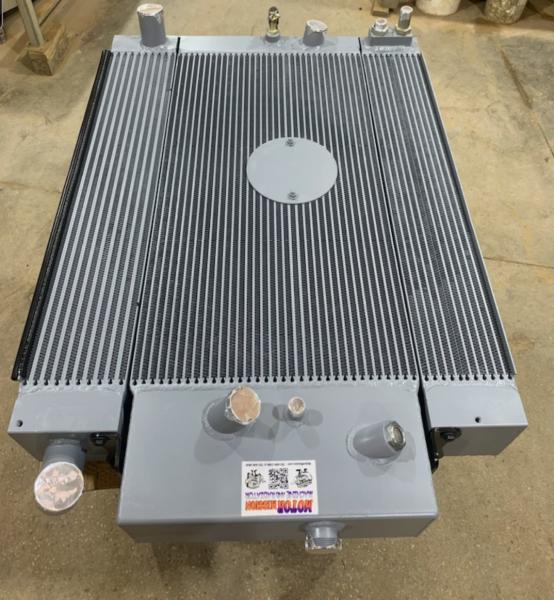
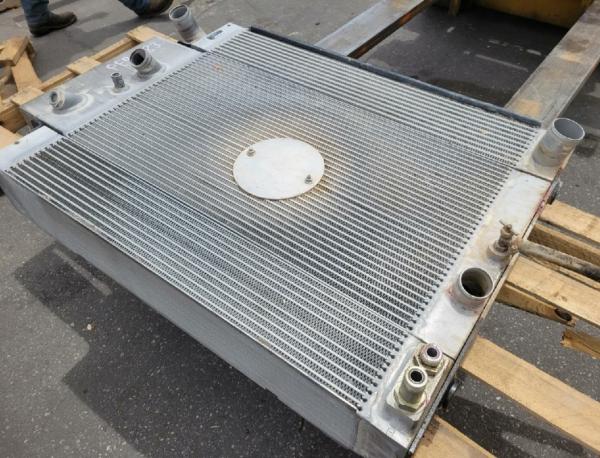
The Caterpillar D6N is a robust and versatile track-type tractor renowned for its performance in various construction and agricultural applications. Central to its operational efficiency is the radiator, a critical component of the cooling system that ensures the engine maintains optimal temperatures. Understanding the function, common issues, and maintenance of the D6N radiator is essential for operators and maintenance personnel.
Function of the Radiator in the D6N
The radiator in the D6N serves as the heart of the engine's cooling system. It dissipates the heat generated by the engine during operation, preventing overheating and potential damage. The system operates by circulating coolant through the engine, absorbing heat, and then passing it through the radiator where it is cooled by air before returning to the engine.
Common Radiator Issues in the D6N
- Clogging and Debris Accumulation
Over time, the radiator fins can become clogged with dirt, dust, and other debris, especially in dusty environments. This accumulation impedes airflow, reducing the radiator's efficiency and leading to increased engine temperatures.
- Corrosion and Leaks
Exposure to harsh chemicals, prolonged use of untreated water, or lack of regular maintenance can lead to corrosion of the radiator core. Corrosion can cause leaks, resulting in coolant loss and potential engine overheating.
- Coolant Contamination
Using improper coolant mixtures or neglecting to flush the cooling system can lead to the buildup of scale and contaminants within the radiator. This contamination can obstruct coolant flow and reduce the system's cooling capacity.
Maintenance and Troubleshooting
- Regular Cleaning
Performing routine inspections and cleaning of the radiator is crucial. Use compressed air or a soft brush to remove debris from the radiator fins. In severe cases, a professional cleaning may be necessary to remove internal blockages.
- Coolant Maintenance
Regularly check and replace the coolant as per the manufacturer's recommendations. Ensure the correct coolant mixture is used to prevent corrosion and scale buildup.
- Leak Detection and Repair
Periodically inspect the radiator for signs of leaks or damage. If leaks are detected, they should be addressed promptly to prevent engine overheating. In some cases, professional repair or replacement may be required.
Replacement Parts and Resources
When maintenance or replacement is necessary, several resources are available:- OEM Parts: Original Equipment Manufacturer parts ensure compatibility and reliability.
- Aftermarket Options: High-quality aftermarket parts can offer cost-effective alternatives.
- Service Manuals: Consulting the D6N service manual provides detailed instructions for radiator maintenance and replacement.
Conclusion
The radiator is a vital component in maintaining the Caterpillar D6N's performance and longevity. Regular maintenance, timely repairs, and proper coolant management are essential practices to ensure the radiator operates efficiently, keeping the engine within optimal temperature ranges and preventing costly downtime.
|
|
|
|
| How to Fix No Fuel to Injectors on a Case 580B |
|
Posted by: MikePhua - 08-14-2025, 11:39 PM - Forum: Troubleshooting & Diagnosing
- No Replies
|
|
Experiencing a Case 580B backhoe loader that suddenly dies and then refuses to send fuel to the injectors can be a complex and frustrating issue. Despite having fuel up to the fuel pump, if no fuel reaches the injector lines, the machine will fail to start or run. This detailed explanation breaks down the possible causes, diagnostic procedures, technical terminology, and practical solutions to help operators and technicians restore fuel delivery and engine performance efficiently.
Understanding the Case 580B Fuel System
The Case 580B fuel system involves several key components working together to ensure fuel reaches the engine cylinders: - Fuel Tank and Petcock Valve: Stores diesel fuel; the petcock controls fuel flow from the tank and may have a protective screen that can become clogged.
- Fuel Lines: Transport fuel from the tank to the fuel pump and from the pump to the injectors.
- Fuel Filters: Remove debris and impurities to protect the injection system.
- Injection Pump (Roosa Master DBG 431 FCC46AJ): Pressurizes and distributes fuel to each injector; key for precise fuel timing and quantity.
- Injector Lines: High-pressure lines delivering fuel to individual engine cylinders.
- Return Line and Elbow: Return excess fuel from the injection system back to the tank.
- Bleeder Valve: Allows removal of air from the fuel system, essential for priming.
Terminology to Know:- Injector Pump: Mechanical device that pressurizes and delivers fuel to the injectors.
- Bleeder Valve: A valve used to remove trapped air from fuel lines.
- Petcock Valve: A fuel shutoff valve located at the tank outlet.
- Fuel Return Line: Line returning unused fuel to the tank.
- Elbow Fitting: Connector in the return line that can become clogged or damaged.
- Fuel Filter Screen: Fine mesh screen that filters fuel entering the pump to prevent debris entry.
- Roosa Master Pump: A type of mechanical injection pump used on many Case machines.
Common Causes for No Fuel to Injectors Despite Fuel at Pump- Clogged or Blocked Fuel Petcock Valve: The shutoff valve at the fuel tank often has a screen that can accumulate debris or rust, blocking fuel flow to the pump.
- Injection Pump Internal Failure: Worn or damaged pump components such as the governor weight retainer ring (flex ring), check valves, or seals can block fuel flow internally.
- Airlocks in Fuel System: Trapped air can prevent fuel flow; inadequate bleeding after repairs or leaks in fuel lines can cause this.
- Fuel Filter or Screen Blockage: Even if fuel is at the pump inlet, blockage in inline filters or screens inside the pump can prevent fuel delivery.
- Damaged or Misadjusted Injection Pump Timing: Incorrect timing or mechanical faults can stop fuel from being pumped out.
- Blocked Return Line or Elbow: If the fuel return path is blocked, it can affect fuel pressure and delivery.
- Worn or Cracked Fuel Lines: Leaks or cracks cause loss of fuel pressure and air ingress.
- Pump Not Rotating Properly: Failure of gear train or pump drive can prevent injection pump operation.
Step-by-Step Diagnostic and Troubleshooting Guide
- Inspect the Fuel Petcock Valve at the Tank
- Remove the petcock valve and check for plugged debris or rust on the screen.
- Clean or replace the valve as needed to ensure free fuel flow.
- Check Fuel Supply Lines and Filters
- Inspect all fuel lines for cracks, kinks, or looseness.
- Replace fuel filters and clean any inline screens.
- Verify fuel flow at the pump inlet by disconnecting lines and observing fuel presence.
- Bleed the Fuel System Thoroughly
- Use bleeder valves on filters and pump to remove trapped air.
- Pump the manual primer repeatedly until fuel flows without air bubbles.
- Repeat bleeding after initial engine cranking to ensure air is fully purged.
- Inspect Injector Lines and Return Line
- Disconnect injector lines at the pump and check for fuel delivery when cranking.
- Remove and inspect return line elbow for blockages; clean or replace if necessary.
- Examine the Injection Pump Internals
- If accessible, disassemble pump to check for broken governor weight retainer (flex ring), worn seals, or stuck check valves.
- Ensure pump components move freely without binding.
- Verify pump timing marks and adjust if necessary according to the service manual.
- Check for Proper Pump Rotation
- Confirm the injection pump gear/train is turning when cranking.
- If not, inspect pump drive components for failure.
- Test Fuel Pressure and Delivery
- Use specialized gauges to measure fuel pressure at pump outlet.
- Compare with manufacturer’s specifications for the Case 580B.
Practical Case Insights
One backhoe operator reported sudden stall and no fuel delivery to injectors despite seeing fuel at the pump inlet. Removing and cleaning the petcock valve screen restored fuel flow, confirming the screen had blocked fuel supply. Another common scenario involves worn internal pump components causing interrupted fuel delivery, requiring rebuild or replacement of the Roosa Master pump.
Additional Recommendations- Always use genuine or high-quality replacement parts for fuel system components.
- Maintain cleanliness during fuel pump servicing to prevent introducing contaminants.
- Keep a spare fuel filter and petcock valve on hand for quick replacement.
- Perform regular inspection and maintenance of fuel system to avoid unexpected failures.
- Consult detailed service manuals for pump rebuilding and timing procedures.
- Use proper tools and safety precautions during fuel system work to prevent fire hazards.
Summary List: Key Checks for Case 580B No Fuel to Injectors Issue- Remove and clean petcock valve screen at fuel tank
- Inspect and replace fuel filters and lines as needed
- Bleed fuel system completely to remove airlocks
- Check injector lines for fuel delivery during cranking
- Inspect and clear blockage in fuel return line and elbow
- Disassemble fuel pump to inspect internal components (flex ring, check valves, seals)
- Verify injection pump timing and adjust if required
- Confirm fuel pump gear drive operation
- Test fuel pressure at pump outlet against specifications
- Maintain clean fuel and system during servicing for longevity
Conclusion
No fuel delivery to the injectors on a Case 580B, despite having fuel at the pump, is often caused by a blocked petcock screen, internal injection pump failures, airlocks, or fuel system blockages. Systematic inspection starting from the tank petcock to fuel lines and pump internals, along with thorough bleeding and timing checks, is essential to restore proper fuel flow and engine function. Practical experience shows that regular maintenance, careful cleaning, and correct pump servicing prevent many such fuel issues, ensuring reliable machine operation.
|
|
|
|
| Troubleshooting Common Issues in the John Deere 850C Crawler Dozer |
|
Posted by: MikePhua - 08-14-2025, 11:36 PM - Forum: Troubleshooting & Diagnosing
- No Replies
|
|
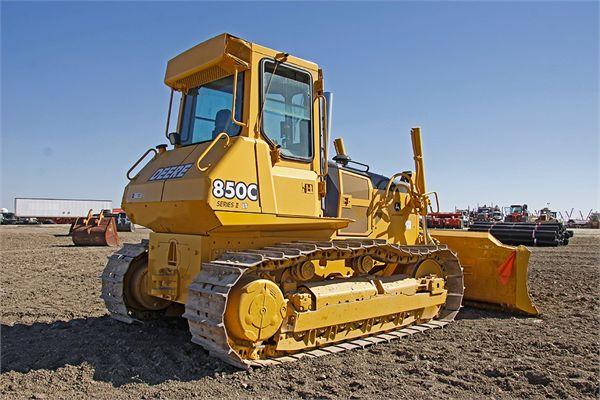
The John Deere 850C Crawler Dozer, a mid-sized machine introduced in the late 1990s, is renowned for its durability and versatility in various construction and forestry applications. However, like all heavy machinery, it is not without its challenges. Understanding these common issues and their solutions can help operators maintain optimal performance and extend the machine's lifespan.
1. Transmission and Movement Issues
One of the most frequently reported problems with the 850C is related to its transmission system. Operators have noted instances where the dozer fails to move forward or backward, despite the engine running smoothly. This issue is often accompanied by error codes such as F695, indicating electrical communication problems between the transmission control unit (TCU) and the operator's display.
Potential Causes: - Faulty speed sensors, particularly the one located near the front hydrostatic pump.
- Corroded or damaged wiring harnesses and connectors.
- Issues with the transmission calibration process.
Recommended Solutions:- Inspect and clean all electrical connections, especially those associated with the speed sensors.
- Replace any faulty speed sensors.
- Perform a complete transmission calibration to reset the system's parameters.
- Consult the service manual for specific diagnostic procedures and wiring diagrams.
2. Undercarriage Wear and Maintenance
The undercarriage of the 850C is subjected to significant wear due to constant contact with the ground. Components such as track rollers, idlers, sprockets, and track shoes can wear out over time, leading to reduced performance and potential mechanical failures.
Signs of Wear:- Uneven track tension.
- Excessive track sag or tightness.
- Visible damage to track shoes or rollers.
Maintenance Tips:- Regularly inspect the undercarriage components for signs of wear or damage.
- Adjust track tension according to the manufacturer's specifications.
- Replace worn or damaged components promptly to prevent further damage.
3. Hydraulic System Leaks
Hydraulic system leaks can lead to a loss of power and efficiency in the 850C. Common leak points include hydraulic hoses, fittings, and cylinders.
Identifying Leaks:- Visible oil stains on the ground or machine components.
- Decreased lifting or pushing power.
- Unusual noises from the hydraulic system.
Repair Recommendations:- Tighten or replace leaking fittings and hoses.
- Inspect hydraulic cylinders for signs of wear or damage.
- Regularly check hydraulic fluid levels and top up as necessary.
4. Engine Performance Issues
Engine performance problems can manifest as reduced power, stalling, or difficulty starting. These issues can be caused by various factors, including fuel system problems, air intake restrictions, or electrical faults.
Troubleshooting Steps:- Check the fuel system for blockages or contamination.
- Inspect the air filter and intake system for obstructions.
- Test the battery and charging system to ensure proper voltage levels.
- Examine the wiring harness for signs of wear or damage.
5. Operator Display and Electrical System Issues
Malfunctions in the operator display can hinder the operator's ability to monitor machine performance and diagnose problems. Issues may include blank screens, erratic readings, or complete failure of the display.
Diagnostic Approach:- Perform a system reset by disconnecting and reconnecting the battery.
- Check for blown fuses or tripped circuit breakers.
- Inspect the wiring connections to the display unit.
- Use diagnostic tools to retrieve any stored error codes.
Conclusion
The John Deere 850C Crawler Dozer is a robust machine capable of handling demanding tasks. Regular maintenance and prompt attention to common issues can ensure its longevity and reliable performance. Operators should familiarize themselves with the machine's systems and consult the service manual for detailed troubleshooting procedures. By addressing problems proactively, the 850C can continue to serve effectively in various applications.
|
|
|
|
| How to Install Hoses in Tight Spaces on Heavy Equipment |
|
Posted by: MikePhua - 08-14-2025, 11:35 PM - Forum: General Discussion
- No Replies
|
|
Routing hydraulic and industrial hoses in confined or limited spaces on heavy equipment poses unique challenges that require careful planning, proper tools, and the right hose technologies. Efficient hose installation and management in these tight areas are critical for machine reliability, safety, and ease of maintenance. This guide provides a detailed explanation of best practices, hose selection, installation techniques, protective measures, and practical solutions to common problems encountered in tight equipment spaces.
Understanding the Challenge of Hose Management in Tight Spaces
Heavy equipment such as excavators, loaders, cranes, and mining machines have complex hydraulic systems with hoses that convey high-pressure fluids necessary for operation. These hoses must be routed through compact areas often cluttered with other components, moving parts, and structural supports while avoiding damage from abrasion, crushing, and kinking.
Key challenges include: - Limited room for maneuvering and bending hoses without exceeding minimum bend radius (MBR)
- Risk of hose kinking that restricts fluid flow and causes premature hose failure
- Abrasion from contact with other hoses, components, or sharp edges
- Difficulty in accessing fittings for maintenance or replacement
- Potential for vibration and machine movement to stress hoses and connectors
Selecting the Right Hoses for Tight Spaces
Choosing hoses optimized for flexibility and protection is the first step to successful installation in tight spaces.- Flexible Hose Construction: Selecting hoses with a smaller minimum bend radius (MBR) and flexible reinforcement layers helps with easier routing in compact layouts. For example, hoses with patented spiral reinforcement or thermoplastic constructions provide enhanced bendability.
- Compact Diameter Hoses: Slimmer hoses reduce the spatial footprint and enable tighter groupings without interference.
- Abrasion-Resistant Covers: Hoses with special covers, such as XtraTuff or rubber with protective coatings, resist wear from rubbing against surfaces.
- High-Pressure Ratings: Despite flexibility, hoses should meet or exceed the system pressure requirements to ensure safe operation.
- Bend Restrictors and Spring Guards: Incorporating bend restrictors (rigid collars near fittings) and spiral spring guards protects hose ends from acute bending and crushing damage.
Installation Techniques for Tight Spaces- Maintain Minimum Bend Radius: During routing, ensure hoses do not bend tighter than their specified MBR to prevent kinking and flow restriction.
- Straight Hose Exits: Allow hoses to exit fittings straight for a length at least twice the hose diameter before bending to reduce stress on the hose end.
- Use of Specialized Tools: Employ crowfoot wrenches, stubby wrenches, or custom-bent tools for loosening or tightening fittings in cramped areas.
- Remove Adjacent Hoses or Components Temporarily: Sometimes loosening or removing nearby hoses or parts improves access for work on the target hose.
- Routing Plans: Follow detailed routing diagrams specifying hose paths, lengths, clamp positions, and slack allowances.
- Use Cushioned and Rubber-Lined Clamps: Secure hoses with cushioned clamps to minimize vibration and abrasion, helping maintain organized bundles.
- Bundle Hoses Together: Group hoses in parallel to move flexibly together and reduce chafing.
- Leave Adequate Slack: Allow enough free length for movement without excessive slack that might snag or interfere with other components.
Protective Measures to Extend Hose Life- Clamping and Supports: Properly spaced clamps reduce hose vibrations and restrict whipping.
- Abrasion Protection Sleeves: Use spiral wire guards or polyethylene sleeves where hoses contact abrasive surfaces.
- Avoid Sharp Edges: Route hoses away from sharp corners or smooth edges using protective padding if needed.
- Avoid Twisting: Align hose lay lines carefully during installation to avoid twisting that can cause early failure.
- Regular Inspections: Conduct frequent visual and physical inspections to detect wear, kinks, leaks, or damage early.
Practical Examples and Solutions- A heavy wheel loader fleet operator suffered repeated hose failures at boom articulation points due to kinking in tight corners. By adopting hoses with a 25% lower force-to-bend rating and installing bend restrictors at hose ends near fittings, the operator doubled hose service life and reduced downtime by over 80%.
- Industrial maintenance teams often use crowfoot line wrenches and stubby wrenches to loosen hoses in confined engine compartments, paired with removing one adjacent hose temporarily to gain better access.
- Protective spring coil guards are routinely added to hoses near moving joints on mining equipment to prevent hose collapse when compressed or bent during operation.
Key Terminology- Minimum Bend Radius (MBR): The smallest radius around which a hose can be bent without damage or flow restriction.
- Bend Restrictor: A rigid collar around the hose end near the fitting to prevent tight bends and kinking.
- Spring Guard: A metal coil wrapped around a hose to protect against crushing or abrasion.
- Lay Line: A marking on the hose surface indicating the reinforcement orientation used to avoid twisting during installation.
- Cushioned Clamp: A clamp with rubber lining to reduce vibration and abrasion on hoses.
- Kink: A sharp bend causing hose deformation that restricts fluid flow and weakens hose structure.
Summary List of Best Practices for Hoses in Tight Places- Select hoses with low minimum bend radius and flexible construction
- Use compact diameter hoses with abrasion-resistant covers
- Implement bend restrictors and spring guards at fittings
- Maintain straight hose exits for at least twice hose diameter length before bending
- Use specialized tools like crowfoot and stubby wrenches for fitting access
- Temporarily remove adjacent hoses or parts to improve workspace
- Follow detailed routing diagrams for lengths, clamps, and slack
- Bundle hoses together with cushioned clamps and allow proper slack
- Avoid twisting; align lay lines correctly during installation
- Routinely inspect hoses for wear, kinks, abrasion, and leaks
- Protect hoses from sharp edges and vibrations with sleeves and padding
Conclusion
Managing hydraulic and industrial hoses in tight spaces on heavy equipment demands a combination of suitable hose selection, precise installation techniques, effective protective devices, and diligent maintenance. Applying these practices significantly increases hose durability, reduces costly failures, and simplifies servicing. Leveraging modern hose technologies with enhanced flexibility, smaller bend radius, and abrasion resistance alongside thoughtful routing and clamping strategies optimizes hydraulic system reliability even in the most cramped and complex machinery environments.
|
|
|
|
| Common Issues in the Case 445 Skid Steer Loader |
|
Posted by: MikePhua - 08-14-2025, 11:34 PM - Forum: Troubleshooting & Diagnosing
- No Replies
|
|
The Case 445 Skid Steer Loader, produced between 2004 and 2010, is a versatile machine known for its robust performance in various applications. However, like all machinery, it is susceptible to certain issues that can affect its operation. Understanding these common problems and their solutions can help maintain the loader's efficiency and longevity.
1. Hydraulic Lockout and Control Failures
A frequent issue reported by operators is the hydraulic lockout, where the loader's boom and bucket controls become unresponsive. This typically occurs when the park brake is engaged or the machine is turned off. In such cases, the forward and reverse levers may still function, but without any reaction from the machine.
Possible Causes: - Engaged park brake or machine shutdown triggering mechanical lockout.
- Faulty hydraulic lockout switch or lever.
- Damaged or loose electrical connections to the control system.
- Worn or malfunctioning solenoids.
Recommended Solutions:- Inspect and ensure the park brake is disengaged and the machine is running.
- Check the hydraulic lockout switch or lever for proper operation.
- Examine all electrical connections for security and cleanliness.
- Test solenoids for functionality and replace if necessary.
2. Intermittent Engine Shutdowns and Fuse Blowing
Another common problem involves the engine shutting down unexpectedly or fuses blowing during startup attempts. This issue can be attributed to several factors within the electrical and fuel systems.
Possible Causes:- Shorts or damaged insulation in wiring harnesses.
- Faulty starter solenoid or ignition switch.
- Defective fuel shutoff or safety interlock switches.
Recommended Solutions:- Inspect wiring harnesses for signs of wear or damage and repair as needed.
- Test the starter solenoid and ignition switch for proper operation.
- Check fuel shutoff and safety interlock switches, replacing any faulty components.
3. Hydraulic Pressure Loss and Sudden Shutdowns
Some operators have reported sudden shutdowns during operation, often accompanied by warnings for low engine oil pressure and hydraulic charge pressure. These symptoms typically indicate a loss of prime or issues with the pressure sensors.
Possible Causes:- Faulty engine oil pressure sender or hydraulic pressure sensor.
- Worn or blocked oil or hydraulic pumps.
- Inadequate fuel supply or clogged filters.
Recommended Solutions:- Test the engine oil pressure sender and hydraulic pressure sensor for proper function.
- Inspect oil and hydraulic pumps for wear or blockages and replace if necessary.
- Verify fuel supply and replace clogged filters to ensure adequate flow.
4. Tilt Cylinder Settling
A common hydraulic issue involves the tilt cylinders settling over time, leading to unintended lowering of the loader arms. This problem can be attributed to internal leaks within the spool valve.
Possible Causes:- Internal leakage in the spool valve.
- Worn or damaged seals within the hydraulic system.
Recommended Solutions:- Inspect the spool valve for signs of wear or damage and replace if necessary.
- Check seals within the hydraulic system and replace any that are worn or damaged.
5. Park Brake and Safety Interlock Issues
Intermittent problems with the safety interlock system can affect the hydraulic brakes and hydraulic flow, leading to operational issues. These problems may be related to the park brake system or safety interlock switches.
Possible Causes:- Faulty park brake system components.
- Defective safety interlock switches.
Recommended Solutions:- Inspect the park brake system for proper operation and repair as needed.
- Test safety interlock switches for functionality and replace any faulty components.
Conclusion
The Case 445 Skid Steer Loader is a durable and reliable machine when properly maintained. By understanding these common issues and implementing the recommended solutions, operators can ensure optimal performance and longevity of their equipment. Regular maintenance and timely repairs are key to preventing these problems and keeping the loader running smoothly.
|
|
|
|
| How to Spread Fill Material Efficiently: A Practical Guide for Construction and Earthwork |
|
Posted by: MikePhua - 08-14-2025, 11:34 PM - Forum: Construction & Urban Infrastructure Forum
- No Replies
|
|
Spreading fill dirt or material is a fundamental task in construction, landscaping, and site preparation, requiring precision, efficiency, and knowledge of soil behavior and machinery use. Proper spreading ensures a solid, stable base for foundations, roads, or landscaping features, avoids future settling or erosion, and optimizes project timelines and costs. This detailed guide explains the key techniques, equipment, terminology, and best practices for spreading fill, enriched with practical advice, case insights, and solutions to common challenges.
Understanding Fill Material and Its Purpose
Fill refers to soil, gravel, or selected material transported to a site to raise the ground elevation or fill excavated areas. It supports structures, roads, or landscaping by providing a stable, compact base. Key concepts around fill include: - Lifts: Layers of fill material spread in incremental thicknesses, typically 8 to 12 inches, then compacted to avoid air pockets and uneven settlement.
- Compaction: The process of densifying the fill to eliminate voids, strengthen the soil, and prevent future shifting.
- Moisture Content: The water level in fill material, crucial to proper compaction; both too dry or too wet materials impair stability.
- Bench: A level cut or step in terrain used as a working platform during excavation or filling.
Equipment Commonly Used for Spreading Fill- Articulated Dump Trucks: Maneuverable vehicles carrying fill from stockpile to site; appropriate for various terrains.
- Dozers: Bulldozers spread and push fill material evenly across the area; the operator controls blade height to maintain uniform lifts.
- Excavators: Used for precise placement and initial spreading of fill, especially helpful for creating benches.
- Compactors/Rollers: Follow the spreading equipment to compact the fill in lifts, including vibratory rollers, sheep’s foot rollers, and plate compactors.
Step-by-Step Fill Spreading Process
- Site Preparation and Planning
- Clear debris and vegetation.
- Establish benchmarks and grade stakes to guide fill elevation.
- Plan truck routes and dozer paths to minimize overlaps and travel time.
- Loading and Transporting Fill Material
- Trucks or loaders take fill material from a source and deliver it to the fill site.
- Material should be dumped in manageable amounts near the spreading zone to reduce rehandling.
- Spreading Fill Material
- Use a dozer or excavator to spread material in uniform lifts, controlling blade height to maintain even distribution.
- Avoid excessive blade movement to prevent uneven spreading or undulations.
- Maintain benches at elevations similar to truck bed or excavator stick length to optimize loading and spreading efficiency.
- Moisture Management
- Test fill moisture levels before spreading.
- Add water via water trucks or hoses if fill is too dry to aid compaction.
- Employ aeration or tilling if fill is overly wet to lower moisture content.
- Compaction After Spreading Each Lift
- Use appropriate compaction equipment based on soil type—for example, vibratory rollers for granular soils or sheep’s foot rollers for clays.
- Compact each lift thoroughly before adding the next layer to avoid air pockets and settling.
- The typical lift thickness ranges from 8 to 12 inches, adjusted per project specifications.
- Final Grading
- After reaching desired elevation, fine grading is performed with blades or motor graders to achieve design contours and smooth surfaces.
Technical Terms to Know- Lift (Layer): A single spread course of fill material subjected to compaction before the next layer is added.
- Compaction Equipment: Machines that apply force or vibration to densify soil.
- Bench: A level working platform used in cut-and-fill operations to support equipment and facilitate efficient material handling.
- Moisture Content: The water percentage present in the soil which affects compactability.
- Air Pockets: Voids or gaps within soil that weaken fill strength if not eliminated during compaction.
Practical Tips and Common Challenges- Always keep the blade angle steady and avoid excessive blade tossing motions to maintain uniform thickness.
- Full truckloads should be dumped efficiently across the spreading area to minimize passes required.
- Avoid dumping fill on slopes or uneven surfaces without proper stabilization.
- Watch for large rocks or debris that can damage equipment or create voids.
- Keep a safe distance between compaction equipment and trucks/dozers to avoid accidents.
- Use GPS-guided equipment or laser grading technology for large sites to improve accuracy and reduce rework.
- Never increase lift thickness beyond project specs, as this compromises compaction and material strength.
- Regularly test compaction to confirm meeting engineering requirements, using Proctor, nuclear density, or sand cone methods.
Illustrative Story
On a large residential development, fill spreading posed challenges due to variable soil moisture and uneven delivery from trucks. The contractor introduced water trucks to adjust moisture and used an articulated dozer to spread material carefully in 10-inch lifts. Frequent compaction testing revealed early issues with under-compaction on steeper slopes, prompting a change in compaction approach using a sheep’s foot roller. The result was a stable, well-compacted base supporting roads and foundations without future settlement problems. This scenario demonstrates the importance of adjusting techniques to site conditions and continuous quality control.
Summary List: Best Practices for Spreading Fill Material- Plan site logistics with clear benches and routes for trucks and dozers
- Load fill trucks efficiently and dump near working areas
- Spread fill in uniform lifts of 8-12 inches using dozers or excavators
- Maintain consistent blade height and avoid excessive tossing
- Manage moisture content by adding water or aeration as needed
- Compact each lift thoroughly with appropriate equipment
- Use compaction testing methods to verify soil density
- Employ technology aids like GPS or laser grading for precision
- Monitor and remove large debris to protect equipment and fill integrity
- Perform final grading for smooth surface and design conformance
Conclusion
Effective spreading of fill material requires a blend of proper planning, skilled equipment operation, and attention to soil conditions. By applying strategic lift layering, moisture control, consistent spreading, and diligent compaction, construction teams can ensure stable, durable bases, preventing costly settling or structural issues. Leveraging modern technology and following best practices enhances efficiency, safety, and quality outcomes.
|
|
|
|
| Transmission Fluid Compatibility and Driveshaft Seal Maintenance in Heavy Equipment |
|
Posted by: MikePhua - 08-14-2025, 11:33 PM - Forum: Parts , Attachments & Tools
- No Replies
|
|
Maintaining the integrity of transmission systems and addressing driveshaft seal issues are crucial for the longevity and performance of heavy equipment. Understanding the appropriate use of transmission fluids and the correct procedures for seal maintenance can prevent costly repairs and downtime.
Transmission Fluid Compatibility: Understanding the Basics
Transmission fluids play a vital role in the operation of heavy equipment, serving as lubricants and coolants for the transmission system. Using the correct type of fluid is essential to ensure optimal performance and to prevent damage to components.
For equipment requiring Caterpillar's TO-4 fluid specification, it's important to use fluids that meet or exceed this standard. While some multi-purpose Automatic Transmission Fluids (ATFs) claim compatibility with TO-4 specifications, such as those meeting Allison C-4 or Caterpillar TO-2 applications, it's crucial to verify the specific requirements of your equipment model. Using fluids that do not meet the required specifications can lead to inadequate lubrication, increased wear, and potential system failures.
Driveshaft Seal Maintenance: Ensuring a Leak-Free Operation
Driveshaft seals are integral components that prevent the leakage of transmission fluid and contaminants into the drivetrain. Over time, these seals can wear out due to friction, environmental factors, or improper maintenance, leading to fluid leaks and potential damage to the transmission system.
Common Causes of Driveshaft Seal Failures - Wear and Tear: Continuous operation can cause seals to degrade, leading to leaks.
- Contamination: Debris and contaminants can damage seals, compromising their effectiveness.
- Improper Installation: Incorrect installation can lead to misalignment and premature seal failure.
Maintenance Tips- Regular Inspection: Periodically check seals for signs of wear or leakage.
- Proper Installation: Ensure seals are installed correctly to prevent misalignment.
- Use Quality Parts: Always use OEM or high-quality replacement seals to ensure compatibility and longevity.
Conclusion
Proper maintenance of transmission fluids and driveshaft seals is essential for the reliable operation of heavy equipment. Always adhere to the manufacturer's specifications and guidelines to ensure optimal performance and to extend the lifespan of your equipment. When in doubt, consult with a professional technician or refer to the equipment's service manual for detailed maintenance procedures.
|
|
|
|
| How to Replace Lincoln PowerLuber Batteries: A Detailed Practical Guide |
|
Posted by: MikePhua - 08-14-2025, 11:32 PM - Forum: Parts , Attachments & Tools
- No Replies
|
|
Lincoln PowerLuber battery-operated grease guns are trusted tools in many maintenance and industrial environments, designed to provide power, efficiency, and ease in lubrication tasks. Over time, however, the original NiCad batteries can fail or lose capacity, prompting users to seek replacements or modern alternatives to maintain tool performance and reliability. This article offers a thorough overview of Lincoln PowerLuber batteries, explains battery technologies, identifies replacement options, and provides practical advice on upgrading or adapting batteries, along with insights from real user experiences.
Understanding Lincoln PowerLuber Batteries and Their Technology
Lincoln PowerLuber grease guns historically use rechargeable NiCad (Nickel-Cadmium) battery packs, typically in 12V or 20V configurations, to power the tool’s high-torque motor capable of delivering grease at pressures up to 10,000 psi. NiCad batteries provide decent power density but have well-known limitations such as memory effect, limited charge cycles, eventual capacity loss, and environmental concerns due to cadmium content.
Recent Lincoln models incorporate more advanced Lithium-ion battery technologies, significantly improving performance across several parameters: - Lithium-ion (Li-ion) Technology: Offers higher energy density, lighter weight, longer run times, and over three times the charge cycles compared to NiCad.
- No Memory Effect: Li-ion batteries avoid the common memory problem seen in NiCad packs, allowing partial charging without capacity loss.
- Consistent Power Delivery: Li-ion batteries maintain steady voltage output throughout discharge, ensuring consistent grease flow.
- Wider Operating Temperature Range: Li-ion cells perform better in varied ambient conditions.
- Faster Charging: Li-ion chargers deliver quick recharge cycles, enhancing tool availability.
Lincoln offers 12V and 20V Li-ion PowerLuber models with compatible batteries and chargers that can fit various tool generations, along with features like digital displays for grease output and battery life.
Issues with Old NiCad Batteries and Replacement Options- Battery Degradation: Over years of use, NiCad battery packs lose capacity and cannot hold sufficient charge, leading to shorter working times.
- Availability and Cost: Original NiCad packs for older PowerLuber models become harder to find and may be costly due to rarity.
- Environmental and Safety Concerns: NiCad batteries contain cadmium, a toxic heavy metal, posing disposal challenges.
Many users explore alternatives, including adapting modern battery technologies:- Using Modern Li-ion Batteries: Some operators consider adapting popular cordless tool batteries (like DeWalt or Milwaukee) via custom adapters or 3D-printed mounts to power PowerLuber grease guns. Li-ion packs bring more run time and lighter weight.
- Custom Adapters and Conversions: With the proliferation of 3D printing and electronics hobbyists, battery replacement kits or custom mounts are available or can be made to retrofit PowerLubers with current battery tech.
- Third-Party Replacement Packs: Some suppliers offer NiMH or Li-ion packs designed to replace NiCad originals, often with improved performance.
Practical Recommendations for Battery Replacement and Maintenance- Consult Manufacturer Specs: Always check the exact voltage, capacity (Ah), voltage rating, and connector type of the battery when purchasing replacements.
- Match Battery Voltage and Size: Lincoln PowerLubers use 12V or 20V systems; substituting a battery with incorrect voltage risks tool damage.
- Prioritize Li-ion Upgrades: Where possible, upgrade to Li-ion batteries for better tool performance and longer battery life.
- Use Official Chargers: Employ compatible chargers designed for the battery chemistry and voltage to ensure safe, efficient charging.
- Battery Care and Storage: Store batteries in cool, dry places; avoid deep discharge; charge regularly to maintain condition.
- Test Charge Capacity: When buying used or third-party batteries, test capacity and output before full deployment.
Technical Terminology Explained- NiCad Battery: Nickel-Cadmium rechargeable battery prone to memory effect and gradual capacity loss.
- Lithium-ion Battery: Modern rechargeable battery with high energy density and longer life cycle.
- Charge Cycle: One full discharge and recharge process; Li-ion batteries typically offer more cycles than NiCad.
- Memory Effect: Reduction of usable battery capacity due to partial charge cycles in NiCad cells.
- Ampere-hour (Ah): A measure of battery capacity indicating how much current a battery can supply over time.
- Voltage Rating: Electrical potential difference; must be matched for compatibility.
- Charger Compatibility: Chargers must match battery type (NiCad, Li-ion) to prevent damage.
Real-World Insights and User Experiences
A seasoned oilfield operator experienced frequent battery failures in his old Lincoln PowerLuber NiCad packs after several years. Switching to 20V Li-ion PowerLuber models with new batteries dramatically improved runtime and tool responsiveness. He also used 3D-printed battery adapters to retrofit some older units with DeWalt 20V Li-ion batteries, achieving cost savings and extended operation between charges.
Another maintenance professional stressed the importance of keeping spare batteries charged and tested regularly, noting that proper storage prevented rapid degradation often seen with NiCad packs in hot climates.
Summary List: Battery Options and Upgrade Tips for Lincoln PowerLubers- Identify tool battery voltage and type (12V NiCad, 20V NiCad, or 12/20V Li-ion)
- Consider upgrading to Lincoln’s official Li-ion PowerLuber battery models for best performance
- Explore compatible third-party or custom battery packs designed to replace NiCad batteries
- Use manufacturer-approved chargers for safe and efficient battery charging
- Employ custom adapters or 3D-printed mounts to retrofit modern cordless tool batteries when feasible
- Maintain batteries by regular charging, avoiding full discharge, and storing properly
- Replace failing NiCad packs proactively to avoid downtime
- Test all replacement batteries for voltage, capacity, and fit
|
|
|
|
|



