| Welcome, Guest |
You have to register before you can post on our site.
|
| Online Users |
There are currently 539 online users.
» 0 Member(s) | 530 Guest(s)
Ahrefs, Amazon, Applebot, Bing, Claude, DotBot, Google, Semrush
|
| Latest Threads |
Identifying and Sourcing ...
Forum: Parts , Attachments & Tools
Last Post: MikePhua
01-07-2026, 06:29 PM
» Replies: 0
» Views: 538
|
Cat 931B Brake Parts
Forum: Parts , Attachments & Tools
Last Post: MikePhua
01-07-2026, 06:29 PM
» Replies: 0
» Views: 286
|
Choosing Between Cat 228,...
Forum: General Discussion
Last Post: MikePhua
01-07-2026, 06:28 PM
» Replies: 0
» Views: 575
|
Hydraulic Delay When Lowe...
Forum: Troubleshooting & Diagnosing
Last Post: MikePhua
01-07-2026, 06:27 PM
» Replies: 0
» Views: 451
|
Bale Chopper and Mulcher ...
Forum: General Discussion
Last Post: MikePhua
01-07-2026, 06:26 PM
» Replies: 0
» Views: 333
|
Mini UC Maintenance
Forum: General Discussion
Last Post: MikePhua
01-07-2026, 06:25 PM
» Replies: 0
» Views: 322
|
Locating Wiring Informati...
Forum: General Discussion
Last Post: MikePhua
01-07-2026, 06:24 PM
» Replies: 0
» Views: 353
|
Case Industrial Brown Sub...
Forum: Parts , Attachments & Tools
Last Post: MikePhua
01-07-2026, 06:23 PM
» Replies: 0
» Views: 279
|
Dirt Work in West Virgini...
Forum: Construction & Urban Infrastructure Forum
Last Post: MikePhua
01-07-2026, 06:23 PM
» Replies: 0
» Views: 382
|
D207 P Hydraulic Steering...
Forum: Parts , Attachments & Tools
Last Post: MikePhua
01-07-2026, 06:22 PM
» Replies: 0
» Views: 307
|
|
|
| Considering the Purchase of a 1970s Case 450 Crawler Loader |
|
Posted by: MikePhua - 08-15-2025, 12:19 AM - Forum: General Discussion
- No Replies
|
 |
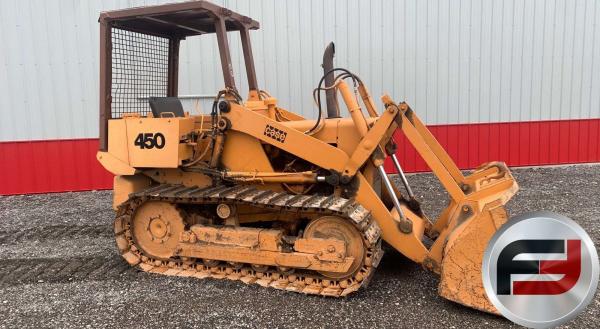
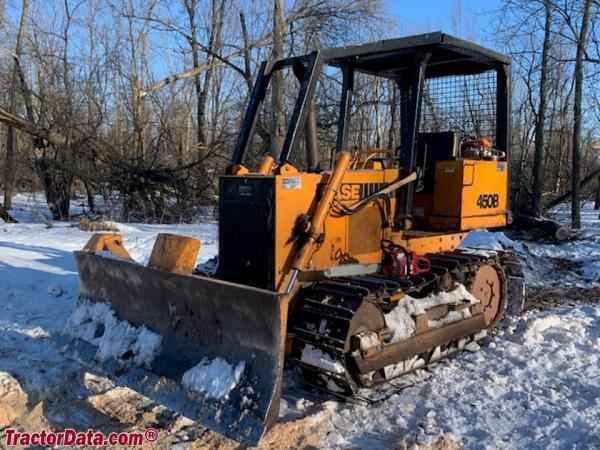
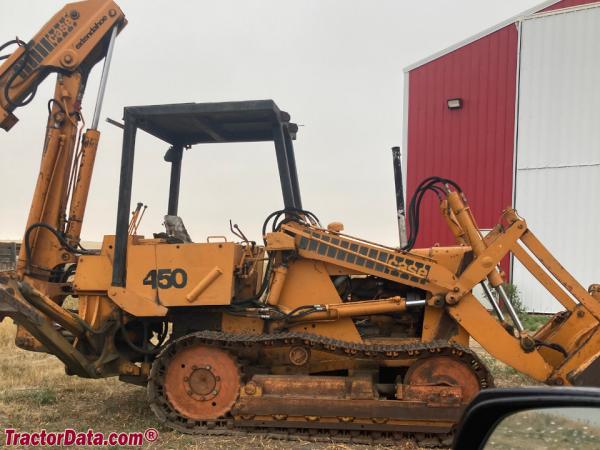
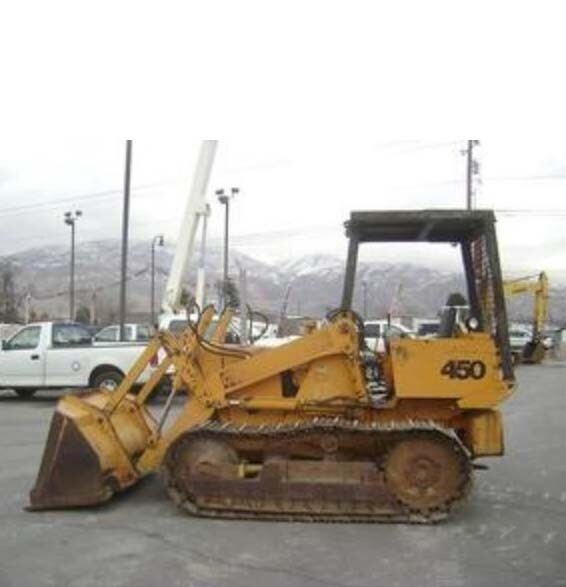
Introduction
The Case 450 Crawler Loader, produced during the late 1960s to early 1970s, remains a notable model in the construction equipment sector. Renowned for its robust build and versatility, it was designed to handle various tasks such as digging, lifting, and grading. However, like any vintage machinery, prospective buyers should be aware of its specifications, potential issues, and maintenance requirements to ensure a sound investment.
Specifications of the Case 450 - Engine: The Case 450 is equipped with a 4-cylinder diesel engine, delivering approximately 58 horsepower.
- Transmission: It features a 4-speed power shift transmission, providing versatility in various operational conditions.
- Hydraulics: The loader boasts a hydraulic system with a flow rate of 21 gallons per minute at a pressure of 2000 psi, facilitating efficient operation of attachments.
- Weight: The operating weight of the Case 450 is approximately 8,850 lbs, making it suitable for a range of tasks without compromising maneuverability.
- Dimensions: It comes with 12-inch tracks, offering stability and traction across diverse terrains.
Common Issues with the Case 450
While the Case 450 is celebrated for its durability, certain issues have been reported by owners:- Overheating: Some users have experienced the machine overheating after extended use. For instance, one owner noted that after running the machine for about 10 minutes, it became excessively hot. Upon inspection, it was found that the water pump impellers were worn out, leading to inadequate coolant circulation.
- Fuel System Problems: Fuel delivery issues are not uncommon. In one case, a machine would run for a few minutes before shutting off. Upon investigation, debris was found in the fuel system, leading to blockages and fuel starvation.
- Final Drive Issues: Problems with the final drive can manifest as one track not moving or moving slowly. This is often due to clogged screens or low hydraulic fluid levels affecting the final drive's performance.
Maintenance Tips
To ensure the longevity and optimal performance of a Case 450:- Regular Fluid Checks: Consistently monitor and replace engine oil, hydraulic fluid, and coolant to prevent wear and overheating.
- Hydraulic System Maintenance: Regularly inspect hydraulic lines and filters for leaks or blockages. Ensure that the hydraulic fluid is clean and at the proper level.
- Track and Undercarriage Inspection: Regularly check the tracks for wear and tear. Ensure that the undercarriage components, such as rollers and sprockets, are in good condition to maintain stability and mobility.
- Fuel System Maintenance: Keep the fuel tank clean and inspect the fuel lines for any signs of clogging or leaks. Regularly replace fuel filters to ensure proper fuel delivery.
Conclusion
Purchasing a 1970s Case 450 Crawler Loader can be a wise decision for those in need of a reliable and versatile machine. However, it's crucial to be aware of its specifications, potential issues, and maintenance requirements. By staying proactive with maintenance and addressing issues promptly, owners can ensure that their Case 450 continues to serve effectively for years to come.
|

|
|
| Cummins 855 Fuel Leak Repair and Fuel System Overview |
|
Posted by: MikePhua - 08-15-2025, 12:18 AM - Forum: Parts , Attachments & Tools
- No Replies
|
|
A fuel leak in the Cummins 855 engine, particularly around the crossover tube between the front and middle cylinder heads, is a serious issue that requires prompt attention to prevent fuel loss, engine damage, and safety hazards. This detailed article examines the fuel system of the Cummins 855 engine, common leak sources including the crossover tube, diagnostic and repair procedures, technical terminology, and maintenance recommendations. Practical insights and contextual information are provided to help operators, mechanics, and technicians effectively address fuel leaks and maintain reliable engine performance.
Cummins 855 Engine Fuel System Components
The Cummins 855 series, including the NT and NTA variants, features a robust PT (Pressure-Time) fuel injection system designed for precise fuel delivery and reliable operation in heavy-duty diesel engines.
Key fuel system components include: - Fuel Pump: A PT type fuel injection pump driven by the engine gear train, responsible for pressurizing and distributing fuel to the injectors.
- Fuel Injectors: Deliver atomized fuel into the combustion chambers at the correct timing and quantity.
- Crossover Tube: A metal tube connecting fuel passages between cylinder heads, essential for equalizing fuel flow across the engine.
- Fuel Supply and Return Lines: Carry fuel from the tank through filters to the pump and return unused fuel back to the tank.
- Fuel Filters: Remove contaminants to protect pump and injectors.
- Fuel Shutoff Valve/Solenoid: Controls fuel flow to stop or start the engine.
- Governor and Throttle Assembly: Regulate fuel delivery based on engine speed and load requirements.
- Injection Pump Internal Components: Include gear pump, pulsation damper, and governors for smooth fuel flow and engine speed control.
The fuel passages in the cylinder heads connect via drilled passages sealed with O-rings and sometimes encompass the crossover tube between the front and middle heads. Proper sealing of this tube is critical to prevent leaks.
Common Causes and Diagnosis of Fuel Leaks at the Crossover Tube
A fuel leak labeled as coming from the crossover tube area often stems from:- Worn or Damaged Seals or O-Rings: Aging seals deteriorate causing fuel to seep from the joints.
- Cracked or Corroded Crossover Tube: Metal fatigue or corrosion can cause small fissures or holes, leading to leaks.
- Improper Installation or Loose Fasteners: Poorly tightened connections around the crossover area allow fuel to escape.
- Injector Tube Seal Failure: Leaks near injectors can sometimes appear near the same area due to close proximity.
- Internal Cylinder Head Damage: Fuel passages or injector seats with damage or wear may leak fuel externally.
Diagnosis involves carefully cleaning the suspected leak area, visually inspecting the crossover tube and its connections, checking seal integrity, and using dye or pressure tests to pinpoint leak sources.
Repair and Maintenance Recommendations- Replacing Crossover Tube Seals: Remove the crossover tube after draining fuel and depressurizing the system. Replace all associated O-rings and seals with OEM specified parts to ensure proper sealing.
- Inspecting and Replacing the Crossover Tube: Examine for cracks or corrosion. If damaged, replace with a new tube manufactured to original specifications to restore fuel system integrity.
- Torque Specifications: When reinstalling, tighten bolts and connectors to the manufacturer’s torque specs to avoid over-tightening or under-tightening which causes leaks.
- Injector Tube and Seal Maintenance: Inspect injector tube seals regularly, replacing worn parts to prevent leaks that can mimic crossover tube issues.
- Use of Genuine Parts: Prefer OEM or high-quality aftermarket seals and tubes to ensure longevity and engine performance.
- Fuel System Cleaning: Preventative maintenance includes clean fuel filters, draining water separators, and ensuring fuel cleanliness to prolong component life.
Technical Terminology- Crossover Tube: A metal conduit connecting fuel passages between cylinder heads to distribute fuel evenly.
- O-Ring Seal: A circular elastomer used to prevent fluid leakage between mechanical parts.
- Pulsation Damper: A component in the fuel pump that smooths pressure fluctuations for steady fuel flow.
- Injector Tube Seal: Seals preventing fuel leakage around injector tubes inserted into the cylinder head.
- Fuel Shutoff Solenoid: Electrically controlled valve that stops fuel flow to the engine.
- PT Fuel System: Pressure-Time system relying on fuel pressure, flow time, and passage size for precise fuel metering.
Practical Insights and Industry Context
A common scenario involves an operator noticing diesel fuel dripping beneath the engine at the cylinder head junction between the front and middle heads. Upon inspection, worn O-rings on the crossover tube were identified as the culprit. Replacing these seals eliminated the leak. In harsher environments, corrosion of the metal tube has also been noted, requiring full replacement.
Such leaks are not only wasteful but potentially dangerous, causing fire risks or environmental contamination. Timely maintenance based on operating hours and usage conditions is essential.
Modern diesel engines increasingly mandate clean and sealed fuel systems to meet emission standards and safety regulations. Maintaining fuel system integrity in classic engines like the Cummins 855 upholds reliability and operational safety.
Summary List for Cummins 855 Fuel Leak Fix at Crossover Tube- Identify fuel leak source visually around crossover tube and cylinder heads
- Drain fuel and depressurize system before disassembly
- Remove crossover tube carefully avoiding damage to adjacent components
- Replace all O-rings, seals, and gaskets with OEM-quality parts
- Inspect crossover tube for cracks, corrosion, or distortion; replace if necessary
- Respect torque specifications during reassembly for leak-free sealing
- Check injector tube seals and replace if worn or leaking
- Maintain clean fuel system with regular filter changes and water separation
- Monitor for leaks periodically, especially after extended engine use or repairs
- Employ proper safety procedures due to flammable fuel and pressurized systems
Conclusion
Fuel leaks near the Cummins 855 engine crossover tube demand a meticulous approach combining a thorough understanding of the PT fuel system, diligence in component inspection, and adherence to maintenance standards. By identifying worn seals, damaged tubes, or improper assembly, operators and technicians can effectively stop leaks, preserving engine efficiency and safety. Using genuine parts and following manufacturer guidelines ensures long-lasting repair success.
|
|
|
|
| Installing a Block Heater on a Case Skid Steer Loader |
|
Posted by: MikePhua - 08-15-2025, 12:18 AM - Forum: General Discussion
- No Replies
|
|
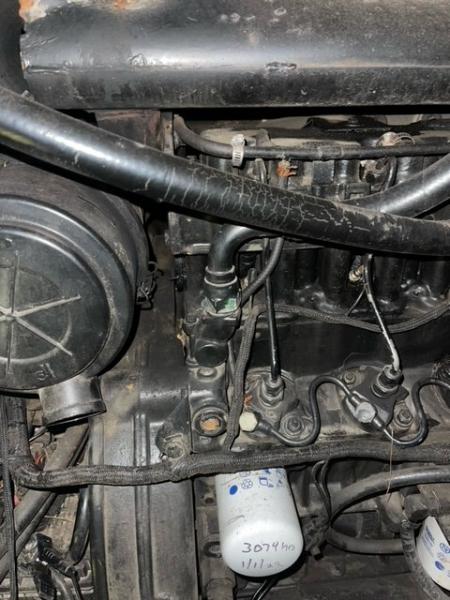
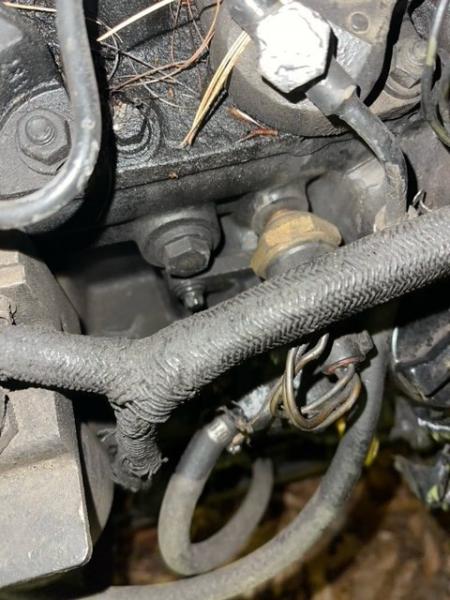
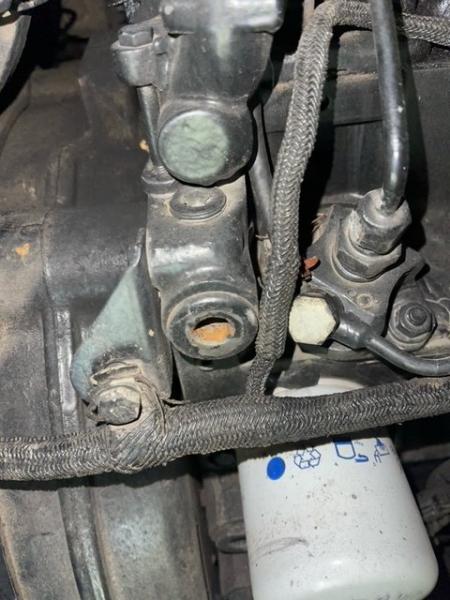
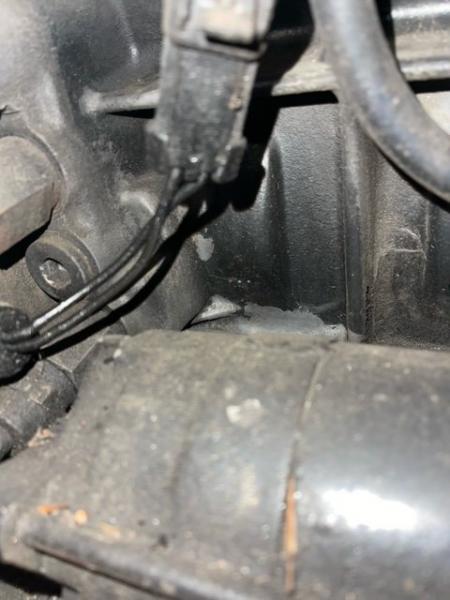
Introduction
Operating a Case skid steer loader in cold climates can present challenges, particularly when starting the engine during freezing temperatures. A block heater is an effective solution to ensure reliable starts and efficient operation in such conditions. This article provides a comprehensive guide on selecting and installing a block heater for your Case skid steer loader.
Understanding Block Heaters
A block heater is an electrical device designed to warm the engine coolant before starting the engine. By preheating the engine, block heaters facilitate easier starts, reduce engine wear, and improve fuel efficiency in cold weather. They are particularly beneficial for diesel engines, which can be more challenging to start in low temperatures.
Selecting the Right Block Heater
When choosing a block heater for your Case skid steer loader, consider the following factors: - Compatibility: Ensure the heater is compatible with your specific Case model and engine type. For instance, the 196803A1 block heater is suitable for various Case models equipped with Cummins 4B and 6B engines.
- Power Rating: Block heaters typically operate at 750 watts, providing sufficient heating for most applications. Verify the power requirements of your loader to select an appropriately rated heater.
- Installation Type: Block heaters can be installed in different ways, such as through frost plugs or inline hose heaters. Choose the installation method that best suits your equipment and technical expertise.
Installation Methods
There are two primary installation methods for block heaters:
- Frost Plug Heater Installation:
- Preparation: Drain the engine coolant to prevent spills.
- Removal: Locate the frost plug on the engine block and carefully remove it.
- Installation: Insert the block heater into the frost plug hole, ensuring a snug fit.
- Sealing: Apply a thin layer of grease around the heater's O-ring to facilitate installation and create a watertight seal.
- Reassembly: Reinstall any components removed during the process and refill the engine coolant.
- Inline Hose Heater Installation:
- Preparation: Select a heater compatible with your radiator hose size.
- Disconnection: Remove the lower radiator hose from the engine.
- Insertion: Cut the hose to fit the heater and insert the heater into the hose.
- Securing: Tighten the hose clamps to secure the heater in place.
- Reconnection: Reattach the hose to the engine and ensure all connections are tight.
Some operators have opted for magnetic heaters, which can be attached directly to the engine block. While these are easier to install, they may not provide the same level of heating efficiency as frost plug or inline hose heaters.
Maintenance and Usage Tips
To maximize the effectiveness and lifespan of your block heater:- Regular Inspection: Periodically check the heater for signs of wear or damage.
- Proper Usage: Avoid starting the engine while the heater is still plugged in, as this can cause damage to the heater and the engine.
- Storage: When not in use, store the heater's power cord in a dry, protected location to prevent damage.
Conclusion
Installing a block heater on your Case skid steer loader is a practical investment to ensure reliable operation in cold weather conditions. By selecting the appropriate heater and installation method, and adhering to proper maintenance practices, you can enhance the performance and longevity of your equipment.
|
|
|
|
| Caterpillar 320CL Excavator Specifications, Features, and Operational Insights |
|
Posted by: MikePhua - 08-15-2025, 12:16 AM - Forum: General Discussion
- No Replies
|
|
The Caterpillar 320CL hydraulic excavator is a powerful and versatile machine widely recognized for its performance, durability, and adaptability in various heavy construction and earthmoving applications. Built on a robust platform with advanced hydraulic systems, the 320CL offers operators exceptional control, comfort, and productivity. This detailed article explores the key specifications, technology features, operational capabilities, maintenance considerations, and practical insights related to the Caterpillar 320CL.
Powerful Engine and Performance
The 320CL is powered by the Cat 3066 T diesel engine, delivering approximately 103 kW (138 hp) net power at the flywheel. This engine meets stringent environmental regulations including US Tier 2 and EU Stage II emissions standards, reflecting Caterpillar’s commitment to reducing emissions without sacrificing performance. The engine’s displacement is 6.37 liters with a bore of 102 mm and stroke of 130 mm, providing reliable torque and fuel efficiency. The system avoids engine derating up to altitudes of 2300 meters (7500 feet), enabling consistent performance in varying conditions.
Advanced Hydraulic System
Equipped with a comprehensive hydraulic system, the 320CL boasts a main implement system flow of about 205 liters per minute (54.2 gallons per minute), with maximum pressures of up to 34,300 kPa (4,980 psi). This enables powerful and precise operation of booms, sticks, buckets, and attachments. The swing mechanism operates smoothly with a speed of 11.5 RPM and torque of 61.8 kN- m (45,611 lb-ft), supporting efficient and controlled continuous rotation. The pilot system enhances operator control with a maximum flow of 41 L/min and pressure of around 4,120 kPa (600 psi).
Hydraulic cylinders offer robust force capacities, with boom and stick cylinders designed for optimal bore sizes and stroke lengths to maximize digging and lifting performance. Digging forces for bucket and stick are rated at approximately 60 kN and 46 kN respectively, aligning with heavy-duty excavation demands.
Undercarriage and Mobility
The 320CL offers flexible undercarriage options including standard (600 mm or 24 inches width tracks) and long undercarriage (up to 800 mm or 32 inches width). Triple grouser shoes provide traction on rough terrain, enabling a maximum travel speed of 5.5 km/h (3.4 mph). The machine’s maximum drawbar pull reaches approximately 196 kN (44,040 pounds), showcasing strong traction for challenging job sites.
Working Ranges and Capacities
The excavator’s working envelope includes a maximum digging depth near 5.84 meters (19 feet 2 inches), reach at ground level of around 8.91 meters (29 feet 2 inches), and maximum cutting height close to 8.9 meters (29 feet 2 inches). Loading heights allow efficient material placement with a maximum loading height near 5.77 meters (18 feet 11 inches) and minimum loading height around 2.28 meters (7 feet 5 inches). The bucket capacity commonly used is around 1.3 cubic meters (1.7 cubic yards), suitable for medium to heavy excavation tasks.
Operator Comfort and Safety
Designed with the operator in mind, the 320CL features a spacious, ergonomic cab offering excellent visibility, noise reduction, and vibration damping for reduced operator fatigue during long shifts. Controls are intuitively placed, and the hydraulic pilot system helps provide smooth and precise machine responsiveness. The cab includes essential features such as climate control, adjustable seating, and improved sound insulation, contributing to enhanced productivity and safety.
Durability and Maintenance
Constructed with heavy-duty materials and components, the 320CL is built for rugged conditions and sustained use. Service refill capacities support extended operating times with a fuel tank capacity of about 400 liters (106 gallons), engine oil and cooling system capacities near 30 liters (7.9 gallons) each, and dedicated reservoirs for hydraulic and swing drives. These parameters facilitate planned maintenance and reduce downtime.
Regular inspection of undercarriage elements, hydraulic lines, and engine systems is recommended to maintain performance. The machine’s design provides easy access to service points, improving turnaround for repairs and routine servicing.
Terminology Explained - Net Power: Power available at the engine flywheel, excluding accessories and losses.
- Pilot System: A hydraulic circuit providing control pressure to control valves with minimal effort.
- Swing Torque: Torque responsible for rotating the excavator upper structure.
- Drawbar Pull: Maximum pulling force the machine can exert for climbing or towing.
- Triple Grouser Shoe: Track shoe design with three ridges to improve traction on uneven or slippery terrain.
- Bore and Stroke: Diameter and length of the engine piston’s movement, influencing displacement and power.
Real-World Application and Insight
Operators working with the Caterpillar 320CL often report its adaptability to diverse excavation tasks such as foundation digging, trenching, and site preparation. In projects requiring prolonged operation under demanding conditions, the 320CL’s robust hydraulic flow maintains smooth cycle times, while its ergonomic cab reduces operator fatigue. For example, urban construction crews appreciate the balance of power and maneuverability the 320CL offers in confined spaces. Additionally, enhanced maintenance access and built-in diagnostics help reduce machine downtime, a critical factor in project schedules.
Summary of Key Features and Specifications- Engine: Cat 3066 T Diesel, 6.37 L displacement, 103 kW (138 hp) net power
- Hydraulic Main Implement Flow: Approximately 205 L/min (54.2 gal/min)
- Maximum Pressure (Implements and Travel): Up to 34,300 kPa (4,980 psi)
- Swing Speed & Torque: 11.5 RPM and 61.8 kN- m (45,611 lb-ft)
- Undercarriage: Standard 600 mm (24 in) to long 800 mm (32 in) triple grouser tracks
- Maximum Digging Depth: About 5.84 m (19 ft 2 in)
- Maximum Reach at Ground Level: Approximately 8.91 m (29 ft 2 in)
- Bucket Capacity: Around 1.3 m³ (1.7 yd³)
- Operating Weight: Approximately 19,700 to 21,000 kg depending on configuration
- Fuel Tank Capacity: 400 L (106 gallons)
- Operator Cab: Spacious, ergonomic with noise and vibration reduction features
Conclusion
The Caterpillar 320CL hydraulic excavator combines proven engine performance, advanced hydraulics, and operator-centric design to deliver efficient and reliable excavation capabilities in a range of construction environments. Its balance of power, reach, maneuverability, and comfort makes it well-suited for both heavy and precise digging tasks. Proper maintenance and understanding of its specifications help maximize its operational lifespan and productivity.
|
|
|
|
| Topcon vs MOBA: A Comprehensive Comparison of Machine Control Systems |
|
Posted by: MikePhua - 08-15-2025, 12:16 AM - Forum: General Discussion
- No Replies
|
|
Topcon: Pioneering Precision in Machine Control - Established in 1932, headquartered in Tokyo, Japan
- Integrates seamlessly with various construction equipment
- Real-time guidance and automation for grading, excavation, and paving
- Key systems:
- MC-Max Excavator System: Automated depth control for excavation, smooth hydraulic interface, increases productivity and precision
- MC-Mobile System: Android tablet interface, IMU tilt sensor, 3D position sensors; designed for mini-excavators, compact track loaders, and skid steer loaders
- Strengths: User-friendly interfaces, robust integration, high precision
MOBA: Innovating with Flexibility and Accuracy- Based in Germany, specializes in electronic control systems for construction machinery
- Known for adaptability and precision across multiple applications
- Key systems:
- MOBA-MATIC II: Dual-grade and slope control system for road construction, precise leveling and slope control
- GS-506 Level Control System: 2D system for graders and dozers, accurate height and slope control, simple and reliable
- Strengths: Flexible retrofitting to various machines, extends equipment lifespan
Comparative Features- System Type
- Topcon: 3D-MC, GNSS-based
- MOBA: 2D/3D, Laser, Ultrasonic
- Interface
- Topcon: Android tablet, touchscreen
- MOBA: Display units, manual controls
- Equipment Compatibility
- Topcon: Wide range of machines
- MOBA: High; excellent retrofitting capability
- Precision Level
- Topcon: High, sub-centimeter accuracy
- MOBA: High, depending on configuration
- Ease of Use
- Topcon: User-friendly, intuitive
- MOBA: Simple, robust design
- Flexibility
- Topcon: Moderate; dependent on equipment
- MOBA: High; easily adaptable to various machines
Considerations for Selection- Project requirements: Topcon excels in high-precision 3D modeling and automation
- Equipment compatibility: MOBA is ideal for retrofitting and extending equipment life
- User experience: Topcon for advanced technological integration; MOBA for operators preferring straightforward controls
Conclusion
Both Topcon and MOBA provide advanced machine control systems tailored to different needs. Topcon offers cutting-edge precision and integration for demanding projects, while MOBA delivers adaptability and cost-effectiveness for maximizing existing machinery. Selection should be based on project demands, machine compatibility, and operator preferences.
|
|
|
|
| Deere 310D Front Bucket Compatibility with 310C Detailed Analysis |
|
Posted by: MikePhua - 08-15-2025, 12:15 AM - Forum: General Discussion
- No Replies
|
|
John Deere’s 310D and 310C backhoe loaders are closely related models widely used in construction and agricultural sites. Many operators and owners wonder if the front loader bucket from a 310D will fit and work properly on a 310C machine. This detailed article explores the key aspects of bucket interchangeability between these models, technical factors influencing compatibility, necessary adaptations, practical advice, and relevant terminology to help users make informed decisions.
Specifications and Design Differences Between Deere 310D and 310C
The Deere 310D backhoe loader is an evolution of the earlier 310C model, featuring enhancements in hydraulic capacity, engine power, and operator comfort, while maintaining similar form factors. - The 310D typically has a slightly upgraded engine delivering around 70–74 hp and improved hydraulic flow rates, supporting more efficient loader and backhoe performance.
- Both machines share similar overall dimensions and loader arm designs, but differences in pin diameters and bucket mount dimensions can affect direct compatibility.
- The 310D loader bucket commonly comes in sizes such as 48 inches width with a capacity around 1.12 cubic yards and weight nearing 490 pounds, designed for a robust hydraulic system delivering up to 38 gallons per minute at high pressures.
- The 310C bucket dimensions are close but may vary slightly in pin spacing, pin diameter, and structural reinforcements reflecting its slightly older design and hydraulic characteristics.
Key Terminology for Bucket Compatibility- Pin Diameter: The thickness of the hinge pins connecting the bucket to the loader arms.
- Pin Centers: The distance between the mounting pins on the bucket or loader linkage.
- Quick Attach System: A mechanism allowing rapid removal and installation of buckets without manual pin removal.
- Hydraulic Flow Rate: The amount of hydraulic fluid the loader’s system can provide, influencing lifting and bucket operation efficiency.
- Lift Capacity: The maximum weight the loader arm and bucket can safely handle.
Bucket Compatibility Considerations and Adaptations- Both the 310C and 310D loaders use a pin-type bucket attachment rather than a quick-attach system, requiring manual pin installation and removal.
- Buckets from 310D generally fit 310C loader arms physically due to overall design similarities; however, minor variations in pin diameter or spacing may require slight modifications such as reaming pin holes or replacing pins to ensure proper fit and function.
- Weight differences should be considered; a heavier 310D bucket placed on a 310C loader might strain hydraulic components if operated at maximum load.
- Hydraulic cylinder sizes and pressures between models differ slightly, so bucket performance (lift speed, control) may vary if the 310D bucket is installed on a 310C machine without hydraulic upgrades.
- Inspecting pivot points, bushing conditions, and ensuring secure pin locking mechanisms is crucial to maintain safe and reliable operation regardless of crossover bucket use.
Practical Tips and Solutions for Bucket Transfer- If the bucket pins do not match exactly, contacting reputable equipment suppliers for replacement pins or sleeves tailored to adapt the bucket to the loader arm is advisable.
- Regularly grease pins and pivot points to minimize wear, particularly if bucket interchange occurs frequently between different machine models.
- Ensure hydraulic fluid specifications and system pressures in the 310C meet or exceed those recommended for operating a 310D bucket.
- Conduct initial tests under light loads to monitor any unusual behavior or performance changes before full operational use.
- Evaluate the bucket’s wear edges and structural integrity; older buckets transferred between machines may require maintenance or reinforcement.
Real-World Example
An operator owning both a 310C and a 310D found that the 310D’s 48-inch front bucket physically fit the 310C loader arm with minor pin bushing adjustments. They replaced worn pins with slightly larger diameter OEM replacements to ensure a tight fit and avoided rapid wear. Although the 310C’s hydraulic system was marginally less powerful, the bucket operated well for typical material handling tasks. This adaptability allowed the operator to reduce equipment downtime by sharing attachments across machines effectively.
Summary List for Deere 310D Bucket Use on 310C Loader- Bucket pin diameter and center spacing should be inspected for fit
- Minor modifications (e.g., reaming, replacing pins/bushings) are often necessary
- Consider hydraulic system capacity differences affecting bucket performance
- Maintain pivot points with proper lubrication to extend life
- Test bucket operation initially under light loads before full use
- Source OEM pins or adaptors for secure and safe attachment
- Monitor for unusual wear or hydraulic strain in crossover applications
Conclusion
The front loader bucket from a Deere 310D generally can be installed and operated on a 310C loader with some attention to pin sizes, spacing dimensions, and hydraulic capacity considerations. Minor mechanical adjustments and preventive maintenance help ensure compatibility and safe operation. Operators benefit from this interchangeability by enhancing equipment flexibility and reducing the need for duplicate attachments.
|
|
|
|
| Case 480E 1986 Loader Backhoe: Parts, Specifications, and Maintenance Insights |
|
Posted by: MikePhua - 08-15-2025, 12:14 AM - Forum: General Discussion
- No Replies
|
|
The 1986 Case 480E is a classic and reliable loader backhoe widely appreciated for its versatility and robust performance in construction, landscaping, and light excavation tasks. Finding parts and maintaining such an older machine can present challenges but understanding its key specifications, components, and maintenance essentials helps ensure continued productivity and longevity. This comprehensive article elaborates on the Case 480E’s critical features, common parts needs, technical terminology, practical maintenance advice, and contextual examples to aid owners and technicians.
Key Specifications of the Case 480E Loader Backhoe - Engine: The 480E is equipped with a Case 57 net horsepower (approximately 42.5 kW) diesel engine, delivering dependable power and fuel efficiency.
- Digging Depth: Backhoe digging depths range between 12 to 15 feet (3.7 to 4.6 meters), depending on arm configurations, allowing for a broad scope of excavation work.
- Loader Lift Capacity: The loader arm can lift approximately 3,170 lbs, which supports material handling for various site jobs.
- Drive and Controls: Available in both 2WD and 4WD configurations with operator-friendly controls and precise hydraulic systems for smooth operation.
- Service Manuals and Components: Service manuals, including detailed instructions for hydraulic systems, engine parts, and electrical components, are essential references for repairs and routine maintenance.
Common Parts for Maintenance and Repair
Owners of the Case 480E typically require replacement parts due to wear from daily operation, including:- Hydraulic Components: Cylinders, hoses, control valves, and pumps are subject to wear and require periodic inspection and replacement.
- Engine Parts: Fuel filters, oil filters, injectors, seals, and gaskets are common service parts to maintain engine efficiency.
- Transmission and Drivetrain: Clutches, torque converters, and drive shafts should be cared for, especially in high-use scenarios.
- Electrical System: Starter motors, alternators, batteries, and wiring connectors can require replacement with age.
- Undercarriage and Tires/Wheels: For 2WD versions, tire replacements and related axle components are standard; track or wheel components need inspection in 4WD editions.
- Buckets and Attachments: Loader and backhoe buckets, teeth, and pins require periodic replacement due to wear or damage.
Technical Terminology- Net Horsepower: The usable engine power available at the flywheel after accessory losses.
- Hydraulic Lift Capacity: The maximum weight the loader arms can safely lift.
- Backhoe Reach/Dig Depth: The horizontal and vertical distances the backhoe arm and bucket can operate.
- Torque Converter: A fluid coupling device that transfers rotating power from the engine to the transmission.
- Relief Valve: A component that regulates hydraulic pressure to protect the system from overload.
- Control Valve: A valve that directs hydraulic fluid flow to various actuators.
Maintenance and Parts Sourcing Advice- Consult Service Manuals: Manuals provide exploded parts diagrams, torque specifications, and step-by-step procedures vital for accurate repairs.
- OEM vs Aftermarket Parts: Using OEM parts ensures compatibility and durability, though quality aftermarket options may be more cost-effective.
- Inspect Hydraulic Components Regularly: Look for leaks, damaged hoses, or worn seals to avoid costly breakdowns.
- Maintain Engine Filters and Fluids: Regular replacement of fuel, air, and oil filters, alongside fresh lubricants, extends engine life.
- Check Wear Items Often: Pins, bushings, and bucket teeth wear quickly and should be replaced proactively to protect structural components.
- Network with Equipment Suppliers: Older model parts may be sourced through specialized dealers, salvage yards, or online marketplaces.
- Consider Refurbishment Options: Rebuilding hydraulic cylinders or remanufacturing engine components can be cost-effective approaches.
Real-World Examples and Context
A landscaping company in the Midwest successfully kept their 1986 Case 480E operational by adhering to a strict parts replacement schedule guided by factory service manuals. They sourced hydraulic hoses and seals from a trusted supplier specializing in legacy equipment, combining OEM and premium aftermarket parts to balance cost and reliability. Strategic maintenance minimized downtime and extended machine usefulness beyond three decades.
In another case, an operator tackling challenging backhoe tasks swapped out loader bucket teeth frequently, recognizing the direct impact of worn teeth on digging efficiency and fuel consumption. Early detection of hydraulic leaks allowed plumbing replacements before system failure occurred, saving costly repairs.
Summary List: Essential Case 480E Parts and Maintenance Focus- Engine-related parts: fuel and oil filters, injectors, seals
- Hydraulic components: hoses, cylinders, pumps, control and relief valves
- Transmission and drivetrain: clutches, torque converter, drive shafts
- Electrical parts: starters, alternators, batteries, wiring
- Undercarriage: tires, wheels, axle components (for 2WD/4WD)
- Attachments: buckets, teeth, pins, bushings
- Service manuals for repair guidance
- OEM and quality aftermarket parts sourcing
- Proactive inspection and replacement of wear items
- Refurbishment as a cost-saving strategy
Conclusion
Maintaining and sourcing parts for the 1986 Case 480E loader backhoe requires a solid grasp of its key mechanical and hydraulic systems, timely maintenance, and access to quality parts sources. Understanding critical specifications, regularly consulting service manuals, and applying practical maintenance measures help ensure this reliable machine continues to deliver effective performance. Combining new parts with refurbishment when appropriate extends the operational lifespan of the 480E, a testament to its robust design and the enduring value of well-maintained legacy equipment.
|
|
|
|
| Komatsu PC200-6 Excavator: Common Issues and Maintenance Insights |
|
Posted by: MikePhua - 08-15-2025, 12:13 AM - Forum: General Discussion
- No Replies
|
|
The Komatsu PC200-6, a mid-sized hydraulic crawler excavator, has been a staple in construction and mining operations since its introduction in the mid-1990s. Renowned for its durability and performance, this model has garnered a reputation for reliability. However, like all machinery, it is not immune to issues. Understanding common problems and their solutions can significantly enhance the machine's longevity and efficiency.
Hydraulic System Performance Degradation
A prevalent concern among PC200-6 operators is diminished hydraulic performance, manifesting as sluggish movements or reduced lifting capacity. This issue often stems from several hydraulic system malfunctions: - Main Pump Pressure Drop: The PC200-6 utilizes a double swash plate axial variable displacement piston pump. If the gap between the piston and cylinder block exceeds 0.02 mm, or if the contact area between the cylinder block and valve plate is less than 90%, the output pressure can fall below the standard 30 MPa, leading to weak operation .
- Control Valve Malfunctions: Issues such as blockages in the PLS feedback circuit, stuck PC-EPC solenoid valves, or malfunctioning PC valve spools can cause the main pump to operate at constant flow, resulting in sluggish machine response .
- Suction Valve Assembly Failures: A worn or poorly sealed suction valve can cause low control oil pressure, affecting the main control valve's spool movement and leading to weak machine performance .
- Main Relief Valve Issues: If the main relief valve's spool is stuck or set to a low pressure, it can cause the system to operate at reduced pressure, limiting the machine's capabilities .
Straight Travel Problems
Another common issue is the inability of the PC200-6 to travel in a straight line. This problem is often due to:- Travel Control Valve Failures: A malfunctioning travel control valve can disrupt the hydraulic flow, causing uneven movement.
- Pressure Compensator Issues: A faulty pressure compensator can lead to uneven hydraulic pressure distribution, affecting straight-line travel .
Electrical System Troubles
Electrical problems can also hinder the PC200-6's performance:- Blown Fuses: A blown fuse, especially the number 1 fuse, can disrupt the power supply to the pump controller, leading to operational failures.
- Wiring Short Circuits: Improperly installed accessories, like heaters or radios, can cause short circuits, leading to fuse blowouts and system malfunctions .
Maintenance Tips
To ensure the longevity and optimal performance of the Komatsu PC200-6:- Regular Hydraulic System Checks: Monitor the main pump's pressure and inspect control valves for any signs of wear or blockage.
- Routine Electrical Inspections: Regularly check fuses and wiring for any signs of damage or wear.
- Scheduled Maintenance: Adhere to the manufacturer's recommended maintenance schedule to prevent potential issues.
Conclusion
While the Komatsu PC200-6 is a robust and reliable machine, understanding and addressing common issues can significantly enhance its performance and lifespan. Regular maintenance and timely interventions are key to keeping the machine in optimal working condition.
|
|
|
|
| Komatsu D65PX-12 Dozer: Specifications, Performance, and Operational Insights |
|
Posted by: MikePhua - 08-15-2025, 12:12 AM - Forum: General Discussion
- No Replies
|
|
The Komatsu D65PX-12 is a powerful and versatile crawler dozer designed to deliver efficient earthmoving and grading performance across challenging terrains. Its robust construction, advanced hydraulic and transmission systems, and comfort-focused operator features make it well-suited for demanding applications such as mesquite grubbing or land clearing, even in harsh environments like central and west Texas. This detailed guide explores the key technical specifications, performance characteristics, operational behavior, and maintenance-related insights to help operators and technicians maximize machine effectiveness.
Engine and Powertrain - The D65PX-12 is powered by a Komatsu S6D125E-2 turbocharged diesel engine producing 142 kW (190 horsepower) at 1,950 rpm.
- Engine torque peaks at approximately 981 N·m (723 lb-ft) at 1,200 rpm.
- The direct injection fuel system features an all-speed mechanical governor and forced lubrication driven by a gear pump, ensuring durability and consistent power delivery.
- Electrical components include a 7.5 kW/24V starter motor, a 35A alternator, and 140 Ah battery capacity (dual 12V batteries).
Hydraulic and Transmission System- The Komatsu Torqflow transmission incorporates a water-cooled, 3-element, 1-stage, 1-phase torque converter along with a planetary gear and multiple-disc clutch. It supports smooth power transfer and exceptional maneuverability.
- The transmission provides three forward speeds up to 10.6 km/h (6.6 mph) and three reverse speeds up to 8.3 km/h (5.3 mph), facilitating efficient operation across various jobsite demands.
- The Hydraulic Steering System (HSS) ensures shock-free, powerful steering by independently varying left and right track speeds, enabling smooth turns, counter-rotation for minimal turning radii, and stable downhill grading.
- Hydraulic cylinders are double-acting piston types offering precise blade control.
Operating Weight and Dimensions- The operating weight of the D65PX-12 crawler dozer is approximately 20,315 kg (44,790 lbs), which includes cab, ROPS canopy, lubricant, coolant, and fuel.
- Standard track width is 915 mm (36 inches), offering a large ground contact area (~9,318 in²), which helps reduce ground pressure to approximately 55.9 kPa (8.1 psi).
- The dozer blade has a straight tilt configuration, with a capacity of 3.69 m³ (4.83 yd³), suitable for consistent and strong material pushing.
- Overall machine dimensions include a width over tracks of about 9.85 feet and a length with blade approximately 18.21 feet, allowing stability and control in tight work areas.
Operator Comfort and Cab Features- The cab features two gull-wing engine side doors for safer and easier servicing and an optional hexagonal, low-noise design with viscous damping mounts, enhancing operator comfort.
- Inside-mounted joystick controls manage tractor movement and blade manipulation intuitively, reducing fatigue during extended use.
- Additional amenities may include cup holders, lunch box holders, rearview mirrors, heaters, and defrosters, ensuring operator support in various weather conditions.
Performance in Demanding Applications- The D65PX-12's hydraulic system delivers 210 liters per minute (55.5 US gallons/min) at a relief valve setting of approximately 2,990 psi (210 kg/cm²), giving strong hydraulic response during heavy dozing tasks like mesquite grubbing.
- Despite frequent turns and heavy attachment weight (e.g., a 2,000 lbs grubber), the hydraulic system maintains stable operating temperatures under typical conditions experienced in areas like central and west Texas.
- Operators have reported some performance fading after prolonged periods of intense maneuvering, though no hydraulic overheating was typical. This can often be managed by temporarily reducing gear or idling briefly to cool the system.
- Comparisons with similar machines, such as a 2004 Caterpillar 7R with upgraded heavy-duty oil cooler, suggest that hydraulic cooling upgrades might improve consistent high-load performance under extreme conditions.
Maintenance and Operational Recommendations- Regular monitoring of hydraulic fluid temperatures and levels during intensive operations is crucial to prevent premature wear or performance degradation.
- Cooling system integrity should be maintained through routine cleaning, inspection of radiators, and replacement or upgrading of hydraulic oil coolers if frequent fluid heating is observed.
- Ensuring track tension adjustment with a grease gun, lubrication of final drives, and maintaining dust seals within pin-to-bushing clearances extends undercarriage service life.
- Operators should be aware that heavy attachments and constant steering loads increase hydraulic demand and may require adjustments in operating practices such as gear selection and speed modulation.
- Scheduling breaks during prolonged high-load operation can help mitigate hydraulic fluid temperature rises and maintain responsive machine behavior.
Technical Terminology- Torque Converter: A hydraulic device transmitting engine power to the transmission, allowing smooth torque multiplication and controlled power delivery.
- Hydraulic Steering System (HSS): System independently powering left and right tracks for smooth turning, counter-rotation, and slope operation without power interruption.
- Relief Valve: Safety valve limiting hydraulic pressure to prevent damage, set to approx. 2,990 psi on this model.
- Ground Pressure: The force exerted by the machine per unit area on the ground, influencing soil compaction and machine mobility.
- Operating Weight: The total machine weight including fluids, attachments, and operator.
- Semi-U Tilt Dozer vs. Straight Tilt Dozer: Different blade configurations affecting material carry and pushing efficiency.
Illustrative Operational Story
A land-clearing operator in central Texas utilizing a Komatsu D65PX-12 equipped with a heavy grubber attachment observed that while steering was responsive at the start of the workday, intense maneuvering for mesquite grubbing caused a slight reduction in hydraulic responsiveness after several hours. The operator noted that idling and shifting to first gear allowed hydraulic temperatures to drop and performance to stabilize, facilitating full-day work without critical issues. This experience reflects normal hydraulic system behavior under heavy use and highlights the importance of managing operating conditions for optimum machine longevity.
Summary List: Key Features and Operational Tips for Komatsu D65PX-12- Engine: Komatsu S6D125E-2 turbocharged diesel, 142 kW (190 HP) @ 1950 rpm
- Operating weight: ~20,315 kg (44,790 lbs) with full fluid and standard cab
- Transmission: Torqflow with torque converter, 3 forward and reverse speeds
- Hydraulic flow: 210 lpm (55.5 gal/min) at 2,990 psi relief valve setting
- Steering: Hydraulic Steering System providing smooth, shock-free turns and counter-rotation
- Blade: Straight tilt with 3.69 m³ (4.83 yd³) capacity, suitable for heavy dozing
- Dimensions: Width over tracks 9.85 ft, length with blade 18.21 ft, track width 915 mm (36 in)
- Operator comfort: Quiet cab option, ergonomic joysticks, heating, and visibility features
- Maintenance: Regular cooling system check, track tension adjustment, fluid monitoring
- Operational advice: Reduce gear and idle briefly during extended heavy maneuvering to maintain hydraulic performance
Conclusion
The Komatsu D65PX-12 is a capable and reliable crawler dozer engineered to perform heavy earthmoving tasks efficiently, even in challenging environments requiring frequent turns and heavy attachments. While hydraulic systems generally maintain stable temperatures, operators should be mindful of extended high-load maneuvering that may lead to temporary performance fade. Proper maintenance, cooling system inspection, and smart operating techniques ensure the machine’s long-term productivity and responsiveness. With its powerful engine, advanced transmission, and operator-focused features, the D65PX-12 remains a strong choice for versatility and durability in construction and land-clearing applications.
|
|
|
|
| Diagnosing Low Power in Yanmar 3TNV84 and Isuzu 3CD1 Engines |
|
Posted by: MikePhua - 08-15-2025, 12:12 AM - Forum: Troubleshooting & Diagnosing
- No Replies
|
|
Experiencing reduced engine performance in compact diesel engines like the Yanmar 3TNV84 and Isuzu 3CD1 can be frustrating. These engines are commonly found in various applications, including construction equipment and agricultural machinery. Understanding the potential causes of low power and the steps to diagnose and resolve them is essential for maintaining optimal engine performance.
Understanding the Engines - Yanmar 3TNV84: This is a 1.5L, 3-cylinder, water-cooled, direct injection diesel engine. It delivers a maximum output of approximately 29.1 kW at 2800 rpm. Common applications include small construction equipment and generators.
- Isuzu 3CD1: Also a 1.5L, 3-cylinder engine, the 3CD1 is known for its reliability in various industrial applications. It shares similar specifications with the Yanmar 3TNV84 but may have different fuel system configurations.
Common Causes of Low Engine Power
- Fuel Delivery Issues
- Fuel Contamination: Old or contaminated fuel can lead to clogging of fuel filters and injectors, restricting fuel flow.
- Air Leaks in Fuel System: Air entering the fuel system can cause inconsistent fuel delivery, leading to power loss.
- Faulty Fuel Injectors: Worn or malfunctioning injectors may not atomize fuel properly, affecting combustion efficiency.
- Air Intake Problems
- Clogged Air Filters: Dirty or clogged air filters can restrict airflow to the engine, reducing power output.
- Turbocharger Issues: For turbocharged variants, a malfunctioning turbocharger can lead to insufficient air intake, impacting engine performance.
- Exhaust Restrictions
- Blocked Exhaust System: A clogged exhaust system can increase backpressure, reducing engine efficiency and power.
- Mechanical Failures
- Compression Loss: Worn piston rings or valves can lead to compression loss, affecting engine power.
- Timing Issues: Incorrect valve timing can disrupt the combustion process, leading to reduced power.
Diagnostic Steps
- Visual Inspection
- Check for visible fuel leaks or signs of contamination.
- Inspect air filters and replace if necessary.
- Examine the exhaust system for blockages.
- Fuel System Check
- Fuel Pressure Test: Measure fuel pressure to ensure it meets manufacturer specifications.
- Injector Testing: Test injectors for proper spray patterns and functionality.
- Fuel Quality Assessment: Check for water or debris in the fuel system.
- Air Intake and Exhaust Evaluation
- Airflow Measurement: Ensure adequate airflow through the air intake system.
- Turbocharger Inspection: For turbocharged models, inspect the turbocharger for proper operation.
- Exhaust Backpressure Test: Measure exhaust backpressure to identify potential blockages.
- Compression and Timing Tests
- Compression Test: Perform a compression test to assess engine health.
- Timing Verification: Check valve timing to ensure it aligns with manufacturer specifications.
Maintenance Tips- Regular Fuel System Maintenance: Replace fuel filters at recommended intervals and use clean, fresh fuel.
- Air Filter Replacement: Change air filters regularly to maintain proper airflow.
- Exhaust System Care: Periodically inspect and clean the exhaust system to prevent blockages.
- Scheduled Engine Overhauls: Follow the manufacturer's recommended maintenance schedule for engine overhauls.
Conclusion
Low power in Yanmar 3TNV84 and Isuzu 3CD1 engines can stem from various issues, including fuel delivery problems, air intake restrictions, exhaust system blockages, and mechanical failures. By systematically diagnosing these areas and adhering to regular maintenance practices, operators can restore engine performance and prevent future power loss. Always consult the engine's service manual for specific diagnostic procedures and specifications.
|
|
|
|
|



