| Welcome, Guest |
You have to register before you can post on our site.
|
| Forum Statistics |
» Members: 74
» Latest member: Tomo
» Forum threads: 47,413
» Forum posts: 47,419
Full Statistics
|
| Online Users |
There are currently 106 online users.
» 0 Member(s) | 97 Guest(s)
Ahrefs, Amazon, Bing, Claude, DotBot, Google, OpenAI, Semrush, Seznam
|
| Latest Threads |
Identifying and Sourcing ...
Forum: Parts , Attachments & Tools
Last Post: MikePhua
01-07-2026, 06:29 PM
» Replies: 0
» Views: 468
|
Cat 931B Brake Parts
Forum: Parts , Attachments & Tools
Last Post: MikePhua
01-07-2026, 06:29 PM
» Replies: 0
» Views: 271
|
Choosing Between Cat 228,...
Forum: General Discussion
Last Post: MikePhua
01-07-2026, 06:28 PM
» Replies: 0
» Views: 489
|
Fix It or Part It Out
Forum: General Discussion
Last Post: MikePhua
01-07-2026, 06:27 PM
» Replies: 0
» Views: 337
|
Hydraulic Delay When Lowe...
Forum: Troubleshooting & Diagnosing
Last Post: MikePhua
01-07-2026, 06:27 PM
» Replies: 0
» Views: 423
|
Bale Chopper and Mulcher ...
Forum: General Discussion
Last Post: MikePhua
01-07-2026, 06:26 PM
» Replies: 0
» Views: 297
|
Mini UC Maintenance
Forum: General Discussion
Last Post: MikePhua
01-07-2026, 06:25 PM
» Replies: 0
» Views: 287
|
Locating Wiring Informati...
Forum: General Discussion
Last Post: MikePhua
01-07-2026, 06:24 PM
» Replies: 0
» Views: 321
|
Case Industrial Brown Sub...
Forum: Parts , Attachments & Tools
Last Post: MikePhua
01-07-2026, 06:23 PM
» Replies: 0
» Views: 263
|
Dirt Work in West Virgini...
Forum: Construction & Urban Infrastructure Forum
Last Post: MikePhua
01-07-2026, 06:23 PM
» Replies: 0
» Views: 356
|
|
|
| Transmission Control Valve Issues on Case 1150B |
|
Posted by: MikePhua - 08-27-2025, 03:40 AM - Forum: Troubleshooting & Diagnosing
- No Replies
|
 |
Machine and Transmission Overview
The Case 1150B is a heavy-duty crawler loader with a robust transmission system that plays a crucial role in powering its drive and auxiliary functions. The transmission control valve is an essential hydraulic component that manages oil pressure and flow to the clutches and torque converter, enabling smooth gear shifting and reliable propulsion. Maintaining proper hydraulic pressure, typically between 250 and 310 psi at operating speeds, is vital for the transmission’s health.
Common Causes of Transmission Pressure Loss
Operators and technicians often encounter issues where the transmission control valve fails to maintain pressure, which can lead to loss of drive, erratic shifting, or slipping clutches. Typical causes include: - Worn or damaged seals or gaskets on the control valve leading to internal leaks.
- Broken or weakened springs inside valves causing improper pressure regulation.
- Malfunctioning charge pumps resulting in inadequate oil supply to the transmission.
- Clogged filters or screens restricting oil flow.
- Contamination or wear in clutch packs and oil control rings.
- Torque converter damage causing internal slippage or fluid degradation.
Diagnostic Procedures
Diagnosing transmission control valve pressure loss involves:- Checking system pressure at various operating rpm with a calibrated gauge.
- Performing stall tests to assess torque converter behavior by measuring rpm under load without track movement.
- Inspecting for leaks and verifying hose and hose fitting integrity especially around the transmission control valve.
- Comparing pressure readings across different gear ranges; consistent low pressure may indicate valve or pump issues, whereas pressure drops isolated to specific gears often suggest clutch or ring wear.
- Testing linkage related to transmission modulators or brake pedals which might interfere with hydraulic pressure.
Observing a pressure that “jumps” between high and low values when shifting levers indicates possible spool valve malfunction or flow restriction within the control valve assembly.
Repair and Maintenance Recommendations- Replace blown or worn gaskets and seals on the control valve assembly promptly.
- Clean or replace transmission filters and ensure no debris is blocking oil flow.
- Renew charge pumps if pressure output is insufficient even when mechanically sound.
- Examine clutch packs and oil rings for wear or damage; replace as necessary.
- Make sure brake pedals and related linkages do not bind or prematurely actuate modulators.
- Utilize factory service manuals which provide crucial schematics, pressure specifications, and step-by-step repair procedures.
Real-World Insights
Case owners report scenarios such as losing transmission pressure to about 130-230 psi, resulting in a free-spinning driveshaft and ineffective forward motion despite input power. Cleaning, gasket replacement, and component swaps sometimes offer short-term fixes, but persistent loss often demands deeper control valve or clutch pack inspection. One user noted how transmission pressure readings would fall sharply with lever movement then spike when shifting back, illustrating the valve spool’s suspect behavior.
Glossary of Terms- Control Valve: Hydraulic component regulating flow and pressure in transmission circuits.
- Charge Pump: Supplies hydraulic pressure necessary for transmission engagement.
- Torque Converter: Fluid coupling that transfers engine power to the transmission.
- Stall Test: Diagnostic method measuring engine rpm versus load to assess converter or clutch condition.
- Clutch Pack: Assemblies engaging gears via friction to transmit power.
Conclusion
Transmission control valve pressure problems in Case 1150B units are multifaceted but revolve around maintaining correct hydraulic pressures and addressing valve integrity. Careful diagnostic testing, proper use of repair manuals, and thorough inspection of pumps, valves, and clutches enable effective resolutions. Observations from operators emphasize the complexity of such failures, often requiring a combination of component replacements and meticulous maintenance to restore reliable machine operation.
|

|
|
| Changing Swing Drive Fluid on the Caterpillar 312CL |
|
Posted by: MikePhua - 08-27-2025, 03:40 AM - Forum: Troubleshooting & Diagnosing
- No Replies
|
|
The Legacy of the Caterpillar 312CL
The Caterpillar 312CL hydraulic excavator is part of the C-Series lineup introduced in the early 2000s, designed to meet Tier 2 emissions standards while improving fuel efficiency and hydraulic performance. Manufactured by Caterpillar Inc., a company founded in 1925 through the merger of Holt Manufacturing and C.L. Best Tractor Co., the 312CL became a popular mid-size excavator for contractors and operators seeking reliability in earthmoving, demolition, and utility work.
With an operating weight of approximately 13.5 metric tons and powered by the Cat 3066T engine (a turbocharged inline-six diesel), the 312CL delivers around 95 horsepower. Its hydraulic system was praised for smooth control and breakout force, and its swing drive mechanism—responsible for rotating the upper structure—was engineered for durability under continuous stress. Caterpillar sold tens of thousands of units globally, with strong adoption in North America, Southeast Asia, and Australia.
Understanding the Swing Drive System
The swing drive, also known as the swing motor or swing gearbox, is a planetary gear system that converts hydraulic energy into rotational motion, allowing the excavator’s upper structure to rotate 360 degrees. It is typically mounted above the swing bearing and below the cab floor, enclosed in a sealed housing filled with lubricating oil.
Key components include: - Swing Motor: A hydraulic motor that drives the planetary gears.
- Planetary Gear Set: Reduces speed and increases torque.
- Swing Bearing: Supports the rotating upper structure.
- Swing Brake: Prevents unwanted rotation during operation or shutdown.
The fluid inside the swing drive lubricates gears and bearings, dissipates heat, and prevents corrosion. Over time, this oil degrades due to heat, contamination, and moisture ingress, making regular fluid changes essential.
Accessing the Drain and Fill Points
On the 312CL, accessing the swing drive for fluid service requires partial disassembly of the lower cab panels. While the operator’s manual may not explicitly mention panel removal, field experience confirms that visibility and access are limited without removing the right-side panel adjacent to the swing motor.
Steps to access the swing drive:- Park the machine on level ground and engage safety locks.
- Remove the right-side lower panel near the swing motor.
- Locate the drain plug at the bottom of the swing drive housing.
- Identify the fill/check plug on the side of the housing.
Operators have noted that the drain plug may be obscured by structural framing or debris, so cleaning the area beforehand is recommended.
Recommended Fluid Type and Capacity
For the 312CL operating in temperate climates like Canada, the recommended lubricant is SAE 30 TO-4 oil. TO-4 is a Caterpillar specification for transmission and drive train oils, designed to maintain friction characteristics and protect against gear wear.
Typical swing drive oil capacity for mid-size excavators ranges from 2 to 4 liters. Always verify with the service manual or measure the drained volume to confirm.
TO-4 oil properties:- High thermal stability
- Anti-wear additives for gear protection
- Compatibility with seals and gaskets
- Water separation capability
Fluid Change Procedure
- Warm up the machine to operating temperature to reduce oil viscosity.
- Shut down the engine and ensure the swing brake is engaged.
- Remove the drain plug and allow oil to fully drain into a clean container.
- Inspect the drained oil for metal particles, water, or sludge.
- Clean the drain plug and reinstall it with a new gasket if needed.
- Fill the swing drive through the side plug until oil reaches the bottom of the threads.
- Reinstall the fill plug and check for leaks after startup.
Common Issues and Field Wisdom
Operators have reported difficulty locating the drain plug due to panel design and lack of visibility. One technician recalled a job in northern Alberta where a frozen swing drive refused to rotate—later traced to water contamination and emulsified oil. After draining nearly 3 liters of milky fluid and refilling with fresh TO-4, the swing resumed normal operation.
Another case involved a contractor in Queensland who extended swing drive life by installing magnetic drain plugs to capture wear particles. Over 5,000 hours, the swing gearbox showed minimal wear during inspection.
Preventive Maintenance Tips- Change swing drive oil every 1,000 to 2,000 operating hours, or annually.
- Use only TO-4 certified oils from reputable brands.
- Inspect breather caps and seals for signs of leakage or contamination.
- Record oil changes and monitor for recurring issues.
Industry Trends and News
In recent years, swing drive failures have become a focus in excavator reliability studies. A 2023 report by a Canadian fleet management firm found that 12% of mid-size excavator downtime was linked to swing system issues—often due to neglected fluid changes or water ingress.
Manufacturers have responded by improving seal designs and offering synthetic TO-4 oils with longer service intervals. Some OEMs now include swing drive sensors to monitor temperature and vibration, alerting operators to potential failures before they occur.
Final Thoughts
Changing the swing drive fluid on a Caterpillar 312CL may seem straightforward, but field experience shows that access challenges and overlooked contamination can lead to costly repairs. By understanding the system, using the correct oil, and following a disciplined maintenance routine, operators can extend the life of their swing gear and maintain smooth rotation under demanding conditions.
The 312CL remains a testament to Caterpillar’s engineering legacy, and with proper care, its swing drive will continue to perform reliably for years to come.
|
|
|
|
| First Impressions and Experience with the Case DL550 Minotaur |
|
Posted by: MikePhua - 08-27-2025, 03:39 AM - Forum: General Discussion
- No Replies
|
|
Introduction to the Minotaur DL550
The Case DL550 Minotaur is a unique compact dozer loader designed to blend the best features of a traditional dozer and a compact track loader (CTL). Powered by a 114-horsepower FPT engine, the DL550 offers robust dozing and precise loading capabilities combined with versatility across many attachments. Its innovative chassis-integrated C-frame with a six-way dozer blade is a breakthrough in delivering true dozer performance within a compact and maneuverable platform.
Performance and Capabilities
Within the first 10 hours of operation, this machine impresses by its: - Operating weight of approximately 18,600 pounds providing stability and traction.
- Rated operating capacity of 5,500 pounds at 50% tipping load, ensuring strong lifting power.
- Massive 12,900-pound bucket breakout force, enabling it to cut through tough soils and material piles effortlessly.
- Vertical lift geometry offering a hinge pin height of about 140 inches that allows effective dump heights and loading ease.
Equipped with heavy-duty steel tracks featuring sealed and lubricated track chains, the DL550 maintains durability in demanding conditions. Its loader arms support high-flow hydraulic attachments, adding to functional flexibility.
Operator Experience
The enclosed cab with ROPS/FOPS Level 1 certification and climate controls (heater and air conditioning) enhances comfort in varying weather. Operators benefit from:- Adjustable electro-hydraulic controls allowing customization of blade tilt, lift, and angle speeds.
- Responsive dozer-style joystick grips for intuitive control.
- Blade shake function to prevent material buildup on the blade during dozing.
- Compatibility with CASE Universal Machine Control systems for precision grading and automated blade guidance.
Ease of switching between dozer and loader configurations through a quick C-frame drop adds significant operational versatility.
Maintenance and Durability
Within the initial hours, maintenance essentials include fluid level checks, track tension adjustment, and inspection of hydraulic couplers. The machine also features CASE SiteWatch™ telematics, enabling remote monitoring of maintenance intervals and machine health.
The machine’s construction and patented technology reflect over two decades of innovation aimed at maximizing productivity while minimizing downtime.
Industry Impact and Market Position
The Minotaur DL550 fills a unique niche by combining the power and blade control of a dozer with the attachment versatility of a loader. It challenges the traditional compact track loader segment by introducing integrated tools and systems otherwise not found on basic models. Its design and technology have earned recognition for redefining jobsite efficiency with over 29 patents pending or granted.
Glossary of Terms- C-frame: A chassis-integrated frame allowing dozer blade mounting with enhanced stability.
- Breakout Force: The force exerted by the bucket to break material free.
- Rated Operating Capacity (ROC): The recommended safe lifting load at 50% tipping capacity.
- Blade Shake: A vibration function that dislodges stuck material on the blade.
- ROPS/FOPS: Roll-over and falling object protection system certifications.
Conclusion
The initial run with the Case Minotaur DL550 reveals a compact powerhouse that delivers astonishing dozing force and loader versatility. Designed for the modern jobsite needs, it impresses with operator comfort, system control sophistication, and multi-functionality. With its advanced hydraulics, telematics, and rugged build quality, the DL550 sets a new benchmark for compact dozer loaders, promising both productivity and durability for construction professionals.
|
|
|
|
| How Do You Accurately Determine Equipment Value |
|
Posted by: MikePhua - 08-27-2025, 03:38 AM - Forum: General Discussion
- No Replies
|
|
The Elusive Nature of Heavy Equipment Valuation
Unlike automobiles or consumer electronics, heavy equipment lacks a standardized pricing guide akin to Kelley Blue Book. While some services like GreenGuide once attempted to fill that gap, their pricing models became restrictive and outdated. Today, most professionals rely on a blend of auction data, dealer listings, and field experience to assess value. This decentralized approach reflects the complexity of the market—where geography, machine condition, brand reputation, and even paint color can influence price.
Terminology Clarification
- Retail Asking Price: The price a dealer lists for a machine, often negotiable and higher than market average
- Auction Price: The final sale price at public auctions, typically lower due to competitive bidding
- Depreciation Curve: The rate at which a machine loses value over time, influenced by usage and model popularity
- Residual Value: The estimated worth of a machine at the end of its useful life
- Tier 4 Compliance: Emissions standards that affect resale value due to maintenance complexity
Using Auction Data as a Benchmark
One of the most reliable sources for real-world pricing is auction history. Companies like Ritchie Bros. and Yoder & Frey publish past sale results, allowing buyers and sellers to compare similar machines across years and regions. For example, a 2012 Caterpillar 320E with 6,000 hours might sell for $78,000 in Texas but only $65,000 in Ontario due to demand fluctuations and transport costs.
Auction data reflects actual buyer behavior, not dealer optimism. However, it’s important to adjust for: - Machine condition (undercarriage wear, hydraulic leaks, cab damage)
- Attachments included (thumbs, buckets, quick couplers)
- Maintenance history and service records
- Local market saturation
Online Marketplaces and Regional Variability
Web platforms like MachineryTrader and IronPlanet offer searchable listings with filters for year, hours, location, and price. These sites help identify trends, such as:- Komatsu excavators holding value better in the Pacific Northwest
- Deere backhoes selling faster in the Midwest due to dealer support
- Volvo wheel loaders depreciating faster in Tier 4 markets due to DEF system concerns
One foreman in Montana noted that his 2008 Case 580M sold for $42,000 locally, while similar units listed for $35,000 in southern states. The difference stemmed from regional demand and the scarcity of midsize backhoes in his area.
Appraisal Techniques and Field Wisdom
Experienced appraisers often use a layered approach:- Start with auction averages for the model and year
- Adjust for hours using a depreciation factor (e.g., $3–$5 per hour over baseline)
- Add or subtract based on condition, attachments, and emissions compliance
- Factor in transport costs and local demand
For example, a 2010 Komatsu PC200LC with 8,000 hours might have a baseline value of $60,000. If it includes a hydraulic thumb and has a recently rebuilt pump, the value could rise to $70,000. Conversely, if the undercarriage is at 20% life and the cab has cracked glass, the price may drop to $50,000.
Challenges with Emissions and Legacy Machines
Tier 4 Final machines—required in many regions since 2015—can complicate resale. Their DEF systems and electronic controls increase maintenance costs and reduce appeal in remote areas. As a result, older Tier 3 machines often retain value longer than expected.
One contractor in Alberta sold his 2006 Hitachi ZX200 for nearly the same price he paid in 2012, citing strong demand for non-Tier 4 units in oilfield work. Meanwhile, newer machines with low hours sat unsold due to DEF-related failures and parts shortages.
Recommendations for Buyers and Sellers
To accurately assess equipment value:- Use auction databases to establish a pricing baseline
- Compare listings on multiple platforms for regional trends
- Inspect machines in person or request detailed photos and service logs
- Consult with local dealers or mechanics for condition assessments
- Consider emissions compliance and transport logistics
For sellers, presenting a clean machine with full documentation can increase value by 10–15%. For buyers, patience and timing—especially during seasonal slowdowns—can yield better deals.
Conclusion
Valuing heavy equipment is both an art and a science. While no universal guide exists, a combination of auction data, online listings, and field expertise can provide a reliable estimate. Whether buying or selling, understanding the nuances of machine condition, regional demand, and emissions regulations is key to making informed decisions. In a market shaped by iron, oil, and opportunity, knowledge remains the most valuable tool of all.
|
|
|
|
| Wiring and Electrical System of Takeuchi TL130 |
|
Posted by: MikePhua - 08-27-2025, 03:37 AM - Forum: General Discussion
- No Replies
|
|
Overview and Machine Background
The Takeuchi TL130 is a robust compact crawler loader designed for construction, landscaping, and agricultural applications. Renowned for its reliability and versatility, the TL130 combines powerful diesel engines with an advanced hydraulic system and an efficient electrical control module that enables smooth operation and precise monitoring. Serial numbers beginning around 21300004 indicate machines manufactured in the early 2000s, continuing Takeuchi’s tradition of building well-regarded compact loaders.
Electrical System and Fuel Gauge Monitoring
The electrical wiring of the TL130 integrates various key components including ignition switches, starter relays, sensors, gauges, and control panels. Of particular interest is the wiring related to the fuel gauge monitor, which provides real-time fuel level information to the operator for efficient jobsite management. - The fuel gauge is connected through a dedicated wiring harness linked to a fuel level sensor located in the tank.
- Electrical signals processed by the gauge relay and cluster translate sensor data into readable fuel levels on the operator’s display.
- Components are protected by inline fuses and secured using plugs and harness clips to prevent disconnections or electrical shorts.
- Wiring diagrams from shop manuals offer detailed color codes for each wire, connector pinouts, and routing paths to aid troubleshooting.
Wiring Diagram and Troubleshooting
The official Takeuchi TL130 workshop and service manuals offer comprehensive wiring diagrams typically covering:- Starting circuit and ignition wiring.
- Lighting and auxiliary electrical systems.
- Sensor and gauge wiring including the fuel gauge monitor.
- Safety interlocks and shutdown circuits.
Understanding these diagrams allows technicians to isolate faults such as poor connections, broken wires, or defective gauges. For example, a common issue with fuel gauge malfunction could stem from:- Loose or corroded connections at the sensor or gauge.
- Faulty fuel level sender unit.
- Damaged wiring harness between sensor and gauge cluster.
Maintenance and Recommendations
Routine inspection of the electrical harness and connectors is essential. Recommended maintenance steps include:- Regular cleaning and corrosion protection of connectors.
- Securing harnesses away from heat sources, sharp edges, or moving parts.
- Using dielectric grease on terminals to reduce oxidation.
- Replacing damaged wiring or plugs with OEM compatible parts.
Operators should refer to the serial number and corresponding manual editions when sourcing wiring information due to variations in specifications over production years.
Glossary of Key Terms- Wiring Harness: Bundled electrical cables providing organized routing of power and signals.
- Gauge Cluster: Instrument panel displaying critical operating data including fuel levels.
- Relay: Electromechanical switch controlled by low current to operate high-current circuits.
- Fuel Level Sender: Sensor detecting fuel quantity typically via float mechanism.
- Fuse: Safety device in electrical circuits that interrupts flow when current is too high.
Conclusion
The Takeuchi TL130’s electrical system, including the fuel gauge wiring, exemplifies engineering that balances functionality with serviceability. Armed with the correct wiring diagrams and maintenance knowledge, operators and technicians can ensure accurate fuel monitoring and reliable machine operation. The detailed wiring schematics available in service manuals empower effective troubleshooting and upkeep, essential for maximizing uptime and prolonging the life of this durable compact loader.
|
|
|
|
| Cat TH83 No Movement |
|
Posted by: MikePhua - 08-27-2025, 03:37 AM - Forum: Troubleshooting & Diagnosing
- No Replies
|
|
Machine Development and Manufacturer Context
The Cat TH83 telescopic handler belongs to Caterpillar’s respected lineup of telehandlers produced during the late 1990s through the early 2000s. This model gained traction among rental fleets and construction companies for its solid build, efficient hydraulics, and versatile reach. Powered by the Cat 3054T turbocharged diesel engine delivering approximately 101 hp (75 kW), the TH83 could lift up to 8,000 lb and reach heights up to 41 ft (12.5 m) . Caterpillar—the original developer—built its reputation over decades on durable industrial machinery, and the TH line was a continuation of that legacy in compact telehandler form.
Key Specifications - Engine: Cat 3054T, ~101 hp net, displacement ~243 in³ (4 L), torque ~269 lb-ft .
- Lifting Performance:
- Max lift height ≈ 41 ft
- Forward reach ≈ 27 ft
- Rated load capacity ≈ 8,000 lb; at full lift ≈ 7,000 lb; at full reach (stabilizers down) ≈ 3,890 lb .
- Weights and Dimensions:
- Operating weight ≈ 22,872 lb (10,375 kg)
- Width ≈ 8 ft; height ≈ 8 ft; length ≈ 19 ft 2 in; wheelbase ≈ 9.75 ft; turning radius over tires ≈ 12.6 ft .
- Transmission: Full-powershift with 4 forward and 3 reverse speeds; max speed ≈ 20 mph forward, ~14 mph in third gear .
Understanding the No-Movement Issue
Loss of drive in a TH83 can stem from electrical, hydraulic, or mechanical faults. Technicians with field experience have identified weak shifter assemblies, faulty wiring harnesses, and transmission control module (TC) issues as frequent culprits . In one case, gear solenoids were not receiving power due to transmission control failure, leading to gearbox damage .
Terminology Notes- Transmission Control (TC): Electronically oversees gear selection and clutch engagement via solenoids.
- Solenoids: Devices that actuate hydraulic clutches; switching gears relies on correct signals.
- Neutralizing relay/diode: Part of circuitry ensuring transmission stays neutral when brakes are applied—failure here can disable drive.
- Pressure test points: Designated ports on the transmission used to measure clutch and system pressure. Proper pressure validates hydraulic operation. .
Troubleshooting and Repair Steps- Electrical Diagnosis:
- Check continuity from shifter and brake switches to the TC.
- Inspect the relay and diode responsible for neutralization. Replace if faulty. .
- Review wiring harness for damage, especially if a new TC didn’t fix the issue. .
- Hydraulic Verification:
- Measure regulated system pressure at test point (2); standard is ~260 psi (±20 psi).
- Check pressure at forward low and reverse clutch points if specific gears won’t engage. .
- Mechanical Checks:
- Ensure shifter linkage is not binding or misaligned.
- Pull the TC’s fault codes if possible for more insight.
Field Anecdote
On a warehouse jobsite, a TH83 simply refused to move forward after a long idle break. The operator first suspected hydraulics but found zero pressure anomalies. Swapping the clutch control solenoids had no effect. The breakthrough came when the wiring harness and diode were tested—finding a dead diode in the neutralizing relay circuit. Bypassing and replacing that fixed drive response immediately, back to full function in under two hours.
Practical Recommendations- Keep wiring diagrams and electrical test tools handy when diagnosing.
- Regularly inspect the harness near the shifter and transmission for wear and damage.
- Calibrate TC behavior after repairs—monitor gear switching and ensure neutral locking functions properly.
- Document absences of pressure and electrical continuity readings for trend tracking.
Summary
A Cat TH83 telehandler that won’t move often unveils complex interplay between electrical, hydraulic, and mechanical subsystems. Understanding the robust specs—including its powerful Cat 3054T engine, full-powershift transmission, and joystick controls—helps isolate faults effectively. By combining pressure testing, electrical diagnostics (especially relays and wiring), and field insight, operators and technicians can accurately pinpoint the cause of motion failure. With methodical troubleshooting and proper component checks, even elusive no-drive conditions can become solvable with minimal downtime.
|
|
|
|
| Hydraulic Hoses in Heavy Equipment |
|
Posted by: MikePhua - 08-27-2025, 03:36 AM - Forum: Parts , Attachments & Tools
- No Replies
|
|
Overview and Importance
Hydraulic hoses are critical components in heavy equipment, responsible for transmitting pressurized hydraulic fluid to actuators, motors, and various components for motion and force generation. Their flexible design allows machinery to perform dynamic movements while maintaining fluid containment under extreme pressures, temperatures, and environmental conditions. Proper hose selection and maintenance are vital to system reliability and safety.
Types of Hydraulic Hoses
Hydraulic hoses are classified primarily by their pressure ratings, construction, and application: - High-Pressure Hoses: Typical pressure ranges from 3,000 to 6,000 psi are suitable for demanding applications such as hydrostatic transmissions and mobile construction equipment. Examples include SAE 100R15 (6,000 psi) and SAE 100R13 (5,000 psi) hoses, reinforced by multiple wire braids or spirals for maximum strength.
- Medium-Pressure Hoses: Often reinforced by single or double wire braids, these hoses typically work under 1,500 to 3,000 psi. They are used in agricultural equipment, industrial hydraulics, and machine tools.
- Low-Pressure Hoses: Operating below 1,000 psi, commonly textile-reinforced, they serve secondary functions such as return lines or lubrication circuits.
- Thermoplastic Hoses: Made of advanced polymers, offering flexibility, chemical resistance, and lighter weight for specific high-performance applications.
Construction Characteristics
Hydraulic hoses consist of several layers:- Inner Tube: Resistant to the type of hydraulic fluid used (e.g., petroleum-based or biodegradable).
- Reinforcement Layer: Steel wire braid or spiral wire layers provide pressure resistance and burst protection.
- Outer Cover: Protects against abrasion, weather, chemicals, and temperature extremes.
Laylines printed on hoses convey important specifications like manufacturer, hose series, size, pressure rating, and compliance with standards such as SAE J517 or ISO 18752. Safety factors commonly range around 4:1 for standard hoses, meaning a hose rated at 3,000 psi can withstand up to 12,000 psi before bursting.
Key Specifications and Selection Criteria
Selecting the right hose requires consideration of:- Pressure rating: Must exceed operating pressure with a safety margin.
- Diameter: Inside diameter (ID) affects flow rates; common sizes range from 1/4 inch to 2 inches.
- Temperature range: Operating temperature must match conditions (typically -40°C to +100°C).
- Fluid compatibility: Hose materials must resist hydraulic fluids and environmental chemicals.
- Flexibility and bend radius: Important for installations needing tight bends or movement.
Applications and Industry Examples
Hydraulic hoses find uses across industries:- Construction and mining equipment requiring rugged, abrasion-resistant hoses.
- Agricultural machines needing corrosion and chemical resistant hoses for field use.
- Industrial machinery demanding precision fluid transfer.
- Specialized hoses for oilfield drilling (Kelly hoses), concrete pumps, and water suction in mining.
Maintenance and Safety
Regular inspection is critical:- Check for external wear, cracks, bulges, or leaks.
- Replace hoses showing signs of damage or aging.
- Maintain clean hydraulic fluid to prolong hose life.
- Install protective guards or sleeves on hoses exposed to abrasion.
- Use hoses meeting appropriate industry standards for reliability.
Glossary of Terms- Burst Pressure: The maximum pressure a hose can withstand before failure.
- Reinforcement: Wire layers inside the hose that provide strength.
- Layline: Markings printed on the hose with key data.
- Safety Factor: Ratio of burst pressure to maximum working pressure.
- Thermoplastic Hose: A hose made from plastic materials rather than rubber, offering advantages in flexibility and weight.
Conclusion
Hydraulic hoses are indispensable in the function of mobile and stationary hydraulic systems seen in heavy equipment. Understanding the types, construction, and specifications of hydraulic hoses supports better selection, safer operations, and prolonged equipment life. Innovations like multi-spiral reinforcement and thermoplastic materials continue to improve hose performance, meeting the rigorous demands of modern machinery.
|
|
|
|
| Samsung SE210 LC-3 Excavator A Forgotten Workhorse with Volvo DNA |
|
Posted by: MikePhua - 08-27-2025, 03:36 AM - Forum: General Discussion
- No Replies
|
|
The Origins of the SE210 LC-3
The Samsung SE210 LC-3 excavator was part of a short-lived but technically impressive lineup produced by Samsung Heavy Industries during the 1990s. Before its acquisition by Volvo Construction Equipment in 1998, Samsung had developed a range of hydraulic excavators that were widely respected in Asia, Europe, and North America for their reliability and cost-effectiveness. The SE210 LC-3, a 21-ton class machine, was designed for general earthmoving, trenching, and light demolition work.
Samsung’s construction equipment division was originally an offshoot of its shipbuilding and heavy industry operations. By the mid-1990s, the company had sold thousands of excavators globally, with the SE210 LC-3 being one of its most popular mid-sized models. After the acquisition, many of its design principles were absorbed into Volvo’s early excavator offerings, particularly the EC210 series.
Terminology Clarification
- LC (Long Carriage): Indicates an extended undercarriage for improved stability and lifting capacity
- Wiring Harness: A bundled set of electrical wires and connectors that distribute power and signals throughout the machine
- Service Manual: A technical document detailing maintenance procedures, specifications, and troubleshooting steps
- Engine Compartment Harness: The portion of the wiring harness specifically routed around the engine bay, often exposed to heat and vibration
- Dismantling Yard: A facility where used machines are disassembled for parts resale
Common Issues and Parts Availability
As these machines age, one of the most frequent challenges is sourcing electrical components—especially the engine compartment wiring harness. Due to exposure to heat, oil, and vibration, these harnesses often degrade, leading to intermittent faults or complete electrical failure. Unfortunately, OEM parts are no longer manufactured, and aftermarket support is limited.
Operators seeking replacements often turn to salvage yards or dismantling operations. In one case, a contractor located a dismantled SE210 LC-3 in New Zealand, though shipping costs and customs logistics posed additional hurdles. Another technician recommended checking compatibility with early Volvo EC210 models, which inherited much of Samsung’s electrical architecture.
Retrofit Strategies and Wiring Solutions
When original harnesses are unavailable, retrofitting becomes a viable option. This involves: - Mapping the original wiring layout using a service manual or visual inspection
- Fabricating a custom harness using heat-resistant wire and sealed connectors
- Installing protective sheathing to prevent abrasion and fluid exposure
- Testing each circuit for continuity and voltage drop before final installation
Some operators have successfully used universal wiring kits designed for agricultural equipment, adapting them to fit the SE210’s layout. While labor-intensive, this approach can restore full functionality without relying on rare OEM parts.
Service Manual Importance and Technical Support
Having access to a service manual is essential for any restoration or repair effort. These manuals include:- Hydraulic schematics
- Electrical diagrams
- Torque specifications
- Fluid capacities and intervals
- Diagnostic procedures
In the absence of official manuals, some technicians have compiled their own guides based on field experience. One operator in South Carolina documented his rewiring process and shared it with local repair shops, helping others keep their SE210 units operational.
Volvo Influence and Cross-Model Insights
After acquiring Samsung’s construction division, Volvo integrated many of its design elements into the EC series. The EC210, for example, shares structural similarities with the SE210 LC-3, including boom geometry, undercarriage dimensions, and hydraulic pump layout. This opens the door for parts interchangeability in areas like:- Hydraulic cylinders
- Track rollers and idlers
- Cab components
- Engine mounts and brackets
However, electrical systems diverged more significantly after 2000, so caution is advised when sourcing electronic parts.
Recommendations for SE210 LC-3 Owners
To maintain or restore a Samsung SE210 LC-3:- Inspect all wiring for heat damage and brittle insulation
- Replace harnesses with custom-built equivalents if OEM parts are unavailable
- Source parts from dismantled Volvo EC210 units where compatible
- Use protective sleeving and grommets to extend harness life
- Acquire or reconstruct a service manual for accurate reference
For long-term reliability, consider upgrading vulnerable systems such as the alternator, starter motor, and fuse box with modern equivalents. These components often fail due to age and can be replaced with off-the-shelf parts from industrial suppliers.
Conclusion
The Samsung SE210 LC-3 may no longer be a household name in the excavator world, but its legacy lives on through Volvo’s continued success and the dedication of operators who keep these machines running. With thoughtful retrofitting, creative sourcing, and a bit of field ingenuity, the SE210 LC-3 remains a capable and reliable tool for earthmoving professionals who value mechanical simplicity and robust design.
|
|
|
|
| Hydraulic Oil Change Interval Essentials for Heavy Equipment |
|
Posted by: MikePhua - 08-27-2025, 03:35 AM - Forum: Troubleshooting & Diagnosing
- No Replies
|
|
Importance of Hydraulic Oil Maintenance
Hydraulic oil serves as the lifeblood in heavy machinery hydraulic systems, lubricating moving parts, transferring power, cooling components, and protecting against corrosion. Over time, hydraulic oil degrades due to contamination, heat exposure, and mechanical stress. Maintaining clean, quality hydraulic oil is essential to ensure hydraulic system efficiency, prolong equipment lifespan, and prevent costly breakdowns.
Recommended Change Intervals
Hydraulic oil change intervals vary based on equipment type, operating environment, and manufacturer guidelines. Common recommendations include: - For construction equipment such as excavators and bulldozers, oil changes are suggested every 500 to 1,000 hours of operation.
- Agricultural machinery tends to follow similar intervals of about 1,000 hours or annually, whichever comes first.
- Manufacturing or continuous operation machines might extend flexibility up to 2,000 hours between oil changes depending on conditions.
Adhering to these intervals helps protect components from abrasive particles, moisture contamination, and chemical breakdown.
Signs Hydraulic Oil Needs Replacement
Monitoring oil condition through visual inspection and laboratory analysis can prompt earlier oil changes. Key signs include:- Discoloration: Dark brown or black hues indicate oxidation and contamination.
- Contamination: Presence of water, dirt, or metal particles can damage hydraulic components.
- Viscosity Changes: Oil that becomes too thick or thin loses lubricating properties.
- Performance Issues: Symptoms like sluggish hydraulic response, overheating, or abnormal noises often signal degrading oil.
These indicators, if detected, suggest immediate oil replacement is warranted regardless of hours logged.
Filter and Fluid System Maintenance
Oil filters play a crucial role in maintaining oil cleanliness by trapping contaminants. Regular filter replacement is necessary alongside oil changes. Neglecting filters accelerates hydraulic wear and shortens oil life.
Cleaning or inspecting tank screens is recommended during oil changes to remove trapped debris. Using manufacturer-recommended oils, such as 10W TO-4 oils (e.g., Shell Spirax), ensures compatibility and optimal system performance across typical ambient temperatures (20–85°F).
Examples and Practical Advice
A notable case involved a Cat 311B owner planning a pre-season hydraulic oil replacement after 6,000+ hours of operation. Despite limited oil sample history, they opted to drain, refill with 10W TO4 oil, replace all filters, and clean the tank screen. Their approach aligned with best practices for extended machine life under moderate temperature conditions.
Technicians advise:- Flushing the system thoroughly if oil sample analysis indicates contamination or questionable oil quality.
- Checking oil level sensors and replacing faulty units to maintain accurate monitoring.
- Inspecting hydraulic hoses, fittings, and seals during maintenance for leaks or wear.
Glossary of Key Terms- Hydraulic Oil: Specialized fluid transmitting power in hydraulic machinery.
- Viscosity: Measure of fluid’s resistance to flow, critical for maintaining lubrication.
- Oil Filter: Component filtering out contaminants from hydraulic fluid.
- Contamination: Presence of foreign particles or moisture degrading the oil.
- TO-4 Oil: Classification of hydraulic oil meeting certain performance standards for construction equipment.
Conclusion
Regular hydraulic oil changes, guided by hour-based intervals and oil condition indicators, are indispensable to heavy equipment maintenance. Combined with diligent filter changes and system inspection, they form the cornerstone of hydraulic system health. Choosing the right oil grade and following manufacturer recommendations safeguard machinery performance across operating conditions, preventing premature wear and unexpected downtime—key to a machine’s reliability and longevity.
|
|
|
|
| BMP Hydraulic Quick Change |
|
Posted by: MikePhua - 08-27-2025, 03:35 AM - Forum: Parts , Attachments & Tools
- No Replies
|
|
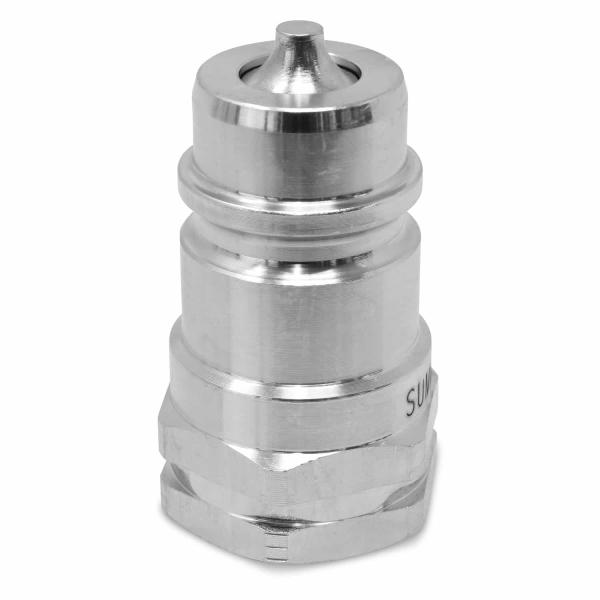
Attachment Innovation Legacy
The BMP hydraulic quick-change (also known as BMP pin-grabber quick coupler) emerged from the growing need for faster, safer attachment swapping in the mid-1990s heavy equipment market. BMP, a specialist in construction and demolition tool interfaces, built a reputation supplying durable mounting systems that allowed operators to switch buckets, breakers, compactors, and rippers with minimal manual intervention. These systems helped contractors reduce downtime and improve site flexibility.
Design Overview And Compatibility
The BMP quick-change system uses hydraulically actuated locking pins that engage attachment lugs with firm, repeatable clamping force. Typically mounted on excavator or backhoe booms, the mechanism aligns the coupler’s front bosses into the attachment saddles, then retracts a wedge or activates hydraulic cylinders to lock it. The result is a secure, one-touch swap done from the cab.
These BMP couplers are made to interface with BMP-compatible attachments—common on mid-size machines—and sold extensively via used equipment dealers. Listings show BMP hydraulic quick-change units priced around $2,400, with used examples often discounted to roughly $2,160.
Terminology Explained - Quick-change (Pin-Grabber): Attachment interface allowing hydraulic lock/unlock without digging out pins manually.
- Coupler bosses and saddles: Matching protrusions and recesses on coupler and attachment for alignment.
- Wedge bar: Internal locking mechanism activated hydraulically.
- Hydraulic actuation: Uses boom hydraulic circuits to power the locking movement remotely.
Operational Benefits And Parameters
BMP quick-change systems offer significant jobsite impact:- Reduces attachment swap time from ~10–15 minutes to under 1 minute.
- Improves safety by minimizing manual pin handling at ground level.
- Enhances versatility across tasks—switching from bucket to breaker to compactor quickly supports mixed-activity jobs.
Practical Trade-offs And Considerations- Initial installation requires precise alignment and robust hydraulic plumbing.
- System weight (often 500–600 lb) slightly impacts machine balance.
- Requires compatible attachments or modification of existing ones.
- Hydraulic integrity is critical—any leak in the coupler line risks failure to lock.
Field Anecdote
On a demolition project downtown, a contractor retrofitted a BMP quick-change onto a 12-ton excavator. With only one operator and a tight schedule, they needed to swap between breaker, grapple, and bucket multiple times each day. Using the BMP system, they accomplished three tool changes in under five minutes total—versus over an hour with conventional pin swaps—accelerating the project and reducing operator fatigue significantly.
Recommendations For Buyers And Operators- If switching attachments more than twice per day, invest in a hydraulic quick-change—the labor savings and reduced delays justify the cost.
- Confirm compatibility—BMP couplers require matching attachment lugs. If mixing brands, budget for adaptation plates or coupler retrofits.
- Ensure hydraulic flow and pressure specs match the coupler's requirements—consult machine and coupler manuals.
- Inspect regularly—specifically measuring for worn locking wedges, checking hydraulic hoses, and testing reliable lock signals.
- Secure a dealer-stocked coupler or used unit to lower costs; used BMP couplers in working condition often sell around $2,160. New units may cost notably more.
Summary
The BMP hydraulic quick-change system represents a powerful productivity upgrade for excavators and backhoes—enabling rapid attachment swaps from the cab via hydraulic actuation. Its design ensures safety, speed, and versatility on jobs requiring multiple tools. With compatible attachments and proper maintenance, BMP couplers pay dividends in efficiency and ease of use for demanding construction, demolition, and excavation work.
|
|
|
|
|



