| Welcome, Guest |
You have to register before you can post on our site.
|
| Forum Statistics |
» Members: 74
» Latest member: Tomo
» Forum threads: 47,413
» Forum posts: 47,419
Full Statistics
|
| Online Users |
There are currently 106 online users.
» 0 Member(s) | 97 Guest(s)
Ahrefs, Amazon, Bing, Claude, DotBot, Google, OpenAI, Semrush, Seznam
|
| Latest Threads |
Identifying and Sourcing ...
Forum: Parts , Attachments & Tools
Last Post: MikePhua
01-07-2026, 06:29 PM
» Replies: 0
» Views: 468
|
Cat 931B Brake Parts
Forum: Parts , Attachments & Tools
Last Post: MikePhua
01-07-2026, 06:29 PM
» Replies: 0
» Views: 271
|
Choosing Between Cat 228,...
Forum: General Discussion
Last Post: MikePhua
01-07-2026, 06:28 PM
» Replies: 0
» Views: 489
|
Fix It or Part It Out
Forum: General Discussion
Last Post: MikePhua
01-07-2026, 06:27 PM
» Replies: 0
» Views: 337
|
Hydraulic Delay When Lowe...
Forum: Troubleshooting & Diagnosing
Last Post: MikePhua
01-07-2026, 06:27 PM
» Replies: 0
» Views: 423
|
Bale Chopper and Mulcher ...
Forum: General Discussion
Last Post: MikePhua
01-07-2026, 06:26 PM
» Replies: 0
» Views: 297
|
Mini UC Maintenance
Forum: General Discussion
Last Post: MikePhua
01-07-2026, 06:25 PM
» Replies: 0
» Views: 287
|
Locating Wiring Informati...
Forum: General Discussion
Last Post: MikePhua
01-07-2026, 06:24 PM
» Replies: 0
» Views: 321
|
Case Industrial Brown Sub...
Forum: Parts , Attachments & Tools
Last Post: MikePhua
01-07-2026, 06:23 PM
» Replies: 0
» Views: 263
|
Dirt Work in West Virgini...
Forum: Construction & Urban Infrastructure Forum
Last Post: MikePhua
01-07-2026, 06:23 PM
» Replies: 0
» Views: 356
|
|
|
| What Is the Best Middle-Class Excavator for Versatility and Reliability |
|
Posted by: MikePhua - 08-27-2025, 03:28 AM - Forum: General Discussion
- No Replies
|
 |
Defining the Middle-Class Excavator Segment
In the global earthmoving industry, middle-class excavators—typically ranging from 15 to 23 metric tons—represent the backbone of multi-purpose operations. These machines are large enough to handle serious trenching, demolition, and forestry work, yet compact enough to maneuver in urban construction zones. Manufacturers have long targeted this segment with models that balance power, fuel efficiency, and attachment compatibility.
The category includes popular models like the Caterpillar 321DL, John Deere 225, Komatsu PC210, Volvo EC220E, and Hitachi ZX200. These units are often deployed in road building, utility trenching, site prep, and even light quarrying. Their success depends not only on horsepower and hydraulic flow, but also on swing radius, transport weight, and ease of maintenance.
Terminology Clarification
- Zero Tail Swing: Excavator design where the counterweight does not extend beyond the track width during rotation
- Compact Radius: Reduced swing radius allowing operation in tight spaces
- Tier 4 Emissions: U.S. EPA standard requiring reduced diesel emissions, often involving DEF systems
- DEF (Diesel Exhaust Fluid): A urea-based fluid injected into the exhaust to reduce NOx emissions
- Swing Radius: The circular area required for the upper structure to rotate
Caterpillar 321DL A Proven Performer
The Cat 321DL stands out for its zero tail swing design, making it ideal for confined job sites. Introduced in the late 2000s, the 321DL was part of Caterpillar’s push to offer compact radius machines with full-size capabilities. It features a 148-hp engine, a maximum digging depth of 21 feet, and an operating weight of around 23 tons.
Operators praise its fuel efficiency and reliability. One unit with over 7,000 hours reportedly ran without major repairs, a testament to Caterpillar’s build quality. The absence of DEF and after-treatment systems in pre-Tier 4 models simplifies maintenance and reduces downtime.
However, newer Tier 4 versions like the 325FL introduce emissions systems that, while environmentally necessary, can complicate service routines. Some contractors prefer older models for this reason, especially in regions with lenient emissions enforcement.
John Deere 225 A Compact Workhorse
The Deere 225 is another favorite in the zero tail swing category. With an operating weight of roughly 24 tons and a digging depth of 22 feet, it offers impressive performance in tight quarters. Its hydraulic system supports a wide range of attachments, from thumbs to mulchers.
One operator recalled damaging a city sidewalk despite using plywood protection—highlighting the machine’s concentrated weight. The 225’s footprint may be compact, but its mass is substantial, which can be a concern in urban environments. Still, its maneuverability and power make it a top choice for demolition and utility work.
Swing Radius vs Conventional Design
The debate between zero swing and conventional tail excavators continues. Traditional designs offer better counterbalance and smoother operation, especially when lifting heavy loads. However, compact radius machines excel in space-constrained areas like alleyways, basements, and roadside shoulders.
Some operators lament the lack of “weight in the caboose,” arguing that conventional machines feel more stable and predictable. Others embrace the trade-off, noting that modern compact radius models compensate with wider tracks and advanced hydraulic tuning.
Transport and Hauling Considerations
Middle-class excavators often push the limits of standard hauling equipment. A 23-ton machine may require a lowboy trailer and special permits, depending on local regulations. Zero tail swing models tend to be heavier due to reinforced frames and offset counterweights.
Contractors must weigh the benefits of compact design against the realities of transport logistics. In some cases, a slightly smaller machine—like a 20-ton unit with conventional swing—may offer better overall efficiency when factoring in hauling costs and setup time.
Recommendations for Buyers and Operators
When selecting a middle-class excavator, consider the following: - Job site constraints: urban vs rural, demolition vs trenching
- Emissions requirements: Tier 3 vs Tier 4 compliance
- Attachment needs: hydraulic thumbs, mulchers, grapples
- Transport logistics: trailer capacity, permit requirements
- Maintenance access: ease of servicing DEF systems and filters
For contractors seeking a versatile, reliable machine with minimal emissions complexity, pre-Tier 4 models like the Cat 321DL or Deere 225 offer strong value. For those operating in regulated zones or requiring advanced telematics, newer models like the Volvo EC220E or Komatsu PC210LC may be better suited.
Conclusion
The best middle-class excavator depends on the balance between job demands, operator preferences, and regulatory context. Whether prioritizing swing radius, hydraulic power, or transport weight, the key is matching machine capabilities to real-world conditions. With thoughtful selection and proper maintenance, these excavators can deliver thousands of productive hours across diverse applications—from forestry and mining to urban infrastructure and agricultural development.
|

|
|
| Loggers and Welders A Partnership Forged in the Woods |
|
Posted by: MikePhua - 08-27-2025, 03:27 AM - Forum: Farming, Landscaping, Forestry Industry Forum
- No Replies
|
|
Innovation and History in Logging Equipment
Logging techniques have evolved substantially from the days of axes and hand saws to the deployment of advanced mechanized harvesters, yarders, and loaders. The industrialization of forestry in the late 19th and early 20th centuries introduced steam-powered equipment, enabling scale and efficiency that manual labor could never achieve. Sawmills and railroad logging further modernized the field, but new mechanical challenges invited even greater innovations—a journey in which welders have played a crucial role, strengthening and repairing the machines that confront the harsh realities of forest work.
The Essential Role of Welding in Logging
Welding in logging is neither an auxiliary skill nor a luxury; it’s a daily requirement for equipment maintenance and modification. From fixing cracked booms to reinforcing blade edges, welders are indispensable for keeping logging machines operational in remote settings. Early blacksmiths provided repairs by forge welding, but as newer machines arrived—such as yarders and feller-bunchers—arc welding, MIG, and TIG techniques became industry standards. Logging equipment faces stresses such as torsion, impact from falling timber, and wear from abrasive materials, resulting in frequent structural damage.
Modern Logging Machines and Welding Challenges
Machines like harvesters, skidders, and loaders routinely encounter loads weighing several tons. A typical forest harvester today can process hundreds of trees in a single shift, handling trunks and branches that place huge forces on booms, grapples, and chassis. Welders in the logging industry often work with high-strength steels, requiring expertise in welding parameters such as amperage, electrode selection, and bead placement. In harsh weather conditions, mobile welding units are the norm—outfitted with inverters robust enough to deliver reliable welds far from conventional shop power.
Company Histories and Pioneering Developments
Innovators like Madill and TimberPro are renowned for integrating both mechanical engineering and skilled welding into their products. Madill’s factory in Nanaimo, for example, included dedicated welding bays where loggers and fitters could reinforce, modify, and repair equipment directly on-site. TimberPro’s founder used surplus military vehicles to build some of the first six-wheel logging machines, and rigorous welding standards were key to ensuring reliability in rugged terrain. Since the mid-1900s, logging equipment manufacturers have sold thousands of units worldwide, with a sustained emphasis on durable construction and service repairability.
Field Stories Demonstrating Welding Expertise
A memorable account involves a logger in the Pacific Northwest whose loader boom cracked during a particularly heavy lift. With time and transportation constraints, waiting for a distant repair shop was impractical. The crew’s welder donned their helmet and, using a portable generator, stitched the boom back together—enabling work to continue and minimizing downtime on a contract worth tens of thousands of dollars. Similar stories play out daily in forests across North America and Europe, where field welding transforms breakdowns into brief interruptions.
Practical Advice and Solutions for Loggers with Welders
To maintain machines in peak condition in rugged forestry environments, experts suggest: - Carrying a full set of welding electrodes and spare wire for both stick and MIG processes.
- Investing in a portable welding machine with at least 200 amps output, suitable for heavy equipment frames.
- Using pre-heating techniques in cold or high-carbon steel repairs to prevent weld failures.
- Establishing routine inspection protocols to catch stress fractures or fatigue before catastrophic damage occurs.
- Partnering with manufacturers for regular service bulletins addressing specific welding points on newer models.
Glossary of Common Welding and Logging Terms- Forge welding: Oldest technique using heat and hammering to bond metal.
- Arc welding: Electrical process creating intense heat for joining steel parts.
- Yarder: Heavy logging machine that lifts logs using cables from rough terrain.
- Feller-buncher: Machine that cuts multiple trees and arranges them for hauling.
- Mobile welder: Self-contained unit for field welding in remote settings.
Conclusion
Loggers and welders together form the backbone of modern forestry. From the invention of steam-powered logging equipment to today’s computer-guided harvesters, skilled welding has ensured that repairs and customizations happen swiftly, efficiently, and safely. Whether responding to emergencies deep in the forest or pioneering new equipment designs in factories, welders remain at the heart of every logging operation that strives for productivity and resilience.
|
|
|
|
| Differential Steering |
|
Posted by: MikePhua - 08-27-2025, 03:27 AM - Forum: General Discussion
- No Replies
|
|
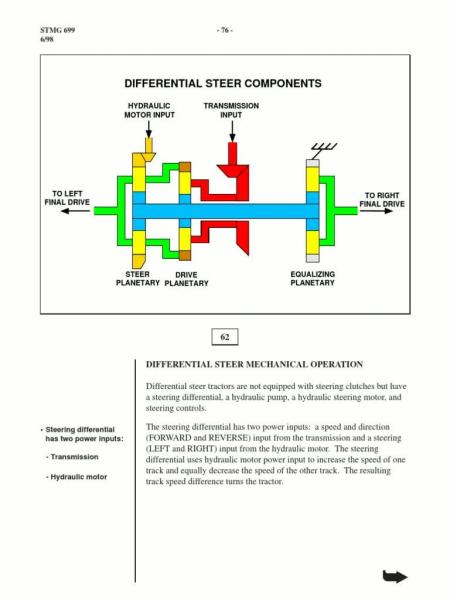
Origins and Industry Significance
Differential steering—steering by applying unequal drive torque to either side—is the foundational method behind maneuvering tracked machines such as tanks, bulldozers, and some wheel loaders. It emerged over a century ago, with early experiments by agricultural companies in continuous-track tractors. Skid-steer loaders, first developed in the late 1950s and refined in the early 1960s, also rely on differential steering for zero-radius (on-the-spot) turns, proving ideal for compact, agile equipment.
Basic Principle
At its simplest, differential steering works by varying the rotation speeds of the left and right tracks or wheels. If one side rotates faster than the other, the vehicle turns towards the slower side. At extremes, reversing one side while advancing the other produces a zero-radius pivot.
Steering Methods
Over time, various mechanisms have evolved to alter track speeds: - Clutch-Brake Steering
One side is disengaged via a clutch, sometimes with braking applied. This basic setup allows directional shifts but wastes power and is only suitable for lightweight vehicles.
- Braked-Differential Steering
A conventional differential is used; a brake slows one side, causing the other to speed up. While allowing constant overall speed, differences in traction may lead to unintended turns.
- Controlled-Differential (Cletrac Style)
Here, internal pinion gears are locked to shift torque, avoiding brakes. It allows a single fixed turn radius but offers better efficiency. Developed in the early 1920s, it was an innovative advance.
- Double-Differential Steering
Two differentials—one per track—are linked with an extra steering power input and idler gears, balancing track speeds and providing smoother controlled turns. Invented in the late 1920s.
- Triple-Differential Steering
Builds on the double diff by introducing a steering differential; braking one steering input creates track speed differences—similar to braked-differential but more refined.
- Hydraulic Differential Steering
Common in skid-steer loaders and zero-turn mowers, this uses a hydraulic pump and two hydraulic motors—one per side—to vary track/wheel speeds continuously and responsively.
- Electric Differential Steering
Used in electric vehicles and robots, independent electric motors drive each side or wheel, allowing precision steering by motor speed control.
Technical Insights—Tracked Vehicle Implementation (e.g., Bulldozer System)
One advanced system employed in heavy tracked equipment uses a dedicated steering differential fed by both the main transmission and a hydraulic steering motor. It manages three planetary gear sets—steer, drive, and equalizing—to split power as needed:- Straight-Line Driving
Transmission alone powers both tracks equally; the steering motor remains idle. Power divides evenly through planetary arrangements to each side.
- Turning
The steering motor engages, driving the steer planetary. This increases speed on one side and slows the other—creating a smooth turn. Direction and engine speed dictate turn direction and radius.
Operators report up to a 2 mph speed difference between tracks for sharp yet smooth turns in equipment such as bulldozers. Originally, steering shared a pump with blade hydraulics, which sometimes limited performance—but newer models added dedicated pumps to optimize steering hydraulics.
Terminology Notes- Planetary gear set: A layered gear structure that splits or balances torque across multiple paths.
- Hydraulic steering motor: Drives the differential’s gearing to adjust track speeds.
- Idler gear: Used in double-differential systems for torque balancing.
- Zero-radius turn: Rotation in place—one side forward, one side reverse.
Illustrative Anecdote
A bulldozer operator working in dense oak forest aimed to rotate the machine in place within a narrow clearing. The differential steering system allowed a controlled spin—one track forward, the other reverse—without losing momentum or safety. On another site, operators noticed sluggish steering while raising the blade. Maintenance revealed the shared hydraulic pump was overloaded. Installing a dedicated steering pump restored crisp control and reduced fatigue.
Practical Suggestions- Use steering with both speed control and smooth torque distribution to prevent excessive wear on tracks and drivetrain.
- If steering becomes sluggish under load, check hydraulic pump capacity—dedicated pumps may improve response.
- Regularly inspect planetary gear sets and steering actuators for wear; replacement parts are easier to access in modular designs.
- Train operators on how leverage speed differentials appropriately during turns for precision and efficiency.
Summary
Differential steering—by varying drive torque between left and right sides—has powered tracked and compact wheeled machinery for over a century, evolving from clutch-brake to sophisticated hydraulic and planetary systems. It delivers exceptional maneuverability, including zero-radius turns. Modern implementations—like those using hydraulic steering motors and dedicated differentials—offer smooth, responsive control, essential for heavy-duty applications. Understanding the mechanics behind steering methods ensures better maintenance, operator efficiency, and long-term performance.
|
|
|
|
| Tackling Electrical Challenges on the John Deere 772D Motor Grader |
|
Posted by: MikePhua - 08-27-2025, 03:26 AM - Forum: Troubleshooting & Diagnosing
- No Replies
|
|
The Significance of a Reliable Electrical System
The John Deere 772D motor grader demands a robust and stable electrical system to manage its sophisticated hydraulics, safety features, and modern conveniences. Operating on a 24-volt architecture with a powerful 100-amp alternator and dual 12-volt batteries, this system is designed to supply dependable power even under the tough conditions of large-scale road construction and earthmoving. Many operators rely on the combined 1,400 cold-cranking amps and substantial reserve capacity for consistent cold starts and consistent electrical performance across a variety of supporting circuits.
Core Components and Design Philosophy
Key features of the 772D’s electrical configuration include: - Two 12-volt, heavy-duty, low-maintenance batteries with 1,400 CCA and 440-minute reserve.
- Blade-type fuses for streamlined individual circuit protection and troubleshooting.
- A centrally positioned electrical load center, which simplifies harness routing and access for diagnostics.
- Dedicated master disconnect switch and positive terminal covers enhance safety and maintenance access.
- High-output halogen transporting and grading lights, with upgrade options for deluxe halogen or LED lights.
- The wiring harness is rubber-isolated for noise and vibration reduction, contributing to long equipment life.
Self-diagnostic systems and a service-code display play a critical role in early problem detection. These functions allow operators and technicians to address faults before escalating failures can occur, reducing costly downtime.
Troubleshooting and Typical Electrical Problems
Common issues on older or heavily-used 772Ds include battery failure, corroded connections, blown fuses, alternator malfunction, or relay and switch wear. Symptoms may present as unresponsive controls, flickering lights, difficulty starting, or failure in safety systems like alarms and lights. Diagnosing these conditions requires a systematic approach:- Inspect all visible wiring and connections for signs of corrosion, abrasion, or loose terminals.
- Test battery voltage and alternator charge output under operating conditions using a digital multimeter.
- Work through corresponding fuse and relay panels, replacing any blown or suspect items.
- Consult the service code display for diagnostic messages, then reference the operator’s manual for resolution steps.
One real-world example involved a grader on a Canadian jobsite repeatedly failing to start on cold mornings. Inspection revealed a loose ground strap at the battery’s negative terminal—tightening it resolved intermittent starts and stabilized the entire electrical system.
Company Background, Model History, and Industry Impact
The John Deere company traces its roots back to 1837 and has become a flagship brand worldwide in heavy equipment and agricultural machinery. The 772D, belonging to the D-series of motor graders introduced in the late 1990s through the 2000s, incorporated advanced electronics and hydraulics for the era. Across decades, John Deere sustained high annual machine sales, with graders like the 772D known for reliability, serviceability, and operator-focused features. The innovations embedded within models such as the 772D have helped the company maintain a leading global presence in the roadbuilding and maintenance sector.
Expert Advice and Preventive Solutions
To maximize uptime and minimize frustration, experts recommend:- Performing seasonal electrical system checks, including cleaning and torqueing all battery terminals.
- Replacing batteries as a matched pair, and never mixing old/new or different capacity units.
- Keeping the alternator belt in optimal condition and regularly checking output voltage.
- Protecting connections and harnesses with dielectric grease, especially in wet or corrosive work environments.
- Storing the grader with the master electrical disconnect engaged to reduce battery drain during long idle periods.
Operators should keep a spare set of fuses and a portable multimeter in the cab for quick field diagnostics.
Glossary of Related Terms- Cold-Cranking Amps (CCA): Measurement of a battery’s ability to start an engine in cold temperatures.
- Alternator: Electrical generator that keeps the battery charged and powers the system when the engine runs.
- Load Center: Main hub of vehicle wiring and circuit control.
Conclusion
Maintaining and troubleshooting the electrical system on the John Deere 772D motor grader requires both technical know-how and routine attention. By understanding the system’s layout, staying proactive with seasonal upkeep, and leveraging built-in diagnostic aids, equipment owners can ensure their machines continue contributing to critical projects for years to come—echoing the legacy of quality that defines John Deere’s history worldwide.
|
|
|
|
| Bobcat 825 A Durable Classic with Fluid System Challenges |
|
Posted by: MikePhua - 08-27-2025, 03:25 AM - Forum: General Discussion
- No Replies
|
|
The Bobcat 825 and Its Historical Footprint
The Bobcat 825 skid steer loader was introduced in the late 1970s by Melroe Manufacturing Company, which later became part of the Bobcat brand under Clark Equipment and eventually Doosan. Designed as a mid-sized loader with robust hydraulic capabilities, the 825 was built for versatility in construction, agriculture, and industrial settings. It featured a rated operating capacity of approximately 1,500 lbs and was powered by a 4-cylinder diesel engine, typically sourced from Perkins or Kubota depending on production year.
Though exact sales figures are hard to trace, the 825 was widely adopted across North America and parts of Europe, especially in rental fleets and municipal yards. Its popularity stemmed from its mechanical simplicity, durable frame, and compatibility with a wide range of attachments. Even today, many units remain in service, often passed down through generations or restored by enthusiasts.
Terminology Clarification
- Hydraulic Reservoir: The tank that stores hydraulic fluid used to power the loader’s arms and attachments
- Chain Case: Enclosure housing the drive chains that transfer power from the engine to the wheels
- Spin-On Filter: A replaceable filter cartridge that screws onto a filter head, used to clean hydraulic fluid
- Auxiliary Hydraulics: Additional hydraulic ports used to power external attachments like augers or grapples
- Filter Cart: A portable unit with pumps and filters used to clean hydraulic systems without running the machine
Milky Hydraulic Fluid and Water Contamination
One of the most common issues in aging Bobcat 825 units is milky hydraulic fluid—a clear sign of water contamination. This condition can arise from several sources: - Cracked fiberglass covers allowing rainwater intrusion
- Worn gaskets on the chain case or reservoir lid
- Condensation buildup in humid climates
- Improper storage without fluid checks
Water-contaminated hydraulic fluid compromises lubrication, corrodes internal components, and reduces system efficiency. In severe cases, it can lead to pump failure or erratic control response.
Drainage and Fluid Replacement Strategies
The Bobcat 825 holds approximately 27 gallons of hydraulic fluid, distributed across the reservoir, chain cases, cylinders, and hoses. Draining this fluid completely is challenging due to the machine’s design, which includes multiple low points and internal cavities.
Operators seeking a thorough flush often use the following approach:- Disconnect a return hose and place it in a clean bucket
- Feed fresh fluid into the reservoir while running the machine briefly
- Repeat until the fluid exiting the hose runs clear
This method, while effective, can be messy and time-consuming. A more controlled alternative is using a filter cart with water-absorbing elements. These carts circulate fluid through specialized filters—such as Aqua-Zorb or similar products—that remove water and particulates without engaging the loader’s hydraulic pump.
Filter Selection and Micron Ratings
The Bobcat 825 typically uses two or more spin-on filters mounted under the fiberglass cover. These filters can be cross-referenced to modern equivalents from brands like Zinga or Donaldson. For water removal, filters ending in “AZ” (Aqua-Zorb) are recommended.
A staged filtration strategy is often employed:- Start with a 10-micron water-absorbing filter to remove bulk contaminants
- Follow with a 3-micron filter to capture fine particles
- Replace stock filters after system cleanup
This approach ensures both water and debris are removed, extending the life of pumps, valves, and actuators.
Preventing Future Contamination
Once the system is clean, preventing recurrence is key. Recommended steps include:- Replacing all reservoir and chain case gaskets with high-quality seals
- Inspecting the fiberglass cover for cracks or warping
- Installing a breather cap with a moisture trap
- Storing the machine indoors or under a tarp during wet seasons
- Performing fluid checks monthly, especially in humid regions
One operator in Kentucky reported recurring contamination until he replaced the chain case gasket and added a breather with a desiccant pack. Since then, his fluid has remained clear for over a year despite frequent outdoor use.
Auxiliary Hydraulics and Filter Integration
Some users consider integrating a filter head directly into the auxiliary hydraulic circuit. This allows for periodic fluid polishing without disassembly. Quick couplers make this setup easy to install and remove, and it can be used with standard spin-on filters or water separators.
While not factory-standard, this modification is increasingly popular among owners of legacy machines. It offers a low-cost way to maintain fluid quality and reduce wear on aging components.
Conclusion
The Bobcat 825 remains a testament to durable engineering and practical design. While its hydraulic system presents challenges—especially with fluid contamination—modern filtration solutions and proactive maintenance can keep it running smoothly. For operators willing to invest time and care, the 825 offers reliable performance and a direct connection to the golden age of skid steer innovation. With proper attention to fluid health and system integrity, this classic loader can continue serving for decades to come.
|
|
|
|
| Cushion Bowls and Their Role in Modern Scraper Design |
|
Posted by: MikePhua - 08-27-2025, 03:25 AM - Forum: Parts , Attachments & Tools
- No Replies
|
|
Understanding the Cushion Bowl Principle
A cushion bowl in earthmoving equipment, particularly in wheel tractor-scrapers like the Caterpillar 627F, plays a crucial role in managing the immense forces involved during bowl loading and transportation. Unlike conventional rigid-hitch arrangements, a cushion bowl is equipped with a suspension mechanism—typically a hydraulic ram paired with a nitrogen accumulator. This setup absorbs sudden shocks and reduces the transfer of jerks between the scraper and the tractor unit, especially on rough terrain or when the bowl hits obstacles. The practical effect is smoother operation, less operator fatigue, and minimized wear on both machine and payload.
Scraper Evolution and the Rise of the Cushion Hitch System
The history of scrapers has witnessed continuous innovation, with companies like Caterpillar and Terex competing to enhance both operator comfort and machine durability. The introduction of the cushion hitch in the mid-20th century marked a turning point. Early systems were relatively simple, but as machine sizes and speeds increased through the 1980s and beyond, improved hydraulic cushioning became a standard feature. By integrating a nitrogen-charged accumulator with the hydraulic circuit at the hitch point, the resulting cushion effect allowed machines like the 627F to maintain high speeds even on uneven construction sites, significantly boosting productivity and safety.
Key Parameters and Technical Features of Cushion Bowls
The core components of a cushion bowl system include: - Hydraulic ram (cylinder): Absorbs and transmits forces between the tractor and scraper.
- Nitrogen accumulator: Provides compressibility, acting like a shock absorber.
- Control valving: Regulates oil flow to maintain optimal damping characteristics.
- Sensors (in advanced models): Monitor endstroke events to optimize damping and prevent mechanical stress.
These systems are designed to handle the full dynamic weight of a loaded scraper, which can exceed 50,000 pounds in typical two-axle configurations. Hydraulic pressures in cushion bowl circuits can reach over 2,000 psi, and the equipment is engineered to operate through daily cycles for thousands of hours without major maintenance.
Operator Benefits and Practical Suggestions
Cushion bowl-equipped scrapers, like the Caterpillar 627F, offer a range of operator-centric features:- Reduced vibration and shock at the controls, which significantly lessens fatigue during long shifts.
- Enhanced control during loading, as the cushion system gently absorbs sudden impacts rather than transmitting them to the cab.
- Prolonged machine longevity, since repeated shock loads are dampened and distributed more gradually through the structure.
- Smoother material handling, leading to cleaner cuts and improved precision during earthmoving operations.
For those transitioning from rigid systems or older models, it is advised to:- Familiarize oneself with cushion system maintenance, ensuring regular checks of nitrogen pressure and hydraulic fluid levels.
- Monitor system for leaks, as even minor drops in pressure can reduce effectiveness dramatically.
- Participate in operator training to acclimate to the new feel and responsiveness of cushioned control.
History and Industry Context
Wheel tractor-scrapers have seen widespread global sales since the end of World War II. Caterpillar, for example, has sold hundreds of thousands of machines worldwide, with the 627 series remaining a flagship in mid-to-large earthmoving projects. The cushion bowl concept has since been adopted industry-wide. Today’s machines feature electronic controls, automatic sequence assist, and payload weighing systems that build on the cushion bowl’s foundation—all designed to further streamline operations and maximize efficiency.
Success Stories and Real-World Applications
Many construction veterans recount how the introduction of the cushion bowl revolutionized their workload. One highway project in the Midwest saw a 15% reduction in machine downtime after switching to cushion-equipped scrapers, as reported by an experienced operator. With less stress on both equipment and crew, jobsite efficiency improved—a finding echoed in studies of machine longevity across multiple fleet owners. In mining applications, the smoother ride and increased haul speeds have led to notable cost reductions over several seasons.
Glossary of Terms- Cushion Bowl: A scraper bowl fitted with a hydraulic-nitrogen accumulator system to dampen impact forces.
- Accumulator: A device store hydraulic fluid under pressure using compressed nitrogen.
- Sequence Assist: Advanced control software that automates complex operating cycles in scrapers.
- Apron: Movable front plate controlling entry of earth into the bowl.
- Ejector: Mechanism that pushes material out of the bowl after hauling.
Conclusion and Further Innovations
The cushion bowl stands as a notable milestone in scraper technology, blending mechanical insight with hydraulic sophistication to meet the demands of modern construction and mining. Machines like the 627F, with their advanced cushioning and intelligent controls, showcase just how far earthmoving design has come—and point the way to even more comfortable, safe, and productive equipment in the years ahead.
|
|
|
|
| Bucket Options For John Deere 490E |
|
Posted by: MikePhua - 08-27-2025, 03:24 AM - Forum: Parts , Attachments & Tools
- No Replies
|
|
Machine Legacy And Manufacturer History
The 490E crawler excavator represents a mid-sized model produced by a renowned agricultural and construction equipment manufacturer that began operations over a century ago and evolved into a global leader in heavy machinery. The 490E was manufactured from the mid-1990s through 2021 and known for its adaptability and longevity, with a mass of about 12.1 metric tonnes and a track gauge of 600 mm . It marked a key segment offering between compact and large excavators, earning popularity among rental fleets and contractors seeking a balance of power and portability.
Bucket Variety And Technical Considerations
This excavator is compatible with a full suite of buckets tailored to a wide array of jobsite needs. Available variants include general-purpose, heavy-duty, and ditching buckets. Most of these come with adjustable side-clearance bushings, improving alignment and wear distribution, except for the ditching bucket .
Available tooth types include the manufacturer’s proprietary Fanggs® or the versatile ESCO Vertalok options. Replaceable cutting edges are standard parts, and optional side cutters can extend bucket width by approximately 150 mm (6 in) for enhanced performance .
Bucket Specifications (List Format)
Here’s a breakdown illustrating the bucket lineup—each entry captures width, volume, weight, and digging power using the shorter (8 ft 3 in) and longer (9 ft 11 in) arm configurations: - General-Purpose Buckets
- 18 in / 460 mm: ~0.34 cu yd (0.26 m³), 723 lb (328 kg)
- 24 in / 610 mm: ~0.50 cu yd (0.38 m³), 893 lb (405 kg)
- 30 in / 760 mm: ~0.64 cu yd (0.49 m³), 1,066 lb (484 kg)
- 36 in / 915 mm: ~0.78 cu yd (0.60 m³), 1,081 lb (490 kg)
- 42 in / 1065 mm: ~0.79 cu yd (0.60 m³), 926 lb (420 kg); or ~0.92 cu yd (0.70 m³), 1,244 lb (564 kg)
- 48 in / 1220 mm: ~1.06 cu yd (0.81 m³), 1,441 lb (654 kg)
- Heavy-Duty Buckets
- 18-42 in widths with similar capacities, heavier weight (e.g., 18 in @ 869 lb; 36 in @ 1,298 lb) .
- Ditching Buckets
- 48 in / 1220 mm, 0.67 cu yd (0.51 m³), 841 lb (381 kg)
- 60 in / 1525 mm, 0.90 cu yd (0.69 m³), 937 lb (425 kg) .
Material-Based Bucket Selection Advice
To match bucket size with material density and loading efficiency, typical guideline volumes are:- Peat (700 lb/cu yd): ~3.25 cu yd (2.5 m³) with general-purpose bucket
- Topsoil (1,600 lb/cu yd): ~1.38 cu yd (1.1 m³)
- Sand, dry (2,400 lb/cu yd): ~0.88 cu yd (0.7 m³)
- Clay, wet (2,800 lb/cu yd): ~0.75 cu yd (0.6 m³)
- Sand and gravel, wet (3,400 lb/cu yd): ~0.63 cu yd (0.5 m³) .
These serve as starting points for matching bucket capacity with job conditions. Lighter volumes suit dense, compact loads; larger sizes help when materials are loose and conditions favorable.
Terminology Notes- Adjustable side-clearance bushing: allows fine alignment of bucket to arm, reducing lateral wear.
- Cutting edge: removable or replaceable blade that takes contact abrasion.
- Ditching bucket: wide, shallow bucket designed for tasks like slope grading or ditch cleanup.
- Fanggs® vs Vertalok: two distinct tooth shapes; Fanggs® typically handle varied materials, Vertalok penetrate sharp surfaces and resist wear.
Performance Metrics And Machine Specs
The 490E’s boom and arm offer two configurations:- Short Arm (2.52 m / 8 ft 3 in):
- Max reach: ~27.0 ft; Dig depth: ~18 ft; Loading height: ~20 ft .
- Long Arm (3.01 m / 9 ft 11 in):
- Max reach: ~28.9 ft; Dig depth: ~20 ft; Loading height: ~21 ft .
Other specs:- Operating weight: ~26,780 lb (~12,147 kg)
- Engine: 4-cylinder turbocharged 4045T, ~85 hp net
- Hydraulic flow: ~52 gpm (198 L/min); pressure: ~4,980 psi .
These figures inform how different bucket loads affect hydraulics, cycle times, and fuel usage.
Practical Recommendations- For general excavation in typical soils, a 30-36 in general-purpose bucket offers a practical balance.
- Denser materials like rock or saturated clay suit heavy-duty buckets in 30-36 in range.
- For surface work—ditch grading, slope cleaning—a 48–60 in ditching bucket improves coverage.
- Installing side cutters adds ~6 in width for trench clearance or when maneuverability is tight.
- Monitor cutting edge wear and replace proactively—extends bucket life and ensures consistent performance.
Field Anecdote
A contractor working on a municipal park project experimented with a 48-in general-purpose bucket to fill wheelbarrows quickly. However, when handling moist clay, the bucket overloaded each cycle, slowing the swings. Later, switching to a 36-in heavy-duty bucket cut cycle time by nearly 20 %, maintained momentum, and reduced fuel per cycle—demonstrating how optimal bucket sizing directly affects work rhythm.
Summary
The John Deere 490E excavator supports a broad suite of bucket options—general-purpose, heavy-duty, and ditching—spanning widths from 18 in to 60 in and with capacities up to around 1.06 cu yd. Choosing the right bucket means balancing material density, task type, and machine hydraulics. Understanding specifications, terminology, and field responses ensures operators can match bucket selection to maximize efficiency and productivity in diverse work conditions.
|
|
|
|
| Choosing the Right Rear Axle Fluid for the Case 580 Super L |
|
Posted by: MikePhua - 08-27-2025, 03:24 AM - Forum: Troubleshooting & Diagnosing
- No Replies
|
|
The Case 580SL and Its Legacy
The Case 580 Super L (580SL) backhoe loader was introduced in the early 1990s by J.I. Case Company, a brand with roots dating back to 1842. Known for its rugged design and versatility, the 580SL quickly became a staple in municipal fleets, utility contractors, and farm operations. It featured a turbocharged diesel engine, four-wheel drive options, and improved hydraulic performance over its predecessors. By the mid-1990s, Case had sold tens of thousands of units globally, with strong adoption in North America and parts of Europe.
The 580SL was part of the broader Super series, which included the 580K, 580SK, and later the 580M. Each iteration brought refinements in operator comfort, hydraulic control, and drivetrain durability. The Super L, in particular, was praised for its wet disc brakes and planetary rear axle—features that required careful attention to fluid compatibility.
Terminology Clarification
- Rear Axle: The assembly that transmits power from the transmission to the rear wheels
- Planetaries: Gear systems inside the wheel hubs that multiply torque and reduce strain on the driveline
- Wet Disc Brakes: Brakes submerged in oil for cooling and longevity
- MS1317 Fluid: A Case-specified gear oil designed for early planetary axles and wet brakes
- Hy-Tran Ultra: A multi-purpose hydraulic and transmission fluid developed by Case IH for modern equipment
Fluid Compatibility and Serial Number Nuances
Early 580SL units—particularly those with rear axle serial numbers ending in “A3”—were originally specified to use MS1317 fluid. This oil was formulated to support the brake disc material and planetary gear tolerances of that era. However, in 1996, Case issued a technical bulletin (NLB MP 006 96) announcing a brake disc material update. Machines that received the updated brake components were re-stamped with an “A4” suffix on the axle plate, indicating compatibility with newer fluids like MS1207 or MS1209—both variants of Hy-Tran Plus and Ultra.
This distinction is critical. Using Hy-Tran Ultra in an unmodified A3 axle can lead to premature brake wear, low-speed chatter, or even brake failure. Unfortunately, many operators are unaware of the stamping update or the implications of fluid substitution.
Real-World Challenges and Dealer Discontinuation
One operator, servicing his 580SL at the 6000-hour mark, discovered that MS1317 was no longer stocked by his local dealer. The dealer recommended Hy-Tran Ultra as a universal replacement, citing its broader compatibility. However, without confirmation of the axle update, this advice posed a risk.
Another technician from Maryland suggested contacting oil distributors like Chevron or Mobil to source equivalent fluids. These companies often provide spec sheets and can match legacy formulations with modern equivalents. Still, the key is ensuring the fluid meets the original MS1317 additive profile—especially for wet brake systems.
Recommendations for Fluid Selection
To avoid costly mistakes, operators should: - Check the rear axle serial number for an “A4” stamp
- If unstamped, assume original brake discs and use MS1317 or equivalent
- Contact Case dealers for bulletin NLB MP 006 96 to verify compatibility
- Consult oil manufacturers for spec-matched alternatives if MS1317 is unavailable
- Consider installing updated brake components if switching to Hy-Tran Ultra
Wet Brake Additives and Performance Enhancements
Even with correct fluid, wet brakes can exhibit low-speed chatter—a vibration or noise during slow movement. Case offers a wet brake oil additive designed to reduce this issue. It’s especially useful in older machines or those operating in cold climates where fluid viscosity affects brake response.
One retired Case technician from Pennsylvania recalled servicing dozens of early 580SLs during the recall period. His shop switched entirely to Hy-Tran Plus after updating the brake systems, and he never encountered fluid-related failures afterward. He emphasized the importance of using the additive in borderline cases or during seasonal transitions.
Torque Converter and Transmission Considerations
While the rear axle fluid is critical, the 580SL also requires attention to its transmission and torque converter. These components typically use the same Hy-Tran Ultra fluid, simplifying inventory and maintenance. However, contamination—such as debris from a failing front pump—can compromise the entire hydraulic circuit. Regular fluid changes and filter inspections are essential, especially on machines approaching 6000 hours.
Conclusion
The Case 580SL remains a workhorse decades after its release, but its longevity depends on informed maintenance. Fluid compatibility is not just a matter of brand—it’s a matter of brake material, axle design, and serial number history. Operators should treat fluid selection as a technical decision, not a convenience. With proper verification and attention to detail, the 580SL can continue delivering reliable performance in fields, trenches, and job sites for years to come.
|
|
|
|
| Engine Swap On 1999 International 4900 |
|
Posted by: MikePhua - 08-27-2025, 03:23 AM - Forum: Troubleshooting & Diagnosing
- No Replies
|
|
Truck Lineage And Manufacturer Background
The 4900 model belongs to a family of medium-duty trucks produced by a long-established company that began its commercial vehicle work in the early 1900s and later renamed itself in the mid-1980s. The 4900, part of the second generation medium-duty series produced roughly between the late 1990s and early 2000s, was a heavier-duty variant built on thicker frame rails, often equipped with air brakes and optionally available in tandem-rear-axle (6×4) layouts. It was designed to fill roles demanding more durability and load capacity within the medium-duty segment. The development of the 4000 series replacement in the early 2000s marked the end of the 4900’s production run.
Engine Swap Motivation And Options
Owners of a 1999 International 4900 commonly seek to refresh or boost performance by replacing the aging standard engine—commonly the DT466 inline-six diesel—with a more powerful and accessible replacement. A popular path is using a diesel V8 from the same corporate family, the T444E (also known as the early 7.3L Power Stroke V8), which was widely used in late-1990s diesel trucks and buses.
The T444E delivered roughly: - 210 hp and 425 lb-ft torque in mid-90s versions
- Up to 275 hp and 525 lb-ft torque in later manual-transmission variants
Fitment Considerations And Challenges
Swapping a T444E into the 4900 requires more than a plug-and-play transplant. The V8 engine is significantly longer than the inline-six it replaces. This often requires cutting or modifying the firewall, adjusting mounts, and reworking engine accessories such as radiator, hoses, alternator, and intake routing. Wiring and harnesses may not align, and cooling components might need repositioning.
Terminology Notes- Fire wall: the barrier between the engine compartment and the cab, often structural.
- ECM: engine control module, which manages engine performance and diagnostics.
- Inline-six vs V8 layout: straight-six engines are elongated along the chassis centerline; V8 engines are wider and often longer.
Pragmatic Steps And Recommendations- Evaluate whether the swap’s complexity justifies the performance gain—engine fabrication, mount reengineering, and wiring reroutes can escalate costs quickly.
- Consider also if updating or refurbishing the original engine might meet performance needs more cost-effectively.
- If proceeding with a T444E, plan for custom fabrication of engine mounts, re-routing of accessories, and possibly invoking stand-alone engine harness solutions.
- Consult with specialists in diesel conversions for access to custom harnesses or mount kits that align with medium-duty truck swaps.
Anecdote From The Field
On a rural haul operation, a driver replaced a worn inline-six with a T444E V8. Mid-swap, the team realized the firewall needed a 4-inch section trimmed to achieve proper fit, and they had to custom-position the radiator. After the retrofit, the truck delivered noticeably smoother power delivery and more low-end torque—especially when climbing grades—making the complicated swap worthwhile in daily operations.
Specifications Comparison (List Format)- Original Engine (DT466 inline-6)
- Inline-six format
- Known for durability; moderate power
- Compact longitudinal layout
- Swapped Engine (T444E V8)
- V8 format; longer and wider
- Higher horsepower (up to 275 hp) and torque (up to 525 lb-ft)
- Requires physical modifications and rewiring
Production And Building Context- The original manufacturer, founded in the early 1900s, leveraged decades of vehicle engineering to create a broad commercial truck lineup, including medium-duty classics such as the S series.
- By the late 1990s, the 4900 embodied the culmination of that lineage before being superseded by a newer 4000 series with updated cabs, multiplex electronics, and refined engines designed for improved crew comfort and fuel economy.
Summary
Performing an engine swap on a 1999 International 4900 by installing a T444E V8 can boost power and torque, delivering improved performance. However, it involves substantial modifications—firewall changes, custom mounts, accessory re-routing, and wiring adaptations. Owners should weigh costs and benefits carefully, perhaps leaning instead on engine refresh or seeking professional support. With the right approach, such a swap can transform a hard-working truck into a stronger, more capable hauler reflecting both vintage ruggedness and modern muscle.
|
|
|
|
| The Rediscovery of Two Classic 977 Track Loaders |
|
Posted by: MikePhua - 08-27-2025, 03:23 AM - Forum: General Discussion
- No Replies
|
|
A Legendary Machine’s Place in History
When it comes to iconic earthmoving equipment, few machines match the reputation and mechanical fortitude of the Caterpillar 977 series track loaders. First rolled out in the mid-1950s, these machines swiftly became a standard sight across global construction sites due to their unparalleled power, reliability, and adaptability. The Caterpillar 977D, for example, was introduced in 1955 featuring the robust D333 diesel engine, which produced around 170 horsepower—quite significant for its era. This power, coupled with advanced hydraulics, helped transform postwar construction, feeding into the explosive growth of infrastructure and urban planning in the decades that followed.
Engineering and Technical Innovations
The heart of the 977 was always its drive system and hydraulic configuration. Featuring a three-speed powershift transmission, reinforced undercarriage, and advanced hydraulic circuits, the 977D allowed for seamless operation even on rugged terrains. With an operating weight exceeding 22,000 pounds and a lift capacity of 12,000 pounds, operators could handle demanding jobs such as excavation, land clearing, and heavy material transport with relative ease. Key specifications also included a 2.5-cubic-yard bucket, a 74-inch track gauge, and 54-gallon fuel capacity, translating to substantial productivity and operational endurance on-site.
Caterpillar Inc. and the Legacy of the 977
Caterpillar Inc., the parent company, has a storied history dating back to 1925. Formed from the merger of two California-based tractor pioneers, Caterpillar rapidly rose to prominence, largely helped by innovative product lines like the 977 track loader. Through economic highs and lows, war efforts, and the postwar boom, Caterpillar built a reputation for rugged, high-quality machinery: by the 1970s, the company had expanded worldwide and posted annual sales in the billions. The 977 series, in particular, cemented Caterpillar's place at the heart of the earthmoving industry, remaining in production for decades and earning a spot in the fleet of nearly every major contractor of the era.
Stories from the Field: Rediscovering Forgotten Iron
Found abandoned in remote fields, many old 977s have stories that mirror the changing fortunes of their owners. A notable tale involved the arduous effort of freeing two 977s that had sat idle and sunken into the earth over many seasons. Stories like these reflect just how tough these machines were; often, it's not mechanical failure but changing needs or newer technology that puts these classics out to pasture. In several modern rescue attempts, enthusiasts and collectors have shared videos and accounts of the stubbornness of seized tracks, thick buildup of mud in the undercarriage, and the thrill when, through teamwork and ingenuity, these "sleeping giants" are coaxed back to life.
Collector Appeal and Restoration Insights
By the 21st century, the 977 series is prized among restoration hobbyists and industrial heritage enthusiasts. Restorers often encounter a mix of challenges and rewards—freeing frozen linkages, tracking down vintage replacement parts, and reviving decades-old engines. The machines’ relative simplicity compared to modern electronics-laden loaders is a double-edged sword: easier to work on for those with mechanical know-how, but sometimes requiring creative problem-solving for hard-to-source components. Despite such hurdles, successful restoration not only preserves a piece of industrial history but can also provide operational machinery for smaller farming or land-clearing projects.
Tips and Solutions for Handling Classic Track Loaders
Owners and restorers of vintage 977s are often advised to: - Document and photograph assemblies before disassembly for reference.
- Source parts from specialty suppliers, many of whom maintain catalogs dating back decades.
- Use penetrating oil and leverage on seized linkages to minimize the risk of damaging rare castings.
- Test hydraulic pressures and fluid integrity before full operation, as seals may degrade over time.
- If possible, connect with other enthusiasts and participate in historical associations or forums for technical guidance and moral support.
The 977 Series in Historical Context
Anecdotes abound of these loaders building highways, clearing land for urban expansion, and even working on major infrastructure projects like dams and airports. Sales figures are difficult to pin down precisely, but by the late 1960s, Caterpillar’s total global revenues had climbed into the billions, with the 977 series accounting for a significant portion of the company’s churn in that era. Throughout their production run, later upgraded iterations such as the 977K demonstrated Caterpillar’s ongoing commitment to incremental innovation, including improvements in power output, operator comfort, and safety.
Glossary of Key Terms- Track Loader: A tracked bulldozer with a large loader bucket, used primarily for earthmoving and material handling.
- Powershift Transmission: A type of transmission allowing gear changes under power, improving ease of use and efficiency compared to traditional manuals.
- Hydraulic Circuit: System of fluid-filled pipes and actuators used to move and control the loader bucket and related implements.
Conclusion
The saga of the Caterpillar 977 is more than just industrial nostalgia: it is a testament to rugged engineering and the enduring value of well-designed machinery. Whether rescued for restoration or left as silent sentinels in fields and barns, these machines continue to inspire admiration and respect—proof that with the right design and a little mechanical tenacity, legends in iron can truly last a lifetime.
|
|
|
|
|



