| Welcome, Guest |
You have to register before you can post on our site.
|
| Forum Statistics |
» Members: 74
» Latest member: Tomo
» Forum threads: 47,413
» Forum posts: 47,419
Full Statistics
|
| Online Users |
There are currently 130 online users.
» 0 Member(s) | 119 Guest(s)
Amazon, Baidu, Bing, Claude, Google, MJ12, OpenAI, Petalbot, Semrush, Sogou, 360
|
| Latest Threads |
Identifying and Sourcing ...
Forum: Parts , Attachments & Tools
Last Post: MikePhua
01-07-2026, 06:29 PM
» Replies: 0
» Views: 448
|
Cat 931B Brake Parts
Forum: Parts , Attachments & Tools
Last Post: MikePhua
01-07-2026, 06:29 PM
» Replies: 0
» Views: 269
|
Choosing Between Cat 228,...
Forum: General Discussion
Last Post: MikePhua
01-07-2026, 06:28 PM
» Replies: 0
» Views: 466
|
Fix It or Part It Out
Forum: General Discussion
Last Post: MikePhua
01-07-2026, 06:27 PM
» Replies: 0
» Views: 335
|
Hydraulic Delay When Lowe...
Forum: Troubleshooting & Diagnosing
Last Post: MikePhua
01-07-2026, 06:27 PM
» Replies: 0
» Views: 415
|
Bale Chopper and Mulcher ...
Forum: General Discussion
Last Post: MikePhua
01-07-2026, 06:26 PM
» Replies: 0
» Views: 295
|
Mini UC Maintenance
Forum: General Discussion
Last Post: MikePhua
01-07-2026, 06:25 PM
» Replies: 0
» Views: 283
|
Locating Wiring Informati...
Forum: General Discussion
Last Post: MikePhua
01-07-2026, 06:24 PM
» Replies: 0
» Views: 319
|
Case Industrial Brown Sub...
Forum: Parts , Attachments & Tools
Last Post: MikePhua
01-07-2026, 06:23 PM
» Replies: 0
» Views: 261
|
Dirt Work in West Virgini...
Forum: Construction & Urban Infrastructure Forum
Last Post: MikePhua
01-07-2026, 06:23 PM
» Replies: 0
» Views: 350
|
|
|
| Evaluating the Suihe Skid Steer Box Grader for Budget-Minded Operators |
|
Posted by: MikePhua - 08-31-2025, 07:57 PM - Forum: General Discussion
- No Replies
|
 |
The Rise of Imported Grading Attachments
Suihe, a Chinese manufacturer known for producing low-cost construction attachments, has gained traction in North America through auction platforms and wholesale distributors. Their skid steer box grader is marketed as a cost-effective alternative to premium brands like Roadrunner, whose CH series models can exceed $10,000 when equipped with dual hydraulics and bolster wheel kits. In contrast, the Suihe unit often sells for under $1,500, making it attractive to homeowners, small contractors, and landowners seeking basic grading capabilities without a major investment.
However, the affordability comes with trade-offs. Like many offshore attachments, the Suihe grader arrives with minimal documentation, limited customer support, and components that may require modification before reliable use.
Initial Setup and Structural Weaknesses
Upon delivery, the Suihe grader presents a basic frame with hydraulic blade adjustment and skid plates. The front blade is constructed from ¼-inch mild steel, which proved insufficient during first use—it folded under load, halting the operation. This material thickness is more appropriate for cosmetic scraping than structural grading, especially when working with compacted gravel or clay.
The attachment also lacks the industry-standard 3-3-6 bolt pattern used for grader blades, meaning replacement or upgrade requires drilling new holes. This is a critical limitation for users expecting plug-and-play compatibility with aftermarket blades.
Terminology Clarification
- Box Grader: A grading attachment with enclosed sides and adjustable blades for leveling surfaces
- 3-3-6 Bolt Pattern: A standardized mounting configuration for grader blades, using three bolts spaced evenly across six inches
- Hydraulic Manifold: A component that distributes hydraulic fluid to multiple actuators or solenoids
- Skid Plates: Flat surfaces that guide the attachment along the ground and control grading depth
- Bolster Wheel Kit: An optional set of wheels that stabilize the grader and improve finish quality
Modifications for Functional Performance
To make the Suihe grader usable, several modifications were necessary: - Replacing the front blade with a discarded 72-inch motor grader blade sourced from a salvage yard
- Raising the hydraulic mounts by 3 inches to allow the blades to adjust both above and below grade
- Rewiring the control harness using aftermarket connectors from Digikey to integrate with the skid steer’s controls
- Manually adapting the blade mount to accept standard hardware
These changes transformed the attachment from a barely functional tool into a workable grader capable of distributing material evenly. The upgraded blades offered better durability and improved cutting performance, while the hydraulic adjustments allowed for more precise control.
Hydraulic System Challenges
The hydraulic manifold on the Suihe grader uses solenoids labeled Hislo PDCE50-2-G3-8, a designation that appears to have no online documentation. This creates uncertainty for troubleshooting or replacement. Users must rely on visual inspection and trial-and-error wiring to integrate the system, which can be daunting for those unfamiliar with hydraulic electronics.
Despite this, the manifold responded well once rewired, and the blade adjustments operated smoothly under load. However, the lack of support means future repairs may require complete replacement of the manifold or custom fabrication.
Field Use and Practical Outcomes
After modifications, the Suihe grader performed adequately for driveway maintenance and light grading tasks. It was able to cut below grade, lift material, and redistribute gravel with reasonable consistency. While not suitable for commercial grading or heavy-duty site prep, it met the needs of a mechanically inclined homeowner.
One operator described the attachment as “an 80% lower” of the grading world—a reference to unfinished firearm receivers that require user completion. This analogy captures the essence of the Suihe grader: a base platform that demands customization to reach full functionality.
Recommendations for Buyers
Before purchasing a Suihe box grader:- Expect to modify blade mounts and hydraulic fittings
- Source replacement blades in advance from salvage yards or aftermarket suppliers
- Be prepared to rewire the control harness using standard connectors
- Inspect welds and frame integrity before use
- Avoid using the stock front blade for anything beyond loose soil
For users with fabrication skills and access to basic tools, the Suihe grader offers a low-cost entry into grading work. For those seeking plug-and-play performance, a domestic brand with full support may be a better long-term investment.
Final Thoughts
The Suihe skid steer box grader is a reminder that price and performance often diverge. While it lacks the polish and durability of premium models, it can be transformed into a functional tool with time, effort, and ingenuity. In a market where equipment costs continue to rise, such budget options fill a niche—provided the buyer understands what they’re getting into. For the right operator, it’s not just a grader—it’s a project worth finishing.
|

|
|
| Chock Those Wheels |
|
Posted by: MikePhua - 08-31-2025, 07:56 PM - Forum: Troubleshooting & Diagnosing
- No Replies
|
|
The Importance of Wheel Chocks
Wheel chocks are simple yet essential safety devices—wedged blocks placed against vehicle wheels to prevent unintended rolling. Often made of durable materials like rubber, urethane, or high-density plastic, they serve as a mechanical barrier when parking heavy equipment, trailers, or even aircraft on inclines or during maintenance. Despite their simplicity, wheel chocks are the unsung heroes safeguarding equipment, cargo, and most importantly, people.
Origins and Material Development
Wheel chocks trace back to early railroad operations, where wooden wedges prevented train cars from drifting. Over time, as rubber and synthetics emerged in the twentieth century, manufacturers began creating chocks with grip tread patterns and molded forms capable of resisting oil, UV exposure, and extreme temperatures. Today’s designs reflect decades of incremental improvements focused on traction, durability, and operator convenience.
Types and Specifications
Modern wheel chocks vary but generally fall into these categories: - Rubber Molded Chocks – Durable, grippy, and resistant to weathering; typical sizes range from 5 × 3 × 2 in for small vehicles up to 24 × 12 × 10 in for heavy equipment. Rated capacity may exceed 10 tons per chock.
- Urethane Chocks – Lighter than rubber but still resilient, useful where weight matters; capacity often similar to rubber but lighter by 30–50%.
- Metal Chocks (Steel or Aluminum) – Used for extreme conditions and aircraft; capacity exceeds 50 tons but must be used with caution due to slip risks on oil or wet surfaces unless paired with cleated versions.
- Inflatable Chocks – Portable and adjustable; ideal for irregular surfaces but require careful monitoring of pressure.
When and Where They Matter Most
Wheel chocks are recommended or mandated under these conditions:- Parking on any incline—even as little as 1–2 degrees.
- During loading/unloading operations where sudden shifts could mobilize the vehicle.
- Maintenance events—lifting a wheel without chocks may let the vehicle slip off jacks.
- Temporary stops of heavy mobile equipment—like cranes, dump trucks, or aerial lifts—especially in crosswinds or soft ground.
Practical Guidelines- Place chocks snugly against the wheel tread and as low as possible on the slope; for steeper grades, use two chocks per wheel, front and rear.
- Match chock size and capacity to the vehicle’s wheel and load—oversized trucks require chocks rated for their weight and tire width.
- Use chocks on both sides of the wheel in high‐risk areas, such as near drop‐offs or on slick surfaces.
- Inspect chocks routinely for cracks, wear, or material degradation; rubber chocks exposed to UV may harden and lose traction over time.
- Keep chocks clean—embedded debris reduces grip.
Safety Advice and Solutions- Color Visibility: Brightly colored or reflective chocks improve visibility, reducing trip hazards and ensuring they’re not forgotten before moving the vehicle.
- Storage: Use designated hooks or racks to store chocks at ground level but off direct sunlight; storing them in compartments helps maintain material condition.
- Replacement Interval: For high-use rubber chocks, consider replacement every 3–5 years depending on exposure and wear.
- Training: Include chock placement and removal in operator checklists; forgetting to remove chocks is a common error leading to damage or wheel overheating.
Anecdote from the Field
On a busy quarry site, a loader once broke free down a gentle slope when the operator neglected chocking after lunch. The loader rolled just a few feet—but enough to punch through a low barrier and come to rest precariously close to a fuel line. Nobody was hurt, but the incident sparked a mandatory pre-shift checklist highlighting chocks. Operators now report near‐perfect compliance, and incident reports involving equipment movement dropped to zero.
Some Quick Data Points- According to safety audits, sites that enforce chock use reduce roll-away incidents by over 90%.
- OSHA and industry guidelines often recommend wheel chocks for equipment exceeding 20 tons or when parked on inclines greater than 1 degree—even though slight grades can generate significant rolling force.
- Crew anecdotes suggest replacing chocks with a rated capacity increase of 20 % over vehicle gross weight adds a margin of safety without significant cost increase.
Conclusion
Wheel chocks are low-tech, cost-effective safety gear whose value is often overlooked—until something slips. From wooden wedges of railroad days to modern molded rubber and urethane units rated for dozens of tons, they illustrate how even the most straightforward tools can carry critical importance. By selecting the right type, maintaining condition, and enforcing consistent use—including color coding, checklist integration, and proper training—sites can prevent accidents, save equipment, and protect lives.
|
|
|
|
| Starter Oil Leak on Cat IT28B |
|
Posted by: MikePhua - 08-31-2025, 07:55 PM - Forum: Troubleshooting & Diagnosing
- No Replies
|
|
The Vehicle
The Caterpillar IT28B is a robust integrated tool-carrier and wheel loader produced by Caterpillar from around 1989 to 1994 . It’s powered by a Caterpillar 3204 turbocharged diesel delivering around 110 hp, with an operating weight just over 23,000 lb (around 10.6 t), and a bucket capacity ranging from approximately 2 to 2.3 cubic yards (1.6 to 1.8 m³) . The loader’s dimensions include a length of about 22 ft 6 in, width near 8 ft 1 in, and a cab height of roughly 10 ft 5 in .
Leak Behavior
Owners have reported a sudden and steady stream of clear oil leaking from the starter area at idle—despite the transmission fluid level reading nearly empty . Typically, starter leaks begin slowly, but this was abrupt and persistent.
Likely Causes
Based on technician observations and machine design, the following potential causes emerge: - Plugged Transmission Breather
Many Caterpillar loaders feature a "wet flywheel" system where converter oil routinely drains back into the transmission. If the breather atop the transmission housing becomes clogged, pressure builds, forcing oil toward the starter area, bypassing seals and gaskets .
- O-Ring or Seal Failure Between Engine and Transmission
A leaking o-ring or torque-converter seal could allow hydraulic or transmission fluid to seep into the bell housing and around the starter .
- Missing or Damaged Starter Gasket
In some cases, the gasket between the starter and flywheel housing may be omitted or deteriorated, allowing oil to seep directly . Similarly, a loose starter can create gaps that encourage leakage .
- Internal Oil Pressure or Vent Blockage
Blocked vent hoses on the starter assembly (especially in loaders with vented or “wet” starters) can lead to internal pressure buildup, causing oil to escape around seals .
Mechanic Tips and Field Wisdom
Experienced mechanics suggest:- Check the breather first—clean or replace if clogged.
- Inspect fluid levels—unexpected presence of fluid in the bell housing can confirm wet-flywheel leakage.
- Verify starter installation—ensure bolts are tight and the correct gasket is used.
- Consider the vent hose—clear any obstruction, and replace worn seals.
- If oil reaches the starter internals, complete starter removal and professional rebuild may be necessary .
Synopsis of Potential Leak Flow – List Format- Blocked transmission breather → pressure builds in converter housing → oil pushed into starter area.
- Worn or missing gasket / o-ring → direct path for fluid into bell housing.
- Starter not sealed or loose → gap allows seepage.
- Vent hose blockage or failed seal in starter → internal vent pressure → oil escapes.
Solutions and Recommendations- Preventive Maintenance
Incorporate regular checks of the transmission breather, vent hoses, and starter mounting integrity into scheduled maintenance.
- Seal Upgrades
Use quality, OEM replacement gaskets and o-rings; consider vent upgrades or checking compatibility if operations involve high-temperature or dusty environments.
- Diagnostic Additions
Use ultraviolet leak detection additives in fluids to trace source more precisely, especially helpful when fluid paths are unclear.
- Operational Notes
Low transmission fluid combined with a plugged breather can still cause leak due to residual fluid—monitor levels and venting even when low.
Anecdote from the Field
An operator described their IT28B beginning to leak so noticeably at idle that mechanics first suspected a catastrophic seal failure. Cleaning the breather fixed the issue immediately—serving as a reminder that even in modern equipment, simple ventilation maintenance can prevent major problems.
In Summary- The IT28B, with its diesel engine and integrated loader design, is a sturdy machine but not immune to hydraulic/transmission fluid leaks near the starter.
- Main suspects: clogged breather, seal/gasket failure, missing gasket, or vent blockage.
- Best approach: clear vents, confirm gasket integrity, ensure proper installation, and use quality oil types.
- Preventive routine checks can save costly interventions later.
|
|
|
|
| Adjusting Brake Pedals on the Caterpillar D7E Dozer |
|
Posted by: MikePhua - 08-31-2025, 07:54 PM - Forum: Troubleshooting & Diagnosing
- No Replies
|
|
The D7E and Its Mechanical Brake System
The Caterpillar D7E dozer, part of the legendary D7 series, was built during an era when mechanical reliability and field serviceability were paramount. Unlike the modern D7E electric-drive model introduced in 2009, the earlier D7E featured a conventional drivetrain and mechanical brake system. These machines were widely used in forestry, mining, and road building throughout the 1970s and 1980s, with thousands sold globally. Their robust clutch-and-brake steering system allowed precise control in rugged terrain, but required periodic adjustment to maintain balance and responsiveness.
The brake pedals on the D7E actuate mechanical linkages connected to the steering clutches and brake bands. Over time, wear in the linkage, uneven tension, or misalignment can cause one pedal to sit lower than the other, even if both brakes function properly. This imbalance can affect operator comfort and steering response, especially during long shifts or precision grading.
Accessing the Brake Adjustment Points
To adjust the brake pedals, begin by locating the triangular covers over the clutch compartments. These are typically bolted to the top of the final drive housings, just beneath the operator platform. Removing these covers reveals the brake adjustment screws, which are 9/16-inch hex bolts connected to the brake band tensioning mechanism.
Adjustment procedure: - Remove both triangular covers to expose the brake screws
- Turn each screw clockwise until fully seated (do not overtighten)
- Back off each screw by 1½ turns, equivalent to approximately 9 audible clicks
- Reinstall the covers and test pedal height
This process resets the brake band tension to factory baseline. If the pedals remain uneven after adjustment, the issue likely lies in the linkage rods or pedal pivot bushings.
Terminology Clarification- Brake Band: A curved friction surface that wraps around a drum to slow or stop rotation
- Steering Clutch: A mechanical clutch that disengages drive to one track for turning
- Final Drive: The gear assembly that transmits torque from the transmission to the tracks
- Linkage Rod: A mechanical connection between the pedal and brake actuator
- Pivot Bushing: A sleeve that allows smooth rotation of the pedal shaft
Fine-Tuning Pedal Height and Linkage
If one pedal sits lower than the other after brake band adjustment, inspect the linkage rods beneath the operator deck. These rods may have threaded ends with locknuts that allow fine adjustment. By shortening or lengthening the rod, you can raise or lower the pedal height without affecting brake tension.
Steps for linkage adjustment:- Locate the linkage rod connected to the lower pedal
- Loosen the locknut and rotate the rod to adjust length
- Test pedal height and feel after each adjustment
- Tighten locknut securely once balanced
In some cases, worn pivot bushings can cause pedal sag. Replacing these bushings restores proper alignment and prevents uneven wear on the brake bands.
Field Anecdotes and Practical Wisdom
A forestry operator in British Columbia shared that his D7E’s left pedal had gradually sunk over a season of heavy use. After adjusting the brake screw and linkage rod, he restored balance and noticed improved turning response on steep slopes. Another technician in Queensland reported that uneven pedals led to premature wear on one brake band, requiring replacement after only 800 hours.
These stories highlight the importance of regular brake inspection—not just for function, but for ergonomics and long-term component health.
Preventive Maintenance Recommendations
To keep the D7E’s brake system in top condition:- Inspect pedal height and feel monthly
- Adjust brake screws every 500 operating hours
- Lubricate linkage rods and pivot points quarterly
- Replace worn bushings and clevis pins as needed
- Monitor for signs of brake fade or uneven steering
Some operators install pedal return springs to maintain consistent height and reduce fatigue. Others mark the adjustment screws with paint to track movement over time.
Final Thoughts
Brake adjustment on the Caterpillar D7E is a straightforward but essential task that ensures safe and responsive operation. While the pedals may seem like minor components, their alignment affects steering precision, operator comfort, and brake longevity. With a few tools and a methodical approach, even a decades-old dozer can be tuned to perform like new. In the world of heavy equipment, small adjustments often yield big results—and the D7E continues to prove that mechanical simplicity is a strength worth preserving.
|
|
|
|
| Installing Hydraulic Breaker Lines on a 1989 JCB 3CX Backhoe |
|
Posted by: MikePhua - 08-31-2025, 07:51 PM - Forum: General Discussion
- No Replies
|
|
The JCB 3CX and Its Global Impact
The JCB 3CX backhoe loader, first introduced in the 1970s, became one of the most iconic and widely used machines in the world. By the late 1980s, the 3CX had evolved into a robust, versatile platform for excavation, loading, and utility work. The 1989 model featured a naturally aspirated diesel engine, mechanical controls, and a non-telescopic rear arm—making it a straightforward, serviceable machine for owner-operators and small contractors.
JCB, founded in 1945 in Staffordshire, England, had by then become a global leader in construction equipment, with the 3CX selling in over 150 countries. Its popularity stemmed from its reliability, parts availability, and adaptability to a wide range of attachments—including hydraulic breakers, which require dedicated auxiliary lines.
Retrofitting Breaker Lines on Older Machines
Adding hydraulic breaker lines to a 1989 JCB 3CX that was not originally equipped with them presents both mechanical and logistical challenges. The machine lacks factory-installed plumbing and control valves for auxiliary hydraulic flow, meaning the retrofit must be carefully planned.
A used OEM breaker line kit can be a valuable starting point, but compatibility must be verified. Key considerations include: - Hose routing and length
- Mounting brackets for clamps and supports
- Valve block location and pressure rating
- Control method (foot pedal, joystick button, or manual valve)
In many cases, the original kits were designed for newer models or turbocharged variants, so modifications may be necessary to fit the non-turbo 1989 chassis.
Terminology Clarification
- Breaker Lines: Hydraulic hoses and fittings that supply flow to a hydraulic hammer or breaker attachment
- Auxiliary Valve: A hydraulic control valve that directs flow to external attachments
- Foot Pedal Control: A mechanical or hydraulic pedal used to activate auxiliary flow
- Return Line: The hose that carries hydraulic fluid back to the tank after use
- Flow Rate: The volume of hydraulic fluid delivered per minute, typically measured in GPM
Control Valve and Activation Options
Since the 1989 3CX lacks a factory-installed foot pedal and activation valve, one must be sourced or fabricated. Options include:- Installing a foot pedal linked to a spool valve mounted near the operator’s feet
- Using a diverter valve controlled by a toggle switch or push button
- Adding a manual valve on the boom or dipper arm for direct control
Each method has trade-offs. Foot pedals offer hands-free operation but require cab modifications. Manual valves are simple but less ergonomic. Electric diverters are modern but may require wiring upgrades and solenoids rated for the machine’s voltage.
Hydraulic Flow and Breaker Compatibility
The 3CX’s hydraulic system delivers moderate flow—typically around 25–30 liters per minute (6.6–8 GPM) at pressures near 200 bar (2900 PSI). This is sufficient for small to medium hydraulic breakers, but not for high-impact units designed for larger excavators.
Before installation, verify:- Breaker’s minimum flow and pressure requirements
- Compatibility of quick couplers and hose diameters
- Cooling capacity of the hydraulic system under continuous load
Running a breaker for extended periods can generate significant heat. If the machine lacks a dedicated cooler for auxiliary flow, consider installing an inline cooler or limiting breaker use to short bursts.
Field Experience and Practical Advice
A contractor in Eastern Europe retrofitted his 1989 3CX with a used breaker line kit sourced from a newer model. After fabricating custom brackets and extending hoses, he mounted the valve block near the loader frame and used a foot pedal salvaged from a scrap machine. The breaker performed well on limestone and concrete, though he noted that the machine’s hydraulic temperature rose quickly during prolonged use.
Another operator in South America installed a manual valve on the dipper arm, allowing him to activate the breaker while standing beside the machine. While unconventional, this setup worked for occasional demolition tasks and avoided cab modifications.
Installation Tips and Safety Considerations- Use high-quality hydraulic hose rated for 3000 PSI or higher
- Secure hoses with clamps every 12–18 inches to prevent chafing
- Install a pressure relief valve to protect the breaker and pump
- Label controls clearly to prevent accidental activation
- Test the system at low RPM before full operation
Always consult the breaker manufacturer’s specifications and ensure the machine’s pump can handle the load. Overloading the hydraulic system can cause pump damage, seal failure, or hose rupture.
Final Thoughts
Retrofitting hydraulic breaker lines on a 1989 JCB 3CX is a feasible project for mechanically inclined operators. With careful planning, proper components, and attention to flow compatibility, the machine can be transformed into a capable demolition tool. While not plug-and-play, the process reflects the adaptability and enduring value of the 3CX platform—a machine built to evolve with its operator’s needs.
|
|
|
|
| CAT 420D Hydraulic Faults Explained |
|
Posted by: MikePhua - 08-31-2025, 07:51 PM - Forum: Troubleshooting & Diagnosing
- No Replies
|
|
Recognizing Hydraulic Symptoms
A common issue with the CAT 420D backhoe loader is sluggish or weak loader lift—especially when both the front lift and bucket-tilt functions run slowly or fail, despite hydraulic pressures testing within expected levels . Another frequent symptom is loss of loader or boom control while auxiliary hydraulics remain functional—often signaling troubles in the main control valve or pump .
Decoding the Hydraulic Mechanics
The hydraulic system relies on several vital elements operating in harmony: - Control spool and valve bank: These direct where hydraulic flow is needed—lift, tilt, steering, or rear boom.
- Resolvers and check balls: They help regulate the pilot pressure signal that governs pump output.
- A fault in any spool or oring can disrupt multiple functions, especially when adjacent circuit functions fail simultaneously .
Reporting from the Shop Floor
One technician shared that the loader’s poor performance, despite normal pressures, pointed to troubles in the resolver section. He found that seals (o-rings) were missing or damaged in the resolver component for both tilt and lift circuits—explaining the weak or non-functional movements . Even after resealing, loader lift struggled when under load, and pump pressure readings (engaged under front controls only) barely rose—indicating a lack of proper pilot signal to stroke the pump. Only when rear controls were also activated did loader functions respond properly .
Broader Context and Common Hydraulic Culprits
Industry-wide, capricious hydraulic behavior in backhoes—including failure to lift, extend, or generate proper pressure—often stems from faults in bypass/relief valves, worn control valve spools, loose hydraulic connections, clogged pilot lines, or failing gear pumps . Ensuring good fluid quality and filter condition is crucial—low or contaminated fluid can degrade system responsiveness and damage components .
Short Story from the Field
A contractor reported a loader that raised normally with no bucket attached, but stalled when loaded. Diagnostics revealed worn o-rings in the valve bank. After replacing those seals, loader regained lift—but pressure tests showed that unless rear functions were also activated, front lift did not send the pilot signal to the pump. In short, the interlinked hydraulic design meant that a fault in one circuit suppressed front performance entirely.
Key Terminology Explained- Pilot signal: Low-pressure hydraulic flow that instructs the main pump to increase pressure/stroke.
- Resolver assembly: Internal control mechanism in the spool that includes check balls and seals to manage pilot flow.
- Control spool: Sliding valve element that directs hydraulic fluid for lift, tilt, or other functions.
- Pilot line: A small hydraulic line carrying the pilot signal.
- Relief valve: Protects the system by limiting maximum hydraulic pressure.
Step-by-Step Diagnostic Approach
- Isolate the symptoms
- Confirm which functions operate normally (e.g., rear boom).
- Note which circuits fail—loader lift, tilt forward, etc.
- Measure hydraulic pressures under various conditions
- Record stall pressure when each function is engaged individually and simultaneously.
- Inspect tightness and condition of hydraulic connections and lines
- Remove and examine the control/loader valve spool bank
- Check for damaged or missing o-rings, compromised check balls, or external wear.
- Test the pump's pilot signal supply
- Use a pressure gauge to see if engaging front controls alone raises pump stroke—if not, pilot failure is indicated.
- Evaluate related hydraulic components
- Include relief valves, bypass valves, and pilot lines in your inspection.
- Maintain fluid quality and component cleanliness
- Replace filters and verify fluid is clean and at proper level.
Suggested Fixes and Best Practices- Replace any worn or missing o-rings or check-balls in resolver assemblies.
- Repack or replace control spools if physical damage or wear is evident.
- Verify the pump can respond solely to front pilot signals. If not, further upstream fault exists.
- Implement regular maintenance: hydraulic fluid changes, filter replacements, leak checks, and bubbler test for pilot system integrity.
Why This Matters
When pilot signals don't reach the pump, functions fail under load—even if the hydraulic pump and cylinder seem robust. Ground-level observation—loader acts fine without load but stalls under bucket weight—paired with pressure testing, points toward resolver or valve defects.
Final Thoughts
Understanding the interplay between spools, pilot signals, and the hydraulic pump is key to diagnosing CAT 420D issues accurately. Replacing seals may seem simple, but systemic diagnostics that track pressure shifts across front and rear functions give clear insight. Keep components clean, track fluid quality, and monitor pilot circuits to prevent recurrence.
|
|
|
|
| The Great Grandfather of Excavators |
|
Posted by: MikePhua - 08-31-2025, 07:49 PM - Forum: General Discussion
- No Replies
|
|
Origins of a Giant Idea
Before modern hydraulics, earthmoving’s heavyweight champion was the steam shovel, a rail-mounted, cable-operated machine conceived in the 1830s. William Otis’s patented design paired a boiler, winch drums, and a hinged dipper arm to scoop and swing spoil away from the cut. By the late nineteenth century, steam shovels and their close cousins—railway ditchers, dipper dredges, and early draglines—were carving rail beds, quarries, harbors, and canals. These cable machines are the true great-grandfathers of today’s excavators.
From Patent Sketch to Production Line
As railroad and canal projects exploded after the Civil War, specialized builders industrialized the concept. - Bucyrus (founded 1880) scaled from small quarry shovels to canal-class machines.
- Marion Steam Shovel Company (founded 1884) emphasized rugged frames and big dippers for rock cuts.
- Northwest, Erie, Lima, and Lorain expanded the family tree with lattice booms and interchangeable fronts.
Through mergers and acquisitions in the twentieth century, these firms fed directly into the DNA of modern earthmoving—eventually culminating in the large OEM ecosystems that still dominate mining and construction.
Anatomy of a Cable Shovel
A classic steam shovel was a study in heavy mechanics:- Boiler and engine powering hoist, crowd, and swing drums via shafts and clutches
- Riveted mainframe set on rails or crawler conversions in later years
- Dipper handle (crowd) sliding in a box boom, with a toothed dipper door tripped by cable
- Turntable bearings evolved from simple rollers to large ring gears
- Timber or steel house sheathed against heat and grime, with the fireman feeding coal as the operator ran the levers
These machines predated hydraulics; every motion was a coordinated cable and clutch event. Operators “felt” the load through line tension and engine pitch rather than through hydraulic pressure gauges.
Numbers That Moved Mountains
Even with nineteenth-century metallurgy, the output was startling.- Typical dipper capacity: 1 to 5 cubic yards for road and rail work; canal shovels reached 7 to 8 cubic yards and beyond
- Average cycle time: 30 to 60 seconds in favorable material
- Realistic daily production for a mid-size shovel: 1,000 to 3,000 cubic yards with competent loading practice and reliable spoil haul
- Crew: often 3 to 5 (operator, fireman, oiler, groundman, and sometimes a signalman)
- Fuel and water: tons of coal and thousands of gallons of feedwater weekly on continuous projects
On mega-projects like early twentieth-century canal and harbor works, fleets of dozens of shovels worked shoulder-to-shoulder, proving that cables and boilers could deliver industrial-scale excavation long before diesel and hydraulics.
Operating Method and Work Rhythm
Cable shovels lived by a disciplined cycle:- Spotting set the track gauge and overhang to avoid undercutting the roadbed.
- Cutting advanced in benches, using dipper teeth to break the face while the crowd drum fed the handle.
- Swing and dump demanded crisp clutch work; skilled operators minimized slewing arcs to save seconds each cycle.
- Track jacking advanced the shovel as the face retreated, often every few buckets in tight cuts.
Because every motion was manual and interlocked, operator finesse mattered. A veteran could outrun a novice by 20–30% on identical machines simply through line handling and face management.
Where They Worked Best- Rock cuts and quarries where repetitive cycles paid back setup time
- Harbors and dredging with dipper dredges placing spoil to scows
- Railroad grades where rail-mounted mobility made sense
- Canal mega-projects where mass excavation trumped flexibility
In soft, mixed, or saturated ground, contractors paired shovels with teams of scrapers, side-dump cars, and, later, tractor-towed wagons to keep the dipper moving without waiting on haul units.
From Steam to Diesel to Hydraulics
The family tree evolved in clear steps:- Steam Era Large boilers and riveted houses dominated until interwar years.
- Diesel Conversion By the 1930s–1940s, diesel prime movers replaced boilers; cable systems and lattice booms remained.
- Hydraulic Revolution Post-1950 designs introduced cylinders for boom, stick, and bucket. Hydraulics delivered smoother metering, more compact houses, and 360-degree swing on crawlers—the direct ancestor of today’s excavator.
Even as hydraulics took over general construction, big cable shovels and draglines continued in mining thanks to unmatched reach and bucket size.
Company Lineage and Market Footprint- Early leaders shipped thousands of cable shovels over several decades, with peak factory outputs measured in the hundreds per year during infrastructure booms.
- Many brands cross-pollinated through licensing, rebuilds, and wartime production, creating a global installed base that kept running for generations.
- By the time hydraulic excavators dominated in the late twentieth century, a large portion of surviving cable machines lived on in quarries and museums, testifying to the durability of riveted frames and simple drum drives.
Anecdotes from the Era
Operators told of winter mornings where the fireman arrived hours early to raise steam, thaw the house, and oil lines before the whistle. On one well-known railroad cut, crews ran an informal contest: which crew could hold a perfect 45-second cycle for an entire shift without stalling the engine or spilling a bucket. The winning crew’s groundman swore the secret wasn’t luck—it was a freshly dressed cutting edge and a clean trip latch.
Practical Tips for Restorers and Demonstrators- Boiler safety first: certified inspections, hydrostatic testing, and modern fusible plugs if you retain steam.
- Re-bush the crowd handle: excessive play damages the rack and ruins dipper geometry.
- True the drums: oval or grooved drums eat wire rope; re-turn or sleeve them and fit proper fleet angles at the sheaves.
- Upgrade lubrication: modern high-temp greases on swing rollers and crowd guides reduce wear dramatically.
- Balance the dipper: set door spring tension and check tooth spacing; sharp teeth cut cycle times.
- Plan your track moves: keep cribbing, jacks, and blocking standardized to avoid side-sway and frame twist.
Field Productivity Enhancements for Cable Machines- Face design: keep a consistent bench height just above full dipper reach so the teeth attack with optimal angle.
- Spoil logistics: minimize swing angle; position cars or trucks close to 90–120 degrees from the cut for short slews.
- Cycle discipline: use a metronome mindset—same motions, same order, every time.
- Preventive maintenance: hourly checks on ropes, pins, and clutches catch small problems before they cascade into lost shifts.
Comparing Cable Ancestors to Modern Hydraulics- Precision Hydraulics deliver millimeter-level metering; cable machines depend on operator timing and line stretch.
- Duty cycle Cable drums tolerate heat and shock well; hydraulics excel at varied, intermittent tasks.
- Mobility Crawlers and compact houses make today’s excavators far easier to relocate and set up.
- Efficiency Modern engines and load-sensing pumps slash fuel per cubic yard versus coal or early diesels.
What Endures
While hydraulics won the versatility battle, the cable era proved that disciplined cycles, robust frames, and good logistics do the heavy lifting. The great-grandfather machines taught the trade that productivity is a system: sharp teeth, short swings, steady fueling, and a crew that works like clockwork. Their iron bones and cable sinews still whisper the fundamentals every modern excavator lives by today.
|
|
|
|
| Troubleshooting Drive and Hydraulic Lockout on the CAT 257B Skid Steer |
|
Posted by: MikePhua - 08-31-2025, 07:49 PM - Forum: Troubleshooting & Diagnosing
- No Replies
|
|
The CAT 257B and Its Control System Design
The Caterpillar 257B compact track loader was introduced in the early 2000s as part of Cat’s B-series lineup, offering improved operator comfort, enhanced hydraulic performance, and electronic control integration. With an operating weight around 7,500 lbs and a rated operating capacity of 2,850 lbs, the 257B became a popular choice for landscaping, utility work, and light construction. Its hydrostatic drive system and pilot-controlled hydraulics made it responsive and versatile, but also introduced electronic dependencies that can cause sudden lockouts if a fault occurs.
One of the key features of the 257B is its electronic park brake system, which interfaces with the machine’s startup sequence and safety interlocks. When functioning properly, the park brake light illuminates during startup and can be disengaged with a button press. However, when the system malfunctions, the loader may refuse to move or operate hydraulics, even if the engine runs normally.
Symptoms of Electronic Lockout
A common failure mode involves the machine starting and idling normally, but refusing to move or actuate the loader arms. In some cases, the clam shell (auxiliary hydraulic function) may still operate, indicating partial hydraulic availability. The park brake light may behave abnormally—illuminating only when the ignition is on but the engine is off, and disappearing once the engine starts. This prevents the operator from disengaging the brake, effectively locking out all drive and lift functions.
This behavior suggests a fault in the park brake circuit, the seat switch, or the control module that governs startup logic. Because the system relies on multiple inputs to verify operator presence and readiness, a single broken wire or failed sensor can disable the entire machine.
Terminology Clarification
- Park Brake Light: Indicator showing whether the electronic parking brake is engaged
- Clam Shell Function: Auxiliary hydraulic control, often used for grapple or multi-function buckets
- Seat Switch: Safety sensor that detects operator presence in the cab
- Hydrostatic Drive: A propulsion system using hydraulic motors controlled by fluid pressure
- Interlock System: A safety mechanism that prevents machine movement unless certain conditions are met
Common Causes and Diagnostic Path
To resolve a no-move condition on the 257B, begin with the following checks: - Inspect the seat switch for damage, corrosion, or loose wiring
- Verify the park brake switch functionality and illumination behavior
- Check fuses and relays related to the control system
- Test continuity on wires leading to the control module
- Confirm that the hydraulic lockout solenoid is receiving voltage
- Use a diagnostic tool or manual override (if available) to test system response
In one documented case, the park brake light failed to illuminate during startup, and the machine remained locked. The issue was traced to a broken wire in the seat switch circuit, which prevented the control module from recognizing operator presence. After repairing the wire, the park brake light behaved normally and the machine regained full function.
Field Anecdotes and Operator Experience
A contractor in North Carolina shared that his 257B stopped moving mid-operation with no prior warning. The engine ran fine, but the loader arms and tracks were dead. After checking fluid levels and confirming no mechanical damage, he noticed the park brake light was missing from the startup sequence. This led him to investigate the electrical system, ultimately finding a failed seat switch connector.
Another operator in Alberta reported intermittent movement issues that turned out to be caused by a loose ground wire near the battery tray. Once tightened, the machine resumed normal operation. These stories highlight the importance of electrical integrity in modern compact loaders.
Preventive Maintenance and System Reliability
To reduce the risk of electronic lockout:- Inspect wiring harnesses quarterly for wear, corrosion, or rodent damage
- Clean and test seat switches and park brake buttons regularly
- Keep fuse boxes dry and free of debris
- Use dielectric grease on connectors to prevent oxidation
- Monitor startup behavior and address anomalies early
Some operators install manual overrides or bypass switches for field troubleshooting, though this should be done with caution and full understanding of the safety implications.
Final Thoughts
The CAT 257B is a capable and efficient machine, but its reliance on electronic interlocks means that small faults can lead to complete operational shutdown. Understanding the logic behind the park brake system and its dependencies—seat switch, control module, and wiring—can help operators diagnose and resolve issues quickly. In the field, where downtime costs money and momentum, knowing how to trace a no-move condition back to its source is as valuable as any tool in the cab.
|
|
|
|
| Hyundai Robex 280 LC Excavator |
|
Posted by: MikePhua - 08-31-2025, 07:48 PM - Forum: General Discussion
- No Replies
|
|
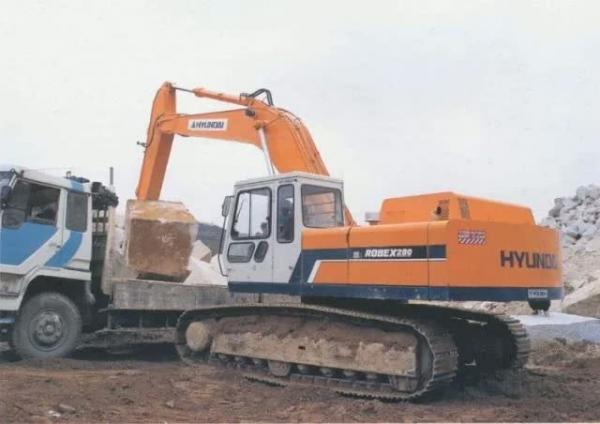
Model Significance
The Hyundai Robex 280 LC is a mid-sized crawler excavator that exemplifies Hyundai Heavy Industries’ push into the competitive excavator market during the mid-1990s. As part of the Robex series—which helped establish Hyundai as a credible contender in global construction equipment—the 280 LC combines reliability with value for money.
Design Era and Background - Development History
Launched in 1994, the 280 LC belongs to a wave of Hyundai excavators gaining traction internationally. It utilizes proven Cummins engine technology, offering familiarity and serviceability for operators already acquainted with similar powerplants. The machine reflects Hyundai’s broader strategy to blend rugged performance with affordability, aiming to capture market share despite not yet having the brand prestige of established manufacturers.
Technical Profile
Here’s a breakdown of its key specifications:- Weight: approximately 26.5 metric tons
- Engine: Cummins 6CT8.3 delivering about 146 kW (~196 horsepower)
- Bucket capacity: around 0.9 m³
- Track width: roughly 710 mm
- Digging depth: up to 23 feet (~7 meters)
Terminology Clarified- Bucket capacity: volume of material the bucket can carry per scoop.
- Track width: width of individual track shoes—affects ground pressure and stability.
- Digging depth: vertical reach from the bucket’s top hinge to the ground—crucial for foundations and trenches.
Performance and Usage
This excavator excels in tasks like farm trenching, foundation digging, and general site prep. With its solid hydraulic performance and efficient engine, it strikes an effective balance of power and weight. The depth capability of around 23 feet makes it versatile for remote rural tasks and lighter construction operations alike.
Market Position and Value
Despite its mid-1990s origin, the 280 LC can still fetch attention for buyers prioritizing cost-effectiveness. Units in good shape may list for under USD 20,000—a bargain compared to modern equivalents—though availability of parts is a known concern.
Common Challenges- Parts availability: Some buyers report difficulty sourcing OEM components for older Robex models.
- Hydraulic quirks: As one operator found, full extension of the dipper could stall the motor, hinting at possible issues in main control valves or pump regulators .
Story from a Farm
Consider a Midwestern farmer eyeing this machine for ditching field drainage. At under USD 20,000, it seemed ideal. But once acquired, he discovered filters needed replacing and some hydraulic response felt sluggish. After investing in a thorough hydraulic flush and sourcing filters—even from surplus suppliers—the machine returned to dependable service, and he still achieved a lower overall cost than new machines.
Modern Comparisons
Today’s excavators weigh about the same but often feature enhanced features such as:- Telemetry systems for maintenance alerts
- Diesel particulate filters for emissions compliance
- Adjustable track width and improved operator comfort
The Robex 280 LC lacks these modern bells and whistles, but its simplicity can be an advantage—maintenance is straightforward, and operating cost remains accessible.
Recommendations for Prospective Buyers
When evaluating a Robex 280 LC, consider:- Inspecting hydraulic lines and testing digging/extending cycles for stall symptoms.
- Ensuring a reliable source for filters and seals before purchase.
- Comparing annual operating costs—including fuel, parts, and potential downtime—against equivalent newer machines.
- Factoring in resale value—while low initially, goodwill resale to the right buyer may recoup more than expected.
Conclusion
The Hyundai Robex 280 LC may not boast modern refinements, but its robust Cummins engine, solid digging capability, and affordability make it a worthy option for budget-conscious users, especially in agricultural or light construction roles. With careful inspection and maintenance, it can offer reliable performance—proving that legacy machinery still holds relevance when handled with foresight.
|
|
|
|
| Tractor Towed Elevators on Garrison Dam |
|
Posted by: MikePhua - 08-31-2025, 07:47 PM - Forum: General Discussion
- No Replies
|
|
The Construction of Garrison Dam
When the Garrison Dam project began in the early 1940s along the Missouri River in North Dakota, it was one of the most ambitious civil engineering undertakings in the United States. Authorized as part of the Flood Control Act of 1944, it aimed not only to control flooding but also to generate hydroelectric power and provide water storage for irrigation. The project required moving an immense volume of earth—over 150 million cubic yards—making it one of the largest earth-fill dams in the world at the time. With such a vast workload, the contractors needed methods that could move soil efficiently before the age of ultra-large scrapers and articulated haulers.
The Role of Tractor Towed Elevators
Among the most critical machines in use during this period were tractor towed elevating scrapers, often referred to simply as tractor towed elevators. These machines combined a scraper bowl with a powered elevator chain that lifted soil into the bowl rather than relying solely on the forward motion of the tractor. This innovation allowed operators to load more effectively in softer or looser materials. Typical units of the time were pulled by heavy tractors such as Caterpillar D8 or Allis-Chalmers HD series, delivering the power needed to handle steep grades and long hauls.
Unlike self-propelled scrapers that would dominate later decades, these tractor-drawn versions required coordination between the tractor operator and sometimes an additional pusher tractor. Their efficiency lay in the balance of cost and output—being cheaper than purchasing fleets of self-propelled units while still delivering high volumes of earthmoving.
Technical Features of the Elevating Scrapers
A standard tractor towed elevator in the 1940s and 1950s typically featured: - A scraper bowl capacity between 8 and 14 cubic yards, depending on model.
- An elevator chain powered by a secondary engine, often gasoline or small diesel, mounted directly on the scraper frame.
- A cutting edge with adjustable depth control to regulate soil intake.
- A system of rollers and chains designed to move earth into the bowl continuously, even in sticky conditions.
This mechanical design eliminated much of the wasted time associated with loading by push tractors alone. While push-loading was still common, the elevator scraper allowed for more consistent loading cycles, making it ideal for projects like Garrison Dam where massive amounts of material had to be shifted quickly.
The Scale of Earthmoving at Garrison Dam
During peak construction years, over 2,500 workers and hundreds of machines operated around the clock. Estimates suggest that at least 400 tractor towed scrapers of different models were in operation at various stages of the dam’s build. Daily earthmoving volumes exceeded one million cubic yards at the height of the project. The dam’s final size—11,300 feet long and 210 feet high—was a testament to the efficiency of these machines.
Challenges and Solutions in Operations
Operators faced several difficulties when using tractor towed elevators:- Soil Variation: Missouri River banks offered a mix of sandy soils, clay, and gravel. Adjusting the elevator chain speed and cutting depth was critical.
- Maintenance: The elevator chain and roller system required frequent lubrication and replacement of worn parts. Breakdowns in the field could halt operations, so spare parts depots were set up nearby.
- Fuel Demands: With both tractor and scraper engines running, fuel logistics became a massive task. Reports from that era suggest that fuel trucks delivered thousands of gallons daily to keep the operation continuous.
Solutions included the introduction of preventive maintenance schedules, standardized training for mechanics, and staggered fueling rotations to minimize downtime.
Historical Development of Elevating Scrapers
The concept of elevating scrapers was developed in the 1930s as contractors sought alternatives to hand loading and cable scrapers. Companies like LeTourneau and Bucyrus-Erie pioneered designs that included powered elevators for faster loading. By the time of World War II, demand for large-scale earthmoving skyrocketed due to military base construction, highways, and dams, pushing manufacturers to refine their machines.
Garrison Dam was one of the proving grounds for these designs. Sales of tractor towed elevators rose significantly after the project, with LeTourneau reportedly selling thousands of units in the late 1940s and early 1950s across the United States and internationally. These machines helped shape infrastructure from irrigation canals in California to airport runways in Europe.
Impact on Future Equipment Design
The success of tractor towed elevators influenced the eventual development of self-propelled elevating scrapers in the 1950s and 1960s. These later machines combined the tractor and scraper into one unit, reducing the need for multiple operators and improving maneuverability. However, the lessons learned at Garrison Dam—regarding durability, soil adaptability, and high-volume efficiency—were central to those later designs.
Personal Stories and Anecdotes
Workers from the Garrison project often recalled the noise and dust that hung over the site. A common memory was the sight of long convoys of scrapers moving in lines, raising clouds visible for miles. In small towns nearby, children would watch the parades of machinery pass daily, sparking lifelong interests in engineering.
One story tells of a mechanic who managed to keep a worn-out elevator chain functioning by fashioning temporary links from farm equipment, allowing the scraper to continue working until proper replacements arrived. Such ingenuity was common, given the immense pressure to maintain production schedules.
Legacy of Tractor Towed Elevators
Today, Garrison Dam continues to serve its original purposes of flood control, irrigation, and power generation. The dam stands as a monument not only to engineering but also to the machines and people who built it. Tractor towed elevators may seem outdated by modern standards, but their role in mid-20th century megaprojects remains undeniable.
Their use demonstrates a pivotal transition in construction history—from manpower and horse-drawn scoops to mechanized earthmoving on an industrial scale. Without them, projects like Garrison Dam would have been far slower and costlier.
|
|
|
|
|



