| Welcome, Guest |
You have to register before you can post on our site.
|
| Forum Statistics |
» Members: 74
» Latest member: Tomo
» Forum threads: 47,413
» Forum posts: 47,419
Full Statistics
|
| Online Users |
There are currently 87 online users.
» 0 Member(s) | 75 Guest(s)
Amazon, Baidu, Bing, Bytespider, Claude, DotBot, Google, OpenAI, Petalbot, Semrush, Seznam, Sogou
|
| Latest Threads |
Identifying and Sourcing ...
Forum: Parts , Attachments & Tools
Last Post: MikePhua
01-07-2026, 06:29 PM
» Replies: 0
» Views: 447
|
Cat 931B Brake Parts
Forum: Parts , Attachments & Tools
Last Post: MikePhua
01-07-2026, 06:29 PM
» Replies: 0
» Views: 269
|
Choosing Between Cat 228,...
Forum: General Discussion
Last Post: MikePhua
01-07-2026, 06:28 PM
» Replies: 0
» Views: 464
|
Fix It or Part It Out
Forum: General Discussion
Last Post: MikePhua
01-07-2026, 06:27 PM
» Replies: 0
» Views: 335
|
Hydraulic Delay When Lowe...
Forum: Troubleshooting & Diagnosing
Last Post: MikePhua
01-07-2026, 06:27 PM
» Replies: 0
» Views: 414
|
Bale Chopper and Mulcher ...
Forum: General Discussion
Last Post: MikePhua
01-07-2026, 06:26 PM
» Replies: 0
» Views: 295
|
Mini UC Maintenance
Forum: General Discussion
Last Post: MikePhua
01-07-2026, 06:25 PM
» Replies: 0
» Views: 283
|
Locating Wiring Informati...
Forum: General Discussion
Last Post: MikePhua
01-07-2026, 06:24 PM
» Replies: 0
» Views: 319
|
Case Industrial Brown Sub...
Forum: Parts , Attachments & Tools
Last Post: MikePhua
01-07-2026, 06:23 PM
» Replies: 0
» Views: 261
|
Dirt Work in West Virgini...
Forum: Construction & Urban Infrastructure Forum
Last Post: MikePhua
01-07-2026, 06:23 PM
» Replies: 0
» Views: 349
|
|
|
| Evaluating a Used John Deere 490E Excavator for Owner-Operator Projects |
|
Posted by: MikePhua - 08-31-2025, 07:47 PM - Forum: General Discussion
- No Replies
|
 |
The JD 490E and Its Historical Footprint
The John Deere 490E hydraulic excavator was introduced in the early 1990s as part of Deere’s E-series lineup, which emphasized improved hydraulic control, operator comfort, and simplified maintenance. Built in collaboration with Hitachi, the 490E shares many design elements with the Hitachi EX100, including a load-sensing hydraulic system and electronically modulated pump controls. With an operating weight around 28,000 lbs and a digging depth of approximately 20 feet, the 490E was positioned as a mid-size excavator suitable for general construction, utility trenching, and light forestry work.
By the late 1990s, thousands of units had been sold across North America, and many remain in service today. However, as with any machine approaching or exceeding 10,000 hours, condition and maintenance history become critical factors in evaluating value and reliability.
Assessing High-Hour Machines and Component Wear
A 490E with 12,000 hours on the meter is well into its second or third lifecycle. While some forestry machines operate reliably past 30,000 hours, excavators in general construction tend to show signs of fatigue earlier due to varied loading conditions and operator habits. Key components to inspect include: - Undercarriage: Track chains, rollers, and sprockets should be checked for wear. A recently replaced undercarriage is a positive sign, but verify with receipts or visual inspection.
- Swing bearing: Excessive play or grinding noises during rotation may indicate wear. Replacement is costly and labor-intensive.
- Hydraulic pumps: Slow or uneven function on one joystick may point to solenoid failure or internal pump degradation.
- Engine: A clean start with no smoke or blow-by is promising, but an oil sample analysis is recommended to detect internal wear.
Terminology Clarification- Load-Sensing Hydraulics: A system that adjusts pump output based on demand, improving efficiency and control.
- Solenoid: An electrically actuated valve used to control hydraulic flow or pump displacement.
- Blow-by: Combustion gases leaking past piston rings into the crankcase, often a sign of engine wear.
- Pilot Signal: A low-pressure hydraulic signal used to control high-pressure components like travel motors.
Electrical and Hydraulic Troubleshooting
One common issue with older 490Es is electrical degradation. Symptoms such as the engine failing to shut off with the key, slow hydraulic functions on one joystick, or travel motors stuck in high gear often trace back to broken wires, failed solenoids, or bypassed control circuits. In one case, a broken wire on a pump solenoid caused the left joystick functions to operate at a crawl, while the right side remained responsive.
The travel system on the 490E uses a three-speed motor with displacement controlled by hydraulic pilot signals. If the machine stalls when tracking, it may be stuck in high-speed mode, requiring more torque than the engine can deliver at low RPM. This can result from stuck motor plates, failed pilot valves, or incorrect wiring.
Evaluating Repair Costs and Practical Workarounds
Before purchasing, it’s wise to price out key replacement parts:- Fuel shut-off solenoid
- Hydraulic pump solenoids
- Travel motor pilot valve
- Swing bearing
- Front windshield panel
Some operators choose to bypass complex repairs with practical solutions. For example, wiring the travel motors permanently into low-speed mode may be acceptable for short-distance movement on private land. Similarly, fabricating a windshield from polycarbonate or steel mesh can restore cab protection without sourcing OEM glass.
Field Experience and Operator Wisdom
A former logger with experience in cut-to-length equipment noted that excavators are intuitive to operate and offer unmatched versatility in rocky terrain. For owner-operators building homes or clearing land, the ability to push with the bucket or reposition with precision makes the excavator a valuable tool—even if it’s not in perfect condition.
However, seasoned mechanics warn against buying machines with multiple unresolved issues. Electrical faults, hydraulic inconsistencies, and missing components often indicate a history of neglect or amateur repairs. One technician described mid-90s Deere-Hitachi machines as “adjustable nightmares,” with too many slotted valves and bypassed electronics that can confuse even experienced troubleshooters.
Recommendations Before Purchase
To make an informed decision:- Bring a mechanic or experienced operator to inspect the machine
- Perform a cold start and observe engine behavior
- Test all hydraulic functions, especially swing and boom speed
- Inspect wiring harnesses and solenoids for damage
- Request service records or parts receipts
- Price out key components to estimate repair budget
- Consider negotiating below asking price based on observed faults
Final Thoughts
The John Deere 490E is a capable excavator with a solid design, but age and wear can turn a bargain into a burden. For hobbyists or owner-builders with mechanical aptitude, a well-priced unit with manageable issues may offer excellent value. However, machines with electrical faults, hydraulic inconsistencies, and high-hour fatigue require careful scrutiny. In the world of used equipment, the difference between a project and a problem often lies in the details—and the willingness to walk away when too many red flags appear.
|

|
|
| Evaluating External Hydraulic Capabilities on the Case 1845C Skid Steer |
|
Posted by: MikePhua - 08-31-2025, 07:43 PM - Forum: General Discussion
- No Replies
|
|
The Case 1845C and Its Hydraulic Legacy
The Case 1845C skid steer loader, introduced in the early 1990s, became one of the most widely used machines in its class. With a production run that lasted well into the 2000s, it earned a reputation for mechanical simplicity, reliability, and versatility. Powered by a 56-horsepower engine, the 1845C featured a gear-driven hydraulic system capable of delivering approximately 16 gallons per minute (GPM) at around 2250 to 2500 PSI. These specs placed it firmly in the “standard flow” category, suitable for a wide range of attachments but limited in high-demand hydraulic applications.
By the mid-1990s, Case had sold tens of thousands of 1800-series skid steers globally, with the 1845C becoming a staple on farms, construction sites, and rental fleets. Its hydraulic system was designed to support basic implements like buckets, forks, and grapples, but not high-flow tools such as cold planers or large rotary cutters.
Understanding Standard Flow Limitations
Standard flow hydraulics, typically defined as 15–25 GPM at pressures below 3000 PSI, are sufficient for most general-purpose attachments. However, they fall short when powering tools that require sustained torque or rapid blade rotation. On the 1845C, the 16 GPM output means that attachments like grapple buckets and trenchers will function adequately, but mowers and augers may struggle under load.
For example: - Grapple buckets: Operate well with standard flow, as they require short bursts of hydraulic pressure
- Concrete breakers: Perform reliably due to intermittent use and lower flow demands
- Ditching attachments: May work, but performance depends on soil type and depth
- Rotary mowers: Will spin, but cutting power and speed will be noticeably reduced
Operators often compensate by increasing engine RPM to boost hydraulic output, but this approach has diminishing returns and increases fuel consumption.
Terminology Clarification
- Standard Flow: Hydraulic output typically between 15–25 GPM at pressures below 3000 PSI
- High Flow: Enhanced hydraulic output, often 30–40 GPM, used for demanding attachments
- GPM (Gallons Per Minute): A measure of hydraulic fluid volume delivered per minute
- PSI (Pounds per Square Inch): A measure of hydraulic pressure
- Auxiliary Hydraulics: External hydraulic ports used to power attachments
High Flow Retrofit Considerations
Retrofitting high flow hydraulics onto an 1845C is technically possible but rarely practical. It involves:- Installing a larger hydraulic pump
- Upgrading hoses, valves, and fittings to handle increased pressure
- Adding a secondary cooler to manage heat
- Replacing or modifying the control system to accommodate dual circuits
In the 1990s, some operators did pursue high flow conversions, especially for snowblowers and stump grinders. However, the cost and complexity often outweighed the benefits. Today, with modern skid steers offering factory-installed high flow circuits and electronic controls, retrofitting an older machine is generally discouraged unless the unit is in exceptional condition and the operator has fabrication expertise.
Operator Insights and Field Experience
One excavation contractor recalled using an 1845C with a mower attachment in the early 2000s. While the blades spun, the machine bogged down in thick grass, requiring multiple passes. He later upgraded to a newer Case model with 24 GPM standard flow and noticed a dramatic improvement in cut quality and speed.
Another operator used a grapple bucket for clearing brush and found the 1845C’s hydraulics more than adequate. The attachment cycled quickly, and the loader’s compact frame allowed maneuvering in tight spaces. For tasks like debris handling and light trenching, the machine remained a reliable performer.
Recommended Attachments for the 1845C
To maximize hydraulic performance without modification:- Grapple bucket
- Hydraulic forks
- Concrete breaker
- Trencher (shallow depth)
- Ditch cleaning bucket
- Post driver (low flow variant)
Avoid using:- Rotary mower (unless cutting light vegetation)
- Cold planer
- High-capacity auger
- Snowblower (unless specifically rated for low flow)
Preventive Maintenance for Hydraulic Longevity
To ensure consistent performance:- Replace hydraulic filters every 250–300 hours
- Use manufacturer-recommended hydraulic fluid
- Inspect hoses for wear, cracking, or leaks
- Monitor fluid temperature during extended use
- Clean quick couplers regularly to prevent contamination
Some operators install inline pressure gauges to monitor system health and detect drops in output before failure occurs.
Final Thoughts
The Case 1845C remains a capable and dependable skid steer, especially when matched with attachments suited to its hydraulic profile. While it lacks the brute force of modern high-flow machines, its simplicity and durability make it ideal for standard-duty tasks. For operators seeking to run demanding implements, upgrading to a newer model may be more cost-effective than retrofitting. But for grapples, breakers, and trenchers, the 1845C still holds its own—proof that good design never goes out of style.
|
|
|
|
| Understanding Custom Rates in Heavy Equipment Operations |
|
Posted by: MikePhua - 08-31-2025, 07:43 PM - Forum: Rental , Leasing & Investment
- No Replies
|
|
Understanding Custom Rates
In the construction and agricultural industries, the concept of “custom rates” refers to the price charged when equipment and operators are hired to perform specific tasks for clients. These rates are not arbitrary—they balance the owner’s expenses, market conditions, and customer expectations. Setting the right custom rate requires considering multiple variables such as fuel consumption, machine depreciation, labor, insurance, and overhead. For example, a skid steer loader may have an hourly rate ranging between 75 to 125 dollars depending on region, fuel prices, and job complexity.
Factors Influencing Pricing
Several elements shape how operators determine their charges: - Fuel costs: Diesel prices can fluctuate heavily, and since most heavy equipment relies on diesel, this is often the most sensitive factor in rates.
- Maintenance and repair: Equipment like excavators or dozers need routine servicing, replacement of hydraulic hoses, and sometimes costly rebuilds. Owners factor these expenses into hourly charges.
- Depreciation: A machine like a Caterpillar D6 dozer, costing upwards of 300,000 dollars new, loses value every hour it runs. Depreciation is often hidden but crucial in pricing.
- Insurance and liability: Contractors must cover themselves in case of accidents, breakdowns, or jobsite damage.
- Labor skill: An experienced operator is more efficient, which often justifies a higher rate.
Regional Differences
Rates can vary widely depending on geography. In areas with dense construction demand—such as urban development corridors—operators may command higher charges. Rural areas, where farming jobs such as land clearing or ditching are common, often see lower rates because of lighter demand. For instance, in the Midwest, custom rates for agricultural tractors with operators often hover around 35 to 55 dollars per hour, while in coastal urban markets, even compact equipment may exceed 100 dollars per hour.
Examples of Custom Work
Common categories of work where custom rates apply include:- Land clearing and grading: Bulldozers, graders, and skid steers are used to prepare sites.
- Excavation and trenching: Excavators and backhoes dig for foundations, utilities, and drainage.
- Snow removal: Wheel loaders and skid steers push or haul snow, usually billed per event or by hourly rates.
- Agricultural support: Tractors with attachments bale hay, spread manure, or dig drainage ditches.
- Hauling services: Dump trucks deliver aggregates or remove debris, often billed per load or per mile.
Industry Benchmarks and Data
Reports from agricultural extension services in the United States show that average custom hiring costs for farm equipment have risen by nearly 20% over the last five years, largely due to fuel and labor inflation. Similarly, construction equipment rental rates reported by market research firms have seen steady increases. A mid-sized excavator today may average 150–200 dollars per hour with operator, while compact track loaders are closer to 90–120 dollars per hour.
Balancing Profitability and Competition
Operators face the challenge of staying profitable without overpricing themselves out of the market. Too low a rate may attract clients but leaves little margin for breakdowns or insurance. Too high a rate risks losing work to competitors. Successful contractors often build trust with clients by providing reliable service, well-maintained equipment, and transparent billing practices.
Stories from the Field
One small contractor in Montana shared that he originally priced his services too low, failing to account for the cost of transporting his bulldozer to sites. After realizing his fuel bills were eating into profits, he revised his rates upward and introduced a minimum mobilization fee. Another example comes from Ontario, where a snow removal operator with a compact loader shifted to per-season flat fees rather than hourly billing, creating steady income regardless of snowfall volume. These stories highlight that real-world experiences often shape pricing strategies more than theoretical calculations.
Long-Term Considerations
As equipment technology evolves, with machines becoming more fuel-efficient and equipped with telematics, contractors can track their costs more precisely. Predictive maintenance systems reduce downtime, which in turn helps stabilize custom rates. In the long run, operators who invest in modern equipment and efficient practices often maintain more competitive pricing.
Practical Recommendations- Always calculate full ownership and operating costs before setting a rate.
- Adjust pricing annually to reflect fuel, insurance, and labor changes.
- Consider adding minimum charges for mobilization to protect against short jobs.
- Offer both hourly and project-based pricing to fit client preferences.
- Keep detailed records of machine hours, fuel use, and repairs to refine future rates.
Conclusion
Custom rates in heavy equipment work are not static—they reflect a combination of machine costs, regional markets, and operator strategy. By carefully analyzing expenses and adjusting to market realities, contractors can remain competitive while ensuring long-term sustainability. In an industry where margins can be slim and equipment investments are substantial, understanding and managing custom rates is as critical as operating the machines themselves.
|
|
|
|
| Solving Transmission Seal and Cooling Hose Issues on the Caterpillar 935CII Loader |
|
Posted by: MikePhua - 08-31-2025, 07:41 PM - Forum: Troubleshooting & Diagnosing
- No Replies
|
|
The 935CII and Its Powertrain Design
The Caterpillar 935CII track loader, produced in the early 1990s, was part of Cat’s mid-size loader lineup designed for rugged earthmoving and site preparation. Equipped with a 3-speed powershift transmission and torque converter, the 935CII offered smooth directional changes and reliable hydraulic performance. Its compact footprint and robust undercarriage made it popular for clearing, grading, and utility work. Though no longer in production, thousands of units remain in service, especially in rural and owner-operated fleets.
The transmission system on the 935CII relies on a sealed filter housing and a dedicated cooling circuit for the torque converter. When these components fail—whether due to aging seals or damaged hoses—fluid loss and overheating can quickly compromise performance.
Transmission Filter Cap Seal Fitment Issues
One common frustration involves replacing the transmission filter cap seal. The original seal, typically part number 5K1770, is designed to fit snugly into the groove of the filter housing. However, aftermarket versions of this seal often differ slightly in diameter or material flexibility. Even a minor size discrepancy can cause the seal to pinch or extrude during installation, leading to leaks and premature failure.
In one case, an operator installed an aftermarket seal that appeared to match the part number but was slightly oversized. Upon tightening the cap, the seal deformed and disintegrated, leaving a trail of fluid and a damaged groove. The solution came in the form of a genuine Caterpillar-branded seal, which fit precisely and held under pressure when installed with a thin layer of grease to seat it properly.
This highlights a broader lesson: while aftermarket parts can offer savings, seals and gaskets—especially those under pressure—are best sourced from OEM suppliers to ensure dimensional accuracy and material compatibility.
Terminology Clarification
- Transmission Filter Cap Seal: A rubber or synthetic ring that prevents fluid leakage at the filter housing
- O-Ring: A circular sealing element used in hydraulic and fluid systems
- Groove: The recessed channel in a housing where the seal sits
- OEM: Original Equipment Manufacturer, referring to parts made to factory specifications
- Aftermarket: Parts produced by third-party suppliers, often with slight design variations
Torque Converter Cooling Hose Replacement Challenges
The torque converter on the 935CII uses a pair of hydraulic hoses to circulate cooling fluid. These hoses are routed tightly around the transmission and engine bay, making access difficult. When one of these hoses begins to leak—either from a cut or degraded outer jacket—replacement becomes a logistical puzzle.
In a documented repair, the upper hose on the left side of the converter was leaking and nearly inaccessible due to its position above another hose. After soaking the fittings with penetrating oil, the operator attempted removal but found no room for a standard wrench. The solution involved cutting the damaged hose near the fitting with a reciprocating saw, allowing a socket to be placed directly on the nut.
For reinstallation, a 1¼-inch crowfoot wrench on a long extension was recommended to reach the fitting without disassembling surrounding components. This approach saved hours of labor and avoided disturbing other hydraulic lines.
Best Practices for Hose Replacement - Use penetrating oil and allow time for soak-in before attempting removal
- Cut damaged hoses near the fitting to gain access with standard tools
- Use crowfoot wrenches and extensions for tight spaces
- Replace both hoses if one shows signs of stiffness or jacket degradation
- Inspect fittings for scoring or corrosion before installing new hoses
Field Wisdom and Operator Experience
One operator shared that after months of cosmetic and service work on his 935CII, his first field test ended abruptly when a hydraulic hose burst, spraying fluid across the cab. The failure occurred at the bucket cylinder feed line, a reminder that aged hoses can rupture under pressure even after minor use. His quick thinking—shutting down the engine and avoiding further hydraulic engagement—prevented additional damage.
Another technician emphasized the importance of checking fluid levels before restarting after a leak. Running the system dry can cause pump cavitation and internal scoring, leading to expensive repairs.
Preventive Maintenance Recommendations
To avoid similar issues:- Replace seals and hoses with OEM parts when possible
- Apply grease to o-rings during installation to prevent pinching
- Inspect hoses annually for cracks, stiffness, or jacket separation
- Keep crowfoot wrenches and long extensions in your tool kit
- Flush hydraulic systems after major hose failures to remove contaminants
Final Thoughts
The Caterpillar 935CII remains a capable and serviceable machine, but its transmission and cooling systems require precision and patience. Small parts like seals and hoses may seem minor, but they play a critical role in keeping the loader operational. With the right tools, quality components, and field-tested techniques, even tight spaces and stubborn fittings can be conquered. In the world of heavy equipment, success often comes down to the details—and the willingness to get dirty solving them.
|
|
|
|
| Takeuchi TB235-2 Throttle Control Issues |
|
Posted by: MikePhua - 08-31-2025, 07:40 PM - Forum: Troubleshooting & Diagnosing
- No Replies
|
|
Introduction
The Takeuchi TB235-2 is a compact, 3.5-ton mini excavator known for its reliability and performance in various construction tasks. Equipped with a Yanmar 3TNV88 engine, it offers 24.4 horsepower at 2,400 rpm and a maximum digging depth of 3,245 mm. Despite its robust design, some operators have reported issues with the throttle control system, particularly the electronic throttle not responding as expected.
Throttle Control System Overview
The TB235-2 utilizes an electronic throttle control system, which allows the operator to adjust engine speed via a dial-type throttle control. This system also features an automatic idle function that reduces engine speed to low idle when the machine is idling for several seconds, enhancing fuel efficiency and reducing engine wear. The throttle system is integrated with the machine's electronic control unit (ECU), which manages engine performance and responds to operator inputs.
Common Throttle Issues
- Unresponsive Throttle Input
Some operators have reported that pressing the throttle switch does not result in an increase in engine speed. This issue persists even when the throttle switch appears to be in good condition. Potential causes include:- Faulty Throttle Switch: The switch may not be sending the correct signal to the ECU.
- Wiring Issues: Loose or damaged wiring connections can disrupt the signal transmission.
- ECU Malfunction: A malfunctioning ECU may fail to process throttle inputs correctly.
- Throttle Cable Problems
In some cases, the throttle cable may become damaged or disconnected. For instance, a user reported that the cable controlling the throttle from the auto actuator was broken, causing the throttle to remain unresponsive. Replacing the damaged cable resolved the issue.
- Auto Idle Function Failure
The auto idle feature, which automatically reduces engine speed when the machine is idling, may stop working if the throttle control system is not functioning properly. This can lead to higher fuel consumption and increased engine wear.
Diagnostic and Repair Steps
- Inspect the Throttle Switch
- Check for any visible damage or wear on the throttle switch.
- Test the switch for continuity using a multimeter to ensure it is functioning correctly.
- Examine Wiring Connections
- Inspect all wiring connections between the throttle switch, ECU, and throttle actuator.
- Look for signs of corrosion, loose connections, or damaged wires.
- Test the ECU
- If the throttle switch and wiring are in good condition, the issue may lie with the ECU.
- Use diagnostic tools to check the ECU for any fault codes or malfunctions.
- Check the Throttle Cable
- Inspect the throttle cable for any signs of damage or disconnection.
- If the cable is damaged, replace it with a new one.
Preventative Maintenance- Regular Inspections: Conduct regular inspections of the throttle control system, including switches, wiring, and cables, to identify potential issues before they become major problems.
- Proper Storage: Store the machine in a clean, dry environment to prevent corrosion and damage to electrical components.
- Use Quality Parts: Always use genuine Takeuchi parts for replacements to ensure compatibility and reliability.
Conclusion
Throttle control issues in the Takeuchi TB235-2 can stem from various components, including the throttle switch, wiring, ECU, and throttle cable. By systematically diagnosing and addressing these components, operators can restore proper throttle function and maintain the machine's performance. Regular maintenance and prompt attention to any issues can help prevent throttle control problems and ensure the longevity of the TB235-2.
|
|
|
|
| Diagnosing and Resolving the 100-Amp Fuse Blowout in Bobcat S300 Skid Steer |
|
Posted by: MikePhua - 08-31-2025, 05:51 PM - Forum: Troubleshooting & Diagnosing
- No Replies
|
|
Introduction
The Bobcat S300 skid steer loader is a versatile and powerful machine widely used in construction, landscaping, and agriculture. However, some operators have reported a recurring issue where the 100-amp fuse blows shortly after startup, causing the machine to shut down. This problem can lead to significant downtime and repair costs if not addressed promptly. Understanding the potential causes and solutions is crucial for maintaining the machine's reliability and performance.
Understanding the 100-Amp Fuse in Bobcat S300
The 100-amp fuse in the Bobcat S300 serves as a critical component in the electrical system, protecting the machine's circuits from overloads and short circuits. Located near the battery compartment, this fuse ensures that excessive current does not damage sensitive electrical components. When the fuse blows, it interrupts the power supply, causing the machine to stop operating.
Common Causes of Fuse Blowouts
- Short Circuits in the Electrical System
A common cause of fuse blowouts is a short circuit, where a wire or component comes into contact with a ground or another wire, creating an unintended path for the electrical current. This can lead to excessive current flow, causing the fuse to blow. Operators have reported that even after replacing the fuse, the issue persists, indicating a deeper electrical problem .
- Faulty Starter Solenoid
The starter solenoid is responsible for engaging the starter motor when the ignition is turned on. If the solenoid is faulty or its wiring is loose, it can cause a high current draw, leading to the fuse blowing. In some cases, operators have noticed that the solenoid wire was not tight, which could contribute to the issue .
- Overloaded Electrical Components
Electrical components such as the alternator, glow plugs, or fuel shut-off solenoid can draw excessive current if they are malfunctioning. For instance, a dead short in a glow plug can cause the 100-amp fuse to blow, as reported by operators who experienced similar issues .
- Worn or Damaged Wiring
Over time, the wiring harness in the Bobcat S300 can become worn or damaged due to exposure to harsh operating conditions. Frayed or exposed wires can create short circuits, leading to fuse blowouts. Regular inspection and maintenance of the wiring harness are essential to prevent such issues.
Diagnostic Steps
- Inspect the 100-Amp Fuse
Begin by inspecting the 100-amp fuse for any visible signs of damage. If the fuse is blown, replace it with a new one of the same rating. Attempt to start the machine again to see if the issue persists.
- Check the Starter Solenoid and Wiring
Examine the starter solenoid for any signs of wear or damage. Ensure that the wiring connections are secure and free from corrosion. A loose or faulty solenoid can cause excessive current draw, leading to fuse blowouts.
- Test Electrical Components
Use a multimeter to test the electrical components connected to the 100-amp fuse, such as the alternator, glow plugs, and fuel shut-off solenoid. Check for any irregular current draw or signs of malfunction. Replace any faulty components as necessary.
- Inspect the Wiring Harness
Thoroughly inspect the wiring harness for any signs of wear, fraying, or damage. Pay close attention to areas where the wiring may be exposed to heat or abrasion. Repair or replace any damaged wiring to prevent short circuits.
Preventative Measures- Regular Maintenance
Adhere to the manufacturer's recommended maintenance schedule, including regular inspections of the electrical system and wiring harness. Regular maintenance can help identify potential issues before they lead to fuse blowouts.
- Use Quality Components
Ensure that replacement parts, such as fuses and electrical components, meet or exceed OEM specifications. Using substandard components can lead to further electrical issues and potential damage to the machine.
- Proper Storage and Handling
Store the Bobcat S300 in a clean, dry environment to protect the electrical system from moisture and contaminants. Proper handling and storage can prolong the life of the electrical components and reduce the risk of fuse blowouts.
Conclusion
Experiencing a blown 100-amp fuse in the Bobcat S300 shortly after startup can be indicative of underlying electrical issues, such as short circuits, faulty components, or damaged wiring. By systematically diagnosing the problem and addressing the root cause, operators can restore the machine's functionality and prevent future occurrences. Regular maintenance and the use of quality components are essential for ensuring the longevity and reliability of the Bobcat S300 skid steer loader.
|
|
|
|
| Troubleshooting the Liebherr R912 Litronic Excavator's Intermittent Power Loss |
|
Posted by: MikePhua - 08-31-2025, 05:50 PM - Forum: Troubleshooting & Diagnosing
- No Replies
|
|
Introduction
The Liebherr R912 Litronic excavator is a robust machine renowned for its versatility and reliability in various construction and mining applications. However, like any complex hydraulic system, it can experience issues that affect performance. One such problem reported by operators is intermittent power loss, where the machine slows down unexpectedly, often accompanied by electrical anomalies such as blown fuses and erratic pump behavior.
Understanding the Issue
Operators have reported that during operation, the R912 Litronic exhibits sudden slowdowns, with the hydraulic pump losing electrical current. In some cases, a fuse dedicated to the pump's angle regulation has blown, and replacing the fuse does not resolve the issue. The machine's RPM sensor appears to function intermittently, and in manual mode, the system only sends 450mA to one pump, indicating potential electrical or control system malfunctions.
Potential Causes
- Electrical System Faults
Intermittent electrical issues can disrupt the hydraulic system's performance. Loose or corroded connections, damaged wiring, or faulty sensors can cause inconsistent signals, leading to the hydraulic pump entering a safe mode or operating at reduced capacity. For instance, a malfunctioning engine speed sensor can trigger the hydraulic pump's safe mode, limiting its output to prevent damage.
- Hydraulic Pump Control Unit (HPCU) Issues
The HPCU is responsible for regulating the hydraulic pump's performance. Faults within the HPCU, such as internal component failures or calibration errors, can lead to improper pump operation. Symptoms may include the pump operating at reduced capacity or erratically, as reported by operators experiencing power loss.
- Sensor Malfunctions
Sensors play a crucial role in monitoring and controlling the excavator's systems. A faulty RPM sensor, for example, can provide incorrect data to the control system, causing it to mismanage hydraulic functions. This mismanagement can result in the hydraulic pump operating below optimal levels, leading to performance issues.
- Control Valve Spool Sticking
The main control valve spool directs hydraulic fluid to various components. If the spool or its internal components become sticky or fail to move freely, it can restrict hydraulic flow, causing slow or erratic machine movements. Operators have noted that such issues can lead to the machine operating slowly or inconsistently.
Diagnostic Steps
- Inspect Electrical Connections
Begin by examining all relevant electrical connections for signs of wear, corrosion, or looseness. Ensure that connectors are secure and free from damage. Use a multimeter to check for continuity and voltage at key points in the circuit.
- Test Sensors
Utilize diagnostic tools to test the functionality of sensors, particularly the RPM sensor. Verify that sensor outputs are within specified ranges and that they respond appropriately to changes in machine operation.
- Check Hydraulic Pump Control Unit
Assess the HPCU for signs of malfunction. This may involve checking for error codes, inspecting internal components for wear, and ensuring that the unit is properly calibrated.
- Examine Control Valve Spool
Inspect the main control valve spool for smooth operation. Look for any debris, wear, or sticking that could impede its movement. Cleaning or replacing the spool may be necessary if issues are found.
Preventative Measures- Regular Maintenance
Adhere to the manufacturer's recommended maintenance schedule, including regular inspections of electrical and hydraulic systems. This proactive approach can help identify potential issues before they lead to significant problems.
- Use Quality Components
Ensure that replacement parts meet or exceed OEM specifications. Using substandard components can introduce new issues or fail to resolve existing ones.
- Training and Awareness
Provide operators with training on recognizing early signs of system malfunctions. Early detection can lead to quicker resolutions and minimize downtime.
Conclusion
Intermittent power loss in the Liebherr R912 Litronic excavator can stem from various sources, including electrical faults, sensor malfunctions, and issues within the hydraulic system. By systematically diagnosing these areas and adhering to preventative maintenance practices, operators can ensure the machine's optimal performance and longevity. Addressing these issues promptly is crucial to maintaining productivity and avoiding costly repairs.
|
|
|
|
| Diagnosing Brake Drag on the Caterpillar D5H Dozer |
|
Posted by: MikePhua - 08-31-2025, 05:49 PM - Forum: Troubleshooting & Diagnosing
- No Replies
|
|
The D5H and Its Role in Mid-Size Earthmoving
Caterpillar’s D5H dozer, introduced in the late 1980s, was part of the H-series lineup that brought hydrostatic drive and improved operator ergonomics to mid-size track-type tractors. Designed for grading, clearing, and slope work, the D5H offered a balance of power and maneuverability, making it popular in forestry, road building, and site prep. With an operating weight around 30,000 lbs and a 130 hp engine, it filled the gap between lighter finish dozers and heavier push machines like the D6R.
The D5H’s braking system is integral to its steering and safety. Unlike older clutch-and-brake designs, the H-series uses wet disc brakes housed within the final drives. These brakes are hydraulically actuated and spring-applied, meaning they default to the engaged position when hydraulic pressure is lost—a safety feature that can also complicate diagnostics.
Symptoms of Brake Drag and Performance Loss
Brake drag in the D5H typically presents as sluggish movement, increased fuel consumption, and difficulty turning. Operators may notice the machine hesitating during directional changes or requiring higher throttle to maintain speed. In severe cases, the tracks may bind, and the machine may stall under load.
One telltale sign is excessive heat in the final drive housings. If the brakes are partially engaged, friction builds up, leading to overheating and premature wear. In some cases, the machine may pull to one side, indicating uneven brake engagement.
Terminology Clarification
- Wet Disc Brake: A brake system using oil-cooled friction discs enclosed in a sealed housing
- Final Drive: The gear assembly at each track that transmits torque from the transmission
- Spring-Applied Hydraulic Release (SAHR): A brake design where springs engage the brake and hydraulic pressure releases it
- Brake Valve: A hydraulic control unit that regulates pressure to the brake actuators
- Steering Clutch: A component in older dozers used to disengage drive to one track for turning
Common Causes of Brake Drag
Several factors can contribute to brake drag in the D5H: - Contaminated Hydraulic Fluid
Dirt, water, or metal particles in the brake circuit can clog valves and restrict flow. This prevents full release of the brakes, causing partial engagement.
- Sticking Brake Valve
The brake valve may become sticky due to varnish buildup or internal wear. If the spool doesn’t return to the neutral position, pressure may remain trapped in the actuator.
- Weak or Broken Return Springs
In SAHR systems, springs are critical for brake engagement. If a spring breaks or weakens, the brake may not release fully even with proper hydraulic pressure.
- Worn Brake Discs or Seals
Excessive wear on the friction discs or internal seals can cause uneven engagement or fluid leakage, leading to drag and reduced braking efficiency.
- Improper Adjustment or Linkage Binding
Mechanical linkages between the control lever and valve may bind or misalign, preventing full actuation or release.
Diagnostic Steps and Field Solutions
To diagnose brake drag:- Check hydraulic fluid condition and level
- Inspect brake valve for smooth operation and spool return
- Measure pressure at the brake actuator ports using a 500 psi gauge
- Remove final drive covers and inspect disc stack for wear or discoloration
- Verify spring integrity and actuator movement
- Test linkage for free movement and proper adjustment
In one case, a contractor in Oregon found that his D5H’s brake valve had internal scoring from contaminated fluid. After replacing the valve and flushing the system, the drag disappeared. Another operator in Alberta discovered a broken return spring during a teardown, which had caused intermittent brake engagement on the left track.
Preventive Maintenance and Best Practices
To avoid brake drag:- Change hydraulic fluid and filters every 500 hours
- Use OEM-approved fluids to prevent seal degradation
- Inspect brake valve and actuator during annual service
- Monitor final drive temperatures during operation
- Train operators to recognize early signs of drag or resistance
Some fleets install temperature sensors on the final drives to detect overheating early. Others use magnetic drain plugs to catch metal particles before they circulate through the brake system.
Final Thoughts
Brake drag in the Caterpillar D5H is more than a nuisance—it’s a warning sign of hydraulic imbalance, mechanical wear, or contamination. With a methodical approach to diagnosis and a solid understanding of the SAHR system, operators and technicians can restore full braking performance and extend the life of critical components. In the field, where every hour counts, smooth steering and reliable braking are not luxuries—they’re necessities.
|
|
|
|
| Hyster 50 Forklift Overview and Troubleshooting Guide |
|
Posted by: MikePhua - 08-31-2025, 05:49 PM - Forum: Troubleshooting & Diagnosing
- No Replies
|
|
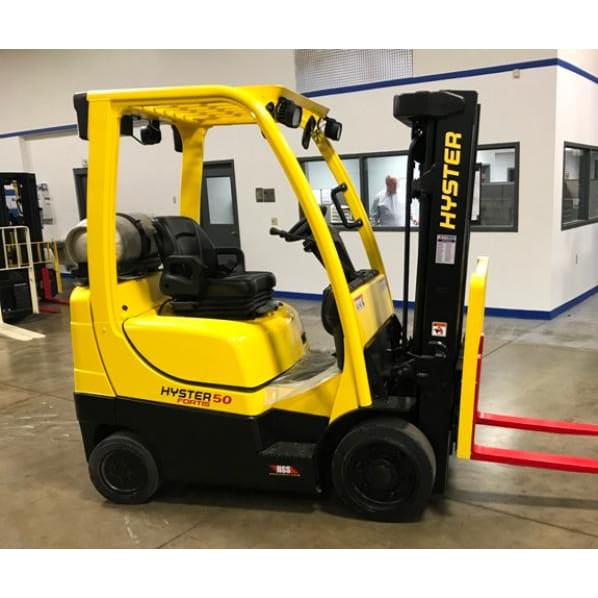
Introduction
The Hyster 50 series forklifts, including models like the H50FT, are renowned for their durability and versatility in material handling applications. These internal combustion cushion tire forklifts are commonly powered by LPG engines, such as the PSI 2.4L or Kubota 2.5L, and are designed for both indoor and outdoor operations. With a load capacity of 5,000 lbs and a lift height of up to 11 feet, they are well-suited for warehouses, distribution centers, and manufacturing facilities.
Specifications - Load Capacity: 5,000 lbs (2,268 kg)
- Load Center: 24 inches (610 mm)
- Engine: PSI 2.4L or Kubota 2.5L LPG
- Tire Type: Cushion (solid rubber)
- Mast Options: Two-stage or three-stage
- Lift Height: Up to 11 feet (3.35 m)
- Turning Radius: Approximately 7 feet (2.13 m)
- Ground Clearance: 6 inches (152 mm)
- Operating Weight: Approximately 8,650 lbs (3,922 kg)
- Fuel Capacity: 11 gallons (41.6 liters)
- Hydraulic System Relief Valve Pressure: 2,250 psi (15.5 MPa)
- Max Speed: 11 mph (17.7 km/h)
Common Issues and Troubleshooting
- Engine Starting Problems
If the forklift fails to start, consider the following checks:- Ignition Spark: Ensure the spark plugs are functioning correctly.
- Fuel System: Verify that the fuel system is delivering fuel properly.
- Timing Belt: Check for any issues with the timing belt, such as slippage or wear.
- Fuel Mixer: Inspect the fuel mixer for proper operation; a faulty mixer can prevent the engine from starting.
For instance, a user reported that after replacing the fuel bottle, the forklift still failed to start. Further investigation revealed that the fuel mixer was not creating sufficient vacuum, leading to starting issues.
- Transmission Not Engaging
If the forklift doesn't move forward or reverse, check the following:- Transmission Fluid: Ensure the fluid level and condition are adequate.
- Directional Control Valve: Inspect for proper operation and any leaks.
- Solenoids and Linkages: Check for faults that may prevent gear engagement.
- Drive Motor: Examine for any damage or corrosion in the drive motor and related electrical connections.
Regular maintenance of hydraulic fluid and filters can also help prevent such issues.
- Hydraulic System Failures
Hydraulic issues can manifest as unresponsive steering or lifting mechanisms. To troubleshoot:- Hydraulic Fluid: Check the fluid level and quality.
- Hydraulic Valves: Inspect for blockages or malfunctions.
- Pump Operation: Ensure the hydraulic pump is functioning correctly.
- Cylinder Seals: Look for leaks that could cause loss of pressure.
A user experienced a situation where the forklift's clutch pedal became inoperative due to a failure in the hydraulic assist system, highlighting the importance of regular hydraulic system maintenance.
Maintenance Tips- Regular Fluid Checks: Monitor engine oil, transmission fluid, and hydraulic fluid levels regularly.
- Scheduled Inspections: Conduct periodic inspections of key components, including the engine, transmission, and hydraulic systems.
- Proper Storage: Store the forklift in a dry, sheltered environment to prevent corrosion and damage.
- Operator Training: Ensure operators are trained in proper forklift operation and maintenance practices.
Conclusion
The Hyster 50 series forklifts are robust machines designed for demanding material handling tasks. By understanding their specifications and common issues, operators and maintenance personnel can ensure optimal performance and longevity of these forklifts. Regular maintenance and prompt attention to potential problems are key to minimizing downtime and maximizing productivity.
|
|
|
|
| Changing the Hydraulic Oil Filter on a John Deere 310D Backhoe |
|
Posted by: MikePhua - 08-31-2025, 05:48 PM - Forum: Troubleshooting & Diagnosing
- No Replies
|
|
The John Deere 310D and Its Hydraulic System
The John Deere 310D backhoe loader, introduced in the early 1990s, was part of Deere’s highly successful 310 series. Known for its rugged build and dependable performance, the 310D featured a closed-center hydraulic system powered by a gear-type pump. This system provided consistent flow and pressure for both loader and backhoe functions, making it a favorite among contractors and municipalities. With thousands of units sold across North America, the 310D remains a workhorse in the field, especially in rural and utility applications.
The hydraulic system on the 310D relies heavily on clean fluid and proper filtration. Contaminants like metal shavings, dust, and moisture can quickly degrade seals, score cylinders, and clog valves. Regular filter changes are essential to maintain system integrity and prevent costly repairs.
Locating and Replacing the Hydraulic Filter
On the 310D, the hydraulic oil filter is mounted externally, typically on the right side of the machine near the loader frame. It’s a spin-on type, similar in appearance to an engine oil filter but designed for high-pressure hydraulic fluid. The filter housing is connected to the return line, meaning it captures contaminants before fluid re-enters the reservoir.
Steps for replacement: - Park the machine on level ground and lower all implements
- Shut off the engine and relieve hydraulic pressure by cycling the controls
- Locate the filter housing and clean the area to prevent debris from entering
- Use a strap wrench or filter tool to remove the old filter
- Inspect the gasket surface and clean thoroughly
- Apply hydraulic oil to the new filter’s gasket and install by hand until snug
- Start the engine and check for leaks
- Monitor fluid level and top off if necessary
The recommended replacement interval is every 500 operating hours, though dusty or high-load environments may require more frequent changes.
Terminology Clarification
- Closed-Center System: A hydraulic design where fluid flow is stopped when controls are in neutral
- Return Line: The hydraulic line that carries fluid back to the reservoir after use
- Spin-On Filter: A self-contained filter unit that screws onto a threaded mount
- Gasket Surface: The metal ring where the filter seals against the housing
- Strap Wrench: A tool used to grip and remove cylindrical components like filters
Common Mistakes and Troubleshooting
Operators sometimes confuse the hydraulic filter with the transmission filter, especially on older machines with multiple spin-on units. Installing the wrong filter can restrict flow or cause bypass valve failure. Always verify the part number—John Deere typically uses a filter like AT101565 for the 310D, but aftermarket equivalents must match pressure and micron rating.
Another issue arises when the old gasket remains stuck to the housing. Installing a new filter over the old gasket can cause leaks or blowouts. Always inspect the sealing surface after removal.
If hydraulic functions become sluggish after a filter change, check for:- Air trapped in the system
- Low fluid level
- Incorrect filter type
- Clogged suction screen in the reservoir
In one case, a contractor replaced the filter but forgot to refill the reservoir. The loader arms stalled mid-lift, and the backhoe wouldn’t swing. After topping off the fluid and bleeding the system, full function returned.
Preventive Maintenance and System Health
To extend the life of the hydraulic system:- Use only clean, manufacturer-approved hydraulic oil
- Store fluid in sealed containers to prevent moisture contamination
- Replace filters on schedule and inspect for metal particles
- Keep breather caps and dipsticks clean
- Monitor for unusual noises, jerky movement, or overheating
Some operators install magnetic drain plugs or inline screens to catch early signs of wear. These additions can reveal pump degradation or cylinder scoring before symptoms appear.
Final Thoughts
The hydraulic system is the lifeblood of the John Deere 310D, powering everything from bucket curl to boom swing. A simple filter change, done correctly, protects thousands of dollars in components and keeps the machine working reliably. In the field, downtime is costly—and clean fluid is cheap insurance. Whether you're trenching for utilities or loading gravel, a well-maintained hydraulic system ensures the 310D delivers the performance it was built for.
|
|
|
|
|



