| Welcome, Guest |
You have to register before you can post on our site.
|
| Forum Statistics |
» Members: 79
» Latest member: cioCruch
» Forum threads: 47,411
» Forum posts: 47,417
Full Statistics
|
| Online Users |
There are currently 222 online users.
» 0 Member(s) | 216 Guest(s)
Ahrefs, Amazon, Bing, Claude, Google, Semrush
|
| Latest Threads |
Identifying and Sourcing ...
Forum: Parts , Attachments & Tools
Last Post: MikePhua
01-07-2026, 06:29 PM
» Replies: 0
» Views: 508
|
Cat 931B Brake Parts
Forum: Parts , Attachments & Tools
Last Post: MikePhua
01-07-2026, 06:29 PM
» Replies: 0
» Views: 280
|
Choosing Between Cat 228,...
Forum: General Discussion
Last Post: MikePhua
01-07-2026, 06:28 PM
» Replies: 0
» Views: 533
|
Hydraulic Delay When Lowe...
Forum: Troubleshooting & Diagnosing
Last Post: MikePhua
01-07-2026, 06:27 PM
» Replies: 0
» Views: 438
|
Bale Chopper and Mulcher ...
Forum: General Discussion
Last Post: MikePhua
01-07-2026, 06:26 PM
» Replies: 0
» Views: 316
|
Mini UC Maintenance
Forum: General Discussion
Last Post: MikePhua
01-07-2026, 06:25 PM
» Replies: 0
» Views: 304
|
Locating Wiring Informati...
Forum: General Discussion
Last Post: MikePhua
01-07-2026, 06:24 PM
» Replies: 0
» Views: 339
|
Case Industrial Brown Sub...
Forum: Parts , Attachments & Tools
Last Post: MikePhua
01-07-2026, 06:23 PM
» Replies: 0
» Views: 274
|
Dirt Work in West Virgini...
Forum: Construction & Urban Infrastructure Forum
Last Post: MikePhua
01-07-2026, 06:23 PM
» Replies: 0
» Views: 371
|
D207 P Hydraulic Steering...
Forum: Parts , Attachments & Tools
Last Post: MikePhua
01-07-2026, 06:22 PM
» Replies: 0
» Views: 300
|
|
|
| Reviving the 1948 Hough HF Loader: A Mechanical Legacy from the Dawn of Industrial Earthmoving |
|
Posted by: MikePhua - 08-08-2025, 09:06 PM - Forum: General Discussion
- No Replies
|
 |
A Glimpse into the Post-War Construction Era
The 1948 Hough HF loader represents a pivotal moment in construction equipment history. Emerging just after World War II, this machine was part of the early wave of industrial mechanization that redefined how America—and much of the world—moved earth. Built by Frank G. Hough Co., one of the pioneers of the modern wheel loader, the HF model exemplified durability, mechanical simplicity, and raw utility before the advent of electronics, hydraulics integration, or operator comfort.
Mechanical Simplicity as a Strength
Unlike today’s equipment laden with sensors, computers, and multiplexed control systems, the Hough HF was a masterpiece of pure mechanical design. Its operation relied entirely on linkages, gear drives, mechanical levers, and air over hydraulic systems. This made the machine incredibly robust—and also forgiving to operators who knew how to "feel" their machine rather than read diagnostics.
Key characteristics of the 1948 HF Loader include: - Gasoline-powered engine, likely a Waukesha inline 6, though some models were retrofitted with Continental or other powerplants over the years.
- Mechanical transmission, typically a 4-speed manual, sometimes with a separate gear reduction box.
- Air-assisted hydraulic system, which used an engine-driven compressor to provide air pressure for lifting and tilting.
- Chain-drive rear axles, enclosed in steel housings with planetary reduction hubs.
- Heavy plate steel frame, riveted and welded for structural strength.
These loaders were built to survive abuse, neglect, and time—and many did. Survivors today are often found in barns, scrap yards, or the back corners of old quarries.
Challenges of Restoration
Restoring a machine from 1948 isn’t a project—it’s a resurrection. Even machines that appear structurally sound may have suffered from decades of:- Water intrusion into gearboxes and final drives, leading to pitting or rusted internals.
- Collapsed air compressor systems, which are critical for lifting operation.
- Cracked or weathered hydraulic hoses and steel tubing.
- Obsolete fittings, such as inverted flare, pipe thread, or early compression types no longer in common use.
- Missing components, including hand levers, gauge clusters, or linkage rods.
Finding replacement parts for such machines requires both creativity and mechanical ingenuity. In many cases, modern hydraulic pumps, electric air compressors, or even diesel engine conversions are substituted to keep the machine alive.
A Real-World Restoration Tale
One determined restorer found his 1948 HF languishing in a farmer’s field. The loader hadn’t run in over 25 years. The engine was stuck, two tires were rotted flat to the rim, and the linkage arms had fused due to rust. But the frame was intact—and so was the original brass Hough serial tag.
Steps taken to bring the loader back included:
- Soaking the cylinders with ATF and acetone for a week, followed by gentle crankshaft rocking until free movement was restored.
- Removing and cleaning the fuel tank, which had turned into a tar pit of varnish and rust. A new petcock and in-line fuel filter were added.
- Rebuilding the original Zenith carburetor, salvaging jets from a parts machine.
- Installing modern radial tires on split rims, after carefully inspecting and wire-brushing all bead areas.
- Building a new wiring harness from scratch, as the original cloth wiring was completely degraded.
- Reconfiguring the air system, substituting a 12V compressor and small reservoir tank to supply the lift valves with 80–100 PSI pressure.
Once brought back to life, the HF roared and lifted with surprising authority. It wasn't fast, but it was undeniably effective—a testament to engineering that favored material mass and mechanical leverage over complexity.
Operational Quirks and Driving Technique
Operators familiar with modern loaders would need a crash course in vintage machine behavior to safely use a 1948 HF. Some critical differences include:- Braking is not instantaneous—early loaders often had dry drum brakes on the rear axle only.
- Lift and tilt are air-hydraulic, meaning that a loss of air pressure could leave the bucket suspended until re-pressurization.
- No power steering, requiring muscle and careful wheel placement, especially when fully loaded.
- No ROPS or seatbelts, meaning operator safety was largely dependent on skill and luck.
Despite these quirks, many veteran operators report that the HF had a surprisingly smooth ride on flat ground, and its chain-drive system offered reliable traction even in muddy or snowy conditions.
The Hough Legacy
Frank G. Hough revolutionized the construction industry with his early wheel loaders. The HF was followed by models like the H-30, H-60, and eventually the Payloader series that became globally recognized. In 1952, Hough Co. was acquired by International Harvester, further expanding its reach. Many principles first seen in the HF—modular design, chain-driven final drives, and the integration of air systems—would influence loader design for decades.
A fun bit of history: Hough once displayed one of their loaders lifting a car vertically to demonstrate bucket strength and stability. These publicity stunts helped cement Hough’s reputation as a builder of “tough iron.”
Preservation and Collector Culture
Today, the 1948 HF loader occupies a special place among antique equipment collectors, who often value it not just as a machine, but as a mechanical time capsule. Clubs and tractor shows sometimes feature these loaders moving gravel, pushing logs, or just idling proudly in the sun.
Tips for preserving such machines:- Drain all fluids annually, especially if the loader sits unused for long periods.
- Apply corrosion inhibitor inside engine cylinders, especially in humid environments.
- Grease every zerk fitting, and replace missing ones to protect joints.
- Run the machine at least monthly, if possible, to keep seals from drying and rust from forming.
Conclusion: The Spirit of the HF Lives On
The 1948 Hough HF loader is more than an old machine—it’s a mechanical survivor of a transformational era. It stands as proof that even in the absence of sensors and silicon chips, brilliant engineering and heavy-duty construction can produce a machine capable of outliving its designers. Whether restored to full function or preserved as a museum piece, the HF carries with it the spirit of post-war innovation, operator grit, and the relentless push to build a modern world—one bucketful at a time.
|

|
|
| Empowering 20‑Ton Tag Trailers with Air‑Actuated Ramps |
|
Posted by: MikePhua - 08-08-2025, 09:05 PM - Forum: General Discussion
- No Replies
|
|
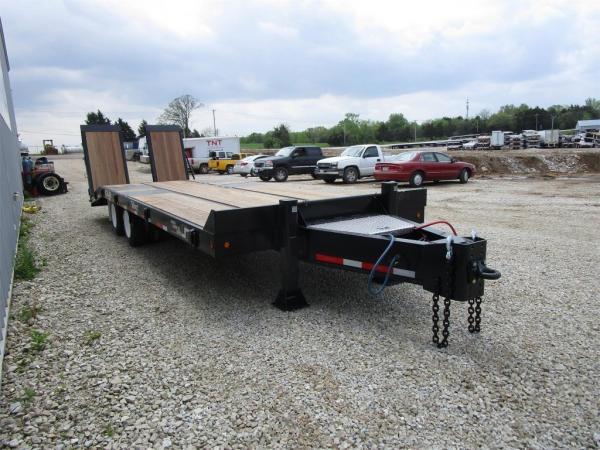
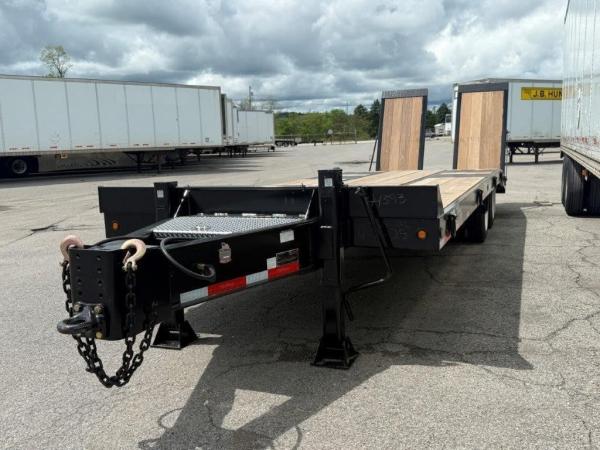
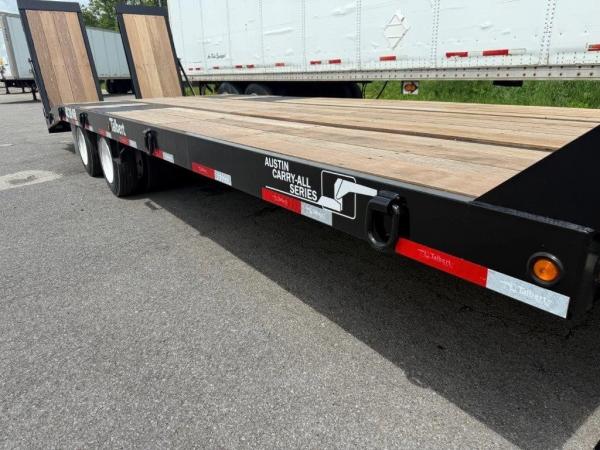
Upgrading a 20‑ton tag trailer to air‑operated ramps brings both convenience and heavy‑duty functionality. This retrofit transforms manual ramp deployment into smooth, safe, and efficient operation—greatly enhancing loading and unloading tasks for heavy equipment.
Why Air‑Powered Ramps Matter - Faster deployment — Air cylinders lift and lower the ramps at the push of a button, saving time.
- Reduced operator strain — Eliminates the physical effort required to handle heavy steel ramps manually.
- Improved safety — Controlled motion prevents sudden drops or swings that could cause injury or damage.
- Enhanced versatility — More responsive loading options, useful in tight job sites or frequent unloading scenarios.
Core Components of the Conversion
To retrofit your trailer effectively, you’ll need:- Air actuator cylinders — Sized to support the ramp load and trailer angle.
- Compressor or air supply — A compact on-board compressor or truck system to feed the actuators.
- Control valve and hose network — A solenoid valve with pilot control linked to dashboard switch or remote.
- Mounting brackets and reinforcements — Strong mounting welded or bolted to the chassis and ramp hinge points.
- Pressure relief and check valves — Ensuring safe, reliable operation without overextending force.
Retrofit Process Overview- Assess existing suspension and ramp geometry — Understand hinge location, ramp weight, and bed angle.
- Select appropriate cylinder size — Ensure stroke length and force ratings align with ramp mass.
- Fabricate or install mounting plates — Reinforce side rail or dovetail sections for actuator loads.
- Install air supply and plumbing — Route hoses neatly, secure, and pressure test.
- Wire and mount control switch or remote — Keep it accessible from both rear and tow vehicle.
- Test and adjust travel limits — Fine‑tune ramp positions for optimal clearance and operation.
Real-World Insight
A contractor performing daily loading of heavy skid steers installed air‑actuated ramps on his 20‑ton tag trailer. One morning on a muddy field, manual ramp deployment failed due to rack binding and debris. With his retrofit, he simply hit the switch, and the ramps smoothly extended despite mud buildup—saving the day and preventing operational delays.
Another example comes from a rental yard upgrade: with air‑actuated ramps, customers were able to load equipment independently in under a minute. The yard's manual handling injuries dropped sharply, underscoring both safety and efficiency gains.
Helpful Terms to Know- Tag Trailer — A trailer towed behind another trailer, often with tandem axle setups for high capacity.
- Actuator Cylinder — A hydraulic or pneumatic piston assembly used to move heavy components like ramps.
- Solenoid Valve — An electrically controlled valve that directs air to extend or retract the actuators.
- Check Valve — A one‑way valve preventing air loss when the system is deactivated.
- Mounting Bracket — A steel fitting that fastens the actuator securely, distributing loads into the trailer frame.
Final Thoughts
An air‑ramp retrofit is more than a convenience—it’s an upgrade to productivity, safety, and operational flexibility. Whether hauling equipment into remote locations or streamlining depot workflows, air‑actuated ramps empower operators to load confidently and efficiently. Curious about cylinder sizing or wiring specifics? Just let me know—I’m ready to dig deeper!
|
|
|
|
| Understanding High Oil Pressure in the CAT 3208: Causes, Myths, and Real Solutions |
|
Posted by: MikePhua - 08-08-2025, 09:04 PM - Forum: Troubleshooting & Diagnosing
- No Replies
|
|
The CAT 3208 and Its Lubrication System
The CAT 3208 is a V8 diesel engine that has seen extensive use in trucks, buses, generators, and heavy equipment since its introduction in the 1970s. Known for its simplicity and solid performance, it’s a mechanical, non-sleeved engine that uses a gear-driven oil pump and a mechanical oil pressure relief system.
Normal oil pressure for the 3208 typically ranges between 40–60 PSI at operating temperature and moderate RPMs. Cold start pressures can be higher, especially with thicker oils. However, sustained high oil pressure above 80 PSI, particularly when hot, can be a sign of underlying issues that need to be understood and addressed.
When Oil Pressure Is Too High
Excessively high oil pressure—readings of 80–90 PSI or more—might seem like a good thing. After all, more pressure means better lubrication, right? Not necessarily.
Over-pressurization can lead to: - Blown gaskets and seals due to excessive force in lubrication passages
- Oil filter rupture or bypass activation, which can send unfiltered oil through the engine
- Increased crankshaft drag, leading to efficiency loss and oil aeration
- Masked bearing clearance issues, which can worsen over time
The goal is optimal, not maximum pressure. A healthy engine doesn’t need excessive pressure to protect itself—especially not when hot.
Common Causes of Excessive Oil Pressure in the CAT 3208
Several factors can cause high oil pressure in this engine, and careful diagnosis is essential.
List of typical culprits:- Stuck oil pressure relief valve
The spring-loaded valve in the oil pump regulates pressure. If stuck closed or restricted by sludge or varnish, pressure rises uncontrollably.
- Incorrect or overly thick oil
Using 20W-50 or straight 50-weight oil in cold climates or with tight clearances can spike pressure, especially when the engine is cold.
- Blocked or poorly installed oil filter
Some aftermarket filters restrict flow or activate the bypass at incorrect pressures. Always use recommended filters from reputable brands.
- Aftermarket mechanical gauges
A faulty gauge or incorrect sender can give false high readings. Always verify with a mechanical test gauge at the sender port.
- Plugged oil galleys
Debris or sludge buildup in oil passages causes back pressure. This is rare but possible, especially in engines with poor maintenance history.
- Rebuilt or modified oil pumps
Some rebuilders mistakenly shim the pressure relief spring for "more pressure equals better" performance. This is a dangerous myth.
Case Study: When a High Reading Isn't What It Seems
An operator reported persistent oil pressure readings of 85–90 PSI on a CAT 3208-powered vehicle. The readings were consistent across various RPMs, and the engine ran smoothly with no apparent distress. Concerned about over-pressurization, he installed a secondary mechanical gauge directly into the block. This gauge showed a more normal 60 PSI hot—revealing that the original dash gauge was over-reporting due to an incompatible sender.
This is a common scenario. Many older machines have aftermarket or mismatched gauges installed during prior repairs. Always confirm oil pressure complaints with a secondary, known-good mechanical gauge before diving into engine internals.
Dealing with a Stuck Relief Valve
If mechanical testing confirms truly high oil pressure—above 80 PSI hot at idle or cruise—attention should focus on the oil pump's relief valve.
Steps to inspect or service:
- Drain oil and remove oil pan
Access to the oil pump is required. Some models allow in-frame removal.
- Inspect the oil pump’s pressure relief valve
Check for corrosion, varnish, stuck plungers, or broken springs. Clean thoroughly.
- Replace the valve or entire pump if suspect
In some cases, the cost of disassembly outweighs replacement, especially for work-critical engines.
- Verify oil pressure after reassembly
Use a mechanical gauge during first startup and monitor behavior across temperature ranges.
Oil Viscosity and Climate Considerations
The CAT 3208 is relatively tolerant of a range of oil viscosities, but climate and condition matter. Using a 15W-40 oil is standard and balances cold-start flow with hot-running protection. Using SAE 50 or 20W-50 in warm climates is acceptable but may cause pressure issues if combined with a restricted oil return path or failing pump.
Key guidelines:- Use the viscosity recommended for your operating temperature
- Avoid heavy oil for older engines with worn bearings unless pressure is low
- Monitor oil temperature, not just pressure
Gasket and Seal Integrity at High Pressure
Sustained high oil pressure doesn't just affect readings—it puts real strain on seals. The 3208 uses traditional rope and lip seals that are not designed for excess pressure. Multiple reported failures involve:- Rear main seal weeping
- Valve cover gaskets pushing out oil
- Front timing cover leaks
These failures typically follow extended periods of overpressure. Seals are a last defense—not designed to restrain excessive internal force.
The Myth of More Pressure Being Better
A common misconception in diesel circles is that increasing oil pressure improves durability. While this holds some truth in race or high-HP applications where RPM and bearing loads are extreme, it doesn't apply to a mechanical diesel running at 2,000 RPM.
In fact, high pressure increases oil pump drive load, raises oil temps, and can even reduce flow at critical bearing locations due to hydraulic resistance.
The right pressure is what the engine was designed to handle—no more, no less.
Aging Gauges and False Alarms
As many CAT 3208s are now 30–50 years old, their instrumentation is often replaced, spliced, or worn. Electrical sending units degrade. Wires corrode. Grounds become unreliable. A high reading on a 40-year-old gauge should never be the final diagnosis.
Tips for accurate pressure readings:- Install a brass tee to run both the OEM sender and a test gauge
- Check pressure cold and hot, idle and at full RPM
- Monitor pressure drop rate after warm-up—healthy pumps stabilize, failing ones dive
When to Be Concerned
Not every high-pressure reading is catastrophic. You should investigate further only if:- Pressure exceeds 80 PSI at hot idle
- Oil leaks begin to appear unexpectedly
- The oil filter appears distorted or leaks
- Engine efficiency drops or strange noises occur
Conclusion: Diagnosis Over Assumption
The CAT 3208, though considered dated by modern standards, remains a robust and field-serviceable engine. High oil pressure isn’t automatically a bad thing—but it shouldn’t be ignored.
With proper mechanical testing, inspection of the oil pump relief valve, and attention to oil viscosity and filter quality, nearly all high pressure cases can be explained—often without major teardown. Always prioritize confirmation over assumption, and avoid the myth that “more pressure is always better.” In the world of diesels, balance is everything.
|
|
|
|
| Upgrading a Flatbed Dump Truck with a Knuckle‑Boom Crane: Insights, Considerations, and Real-World Practice |
|
Posted by: MikePhua - 08-08-2025, 09:04 PM - Forum: General Discussion
- No Replies
|
|
Mounting a knuckle‑boom crane on a flatbed dump truck transforms it into a versatile workhorse—capable of loading and unloading heavy materials without external equipment. But executing this upgrade smartly requires careful planning, engineering rigor, and practical foresight.
Key Aspects to Examine Before Installation - Structural Reinforcement
- Evaluate chassis strength—ensure the frame and sub‑frame can withstand boom forces, including lift torque and side loads.
- Reinforce with gusset plates or welded steel sections if original framing isn't rated for crane loads.
- Weight Distribution and Load Dynamics
- Account for the added dead weight of the crane and its implications on axle loads.
- Confirm gross vehicle weight rating (GVWR) and ensure suspensions, tires, and brakes are upgraded as needed.
- Hydraulic System Integration
- Select a hydraulic pump or power-take‑off (PTO) setup compatible with both truck engine output and crane hydraulic demands.
- Incorporate pressure relief valves, pilot control valves, and hydraulic oil cooling if needed for heavy duty cycles.
- Control Ergonomics and Safety
- Choose user-friendly control systems—options include joysticks, remote control, or manual levers.
- Include safety features such as load moment indicators, stabilizer interlocks, and emergency shutoff.
- Compliance and Permitting
- Ensure modifications conform to local vehicle safety standards and bridge the requirements for additional permits.
- Label load capacity and crane reach visibly to stay in compliance during inspections.
A Practical Anecdote from the Field
An arborist fleet once retrofitted several flatbed dump trucks with knuckle‑boom cranes to streamline tree removal. One afternoon, an operator used his truck to lift a 600-pound Cedar trunk stump across a narrow driveway. The reinforced flatbed—with side supports and upgraded brakes—handled the twist safely. Word spread fast—now the operation moves debris solo, eliminating the need for separate loaders and saving time daily.
Step‑By‑Step Implementation Guide- Assess existing chassis and sub‑frame strength
- Determine crane model and capacity suited to load needs
- Design reinforcement and integrate hydraulics
- Install and test hydraulic flow, stability, and controls
- Conduct load tests with graded weights and safety load values
- Train operators in safe lifting practices and emergency protocols
Glossary of Relevant Terms- Knuckle‑Boom Crane – A hydraulic crane with an articulating arm that folds (like a knuckle) for compact stowage and fine motion control.
- Power‑Take‑Off (PTO) – A drivetrain connection that enables engine power to run auxiliary equipment, such as a hydraulic pump.
- Gusset Plate — A reinforcing steel plate used to strengthen joints or welds subject to high stress.
- Load Moment Indicator (LMI) — A safety device advising the operator of the crane’s current load relative to its capacity.
- Dead Weight — The unladen weight of equipment, in this case the crane, which influences gross vehicle weight and balance.
Upgrading a flatbed dump truck with a knuckle‑boom crane is both an engineering feat and a productivity boost. Done right—with proper frame reinforcement, hydraulic integration, and safety systems—it delivers unmatched on‑site loading autonomy. If you’d like to explore crane brands, hydraulic sizing, or operator training, I’d be glad to dive deeper!
|
|
|
|
| Pushing Trees Safely: Preventing Injury and Equipment Damage in Land Clearing Operations |
|
Posted by: MikePhua - 08-08-2025, 09:03 PM - Forum: Farming, Landscaping, Forestry Industry Forum
- No Replies
|
|
The Hidden Dangers of Pushing Trees
Clearing land by pushing over trees with heavy equipment like dozers, loaders, or excavators may seem straightforward—but it is among the most hazardous operations in the world of earthmoving. The risks involved range from unpredictable tree fall paths to sudden machine instability, and even catastrophic injury from tree rebound, top breakage, or root kickback. Understanding the mechanical forces, ground conditions, tree behavior, and operator limits is essential to survival and safety in forestry and land development.
Why Trees Behave Unpredictably
Trees are dynamic, tension-loaded structures. Internally, their fibers store energy over decades of growth. When uprooted, this energy can release in violent ways: - Top snapping: The upper section may break and snap back toward the cab.
- Trunk rebound: A tree under pressure may spring backward with tremendous force.
- Root ball rotation: As roots give way, the base can pivot and flip unexpectedly.
- Branching entanglements: Nearby trees may be pulled or pushed along, complicating falls.
Each of these phenomena has been the cause of operator injury or death in real-world cases.
Case Study: The Backlash That Nearly Killed a Veteran Operator
A seasoned contractor working in the Pacific Northwest once described pushing over a 60-foot alder with a mid-size crawler loader. As the tree tilted and snapped at the base, its upper third fractured mid-fall, catapulting the top back onto the roof of the ROPS canopy. The impact crushed the air intake and flattened the exhaust stack—but miraculously missed the operator. Post-incident analysis suggested the tree had been weakened by internal rot and wind shear stress—an invisible hazard before the push.
Essential Equipment Considerations
Operators often underestimate the forces involved when pushing large trees. While a powerful machine might have the raw power to uproot a tree, it’s not always designed for this task.
Key points to consider include:- ROPS/FOPS protection: Machines used in tree pushing should be equipped with rollover and falling object protection structures.
- Brush guards and limb risers: These deflect branches away from vulnerable components like hydraulic lines and radiators.
- Reinforced cabs: Polycarbonate or Lexan windows and steel mesh guards improve operator survival chances.
- Weight and traction: An underweight loader or dozer will spin or lift under strain; track machines with low centers of gravity are safer.
- Visibility and camera systems: Seeing what's above or behind can prevent misjudging the tree lean or snag points.
Best Practices When Pushing Trees
The act of pushing a tree is more than brute force—it is a calculated mechanical operation requiring strategy and awareness.
Steps to reduce danger:
- Assess tree species and condition
- Dead, diseased, or hollow trees behave unpredictably
- Hardwood vs. softwood matters: hardwoods snap, softwoods bend
- Check for lean and weight bias
- Push trees in the direction they naturally lean
- Avoid trying to reverse the fall direction unless fully excavating roots
- Clear the base
- Remove dirt, debris, or rocks around the base to minimize resistance
- Look for shallow roots that might trip the machine
- Use the machine's mass and frame, not just the bucket or blade
- Apply force near the tree's base—not high up where leverage is lost
- Keep the tree between the arms if using a loader to brace the fall
- Keep the cab away from the fall line
- Angle the machine to the side, not directly behind
- Stay out of the "kick zone" of the root ball
- Have an escape plan
- Know where to back out fast if things go wrong
- Keep the work zone free of obstacles for retreat
- Avoid windy conditions
- Even small gusts can alter tree fall trajectories, especially in tall timber
- Cut and push teamwork (if possible)
- When safe, making a back cut with a chainsaw before pushing can reduce force required and guide the fall
Common Mistakes That Lead to Injury or Machine Damage- Overestimating machine capability: Just because a loader can tip a tree doesn't mean it should.
- Ignoring surroundings: Other trees, branches, or structures may be in the fall path.
- Pushing from too high: Applying pressure above the midpoint risks breaking the trunk and having the top come back.
- Standing too close to rotten stumps: They may collapse inward or upward.
- Lack of situational awareness: Operators sometimes forget where the root crown will land or rotate.
Personal Protective Equipment and Safety Protocols
Even when enclosed in a cab, operators should still consider protective measures:- Hard hats, eye protection, and gloves when outside the machine
- Radio or signal communication if working with chainsaw operators or spotters
- First-aid kits and emergency response plans in case of an incident
- Daily inspection of ROPS integrity and safety glass
An Industry Marked by Hard Lessons
Forestry operations have historically been one of the deadliest sectors in heavy equipment work. According to occupational hazard studies in Canada and the U.S., injuries from tree falls, equipment rollovers, and debris strikes account for the majority of fatalities. Even with modern machinery, human error or complacency often plays a critical role in these incidents.
An example from Maine recounts a skidder operator who attempted to fell a leaning pine by pushing from the high side. The trunk cracked in an unexpected spot due to internal rot and struck the cab. Although the operator survived, he required multiple surgeries for blunt trauma injuries.
Safer Alternatives to Manual Pushing
For those looking to reduce risk, mechanical attachments and techniques offer alternatives:- Hydraulic tree shears: Cut and grab in one motion, reducing unpredictability
- Grapple saws: Mounted to excavators or skid steers, they allow cutting from a distance
- Excavator stump removal: Digging out roots before pushing increases safety
- Winching: Cable pulling with controlled fall paths
Final Thoughts: Think Like a Tree, Operate Like a Strategist
Pushing trees safely is not about force; it’s about understanding biology, physics, and situational awareness. Trees grow in tension, respond to wind, decay from the inside, and often hide dangers until the moment they fall. Successful operators think ahead, plan for the unexpected, and treat each tree as a potential threat.
Whether you’re clearing land for development or removing hazards along a right-of-way, remember: the tree you underestimate could be your last. Use the right equipment, follow strategic procedures, and always give nature the respect it demands.
|
|
|
|
| Unveiling the 1300CX Scat Trak Skid‑Steer Loader |
|
Posted by: MikePhua - 08-08-2025, 09:02 PM - Forum: General Discussion
- No Replies
|
|
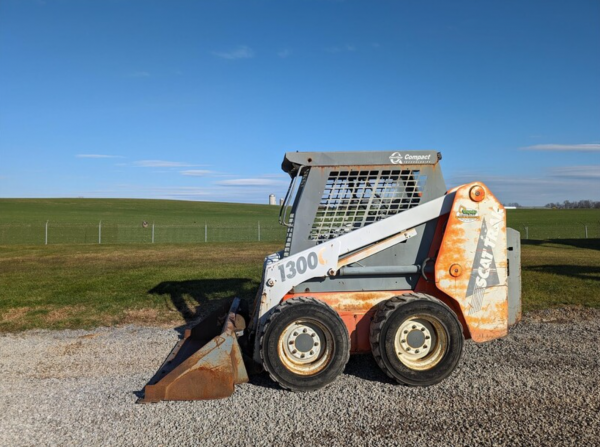
When digging through compact skid‑steer options, the Scat Trak 1300CX stands out for its rugged simplicity and surprising value. Briefly adopted by Volvo in the early 2000s, this machine remains beloved for its durable design and compact versatility. Here's everything worth knowing:
A Rare Find With Character
Imagine snagging a 1300CX at auction for around $2,600 and finding that—aside from a leaky quick‑coupler hose, bald tire, missing muffler, and errant fuel gauge—the rest of the machine is near‑perfect. No welds, tight pins and bushings, strong engine and hydraulics, and effortless daily startups made a believer out of one new owner .
What Is the 1300CX Scat Trak? - Part of Scat Trak’s lineup, a company producing compact skid‑steers from the late 1990s until Volvo’s acquisition in 2001 .
- The "CX" variant often came with optional features or enhancements compared to the base “C” model—possibly including auxiliary hydraulics or operator comfort upgrades.
Key Specifications- Engines typically deliver around 48–60 horsepower, driving tasks via a reliable Deutz (or similar) diesel setup .
- Rated operating capacity hovers near 1,300 lb—solid for general grading, loading, and farm work .
- Compact dimensions make it ideal for confined job sites: short length, narrow width, and moderate height for easy transport and tight maneuvering.
Real‑World Strengths- Built with accessibility in mind: a tilting cab and rear engine door make routine maintenance and servicing unusually hassle‑free .
- Operators frequently observe better build quality compared to similar machines like Bobcats—higher strength, fewer flex points, and solid structural layout.
Built for Longevity and Support- Even decades later, parts like oils, filters, and standard mechanical components remain available through aftermarket networks such as NAPA .
- Manuals—operator, service, parts—covering the 1300CX are archived online across repair repositories for discovery and download .
Glossary of Key Terms- Operating Capacity – The maximum safe load a skid steer can lift.
- Auxiliary Hydraulics – Secondary hydraulic flow used for operating attachments like augers or hydraulic hammers.
- ROPS/FOPS – Structural protections in the cab against roll‑over and falling objects, often tilting forward for service access.
- Aftermarket Support – Replacement parts and consumables sold by third‑party suppliers, ensuring long‑term serviceability.
In Summary
The 1300CX Scat Trak combines rugged engineering, compact agility, and operator‑friendly design. While resources may be less abundant than for big‑brand loaders, its simplicity means that few things go wrong—and when they do, help and parts are available if you know where to look. For farmers, contractors, or equipment aficionados, this skid‑steer offers heart and utility well worth uncovering.
If you'd like help with attachment choices, system upgrades, or sourcing operators' manuals, I’m here to assist.
|
|
|
|
| Unraveling Rear Hydraulic Woes on the CAT 436C IT Backhoe: A Deep Dive into Troubleshooting, Misdiagnosis, and Real Solutions |
|
Posted by: MikePhua - 08-08-2025, 09:01 PM - Forum: Troubleshooting & Diagnosing
- No Replies
|
|
Understanding the Context: A Rear Hydraulic Mystery
The CAT 436C IT is a versatile and rugged backhoe, widely used in construction and utility work. With its Integrated Toolcarrier (IT) design, it's capable of both digging and handling a variety of attachments. However, even the most reliable machines face their challenges—especially when hydraulic systems go awry. One user’s persistent issue with the rear hydraulics not functioning triggered a deep investigation, raising concerns about potential dealer misdirection and shedding light on broader industry themes such as diagnostic accuracy, customer-dealer trust, and mechanical literacy.
Symptoms and Initial Observations
The core issue: the rear hydraulic circuits—including boom, dipper, bucket, and stabilizers—refused to function. Curiously, the loader (front) hydraulics worked fine, and so did the auxiliary circuit when tested. The joystick for the backhoe was unresponsive, giving the initial impression of an electrical or control fault. This symptom profile pointed to one of three potential categories: - Electrical control failure: a switch, solenoid, or fuse not functioning.
- Hydraulic flow issue: blocked or misrouted fluid.
- Mechanical failure: such as pump problems or broken valves.
The Diverging Theories: Customer vs. Dealer
The owner, equipped with a solid understanding of the machine and service manuals, began to explore potential causes. He checked and confirmed the functionality of the diverter solenoid—an electrically controlled valve that reroutes hydraulic flow between different systems. This solenoid “clicked” audibly when the backhoe control was engaged, suggesting it was energizing. Hydraulic pressure was present, and fluid levels were proper.
The dealer, however, diagnosed the issue as a failed hydraulic pump, quoting a substantial cost for replacement. This raised a red flag for the owner: why would the pump selectively fail only for the rear hydraulics, especially when the loader and other systems worked perfectly?
Hydraulic Flow Control in the 436C IT
To understand the conflict, one must grasp how hydraulic flow is managed in the CAT 436C IT:- Main Hydraulic Pump: A variable-displacement axial piston pump driven by the engine.
- Priority Valve: Ensures steering and braking always receive pressure first.
- Loader Valve Stack: Directly connected to the front loader joystick.
- Backhoe Valve Stack: Controlled via another bank, activated when the diverter solenoid reroutes flow.
- Solenoid-Activated Diverter: Responsible for switching flow between loader and backhoe circuits.
When the backhoe joystick is activated, the diverter valve should switch flow to the rear circuits. If the solenoid activates but the flow does not change, the issue is often internal—either the spool is stuck, the wiring is misrouted, or internal hydraulic bypassing is occurring.
Exploring the Root Causes
With the solenoid confirmed as working, and the hydraulic pressure sufficient, attention turned to the diverter valve itself. This valve, although electronically triggered, can suffer from mechanical issues:- Spool jamming due to contamination: Metal shavings, sludge, or broken O-rings can prevent movement.
- Electrical actuation without mechanical movement: A clicking solenoid doesn’t always mean internal parts are moving.
- Worn or failed internal seals: Causing pressure loss or ineffective switching.
In one notable real-world case involving a Deere 310G, a similar hydraulic failure was traced back to a diverter valve spool stuck due to old hydraulic oil varnishing the components. A simple cleaning and seal kit replacement solved a $7,000 problem misdiagnosed as a failed pump.
Dealer Misdiagnosis: A Common Pain Point
The experience reflects a broader trend where dealers, possibly under time pressure or lacking deep familiarity with specific models, resort to broad-stroke diagnoses—often defaulting to “replace the pump.” But pumps are rarely the issue when some hydraulic systems work. This reveals the importance of diagnostic flowcharts and component testing.
Misdiagnosis like this not only leads to unnecessary costs but erodes trust between owners and service providers. A more ethical or skilled approach would involve:- Pressure testing at diverter outputs.
- Manually actuating the valve with a jumper.
- Checking voltage at the solenoid.
- Temporarily bypassing the diverter to confirm hydraulic flow to the rear.
Lessons from the Trenches: Operator Knowledge Saves the Day
The backhoe operator, rather than blindly following the dealer’s advice, relied on schematics, service manuals, and systematic testing. This revealed that the diverter valve was not functioning hydraulically despite being triggered electrically. Replacement or rebuilding of this component would likely restore rear hydraulic function.
His experience echoes others in the field. An excavator technician once discovered a no-boom-pressure complaint on a Komatsu PC200-6 that traced back to a stuck pilot valve—solved with a $14 spring, not a $5,000 pump. The importance of structured diagnostics over assumption cannot be overstated.
Key Takeaways and Recommendations
- Don’t trust a single symptom: Just because one part of the system fails doesn’t mean the pump is bad. Look for selective failure patterns.
- Use service schematics: The CAT 436C IT’s service documentation shows the complete hydraulic routing, and it’s critical for isolating problems.
- Always test electrically and hydraulically: A solenoid clicking doesn’t confirm flow is being rerouted. Pressure testing is essential.
- Question expensive diagnoses: If a quote seems overboard and not backed by solid diagnostics, ask for component-level tests or a second opinion.
- Keep fluids and filters clean: Contamination is a leading cause of valve spool sticking and solenoid malfunctions.
- Know your machine: Operators with even moderate technical literacy can save thousands by being informed advocates.
Epilogue: Trust, Tools, and Technical Literacy
The CAT 436C IT is a formidable workhorse, but like all machines, it demands understanding and care. This case study reminds us of the value of questioning diagnoses, trusting the operator’s instincts, and diving deep into the mechanical logic of hydraulic systems.
When technical literacy meets field experience, it often trumps cursory dealership assessments. Whether it's a diverter valve, a pilot signal, or a jammed spool, the truth lies in methodical, informed troubleshooting—not in blind replacement.
|
|
|
|
| Optimizing Your PC200LC‑3: Understanding the OLSS H, S, and L Modes |
|
Posted by: MikePhua - 08-08-2025, 08:59 PM - Forum: General Discussion
- No Replies
|
|
Modern excavators integrate sophisticated hydraulic and engine controls to balance power delivery, responsiveness, and fuel economy. On the PC200LC‑3, the OLSS (Open‑center Load Sensing System) switch offers three distinct operating modes—H, S, and L—each tailoring performance for different operational needs.
What Each Mode Means - L Mode (Light)
Prioritizes precision over power, delivering gentle hydraulic response for delicate tasks like fine grading, setting pipe, or maneuvering in tight areas.
- S Mode (Standard)
Offers a balanced profile—good hydraulic flow and responsiveness, making it suitable for everyday operations, striking the right blend of control and efficiency.
- H Mode (Heavy)
Delivers maximum hydraulic flow and torque, ideal for high-load duties such as rock digging, deep excavation, or heavy material handling.
These modes adjust the hydraulic pump's output pressure versus engine torque curve, controlling the swashplate's angle and thus modulating flow and efficiency.
Why These Modes Matter- Fuel efficiency: L and S modes moderate engine load, saving fuel when full power isn't necessary.
- Task-specific performance: H mode tackles tough jobs that demand hydraulic muscle.
- Operator comfort: Switching between modes keeps the machine responsive and reduces fatigue.
Anecdote from the Field
An operator noted that working near delicate landscaping required fine control—L mode became his go-to. When switching to demolition later in the day, toggling to H mode gave his digger the extra bite it needed to break through concrete and compacted soil, all without sacrificing control.
Glossary of Terms- OLSS (Open‑center Load Sensing System) — A hydraulic system where an open center valve works with a jet sensor to manage pump flow and pressure, matching load demand efficiently.
- Swashplate — A movable component in a pump that adjusts hydraulic flow rate by changing its angle.
- Flow vs. Torque Curve — How the pump balances fluid output and engine torque based on load—essentially, how "hard" the hydraulics push.
- Load sensing — System capability that adapts hydraulic output depending on actual demand, reducing wasted power.
Effective Use Strategy- Start in L mode when positioning attachments, grading finely, or working close to structures.
- Switch to S mode for general digging, lifting, and loading—keeping performance smooth and efficient.
- Select H mode when the work calls for raw hydraulic power, like prying out stumps or working with tough materials.
|
|
|
|
| Understanding Dog Clutches on the Caterpillar 12E Grader: Functions, Issues, and Maintenance |
|
Posted by: MikePhua - 08-08-2025, 08:58 PM - Forum: General Discussion
- No Replies
|
|
Introduction: The Role of Dog Clutches in Grader Operation
Dog clutches in the Caterpillar 12E grader are mechanical devices used to engage and disengage gears, allowing power transmission to various drivetrain components. Unlike friction clutches, dog clutches provide a positive mechanical lock between rotating parts, essential for precise gear engagement and reliable operation in heavy machinery such as graders.
How Dog Clutches Work in the Cat 12E
Dog clutches consist of interlocking teeth on two rotating components. When engaged, these teeth mesh to transmit torque without slippage. On the 12E grader, dog clutches are used in the transmission and final drives, enabling gear shifts and directional changes with minimal power loss.
Common Issues Associated with Dog Clutches - Difficulty Engaging or Disengaging: Worn or damaged clutch teeth can cause hard shifts or failure to engage gears properly.
- Grinding Noises: Misalignment or damaged teeth may produce grinding during gear changes.
- Slippage: Although dog clutches are designed for positive engagement, damage or debris can prevent full engagement, leading to slippage.
- Wear and Tear: Continuous heavy-duty use causes gradual wear of clutch teeth and components.
- Hydraulic or Mechanical Actuator Problems: Malfunctioning actuators can prevent proper clutch engagement.
Symptoms Indicating Dog Clutch Problems- Hesitation or resistance when shifting gears.
- Audible grinding or clicking noises from the transmission.
- Loss of power transmission or unexpected gear disengagement.
- Visible wear or damage upon inspection.
Diagnostic Procedures- Visual inspection of dog clutch teeth and engagement surfaces.
- Checking actuator function, whether hydraulic or mechanical.
- Measuring clearance and alignment of clutch components.
- Testing transmission operation under load.
Maintenance and Repair Recommendations- Regularly inspect clutch teeth for wear, cracks, or deformation.
- Keep clutch and transmission components clean and lubricated as per manufacturer guidelines.
- Replace worn or damaged dog clutches promptly to prevent further drivetrain damage.
- Ensure actuators are maintained and adjusted to manufacturer specifications.
- Avoid abrupt or aggressive gear changes that stress dog clutches.
Case Story: Resolving Transmission Engagement Issues on a 12E Grader
A road construction crew operating a Cat 12E grader experienced difficulty engaging certain gears, accompanied by grinding noises. Inspection revealed chipped teeth on the dog clutch assemblies. After sourcing OEM replacement parts and performing a thorough transmission service, the grader returned to smooth and reliable operation, demonstrating the critical role of dog clutch integrity in drivetrain performance.
Terminology Glossary- Dog Clutch: A clutch type with interlocking teeth that provide positive mechanical engagement without slip.
- Torque Transmission: The transfer of rotational force through drivetrain components.
- Actuator: A device that engages or disengages the clutch, which can be hydraulic, pneumatic, or mechanical.
- Gear Shift: The process of changing gear ratios to control speed and torque.
- Wear: The gradual degradation of component surfaces due to friction or load.
Preventive Measures to Extend Dog Clutch Life- Train operators in smooth gear shifting techniques to reduce mechanical stress.
- Maintain hydraulic systems that operate actuators to avoid engagement failures.
- Monitor transmission performance and address anomalies early.
- Use high-quality lubricants and replace transmission fluids as scheduled.
- Schedule periodic drivetrain inspections and maintenance.
Conclusion: Ensuring Reliable Transmission Performance Through Dog Clutch Care
Dog clutches are fundamental to the effective operation of the Caterpillar 12E grader’s drivetrain, enabling precise and durable power transfer. Understanding their function, recognizing common issues, and adhering to rigorous maintenance protocols ensure the grader remains productive and reliable in demanding applications. Proactive dog clutch management reduces downtime, extends component life, and supports efficient grading operations.
|
|
|
|
| Terex HR32 (2003) Midi‑Excavator: Strength in a Compact Sphere |
|
Posted by: MikePhua - 08-08-2025, 08:57 PM - Forum: General Discussion
- No Replies
|
|
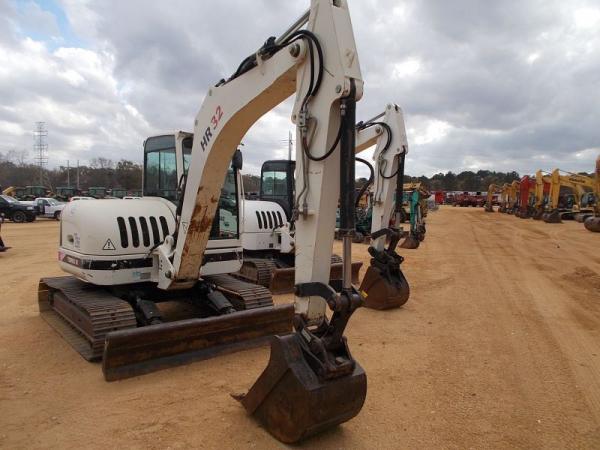
Operating at the intersection of compact size and robust capability, the 2003 Terex HR32 midi‑excavator delivers reliable performance across tight job sites and diverse tasks. Its blend of operator comfort, dig power, and ease of transport makes it a dependable choice for general construction, landscaping, and utility work.
Key Specifications at a Glance - Operating weight approximately 16,535 lb (7.5 ton) — classing it firmly in the midi range
- Engine power around 71 hp — providing steady torque without demanding a large powertrain
- Digging depth in the realm of 16–17 ft — sufficient for most residential or trenching operations
- Rubber‑track design — offering low ground disturbance and smooth travel over sensitive surfaces
- Enclosed cab with optional air conditioning — keeping operator comfort forefront even in changing weather
Why the HR32 Stands Out- Compact versatility — 19 ft 9 in length, 11 ft 4 in width, and 14 ft 3 in height allow access to tight sites without sacrificing stability
- Balanced performance — under‑weight allows affordable transport, yet its digging force handles substantial tasks with ease
- Operator experience — roomy enclosed cab so operators stay steady in productivity, even under harsh climates
- Service readiness — simplicity in hydraulic layout and parts availability keeps downtime minimal
On‑Site Narratives Bring It to Life- A utility contractor once deployed the HR32 at a suburban job where space was severely limited. The rubber tracks preserved delicate topsoil, and the compact form let the operator pivot gracefully between digging and trench‑clearing—all without disturbing nearby landscaping.
- In a winter job, an operator praised the heated cab—for hours of frozen‑ground trenching, the cab kept him focused and safe, while heated hydraulics helped prevent sluggish performance.
Maintenance Tips for Longevity- Keep hydraulic filters and track tension well maintained—these keep smooth operation on and off site
- Regularly inspect and clean the radiator and air filters, particularly after dusty or muddy work
- Adhere to scheduled engine oil changes, especially if running heavy attachments or working in abrasive conditions
- Lubricate pivot points diligently to ensure smooth movement and reduce wear—not just important, but peace of mind
Glossary of Technical Terms- Midi‑excavator — A mid‑sized excavator class that bridges compact maneuverability and sufficient power for moderate tasks.
- Rubber tracks — Flexible treads that grant smoother travel and less turf damage compared to steel counterparts.
- Operating weight — Total mass, including cab, hydraulics, fuel, and standard attachments; reflects shipping category and transport needs.
- Digging depth — Maximum vertical reach of the bucket below ground level; influences trenching capacity.
- Enclosed cab — A sealed operator compartment—often climate‑controlled—for comfort and safety.
Closing Reflections
The 2003 Terex HR32 strikes a fine balance between mobility, performance, and durability. Whether navigating confined urban spaces, preserving fragile landscapes, or simply delivering dependable dig power, it remains a testament to practical design. With vigilant care—especially in hydraulics and drivetrain preservation—it continues to perform impressively across seasons and terrains.
Want to explore attachment recommendations, hydraulic tuning, or ideal transport setups for this model? I'm happy to dig deeper!
|
|
|
|
|



