| Welcome, Guest |
You have to register before you can post on our site.
|
| Forum Statistics |
» Members: 79
» Latest member: cioCruch
» Forum threads: 47,411
» Forum posts: 47,417
Full Statistics
|
| Online Users |
There are currently 244 online users.
» 0 Member(s) | 232 Guest(s)
Ahrefs, Amazon, Applebot, Bing, Claude, DotBot, Google, MJ12, OpenAI, Semrush, Seznam
|
| Latest Threads |
Identifying and Sourcing ...
Forum: Parts , Attachments & Tools
Last Post: MikePhua
01-07-2026, 06:29 PM
» Replies: 0
» Views: 509
|
Cat 931B Brake Parts
Forum: Parts , Attachments & Tools
Last Post: MikePhua
01-07-2026, 06:29 PM
» Replies: 0
» Views: 281
|
Choosing Between Cat 228,...
Forum: General Discussion
Last Post: MikePhua
01-07-2026, 06:28 PM
» Replies: 0
» Views: 533
|
Hydraulic Delay When Lowe...
Forum: Troubleshooting & Diagnosing
Last Post: MikePhua
01-07-2026, 06:27 PM
» Replies: 0
» Views: 438
|
Bale Chopper and Mulcher ...
Forum: General Discussion
Last Post: MikePhua
01-07-2026, 06:26 PM
» Replies: 0
» Views: 316
|
Mini UC Maintenance
Forum: General Discussion
Last Post: MikePhua
01-07-2026, 06:25 PM
» Replies: 0
» Views: 305
|
Locating Wiring Informati...
Forum: General Discussion
Last Post: MikePhua
01-07-2026, 06:24 PM
» Replies: 0
» Views: 339
|
Case Industrial Brown Sub...
Forum: Parts , Attachments & Tools
Last Post: MikePhua
01-07-2026, 06:23 PM
» Replies: 0
» Views: 274
|
Dirt Work in West Virgini...
Forum: Construction & Urban Infrastructure Forum
Last Post: MikePhua
01-07-2026, 06:23 PM
» Replies: 0
» Views: 371
|
D207 P Hydraulic Steering...
Forum: Parts , Attachments & Tools
Last Post: MikePhua
01-07-2026, 06:22 PM
» Replies: 0
» Views: 301
|
|
|
| Diagnosing and Resolving DCU Code 3516-01 and High Outlet NOx Sensor Readings on John Deere 333G |
|
Posted by: MikePhua - 08-08-2025, 09:56 PM - Forum: Troubleshooting & Diagnosing
- No Replies
|
 |
The John Deere 333G skid steer loader is known for its power and versatility on construction sites. However, operators sometimes encounter diagnostic trouble codes (DTCs) and sensor alerts that can impact machine performance and emissions compliance. One such issue is the appearance of DCU code 3516-01 accompanied by very high outlet NOx sensor readings. Understanding the causes, diagnosis, and repair procedures for this problem is essential for maintaining the loader's efficiency and regulatory compliance.
Understanding DCU Code 3516-01 and NOx Sensor Function
The Diesel Control Unit (DCU) monitors various engine parameters and emissions control components. Code 3516-01 generally indicates a problem with the exhaust aftertreatment system, particularly related to NOx (nitrogen oxide) sensors. NOx sensors measure the concentration of nitrogen oxides in the exhaust gases, which is critical for controlling emissions and managing selective catalytic reduction (SCR) systems.
A very high outlet NOx sensor reading suggests excessive nitrogen oxide levels exiting the SCR system, indicating potential malfunction or inefficiency in the aftertreatment components.
Common Causes of DCU Code 3516-01 and High NOx Readings - Faulty or Contaminated NOx Sensors: Sensors can degrade or become fouled, causing inaccurate readings.
- SCR Catalyst Degradation: Reduced catalyst effectiveness leads to poor NOx reduction.
- Exhaust Leaks: Leaks upstream of the sensor can cause false readings.
- Defective Diesel Exhaust Fluid (DEF) System: Issues with DEF dosing or quality impact NOx conversion.
- Wiring or Connector Problems: Damaged or corroded wiring can cause sensor communication errors.
Diagnostic Steps- Scan and Read Codes: Confirm DCU code 3516-01 and check for additional codes.
- Inspect NOx Sensors: Test sensor resistance, voltage, and wiring integrity.
- Check SCR System Components: Examine catalyst condition and DEF injector operation.
- Inspect Exhaust System: Look for leaks or damage affecting sensor readings.
- Verify DEF Quality and Level: Ensure DEF is fresh and at correct levels.
Terminology and Technical Notes- DCU (Diesel Control Unit): The electronic module controlling engine and emission functions.
- NOx Sensor: Measures nitrogen oxide levels in exhaust gases.
- SCR (Selective Catalytic Reduction): An emissions control technology reducing NOx using DEF.
- DEF (Diesel Exhaust Fluid): A urea-based solution injected into exhaust to convert NOx into nitrogen and water.
- Exhaust Leak: Any unintended opening in the exhaust system affecting emissions readings.
Case Study
A rental company operating John Deere 333G loaders experienced frequent DCU 3516-01 codes. Technicians found the outlet NOx sensor was contaminated due to exhaust soot buildup. After replacing the sensor and performing a DEF system calibration, the alarms ceased, and emissions returned to normal levels.
Maintenance and Repair Tips- Replace NOx sensors at manufacturer-recommended intervals or if faulty.
- Regularly inspect the SCR catalyst for signs of wear or clogging.
- Maintain the DEF system by using high-quality DEF and keeping tanks clean.
- Repair exhaust leaks promptly to ensure accurate sensor data.
- Ensure wiring and connectors are secure and free of corrosion.
Summary List: Addressing DCU Code 3516-01 and High Outlet NOx- Scan and document all diagnostic codes
- Test and replace faulty NOx sensors
- Inspect and maintain SCR catalyst health
- Check and service DEF dosing system
- Repair exhaust system leaks
- Verify wiring harness and connector condition
- Use high-quality DEF and maintain proper fluid levels
Additional Insights
Proper functioning of the NOx sensor and SCR system is critical not only for emissions compliance but also for optimal engine performance and fuel economy. Ignoring sensor faults or aftertreatment issues can lead to increased emissions, reduced power, and potential fines under environmental regulations.
Conclusion
DCU code 3516-01 combined with very high outlet NOx sensor readings on the John Deere 333G skid steer loader typically signals issues within the emissions aftertreatment system. A systematic approach involving sensor inspection, SCR system evaluation, and DEF system maintenance is vital for resolving the fault. Regular preventive care and prompt repairs help maintain machine performance, regulatory compliance, and environmental responsibility.
|

|
|
| Understanding Auxiliary Hydraulic Flow on the Caterpillar 314C Excavator |
|
Posted by: MikePhua - 08-08-2025, 09:56 PM - Forum: General Discussion
- No Replies
|
|
The Caterpillar 314C is a popular medium-sized excavator widely used in construction and earthmoving projects. One important feature for versatility in this machine is the auxiliary hydraulic system, which powers attachments like hydraulic breakers, augers, and grapples. Proper understanding and management of auxiliary hydraulic flow are essential for optimizing attachment performance and ensuring machine reliability.
Overview of Auxiliary Hydraulic Systems
Auxiliary hydraulics provide additional hydraulic flow and pressure separate from the main boom, stick, and bucket circuits. This system allows the operator to connect and power a variety of attachments, increasing the machine’s functionality.
Key Components - Auxiliary Hydraulic Pump: Supplies fluid flow dedicated to attachments.
- Control Valves: Regulate flow and pressure to auxiliary circuits.
- Hydraulic Lines and Couplers: Connect attachments to the hydraulic system.
- Flow Control Lever: Allows the operator to adjust flow rate to match attachment requirements.
Common Concerns with Auxiliary Hydraulic Flow- Insufficient Flow: Attachments operate sluggishly or fail to perform effectively.
- Excessive Flow or Pressure: Risk of attachment damage or hose failure.
- Leaks or Pressure Loss: Hydraulic oil leaks reduce system efficiency.
- Incorrect Flow Settings: Mismatched flow rate can cause poor attachment response.
Flow Adjustment on the Caterpillar 314C
The 314C allows flow adjustment to the auxiliary circuit through a flow control lever or system settings. Operators can increase or decrease flow based on the attachment's needs. Correct flow ensures optimal performance and protects hydraulic components.
Terminology and Technical Notes- Flow Rate (GPM or L/min): The volume of hydraulic fluid delivered per minute.
- Pressure (PSI or bar): The force exerted by hydraulic fluid within the system.
- Relief Valve: Protects the system by limiting maximum pressure.
- Couplers: Quick-connect fittings for attachments.
- Proportional Valve: Controls hydraulic flow precisely based on operator input.
Troubleshooting Auxiliary Hydraulic Issues- Check for hydraulic fluid leaks along hoses and couplers.
- Inspect and clean or replace filters to maintain fluid quality.
- Verify flow settings on the control lever or system.
- Examine the auxiliary pump and valves for wear or malfunction.
- Ensure compatibility of attachments with the 314C auxiliary flow specifications.
Case Study
A landscaping company reported poor performance of a hydraulic auger attachment on their 314C. Technicians found the auxiliary hydraulic flow setting was too low for the auger's requirements. After adjusting the flow to recommended levels and inspecting hoses for leaks, the auger operated efficiently, reducing project time.
Maintenance Tips- Regularly inspect hydraulic hoses and couplers for damage.
- Change hydraulic fluid and filters per manufacturer schedule.
- Keep control valves clean and lubricated.
- Monitor attachment performance and adjust flow as needed.
- Schedule periodic hydraulic system diagnostics.
Summary List: Managing Auxiliary Hydraulic Flow on Cat 314C- Understand attachment hydraulic flow and pressure requirements
- Adjust flow control lever to match attachment needs
- Inspect hoses, couplers, and fittings for leaks or wear
- Maintain clean hydraulic fluid and replace filters regularly
- Verify auxiliary pump and valve function during maintenance
- Train operators on correct auxiliary hydraulic flow usage
Additional Insights
Auxiliary hydraulics greatly enhance the versatility of excavators like the Caterpillar 314C. Precise flow control and routine maintenance not only improve attachment performance but also extend the service life of hydraulic components.
Conclusion
Proper management of auxiliary hydraulic flow on the Caterpillar 314C is essential for safe, efficient, and reliable operation of hydraulic attachments. Understanding system components, adjusting flow settings appropriately, and maintaining the hydraulic system ensure that attachments perform optimally, contributing to overall jobsite productivity.
|
|
|
|
| The Power and Practicality of Hydraulic Broom Attachments |
|
Posted by: MikePhua - 08-08-2025, 09:55 PM - Forum: Parts , Attachments & Tools
- No Replies
|
|
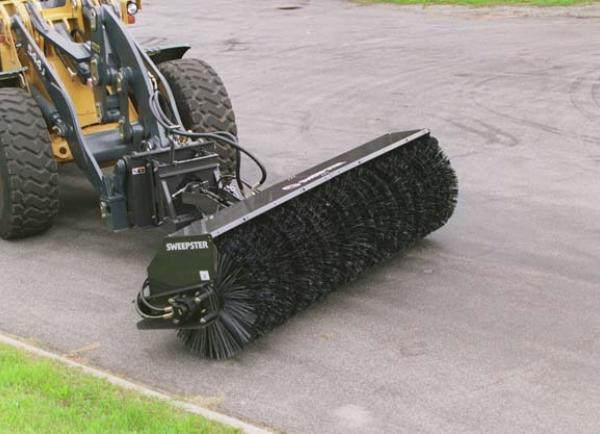
Introduction to Hydraulic Broom Attachments
Hydraulic broom attachments turn loaders, skid steers, and backhoes into efficient cleaning machines. Designed to sweep snow, dirt, grass, and debris, they enhance productivity by combining strong hydraulics with brush technology.
Types of Hydraulic Brooms and Their Features
Different styles exist to suit varied applications: - Angle Broom
- Swings 30° left or right
- Ideal for windrowing material
- Versions may include dual motors and quick-change brushes
- Pick-Up Broom
- Includes a hopper to collect swept debris
- Operates via a third hydraulic valve
- Often paired with flow regulators or spring kits
- Hopper Broom
- Combines sweeping and collection in one unit
- Optimal for cleanup tasks on paved surfaces
Design Highlights and Terminology- Hydraulic motor: The power source connected to the brush core—can be single or dual for added torque
- Flow control/regulator: Prevents damage in high-flow systems by limiting oil delivery
- Shock absorbers/springs: Reduce vibration and prevent brush 'hopping' during travel
- Quick attach systems: Allow fast mounting and dismounting for smoother jobsite workflows
Operational Advantages and Real-World Scenarios
Hydraulic brooms shine in outdoor cleaning roles:- Municipal teams often deploy angle brooms after storms to clear roadsides, pushing snow or leaves into neat rows before collection
- A landscaping firm recalled using a hopper broom to sweep vineyard grounds during harvest—debris went straight into the hopper, saving their crew hours of manual cleanup
- Urban contractors report that pick-up brooms on skid steers made sidewalk maintenance during fall leaf season easier—no rakes needed, debris went directly into the machine
Maintenance Tips and Best Practices
To keep hydraulic brooms in top condition:- Check hydraulic flow and pressure, ensuring compatibility with the broom’s specifications
- Inspect brush wear regularly, replacing individual wafers rather than the entire core when possible
- Monitor suspension components—springs and dampers that protect brush movement during transport
- Ensure hoses and fittings are secure, especially when quick-change setups are used frequently
Notable Anecdotes- A snow-removal company in a northern city once used a front-mounted angle broom to clear airport runways swiftly during winter storms. Operators praised how the poly-wire brush and hydraulic angling kept flights on schedule
- During a community clean-up event, volunteers paired a loader with a pick-up broom and cleared over two dumpsters’ worth of debris from a schoolyard in under an hour
Summary Table (Now a List of Benefits)- Versatile: sweeps, collects, and angles debris with ease
- Efficient: reduces manual labor and speeds cleanup
- Adaptable: angle, pick-up, and hopper models for different jobs
- Durable: built for tough environments with protective features
Conclusion
Hydraulic broom attachments are indispensable tools for efficient cleanup across industries—from construction to landscaping to municipal maintenance. Their smart hydraulics, flexible designs, and operator-friendly features make them productivity boosters. With proper care and application, these attachments serve as unsung heroes, transforming tough surfaces into clean, safe environments—one sweep at a time.
|
|
|
|
| Pile Driving: Techniques, Equipment, and Practical Considerations |
|
Posted by: MikePhua - 08-08-2025, 09:54 PM - Forum: Construction & Urban Infrastructure Forum
- No Replies
|
|
Pile driving is a fundamental construction process used to provide deep foundation support for buildings, bridges, and other heavy structures. By driving long columns, or piles, deep into the soil, the load from the structure is transferred to more stable ground layers, ensuring stability and durability. This article explores the key aspects of pile driving, including equipment types, techniques, common challenges, and real-world insights.
Overview of Pile Driving
Pile driving involves inserting piles—typically made of timber, steel, or concrete—vertically into the ground using mechanical force. The piles support structural loads by bearing on firm soil layers or rock beneath softer surface soils.
Types of Piles - Timber Piles: Traditional and cost-effective but limited in length and load capacity.
- Steel Piles: Strong, durable, and suitable for heavy loads or deep foundations.
- Concrete Piles: Often precast or cast-in-place, offering excellent compressive strength.
Common Pile Driving Equipment- Diesel or Hydraulic Hammers: Deliver powerful blows to drive piles into the soil.
- Vibratory Drivers: Use oscillating forces to reduce soil resistance and ease pile installation.
- Press-in Equipment: Apply steady hydraulic pressure to insert piles silently, ideal for noise-sensitive areas.
- Crane or Rig Mounted Systems: Support and position pile driving tools on site.
Terminology and Technical Notes- Pile Cap: The concrete or steel structure distributing loads from the building to the piles.
- Blow Count: Number of hammer blows per unit penetration, indicating soil resistance.
- Set: The penetration distance per hammer blow; excessive set may signal pile refusal.
- Refusal: The point at which the pile cannot be driven further, usually indicating firm bearing strata.
- Vibratory Frequency: The oscillation rate used in vibratory drivers to reduce soil friction.
Pile Driving Techniques- Impact Driving: Uses repeated hammer blows to drive piles; effective in dense soils but noisy.
- Vibratory Driving: Applies vibrations to loosen soil particles and facilitate pile penetration.
- Jetting: Injects water or air at the pile tip to reduce soil resistance; combined with impact or vibration.
- Press-in Method: Gradual insertion under controlled pressure, minimizing noise and vibration.
Common Challenges- Noise and Vibration: Impact hammers create significant noise and ground vibration, which can disturb nearby structures.
- Pile Damage: Excessive hammer energy or improper handling can crack or deform piles.
- Obstructions: Underground rocks or debris may impede pile penetration.
- Environmental Restrictions: Regulations may limit the use of certain pile driving methods in sensitive areas.
Case Study
A bridge project in an urban area utilized vibratory driving combined with jetting to install steel piles. This approach reduced noise and vibration complaints from residents while ensuring piles reached adequate depth. The method proved efficient and compliant with local environmental guidelines.
Maintenance and Safety Tips- Inspect pile driving equipment for wear and damage regularly.
- Ensure proper alignment of piles during driving to avoid bending.
- Use appropriate hammer energy settings to prevent pile damage.
- Monitor noise levels and implement mitigation measures when necessary.
- Train operators in safe and effective driving procedures.
Summary List: Key Considerations for Pile Driving- Select pile type based on soil conditions and load requirements
- Choose driving method considering noise, vibration, and site constraints
- Monitor blow count and set to assess pile penetration quality
- Inspect equipment and maintain hammer and vibratory drivers
- Address underground obstructions before driving
- Implement environmental and safety measures to protect workers and surroundings
Additional Insights
Advancements in pile driving technology, such as quiet hydraulic presses and smart monitoring systems, are improving efficiency and reducing environmental impact. Awareness of soil conditions and equipment capabilities is critical for successful pile installation.
Conclusion
Pile driving is a complex yet essential foundation technique requiring careful selection of materials, equipment, and methods tailored to specific project conditions. Understanding the technical aspects and challenges involved ensures stable foundations and long-lasting structures. Proper maintenance, operator training, and environmental considerations further contribute to successful pile driving operations.
|
|
|
|
| Mastering the Case 580N Tier 4 2WD Backhoe Loader |
|
Posted by: MikePhua - 08-08-2025, 09:54 PM - Forum: General Discussion
- No Replies
|
|
Introduction to the Case 580N Tier 4 2WD
The Case 580N Tier 4 2-wheel drive (2WD) backhoe loader stands as a versatile workhorse—melding power, agility, and regulatory compliance. With a Tier 4-certified engine, it meets modern emissions standards while delivering reliable hydraulics and excellent operator experience. Whether you're on a construction site, farm, or urban job, this model strikes a fine balance between performance and simplicity.
Engine Performance and Tier 4 Compliance - Tier 4 refers to strict emission standards set by the U.S. Environmental Protection Agency—designed to reduce nitrogen oxides and particulate matter.
- The 580N’s engine achieves compliance using advanced emission-control methods like diesel oxidation catalysts (DOC) and selective catalytic reduction (SCR).
- Operators benefit from strong torque at low RPMs, meaning smooth digging and loading even at idle or low revs. This translates to less fuel consumption and lower noise levels—plus fewer trips to the fuel pump.
2WD Configuration: Benefits and Considerations- 2‑Wheel Drive means the rear wheels provide traction. This simplifies the drivetrain and reduces costs compared to 4WD variations.
- Benefits include easier maintenance, improved fuel economy, and lighter weight—especially helpful on stable surfaces like pavement or firm ground.
- However, in muddy, slippery, or soft terrain, 2WD can struggle with traction. Workers on farms or in wet environments often use chains, tire ballast, or add-on weight to counteract this.
- Interestingly, a contractor in rural Minnesota shared how he uses counterweights and wide tires during spring thaw to avoid jamming the machine while planting irrigation pipes—maintaining steady 2WD progress without switching models.
Hydraulic System and Operator Controls- The loader and backhoe both operate off a shared hydraulic system, powered by a gear-type pump.
- The adjustable flow and pressure settings let you customize performance for attachments like augers, breakers, or forks.
- The operator station includes ergonomic joysticks—each mapped intuitively to loader lift/tilt and boom/dipper stick.
- Term clarification:
- Hydraulic pump: Moves oil to cylinders, converting engine power into movement force.
- Boom: The main digging arm assembly.
- Dipper stick (or dipper arm): The second arm segment, controlling reach and depth.
- Loader bucket tilt: Movement of the front bucket for dumping or scooping.
- A construction supervisor once remarked that the 580N’s control layout prevented mix-ups even under lights-out night shifts—because each lever’s resistance and feel corresponded precisely to its function.
Maintenance Highlights and Common Spot Checks
Key maintenance tasks include:- Checking coolant and hydraulic oil levels.
- Inspecting drive belts and filters.
- Monitoring tire wear and maintaining proper pressure.
- Seeking leaks at hydraulic connection points and boom pins.
- Real-world example: A landscaping crew in Oregon discovered a minor hydraulic leak that was traced to a loose F‑34 seal. They tightened the fitting, applied a reusable backup ring, and avoided major downtime.
- Tier 4 systems may include a diesel particulate filter (DPF) that self-cleans during operation. Operators should allow for passive regeneration by maintaining steady idle periods.
Case Studies and Anecdotes- A news report once recounted how emergency-repair teams in Florida relied on 580N loaders to clear debris after a hurricane. Their 2WD configuration allowed efficient cleanup on paved roads and parking lots. They carried sandbags for traction when needed—turning a standard model into a field savior.
- In a family-owned vineyard, the 580N became the backbone of seasonal work. Between lifting pallets of grapes and digging new irrigation trenches, the loader proved adaptable, especially when paired with a tilt‑bucket and extended dipper stick.
Optional Upgrades and Modernizations
Consider these enhancements for greater utility:- Premium suspension seat—reduces fatigue on long shifts.
- LED lighting kits—for enhanced visibility during dawn, dusk, or indoor work.
- Quick‑coupler systems—facilitate fast attachment changes such as pallet forks, hydraulic hammers, or auger drives.
- Tire ballast or rear counterweights—significantly improve rear stability when loading heavy buckets.
Concluding Thoughts
The Case 580N Tier 4 2WD is a straightforward, durable machine—embracing clean emissions without sacrificing adaptability. Its simplicity is a virtue: fewer parts, easier upkeep, and reliable performance. For operators requiring traction on tough terrain, simple workarounds—like chains or weight—preserve efficiency without extra drivetrain complexity. Through real-world examples and thoughtful maintenance, the 580N continues to prove itself as a go-to solution in diverse settings.
|
|
|
|
| Troubleshooting Water Temperature Alarm on the 1998 Kobelco SK115 Excavator |
|
Posted by: MikePhua - 08-08-2025, 09:53 PM - Forum: Troubleshooting & Diagnosing
- No Replies
|
|
The 1998 Kobelco SK115 is a reliable excavator widely used in construction and earthmoving operations. Like all heavy machinery, it relies heavily on its cooling system to maintain optimal engine temperature. Operators sometimes encounter water temperature alarms, indicating the engine is running hotter than safe limits. Understanding the causes, diagnosis, and solutions for these alarms is critical to prevent engine damage and costly downtime.
Understanding the Water Temperature Alarm
The water temperature alarm is triggered when the engine coolant temperature exceeds a preset threshold. This alarm serves as an early warning to operators, signaling potential overheating that could lead to engine failure if not addressed promptly.
Common Causes of Water Temperature Alarms - Low Coolant Level: Insufficient coolant reduces heat absorption and circulation.
- Coolant Leaks: Leaks in hoses, radiator, or water pump result in loss of coolant.
- Radiator Blockage: Dirt, debris, or damaged fins impede airflow and heat dissipation.
- Faulty Thermostat: Stuck thermostat prevents coolant flow through the radiator.
- Water Pump Failure: Inoperative pump stops coolant circulation.
- Sensor or Electrical Issues: Malfunctioning temperature sensors or wiring cause false alarms.
Diagnostic Procedures- Check Coolant Level: Ensure the coolant reservoir and radiator are filled to proper levels.
- Inspect for Leaks: Look for wet spots, stains, or drips around hoses, joints, and the radiator.
- Radiator Examination: Clean radiator fins and remove any obstructions.
- Thermostat Testing: Verify operation by checking if coolant flows once the engine warms up.
- Water Pump Assessment: Inspect pump for signs of wear, leaks, or failure.
- Sensor and Wiring Check: Test temperature sensor output and inspect wiring connections.
Terminology and Technical Notes- Coolant: A liquid mixture, typically water and antifreeze, used to absorb and dissipate engine heat.
- Thermostat: A valve regulating coolant flow based on temperature.
- Water Pump: Circulates coolant through the engine and radiator.
- Radiator Fins: Metal strips increasing surface area for heat transfer.
- Temperature Sensor: Measures coolant temperature to inform the engine control system.
Real-World Example
An operator reported repeated water temperature alarms on their SK115 during summer operations. Investigation found a partially clogged radiator and a failing water pump. After cleaning the radiator and replacing the pump, the alarms ceased, and engine temperature stabilized.
Maintenance Tips to Prevent Overheating- Maintain proper coolant levels and quality.
- Regularly inspect hoses and clamps for tightness and wear.
- Keep radiator clean and free of debris.
- Replace thermostats and water pumps per manufacturer recommendations.
- Monitor engine temperature gauges during operation.
Summary List: Troubleshooting Water Temperature Alarm- Verify coolant level and top up if necessary
- Inspect hoses, clamps, and radiator for leaks or damage
- Clean radiator fins and remove blockages
- Test thermostat operation and replace if faulty
- Examine water pump functionality and replace if worn
- Check temperature sensor and electrical wiring integrity
Additional Insights
Overheating not only triggers alarms but can cause severe engine damage such as warped cylinder heads or blown gaskets. Early detection and resolution are vital to machine longevity.
Conclusion
Water temperature alarms on the 1998 Kobelco SK115 excavator are serious indicators of cooling system problems. Timely diagnosis involving coolant checks, component inspections, and sensor testing can prevent costly repairs. Regular maintenance of cooling components is essential to keep the engine running within safe temperature ranges, ensuring reliable performance in demanding environments.
|
|
|
|
| Understanding the ISO–SAE Pattern Switch Mystery on a 2004 JCB JS160 Excavator |
|
Posted by: MikePhua - 08-08-2025, 09:53 PM - Forum: General Discussion
- No Replies
|
|
Overview of ISO vs. SAE Control Patterns
In the world of excavators, control patterns determine how joystick movements correspond to machine functions. The two main standards are: - ISO (International Organization for Standardization) pattern: Common in Europe, where typically the left joystick controls boom and bucket, and the right joystick controls stick (arm) and swing.
- SAE (Society of Automotive Engineers) pattern: More prevalent in North America, it switches controls—left moves boom and swing, right moves stick and bucket.
These patterns affect operator ergonomics and muscle memory. A missing switch between them can create confusion and disrupt productivity.
Symptoms and Early Clues
A JCB JS160 owner reported that joystick operations didn’t feel right. The machine felt like it was stuck in one pattern, yet they lacked the physical rocker switch that should toggle between ISO and SAE. Without it, operators can’t easily adapt the control layout to their preference or swap between international and North American norms.
Diagnosis and Simple Testing Procedure
To identify which hoses control which functions, one can perform a tactile test:- Go to the first connection after the pilot valve.
- Hold a hose gently.
- Have someone operate a joystick lever.
- You’ll feel the hose ‘jump’ or pulse, indicating which circuit (boom, stick, bucket, swing) it controls.
- Label hoses accordingly.
This hands-on method, though simple, helps map out which hydraulic lines correspond to each joystick action—vital for understanding your machine’s current pattern in the absence of the switch.
Expert Recommendation: Switch at the Source
Technicians advise making changes as close to the hydraulic source (the pilot valve) as possible. That means installing or repairing the ISO/SAE selector right at that junction. Here’s why:- Minimizes risk of introducing pressure drops or leaks.
- Reduces complexity—you're altering the pattern at its origin, before any intermediary valves.
- Keeps the system simpler and safer to troubleshoot.
Moreover, if multiple operators use the machine, affixing a window decal to indicate the active pattern can prevent confusion and accidents.
Solution to the Missing Rocker Switch
After consultation with a JCB dealer, it was confirmed that the 2004 JS160 is indeed designed to have a rocker switch for toggling between ISO and SAE controls. The absence of the switch explains the locked pattern. Ordering a replacement rocker assembly should restore full operability.
Annotations of Key Terms- Pilot valve: A low-pressure valve controlling main hydraulic valves.
- ISO / SAE patterns: Different joystick control standards—ISO being European, SAE North American.
- Rocker switch: A tiny toggle attachment that enables switching patterns electronically or mechanically.
- Pressure drop: Reduction in hydraulic pressure across components—minimizing potential failure points is ideal.
Related Cases and Anecdotes
It's not uncommon for older machines to lose minor components over time—similar reports exist of excavators arriving at job sites with missing decals or switches. A Seattle contractor once recounted how an operator almost swapped joystick assignments mid-shift—thinking the breaker function had changed—until they discovered the ISO/SAE switch had fallen behind the control console. A quick replacement and a sticker reminder solved it.
In another instance, a renovation crew in the Midwest retrofitted their JS160 with a modern electronic selector, allowing pattern changes with a smartphone app. Though not standard, it sparked conversation across operator forums about blending classic hydraulics with modern convenience.
Practical Checklist for Operators
- Inspect for the ISO/SAE rocker switch behind the control panel. If missing, order a replacement from a JCB parts supplier.
- Test hoses at the pilot valve using the “feel and label” method to confirm current pattern mappings.
- Install the switch at the pilot valve junction, where wiring/hydraulics converge.
- Apply a visible decal inside or near the cabin noting “ISO pattern” or “SAE pattern” as active.
- Optional upgrade: Explore electronic or app-based selectors if you’re into tech retrofits.
Closing Thoughts
This “small switch, big impact” scenario highlights how even a tiny missing component—a rocker switch—can disrupt heavy equipment ergonomics and safety. It underscores the importance of component integrity, clear labeling, and understanding machinery’s hydraulic control architecture. A bit of detective work, combined with practical fixes, can restore harmony between operator and machine.
|
|
|
|
| Understanding the M65 Engine: Features, Applications, and Maintenance |
|
Posted by: MikePhua - 08-08-2025, 09:53 PM - Forum: General Discussion
- No Replies
|
|
The M65 engine is a versatile power unit widely utilized in various heavy equipment and machinery applications. Known for its robust performance and reliability, the M65 engine powers equipment ranging from construction machines to agricultural vehicles. This article provides a detailed overview of the M65 engine’s characteristics, common maintenance practices, troubleshooting tips, and real-world insights to help operators and technicians maximize its performance.
Overview of the M65 Engine
The M65 engine is typically a diesel-powered internal combustion engine designed for durability and efficient power delivery. It features a robust block construction, reliable fuel injection systems, and is often favored for its balance between power output and fuel economy.
Key Specifications - Engine type: Diesel, four-stroke
- Cooling system: Liquid-cooled for thermal efficiency
- Fuel system: Mechanical or electronic fuel injection depending on model
- Power output: Variable by application, commonly mid-range horsepower suited for medium-duty equipment
- Displacement: Moderate, optimized for torque and efficiency
Common Applications- Skid steer loaders
- Compact track loaders
- Small excavators
- Agricultural machinery
- Industrial equipment such as generators and compressors
Maintenance Practices
Routine maintenance is crucial for the longevity and efficiency of the M65 engine:- Regular Oil Changes: Using manufacturer-recommended oil grades to reduce engine wear.
- Fuel System Care: Changing fuel filters regularly and using clean diesel to prevent injector clogging.
- Air Filter Maintenance: Cleaning or replacing air filters to ensure proper air intake and combustion.
- Cooling System Checks: Monitoring coolant levels and inspecting hoses for leaks to prevent overheating.
- Valve Adjustments: Periodic adjustment to maintain engine timing and performance.
Troubleshooting Common Issues
Despite its reliability, the M65 engine can face typical issues such as:- Starting Difficulties: Often linked to battery health, fuel supply issues, or glow plug failure.
- Overheating: Usually caused by coolant leaks, radiator blockage, or thermostat malfunction.
- Loss of Power: Can be related to clogged fuel filters, dirty air filters, or injector problems.
- Excessive Smoke Emission: May indicate combustion problems or fuel system malfunctions.
Terminology and Technical Notes- Fuel Injector: Device delivering atomized fuel into the combustion chamber.
- Glow Plug: Heating element assisting cold starts in diesel engines.
- Torque: Rotational force produced by the engine, important for machine operation.
- Displacement: Total volume of air/fuel mixture an engine cylinder displaces, impacting power output.
- Four-Stroke Cycle: Engine operation cycle including intake, compression, combustion, and exhaust strokes.
Real-World Case Study
A landscaping company operating skid steer loaders with M65 engines experienced intermittent power loss. After investigation, technicians found clogged fuel filters and deteriorated glow plugs. Replacing these components restored engine performance, emphasizing the importance of routine maintenance.
Tips for Maximizing M65 Engine Performance- Use quality fuel and regularly change filters to keep the fuel system clean.
- Follow recommended service intervals strictly to prevent premature wear.
- Monitor engine temperature gauges to detect cooling issues early.
- Ensure timely replacement of consumable parts like belts and hoses.
Summary List: M65 Engine Maintenance Checklist- Change engine oil and oil filter as per schedule
- Replace fuel filters regularly
- Clean or replace air filters
- Inspect and maintain cooling system components
- Adjust valves and check timing periodically
- Test and replace glow plugs if necessary
- Check battery and electrical connections for reliable starts
Additional Insights
The M65 engine’s combination of efficiency and reliability has made it a staple in medium-duty equipment. Operators benefit from understanding its operational parameters and adhering to maintenance guidelines to extend service life and reduce downtime.
Conclusion
The M65 engine is a dependable power source for a range of heavy equipment, balancing power and efficiency. Familiarity with its maintenance requirements and common issues enables operators and technicians to maintain optimal performance. Routine care, including fuel system management and cooling system upkeep, is essential for maximizing the engine’s lifespan and reliability.
|
|
|
|
| Switching a Kobelco Excavator from Metric to Imperial Units |
|
Posted by: MikePhua - 08-08-2025, 09:52 PM - Forum: General Discussion
- No Replies
|
|
Introduction
Operators accustomed to one system of measurement can be thrown off by another. When steering a Kobelco excavator set in metric—yet working on sites where feet and inches are the norm—unit misalignment impacts not just accuracy, but operator confidence. This guide outlines how to change the unit system on Kobelco machines and why attention to measurement harmony matters.
Technical Terms (Glossary) - Display Unit Settings: Interface menu allowing the operator to adjust readouts—such as depth, length, or angle—from metric (millimeters/meters) to imperial (inches/feet).
- ECU (Electronic Control Unit): On modern excavators, handles system settings including measurement outputs.
- Calibration Mode: A diagnostic or setup screen where measurement units and sensor scaling are configured.
- Firmware Revision: Software version installed on the machine’s display or ECU, which may affect whether unit changes are permitted.
Step-by-Step Process for Changing Units
- Enter the System or Calibration Menu
- Power on the machine (ignition on, engine off) and navigate to the display’s settings. Look for a “Unit,” “Display,” or “Calibration” section.
- Select Unit Configuration
- Within settings, find “Distance Units” or “Depth Display.” Choose between “mm/m” (metric) or “ft/in” (imperial), depending on your preference.
- Apply and Save Changes
- Confirm the change—often labeled as “Accept” or “Confirm”—so the system writes the new setting into memory.
- Validate in the Field
- Test the configuration by measuring a known distance (for example, a 1‑meter calibration rod) to ensure the display now reads approximately 3 ft 3 in. If correct, the switch is complete.
- Revert if Required
- If working across projects that mix units, note the steps to reverse the setting—or check if system firmware allows dual‑display (showing both metric and imperial simultaneously).
Why Unit Conversion Matters- Precision in Excavation Projects: Whether digging trenches or laying pipe, reading the wrong units can result in depth errors of over a foot—enough to trip safety codes or disrupt fitting.
- Operator Efficiency: Familiar numbers reduce hesitation and boost speed. A U.S. contractor working daily in feet may hesitate at a “2000 mm” readout, whereas “6.56 ft” translates more directly.
- Mixed‑team Environments: Projects with gyro‑mapping, GPS alignment, or engineering oversight may require matching unit display to documentation to avoid transcription mistakes.
Anecdotes and Field Stories- A site foreman once recounted, “We had a Kobelco reading meters while the rest of us worked in feet—ended up digging 3 feet deeper than needed on a breakwater job. Once we switched, we avoided further rework.”
- Another operator joked, “Changing to inches felt like putting on glasses—I could finally see the numbers I knew.”
- In a construction newsletter, a project manager described how unit mismatch caused a mismatch in laser alignment for curbs—saving hours when they caught it by flipping to imperial.
Checklist Format for Key Steps- Locate and open the display unit settings or calibration menu
- Navigate to measurement unit selection
- Choose between metric (mm/m) or imperial (ft/in)
- Confirm and save the new setting
- Field-test with a known standard measurement
- Document the process for future unit reversal or multi-unit ops
Conclusion
Changing a Kobelco excavator’s display from metric to imperial is more than a preference—it’s a practical necessity when accuracy and workflow demand consistency. By following the correct menu path, validating outcomes, and staying alert to project requirements, operators ensure that every datum reflects the system they trust. Let me know if you'd like help locating specific Kobelco model menu layouts, gauge calibration numbers, or multi-unit display configurations!
|
|
|
|
| Common Problems and Troubleshooting Guide for the Caterpillar 953C Track Loader |
|
Posted by: MikePhua - 08-08-2025, 09:52 PM - Forum: Troubleshooting & Diagnosing
- No Replies
|
|
The Caterpillar 953C is a robust track loader widely utilized in construction, mining, and earthmoving applications. Despite its durable design, operators sometimes encounter operational challenges that can impact machine performance and productivity. This article provides an in-depth examination of typical problems associated with the 953C, effective troubleshooting methods, and maintenance tips to ensure reliable operation.
Typical Issues with the Caterpillar 953C
Several recurring problems reported by users include: - Engine Performance Issues: Such as difficulty starting, loss of power, or irregular idling.
- Hydraulic System Failures: Including sluggish bucket or track movement, hydraulic leaks, and overheating.
- Electrical Problems: Faulty wiring, sensor failures, or intermittent power interruptions.
- Track and Undercarriage Wear: Excessive wear leading to reduced traction and increased maintenance costs.
- Cooling System Malfunctions: Overheating due to radiator blockage or coolant leaks.
Engine Troubleshooting
Engine-related issues on the 953C can arise from:- Fuel Delivery Problems: Clogged filters, contaminated fuel, or faulty injectors impacting combustion.
- Air Intake Restrictions: Dirty air filters or intake leaks reducing engine efficiency.
- Ignition and Starting System Faults: Worn starter motors, batteries, or electrical connections causing slow or no start.
Hydraulic System Diagnosis
Hydraulic challenges often stem from:- Low Hydraulic Fluid Levels: Resulting in reduced pressure and sluggish response.
- Leaks in Hydraulic Lines or Cylinders: Causing loss of fluid and pressure.
- Contaminated Hydraulic Fluid: Leading to valve sticking or pump wear.
- Pump or Motor Failures: Mechanical breakdown reducing system efficiency.
Electrical System Considerations
Common electrical issues include:- Corroded or Loose Connectors: Interrupting signal transmission.
- Faulty Sensors: Triggering error codes or operational faults.
- Blown Fuses or Relays: Disabling critical components.
Track and Undercarriage Maintenance
Track problems often relate to:- Worn Track Pads and Rollers: Affecting traction and increasing vibration.
- Improper Track Tension: Leading to premature wear or derailment.
- Debris Accumulation: Causing damage and hindering smooth operation.
Cooling System Evaluation
Overheating symptoms may be due to:- Radiator Blockage: Dirt, debris, or damaged fins restricting airflow.
- Coolant Leaks: From hoses, seals, or radiator cracks.
- Faulty Thermostat or Water Pump: Affecting coolant circulation.
Terminology and Technical Notes- Hydraulic Pressure: The force exerted by hydraulic fluid to power actuators.
- Track Tension: The tightness of the track around the undercarriage, critical for proper function.
- Injector: Device delivering fuel into the combustion chamber.
- Radiator Fins: Thin metal strips increasing surface area for heat dissipation.
- Sensor: Device detecting operational parameters like temperature or pressure.
Case Study
A construction company operating several 953C loaders noticed frequent hydraulic sluggishness. Investigation revealed contaminated hydraulic fluid and minor leaks in hoses. After flushing the hydraulic system, replacing filters, and repairing leaks, machine responsiveness improved significantly.
Maintenance Tips for Caterpillar 953C- Regularly check and replace engine air and fuel filters.
- Inspect hydraulic fluid levels and quality; change fluid as per service schedule.
- Examine electrical connections and replace damaged wiring.
- Adjust track tension according to manufacturer specifications.
- Clean radiator fins and inspect coolant system components frequently.
Summary List of Troubleshooting Steps- Verify engine fuel and air supply integrity
- Inspect starter motor, battery, and ignition wiring
- Check hydraulic fluid level, hoses, and cylinders for leaks
- Test hydraulic pump and valves for performance
- Examine electrical connectors, fuses, and sensors
- Assess track condition and adjust tension
- Clean and inspect cooling system components
Additional Insights
Routine inspections and proactive maintenance are essential to extend the service life of the Caterpillar 953C. Operators should maintain detailed service records and promptly address any warning signs to avoid costly repairs.
Conclusion
While the Caterpillar 953C track loader is a durable and versatile machine, typical issues with its engine, hydraulics, electrical system, undercarriage, and cooling system can affect its performance. Systematic troubleshooting, regular maintenance, and timely repairs are critical to ensuring optimal operation and minimizing downtime in demanding work environments.
|
|
|
|
|



