| Welcome, Guest |
You have to register before you can post on our site.
|
| Online Users |
There are currently 499 online users.
» 0 Member(s) | 491 Guest(s)
Ahrefs, Amazon, Bing, Claude, Google, OpenAI, Semrush, Seznam
|
| Latest Threads |
Identifying and Sourcing ...
Forum: Parts , Attachments & Tools
Last Post: MikePhua
01-07-2026, 06:29 PM
» Replies: 0
» Views: 532
|
Cat 931B Brake Parts
Forum: Parts , Attachments & Tools
Last Post: MikePhua
01-07-2026, 06:29 PM
» Replies: 0
» Views: 284
|
Choosing Between Cat 228,...
Forum: General Discussion
Last Post: MikePhua
01-07-2026, 06:28 PM
» Replies: 0
» Views: 563
|
Hydraulic Delay When Lowe...
Forum: Troubleshooting & Diagnosing
Last Post: MikePhua
01-07-2026, 06:27 PM
» Replies: 0
» Views: 449
|
Bale Chopper and Mulcher ...
Forum: General Discussion
Last Post: MikePhua
01-07-2026, 06:26 PM
» Replies: 0
» Views: 326
|
Mini UC Maintenance
Forum: General Discussion
Last Post: MikePhua
01-07-2026, 06:25 PM
» Replies: 0
» Views: 316
|
Locating Wiring Informati...
Forum: General Discussion
Last Post: MikePhua
01-07-2026, 06:24 PM
» Replies: 0
» Views: 349
|
Case Industrial Brown Sub...
Forum: Parts , Attachments & Tools
Last Post: MikePhua
01-07-2026, 06:23 PM
» Replies: 0
» Views: 278
|
Dirt Work in West Virgini...
Forum: Construction & Urban Infrastructure Forum
Last Post: MikePhua
01-07-2026, 06:23 PM
» Replies: 0
» Views: 380
|
D207 P Hydraulic Steering...
Forum: Parts , Attachments & Tools
Last Post: MikePhua
01-07-2026, 06:22 PM
» Replies: 0
» Views: 305
|
|
|
| John Deere 329D Skid Steer Loader: Performance, Maintenance, and Troubleshooting |
|
Posted by: MikePhua - 08-13-2025, 09:41 PM - Forum: Troubleshooting & Diagnosing
- No Replies
|
 |
Introduction
The John Deere 329D is a compact track loader renowned for its robust performance and versatility in various construction and landscaping applications. Manufactured between 2005 and 2013, this model has been a staple in the industry, offering operators a reliable machine capable of handling demanding tasks.
Specifications - Engine Power: Approximately 85 horsepower (63 kW)
- Operating Weight: Approximately 10,930 lbs (4,960 kg)
- Rated Operating Capacity: At 50% tipping load: 4,150 lbs (1,884 kg)
- Hydraulic Flow: Standard Flow: 21 GPM (79.5 L/min); High Flow: 33 GPM (124.9 L/min)
- Maximum Speed: Approximately 6 mph (9.7 km/h)
- Fuel Capacity: Approximately 26 gallons (98 liters)
- Dimensions:
- Length: Approximately 12 ft (3.66 m)
- Width: Approximately 6.6 ft (2.01 m)
- Height: Approximately 7.1 ft (2.15 m)
- Ground Clearance: Approximately 10.4 inches (265 mm)
- Angle of Departure: Approximately 32 degrees
- Dump Angle: Approximately 45 degrees
- Bucket Rollback: Approximately 35 degrees
- Tipping Load: Approximately 8,300 lbs (3,768 kg)
- Boom Breakout Force: Approximately 4,600 lbs (2,088 kg)
- Bucket Breakout Force: Approximately 10,325 lbs (4,688 kg)
Common Issues and Troubleshooting
- Hydraulic and Drive Failure
- Symptoms: Loss of hydraulic function and drive capabilities without audible solenoid clicks.
- Potential Causes:
- Faulty Engine Control Module (ECM) requiring reprogramming.
- Damaged wiring harnesses or blown fuses.
- Malfunctioning sensors affecting system communication.
- Solutions:
- Reprogram the ECM using authorized software to match the machine's serial number and security codes.
- Inspect and repair any damaged wiring or replace blown fuses.
- Test and replace faulty sensors as necessary.
- Lack of Power and Black Smoke
- Symptoms: Engine starts and idles smoothly, but under load, the engine emits black smoke and lacks power.
- Potential Causes:
- Clogged or malfunctioning injectors.
- Issues with the turbocharger or air intake system.
- Problems with the fuel system or air filters.
- Solutions:
- Inspect and clean or replace injectors.
- Check the turbocharger for proper operation and inspect the air intake system for blockages.
- Replace fuel filters and ensure the fuel system is functioning correctly.
- Starting Difficulties
- Symptoms: Engine cranks excessively before starting, particularly in cold conditions.
- Potential Causes:
- Weak or failing battery.
- Faulty glow plugs or starting system components.
- Issues with the fuel system, such as air in the lines.
- Solutions:
- Test and replace the battery if necessary.
- Inspect and replace faulty glow plugs.
- Bleed the fuel system to remove any air and ensure proper fuel delivery.
Maintenance Tips- Regular Fluid Checks: Monitor engine oil, hydraulic fluid, and coolant levels to ensure optimal performance.
- Filter Replacements: Replace air, fuel, and hydraulic filters at recommended intervals to maintain system efficiency.
- Track Maintenance: Inspect tracks for wear and tension regularly to prevent operational issues.
- Electrical System Inspection: Periodically check the battery, wiring, and connectors for signs of corrosion or damage.
- Hydraulic System Care: Inspect hoses and fittings for leaks and ensure the hydraulic system operates smoothly.
Conclusion
The John Deere 329D skid steer loader is a powerful and versatile machine suitable for a wide range of applications. By understanding its specifications, common issues, and maintenance requirements, operators can ensure the longevity and reliability of the equipment. Regular maintenance and prompt attention to troubleshooting can prevent costly repairs and downtime, keeping projects on schedule and within budget.
|

|
|
| Injector Pump Alignment: Troubleshooting and Solutions |
|
Posted by: MikePhua - 08-13-2025, 09:40 PM - Forum: Troubleshooting & Diagnosing
- No Replies
|
|
Introduction
Proper alignment of the injector pump is crucial for the optimal performance of a diesel engine. Misalignment can lead to various engine issues, including hard starting, rough idling, excessive smoke, and poor fuel efficiency. This article delves into the common causes of injector pump misalignment, diagnostic methods, and effective solutions to address these challenges.
Common Causes of Injector Pump Misalignment
- Incorrect Installation: Improper installation of the injector pump can result in misalignment. This often occurs when the pump is installed without aligning the timing marks correctly.
- Worn or Damaged Components: Over time, components such as gears, shafts, and seals can wear out or become damaged, leading to misalignment.
- Improper Timing: Incorrect timing settings can cause the injector pump to operate out of sync with the engine's cycles, leading to misalignment.
- Lack of Maintenance: Failure to perform regular maintenance, such as cleaning and lubricating components, can lead to the buildup of debris and wear, causing misalignment.
Diagnostic Methods
To diagnose injector pump misalignment, consider the following steps:
- Visual Inspection: Check for any visible signs of damage or wear on the injector pump and related components.
- Check Timing Marks: Ensure that the timing marks on the injector pump and engine align correctly. Misalignment of these marks can indicate timing issues.
- Listen for Unusual Noises: Unusual noises during engine operation can be a sign of misalignment.
- Monitor Engine Performance: Poor engine performance, such as rough idling or excessive smoke, can indicate injector pump misalignment.
Solutions to Injector Pump Misalignment
- Correct Installation: Ensure that the injector pump is installed correctly, with all timing marks aligned properly.
- Replace Worn or Damaged Components: If any components are found to be worn or damaged, replace them promptly to restore proper alignment.
- Adjust Timing Settings: If the timing is incorrect, adjust it according to the manufacturer's specifications to ensure proper synchronization.
- Regular Maintenance: Perform regular maintenance, including cleaning and lubricating components, to prevent misalignment.
Conclusion
Injector pump misalignment can lead to significant engine performance issues. By understanding the common causes, employing effective diagnostic methods, and implementing appropriate solutions, you can ensure the optimal operation of your diesel engine. Regular maintenance and attention to detail are key to preventing misalignment and ensuring long-term engine health.
|
|
|
|
| Protective Cages for Underground Utility Work: Safety, Standards, and Smart Solutions |
|
Posted by: MikePhua - 08-13-2025, 09:39 PM - Forum: Construction & Urban Infrastructure Forum
- No Replies
|
|
The Purpose Behind Utility Trench Cages
When utility workers enter trenches or excavations to access pipes, cables, or conduits, the risk of soil collapse is high. Protective cages—or trench shields—create a safe work zone by supporting trench walls and protecting personnel from cave-ins. These temporary, robust enclosures are fundamental safety tools in underground utility operations.
Terminology Note - Trench Shield / Protective Cage: A rigid structure installed within a trench to safeguard workers from walls collapsing.
- Shielding: Using protective systems like trench boxes to isolate workers from soil failure—distinct from sloping or benching.
- Shoring vs Shielding: Shoring supports trench walls to prevent soil movement; shielding provides a secure enclosure without supporting the soil.
- Competent Person: An individual trained to assess site-specific hazards and ensure safety systems are correctly used and maintained.
Why Protective Cages Are Crucial- Regulatory Compliance: OSHA mandates protective systems such as trench boxes for excavations deeper than 5 feet (1.5m), unless composed entirely of stable rock.
- Risk Mitigation: Over 130 trenching fatalities occurred between 2011 and 2016—highlighting how cave-ins remain the most frequent danger in such work.
- Efficiency and Safety Combined: Cages allow crews to safely perform work on underground utilities without extensive site modifications, streamlining repairs and inspections.
Key Factors for Safe Use of Protective Cages- Correct Placement: Position the trench box so that space between its exterior and the trench walls is minimal, then backfill the gap to keep the cage from sliding under pressure.
- Adequate Extension: The shield should rise at least 18 inches above the soil surface if sloping is present, guarding against soil entry.
- Combined Protective Methods: Use shielding alongside sloping or benching methods in deeper or wider excavations to maintain structural integrity.
- Skill Oversight: A qualified "competent person" must supervise trench preparation and daily operations, as required by OSHA.
Situational Scenarios and Smart Solutions
- City Street Utility Repairs
Urban technicians installing new electrical conduits rely on prefabricated trench shields. These let them access deep utilities safely in tight spaces, minimizing service interruption.
- Utility Inspection During Rainy Weather
A construction crew once nearly lost equipment due to water infiltration in a shallow ditch. By repositioning a shield and pumping out water, they repaired a fiber optic line without endangering the crew.
- Remote Pipeline Installation
In areas without engineered sloping capacity, teams use heavy-duty trench boxes as secure shelters to prep pipe joints, especially where soil stability is unpredictable.
Checklist: Best Practices for Trench Shield Deployment- Confirm excavation depth—OSHA standards require shields in trenches ≥ 5 ft (1.5 m).
- Position the cage carefully; minimize space between shield and wall.
- Backfill around the cage to prevent sliding or shifting.
- Ensure top of shield extends at least 18 inches above ground if sloping exists.
- Always have a competent person inspect and oversee operations.
- Combine shielding with sloping or benching where needed.
- Reassess site conditions after rain or other changes.
Why It Matters
Protective trench cages are often underappreciated but fundamentally safeguard lives in underground utility work. They help balance regulatory compliance, productivity, and crew well-being—especially when properly installed and regularly inspected.
|
|
|
|
| Troubleshooting and Repairing the Windshield Wiper on a 2001 Caterpillar 416C Backhoe Loader |
|
Posted by: MikePhua - 08-13-2025, 09:39 PM - Forum: Troubleshooting & Diagnosing
- No Replies
|
|
Introduction
The windshield wiper system on the 2001 Caterpillar 416C backhoe loader is essential for maintaining visibility during adverse weather conditions. A malfunctioning wiper can significantly hinder operator safety and efficiency. Understanding the components and common issues associated with this system is crucial for effective troubleshooting and repair.
Components of the Windshield Wiper System
The windshield wiper system on the 416C consists of several key components: - Wiper Motor: Drives the wiper arm and blade.
- Wiper Arm and Blade: Physically clears the windshield.
- Switch: Controls the operation of the wiper motor.
- Fuse: Protects the electrical circuit from overload.
- Relay: Acts as a switch to control the high-current wiper motor using a low-current signal.
Common Issues and Troubleshooting Steps
- Wiper Motor Not Operating
- Possible Causes:
- Blown fuse.
- Faulty wiper motor.
- Defective switch or relay.
- Troubleshooting Steps:
- Check the Fuse: Inspect the fuse associated with the wiper circuit. A blown fuse can prevent the motor from operating.
- Test the Wiper Motor: Using a multimeter, check for voltage at the motor terminals when the switch is activated. No voltage indicates a problem upstream.
- Inspect the Switch and Relay: Test the switch for continuity. If the switch is functional, check the relay for proper operation.
- Wiper Motor Runs Continuously
- Possible Causes:
- Stuck relay.
- Wiring short to ground.
- Troubleshooting Steps:
- Inspect the Relay: A stuck relay can cause the motor to run continuously. Replace if necessary.
- Check Wiring: Look for any wiring that may be shorted to ground, causing the motor to receive constant power.
- Wiper Blade Not Moving Properly
- Possible Causes:
- Loose or broken wiper arm.
- Worn wiper blade.
- Obstructions on the windshield.
- Troubleshooting Steps:
- Inspect the Wiper Arm: Ensure the wiper arm is securely attached to the motor shaft.
- Check the Wiper Blade: Replace if the blade is worn or damaged.
- Clear Obstructions: Remove any debris or ice that may be hindering the blade's movement.
Replacement Parts and Maintenance
If troubleshooting indicates a faulty component, replacement parts are available:- Wiper Motor Assembly: Part numbers such as 127-0264 and 6C-4160 are compatible with the 416C model.
- Wiper Blades: Ensure compatibility with the 416C's specifications.
- Fuses and Relays: Use OEM parts to maintain system integrity.
Maintenance Tips:- Regular Inspection: Periodically check the wiper system for wear and tear.
- Proper Storage: Store the backhoe in a sheltered area to protect the wiper components from environmental damage.
- Use Appropriate Wiper Fluid: Use recommended wiper fluids to prevent residue buildup.
Conclusion
A non-functional windshield wiper on the 2001 Caterpillar 416C backhoe loader can compromise operator safety. By systematically troubleshooting the system's components—fuse, motor, switch, and relay—operators can identify and resolve common issues. Regular maintenance and timely replacement of worn parts ensure the wiper system operates effectively, maintaining clear visibility during operations.
|
|
|
|
| Selecting the Right Dump Truck to Tow a 15,000-lb Backhoe |
|
Posted by: MikePhua - 08-13-2025, 09:38 PM - Forum: General Discussion
- No Replies
|
|
Understanding the Load and Truck Capabilities
When contemplating towing a hefty machine like a 15,000-lb backhoe, key weight considerations come into play: - Pintle Hitch Capacity: Heavy-duty pintle hooks generally support a vertical load of 15,000 lb and a tow rating up to 50,000 lb .
- Dump Truck Weight Range: Typical mid-size dump trucks weigh between 10,000 to 15,000 lb (empty) .
- Trailer Dead Weight: A gooseneck or equipment trailer alone can add 3,000–10,000 lb, depending on type and build .
When properly equipped, a dump truck can indeed handle the task—provided its foundation, towing hardware, and weight distribution are well-matched to the job.
Terminology Note- Pintle Hitch: A heavy-duty towing coupling commonly used with robust trailers.
- Vertical Load Limit: The downforce that the hitch can safely bear from a trailer or equipment.
- Tow Rating: Indicates the maximum safe weight the truck can pull.
- Frame Splice: A reinforced joint in a modified frame to maintain structural strength.
Assessing Structural Readiness
When converting or selecting a dump truck for towing, consider the following:- Frame Integrity: Modified frames must have reinforcements—especially around the spring hangers—to ensure strength under stress. Weak splices can fail catastrophically .
- Air Brake Compatibility: The truck should have rear air lines (glad hands) to supply the trailer's brake system—especially essential for highway towing .
- Hydraulic Hoist Suitability: Mainly valuable for unloading; verify its rating if hauling loose materials, though less critical when towing heavy machinery .
Real-World Experiences & Lessons Learned
A seasoned operator once described acquiring a converted heavy-duty truck:
Quote:"...It ended up being a stout truck with a 300-horsepower motor, adequate frame weight, minimal overhang behind the pintle hook, and rear air lines for towing..."
Their quote highlights the importance of ensuring that visual appeal (like painted rims) doesn’t overshadow mechanical and structural soundness.
Key Considerations Checklist- Confirm the pintle hitch rating (vertical load ≥ 15,000 lb).
- Verify the truck’s base curb weight and ensure it stays within safe GVWR limits.
- Evaluate trailer weight—an empty equipment trailer can weigh 3,000–10,000 lb.
- Inspect the truck’s frame, especially any spliced areas, for proper reinforcement.
- Ensure rear air braking lines are installed for safe trailer braking.
- Consider hydraulic lift capabilities if dual-purpose (hauling and dumping) is needed.
Community Takeaways
Experienced users caution against relying on light pickups:
Quote:“Towing a skid steer with a ½-ton truck is dangerous… stopping distance and control suffer. If hauling just a few times a year, it may be manageable; otherwise opt for heavier-duty equipment.”
Their advice underlines that safety and braking control are often more critical than mere engine power.
Weight Distribution & Securement Guidelines- Balance the trailer load with 60% up front and 40% towards the rear to minimize sway .
- Meet DOT tie-down rules: For 15,000 lb cargo, secure at least 7,500 lb of load capacity with sufficient-rated straps or chains .
- Ensure safety features: Use breakaway switches and crossed safety chains for hovering or detachable setups .
Summary Overview- A dump truck built on a solid, well-reinforced chassis, equipped with a properly rated pintle hitch and trailer braking system, can tow a 15,000-lb machine safely.
- Trailers add significant weight—plan for at least 3,000–10,000 lb in addition to the equipment.
- Balanced load distribution and reliable tie-down practices are vital for safe transport.
- Frame inspection, towing hardware evaluation, and community insights all point back to one mantra: build strong and tow smart.
|
|
|
|
| Earthmoving with Excavators: A Strategic Approach to Construction Projects |
|
Posted by: MikePhua - 08-13-2025, 09:38 PM - Forum: Construction & Urban Infrastructure Forum
- No Replies
|
|
Introduction
Excavators are indispensable in modern construction, offering versatility and efficiency across various tasks. From digging trenches to lifting heavy materials, their adaptability makes them a preferred choice for earthmoving projects. However, the decision to employ excavators should be based on a thorough understanding of the project's requirements, site conditions, and the specific capabilities of the equipment.
Understanding Excavator Capabilities
Excavators are designed to perform a range of functions, including: - Digging and Trenching: Ideal for creating foundations, utility trenches, and drainage systems.
- Material Handling: Efficient in lifting and transporting materials like soil, gravel, and debris.
- Demolition: Equipped with specialized attachments, excavators can dismantle structures and remove debris.
- Grading and Leveling: Used for preparing surfaces for construction or landscaping.
- Landscaping: Assist in shaping terrains and creating features like ponds or embankments.
The versatility of excavators is further enhanced by their various sizes and configurations, ranging from compact mini-excavators for tight spaces to large-scale machines for heavy-duty tasks. For instance, crawler excavators are particularly effective in soft or uneven terrains due to their tracked undercarriage, providing stability and mobility .
Assessing the Suitability of Excavators for Earthmoving Jobs
Before deploying an excavator, consider the following factors:- Project Scope: Large-scale excavation projects, such as site preparation for subdivisions or commercial developments, often benefit from the use of heavy-duty excavators combined with rock trucks. This combination allows for efficient material removal and transportation .
- Site Conditions: Evaluate the terrain for obstacles, slopes, and accessibility. Excavators are adept at navigating challenging terrains, but extreme conditions may require specialized equipment.
- Material Characteristics: The type of material to be moved (e.g., soil, rock, debris) influences the choice of excavator and attachments. For example, hard rock excavation may necessitate a machine with higher digging force or specialized buckets.
- Budget and Equipment Availability: Assess the financial feasibility of renting or purchasing excavators. For smaller projects, mini-excavators can be cost-effective and versatile options .
Best Practices for Excavator Operation
To maximize efficiency and safety:- Operator Training: Ensure operators are trained in both machine operation and site safety protocols.
- Pre-Operation Checks: Conduct thorough inspections of the excavator, including fluid levels, hydraulic systems, and attachments.
- Site Preparation: Clear the work area of debris and identify any underground utilities or obstacles.
- Work Zone Management: Establish clear boundaries and communicate with other personnel on-site to coordinate activities.
- Maintenance: Regularly service the excavator to prevent downtime and extend its lifespan.
Case Study: Efficient Earthmoving in Urban Development
In a recent urban development project, a construction company faced challenges in excavating a site with limited access and proximity to existing structures. By utilizing a fleet of mini-excavators equipped with specialized buckets and employing precise excavation techniques, the team efficiently removed material without compromising the integrity of surrounding areas. This approach minimized disruption and adhered to project timelines.
Conclusion
Excavators play a pivotal role in earthmoving tasks, offering flexibility and power to meet diverse construction needs. By carefully assessing project requirements and site conditions, and adhering to best practices in operation and maintenance, excavators can significantly contribute to the success of construction projects. Whether undertaking large-scale developments or smaller, specialized tasks, the strategic use of excavators ensures efficiency, safety, and cost-effectiveness.
|
|
|
|
| Snorkel TB-60 Boom Lift: Comprehensive Guide to Its Features, Use, and Maintenance |
|
Posted by: MikePhua - 08-13-2025, 09:37 PM - Forum: General Discussion
- No Replies
|
|
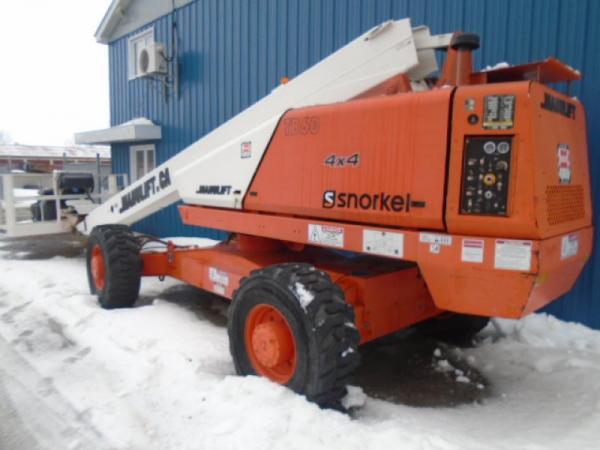
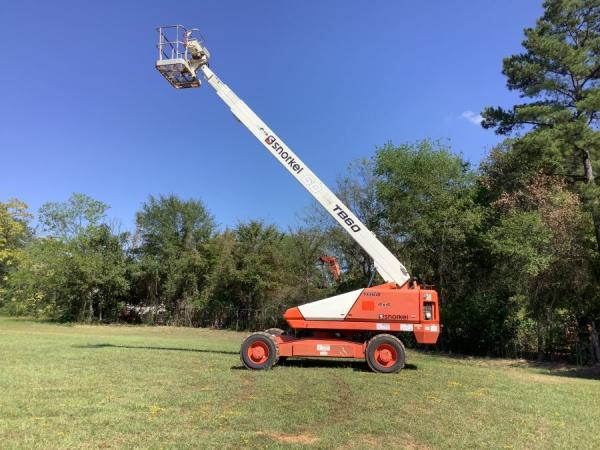
Introducing the TB-60: Compact Power, Significant Reach
The Snorkel TB-60 is a mid-size telescopic boom lift designed for demanding jobsite environments. As part of Snorkel’s durable T-series, it delivers a potent blend of reach, maneuverability, and reliable performance—making it ideal for tasks from construction to industrial maintenance.
Terminology Note - Telescopic Boom: A boom with extendable sections that provide long reach while maintaining compact storage.
- Gradeability: The machine’s ability to ascend slopes; expressed as a percentage indicating the vertical rise per horizontal distance.
- Winch Swing / Superstructure Rotation: Full 360° continuous rotation allows effortless positioning without repositioning the base unit.
Key Specifications at a Glance
Putting the TB-60’s specifications into clear bullet form offers an easier reference:- Working Heights:
- Platform Height: 60 ft (18.3 m)
- Maximum Reach: Around 50 ft (15.0 m)
- Capacity & Platform:
- Payload: ~500 lb (227 kg)
- Platform size: ~30 in × 60 in (76 cm × 152 cm)
- Machine Dimensions:
- Overall length: ~30 ft 10 in (~9.4 m)
- Width: ~8 ft (2.5 m)
- Stowed height: ~8 ft 9 in to 10 ft (2.7–3.0 m)
- Mobility & Drive:
- Drive system: 4WD with up to 30% gradeability
- Steering: Narrow tail-swing back and tight turning radius (~26 ft outer radius)
- Performance:
- Stowed travel speed: up to ~3 mph; elevated movement: slower (~0.5 mph)
- Ground clearance: ~13 in (33 cm)
- Power & Fluids:
- Engine: Kubota ~59 hp Tier 4 (diesel)
- Fuel capacity: ~40 gal (151 L)
- Hydraulic fluid: ~35 gal (133 L)
- Operational Weight: ~20,700–21,700 lb (9,400–9,850 kg)
Why the TB-60 Stands Out- Robust, Rough-Terrain Capability: Its 4WD system and solid gradeability make it a reliable performer on uneven or sloped job sites.
- Full 360° and Platform Rotation: Allows operators to maneuver without repositioning the base or compromising on precision.
- Hydrostatic Drive with Positive Traction: Delivers smooth, controllable movements, ideal for delicate or precise operations—even when the boom is extended.
- Balanced Dimensions: The compact stowed profile fits through standard access points while still achieving substantial working height.
Real-World Use and Operator Insights
A rental manager once shared how the TB-60 became a go-to machine during a public infrastructure project: its tight turning radius and 4WD allowed quick repositioning in tight urban zones, while the telescopic boom reached overhead structures without needing costly scaffolding. The fade-resistant controls and reliable hydraulics helped minimize downtime. Operators appreciated the platform’s ergonomic layout and the full rotation, reducing worker fatigue.
Maintenance & Operational Tips- Ensure Proper Ground: Always operate on firm, level ground to preserve stability and hydraulic efficiency.
- Regular Fluid Check: Monitor both fuel and hydraulic reservoir levels before each shift, especially after heavy usage.
- Routine Inspections: Check tire condition (foam-filled tires reduce puncture risk), greasing points, and discernible hydraulic leaks.
- Use Genuine Parts: For replacements—from filters to hoses—Snorkel’s official support network ensures quick turnaround and accurate specifications.
- Training Matters: Leveraging Snorkel’s Toolbox™ or Platform™ platforms (training and service portals) ensures operators are familiar with safe operating procedures and control functions.
Choosing the Right Unit
If you’re evaluating equipment, the TB-60 generally ranges in price from around $8,000 for older models to $25,500 for well-maintained machines with low hours. Additionally, models on the secondary market warehouse between $14,500 to $22,500, depending on age, hours, and condition.
Summary Highlights- Ideal for operations needing up to 60 ft elevation with tight mobility
- Strong platform capacity and integrated rotation offer unmatched flexibility
- Engineered for rugged terrain with solid 4WD, traction, and clearance
- Proven reliability, backed by dedicated support and parts logistics
- Widely used across construction, infrastructure, and maintenance sectors
Want help comparing the TB-60 to other boom lifts, exploring finance options, or planning preventive maintenance? Just let me know—happy to elevate your project.
|
|
|
|
| John Deere 350 Crawler Loader: A Comprehensive Overview |
|
Posted by: MikePhua - 08-13-2025, 09:36 PM - Forum: General Discussion
- No Replies
|
|
Introduction
The John Deere 350 Crawler Loader, introduced in the mid-1960s, stands as a testament to John Deere's commitment to producing durable and versatile construction equipment. Designed for various applications, including trenching, grading, and material handling, the 350 series has become a staple in the heavy equipment industry.
Key Specifications - Engine Options:
- Gasoline: 3-cylinder, 135 cu in (2.2 L)
- Diesel: 3-cylinder, 152 cu in (2.5 L)
- Horsepower:
- Gross: 46 hp (34.3 kW)
- Net: 42 hp (31.3 kW)
- Operating Weight: Approximately 7,895 lbs (3,582 kg)
- Dimensions:
- Length: 13 ft 3 in (4.04 m)
- Width: 5 ft 6 in (1.68 m)
- Height: 6 ft 4 in (1.93 m)
- Hydraulic System:
- Pump Flow Capacity: 14 gpm (53 lpm)
- Relief Valve Pressure: 2,250 psi (155 bar)
- Type: Open-center
- Transmission:
- Type: Sliding gear
- Forward Gears: 4
- Reverse Gears: 1
- Fuel Capacity: 22 gal (83.3 L)
- Hydraulic Fluid Capacity: 6.4 gal (24.2 L)
- Final Drives Fluid Capacity: 10 gal (37.9 L)
Common Issues and Troubleshooting
- Steering Clutch Problems:
- Symptoms: Difficulty in turning or uneven steering response.
- Potential Causes: Worn clutch plates, low hydraulic pressure, or contaminated hydraulic fluid.
- Solutions:
- Inspect and replace clutch plates if worn.
- Check and adjust hydraulic pressure to manufacturer specifications.
- Drain and replace contaminated hydraulic fluid.
- Hydraulic System Failures:
- Symptoms: Slow or unresponsive loader arms and bucket.
- Potential Causes: Clogged hydraulic filters, air in the hydraulic lines, or failing hydraulic pump.
- Solutions:
- Replace clogged hydraulic filters.
- Bleed the hydraulic system to remove air pockets.
- Test and replace the hydraulic pump if necessary.
- Engine Performance Issues:
- Symptoms: Engine stalling, lack of power, or difficulty starting.
- Potential Causes: Clogged fuel filters, faulty fuel injectors, or air intake restrictions.
- Solutions:
- Replace clogged fuel filters.
- Inspect and clean fuel injectors.
- Ensure the air intake system is clear of obstructions.
Maintenance Tips- Regular Inspections: Conduct daily checks of fluid levels, tire pressure, and general machine condition.
- Scheduled Servicing: Follow the manufacturer's recommended service intervals for oil changes, filter replacements, and other routine maintenance.
- Proper Storage: Store the loader in a dry, sheltered location to protect it from environmental elements.
- Operator Training: Ensure that all operators are trained in the proper use and maintenance of the John Deere 350 to prevent misuse and extend the machine's lifespan.
Conclusion
The John Deere 350 Crawler Loader remains a reliable and efficient piece of equipment for various construction and agricultural tasks. By understanding its specifications, common issues, and maintenance requirements, operators can ensure optimal performance and longevity of the machine. Regular maintenance and prompt attention to any issues will help in achieving maximum productivity and minimizing downtime.
|
|
|
|
| Comprehensive Guide to Heavy Equipment Screens: Types, Specifications, Maintenance, and Practical Solutions |
|
Posted by: MikePhua - 08-13-2025, 09:35 PM - Forum: General Discussion
- No Replies
|
|
Introduction to Heavy Equipment Screens
Screening equipment plays a crucial role in heavy equipment operations spanning mining, quarrying, construction, and material processing industries. Screens are used to separate materials by size, remove debris, and optimize downstream processing operations. Selecting the right type of screen with appropriate specifications is vital for efficiency, durability, and minimizing operational downtime.
This detailed guide explains various types of screening equipment used with heavy machinery, their technical characteristics, common challenges, maintenance practices, and practical advice. Supplemented with terminology clarification, case insights, and actionable solutions, this overview aids operators, technicians, and managers in choosing, maintaining, and troubleshooting heavy equipment screens effectively.
Common Types of Heavy Equipment Screens - Vibrating Screens:
Employ electromagnetic or mechanical vibration motors to move material across inclined or horizontal screen decks. Widely used due to high screening efficiency, ability to handle heavy loads, and ease of maintenance. Examples include:- Inclined Vibrating Screens with H-beam frames and multiple decks for layered screening.
- Linear Vibrating Screens generate straight material flow; favorable for assembly line operations.
- Resonance Screens operate near natural frequency but are complex and prone to faults.
- Features: adjustable screen tension devices, replaceable screen panels, oil-lubricated vibrating mechanisms.
- Trommel Screens (Rotary Screens):
Cylindrical rotating drums with perforated surfaces. Materials pass through holes while the drum rotates, suitable for dirty or wet materials.
- Disc Screens:
Cylindrical arrays of discs rotating around a shaft. Material separation based on size through gaps between discs with gentle material handling.
- Flip-Flop and Gyro Screens:
Specialized vibrating screens designed for high-precision screening and dust control.
- Fixed Screens:
Stationary screen surfaces relying on material sliding over by gravity, often for pre-screening or coarse separation. Simple and low cost but less productive.
Key Specifications and Components of Heavy Equipment Screens- Screen Deck Size:
Width and length tailored to throughput and material size, often expressed in feet or meters (e.g., 8’ x 20’ decks).
- Screen Media:
- Wire Cloth: For fine or medium separation; tensioned over decks for durability.
- Perforated Plate: For coarse material screening.
- Rubber or Urethane Liners: Protect wear-prone surfaces and reduce noise/vibration.
- Screen Tensioning Systems:
Automatic spring-loaded or adjustable wedge/spring tension assemblies maintain consistent screen media tension during operation to prevent wire breakage or premature wear.
- Vibrating Mechanisms:
- Electromagnetic Vibrators: Precise frequency and amplitude control for fine screening.
- Unbalanced Motors or Eccentric Shafts: Produce mechanical vibration; robust for heavy-duty use.
- Frame and Base:
Heavy-duty H-beam or welded steel frames designed to withstand dynamic loads and minimize structural fatigue.
- Lubrication and Bearings:
Oil-lubricated mechanisms with pressure or quantity-controlled systems improve bearing life, especially under harsh conditions.
Maintenance, Troubleshooting, and Practical Solutions- Inspection:
- Regularly check screen media for wear, tears, or stretching; replace damaged panels promptly.
- Inspect vibration motors, bearings, and drive belts for looseness or wear.
- Ensure tensioning systems (springs, wedges) function correctly to maintain media tension.
- Monitor frame structure for cracks or fatigue signs.
- Cleaning and Lubrication:
- Clean debris buildup to prevent clogging and maintain screening efficiency.
- Lubricate bearings and moving parts per manufacturer’s intervals using appropriate oils or greases.
- Operational Adjustments:
- Adjust stroke length and vibration amplitude to optimize material flow and separation quality.
- Fine-tune screen angle and feed rates according to material type and desired throughput.
- Replacement Parts and Upgrades:
- Use OEM or high-quality aftermarket tension assemblies, screen cloth, springs, and vibration motors.
- Consider rubber or urethane liners to extend wear life and reduce noise.
- Utilize modular screen designs for easy deck replacement and configuration changes.
- Safety and Setup:
- Ensure guarding is in place around belts, drives, and vibrating mechanisms.
- Verify electrical connections and motor grounding for safe operation.
Terminology Explained- Screen Deck: The surface area where material is separated by size.
- Screen Media: The woven wire, perforated metal, or rubber panels through which material is sorted.
- Vibration Amplitude: The displacement of the vibrating screen surface during operation.
- Spring Tensioning Assembly: Components that apply constant force to maintain tight screen media tension.
- Electromagnetic Vibrator: A device creating vibration using electromagnets for efficient, adjustable motion.
- Inclined Screen: A screen mounted at an angle to improve material flow and separation.
- Bearings: Components allowing smooth rotation or oscillation of vibrating parts.
- Trommel Screen: A rotating drum screen commonly used for washing and separation of aggregates.
Case Story: Preventing Downtime with Proactive Screen Maintenance
A quarry operator experienced declining product quality and increased downtime due to broken wire cloth sections and bearing failures on a 3-deck inclined vibrating screen. After switching to automatic spring tension assemblies and installing wear-resistant rubber liners, combined with a preventive lubrication schedule, the operator reduced unplanned maintenance by 40%.
In addition, training operators on feed rate control and regular visual inspections further extended screen service life. Similar improvements were observed when the vibrating motors were upgraded to models with better sealing and higher service factor ratings to withstand abrasive and wet conditions.
Summary List of Key Recommendations for Heavy Equipment Screens- Select screen type (vibrating, trommel, disc, fixed) based on material properties, capacity, and separation requirements.
- Use appropriate screen deck dimensions and modular designs for flexibility.
- Maintain consistent screen media tension using automatic or adjustable tension assemblies.
- Regularly inspect and replace worn or damaged screen cloth and liners.
- Ensure lubrication and maintenance of vibrating mechanisms and bearings.
- Adjust vibration parameters to optimize throughput and product quality.
- Employ OEM or high-quality aftermarket replacement parts for longevity.
- Monitor frame and structural components for fatigue or damage.
- Train operators on material feed control and routine visual inspections.
Additional Practical Advice- Implement scheduled maintenance programs including vibration motor checks, lubrication, and screen tension assessment.
- Keep an inventory of replacement screen cloth panels, springs, vibration motors, and bearings.
- Consult manufacturer manuals for detailed specifications, part numbers, and recommended maintenance intervals.
- Stay informed on advances in screen materials such as polymeric screens and sensor-integrated screening media for condition monitoring.
- Consider environmental conditions like moisture and abrasive characteristics when selecting screen coatings and liners.
Conclusion
Heavy equipment screens are vital to efficient materials processing in numerous industries. Understanding the range of screen types—vibrating, trommel, disc, and fixed—along with their design attributes and operational principles enables effective selection and use. Maintenance focusing on screen media tension, vibrating mechanism health, and structural integrity prevents unplanned downtime and costly repairs.
Real-world experiences highlight how upgrades to tensioning systems, wear liners, and motor components significantly enhance performance and screen life. Adopting scheduled maintenance, operator training, and using quality replacement parts ensures optimal screening efficiency and durability.
This comprehensive article serves as a valuable reference for equipment owners, technicians, and operators committed to maintaining high productivity and reliability in their heavy equipment screening operations.
|
|
|
|
| JCB Robot 190: A Comprehensive Guide to Specifications, Applications, and Troubleshooting |
|
Posted by: MikePhua - 08-13-2025, 09:34 PM - Forum: Troubleshooting & Diagnosing
- No Replies
|
|
Introduction to the JCB Robot 190
The JCB Robot 190 is a compact, high-performance skid steer loader designed for versatility and efficiency in various industries, including construction, agriculture, and landscaping. Manufactured by JCB, a renowned British construction equipment manufacturer, the Robot 190 offers a blend of power, maneuverability, and user-friendly features.
Key Specifications - Engine Power: The JCB Robot 190 is equipped with a 4-cylinder, 4.4L diesel engine, delivering approximately 80 horsepower.
- Operating Weight: Approximately 3,710 kg (8,180 lbs), providing a stable base for various tasks.
- Rated Operating Capacity: Up to 950 kg (2,094 lbs), allowing for efficient handling of heavy loads.
- Bucket Capacity: 0.5 m³, suitable for a range of materials.
- Hydraulic System: Features a hydrostatic drive pump with a flow capacity of 20 gal/min (75.7 L/min) and a relief valve pressure of 2,682 psi (185 bar).
- Dimensions:
- Length with Bucket: 3,490 mm
- Width: 1,730 mm
- Height: 2,029 mm
- Wheelbase: 1,100 mm
- Ground Clearance: 210 mm
- Turning Radius: 2,000 mm
Applications
The JCB Robot 190 is designed to excel in various applications:- Construction: Ideal for tasks such as site preparation, material handling, and trenching.
- Agriculture: Useful for moving feed, cleaning barns, and handling hay bales.
- Landscaping: Efficient in tasks like grading, digging, and transporting materials.
- Snow Removal: Equipped with attachments suitable for clearing snow in urban and rural settings.
Troubleshooting Common Issues
- Hydraulic System Failures
- Symptoms: Slow or unresponsive boom and bucket movements.
- Potential Causes:
- Low hydraulic fluid levels.
- Clogged hydraulic filters.
- Air trapped in the hydraulic system.
- Solutions:
- Check and top up hydraulic fluid levels.
- Replace or clean hydraulic filters.
- Bleed the hydraulic system to remove air pockets.
- Drive Motor Issues
- Symptoms: Uneven movement or complete lack of movement.
- Potential Causes:
- Faulty drive motors.
- Damaged hydraulic lines.
- Electrical issues affecting motor operation.
- Solutions:
- Inspect and test drive motors for functionality.
- Check hydraulic lines for leaks or blockages.
- Verify electrical connections and fuses related to motor control.
- Engine Performance Problems
- Symptoms: Engine stalling or lack of power.
- Potential Causes:
- Clogged fuel filters.
- Faulty fuel injectors.
- Air intake restrictions.
- Solutions:
- Replace fuel filters.
- Inspect and clean fuel injectors.
- Ensure air intake system is clear of obstructions.
Maintenance Tips- Regular Inspections: Conduct daily checks of fluid levels, tire pressure, and general machine condition.
- Scheduled Servicing: Follow the manufacturer's recommended service intervals for oil changes, filter replacements, and other routine maintenance.
- Proper Storage: Store the loader in a dry, sheltered location to protect it from environmental elements.
- Operator Training: Ensure that all operators are trained in the proper use and maintenance of the JCB Robot 190 to prevent misuse and extend the machine's lifespan.
Conclusion
The JCB Robot 190 is a robust and versatile skid steer loader suitable for a wide range of applications. By understanding its specifications, common issues, and maintenance requirements, operators can ensure optimal performance and longevity of the machine. Regular maintenance and prompt attention to any issues will help in achieving maximum productivity and minimizing downtime.
|
|
|
|
|



