| Welcome, Guest |
You have to register before you can post on our site.
|
| Online Users |
There are currently 60 online users.
» 0 Member(s) | 49 Guest(s)
Ahrefs, Amazon, Applebot, Bing, Claude, DotBot, Google, OpenAI, Semrush, Trendiction
|
| Latest Threads |
Identifying and Sourcing ...
Forum: Parts , Attachments & Tools
Last Post: MikePhua
01-07-2026, 06:29 PM
» Replies: 0
» Views: 534
|
Cat 931B Brake Parts
Forum: Parts , Attachments & Tools
Last Post: MikePhua
01-07-2026, 06:29 PM
» Replies: 0
» Views: 285
|
Choosing Between Cat 228,...
Forum: General Discussion
Last Post: MikePhua
01-07-2026, 06:28 PM
» Replies: 0
» Views: 571
|
Hydraulic Delay When Lowe...
Forum: Troubleshooting & Diagnosing
Last Post: MikePhua
01-07-2026, 06:27 PM
» Replies: 0
» Views: 450
|
Bale Chopper and Mulcher ...
Forum: General Discussion
Last Post: MikePhua
01-07-2026, 06:26 PM
» Replies: 0
» Views: 333
|
Mini UC Maintenance
Forum: General Discussion
Last Post: MikePhua
01-07-2026, 06:25 PM
» Replies: 0
» Views: 319
|
Locating Wiring Informati...
Forum: General Discussion
Last Post: MikePhua
01-07-2026, 06:24 PM
» Replies: 0
» Views: 352
|
Case Industrial Brown Sub...
Forum: Parts , Attachments & Tools
Last Post: MikePhua
01-07-2026, 06:23 PM
» Replies: 0
» Views: 279
|
Dirt Work in West Virgini...
Forum: Construction & Urban Infrastructure Forum
Last Post: MikePhua
01-07-2026, 06:23 PM
» Replies: 0
» Views: 380
|
D207 P Hydraulic Steering...
Forum: Parts , Attachments & Tools
Last Post: MikePhua
01-07-2026, 06:22 PM
» Replies: 0
» Views: 305
|
|
|
| Volvo Mini Excavator: Common Problems, Solutions, and Maintenance Insights |
|
Posted by: MikePhua - 08-14-2025, 07:41 PM - Forum: General Discussion
- No Replies
|
 |
Understanding Volvo Mini Excavators
Volvo mini excavators are compact yet powerful machines designed for digging, trenching, and material handling in confined spaces. They combine advanced hydraulics, robust engines, and sophisticated electronics to deliver efficient operation. However, like any heavy equipment, these machines face challenges over time due to wear, environmental conditions, and usage intensity. Being aware of common issues and their resolution is essential to maximize uptime and extend the machine's lifespan.
Common Problem Areas in Volvo Mini Excavators
Owners and operators of Volvo mini excavators often encounter several key problem areas, each impacting performance and reliability. Understanding these helps in timely intervention. - Hydraulic System Issues: The hydraulic system powers digging, lifting, and other operations. Problems often arise from fluid leaks, worn hoses, seal failures, and contamination by dirt or water. Low hydraulic fluid pressure can degrade machine performance and cause operational failure.
- Undercarriage Wear and Track Tension: Tracks, rollers, sprockets, and idlers constitute the undercarriage, allowing mobility on rough terrains. These components wear with use, with improperly tensioned tracks causing accelerated wear or slippage. Loose tracks may sag and damage pins and bushings, while overly tight tracks impose excess stress on bearings and rollers.
- Engine and Starting Problems: Engines sometimes fail to start due to electrical faults (e.g., dead batteries, loose wiring), clogged fuel lines, or maintenance neglect. Overheating from blocked radiators or low coolant levels is another frequent engine issue.
- Overheating Concerns: Overheating threatens engine health. Typical causes include low coolant, blocked airflow in radiators, malfunctioning thermostats, or overworking the machine in hot conditions.
- Electrical System Faults: Mini excavators rely heavily on their electrical systems for starting, lighting, sensors, and controls. Faulty wiring, blown fuses, and defective sensors can cause erratic behavior or complete shutdown.
- Final Drive Motor Failures: The final drive translates hydraulic power to the tracks. Faults in this motor manifest as grinding noises, reduced power, leaking oil, or resistance while maneuvering, often due to lack of maintenance or seal damage.
Terminology to Know- Hydraulic Leak: Loss of hydraulic fluid from hoses, seals, or fittings that compromises system pressure.
- Track Tension: The degree of tightness in the track chain; critical for smooth movement and minimizing wear.
- Final Drive Motor: A component that receives power from the hydraulic system and drives the tracks.
- Thermostat: A valve regulating coolant flow to maintain engine temperature.
- Sensor Failures: Malfunctioning sensors that provide faulty data to the machine’s control system.
Diagnosing and Troubleshooting Volvo Mini Excavator Problems
- Hydraulic System Maintenance
- Inspect hoses and seals regularly for wear and leaks.
- Flush hydraulic fluid periodically to remove contamination.
- Replace filters according to manufacturer schedules to maintain fluid cleanliness.
- Track and Undercarriage Care
- Check track tension daily; adjust to manufacturer-recommended specifications.
- Lubricate rollers and sprockets routinely to reduce friction.
- Replace worn or damaged components promptly to prevent further damage.
- Engine and Electrical Checks
- Test battery voltage and ensure secure connections.
- Inspect fuel lines for blockages; use clean and fresh fuel.
- Verify radiator cleanliness and coolant levels to prevent overheating.
- Examine wiring harnesses and fuses; replace any faulty parts.
- Final Drive Motor Inspection
- Listen for abnormal sounds while operating; investigate any grinding or knocking.
- Check for oil leaks and ensure seals are intact.
- Maintain cleanliness around the motor to prevent overheating.
Solutions and Preventative Measures- Replace damaged hydraulic hoses and seals without delay.
- Maintain optimal track tension to avoid undue wear—adjust tension by observing sag or overstretching visibly.
- Follow engine maintenance schedules strictly, including oil changes, coolant checks, and filter replacements.
- Keep electrical connectors clean and dry; use dielectric grease to prevent corrosion.
- Regularly clean radiators and cooling fins to ensure adequate engine cooling.
- Perform routine inspections before and after shifts to catch emerging issues early.
Additional Tips- Use high-quality hydraulic fluids and engine oils suited for your machine and climate.
- Avoid working the machine at full capacity in extreme heat or harsh conditions to reduce the risk of overheating.
- Carry essential spare parts such as fuses, hoses, and filters to minimize downtime.
- Keep a detailed maintenance log to track repairs and servicing schedules.
Field Stories and Case Examples
A contractor operating a Volvo mini excavator once experienced sudden hydraulic loss during a critical excavation. Upon inspection, a worn-out hose developed a crack, causing fluid leakage. Quick replacement and fluid flush restored functionality, underscoring the importance of hydraulic system vigilance.
Another operator reported rapid track wear due to improper tension adjustments. By adopting a routine tension check at shift start and lubricating undercarriage components regularly, the machine’s track life was significantly extended, saving costly repairs.
Similarly, a case of engine overheating was traced back to a clogged radiator fan and dirty coolant. After cleaning and replacing the coolant with a proper mix, the engine’s temperature normalized, improving reliability.
In Closing
Volvo mini excavators are resilient machines but depend heavily on proper maintenance and timely troubleshooting. Preventative care targeting hydraulics, undercarriage, engine, and electrical systems can mitigate common failures. Combining this with attentive inspection and addressing issues promptly provides operators with a dependable tool for demanding jobs.
By understanding these typical challenges and applying expert solutions, Volvo mini excavator owners can ensure efficient, long-lasting operation and optimize their investment.
|

|
|
| Evaluating the Value of a 1988 Dresser TD-7 Dozer with 300 Hours |
|
Posted by: MikePhua - 08-14-2025, 07:41 PM - Forum: General Discussion
- No Replies
|
|
The 1988 Dresser TD-7 dozer, particularly the TD-7E model, is recognized for its durability and versatility in various construction and agricultural applications. When considering the purchase of such a machine with only 300 operating hours, several factors must be assessed to determine its fair market value.
Market Pricing Trends
The pricing of used Dresser TD-7E dozers varies based on several factors, including age, condition, and hours of operation. For instance, a 1988 model with approximately 3,400 hours is listed at $27,900 USD . Conversely, a 1982 model with 3,336 hours is priced at $25,000 USD . These listings suggest that a 1988 TD-7E dozer with only 300 hours could command a premium price, potentially ranging from $30,000 to $35,000 USD, assuming it is in excellent condition and well-maintained.
Factors Influencing Value
- Low Operating Hours: A machine with only 300 hours indicates minimal usage, which typically translates to less wear and tear on critical components, thereby preserving its value.
- Undercarriage Condition: The undercarriage is a significant cost factor in dozer maintenance. A well-maintained undercarriage with minimal wear can add substantial value to the machine.
- Maintenance History: A comprehensive service record demonstrating regular maintenance and any recent repairs or replacements can enhance the machine's value by assuring potential buyers of its reliability.
- Attachments and Features: Additional features such as a six-way blade, ripper, or winch can increase the machine's versatility and, consequently, its market value.
- Market Demand: Regional demand for such equipment can influence pricing. Areas with active construction or agricultural projects may see higher valuations due to increased need.
Potential Buyers and Uses
Given its low hours and potential for extended service life, this dozer would appeal to:- Construction Contractors: Looking for reliable equipment for grading, trenching, or site preparation.
- Land Developers: In need of machinery for land clearing and leveling.
- Farm Operators: Seeking equipment for soil management and field preparation.
- Government and Municipal Agencies: For infrastructure projects requiring durable machinery.
Conclusion
A 1988 Dresser TD-7E dozer with only 300 hours of operation is a rare find and could be a valuable addition to any fleet. By considering the factors outlined above and conducting a thorough inspection, potential buyers can make an informed decision regarding its purchase.
|
|
|
|
| John Deere 4555 Blower Motor Failure: A Comprehensive Guide |
|
Posted by: MikePhua - 08-14-2025, 07:40 PM - Forum: Troubleshooting & Diagnosing
- No Replies
|
|
Understanding the Issue
The blower motor in the John Deere 4555 tractor is a crucial component responsible for circulating air through the cab’s heating and air conditioning systems. When it fails, operators lose essential climate control, affecting comfort and visibility due to lost defrosting capabilities. Blower motor failure often manifests as it stopping abruptly, starting and stopping erratically, or not functioning at all.
Common Causes of Blower Motor Failure
Several factors can lead to blower motor problems in agricultural tractors like the John Deere 4555. Understanding these helps diagnose and fix the issue effectively. - Electrical Wiring Problems: Wiring issues such as damaged harnesses, crushed or chewed wires, internal corrosion in connectors, or poor grounding can disrupt power delivery to the blower motor. These faults often cause intermittent operation or complete failure.
- Blower Motor Itself: The motor may develop bearing failures, internal dead spots, or worn components over time. Bearings can seize or develop “dead spots” that cause the motor to stop randomly until manually moved or cleaned.
- Faulty Relays or Switches: The blower motor relies on relays and switches in the electrical control system. A failing relay or a defective blower switch interrupts the power flow, causing the motor to stop working.
- Load Center or Board Issues: In some John Deere 4555 models, especially older ones, the load center or control boards have been known to fail or develop loose connections, leading to blower motor and other electric anomalies.
- Airflow Restrictions: Though not directly causing blower motor failure, clogged air filters or obstructed evaporator cores can increase motor load, leading to overheating or premature failure.
Diagnostics and Troubleshooting
A methodical approach is essential to pinpoint the exact cause:- Voltage Verification: With the blower switch set to high speed, measure the voltage at the blower motor terminals. Confirming a stable 12 volts ensures the motor is getting proper power. If voltage is missing or unstable, the problem lies upstream in the wiring or controls.
- Inspect Wiring and Connections: Visually and physically inspect the wiring harness for damage or corrosion. Unplug and re-plug connectors to ensure good contacts. Check all ground points on the tractor thoroughly.
- Relay and Fuse Testing: Identify which relays and fuses control the blower motor circuit. Test relays by swapping with known good ones of the same type. Note patterns in which fuses or relays lose power when the motor stops.
- Control Board Examination: Since some reported issues involve the control board losing power, send suspect boards for professional renovation or replacement. Faulty boards can cause multiple electrical failures simultaneously.
- Blower Motor Test: Remove the blower motor and bench test with a direct 12-volt power source. Listen for unusual noises or observe stoppages which may indicate bearing failure or internal motor issues.
Technical Terms Explained- Load Center: The central electrical distribution panel or fuse box in the tractor, housing fuses and relays.
- Relay: An electrically operated switch used to control a circuit by a low-power signal.
- Ground Point: A connection point in the electrical system where circuits are connected to the tractor’s chassis for completing the electrical path.
- Dead Spot: A point in a motor bearing’s rotation where it halts due to mechanical friction or wear.
Solutions and Recommendations
For successful restoration and prevention of future blower motor issues, consider these solutions:- Replace Faulty Components: If the blower motor is faulty, replacing it is most straightforward. When selecting a replacement, ensure the motor matches the original’s voltage, frame size, speed (RPM), and horsepower rating.
- Clean and Lubricate Bearings: For motors with serviceable bearings, routine lubrication can extend the motor’s life. Sealed bearings may sometimes be oiled via a small puncture for maintenance.
- Address Wiring Concerns: Repair or replace damaged wires and connectors. Clean corroded terminals and ensure solid grounding.
- Renew Control Boards or Load Centers: For persistent electrical issues not resolved by wiring checks, consider professional repair or replacement of the control board or load center.
- Regular Maintenance: Keep air filters clean and evaporator cores free of obstruction to reduce motor strain.
- Spare Parts Readiness: Given that some original motors and parts may become obsolete, having spares on hand is beneficial to minimize downtime.
Stories from the Field
One farmer shared his experience with a 4555 that had intermittent blower motor failures. After replacing the ignition switch with no improvement, he suspected the load center. Sending the control board for professional overhaul helped initially, but the problem recurred. Through detailed relay and fuse testing, he found specific relays going dead intermittently, pointing toward a wiring fault. Repairing and reinforcing wire connections finally restored reliable blower operation.
In another HVAC case unrelated to tractors, a blower motor stopped working because of a “dead spot” in its bearings. After a similar intermittent behavior and thorough cleaning with lubrication, the motor worked again briefly but ultimately needed full replacement. This story parallels tractor blower motor issues, highlighting the importance of mechanical motor component health.
Additional Tips- When testing, always disconnect power and use proper tools, including a multimeter and test lights.
- If unsure about electrical diagnostics, consult with certified tractor mechanics or electricians.
- Document symptoms, tested parts, and repair steps to help with warranty claims or future troubleshooting.
- For upgraded performance and durability, consider modern blower motor designs that offer quieter and more efficient airflow.
By understanding the common causes, performing structured troubleshooting, and applying sound repair strategies, you can effectively resolve John Deere 4555 blower motor problems and enjoy uninterrupted tractor comfort and functionality.
|
|
|
|
| Comprehensive Guide to Troubleshooting Steering Issues in the Volvo L220E Wheel Loader |
|
Posted by: MikePhua - 08-14-2025, 07:39 PM - Forum: Troubleshooting & Diagnosing
- No Replies
|
|
The Volvo L220E wheel loader is renowned for its robust performance and advanced hydraulic steering system. However, operators may occasionally encounter steering problems that can impede productivity. This guide delves into common steering issues, diagnostic procedures, and maintenance practices to ensure optimal performance of the steering system.
Understanding the Steering System
The L220E is equipped with a load-sensing hydrostatic steering system that activates only when the steering wheel is turned, thereby conserving energy and reducing fuel consumption. This system comprises several key components: - Steering Valve (Orbitrol Valve): Directs hydraulic fluid to the steering cylinders based on operator input.
- Steering Cylinders: Convert hydraulic pressure into mechanical force to turn the wheels.
- Hydraulic Pump: Supplies pressurized fluid to the steering system.
- Load Sensing System (LS): Monitors steering pressure and adjusts flow to maintain consistent performance.
- Pressure Relief Valve: Protects the system from excessive pressure that could cause damage.
Common Steering Issues and Diagnostics
- Intermittent Steering Loss
Operators have reported instances where the steering wheel becomes unresponsive after quick or jerky movements, only to regain functionality after a brief pause. This issue often points to:- Pressure Drop: A significant drop in steering pressure from 3050 psi to 150 psi when the problem occurs.
- Load Sensing Line Blockage: A drop in LS pressure from 40 psi to 0 psi during the fault condition.
- Possible Causes: Contaminated or faulty steering valve, malfunctioning pressure relief valve, or issues within the load sensing system.
Diagnostic steps include inspecting the steering valve for debris, testing the pressure relief valve, and ensuring the LS system is free from obstructions.
- Complete Steering Failure
In more severe cases, the steering wheel may become completely unresponsive, and the machine may be unable to turn. This can result from:- Hydraulic Fluid Contamination: Debris or water in the hydraulic fluid can cause internal component wear or blockages.
- Worn Steering Cylinders: Damaged or leaking cylinders can lead to a loss of steering force.
- Faulty Hydraulic Pump: A malfunctioning pump may not provide adequate pressure to the steering system.
It's crucial to check the hydraulic fluid quality, inspect cylinders for leaks, and test the pump's output pressure.
Maintenance Practices to Prevent Steering Issues- Regular Fluid Checks: Monitor hydraulic fluid levels and quality. Low or contaminated fluid can impair steering performance.
- System Flushing: Periodically flush the hydraulic system to remove contaminants and prevent blockages.
- Component Inspections: Regularly inspect the steering valve, cylinders, and hydraulic lines for signs of wear or damage.
- Pressure Testing: Use pressure gauges to verify that the system maintains the correct operating pressures.
Case Study: Resolving Steering Issues in a Volvo L220E
A fleet operator in New Zealand reported intermittent steering loss in their L220E loader. After ruling out the steering valve and shift valve, they adjusted the steering pressure to 3050 psi. Initially, the steering functioned correctly, but during a test drive, the steering failed again. Upon further investigation, they discovered a significant drop in LS pressure, indicating a blockage or malfunction in the LS system. Clearing the obstruction restored normal steering function.
Conclusion
Steering issues in the Volvo L220E wheel loader can stem from various sources, including hydraulic pressure problems, component wear, and system blockages. By understanding the system's components and implementing regular maintenance practices, operators can minimize downtime and ensure the loader's optimal performance. Always consult the manufacturer's service manual for detailed procedures and specifications.
|
|
|
|
| NorAm 65E Motor Grader: Compact Power for Precision Grading |
|
Posted by: MikePhua - 08-14-2025, 07:39 PM - Forum: General Discussion
- No Replies
|
|
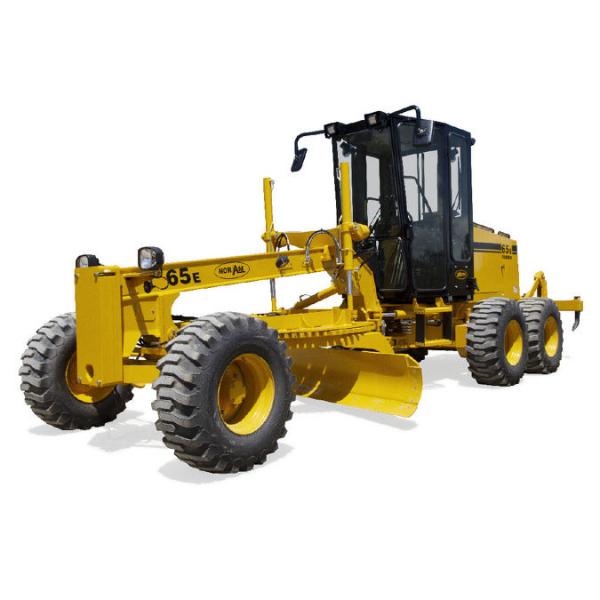
The NorAm 65E motor grader is a compact yet powerful machine designed to deliver the performance of larger graders in a more maneuverable package. Manufactured by NorAm Construction Equipment, a company with roots tracing back to the Fiat-Allis grader range, the 65E has become a popular choice for various grading tasks, including road maintenance, site preparation, and fine grading.
Key Specifications - Engine: Equipped with a 120-horsepower Cummins QSF3.8 turbocharged diesel engine, meeting Tier 4 Final emissions standards.
- Operating Weight: Approximately 16,800 lbs (7,615 kg), providing a balance between stability and maneuverability.
- Blade: Standard 12-foot moldboard with manual pitch adjustment, suitable for various grading applications.
- Transmission: Full power shift transmission with six forward speeds and one reverse, offering smooth and efficient operation.
- Axles: Torque-proportioning rear axle for enhanced traction and stability on uneven surfaces.
- Cab: Enclosed ROPS/FOPS-certified cab with air conditioning, heating, and tinted windows for operator comfort.
Performance and Versatility
The NorAm 65E is designed to perform tasks traditionally handled by larger graders, such as rough cutting, mixing, spreading, and fine grading. Its compact size allows it to operate in confined spaces where larger machines cannot access, making it ideal for urban construction sites, residential developments, and road maintenance projects.
The 12-foot blade provides a wide working width, reducing the number of passes required to complete grading tasks, thereby improving efficiency. The manual pitch adjustment allows for precise control over the blade angle, enhancing the quality of the finished surface.
Operator Experience
Operators of the NorAm 65E benefit from a spacious and comfortable cab equipped with modern amenities. The air-conditioned and heated environment ensures comfort in various weather conditions, while the tinted windows reduce glare and improve visibility. The ergonomic controls and adjustable air-ride seat contribute to reduced operator fatigue during long shifts.
Maintenance and Support
NorAm Construction Equipment offers comprehensive support for the 65E, including parts availability and service options. The machine's design emphasizes ease of maintenance, with accessible components and clear service intervals. Regular maintenance ensures optimal performance and longevity of the grader.
Market Presence and Adoption
The NorAm 65E has found a niche in the market for compact graders, with adoption by various construction companies and rental fleets. Its combination of power, versatility, and compact size makes it a valuable asset for projects requiring precise grading in confined spaces.
Conclusion
The NorAm 65E motor grader stands out in the compact grader segment for its robust performance, operator comfort, and versatility. Whether for road maintenance, site preparation, or fine grading, the 65E offers a reliable solution for tasks that demand precision in limited spaces.
Specifications Summary- Engine: 120 HP Cummins QSF3.8 Turbo Diesel
- Operating Weight: 16,800 lbs (7,615 kg)
- Blade Width: 12 feet
- Transmission: Full Power Shift, 6 Forward, 1 Reverse
- Rear Axle: Torque-Proportioning
- Cab: Enclosed, ROPS/FOPS, Air Conditioning, Heating
- Emissions Standard: Tier 4 Final
Related Models- NorAm 65C: A predecessor to the 65E, offering similar features with slight variations in specifications.
- NorAm 75E: A larger model in the NorAm lineup, providing increased horsepower and blade width for more demanding grading tasks.
Maintenance Tips- Regular Inspections: Conduct daily checks of fluid levels, tire pressure, and blade condition to ensure optimal performance.
- Scheduled Maintenance: Follow the manufacturer's recommended service intervals for oil changes, filter replacements, and other routine maintenance tasks.
- Component Care: Keep the moldboard and circle assembly free from debris and inspect for wear regularly to maintain grading precision.
Operator Training
Proper training is essential for maximizing the performance and lifespan of the NorAm 65E. Operators should be familiar with the machine's controls, maintenance procedures, and safety protocols. Manufacturer-provided training programs or certified courses can enhance operator proficiency and safety.
Future Developments
As the construction industry moves towards more sustainable practices, future iterations of the NorAm 65E may incorporate advancements such as hybrid or fully electric powertrains, enhanced automation features, and improved fuel efficiency. Staying informed about these developments can help operators and fleet managers make informed decisions about equipment investments.
Customer Feedback
Users of the NorAm 65E have praised its maneuverability, ease of use, and reliability. Many have highlighted its performance in urban construction projects and its ability to operate in confined spaces. Feedback indicates that the 65E meets the demands of various grading applications while providing comfort and efficiency for operators.
Conclusion
The NorAm 65E motor grader is a testament to NorAm Construction Equipment's commitment to delivering high-performance machinery in a compact form. Its blend of power, versatility, and operator comfort makes it a valuable asset for a wide range of grading tasks. As the industry evolves, the 65E continues to adapt, ensuring its place in the future of construction equipment.
|
|
|
|
| Choosing the Right Transmission Fluid for the Hyster H200 Forklift: A Practical Guide to Vintage Equipment Maintenance |
|
Posted by: MikePhua - 08-14-2025, 07:37 PM - Forum: Parts , Attachments & Tools
- No Replies
|
|
Introduction: The Fluid That Keeps the Gears Turning
The Hyster H200 is a classic industrial forklift, built for durability and raw lifting power. With its manual transmission and mechanical simplicity, it remains in service across yards, farms, and warehouses decades after production ceased. Yet one question continues to stump mechanics and operators alike: what transmission fluid should be used in this aging workhorse?
This article explores the fluid requirements of the Hyster H200’s manual transmission, clarifies terminology, and offers practical advice for maintaining vintage drivetrains. We’ll also share stories from the field and offer preventive strategies to extend the life of these legacy machines.
Understanding the Hyster H200 Transmission
The H200 typically features a manual gearbox with a dry clutch and gear-driven powertrain. Unlike modern hydrostatic or electronically controlled transmissions, this system relies on: - Gear oil for lubrication and heat dissipation
- Mechanical linkages for gear selection
- Cast iron housings and steel gears
- Minimal filtration or fluid monitoring systems
Because of its age, documentation may be scarce, and fluid recommendations vary depending on climate, load, and wear condition.
Terminology Clarification
- Manual Transmission: A gearbox where gears are selected manually by the operator using a clutch and gear lever.
- Gear Oil: A high-viscosity lubricant designed for gearboxes, typically rated by SAE standards (e.g., 80W-90, 85W-140).
- Viscosity: A measure of a fluid’s resistance to flow; higher viscosity oils are thicker and better for high-load applications.
- Fill Level Plug: A threaded port on the side of the transmission case used to determine proper oil level—fluid should reach this point when full.
Recommended Fluids and Parameters
For the Hyster H200 manual transmission, the following fluids are commonly recommended:- SAE 80W-90 gear oil for moderate climates and general use
- SAE 85W-140 gear oil for high-load or high-temperature environments
- GL-4 or GL-5 rated oils depending on gear metallurgy (GL-5 may be too aggressive for yellow metals)
- Shell Spirax or Mobilgear equivalents for premium performance
Operators should fill the transmission until oil begins to seep from the side fill plug—typically two square plugs located mid-case.
Field Anecdote: Michigan Mechanic’s Solution
A mechanic in Michigan faced the same dilemma with a vintage H200. After consulting with peers and inspecting the transmission internals, he opted for Shell 85W-140 gear oil. The loader ran smoothly through winter and summer, with no signs of gear chatter or overheating. His rule of thumb: “If it’s old, heavy, and manual—go thick.”
Preventive Maintenance Tips
To keep the H200 transmission healthy:- Check fluid level monthly, especially in high-use environments
- Replace gear oil every 500–750 hours or annually
- Inspect fill and drain plugs for metal shavings
- Use magnetic plugs to capture wear particles
- Avoid mixing fluid types—flush thoroughly during changes
- Monitor for signs of gear whine, hard shifting, or fluid leaks
Case Study: Forklift Failure in a Coastal Yard
In a coastal shipping yard, an H200 was filled with ATF (automatic transmission fluid) by mistake. Within weeks, the transmission began slipping and overheating. The thinner fluid failed to protect the gears under load. After draining and refilling with 85W-140, the issue resolved—but not before a clutch replacement was needed. This underscores the importance of viscosity and fluid type in manual gearboxes.
Climate Considerations
Fluid selection should be tailored to operating conditions:- Cold climates: 80W-90 for easier cold starts
- Hot climates or heavy loads: 85W-140 for better film strength
- Mixed-use environments: synthetic gear oils with wide temperature tolerance
Conclusion: Respecting the Simplicity of Legacy Machines
The Hyster H200 may lack the sophistication of modern forklifts, but its reliability lies in its simplicity. Choosing the right transmission fluid—typically a high-viscosity gear oil—can mean the difference between smooth operation and premature failure. With careful attention to fill levels, viscosity ratings, and preventive maintenance, operators can keep these vintage machines running strong for years to come.
|
|
|
|
| John Deere vs. Caterpillar: A Comprehensive Comparison of Heavy Equipment |
|
Posted by: MikePhua - 08-14-2025, 07:37 PM - Forum: General Discussion
- No Replies
|
|
When it comes to heavy equipment, John Deere and Caterpillar (CAT) are two of the most prominent names in the industry. Both companies offer a wide range of machinery designed for various applications, from construction and mining to agriculture and forestry. Understanding the differences between these brands can help operators and fleet managers make informed decisions based on their specific needs and preferences.
Performance and Productivity
Caterpillar machines are often praised for their speed, smooth operation, and user-friendly layouts. Operators frequently note that CAT equipment is easier to enter and exit, providing a more comfortable working environment. However, these advantages come at a cost, as CAT machines tend to consume more fuel and may have higher maintenance expenses. Additionally, finding qualified service technicians can be more challenging in certain regions.
In contrast, John Deere equipment is known for its robust performance and fuel efficiency. While it may not match the speed of some CAT machines, Deere's equipment often offers greater durability and lower operating costs over time. Serviceability is another strong point for Deere, with many models designed for easy access to maintenance points, simplifying routine upkeep and reducing downtime.
Operator Comfort and Ergonomics
Operator comfort is a critical factor in enhancing productivity and reducing fatigue. Caterpillar's machines are designed with ergonomics in mind, featuring spacious cabs, intuitive controls, and advanced suspension systems. These features contribute to a smoother ride and less physical strain during extended work hours.
John Deere also prioritizes operator comfort, incorporating features such as adjustable seating, climate control, and noise reduction technologies. While some operators may find Deere's cabs slightly less luxurious compared to CAT's, the emphasis on functionality and practicality ensures a comfortable working environment.
Technology and Innovation
Both John Deere and Caterpillar have invested heavily in integrating advanced technology into their equipment. Deere has been at the forefront of automation, unveiling autonomous tractors and industrial equipment equipped with AI and computer vision systems. These innovations aim to address labor shortages and increase efficiency in agriculture and construction sectors.
Caterpillar, on the other hand, has focused on enhancing machine control and fleet management through its Cat Connect technology. This system provides real-time data on machine performance, location, and health, enabling operators and fleet managers to make data-driven decisions that optimize productivity and reduce costs.
Maintenance and Durability
Durability and ease of maintenance are crucial considerations for any heavy equipment owner. Caterpillar machines are renowned for their longevity and ability to withstand harsh operating conditions. Many CAT models are designed with rebuildability in mind, allowing for multiple overhauls throughout their lifespan. This approach can be more cost-effective in the long term, especially for machines that see extensive use.
John Deere equipment is also built to last, with a reputation for reliability and ease of service. Deere's design philosophy emphasizes accessibility, with many components positioned for straightforward maintenance. This design choice can lead to reduced downtime and lower service costs, making Deere a popular choice among fleet operators.
Cost of Ownership
The total cost of ownership encompasses not only the initial purchase price but also operating expenses, maintenance costs, and resale value. Caterpillar machines often come with a higher upfront cost, reflecting their advanced features and capabilities. Operating costs, including fuel consumption and maintenance, can also be higher compared to John Deere equipment.
John Deere machines typically offer a more economical ownership experience, with lower operating and maintenance costs. The company's focus on fuel efficiency and ease of service contributes to a lower total cost of ownership. Additionally, Deere's strong resale value ensures that owners can recoup a significant portion of their investment when it's time to upgrade.
Conclusion
Choosing between John Deere and Caterpillar depends on the specific needs and priorities of the operator or fleet manager. Caterpillar may be the preferred choice for those seeking high-speed performance, advanced technology, and operator comfort, with the willingness to invest in higher operating costs. On the other hand, John Deere offers a more cost-effective solution without compromising on performance, durability, or ease of maintenance. Ultimately, both brands provide reliable and efficient equipment, and the decision should align with the operational requirements and financial considerations of the user.
|
|
|
|
| Diagnosing Transmission Failure in the Volvo/Michigan L120 Loader: A Case of Overlooked Filtration |
|
Posted by: MikePhua - 08-14-2025, 07:36 PM - Forum: Troubleshooting & Diagnosing
- No Replies
|
|
Introduction: When a $19,000 Repair Misses the Obvious
The Volvo/Michigan L120 wheel loader is a workhorse in construction and agricultural settings, known for its robust frame and reliable drivetrain. Yet even the most dependable machines can falter—especially when a seemingly minor oversight leads to major operational failure. This article explores a real-world case of transmission malfunction in an L120 loader, where the root cause was not mechanical complexity but a neglected suction screen. Through detailed analysis, terminology clarification, and practical recommendations, we’ll uncover how a simple fix outperformed a costly rebuild.
Transmission System Overview: L120 Loader
The L120 transmission system is a powershift type, designed for smooth directional changes under load. Key components include: - Torque converter with lock-up clutch
- Multiple clutch packs for gear selection
- Hydraulic control valves and solenoids
- Transmission pump and suction screen
- Electronic control unit (ECU) for shift logic
The system relies heavily on clean, pressurized hydraulic fluid to engage gears and maintain torque delivery. Any disruption in fluid flow—especially cavitation or contamination—can lead to erratic behavior or total failure.
Terminology Clarification
- Cavitation: Formation of vapor bubbles in hydraulic fluid due to low pressure, which collapse violently and damage components.
- Suction Screen: A mesh filter located at the transmission pump inlet, designed to trap debris before it enters the hydraulic circuit.
- Transmission Pump: A gear or vane pump that supplies pressurized fluid to clutch packs and control valves.
- Prime Loss: When a pump loses its ability to draw fluid, often due to air ingress or blockage.
Symptoms and Initial Misdiagnosis
The loader in question exhibited intermittent transmission failure:- Operated normally for 5–15 minutes
- Suddenly lost drive in both forward and reverse
- Engine and hydraulics remained functional
- After a brief shutdown, transmission resumed operation
Multiple repair shops and dealers failed to identify the issue, even after a $19,000 rebuild. Pressure tests showed normal readings at idle, misleading technicians into ruling out pump or fluid flow problems.
Root Cause: Blocked Suction Screen
Upon further inspection by an independent mechanic, the following was discovered:- Transmission sump contained metal shavings, plastic fragments, and sludge
- Suction screen was heavily clogged
- Filter canister was empty during failure episodes
- Audible cavitation noises were present when transmission failed
After cleaning the screen and replacing the fluid, the loader operated flawlessly for over five hours—confirming that the blockage had caused pump cavitation and loss of hydraulic pressure.
Why the Screen Was Overlooked
Several factors contributed to the oversight:- Pressure tests were conducted at idle, not under load
- Technicians assumed the rebuilt transmission ruled out internal contamination
- Suction screen location was not easily accessible
- Lack of procedural rigor in post-rebuild diagnostics
This highlights a broader issue in heavy equipment maintenance: the tendency to trust expensive repairs over basic checks.
Preventive Maintenance Recommendations
To avoid similar failures, operators and technicians should implement the following:- Inspect and clean suction screens during every fluid change
- Use borescope or endoscope tools to check sump conditions
- Conduct pressure tests under load, not just at idle
- Replace transmission fluid with OEM-specified grade (e.g., Volvo ATF HD or equivalent)
- Install magnetic drain plugs to capture metal debris
- Maintain service logs with component-level inspection records
Field Anecdote: A Kenyan Operator’s Discovery
In Kenya, an L120C loader showed weak drive performance despite healthy hydraulics. Inspired by similar cases, the operator located and cleaned the suction screen—restoring full transmission function without replacing any parts. This underscores the global relevance of filtration maintenance, especially in regions with limited access to diagnostic equipment.
Industry Insight: Filtration Neglect in Heavy Equipment
A 2022 survey by a European fleet management firm found that 38% of transmission failures in loaders were linked to fluid contamination. Of those, nearly half involved clogged suction screens or neglected filters. The cost of these failures averaged €12,000 per incident, excluding downtime.
Conclusion: The Power of Simplicity in Diagnostics
The Volvo/Michigan L120 transmission case serves as a cautionary tale and a lesson in humility. While advanced diagnostics and rebuilds have their place, they must be grounded in methodical inspection and respect for basic systems. A blocked suction screen—hidden beneath layers of assumption—nearly sidelined a reliable machine. But with patience, curiosity, and a willingness to question the obvious, even the most elusive problems can be solved.
|
|
|
|
| Exploring the UK’s Forest Machinery Landscape: Key Players and Innovations |
|
Posted by: MikePhua - 08-14-2025, 07:35 PM - Forum: Farming, Landscaping, Forestry Industry Forum
- No Replies
|
|
The United Kingdom's forestry sector is supported by a diverse range of machinery suppliers and manufacturers, catering to both large-scale commercial operations and specialized, low-impact forestry practices. From global industry leaders to specialized local suppliers, the UK offers a comprehensive ecosystem for forest machinery.
Major International Manufacturers Operating in the UK - John Deere Forestry: A prominent name in the global forestry equipment market, John Deere offers a range of forest machines designed to enhance productivity and efficiency in forestry operations.
- Komatsu Forest: Operating as one of the world's largest manufacturers of forest machines, Komatsu Forest provides a comprehensive range of machines, services, servicing, and spare parts for modern forestry.
- Ponsse: A Finnish company manufacturing forestry vehicles and machinery, Ponsse's products are utilized in logging sites across approximately 40 countries, with 80% of the company's net sales coming from exports.
Specialized UK-Based Suppliers and Manufacturers- Field & Forest Machinery: Based in the UK, Field & Forest Machinery is a leading supplier of specialist forestry machinery and attachments, offering both new and used machinery across the country.
- Komatsu Forest UK: With a comprehensive range of machines and services, Komatsu Forest UK operates from Carlisle, providing modern forestry solutions to the UK market.
- Paul Vidgen Forest Machines Ltd: As the sole UK importer for Ahwi (now Prinoth), Paul Vidgen Forest Machines specializes in mulchers, stump grinders, rotovators, and tracked carriers, with a focus on mulching and land clearing industries.
- Oakleaf Forestry: Specializing in low-impact timber harvesting and extraction machinery, Oakleaf Forestry offers equipment suitable for sustainable forestry practices in the UK and Ireland.
- Jas P Wilson: Established in 1964, Jas P Wilson provides a wide range of forestry and firewood machinery, including firewood processors, log splitters, and timber handling equipment, serving customers throughout the UK and Europe.
- Clark Engineering: With over 100 years of experience, Clark Engineering offers an extensive range of forestry, logging, and sawmill products from leading brands, along with in-house servicing and repair of machinery components.
- Forest Machine Services Ltd: Based in Northumberland, Forest Machine Services provides machinery for timber harvesting, extraction, and processing, along with fabrication and design services for various industries.
- Global Machinery Solutions: Operating since 2004, Global Machinery Solutions is a leading supplier of forestry and recycling machinery in the UK and Europe, offering a range of equipment and services to meet industry needs.
Innovations and Trends in UK Forestry Machinery- Low-Impact Forestry Practices: Companies like Oakleaf Forestry are at the forefront of promoting sustainable logging techniques, providing machinery that minimizes environmental impact during timber extraction.
- Technological Advancements: Manufacturers are increasingly integrating advanced technologies into their machinery, enhancing efficiency, safety, and precision in forestry operations.
- Specialized Equipment for Bioenergy: The growing demand for bioenergy has led to the development of specialized machinery for efficient biomass harvesting and processing.
Conclusion
The UK's forest machinery sector is characterized by a blend of global industry leaders and specialized local suppliers, offering a wide range of equipment to meet diverse forestry needs. From large-scale commercial operations to sustainable, low-impact forestry practices, the UK provides a comprehensive ecosystem for forest machinery, supporting the industry's growth and evolution.
|
|
|
|
| How to Safely Release the Parking Brake on a John Deere 544G Loader for Loading onto a Trailer |
|
Posted by: MikePhua - 08-14-2025, 07:34 PM - Forum: Logistics & Transportation
- No Replies
|
|
Transporting a John Deere 544G loader requires careful preparation, especially when it comes to releasing the parking brake. Improper handling can lead to mechanical issues or safety hazards. This guide provides a comprehensive, step-by-step approach to safely releasing the parking brake, ensuring the loader is ready for transport.
Understanding the Parking Brake System
The John Deere 544G loader is equipped with an automatically spring-applied, hydraulically released parking brake. This system ensures the machine remains stationary when not in operation. However, when preparing to load the loader onto a trailer, it's essential to manually release the parking brake to allow movement.
Preparation Before Releasing the Parking Brake
- Ensure the Loader is on Level Ground
Position the loader on a flat surface to prevent unintended movement during the brake release process.
- Lower the Loader Bucket
Place the bucket flat on the ground. This action helps stabilize the loader and reduces the risk of tipping.
- Block the Wheels
Place wheel chocks behind the rear wheels to prevent any unintended movement once the brake is released.
- Engage the Loader's Frame Locking Bar
This safety feature secures the loader's frame, preventing any unexpected movements during maintenance.
Manually Releasing the Parking Brake
- Access the Brake Adjustment Cover
Locate the parking brake adjustment cover on the loader's frame. This cover is typically secured with three screws.
- Remove the Cover
Using a suitable screwdriver, remove the three screws and take off the cover to expose the brake adjustment mechanism.
- Loosen the Jam Nut
Identify the jam nut securing the brake adjustment screw. Using a wrench, loosen this nut to allow adjustment of the screw.
- Adjust the Brake Release Screw
Turn the brake release screw counterclockwise to release the parking brake. This action disengages the brake, allowing the loader to move.
- Retighten the Jam Nut
Once the brake is released, retighten the jam nut to secure the adjustment screw in place.
Releasing the Loader from the Trailer
- Ensure the Trailer is on Level Ground
Position the trailer on a flat surface to facilitate the safe unloading of the loader.
- Remove Wheel Chocks
Before attempting to move the loader, remove any wheel chocks to allow free movement.
- Start the Loader's Engine
Turn on the loader's engine to provide hydraulic power for movement.
- Disengage the Parking Brake
Press the parking brake switch to the "OFF" position to disengage the brake.
- Move the Loader
Slowly move the loader forward to ensure it is free from the trailer.
Troubleshooting Tips- If the Parking Brake Won't Release
Check the hydraulic system for proper pressure. Low hydraulic pressure can prevent the brake from releasing. Inspect the brake accumulator for proper charge and look for any leaks in the system.
- If the Loader Moves After Loading
Ensure the parking brake is fully engaged and the transmission is in neutral. If the loader continues to move, inspect the brake system for any faults.
Safety Precautions- Always Block the Wheels
Even after releasing the parking brake, always use wheel chocks to prevent unintended movement.
- Never Rely Solely on the Parking Brake
Always use wheel chocks in conjunction with the parking brake to ensure the loader remains stationary.
- Regularly Inspect the Brake System
Routine maintenance and inspections can help identify potential issues before they become serious problems.
Conclusion
Properly releasing the parking brake on a John Deere 544G loader is crucial for safe loading and unloading. By following the steps outlined in this guide and adhering to safety precautions, operators can ensure the loader is prepared for transport without compromising safety. Always consult the loader's operator manual for specific instructions and maintenance schedules.
|
|
|
|
|



