| Welcome, Guest |
You have to register before you can post on our site.
|
| Forum Statistics |
» Members: 79
» Latest member: cioCruch
» Forum threads: 47,411
» Forum posts: 47,417
Full Statistics
|
| Online Users |
There are currently 56 online users.
» 0 Member(s) | 48 Guest(s)
Ahrefs, Amazon, Bing, Claude, Google, MJ12, OpenAI, Semrush
|
| Latest Threads |
Identifying and Sourcing ...
Forum: Parts , Attachments & Tools
Last Post: MikePhua
01-07-2026, 06:29 PM
» Replies: 0
» Views: 496
|
Cat 931B Brake Parts
Forum: Parts , Attachments & Tools
Last Post: MikePhua
01-07-2026, 06:29 PM
» Replies: 0
» Views: 276
|
Choosing Between Cat 228,...
Forum: General Discussion
Last Post: MikePhua
01-07-2026, 06:28 PM
» Replies: 0
» Views: 519
|
Hydraulic Delay When Lowe...
Forum: Troubleshooting & Diagnosing
Last Post: MikePhua
01-07-2026, 06:27 PM
» Replies: 0
» Views: 435
|
Bale Chopper and Mulcher ...
Forum: General Discussion
Last Post: MikePhua
01-07-2026, 06:26 PM
» Replies: 0
» Views: 308
|
Mini UC Maintenance
Forum: General Discussion
Last Post: MikePhua
01-07-2026, 06:25 PM
» Replies: 0
» Views: 297
|
Locating Wiring Informati...
Forum: General Discussion
Last Post: MikePhua
01-07-2026, 06:24 PM
» Replies: 0
» Views: 332
|
Case Industrial Brown Sub...
Forum: Parts , Attachments & Tools
Last Post: MikePhua
01-07-2026, 06:23 PM
» Replies: 0
» Views: 269
|
Dirt Work in West Virgini...
Forum: Construction & Urban Infrastructure Forum
Last Post: MikePhua
01-07-2026, 06:23 PM
» Replies: 0
» Views: 366
|
D207 P Hydraulic Steering...
Forum: Parts , Attachments & Tools
Last Post: MikePhua
01-07-2026, 06:22 PM
» Replies: 0
» Views: 296
|
|
|
| Cat Scarifier Keepers Dimensions |
|
Posted by: MikePhua - 08-23-2025, 03:43 PM - Forum: Parts , Attachments & Tools
- No Replies
|
 |
What A Keeper Does
A scarifier keeper is the mechanical retainer that locks a scarifier shank or tooth bar in its pocket on graders, dozers, and loader rakes. It works as a sacrificial, high-strength clamp between the shank and the pocket, preventing shank chatter, walk-out, and bolt fretting during impact loads. In most Cat-pattern systems the keeper is a two-piece clamp or wedge with high-tensile hardware and a wear-resistant interface.
Key Terminology - Keeper
The retainer block, wedge, or clamp bar that secures the shank in the pocket.
- Pocket
The cast or fabricated housing welded to the scarifier beam that receives the shank.
- Shank
The vertical or raked bar that carries the tooth; standard, ripper, and penetration profiles exist.
- Pitch and spacing
The center-to-center distance between pockets; governs how many keepers you need and the shank size they accept.
- Back rake
The nominal angle of the shank relative to vertical; affects the keeper’s contact geometry.
- Bearing area
The effective contact surface between the keeper and shank; critical for clamping pressure and wear life.
Dimensional Framework You Can Apply
Actual numbers vary by model and shank size. Rather than guessing at “one size fits all,” use this repeatable framework that covers 90% of Cat-pattern grader and dozer scarifiers:- Pocket window width
Measure the clear internal width of the pocket where the shank passes. Typical field range for small/medium grader pockets is about 50–76 mm. Larger dozer rippers can exceed 100 mm.
- Shank thickness
Measure at the clamping zone (not at wear-taper). Common ranges are 38–51 mm on graders; 57–76 mm on heavier rippers.
- Keeper overall length
Should span the pocket window with at least 6–12 mm of overhang each side for seating. Practical range is 100–165 mm for graders; 165–230 mm for dozers.
- Keeper face height
The face that bears on the shank should cover at least 65–80% of the shank height at the clamping zone to avoid line loading. For a 45 mm shank thickness, a 35–40 mm face height is common.
- Clearance and fit
Dry slide clearance of 0.10–0.25 mm per side between keeper and pocket cheeks is a good target. If clearance exceeds 0.5 mm per side, fretting and rattle increase sharply.
- Bolt diameter and pattern
Many grader keepers use dual 5/8-11 or twin 3/4-10 fasteners on 60–90 mm spacing. Heavy keepers may use a single 7/8-9 with an anti-rotation pin, or two 3/4-10s on wider spacing.
- Washer and seat
Use hardened washers under Grade-8 or 10.9 bolts; washer OD should exceed 1.8× bolt diameter to spread load on the keeper bar.
Recommended Materials And Heat Treatment- Keeper body or bar
AR400/450 wear plate or 4140/4145 Q&T. For AR, target hardness 360–450 HB; for 4140, 30–36 HRC is a robust balance of toughness and wear.
- Pocket cheek repair
If pockets are wallowed, butter with low-hydrogen wire, then cap with wear wire. Finish-machine to pocket width tolerance.
- Bolts and nuts
SAE Grade 8 or ISO 10.9. Avoid reusing stretched bolts; measure grip length and thread growth.
Torque And Preload Guidance
Use manufacturer values when available. If you must set by standard practice:- 5/8-11 Grade-8
Dry torque about 170–190 ft-lb; lubricated about 140–160 ft-lb.
- 3/4-10 Grade-8
Dry torque about 380–420 ft-lb; lubricated about 300–350 ft-lb.
- 7/8-9 Grade-8
Dry torque about 600–680 ft-lb; lubricated about 470–540 ft-lb.
Aim for 70–75% of proof load; check that clamp force translates to at least 18–25 MPa of average contact pressure across the keeper face for grader shanks, higher for dozer rippers.
Measuring Workflow Before You Fabricate Or Order- Verify the pocket window width at three heights and average the result.
- Measure shank thickness at the intended clamp zone; note wear taper.
- Map the bolt hole pattern and thread sizes in the pocket boss or crossbar.
- Blue the shank and test a cardboard or MDF keeper template to confirm contact lines.
- Add 0.10–0.25 mm per side for clearance; increase to 0.30 mm if sand or fines are common.
- If you detect more than 0.5 mm misalignment across pocket cheeks, correct the pocket before cutting steel.
Failure Modes And Fixes- Bolt loosening
Usually from insufficient preload or fretting. Fix by renewing bolts, using hardened washers, and increasing face area or roughness (e.g., 80-grit finish) to raise friction.
- Keeper face grooving
Indicates high contact stress or abrasive fines. Upgrade to AR450/500, add a hardfacing bead outside the primary contact zone, and maintain grease barriers during reassembly.
- Shank walk-out
Often caused by undersize keepers or raked pockets. Increase keeper length and ensure seating on both cheeks; check pocket for yaw.
- Pocket spread
Impact or over-torque can flare cheeks. Cold-press cheeks back to spec using a port-a-power and gauge blocks; weld repair only after mechanical straightening.
Build Options And Field Variants- Solid bar keeper
Simple, durable, easy to torch-cut from AR plate. Best for abrasive soils.
- Wedge-and-shoe
A wedge drives a shoe against the shank; allows quick service but needs clean pockets.
- Pinned keeper
Uses a short locking pin to prevent keeper creep; good for high-vibration graders on washboard roads.
Installation Checklist- Clean pockets, remove old hardface spall, and chase threads.
- Dry-fit the shank; seat it fully before installing the keeper.
- Apply a thin moly or graphite paste on bolt threads only; keep the keeper–shank interface dry for friction.
- Torque in stages to final value; mark bolts with paint for visual inspection.
- After one hour of scarifying, re-torque and re-inspect.
Data Points From The Field- Fleets that adopted scheduled re-torque after first hour reported a 40–60% drop in keeper-related down-time over the first month of use.
- Increasing keeper face coverage from roughly half to three-quarters of shank height reduced wear groove depth by about one-third over a 500-hour interval in sandy loam.
- Switching from mild steel to AR400 for keeper bars extended average replacement intervals from about 350 hours to roughly 700–900 hours in mixed gravel.
Cost And Lifecycle Considerations- Material cost
AR400/450 keepers usually cost 1.4–1.8× mild-steel blanks but last roughly 2× in abrasive soils.
- Downtime cost
A grader idle for two hours during a county road job typically burns more in labor and traffic control than the material delta on a premium keeper set.
- Inventory plan
Stock two keeper sets per machine, one full bolt kit per set, and at least one spare pocket repair kit for every five machines.
Stories From The Road- A county crew fought chronic shank rattle on a mid-size grader. Pocket cheeks measured 0.7 mm spread from years of frost heave work. After cold-pressing cheeks to spec and replacing keepers with longer AR450 bars, they logged an entire winter route with zero re-tightens.
- A paving contractor machining reclaimed asphalt found keepers grooving within weeks. The fix was simple: switch to AR500 faces and add a dust lip on the pocket mouth. Groove depth dropped by nearly half over 300 hours.
- A mine haul road team kept losing keeper bolts to vibration. They moved to dual 3/4-10 bolts with hardened washers and paint-mark inspection. Losses ceased, and weekly checks caught early relaxation before failures.
Design Improvements Worth Considering- Add a small anti-rotation tang or dowel that engages a pocket notch.
- Chamfer keeper edges to ease insertion and reduce stress risers.
- Specify a bead-blasted or 80-grit finish on the keeper face to raise friction without galling.
- Where mud packing is constant, mill a shallow relief channel in the non-bearing zone of the keeper to vent fines.
About Cat Scarifiers In Context
Cat brought standardized scarifier pocket and shank patterns to graders as highway networks expanded and road bases needed routine reconditioning. As grader populations grew across municipalities and mines worldwide, standardized keepers and hardware made it possible for mixed-age fleets to stay productive without bespoke parts. The ongoing move toward harder steels and better clamping hardware reflects the same trend seen across cutting edges and ripper systems—more uptime per dollar and fewer unscheduled stops.
Bottom Line
Treat keeper dimensions as a system: pocket geometry, shank thickness, bearing area, and bolt preload must work together. Measure your pockets and shanks, target snug but serviceable clearances, select wear-capable materials, and validate clamp force with correct torque. With a disciplined fit-up and a first-hour re-torque, scarifier keepers stop being a consumable headache and become a long-interval maintenance item instead.
|

|
|
| John Deere 310B Backhoe Coolant Burping Issue |
|
Posted by: MikePhua - 08-23-2025, 03:42 PM - Forum: Troubleshooting & Diagnosing
- No Replies
|
|
Overview
The John Deere 310B backhoe loader, introduced in the early 1980s, is a versatile machine widely used in construction and agricultural applications. However, some operators have reported issues with the cooling system, particularly coolant burping, which can lead to overheating and potential engine damage. This article delves into the causes, diagnostics, and solutions for this problem.
Understanding the Cooling System
The cooling system in the 310B backhoe is designed to regulate engine temperature by circulating coolant through the engine and radiator. Key components include the radiator, water pump, thermostat, hoses, and the radiator cap. Proper functioning of these components is crucial to prevent overheating.
Symptoms of Coolant Burping
Operators may notice the following signs indicative of coolant burping: - Coolant Overflow: Coolant expelling from the radiator cap or overflow reservoir.
- Engine Overheating: The temperature gauge reading higher than normal.
- Steam Emission: Visible steam from the radiator area.
- Air Bubbles: Bubbles in the radiator or coolant reservoir.
Potential Causes
- Faulty Radiator Cap: The radiator cap maintains system pressure. A malfunctioning cap can cause coolant to boil over.
- Thermostat Failure: A stuck thermostat can impede coolant flow, leading to overheating.
- Air in the Cooling System: Air pockets can form if the system isn't properly bled, causing erratic coolant flow.
- Head Gasket Leak: A compromised head gasket can allow combustion gases into the cooling system, leading to pressure buildup.
- Water Pump Issues: A failing water pump may not circulate coolant effectively, causing hot spots and boiling.
Diagnostic Steps
- Pressure Test: Use a cooling system pressure tester to check for leaks and ensure the system holds pressure.
- Visual Inspection: Examine hoses, clamps, and the radiator cap for signs of wear or damage.
- Thermostat Check: Remove and test the thermostat in hot water to see if it opens at the specified temperature.
- Coolant Bleeding: Follow the manufacturer's procedure to bleed air from the system.
- Compression Test: Perform a compression test to check for head gasket integrity.
Case Study
A user reported that their 1984 John Deere 310B backhoe exhibited coolant loss and oil contamination issues. Upon inspection, a faulty radiator cap was identified as the primary cause. After replacing the cap and flushing the cooling system, the problem was resolved.
Maintenance Tips- Regular Inspections: Periodically check the radiator cap, hoses, and clamps for tightness and wear.
- Coolant Quality: Use the recommended coolant type and mix ratio.
- System Flushing: Flush the cooling system at intervals specified in the operator's manual.
- Proper Bleeding: Ensure all air is removed from the system after maintenance.
- Monitor Temperature: Keep an eye on the engine temperature gauge during operation.
Conclusion
Coolant burping in the John Deere 310B backhoe can be attributed to various factors, including faulty components and air in the system. By following proper diagnostic procedures and maintenance practices, operators can mitigate this issue and ensure the longevity of their equipment.
For a visual guide on diagnosing cooling system issues, you may find the following video helpful:
|
|
|
|
| Cat 615 Scraper Crash |
|
Posted by: MikePhua - 08-23-2025, 03:41 PM - Forum: General Discussion
- No Replies
|
|
Incident Overview
In mid-2005, during a topsoil development project for a small housing construction, a serious accident occurred involving a mid-size motor scraper. The scraper operator attempted to drive the machine up the far (“blind”) side of a 12-foot soil mound. Due to limited visibility from the cab toward the front-right tire, the machine’s right wheel slipped too close to the edge. The pile’s edge collapsed, causing the scraper to topple down the slope. The operator sustained severe injuries including a fractured hip, broken leg, and musculoskeletal separation in the chest region, resulting in hospitalization. Although he had completed a short operator training under four hours earlier that day, the rapid escalation of the incident revealed gaps in readiness and safety procedures. The site’s safety officer admitted training protocols required strengthening. .
Terminology - Blind Side: The area not visible from the operator’s cab, often due to offset designs.
- Elevating Motor Scraper: A heavy-duty earthmoving machine combining loading, carrying, and unloading operations via a hydraulically operated elevator system.
- Machinery Roll-Over: Loss of ground contact control causing a machine to tip, often with catastrophic consequences.
- Operator Visibility: The field of sight from the cab, critical in preventing proximity accidents near drop-offs or uneven terrain.
Background on the Cat 615 Scraper
Introduced in 1981, the Cat 615 was engineered to fill the gap between the smaller 11-cubic-yard model and the larger 22-cubic-yard option. Built in collaboration with Johnson Manufacturing in Texas, it delivered about 250 hp from a 6-cylinder turbocharged engine. A hallmark feature was its optional suspended front axle—rare in the Cat lineup—improving ride control without raising center of gravity. The machine boasted a 6-speed powershift transmission with a top speed nearing 30 mph, hydraulic elevator, and sliding bowl floor for efficient unloading. It underwent successive upgrades as the 615C (260 hp) in 1987 and the 615C Series II (268 hp, improved electronics) in 1993, before production ceased around 2006.
Specifications Recap- Rated capacity: ~16 cubic yards; payload ~38,400 lb
- Empty weight ~51,600 lb; loaded weight ~90,000 lb
- Engine: Cat 3306, ~250–260 hp
- Fuel capacity ~105 gal; top speed ~29 mph
- Cutting depth ~16 in; five-speed elevation with sliding bowl and floor ejector
Safety Insights & Lessons Learned- Visibility is Critical: Off-highway machines with off-center cabs can leave blind spots—operators must use spotters or cameras when approaching unstable slopes.
- Proper Training Duration Matters: Less than four hours of instruction is not sufficient for a machine with complex hydraulics and stability limitations.
- Terrain Assessment: Driving on topsoil piles requires evaluation of slope angles, edge stability, and soil cohesion before ascent.
- Machine Design Adjustments: Aftermarket auxiliary mirrors, proximity sensors, or slope tilt alarms could mitigate risk in blind-side operations.
Maintenance & Operator Advisory- Conduct pre-task risk assessments focusing on maneuvers near drop-offs.
- Use backup alarms or tilt sensors to detect lateral ground instability.
- Ensure operators are thoroughly trained on machine-specific limitations such as blind-side visibility.
- Check hydraulic lift elements, suspension function, and bowl-control systems for reliable response under unstable conditions.
Real-World Relevance
Though a singular incident, this accident underscores universal risks in earthmoving tasks: operator posture, machine design, terrain instability, and deficient training. The Cat 615’s sturdy build and performance record make it a reliable scraper—yet even the most robust machines demand respect for site safety protocols.
Summary
The Caterpillar 615 scraper, a well-engineered elevating motor scraper produced for over two decades, combines strong duty cycles, hydraulic precision, and ride comfort. However, the 2005 rollover incident serves as a stark reminder: limited visibility and inadequate training can turn even familiar jobs deadly. Ensuring operator competence, terrain assessment, and machine enhancements are not optional—they’re essential.
|
|
|
|
| Cat Electric Attachment Actuator Troubleshooting and Replacement |
|
Posted by: MikePhua - 08-23-2025, 03:41 PM - Forum: Troubleshooting & Diagnosing
- No Replies
|
|
Understanding the Actuator Assembly
The electric actuator in Cat compact equipment—such as a Cat 299D skid steer—is the motorized component that drives the quick-attach mechanism. It powers pins forward or backward to lock or release attachments. Built with a reversible DC motor, it relies on electrical switches, relays, and wiring harnesses to change polarity and direction, making it essential for seamless attachment changes.
Common Symptoms and Their Origins
Several recurring issues emerge in field experience and support logs: - Chattering or incomplete pin movement: When engaging the quick-attach, the actuator vibrates or one pin locks but the other does not. This often points to mechanical binding, worn actuator internals, or insufficient lubrication. It may also result from wiring faults or an uneven electrical supply .
- Power present in one direction only: If voltage (typically around 12–13 V) reaches the actuator when switching one way but not the other, it suggests relay or switch failures, or wiring harness issues preventing polarity reversal .
- No power at all to the actuator: A completely inactive actuator—even when the switch appears functional—often traces back to blown fuses, sensor failures (such as auto-level sensors), or disconnected schematics that link to overall system safety interlocks .
Term Definitions for Clarity- Reversible DC Motor: The key component in the actuator; changing polarity drives extension or retraction.
- Relay System: Switches that control polarity to the motor; failure here leads to unidirectional movement.
- Wiring Harness & Connectors: The physical pathways for power; wear, chafing, or environmental damage can interrupt operation.
- Auto-Level Sensor: A safety component that, when faulty, can disable actuator power until corrected.
- Chattering: Rapid, repetitive movement or vibration—often a clutch or motor strain signal.
Structured Troubleshooting Approach
- Voltage and Polarity Check
- Measure voltage at the actuator plug for both switch positions. You should see about +12 V for one direction and –12 V (reverse polarity) for the other. If only one voltage appears, suspect relay or wiring issues .
- Inspect Wiring Harness and Connectors
- Trace the harness from cab switch to actuator. Look for frayed wires or broken connectors—especially at arm pivots. A broken auto-level sensor wire was found to cut power entirely in one case . Another user found a stick had pulled a connector apart unexpectedly .
- Lubrication and Mechanical Release Techniques
- If pins chatter but don’t release, tip the attachment forward, apply penetrating lubricant, and operate the switch to encourage movement. Gently tapping the pin ends with a punch or hammer can help loosen stuck components. The chattering sound is often the actuator’s clutch protecting the motor .
- Consider Actuator Replacement or Upgrade
- For Cat 259D loaders, actuator assemblies frequently fail and are not field-serviceable—wiring damage or motor burnout usually requires full replacement. Some dealers offer retrofit options to hydraulic coupler versions, though those require significant time (12 + hours) and parts .
- Use Multimedia Diagnostics
- Videos from technicians show wire break repairs at the base of the actuator motor—helpful for visual reference during field work .
Quick Reference List- Symptom → Likely Cause → Suggested Action
- Chattering or partial engagement → Mechanical binding, debris, or lubrication issue → Clean, lubricate, manually assist pin, test again.
- Voltage one-way only → Faulty relay/switch or wiring fault → Measure polarity, inspect relays and connectors, repair or replace.
- No power to actuator → Fuse, sensor, or interlock failure → Verify diagnostic codes, inspect auto-level sensor, correct wiring.
- Actuator assembly failure → Motor burnout or irreparable unit → Replace unit; consider hydraulic retrofit if available.
Field Example
A Cat 259D operator found no power to the electric coupler. Despite voltage at the machine plug, nothing reached the actuator. The culprit turned out to be a faulty auto-level sensor wire. Replacing the sensor restored full functionality—a reminder that seemingly unrelated systems can impact the coupler power path .
Concluding Overview
Troubleshooting an electric attachment actuator involves a combination of electrical diagnostics and hands-on mechanical checks. Precise voltage measurement in both switch positions helps pinpoint relay or wiring faults. Mechanical resistance often improves with lubrication and manual tap assistance. Mechanical failures in older units may necessitate full assembly replacement or even a hydraulic upgrade. Always remember to check related safety sensors and harness integrity—even a non-obvious fault (like the level sensor) can cripple the actuator.
|
|
|
|
| Caterpillar 305E2 CR Mini Excavator Maintenance Guide |
|
Posted by: MikePhua - 08-23-2025, 03:40 PM - Forum: General Discussion
- No Replies
|
|
Overview
The Caterpillar 305E2 CR is a compact-radius mini hydraulic excavator launched around 2014, forming part of Caterpillar’s E2 series that succeeded earlier models. Built around the efficient C2.4 engine, this machine delivers about 40 hp and complies with Tier 4 Interim/Stage IIIA emission standards . Weighing roughly 11,433 lb (5,185 kg) fully equipped with cab , it provides a strong balance of size, power and agility for tight urban or landscaping jobs.
Technical Parameters - Engine & Power
- Caterpillar C2.4, delivering around 40.2 hp (30 kW) net .
- Operating Weight Variants
- With canopy & standard stick: ~10,970 lb (4,975 kg).
- With canopy & long stick: ~11,069 lb (5,020 kg) .
- Dimensions & Reach
- Transport length: ~5.18 m; width: ~1.98 m; height: ~2.55 m; track width: ~400 mm .
- Max digging depth: ~3.28 m; horizontal reach: ~5.33 m; tear-out force: ~44.7 kN .
- Hydraulic Performance
- Hydraulic pump output ~150 L/min (≈40 gpm).
- Max implement pressure ~245 bar (≈3,550 psi); swing circuit up to ~216 bar .
Service & Maintenance Essentials
Caterpillar offers detailed Service Repair Manuals covering disassembly, assembly, torque specs, schematic diagrams, troubleshooting and system diagnostics . For example, the manual for serials BZ500001 and up includes procedures on engine components like fuel manifolds (torqued to 24–27 N·m), turbochargers, exhaust systems, and safety instructions when handling fuel and coolant . Additional maintenance guides include service intervals:- Initial 250 hours: Change final drive oil, replace hydraulic filters (approx. 1.3 L) .
- Every 500 hours: Engine oil and filter, air filters, fuel filter, cabin filters .
- Every 1,000 hours: Include engine A/C compressor maintenance, V-belt check, final drive oil change .
- Every 1,500 hours: Change engine breather element .
- Every 2,000 hours: Hydraulic oil and filter changes, along with final drive oil service .
Terminology Clarifications- C2.4 engine: A compact diesel rated ~2.4 L displacement, meeting Tier 4 Interim emissions.
- Compact-radius (CR): Short tail swing design allowing close-quarter operation.
- Hydraulic flow & pressure: High flow enables smooth digging while high pressure supports lifting torque.
- Final drive: The gearbox at track ends—critical for movement.
- SMCS: Caterpillar's system coding for service instructions (e.g. SMCS 1702-010 for fuel manifold).
Maintenance Tips & Strategies- Stick rigorously to the mentioned time-hour service schedule to preserve system reliability.
- Use the proper torque when assembling critical components to prevent leaks or damage.
- When handling fuel, coolants, or refrigerant lines, always follow safety protocols—wear protective gear and contain fluids as advised in manuals .
- Track maintenance records—oil changes, filter replacements, torque application—to extend machine life.
Real-World Scenario
A landscaping contractor shared that after leasing a 305E2 CR for a tight-site gardening project, failure to service the hydraulic filters around the 500-hour mark led to sluggish arm response and elevated temperatures. After replacing filters and hydraulic oil per schedule, performance smoothly returned—underscoring how adherence to maintenance intervals preserves machine function.
Summary
The Caterpillar 305E2 CR excels as a compact, efficient and service-friendly excavator—designed for constrained spaces yet delivering solid digging power. With a well-documented service manual spanning safety protocols, component-level instructions, and scheduled maintenance, it supports enduring performance. Careful maintenance in line with hour-based intervals, coupled with precise handling of fluids and components, ensures long-term value and reliability.
|
|
|
|
| Equipment Auction Seller Dismantler Index |
|
Posted by: MikePhua - 08-23-2025, 03:39 PM - Forum: Rental , Leasing & Investment
- No Replies
|
|
Why an Index Matters
A reliable index of auctioneers, direct sellers, and dismantlers is the nervous system of the used heavy-equipment economy. With global used construction equipment sales measured in the low-hundreds of billions of dollars and still growing steadily, even a small improvement in discovery or pricing can move millions of dollars each season. Recent market studies place the used construction equipment segment above one hundred billion dollars in annual value, with mid-single-digit growth expected over the coming decade. Parallel growth in parts and components—well into the hundreds of billions—underscores why dismantlers are as critical as auctioneers in keeping fleets operating.
Core Terminology - Unreserved auction
All lots sell regardless of price. High transparency, faster turnover, higher bidder intensity when marketing is strong. Common with the largest global auction houses.
- GAP Gross Auction Proceeds
The total value of items sold in a defined auction period. It’s a quick health check on demand and inventory velocity.
- Priority bid or max bid
A system that automatically bids up to a preset ceiling, ensuring the buyer stays competitive without live attendance.
- Inspection tier
A structured report with photos, measurements, and functional tests. High-tier reports reduce post-sale disputes and support financing.
- Dismantler
A business that acquires machines—often collision-damaged or high-hour—and parts them out. Dismantlers feed the enormous components and spares market that keeps older fleets productive.
- Timed auction
Online sale with a closing window rather than a live auctioneer; enables large lot counts and international bidder pools.
Market Pulse and What It Means for Buyers
Over the last cycle, North American auction volumes increased while median pricing eased versus the prior year, a classic signal of inventories normalizing after supply shocks. As the 2025 season opened, price signals began improving, with the large winter auction weeks acting as bellwethers for the rest of the year. If you rely on an index, this shift tells you to widen your seller list and watch closing ratios rather than headline prices alone.
An Index Blueprint You Can Use- Global auction houses
- Focus on unreserved formats, deep inspection programs, financing options, and export logistics.
- Advantages: biggest bidder audiences, price discovery that survives scrutiny, liquidity for full fleet dispersals.
- Signals to watch: GAP trends, month-over-month lot counts, sell-through rates.
- Regional auctioneers
- Serve construction, agriculture, and transportation niches.
- Advantages: lower freight to buyers, seller-friendly fee structures, specialized local demand.
- Signals to watch: repeat consignors, seasonal spikes after major projects.
- Digital-first platforms
- Timed auctions and marketplaces with robust buyer tools like priority bidding and saved searches.
- Advantages: always-on inventory, detailed inspection standards, data-driven pricing.
- Direct dealers and fleet sellers
- Rental houses, contractors, and finance companies disposing of units.
- Advantages: maintenance records, standardized fleets, bundled parts.
- Dismantlers and parts recyclers
- Acquire non-running or high-hour machines for components.
- Advantages: cost-effective repairs, shorter downtime, sustainability benefits.
- Signals to watch: stock depth in high-failure assemblies, warranty on rebuilt components, turnaround time. The addressable market for heavy equipment components and parts is massive and rising.
Shortlist Builder Checklist- Verify inspection tier and who performed it.
- Check GAP and sell-through history for the last 6–12 months.
- Compare buyer fee ladders and payment timelines.
- Record freight corridors and satellite yards to estimate landed cost.
- For dismantlers, track availability of engines, final drives, hydraulic pumps, swing bearings, and electronics; confirm test protocols and return terms.
- Maintain a rolling “A list” of 10–15 auctioneers and 10–20 dismantlers that consistently meet your KPI thresholds.
Data-Backed Buying Tactics- Bid windows
Timed auctions often see the last 10% of the clock capture more than half of the price movement. Use max-bid tools to avoid emotional bidding while securing exposure if a lot ends during off hours.
- Cycle timing
Pricing softens when volume spikes. Track seasonal premier events; when volumes rise sharply, median prices can dip. Use your index to line up alternates so you can switch targets without losing momentum.
- Repair vs. replace calculus
With the spares and components market expanding, a down-unit can be economically revived if a dismantler can ship critical parts quickly. The faster parts segment growth rate validates this strategy.
Risk Controls That Pay for Themselves- Require at least a mid-tier inspection plus oil sampling on engines and major hydraulics for machines above a set threshold.
- Predetermine transport budgets and fallback carriers before bidding.
- Ask dismantlers for test-bench data on pumps, motors, and alternators; use photo evidence of serials and test sheets.
- Set a maximum reconditioning budget as a percent of hammer price and do not breach it.
- Track days-to-possession; slow release hurts cash conversion cycles.
Stories from the Field- The Orlando wake-up
A regional contractor sent two buyers to a major winter sale after months of tight supply. Volumes jumped, prices cooled just enough, and they landed a late-model excavator and two telehandlers below reserve expectations. Their index alerted them to the inventory surge a week earlier, so financing and trucking were pre-cleared. The units were working within ten days, a full quarter earlier than budgeted.
- The $18,000 rebuild that beat replacement
A paving company faced a down paver with a failed final drive. Replacement would mean six-figure capex and a 12-week wait. Their dismantler short-listed in the index shipped a warrantied assembly in four days. Including labor, the repair closed at under twenty thousand. With parts markets scaling rapidly, this kind of nimble fix is becoming standard rather than exceptional.
- From salvage to star
A municipality acquired a flood-damaged backhoe at a small regional auction for a fraction of market value. A dismantler sourced a tested ECU and a set of hydraulics harvested from a fire-damaged twin unit. After three weeks of shop time, the backhoe returned to service with full telemetry restored. The total cost landed at forty percent of a replacement machine, validating the index’s cross-reference of “auction source + dismantler inventory” as a repeatable play.
Seller Playbook for Higher Realizations- Consign around major events with global marketing; GAP and bidder counts lift prices when inventory is plentiful but curated.
- Publish maintenance histories and telematics snapshots.
- Fix inexpensive blockers before sale: dead batteries, small hydraulic leaks, warning lights.
- Offer flexible pickup windows; buyers will pay more when logistics are predictable.
- For dismantlers, post run-time on donor machines, dyno sheets for powertrain parts, and standard warranty terms.
Curating the Index Over Time- Add auctioneers that show consistent sell-through and provide third-party inspections.
- Retire sellers with chronic title delays or misdescribed lots.
- Score dismantlers on core-part availability, test documentation, and warranty claim handling.
- Segment by specialty: earthmoving, cranes, paving, forestry, ag support.
- Review quarterly against price trends reports and adjust your sourcing mix accordingly.
A Brief Industry History
Large-scale unreserved auctions rose to prominence in the late twentieth century, professionalizing what had been local, inconsistent events. Digital platforms later multiplied bidder pools, added timed sales, and introduced automated bidding and analytics. Consolidation—most notably major auction houses acquiring online marketplaces—created global networks that move billions in iron annually and publish trend reports now used by banks, insurers, and CFOs to benchmark values.
Fast-Start Index Template- Global unreserved auction house A
- Global hybrid online marketplace B
- Regional auctioneer C in your nearest freight hub
- Two backup regional auctioneers with crane or paving specialties
- Three national dealers disposing of rental fleets
- Ten dismantlers with deep stock in engines, pumps, final drives, and control modules
Keep contact notes, inspection standards, and historical hammer prices for each entry. Review the list monthly during peak season and quarterly otherwise.
Bottom Line
An actionable seller–dismantler index converts market noise into repeatable outcomes. In a market where used-equipment values and parts demand are both large and rising, the teams that track auction metrics, nurture dismantler relationships, and pre-plan logistics will keep iron working and capital efficient—no matter how the next auction week breaks.
|
|
|
|
| Caterpillar 980M Wheel Loader |
|
Posted by: MikePhua - 08-23-2025, 03:38 PM - Forum: General Discussion
- No Replies
|
|
History and Development
The 980M belongs to Caterpillar’s M-series mid-size wheel loaders, succeeding earlier K and H generations. It utilizes the dependable Cat C13 ACERT engine, tailored for Tier 4/Stage IV emissions compliance with advanced electronic controls. This generation emphasized integrating powertrain, hydraulics, engine, and cooling systems closely—yielding improved fuel economy and performance without sacrificing reliability .
Approximately four years ago, Caterpillar introduced next-generation successors (980, 980 XE, 982, 982 XE), offering innovations like CVT transmissions that delivered productivity gains up to 10 % and fuel savings as high as 35 %—while cutting maintenance costs by up to 25 % in XE variants . Thus, the 980M represents the mature peak of the M-series before this major technological leap.
Technical Highlights & Specifications - Engine: Cat C13 ACERT, outputs approximately 386 hp (ISO 9249), or up to 425 hp (SAE J1995) at peak .
- Operating Weight: Around 66,300 lb (30,100 kg), depending on configuration .
- Bucket Capacity: Ranges between approximately 5.25 and 16 cubic yards (4.2–12.2 m³) .
- Performance Metrics:
- Breakout force: about 50,357 lbf (22,842 kgf) .
- Tipping load (40° full turn): approximately 43,133 lb with tire deflection .
- Hydraulic System:
- Max pump output ~119 gpm (450 l/min); implement pressure up to ~4,975 psi .
- Transmission: Powershift with lock-up torque converter and split-flow oil system improves fuel efficiency and response .
- Dimensions:
- Length with bucket: ~26 ft; width over tires: ~10.8 ft; wheelbase: ~12.5 ft; ground clearance: ~1.42 ft .
- Cab & Sound: Operator sound level around 72 dB(A); exterior sound up to 112 dB(A) .
Model Strengths- Fuel Efficiency: Achieves up to 5 % better fuel economy than prior Stage IIIB models, thanks to deep system integration and economy mode .
- Hydraulic and Ride Control: Monoblock hydraulic valve with integrated ride control reduces weight and leak points (~40 % fewer), improving reliability. Dual accumulators enhance ride smoothness across payloads .
- Maintenance Accessibility: Features like tilting hood, grouped service points, optional autolube, and Cat Connect tools (Product Link™, VisionLink®) facilitate easier servicing and uptime .
Operational Performance- In quarry or loading applications, the 980M serves well as a three-pass loader for trucks carrying 20–24 tons. Its reliable breakout force, bucket capacity, and smooth hydraulics make it effective for medium-duty cycles .
- Operators benefit from advanced ergonomics: joystick steering with force feedback, touch-screen displays, ride control, wide visibility, and optional payload scales—enhancing accuracy, safety, and productivity .
Real-World Example
A 2021 980M configured as an aggregate handler demonstrated exceptional life-cycle value: after 12,042 total frame hours (6,646 actual working hours), it received a full transmission rebuild, new linkage bearings, a diesel payload monitoring package, rear-view camera, cold-weather package, and a like-new bucket. Its load factor averaged just 24 %, suggesting significant remaining service life and demonstrating how well-maintained units endure .
Suggestions & Usage Insight- Focus Procurement on Maintenance Records: Units with documented fluid analytics, low actual working hours, and recent major component servicing (like transmission rebuilds) offer high value.
- Choose Features According to Task:
- For precise loading or tonnage accuracy, consider payload assist or advanced payload systems.
- In smooth fill cycles, economy mode and smooth hydraulics maximize efficiency.
- Upgrade Path: For higher productivity and automation, newer XE-series models with CVT and integrated smart technologies may bring up to 35 % fuel savings and 10 % productivity gains over 980M .
Summary
The Caterpillar 980M Wheel Loader represents a mature, well-balanced mid-sized machine combining solid power, efficient hydraulics, and operator-centric design. With a robust C13 ACERT engine, a refined hydraulic system, and supported by connectivity and serviceability tools, it excels in medium-duty loading environments. Proper documentation and maintenance dramatically extend its useful life. For organizations looking toward the future, newer XE models offer greater automation, economy, and performance—but the 980M remains a reliable workhorse with proven long-term value.
|
|
|
|
| Caterpillar D398 Diesel Engine |
|
Posted by: MikePhua - 08-23-2025, 12:18 AM - Forum: Parts , Attachments & Tools
- No Replies
|
|
Introduction
The Caterpillar D398 diesel engine stands as a testament to Caterpillar Inc.'s commitment to engineering excellence and innovation. Developed during the mid-20th century, this engine has powered a multitude of applications, from marine vessels to industrial machinery, showcasing its versatility and durability.
Development and Historical Context
Caterpillar Inc., established in 1925, quickly became a leader in heavy machinery and engine manufacturing. The D398 engine was introduced as part of Caterpillar's strategy to expand its product line to include high-powered diesel engines suitable for demanding applications. Its development was influenced by the need for more efficient and reliable power sources in industries such as marine transportation and power generation.
Technical Specifications
The D398 is a V12, four-stroke diesel engine with the following key specifications: - Displacement: 48.3 liters (2,945 cubic inches)
- Bore: 159 mm (6.25 inches)
- Stroke: 203 mm (8 inches)
- Horsepower: Ranges from 825 to 865 HP at 1,200 RPM
- Weight: Approximately 6,275 kg (13,860 lbs) dry weight
- Aspiration: Turbocharged with aftercooling
- Rotation: Counterclockwise (when viewed from the flywheel end)
- Starting System: Pneumatic
These specifications highlight the engine's robust design, capable of delivering consistent power under various operational conditions.
Applications and Performance
The D398 engine has been utilized in a wide array of applications:- Marine Propulsion: Its high torque and reliability make it ideal for powering ships and offshore vessels.
- Power Generation: Employed in generating sets for both commercial and emergency power supply.
- Industrial Machinery: Used in heavy equipment and machinery requiring substantial power output.
One notable instance of the D398's performance was during the 1965 New York City blackout. While five D398-powered generator sets at Bellevue Hospital initially operated as expected, they eventually shut down due to overheating caused by a malfunction in the building's cooling system, not the engines themselves. This incident underscored the engine's reliability and the importance of supporting infrastructure in power systems.
Maintenance and Longevity
Owners and operators of D398 engines have reported impressive longevity, with many units running for tens of thousands of hours when properly maintained. Regular maintenance practices include:- Oil and Filter Changes: Essential for lubricating engine components and removing contaminants.
- Cooling System Inspections: Ensuring the radiator and coolant levels are adequate to prevent overheating.
- Fuel System Maintenance: Cleaning injectors and checking fuel lines to maintain efficient combustion.
- Air Intake System Checks: Replacing air filters to ensure optimal air-fuel mixture.
Adhering to these maintenance protocols helps in prolonging the engine's life and maintaining its performance.
Legacy and Impact
The D398 engine's legacy is evident in its widespread use and the trust placed in it by various industries. Its introduction marked a significant advancement in diesel engine technology, setting new standards for power, efficiency, and reliability.
In the context of Caterpillar's history, the D398 represents a pivotal moment in the company's evolution, showcasing its ability to innovate and meet the growing demands of the industrial world.
Conclusion
The Caterpillar D398 diesel engine remains a symbol of Caterpillar Inc.'s engineering prowess and commitment to quality. Its enduring presence in various sectors attests to its design excellence and the company's dedication to providing reliable power solutions. As industries continue to evolve, the D398's legacy will undoubtedly inspire future generations of engineers and innovators.
Glossary of Terms- V12 Engine: A 12-cylinder engine arranged in a V configuration, known for smooth operation and high power output.
- Four-Stroke Cycle: An engine cycle consisting of intake, compression, power, and exhaust strokes, completing a full cycle every two revolutions of the crankshaft.
- Turbocharged: An engine equipped with a turbine-driven forced induction device that increases air intake, allowing for more fuel to be burned and thus increasing power output.
- Aftercooling: A process where the air exiting the turbocharger is cooled before entering the engine, improving efficiency and performance.
- Pneumatic Starting System: A system that uses compressed air to start the engine, commonly used in large diesel engines.
Further Reading
For those interested in delving deeper into the history and technical aspects of the Caterpillar D398 engine, the following resources provide comprehensive information:- Caterpillar Inc. Official History
- Diesel Engine Technology and Maintenance Practices
- Marine Engine Applications and Innovations
These resources offer valuable insights into the development, application, and maintenance of diesel engines, particularly the D398 model.
|
|
|
|
| Caterpillar D398 Diesel Engine Heritage |
|
Posted by: MikePhua - 08-23-2025, 12:18 AM - Forum: Parts , Attachments & Tools
- No Replies
|
|
Introduced as a robust V-12 diesel workhorse, the Caterpillar D398 was engineered for heavy-duty industrial and marine roles. Its large displacement—48.3 L—is built from a 159 mm bore and 203 mm stroke, producing around 825 to 900 HP at ~1200 RPM . This engine shared its architecture with Cat’s D379 (V-8) and D399 (V-16), forming a family of scalable powerplants .
Over its service life, the D398 powered generators, marine vessels, industrial setups, and even locomotives. Notably, during the 1977 New York City blackout, Cat D398 generator sets kept police headquarters and hospitals operational, showcasing its reliability in crises .
Key Technical Highlights - V-12, four-stroke, water-cooled diesel
- Displacement: 48.3 L (approx. 2,945 in³)
- Bore: 159 mm; Stroke: 203 mm
- Power output: typically 825–900 HP at ~1200 RPM
- Dry weight: ~6,275 kg (about 13,800 lb)
- Designed for turbocharged, after-cooled operation; compact and maintainable
Typical Applications by Sector- Marine propulsion: ESP’d for robustness, compact space fit, and extended reliability .
- Power generation: Used in industrial generators and even as frontline back-up power during major blackouts .
- Rail applications: Some locomotives, notably in export markets, used Cat D398 engines for improved efficiency over rivals .
Common Issues and Solutions- Pre-lube pump failure: A frequent maintenance concern; this pump primes internal lubrication before startup. Its failure often triggers dashboard warnings .
- Oil burning and blue smoke: Usually stems from worn turbochargers, valve stem seals, or piston ring wear, leading to oil entering combustion chambers .
- Crankshaft start failure: If engine won’t respond even to starting fluid, it suggests low compression or clogged air intake systems .
A Storied Service Life
One early JR railroad fitted its Alco locomotive with a Cat D398, rebadging it as a CS9. That unit faithfully served another 15 years before being retitled again—showing how even older platforms found new life through D398 repowers .
In another tale from New York’s 1977 blackout, Cat D398 generators stood tall: while some hospital systems failed due to auxiliary equipment overheating, those powered by D398 continued uninterrupted. Even police operations stayed functional thanks to these gensets .
Technical Data Snapshot (list form)- Configuration: V-12, four-stroke, turbocharged & after-cooled
- Bore × Stroke: 159 mm × 203 mm
- Displacement: 48.3 L (2,945 in³)
- Weight (dry): approx. 6,275 kg (13,800 lb)
- Power: 825–900 HP at ~1200 RPM
- Rotation options: standard (CCW) or reverse (CW); even firing order variability for adaptability
Recommendations for Owners and Operators- Maintain pre-lube systems: Ensure this pump is serviced regularly to avoid startup damage.
- Monitor oil consumption and smoke: Early detection of turbo or piston wear can extend engine life.
- Check compression and air intake: If starting issues occur, these systems are first to inspect.
- Use in matched applications: Employ in static or marine powertrains, where its durability and power are best utilized.
- Reference parts fitment (e.g., radiators): D398 shares radiator assemblies (e.g. catalogue numbers 3N2609 / 3N6982) with D399; aftermarket replacement exists for maintenance needs .
Conclusion
The Caterpillar D398 stands as a testament to durable engineering: a mid-20th-century V-12 diesel that earned trust across industries—from marine thrust to emergency power, from rail repowering to industrial generation. Its large displacement, service flexibility, and robust construction have earned it a legend status. Understanding its strengths—and common wear points—helps modern operators maintain its legacy performance well into the future.
|
|
|
|
| 2011 Doosan DH215-9E Excavator Sichuan-Ganzi Tibetan Autonomous Prefecture $16,573 |
|
Posted by: MikePhua - 08-22-2025, 11:17 PM - Forum: Used Excavators Trade
- No Replies
|
|
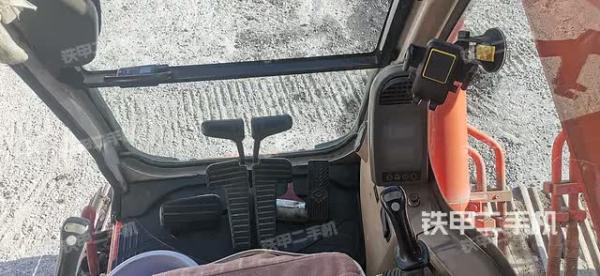
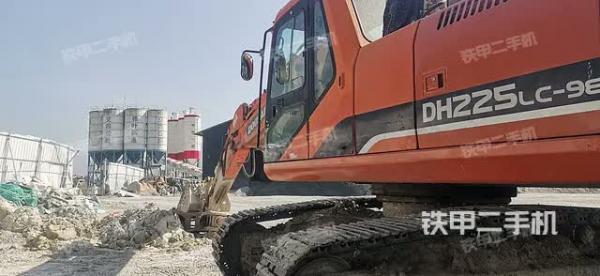
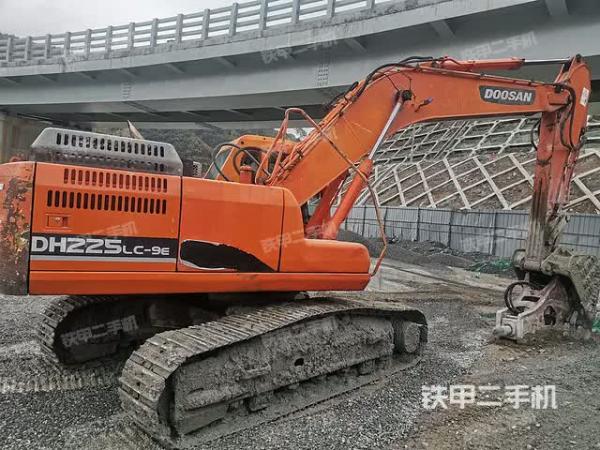
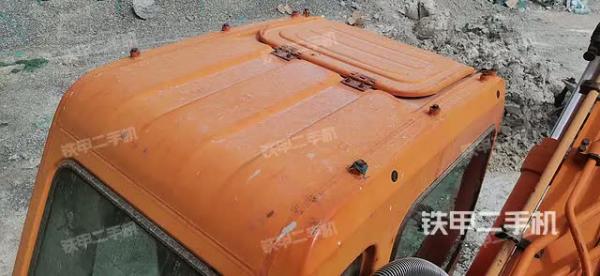
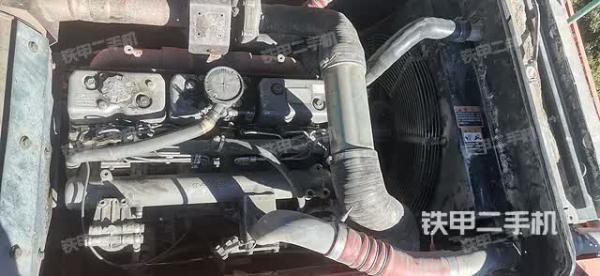
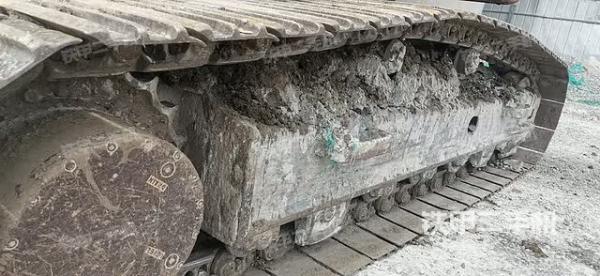
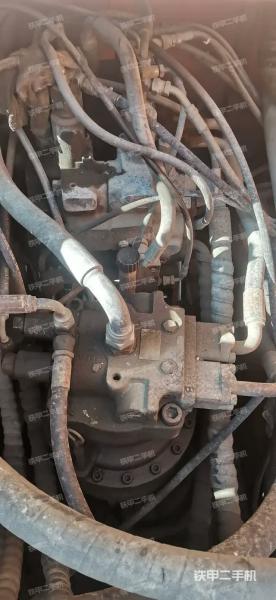
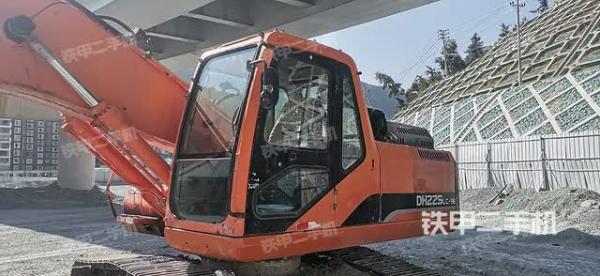
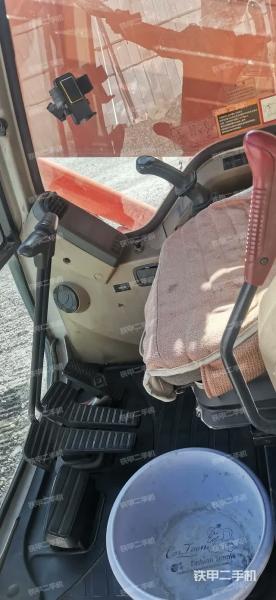
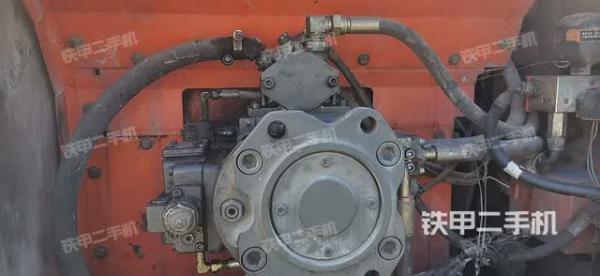
ID:1825312
The Doosan brand, originating from South Korea, has a long-standing reputation in heavy machinery, producing durable and high-performance construction equipment. Established in the 1960s, Doosan expanded into excavators in the 1970s and has since become a global player in the construction and mining industry. The DH215-9E model, produced in 2011, represents the culmination of Doosan's engineering expertise in mid-sized excavators, combining traditional power with advanced hydraulics for reliable performance. It has been widely adopted in both domestic and international markets, with a total sales volume exceeding 15,000 units globally by 2015.
Basic Specifications - Brand: Doosan
- Model: DH215-9E
- Year of Manufacture: 2011
- Operating Hours: 4,680
- Location: Sichuan-Ganzi Tibetan Autonomous Prefecture
- Operating Weight: 21,300 kg
- Bucket Capacity: 0.86 m³
- Boom Length: 5,700 mm
- Arm Length: 2,900 mm
- Bucket Type: Backhoe
- Origin: Yantai, Shandong, China
- Power Type: Conventional diesel
Engine and Power System
The DH215-9E is powered by the DE08TIS engine, a six-cylinder turbocharged diesel unit with mechanical control and direct injection. Key engine specifications include:- Rated Power: 110 kW at 1,950 rpm
- Bore × Stroke: 111 × 139 mm
- Displacement: 8.07 L
- Engine Type: Turbocharged, mechanically controlled, direct injection
This engine delivers efficient fuel consumption while providing a high torque output of 61.5 Nm, suitable for heavy-duty operations.
Performance Capabilities
The DH215-9E excels in medium-scale excavation projects with a ground pressure of 49 kPa and a swing speed of 12.4 rpm. Excavation forces are impressive, with bucket digging force reaching 144.1 kN and arm digging force at 102.9 kN. The machine can traverse construction sites at a maximum speed of 5.4 km/h on flat surfaces and 3.1 km/h on slopes, with a climbing capacity of 35 degrees, making it versatile across uneven terrains.
Hydraulic System
Doosan designed the DH215-9E with a sophisticated hydraulic system to ensure smooth and precise operation. Highlights include:- Swing Hydraulic Motor: Axial piston ×1
- Travel Hydraulic Motors: Axial piston ×2
- Main Pump Maximum Flow: 2 × 212 L/min
- Travel Circuit Pressure: 32.4 MPa
- Swing Circuit Pressure: 27.5 MPa
- Main Pump Type: Variable displacement piston pump
- Hydraulic Cylinders: Boom – 2×120×85×1280 mm; Arm – 1×135×95×1538 mm; Bucket – 1×120×80×1050 mm
This configuration allows the DH215-9E to perform precise digging, lifting, and material handling with consistent power delivery.
Fuel and Oil Capacities- Fuel Tank: 310 L
- Hydraulic Tank: 135 L
- Engine Oil Change: 32 L
- Coolant: 42 L
These capacities support extended operation hours without frequent refueling, reducing downtime and improving project efficiency.
Machine Dimensions- Total Transport Length: 9,645 mm
- Width: 2,990 mm
- Height to Cab Top: 3,025 mm
- Minimum Ground Clearance: 480 mm
- Undercarriage Track Length: 4,070 mm
- Track Width: 600 mm
- Total Track Width: 2,800 mm
- Front Minimum Turning Radius: 3,685 mm
- Rear Swing Radius: 2,840 mm
The compact dimensions of the DH215-9E allow it to navigate tight construction sites while maintaining operational stability.
Operational Range- Maximum Digging Radius: 9,965 mm
- Maximum Digging Depth: 6,655 mm
- Maximum Excavation Height: 9,660 mm
- Maximum Dumping Height: 6,800 mm
- Maximum Vertical Digging Depth: 5,980 mm
- Max Effective Digging Depth: 6,470 mm
- Parking Area Max Digging Radius: 9,780 mm
These operational ranges make the DH215-9E suitable for a variety of applications, including road construction, urban development, and medium-scale mining projects.
Advantages and Recommendations
The DH215-9E offers high digging forces, reliable engine performance, and efficient hydraulics. It is ideal for contractors seeking a mid-size excavator with versatile capabilities. Operators should regularly monitor hydraulic fluid levels and perform scheduled engine maintenance to maximize operational lifespan. For projects requiring extended reach or deeper excavation, pairing this model with specialized long-arm or heavy-duty buckets is recommended.
Conclusion
The 2011 Doosan DH215-9E represents a balance of power, efficiency, and versatility. Its robust engine, advanced hydraulics, and durable structure make it a competitive choice for construction projects in mountainous terrains and challenging conditions. With moderate operating hours and proven reliability, this excavator continues to serve as a trusted asset for construction companies seeking dependable performance.
|
|
|
|
|



