| Welcome, Guest |
You have to register before you can post on our site.
|
| Forum Statistics |
» Members: 79
» Latest member: cioCruch
» Forum threads: 47,411
» Forum posts: 47,417
Full Statistics
|
| Online Users |
There are currently 392 online users.
» 0 Member(s) | 379 Guest(s)
Amazon, Applebot, Baidu, Bing, Claude, DotBot, Facebook, Google, MJ12, OpenAI, Semrush, Twitter
|
| Latest Threads |
Identifying and Sourcing ...
Forum: Parts , Attachments & Tools
Last Post: MikePhua
01-07-2026, 06:29 PM
» Replies: 0
» Views: 494
|
Cat 931B Brake Parts
Forum: Parts , Attachments & Tools
Last Post: MikePhua
01-07-2026, 06:29 PM
» Replies: 0
» Views: 276
|
Choosing Between Cat 228,...
Forum: General Discussion
Last Post: MikePhua
01-07-2026, 06:28 PM
» Replies: 0
» Views: 517
|
Hydraulic Delay When Lowe...
Forum: Troubleshooting & Diagnosing
Last Post: MikePhua
01-07-2026, 06:27 PM
» Replies: 0
» Views: 435
|
Bale Chopper and Mulcher ...
Forum: General Discussion
Last Post: MikePhua
01-07-2026, 06:26 PM
» Replies: 0
» Views: 307
|
Mini UC Maintenance
Forum: General Discussion
Last Post: MikePhua
01-07-2026, 06:25 PM
» Replies: 0
» Views: 295
|
Locating Wiring Informati...
Forum: General Discussion
Last Post: MikePhua
01-07-2026, 06:24 PM
» Replies: 0
» Views: 330
|
Case Industrial Brown Sub...
Forum: Parts , Attachments & Tools
Last Post: MikePhua
01-07-2026, 06:23 PM
» Replies: 0
» Views: 269
|
Dirt Work in West Virgini...
Forum: Construction & Urban Infrastructure Forum
Last Post: MikePhua
01-07-2026, 06:23 PM
» Replies: 0
» Views: 365
|
D207 P Hydraulic Steering...
Forum: Parts , Attachments & Tools
Last Post: MikePhua
01-07-2026, 06:22 PM
» Replies: 0
» Views: 295
|
|
|
| Case 90XT Control Panel Explained |
|
Posted by: MikePhua - 08-24-2025, 12:40 PM - Forum: Parts , Attachments & Tools
- No Replies
|
 |
Overview of the 90XT
The Case 90XT skid-steer loader, produced in the late 1990s and early 2000s, reflects a period when operator-centric design and hydraulic versatility became industry standards. Renowned for its hydrostatic drive, robust selectively-positioned controls, and optional high-flow systems, it combined rugged power with enhanced functionality.
Left-Hand Joystick Controls
On the left joystick you'll typically find: - A red push-button brake—used to engage the parking brake. It usually operates only when safety conditions are met (seat bar raised, engine off) .
- A black two-speed (high/low) drive button—pressing this toggles between low-speed precision mode (up to approximately 7.1 mph) and high-speed transport mode (up to around 11.1 mph) .
- A rubberized rocker switch—commonly functions as the high-flow hydraulics selector (center-off neutral position) for use with attachments that require higher hydraulic output .
Controls Near the Ignition
Typically located above or around the ignition are:- A rocker switch for lights, offering illumination when operating in low visibility environments.
- An additional cold-start aid switch—this delivers a controlled amount of extra fuel during cranking to ease starting in colder ambient temperatures .
Right-Hand Console Features
On the right console:- A toggle switch controls the hydraulically powered attachment locking pins, used to securely engage or release attachments quickly .
- Additional rocker switches in this area may control optional electric hydraulic harness power (for front aux electric hydraulics) or turn signals if equipped .
- A black button marked with an electric bolt symbol (on the joystick) generally indicates electric auxiliary hydraulic power activation, depending on the specific factory-installed option .
Summary of Controls- Red button (left joystick): Parking brake (requires seat bar raised)
- Black button (left joystick): High/low travel speed selector
- Rubber rocker (left joystick): High-flow hydraulics toggle
- Ignition area (rockers): Headlights and cold-start fuel boost
- Right console toggle: Attachment-locking pins
- Right console rocker(s): Electric aux hydraulics or indicators (optional)
Why These Functions Matter- The two-speed drive enhances operational efficiency—low speed for handling tight tasks; high speed for transport.
- High-flow hydraulic mode is essential for attachments like cold planers or augers, boosting versatility.
- Cold-start aids ensure reliable engine ignition under low-temperature conditions by enriching the fuel momentarily.
- Attachment-lock toggling simplifies switching implements, improving jobsite speed and safety.
Anecdote from the Field
One 90XT operator recounted maneuvering over rough terrain in muddy conditions. By toggling to high-speed mode, he breezed across the site quicker—then switched to high-flow hydraulics to run a tree auger attachment efficiently. It’s a real-world example of how seamlessly these features can be combined to tackle diverse tasks.
Technical Tip
Should a function seem unresponsive, check the operator presence sensors and seat bar—many systems, especially the parking brake, are interlocked for safety and only engage when the seat bar is in the correct position and no load is present .
|

|
|
| Troubleshooting Boom and Bucket Interlock Failures on the Bobcat 753 F-Series |
|
Posted by: MikePhua - 08-24-2025, 12:40 PM - Forum: Troubleshooting & Diagnosing
- No Replies
|
|
The Bobcat 753 and Its Safety Control Evolution
The Bobcat 753 skid steer loader, particularly the F-Series variant, was part of Bobcat’s late-1990s push to integrate more advanced safety systems into compact equipment. Manufactured by Melroe Company (later Bobcat Company), the 753 featured a 43 hp Kubota diesel engine, a rated operating capacity of 1,500 lbs, and a hydraulic system capable of 16.3 gpm standard flow. It was widely adopted across North America for landscaping, construction, and agricultural tasks.
One of the key innovations in the F-Series was the introduction of the Bobcat Integrated Control System (BICS), a safety logic module designed to prevent unintended movement of the boom and bucket unless specific operator conditions were met. While effective in reducing accidents, the BICS system introduced diagnostic complexity and occasional interlock failures that could leave operators frustrated and machines immobilized.
Terminology Explained - BICS (Bobcat Integrated Control System): A safety module that monitors operator presence and input conditions before unlocking hydraulic functions.
- Lift/Tilt Lock: A solenoid-controlled valve that prevents boom and bucket movement unless unlocked by the BICS.
- Seat Switch: A Hall Effect sensor that detects operator presence in the seat.
- Interlock Override Button: A switch located under the ignition key used to initiate loader operation.
Symptoms of Interlock Failure
Operators encountering boom and bucket lockout typically report:- Machine starts and drives normally.
- Foot pedals move freely but produce only a hydraulic “growl” with no boom or bucket response.
- Audible “clunk” when pressing the operate button, indicating parking brake release.
- No visible LED indicators due to poor placement of the BICS controller.
- Intermittent operation—sometimes the system works perfectly after warm-up.
These symptoms suggest that while the parking brake solenoid is functioning, the lift/tilt lock remains engaged due to a fault in the BICS logic or its input conditions.
Root Causes and Diagnostic Path
Several factors can trigger this behavior:- Faulty Seat Switch: The Hall Effect sensor may intermittently fail, preventing the BICS from registering operator presence.
- Seat Bar Switch Misalignment: If the lap bar sensor is not fully engaged, the system will not unlock hydraulics.
- Low Hydraulic Fluid or Contamination: Milky fluid from water ingress can cause spool valves to stick until warmed.
- BICS Controller Fault: Early F-Series controllers have rudimentary diagnostics and may fail silently.
- Wiring Damage: Repaired or corroded wires near the seat or control panel can interrupt signal flow.
In one case, a technician discovered that the hydraulic reservoir had been left uncapped during transport, allowing rainwater to contaminate the fluid. After flushing the system and replacing the fluid, the machine still exhibited intermittent lockout—until it warmed up. This pointed to internal corrosion around the spool valve, which loosened with heat.
Recommended Diagnostic Steps- With engine running and seat bar down, inspect the BICS controller LEDs (located behind the seat) for fault codes.
- Verify seat switch function using a multimeter—Hall Effect sensors require proper voltage and magnetic alignment.
- Check hydraulic fluid condition and level; replace if milky or contaminated.
- Inspect wiring harnesses for splices, corrosion, or loose connectors.
- Test solenoid resistance and voltage at the lift/tilt valve.
Preventive Maintenance and Long-Term Solutions- Replace hydraulic fluid annually and inspect for water intrusion.
- Clean and lubricate seat bar pivot and sensor mounts.
- Install a BICS controller relocation kit or mirror to view LEDs easily.
- Use dielectric grease on all safety system connectors.
- Consider upgrading to a G-Series machine with improved diagnostics if frequent failures occur.
Legal and Safety Considerations
While some operators attempt to bypass the BICS system by hot-wiring solenoids directly, this introduces liability and safety risks. The BICS is designed to prevent accidental movement of loader arms—especially critical when working near personnel or structures. Disabling it may violate OSHA standards and void insurance coverage.
Manufacturers like Bobcat have faced lawsuits over safety system failures and injuries. As a result, they’ve continually refined interlock logic and diagnostics. The G-Series introduced more robust fault codes and eliminated problematic seat switches, relying instead on bar position and operator input.
Field Anecdote and Operator Insight
A contractor in Illinois purchased a used 753 F-Series and encountered intermittent boom lockouts. After bypassing the seat switch and manually energizing the tilt solenoid, the machine worked—until it sat overnight. The next morning, the problem returned. After idling for five minutes, the hydraulics unlocked again. This led to the discovery of a corroded spool valve that responded to thermal expansion.
He later installed a fluid heater and replaced the valve body, resolving the issue permanently. His advice: “Don’t fight the computer—understand what it’s trying to protect.”
Conclusion
Boom and bucket interlock failures on the Bobcat 753 F-Series are often rooted in BICS input faults, fluid contamination, or aging components. While frustrating, these issues can be diagnosed methodically by inspecting sensors, solenoids, and fluid condition. The BICS system, though primitive by modern standards, plays a vital role in operator safety. With proper maintenance and informed troubleshooting, the 753 remains a reliable and capable machine in the field.
|
|
|
|
| XCMG XE35U: Auxiliary Hydraulics Overview |
|
Posted by: MikePhua - 08-24-2025, 12:39 PM - Forum: General Discussion
- No Replies
|
|
Introduction to the XCMG XE35U
The XCMG XE35U is a compact hydraulic excavator designed for a wide variety of construction tasks. Known for its durability and efficient design, it’s a reliable piece of machinery often used in landscaping, demolition, utility work, and urban infrastructure development. The model features a compact design, easy maneuverability, and exceptional power for its size, making it popular for projects requiring tight working conditions.
Auxiliary Hydraulics in Excavators
What are Auxiliary Hydraulics?
Auxiliary hydraulics refer to additional hydraulic circuits that are installed in equipment like excavators to power attachments beyond the basic digging bucket. These can include a wide range of tools such as augers, hammers, shears, grapples, and more. These systems are critical in enhancing the versatility and functionality of the excavator.
For the XCMG XE35U, the auxiliary hydraulics allow operators to easily connect various attachments, making it a versatile tool for multiple applications. The system uses hydraulic pressure to transfer power from the machine’s main hydraulic system to the attachment.
Auxiliary Hydraulic Specifications for XE35U
Typically, the auxiliary hydraulic flow for an excavator like the XE35U will vary, but it can be in the range of 30-60 L/min with a pressure capacity of about 200 bar. These values can fluctuate depending on the type of work and the attachment used. Specific models may have multiple hydraulic circuits, including a high-flow option for heavier attachments. - Flow Rate: 30–60 L/min
- Pressure: 200 bar (up to 220 bar for some configurations)
- Additional Features: Dual or single-function auxiliary systems depending on attachment needs (e.g., hammer, auger, or rotating grab).
Importance of Flow and Pressure Matching
When selecting attachments for the XE35U, it is crucial to match the hydraulic flow and pressure to the needs of the equipment. Overloading the hydraulic system by using attachments with higher requirements than the machine’s system can lead to overheating, system failures, and reduced service life.
For example, a hydraulic breaker may require a high flow rate (around 60 L/min) and high pressure (220 bar), while a hydraulic auger could operate effectively with lower flow rates.
Installation and Setup of Auxiliary Hydraulics
Installing auxiliary hydraulics often involves a quick connect/disconnect system, which allows the operator to switch between different attachments with ease. The XE35U is typically equipped with standard quick couplers for simple attachment exchanges, minimizing downtime between tasks.
- Quick Couplers: Simplifies connection and disconnection of attachments.
- Flow Adjustment: Adjustable flow valves allow for fine-tuning of the hydraulic flow rate based on the attachment.
- Auxiliary Line Routing: Efficient routing of hydraulic lines minimizes wear and tear, ensuring longer-lasting functionality.
Common Issues with Auxiliary Hydraulics
Like all hydraulic systems, the auxiliary hydraulics on the XE35U can encounter some common issues:
- Leaks: Over time, seals and hoses can wear out, causing leaks that reduce efficiency.
- Pressure Fluctuations: If the pressure is not correctly adjusted, it can lead to jerky movement or insufficient power for certain attachments.
- Clogging: Dirt and debris can enter the hydraulic system, causing blockages or reduced fluid flow.
Regular maintenance, such as replacing seals, cleaning filters, and checking hydraulic fluid levels, can help prevent these issues. Also, maintaining proper flow and pressure settings can prevent damage to the attachments.
Benefits of Auxiliary Hydraulics for XE35U
- Increased Versatility: The ability to use various attachments increases the machine's utility on a job site, allowing operators to perform a wider range of tasks.
- Improved Efficiency: Auxiliary hydraulics make it easier to quickly swap between attachments, saving time and improving overall productivity.
- Enhanced Performance: With the right attachments, such as a hydraulic breaker or grapple, the XE35U can handle more demanding tasks with ease, offering better performance compared to non-hydraulic options.
Conclusion
The XCMG XE35U with auxiliary hydraulics is a highly adaptable and efficient machine that meets the demands of modern construction and demolition projects. With the right attachment, operators can tackle a wide variety of tasks, from breaking concrete to trenching or lifting heavy materials. Proper setup, maintenance, and understanding of the system’s flow and pressure requirements are key to maximizing the lifespan and performance of the XE35U.
For users who are just starting with hydraulic attachments, it is always recommended to consult with the manufacturer or a hydraulic specialist to ensure compatibility and optimal setup.
|
|
|
|
| Genie GS-2668 RT Brake Dragging Resolved |
|
Posted by: MikePhua - 08-24-2025, 12:38 PM - Forum: Troubleshooting & Diagnosing
- No Replies
|
|
Brake Dragging Symptoms
A common issue surfaced when the Genie GS-2668 RT rough-terrain scissor lift—typically weighing around 2,891 kg (6,374 lb) with a platform capacity of 567 kg (1,250 lb) and a working height of approximately 9.9 m (32.8 ft) —was driven and found to be exceedingly slow, as though the brakes were constantly applied. The machine's sluggishness suggested a brake release failure, even though the electrical diagnostics and control circuits seemed functional. A manual override pump likewise failed to fully free the brakes .
Brake System Overview
The GS-2668 RT employs a hydraulically actuated brake system, where a solenoid-controlled valve channels hydraulic pressure to release the wheel brakes. When functioning correctly, the brakes remain engaged when at rest but fully release when pressure is applied via either the electrical control or the emergency hand pump. Without sufficient release pressure, the machine moves slowly, or stalls even under engine power.
Likely Causes of Brake Stick
Evidence points to two potential culprits: - Insufficient Hydraulic Pressure: The hand pump release or solenoid may not supply enough pressure to retract the brake pads. Without a reference pressure from the manual—absent from the available documentation—this is hard to verify .
- Internal Hydraulic Blockages or Valve Issues: Contaminants in the brake fluid or stuck valves can prevent adequate pressure build-up, preventing full brake release.
Troubleshooting Steps
While a precise pressure spec wasn't available, here’s a practical protocol that technicians recommend:- Attach a precision pressure gauge near a brake line to measure release pressure both via the solenoid and hand pump. Aim for pressure high enough to clear mechanical brake engagement.
- Inspect the brake fluid filter for debris or metallic particles, which may impair fluid flow and reduce pressure—clearing or replacing the filter and bleeding the system can restore proper release force .
- Bench-test the solenoid valve to confirm it’s actuating adequately and not partially blocked.
- Verify hydraulic connections and line integrity, ensuring hoses are not kinked or leaking.
- Use the service manual’s schematics (part number 112657) to locate test points and confirm pump outputs—this manual covers the GS-2668 RT and is available through Genie .
Operator Tips & Real-World Insight
Many machine service professionals note that disassembly isn’t always needed: if the pump produces strong pressure and the solenoid clicks clearly, the issue often lies within a contaminated filter or a sticky valve. Cleaning these components under proper hydraulic bleed procedures usually restores normal function.
Preventive Maintenance Suggestions- Conduct scheduled brake system flushing, ideally every 2,000 hours or at intervals specified by Genie’s maintenance schedule .
- Replace brake fluid and filters regularly to guard against contamination and wear.
- Test hand pump operation during routine service to catch pressure loss early.
- When trouble arises, reference the service manual for detailed hydraulic schematics and ensure pressure values align with specifications.
Summary Table:- Symptom: Machine slow to drive → brakes likely stuck.
- Probable Cause: Insufficient hydraulic release pressure.
- Checks: Solenoid valve actuation, hand pump output, pressure at wheel line, brake filter condition.
- Fix: Clean/replace filter, bleed fluid, repair valve or pump as needed.
- Maintenance: Regular hydraulic fluid/filter replacement, manual pump testing, schematic reference.
|
|
|
|
| Diagnosing Sudden Fuel Leaks at the Primer Pump on John Deere Skid Steers |
|
Posted by: MikePhua - 08-24-2025, 12:38 PM - Forum: Troubleshooting & Diagnosing
- No Replies
|
|
The John Deere 317 and Its Fuel System Design
The John Deere 317 skid steer loader, introduced in the early 2000s, was part of Deere’s compact equipment lineup aimed at contractors, landscapers, and municipalities. With a rated operating capacity of 1,750 lbs and a 61 hp diesel engine, the 317 was designed for versatility and ease of maintenance. Deere’s fuel system on this model includes a mechanical primer pump mounted near the fuel filter housing, used to manually prime the system after filter changes or fuel starvation.
This primer pump is a common feature on many compact diesel machines, but its design—especially the sealing around the lever base—can be a weak point over time.
Terminology Explained - Primer Pump: A manually operated pump used to purge air from the fuel system and restore fuel flow to the injection pump.
- O-ring: A circular rubber seal used to prevent fluid leakage at joints and moving parts.
- Lever Base: The pivot point where the primer pump handle connects to the pump body, often sealed with an o-ring or gasket.
Symptoms and Initial Observations
A sudden fuel leak at the base of the primer pump lever is typically dramatic—fuel may pour out even when the machine is off. Operators often report:- No visible cracks in the rubber components
- O-ring appears intact and seated properly
- Leak occurs without pressing the primer lever
- Fuel loss is rapid and persistent
This suggests that the leak is not due to a failed o-ring alone, but possibly a deeper mechanical fault or internal wear.
Common Causes of Primer Pump Leaks- Worn Shaft Seal: The shaft that connects the lever to the pump body may wear over time, allowing fuel to bypass the o-ring.
- Corroded Pump Housing: Internal corrosion can cause pitting around the sealing surface, compromising the o-ring’s effectiveness.
- Cracked Lever Pivot: Hairline fractures in the metal or plastic around the lever base may not be visible but can open under pressure.
- Fuel Pressure Backfeed: If the fuel system builds excessive pressure due to a blocked return line, it may force fuel past the primer pump seals.
In one case, a technician in Minnesota discovered that the primer pump housing had developed a micro-crack near the lever pivot. The o-ring was fine, but the crack allowed fuel to escape under gravity and pressure. Replacing the entire pump assembly resolved the issue.
Recommended Diagnostic Steps- Remove the primer pump and inspect the shaft and housing under magnification.
- Check for corrosion, pitting, or deformation around the sealing surface.
- Test the return line for blockage that may be causing pressure buildup.
- Replace the o-ring with a new one of identical material and hardness (Buna-N or Viton).
- If the leak persists, replace the entire primer pump assembly.
Preventive Maintenance Tips- Prime the fuel system gently—avoid excessive force on the lever.
- Replace fuel filters regularly to prevent clogging and pressure spikes.
- Inspect the primer pump during every oil change for signs of seepage.
- Use fuel stabilizers to reduce internal corrosion in the pump housing.
Parts Availability and Cost Considerations
Primer pump assemblies for the John Deere 317 are available through:- OEM dealers (typically $80–$120)
- Aftermarket suppliers (often $50–$90)
- Salvage yards (used units may cost $20–$40 but carry risk)
When replacing, ensure compatibility with the fuel system’s pressure rating and mounting configuration. Some aftermarket pumps may require minor bracket modifications.
Field Anecdote and Practical Insight
A contractor in Wisconsin experienced a sudden fuel leak on his 317 during a snow removal job. With temperatures below freezing, fuel poured from the primer pump and froze on the frame. He initially suspected a cracked fuel line but traced the leak to the pump lever base. After replacing the pump with an aftermarket unit and adding a fuel heater, the issue never recurred.
He later discovered that his original pump had been replaced once before, and the previous technician had reused the old o-ring. This highlights the importance of replacing seals with every disassembly, even if they appear intact.
Conclusion
A sudden fuel leak at the primer pump lever on a John Deere 317 skid steer is often more than a simple o-ring failure. Internal wear, corrosion, or pressure imbalance can compromise the seal and lead to rapid fuel loss. By inspecting the pump housing, verifying system pressure, and replacing worn components, operators can restore reliability and avoid costly downtime. The 317 remains a dependable machine—but like all diesel systems, its fuel components demand respect and regular attention.
|
|
|
|
| Starter Engagement Issues in Heavy Machinery |
|
Posted by: MikePhua - 08-24-2025, 02:52 AM - Forum: General Discussion
- No Replies
|
|
Starter Refuse to Release
A common headaches for equipment operators: the starter remains powered and stuck even after the engine fires up. This is often due to a welded or stuck starter solenoid, which keeps sending power to the starter motor. Simply pulling back the battery master switch might free it—but it’s just a temporary relief, not a real fix.
Root Causes and Electrical Gremlins - A solenoid contact plate can become heat-welded to the studs through prolonged use or arcing, causing it to stay energized.
- Bypassed ignition switches, chewed wiring harnesses, or faulty alternator diodes can feed continued power to the starter even when the key is off.
When It Spinns but Doesn't Engage- If the starter spins freely without cranking the engine, it frequently stems from an improperly extended Bendix drive (pinion gear). This could be caused by a weak or sticky solenoid, gummed-up Bendix shaft, or poor battery voltage.
- In addition, a misaligned starter or one requiring shimming might not mesh properly with the flywheel. Adding or removing starter-mount shims (thin metal disks) can correct engagement depth.
- Bentix or sprag clutch failures, worn gears, or flexplate ring gear damage can also cause incomplete engagement or grinding.
Systematic Troubleshooting Approach
- Electrical Diagnosis
- Ensure battery voltage is healthy (around 12.6 V) and current delivery is strong.
- Perform voltage-drop tests—in a good system, there should be minimal voltage loss from battery to starter and across solenoid circuits.
- Inspect grounds and wiring for corrosion, damage, or improper grounding.
- Mechanical Inspection
- Remove and bench-test the starter. Observe if the Bendix gear freely extends and retracts. If it jams or sticks, clean and dry its shaft and lube with graphite or dry film—not grease.
- Engage the starter directly with jump wires (not key-controlled) to test if wiring or switches are suspect.
- Cockpit to Solenoid Testing
- Remove the “small wire” (the signal wire) to the solenoid and run a remote test—if the starter still spins without disengaging, the solenoid internal assembly is likely the culprit.
Anecdotes from the Field
One operator discovered that even cutting the master switch didn’t stop a continuously engaged starter. Disconnecting the starter’s solenoid wire made no difference, narrowing the failure to a likely wrecked relay plate—despite the starter being relatively new.
Another shared how battery problems or poor connections weakened cranking power, causing the starter motor to struggle and fail to engage the flywheel fully.
Preventive Measures and Solutions- Replace worn or welded solenoids instead of patching temporary fixes.
- Use only properly specified battery and cabling systems—underrated cables or weak batteries are often the silent causes of poor cranking.
- When bench-testing or servicing, always clean starter shafts, lubricate responsibly, and ensure proper alignment using shims as needed.
- If starter operates inconsistently when cold but gets worse when hot, heat-related binding or internal starter issues must be evaluated.
Summary Table of Faults and Fixes- Starter won’t disengage → Damaged solenoid contacts → Replace solenoid
- Starter spins freely, no engine crank → Sticky or unextended Bendix → Clean & lubricate dry, bench test
- Grinding/no engagement with flywheel → Worn gear/misalignment → Check gear & shimming
- Starter power weak/not consistent → Low voltage/train connector faults → Voltage test & clean connections
|
|
|
|
| Quick-Connect Lighting with Deutsch Plugs |
|
Posted by: MikePhua - 08-24-2025, 02:51 AM - Forum: Parts , Attachments & Tools
- No Replies
|
|
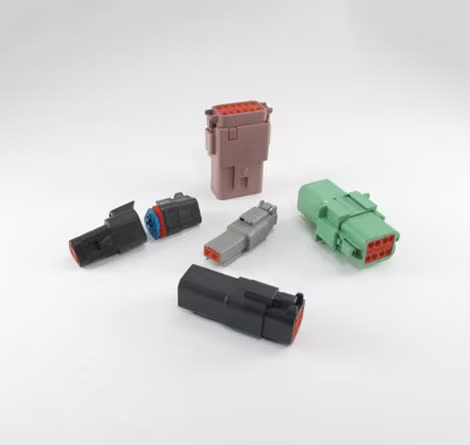
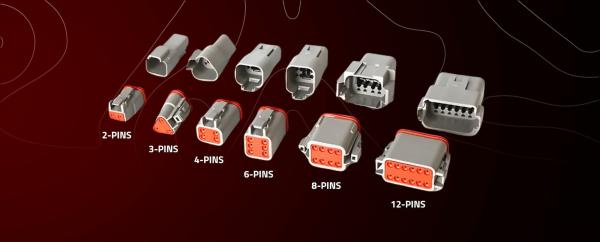
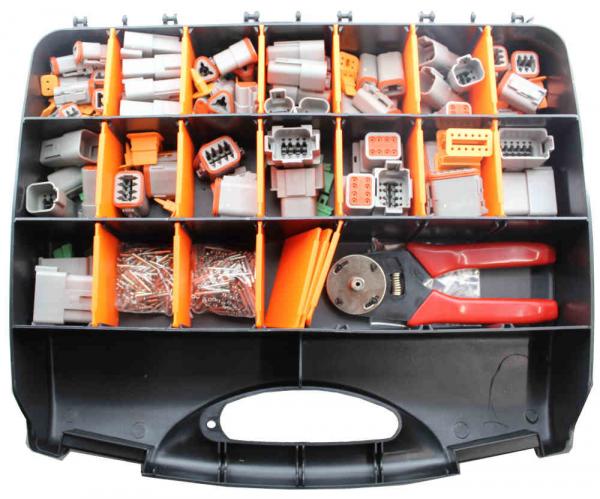
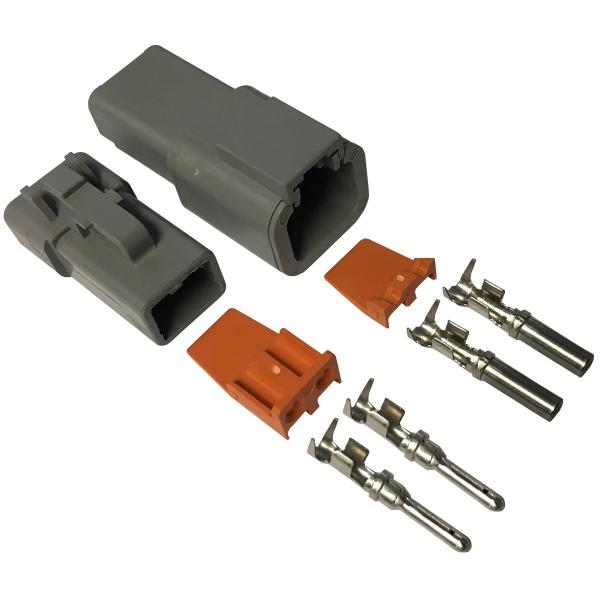
Reliable Electrical Connections
Deutsch connectors—aptly named from the German word for “German”—have earned a reputation for their toughness and reliability across industries. They function as environmentally sealed quick connectors built with thermoplastic housings, silicone gaskets, and rugged locking latches, enabling them to withstand extreme temperatures, dust, vibrations, and even water immersion up to IP68 standards . This combination makes them a go-to in heavy equipment, off-road vehicles, marine vessels, aerospace, and military systems .
Why They're Ideal for Lights on Heavy Equipment
When connecting work lights or light bars on construction machines, robustness is key. Deutsch connectors: - Provide waterproof, vibration-resistant bonds essential for outdoor use.
- Allow easy disconnection and reuse of components without cutting wires—perfect for maintenance and retrofits .
- Designed for field conditions—built to endure hydraulic fluid exposure, dust, and temperature swings.
- Come in various sizes to suit different power demands and harness complexities .
Connector Types and their Uses
Here's a breakdown of common Deutsch series used in lighting and equipment:- DT Series: The most prevalent; handles 16–20 AWG wires, rated for ~13 A. Available with 2 to 12 cavities .
- DTM Series: Smaller footprint, using 14–22 AWG wires with a 7.5 A limit; often found in sensor systems .
- DTP Series: Larger contacts for 10–14 AWG wires, rated 25 A—ideal for powerful lighting or heating loads .
- Quick Connect Series: Compact option for lighter uses; supports 16–26 AWG, in 2-, 7-, or 12-contact configurations .
- HD Series (HD10, HDP20, HD30): Ultra-rugged connectors with bayonet or lever-lock mechanisms, suited to heavy-duty applications like mining or marine wiring .
OEM Adoption and Field Insights
Equipment manufacturers and harness builders favor Deutsch connectors due to:- Their uniform tooling and contact systems, simplifying assembly and training .
- Widespread availability—dealers often stock the connectors and contacts, though crimp tools may require aftermarket versions .
Users have shared practical advice:
Quote:“I’d stick with Deutsch connectors. They are waterproof and you can dismantle and reuse the components if you like.”
One forum contributor detailed local sourcing:- 2-pin plug: housing + terminal
- 2-pin socket: housing + terminal
- Noting that genuine crimp tools are costly, but aftermarket pliers can suffice .
Summary List of Common Deutsch Connector Series- DT Series
- Wire Gauge: 16–20 AWG
- Amp Rating: ~13 A
- Applications: General lighting, sensors, medium-duty harnesses
- DTM Series
- Wire Gauge: 14–22 AWG
- Amp Rating: ~7.5 A
- Applications: Compact sensors, low-current circuits
- DTP Series
- Wire Gauge: 10–14 AWG
- Amp Rating: ~25 A
- Applications: High-power lights, fans, heaters
- Quick Connect Series
- Wire Gauge: 16–26 AWG
- Amp Rating: N/A (light-duty circuits)
- Applications: Compact wiring tasks, lightweight electrical loads
- HD Series (HD10, HDP20, HD30)
- Wire Gauge: 6–22 AWG (varies by model)
- Amp Rating: varies with contact size
- Applications: Heavy-duty industrial wiring, mining, marine, and construction equipment
Final Thoughts
Deutsch quick-connect plugs offer unmatched durability and maintenance convenience for lighting systems on heavy machinery. Built to endure dust, mud, vibration, and extreme temperatures, they simplify wiring needs without compromising reliability. Whether you're working on a backhoe, crane, or off-road vehicle, choosing Deutsch connectors ensures your lights stay powered through the toughest conditions.
|
|
|
|
| Essential Heavy Equipment for Rental Success |
|
Posted by: MikePhua - 08-24-2025, 02:49 AM - Forum: Rental , Leasing & Investment
- No Replies
|
|
Industry Growth and Profit Opportunity
The global construction equipment rental market has seen remarkable growth, with revenues hitting approximately USD 204 billion in 2024 and projected to rise to USD 280 billion by 2030, driven by robust infrastructure development and automation trends . In the United States, rental demand remains strong—earthmoving machinery accounts for over 50% of the rental market, while renting rather than owning can save companies 30–50% of ownership costs . This combination of market expansion and clear economic incentives makes equipment rental a compelling business venture.
Top-Renting Equipment Types
Based on demand and profitability, the most sought-after machines include: - Earthmoving Equipment: Excavators, wheel loaders, and dozers remain front-runners for high utilization.
- Backhoes and Loaders: Provide versatility and appeal to both contractors and DIY operators.
- Forklifts and Dump Trucks: In high demand across logistics, manufacturing, and waste management sectors .
- Additionally, concrete pumps see steady rental demand in infrastructure and commercial projects .
These machine types align with the broad trend favoring earthmoving machinery, which dominates over 54% of the global rental market .
Selecting the Right Equipment for Your Rental Fleet
To maximize returns, focus on equipment that combines high rental frequency with manageable operating costs. Prime candidates include:- Mini-excavators: Compact, road-transportable, ideal for tight workspaces—great for contractors and homeowners.
- Skid-steer loaders: Versatile, widely used in landscaping, agriculture, and light construction.
- Hydraulic excavators: For heavy-duty digging tasks, new infrastructure jobs, or utility work.
- Backhoes and dumpers: Offer dual-functionality and usefulness across site prep and material handling.
- Compressors, pumps, and compactors: Smaller but frequently needed tools—often rented alongside larger machinery .
Guiding Principles for Fleet Composition- Choose equipment that matches your target clientele—residential? medium construction? large infrastructure?
- Balance investment costs with expected frequency of rentals.
- Offering a mix of small (e.g., mini-excavator) and large machines (e.g., backhoe or loader) allows flexibility.
- Specialized units such as concrete pumps or forklifts can yield niche demand and strong margins .
Best Practices in Fleet Management- Assess demand accurately—understand local contractors’ needs before acquiring high-cost units.
- Provide transparent pricing and flexible rental terms—flat rates and clear agreements build trust .
- Deliver or offer on-site services, especially for larger machines—it boosts convenience and repeat business.
- Invest in maintenance or partner with service providers—downtime damages profitability .
- Optimize equipment utilization using digital tools—higher utilization improves ROI .
Strategic Market Climate
Industry consolidation is underway—major players like United Rentals and Herc Holdings are expanding aggressively, while Ashtead (Sunbelt Rentals) reports slowing growth due to challenging construction markets, albeit with strong capital reserves . These moves reflect surging demand for rental models and underscore the importance of scale and diversity in fleet offerings.
Key Takeaways- Earthmoving machines, including excavators and loaders, should form your core fleet due to widespread demand.
- Versatile assets like mini-excavators, backhoes, and skid-steers are smart starter investments.
- Accessory equipment (compactors, pumps, forklifts) offers additional rental revenue.
- Market data and utilization metrics suggest solid long-term growth and profitability.
- Transparency, maintenance, and digital tools are essential for efficient operations and customer satisfaction.
With thorough due diligence and smart equipment selection, a rental fleet can become a highly profitable and scalable business—meeting rising construction demand and the growing preference for rental over ownership in today’s “asset-light” economy.
|
|
|
|
| Troubleshooting and Insights on the Bobcat 753G Skid Steer |
|
Posted by: MikePhua - 08-24-2025, 02:48 AM - Forum: Troubleshooting & Diagnosing
- No Replies
|
|
Background of the Bobcat 753G
The Bobcat 753 series, introduced in the mid-1990s, became one of the company’s most popular skid steer loaders. The 753G, an improved version launched toward the late 1990s, was designed for versatility and durability in construction, landscaping, and agricultural applications. It was equipped with a 43–46 horsepower Kubota diesel engine, a rated operating capacity of about 1,300 lbs, and a tipping load near 2,600 lbs. The machine weighed approximately 4,800 lbs, making it compact enough for tight job sites while still powerful enough to handle digging, lifting, and grading tasks.
Bobcat, founded in 1947, established itself as a leader in compact equipment. By the time the 753G was in production, Bobcat skid steers were being sold globally in large numbers, with annual sales of compact loaders exceeding tens of thousands of units. The 753G in particular found success due to its reliability, relatively low fuel consumption, and compatibility with a wide range of attachments.
Common Issues with the 753G
While the 753G is known for reliability, certain recurring issues arise with age and use: - Electrical System Failures
Many operators report problems with starting, often linked to weak relays, corroded grounds, or worn ignition switches. Since the machine relies on electronic safety interlocks to ensure safe operation, any failure in the wiring harness or seat bar sensor can lead to no-start conditions.
- Fuel System Complications
Air in the fuel lines, clogged filters, or a malfunctioning lift pump may prevent the engine from firing. Because the Kubota diesel requires consistent fuel pressure, even minor leaks or blockages can cause stalling or complete shutdown.
- Hydraulic Lockout Problems
The skid steer uses a hydraulic interlock system tied to operator presence. If sensors under the seat or on the control handles fail, hydraulics will not engage. Many users confuse these malfunctions with engine problems, when in fact the engine runs but hydraulics remain locked.
- Starter and Solenoid Wear
After years of operation, the starter motor and solenoid are frequent points of failure. Symptoms include clicking sounds with no crank, sluggish turnover, or intermittent starting.
Diagnostic Approach
When troubleshooting a Bobcat 753G, a structured process avoids unnecessary part replacements:
- Battery and Connections
- Check voltage under load (should remain above 10.5V while cranking).
- Inspect terminals for corrosion and cables for internal resistance.
- Ignition and Relay System
- Test key switch continuity.
- Verify relays click and pass current when activated.
- Replace worn or burnt fuses.
- Fuel Delivery
- Bleed air from lines at the injectors.
- Replace primary and secondary fuel filters.
- Inspect fuel shutoff solenoid for correct operation.
- Starter and Alternator
- Bench test starter for torque and draw.
- Confirm alternator output is 13.5–14.5V under load.
- Safety Interlocks
- Inspect seat switch, seat bar sensor, and hydraulic interlock solenoid.
- Bypass temporarily for testing, but restore functionality for safe use.
Field Experiences and Real Cases
On many farms and construction sites, operators have reported frustrating downtime when the 753G refused to start after sitting overnight. In one documented case, a faulty ground strap between the engine block and frame was the culprit, causing intermittent electrical failures. After replacement, the machine performed reliably for years.
Another owner shared that contaminated diesel fuel led to recurring stalling until the tank was flushed and filters changed. This highlighted the importance of clean fuel and preventive maintenance in older skid steers.
Preventive Maintenance Recommendations- Replace fuel filters every 250 hours.
- Inspect electrical connections monthly, especially in humid or corrosive environments.
- Test battery health twice a year.
- Service hydraulic fluid and filters every 500 hours.
- Keep spare relays and fuses on hand to minimize downtime.
Why the 753G Remains Valuable
Despite being over two decades old, the Bobcat 753G continues to serve small contractors and farmers around the world. Its simple mechanical design, compared to today’s heavily computerized equipment, makes it easier to repair in the field. Parts remain available through aftermarket suppliers, and used units in good condition often command strong resale prices.
Conclusion
The Bobcat 753G is a proven workhorse with a strong legacy in compact construction machinery. Its main challenges often stem from electrical and fuel system issues, but with methodical diagnostics and consistent maintenance, these machines can remain productive for decades. For buyers considering a used 753G, careful inspection of the starter system, wiring harness, and fuel delivery components will prevent unexpected downtime and ensure a reliable investment.
|
|
|
|
| Track Tension Cylinder in Cat 977K: Repair Insights and Precautions |
|
Posted by: MikePhua - 08-24-2025, 02:48 AM - Forum: Troubleshooting & Diagnosing
- No Replies
|
|
Background
The Caterpillar 977K crawler loader is a heavy-duty machine tipping the scales at around 42,000 lb (≈ 19,050 kg), with an overall length of 18 ft 5 in, width of 7 ft 10 in, and height of 10 ft 10 in—designed for durability across construction and quarry operations . Its undercarriage includes a track tension system featuring a recoil-spring tension cylinder, which maintains proper idler tension and track alignment.
Track Tension Cylinder Function
A critical piece, the track or “recoil spring” adjustment cylinder, ensures the idler stays forward, keeping correct track tension. This assembly combines a piston, rod, and cylinder and works in tandem with a powerful coil recoil spring inside a retaining mount .
Common Failure and Components at Fault
A frequent and serious issue arises when the seal in this cylinder fails—it can no longer hold the idler forward, compromising track alignment. The leaking seal allows idler back-off and slack in the track, leading to potential derailing or damage .
Safety Warning: The "Death Spring"
A recurring warning: do not tamper with the internal spring. It’s often referred to as the "death spring" due to the high tension—it remains compressed and poses serious safety risks if mishandled .
Repair Strategy
- Break the Track and Advance the Idler: This relieves pressure on the cylinder, making access safer and easier .
- Disassemble the Tensioning Assembly: Once the idler is sufficiently forward, you can remove the cylinder assembly for servicing.
- Replace Seals and Clean the Bore: Inside the cylinder, new O-rings and packings can restore proper sealing. The cylinder bore often needs cleaning or honing to ensure smooth operation after reassembly .
- Reassemble Carefully: Reinstall the assembly and cautiously reapply tension to avoid risking spring integrity.
Parts Availability
Caterpillar offers a cylindrical assembly (part 1S-5331) for this function. Individual seals and o-rings may be obtainable through seal kits or parts departments—verification with serial-specific parts listings is advised .
Maintenance Checklist- Regularly inspect track tension and check for sluggish idler rebound.
- Clean mud and debris from the undercarriage to prevent seal abrasion and wear .
- Check the condition of the cylinder bore and components at each service interval.
Real-World Insight
One operator recounted replacing the tension seal on a 977K. They avoided tampering with the spring, instead shifting the idler forward to disassemble the assembly in place. After cleaning the bore and installing new seals, the track tension normalized—no major issues after careful reconditioning .
Statistical Context
While specific failure rates for this seal are not publicly recorded, undercarriage components are among the highest-wear parts in tracked machinery. A well-maintained tension cylinder can last several thousand hours, but dusty or muddy conditions accelerate degradation.
Summary of Best Practices- Avoid tampering with the internal recoil spring—it's dangerous and unnecessary.
- Instead, disengage the track and move idler forward, then service the cylinder in place.
- Replace worn seals and clean bores meticulously.
- Use the OEM cylinder or seal kits when available for reliable restoration.
- Keep the undercarriage clean to minimize wear.
Addressing a blown track tension cylinder proactively can prevent catastrophic track failure and ensure your 977K continues operating reliably on the toughest jobsites. Let me know if you'd like guidance on part numbers or detailed OEM rebuild procedures!
|
|
|
|
|



