| Welcome, Guest |
You have to register before you can post on our site.
|
| Forum Statistics |
» Members: 79
» Latest member: cioCruch
» Forum threads: 47,411
» Forum posts: 47,417
Full Statistics
|
| Online Users |
There are currently 152 online users.
» 0 Member(s) | 142 Guest(s)
Ahrefs, Amazon, Bing, Claude, DotBot, Google, Petalbot, Semrush, Sogou, Trendiction
|
| Latest Threads |
Identifying and Sourcing ...
Forum: Parts , Attachments & Tools
Last Post: MikePhua
01-07-2026, 06:29 PM
» Replies: 0
» Views: 508
|
Cat 931B Brake Parts
Forum: Parts , Attachments & Tools
Last Post: MikePhua
01-07-2026, 06:29 PM
» Replies: 0
» Views: 280
|
Choosing Between Cat 228,...
Forum: General Discussion
Last Post: MikePhua
01-07-2026, 06:28 PM
» Replies: 0
» Views: 533
|
Hydraulic Delay When Lowe...
Forum: Troubleshooting & Diagnosing
Last Post: MikePhua
01-07-2026, 06:27 PM
» Replies: 0
» Views: 438
|
Bale Chopper and Mulcher ...
Forum: General Discussion
Last Post: MikePhua
01-07-2026, 06:26 PM
» Replies: 0
» Views: 316
|
Mini UC Maintenance
Forum: General Discussion
Last Post: MikePhua
01-07-2026, 06:25 PM
» Replies: 0
» Views: 304
|
Locating Wiring Informati...
Forum: General Discussion
Last Post: MikePhua
01-07-2026, 06:24 PM
» Replies: 0
» Views: 339
|
Case Industrial Brown Sub...
Forum: Parts , Attachments & Tools
Last Post: MikePhua
01-07-2026, 06:23 PM
» Replies: 0
» Views: 274
|
Dirt Work in West Virgini...
Forum: Construction & Urban Infrastructure Forum
Last Post: MikePhua
01-07-2026, 06:23 PM
» Replies: 0
» Views: 371
|
D207 P Hydraulic Steering...
Forum: Parts , Attachments & Tools
Last Post: MikePhua
01-07-2026, 06:22 PM
» Replies: 0
» Views: 300
|
|
|
| Understanding and Resolving Bobcat 751F Lockout System Issues |
|
Posted by: MikePhua - 08-08-2025, 08:02 PM - Forum: Troubleshooting & Diagnosing
- No Replies
|
 |
The Bobcat 751F skid steer is known for its reliability and mechanical simplicity, but even time-tested machines face occasional electronic and safety interlock issues. One of the most frustrating problems operators report involves the machine's lockout system, where the safety or control features prevent the machine from functioning as expected—despite everything appearing mechanically sound. This article provides an in-depth look at lockout issues in the Bobcat 751F, including causes, symptoms, solutions, and real-world stories to bring clarity to this critical troubleshooting topic.
Overview of the Lockout System
The lockout system in a Bobcat 751F is a safety and security mechanism designed to prevent unintended operation. Its primary function is to ensure the machine can only be operated when all conditions are safe. Components often involved include: - Seat Bar Sensor: Detects whether the safety bar is down and locked
- Seat Switch: Registers if the operator is seated
- Key Switch / Ignition: Activates electrical systems
- Interlock Control Module (ICM): The electronic brain managing the lockout
- Lift/tilt Lock Solenoids: Allow or block hydraulic flow to the arms and bucket
- Control Panel Lights and Status LEDs: Indicate system readiness
If any part of this system fails or gives incorrect data, the machine may refuse to activate its hydraulics, drive system, or both—rendering it effectively "locked out."
Common Symptoms of Lockout Failures
Operators often encounter the following signs of a lockout issue:- The lift and tilt functions don’t respond after starting
- Drive control is disabled even with the seat bar lowered
- The warning lights or LED indicators stay on or don’t illuminate
- Audible alarms continue despite normal operating procedures
- The key turns but nothing "activates" beyond initial dashboard lights
Real-World Case: The Silent Loader
In one notable case, an equipment yard technician was preparing a 751F for resale after it had been parked for a year. After replacing the battery, the machine powered up but refused to move. All visual indicators seemed fine—seat bar down, operator seated—but the lift arms remained dead. After a frustrating afternoon of diagnostics, the culprit was discovered to be a corroded seat switch connector, sending an intermittent signal to the ICM.
This situation illustrates a core lesson: electrical components age even when unused, and low-voltage logic systems are especially sensitive to poor connections and dirty contacts.
Diagnosing the Lockout System
Troubleshooting a lockout requires both mechanical awareness and a systematic electrical diagnostic process. Here is a methodical list for identifying root causes:- Step 1: Confirm Battery Voltage
- Check the battery with a multimeter. Low voltage (<12.4V) may confuse the ICM.
- Step 2: Inspect the Seat Bar and Seat Switch
- Use a continuity tester to verify the seat switch engages properly when pressed.
- Look for damaged wires or loose connections under the seat and armrest.
- Step 3: Watch the Indicator Lights
- On the older 751F, pay attention to the green “Ready” light or any fault codes that flash via LEDs on the control panel.
- Step 4: Test the Solenoids
- Locate the lift/tilt solenoids near the hydraulic control block and verify they receive voltage when the system should be active.
- You can use a jumper wire to see if the solenoid activates manually—though caution is required to avoid unexpected motion.
- Step 5: Interlock Control Module Checks
- Tap lightly on the ICM (usually located behind the seat) to test for loose internal connections—a surprisingly common field trick.
- Step 6: Check Fuses and Relays
- Open the electrical panel and inspect all fuses. Even a seemingly intact fuse can fail under load.
Terminology Recap- Solenoid: A device that converts electrical energy into mechanical movement—used to control hydraulic valves.
- Continuity Test: A method to check if electricity can flow through a wire or component.
- ICM (Interlock Control Module): A logic controller that permits or denies operation based on safety inputs.
- Seat Switch: A pressure-sensitive switch under the seat cushion, essential for enabling hydraulic functions.
Maintenance Tips to Prevent Lockout Issues
To avoid unexpected lockouts, regular maintenance is essential—especially for electrical systems that are often overlooked in rugged environments.
Suggested practices include:- Periodically unplug, clean, and reconnect wiring harnesses with dielectric grease
- Check seat bar tension and switch alignment
- Keep the battery terminals corrosion-free
- Protect wiring from rodents and debris buildup
- Store machines indoors or under cover when not in use for long periods
Historical Context: The Evolution of Interlocks
Back in the 1990s, machinery fatalities due to unintentional activation were significantly higher. This led many manufacturers, including Bobcat, to install increasingly sophisticated interlock systems. While modern machines use CAN-bus systems and diagnostic screens, the 751F’s analog system still represented a leap in operator safety—though it also introduced new potential failure points.
A Farmer’s Workaround: Field Ingenuity
One farmer, unable to get his 751F to function mid-harvest, bypassed the seat bar sensor using a loopback connector made from paper clips and a section of phone wire. Though not advisable from a safety standpoint, the story underscores how critical uptime is to operators—and why clear diagnostics are more valuable than just warnings.
Other Possible Faults That Mimic Lockouts- Broken Key Switch: May pass power to dash lights but not to hydraulic logic
- Faulty Hour Meter or Dash PCB: These can interrupt signal chains
- Rodent-Chewed Harnesses: Especially in machines stored outdoors
- Short Circuits in Control Handles: Can cause the ICM to "think" it’s being misused
When to Call for Help
If all electrical tests are clean and solenoids don’t activate despite good input signals, the Interlock Control Module may be faulty. These are hard to repair in the field and are often replaced outright. Consulting a Bobcat-certified technician or a dealer with access to service documentation and legacy parts may be necessary.
Final Thoughts
The Bobcat 751F remains a favorite among contractors and small-fleet owners for its reliability and mechanical resilience. However, like many machines from its era, its early electronic safety systems can introduce complexity when malfunctions occur. Understanding how the lockout system works—and how to methodically diagnose it—can save hours of frustration and downtime.
By respecting the balance between safety and productivity, operators can keep machines running smoothly while honoring the purpose behind lockout systems: keeping people and property safe. Whether you’re in a muddy field, a frozen barnyard, or a dusty warehouse, knowing your 751F inside and out gives you the confidence to turn that key and get to work.
|

|
|
| Prime Mover RDX30: Compact Reach Truck Tailored for Tight Spaces |
|
Posted by: MikePhua - 08-08-2025, 08:01 PM - Forum: General Discussion
- No Replies
|
|
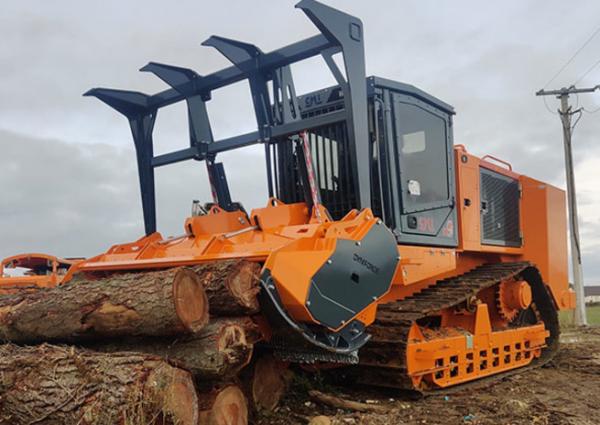
Overview and Role
The Prime Mover RDX30 is an electric, stand‑up reach truck engineered for navigating narrow aisles and dense warehouse layouts. With a rated capacity of 3,000 pounds and a 24‑inch load center, it combines strength with agility for efficient material handling in confined zones.
Key Specifications
This machine’s vital dimensions and capabilities are best understood through readily digestible lists rather than rigid tables: - Load capacity: 3,000 lbs
- Load center: 24 in
- Power type: Electric
- Operator stance: Stand‑up configuration
- Mast: Standard 3‑stage design
- Maximum fork height (MFH): 210 in
- Free lift: 75 in
- Fork carriage width: 31 in
- Load backrest height: 48 in
- Fork dimensions: 1.75 × 4 × 42 in, spread 29.5 in
- Tilt angles: 4° backward / 3° forward
- Reach extension: 53.4 in
- Length to fork face: 59.3 in
- Overall width: 40.5 in
- Outrigger inner dimensions: 32–50 in; outer max: 61 in
- Height (lowered or overhead guard): 95 in
- Turning radius: 69.5 in
Technical Glossary- Stand‑up reach truck: A forklift design where the operator maintains a standing position and the forks can extend forward (“reach”) to access loads in narrow aisles.
- Free lift: The range the mast can rise before the forks leave the mast’s tilt stage—useful in spaces with low ceilings.
- 3‑stage mast: A telescoping mast structure that balances reach height with collapsed compactness.
- Load center: The horizontal distance from the load’s center of gravity to the fork face; critical for stability calculations.
- Tilt angle: Degree by which forks tilt, assisting with load engagement and handling.
Maintenance and Troubleshooting
Reliable parts availability and detailed servicing guidelines make this truck a sound choice for fleet operators. Aftermarket suppliers deliver filters, batteries, electric components, and more, often with quick turnaround times.
A thorough service manual covers safety symbols, maintenance schedules, lubrication requirements, troubleshooting, and more—spanning over 600 pages. It serves as a vital reference for technicians ensuring long-term machine health.
Anecdote from the Warehouse Floor
One logistics supervisor recounts how the RDX30 revolutionized pallet access in a 10‑foot‑wide aisle. Previously, two‑man teams struggled to position loads safely. After introducing the RDX30, a single operator could reach and stack pallets with precision. Its free‑lift capability meant they no longer accidentally scraped low beams while loading high, cutting both incidents and labor hours.
Comparisons & Broader Industry Context
When compared with sit‑down or counterbalance forklifts, reach trucks like the RDX30 shine where space is tight:- Swap from bulky counterbalance units to reach trucks for densified rack systems.
- Embrace stand‑up ergonomics to enhance operator alertness and visibility.
- Leverage electric drive systems for lower emissions and quieter operation—ideal for indoor environments.
Meanwhile, manufacturers like CMI—known for their dedicated mulcher carriers—highlight how specialized machinery tailored to specific tasks brings major efficiency gains. While not in the same equipment category, this philosophy applies: right‑machine, right‑job.
Summary
The Prime Mover RDX30 stands out for its:- Compact but powerful performance—moving 3,000 lbs within narrow confines.
- Comprehensive design—stand‑up stance, extended reach, free lift, and a robust tilt system.
- Strong support ecosystem—ample parts availability and expansive service documentation.
- Operational benefits—enhanced aisle efficiency, safer stacking, and reduced staffing needs.
In environments where every inch counts, the RDX30 doesn’t just fit—it excels. Let me know if you’d like a side‑by‑side comparison with similar reach trucks or deeper stories from operational use!
|
|
|
|
| The JCB TM320S: Performance, Design, and Real-World Impressions |
|
Posted by: MikePhua - 08-08-2025, 08:01 PM - Forum: General Discussion
- No Replies
|
|
The JCB TM320S is not just another addition to the world of telehandlers—it’s a robust, high-performance, articulated machine tailored for demanding agricultural and construction operations. Uniting power, precision, and operator comfort, the TM320S is a premium model that combines the best of a wheel loader and a telehandler. This article provides a comprehensive exploration of the TM320S’s features, field behavior, mechanical details, user impressions, and contextual insights from the broader equipment industry.
Overview of the TM320S Design
The TM320S stands out for its unique combination of an articulated chassis and a telescopic boom. Unlike conventional rigid-frame telehandlers, this model offers a tighter turning radius and more nimble maneuverability while still delivering lifting capacity and reach.
Key design attributes include: - Articulated Steering: The TM320S uses center articulation instead of front-wheel steering, enabling sharper cornering and better performance in tight spaces.
- Telescopic Boom: The long-reach boom allows operators to place loads farther and higher than traditional wheel loaders.
- Hydraulic Quick Hitch: Enables rapid attachment changes without leaving the cab.
- Load-Sensing Hydraulics: Optimizes power delivery based on the task, improving efficiency and fuel economy.
Key Terminology Explained- Articulated Chassis: A jointed frame allowing the front and rear of the machine to pivot independently for superior turning capability.
- Telehandler: A versatile lifting machine with an extendable boom, used across industries for lifting, moving, and placing loads.
- Quick Hitch: A mechanism for swapping attachments (buckets, forks, etc.) quickly.
- Load-Sensing Hydraulics: A system that adjusts hydraulic pressure and flow based on demand, enhancing control and saving energy.
Engine and Powertrain
At the heart of the TM320S is a powerful 4.8-liter JCB DieselMAX engine delivering up to 145 horsepower. It’s matched with a six-speed powershift transmission, allowing smooth gear transitions and powerful acceleration.
Performance highlights include:- A top road speed of approximately 40 km/h (25 mph), ideal for large site coverage or on-road travel between jobs.
- Torque converter lock-up in gears 2 through 6, improving fuel economy and pushing power.
- Limited-slip differentials and 4WD provide optimal traction in slippery or uneven terrain.
- Auto reversing cooling fan to clear debris from the radiator, ideal for dusty farm or construction sites.
Operator Environment
One of the TM320S’s most celebrated aspects is its operator-focused cab. Comfort, visibility, and intuitive controls have been prioritized.
Comfort and control features include:- Fully adjustable, air-suspension seat
- Ergonomic joystick controls for loader functions
- Climate control with effective heating and cooling
- Low-noise, vibration-isolated cab environment
- Expansive glazing for all-around visibility
Operators often note how the cab feels more like that of a high-end tractor than a workhorse machine.
Field Use Case: Agricultural Versatility
During a recent open day event hosted by a UK dealer, the TM320S was shown working in various agricultural roles. From loading silage into feeders to stacking hay bales and sweeping yard surfaces with a hydraulic broom attachment, the machine demonstrated its multi-role flexibility.
Farm operators appreciated the ease of switching between attachments, the power delivery while climbing silage clamps, and the responsive hydraulic system that allowed precise movement—even when performing delicate tasks like stacking wrapped hay.
Field Use Case: Construction Efficiency
A contractor who transitioned from a traditional backhoe to the TM320S on a rural housing development project praised its ability to handle diverse roles without sacrificing speed. The articulated frame allowed for better site navigation, and the boom reach enabled materials to be loaded onto elevated platforms without repositioning the machine.
Attachments and Versatility
The TM320S is compatible with a wide array of JCB and third-party attachments, transforming the base machine into a multi-tool platform.
Common attachments include:- General-purpose buckets
- High-tip buckets for loose material
- Bale spikes and grabs
- Pallet forks
- Sweeper brooms
- Snow blades
- Man baskets
This flexibility reduces the need for multiple machines on-site and maximizes ROI.
Maintenance and Durability
The TM320S is built with ease of maintenance in mind. Most daily checks can be performed from ground level, and the engine bay is easily accessed via a gas-assisted hood.
Maintenance-friendly features include:- Centralized greasing points
- Diagnostic access via in-cab display
- Long service intervals for engine and hydraulics
- Reversible fan for radiator cleaning
Common maintenance tips:- Regularly check hydraulic oil and filter condition
- Clean debris from articulation joint and cooling packs
- Inspect boom wear pads and adjust when necessary
- Grease all pivot points per service schedule
- Monitor tire condition—especially for agricultural turf use
Operator Feedback and Field Performance
Operators across different sectors frequently highlight the following:- Excellent visibility when operating around livestock or tight barns
- Precise boom control when loading grain or silage
- Smooth gear changes under heavy load
- Comfortable for all-day operation
- Impressive reach and lift for its size
However, some users point out:- Articulated steering takes getting used to for those coming from rigid chassis machines
- High-speed road travel, while possible, is less comfortable than a purpose-built tractor
Industry Context and Competitor Landscape
In the compact telehandler category, the TM320S competes with models such as:- Manitou MLA-T 533-145 V+: Offers similar power and load capacity with hydrostatic transmission.
- Merlo TF33.7: Known for its lightweight agility and cab comfort.
- CLAAS Scorpion 960: Focused on high-capacity agricultural lifting.
Each brand brings different strengths, but the JCB TM320S excels in all-rounder capability—blending construction ruggedness with agricultural finesse.
Safety Considerations
To ensure safe operation of the TM320S:- Never exceed the rated lift capacity for the current boom position
- Use appropriate counterweights when lifting at full reach
- Avoid abrupt boom movements with heavy loads
- Always use ROPS and seatbelt
- Be cautious of articulation pinch points during inspection or cleaning
Final Thoughts
The JCB TM320S is a benchmark machine in the articulated telehandler class. With its balance of power, maneuverability, and operator comfort, it delivers value across multiple industries. Whether on a dairy farm, equestrian center, or a residential construction site, the TM320S handles daily challenges with reliability and refinement.
Its continued popularity among owner-operators and fleets alike speaks to the machine’s practical engineering and JCB’s longstanding focus on usability and durability. With proper care and intelligent operation, the TM320S becomes more than just a tool—it becomes an indispensable partner on the job.
|
|
|
|
| Loftness Battle Ax: The Mulching Attachment That Changed the Game |
|
Posted by: MikePhua - 08-08-2025, 08:00 PM - Forum: Parts , Attachments & Tools
- No Replies
|
|
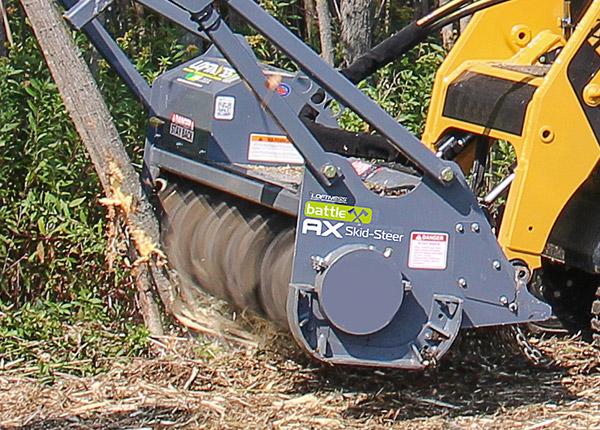
Introduction to the Battle Ax
The Battle Ax from Loftness is a groundbreaking mulching attachment built for skid steers, excavators, and heavy machinery. At its core lies an innovative depth gauge rotor design—bite-limiting devices akin to chainsaw raker teeth. These depth gauges control how much material the attachment engages, balancing productivity with the risk of overload—an advantage many say surpasses traditional ring-style rotors.
Key Design Highlights - Depth gauges prevent overloading while still allowing carbide teeth to pick up ground-level material effectively.
- Two-stage cutting chamber uses dual shear bars to process material twice for finer mulch and fewer passes.
- Tooth mounting is streamlined: one hex-bolt per tooth enables field reversal or replacement with minimal effort.
- Staggered/spiral tooth pattern ensures one tooth touches the ground at a time, improving balance and reducing vibration.
Model Variants and Adaptations
Loftness offers multiple versions tailored to differing power units:
L Series (Low-Flow Skid Steers, up to ~10,300 lbs)- Flow: 15–35.9 GPM, 30–70 hydraulic HP
- Rotor: 13.5-inch diameter, around 38 teeth
- Drive: Fixed-displacement gear motor
- Extras: Belt drive, anti-wrap bearings, push bar for debris control
S Series (Mid to High-Flow Skid Steers & Compact Track Loaders)- Flow: 28–62.9 GPM, 50–150 hydraulic HP
- Wide cutting widths (e.g., 61", 71"), weight around 2,600–2,800 lbs
- Drive options: Fixed gear motor or variable-displacement piston motor increasing torque automatically under load
- Robust features: premium steel housing, skid shoes, steel deflector chains, improved visibility, universal mount, hose routing refinement
H, Extreme, and Excavator Series- Extreme: For prime movers up to 375 HP; twin variable-speed piston motors; extreme triple carbide teeth; movable door for flexible debris handling; anti-wrap rings; two-year warranty
- Excavator Series (10, 20, 30, 40, 50): Tailored to excavators between ~7,000 to 88,000 lbs; each benefits from depth gauge and two-stage cutting design customized to machine size
Recent Enhancements and Durability
In early 2023, Loftness applied key updates to the S Series:- Reversible secondary shear bar replaced the previous welded design—extending blade life and ease of replacement
- Replaceable wear liner shields the drum from abrasion
- Reinforced, recessed belt cover and welded body strengthen durability
- Two-year warranty included for added operator confidence
Terminology & Technical Notes- Depth gauges: Bite-limiting elements modeled after chainsaw raker teeth
- Two-stage cutting chamber: Dual shear bars that reduce material in two phases
- Fixed‑displacement gear motor: Provides consistent speed and torque using a gear-based drive
- Variable‑displacement piston motor: Adjusts flow to ramp torque when mulching heavy vegetation
- Anti-wrap rings: Prevent vines or debris from wrapping around rotor bearings
- Skid shoes / deflector chains: Protect surfaces and contain debris during operation
Stories from the Field
One forestry contractor recounted the Battle Ax S Series easily clearing tangled underbrush and saplings that would slow down conventional gnawed mulchers. The spiral tooth pattern smoothed operation, while replacing wear liners in a quick bolt-out routine let them stay ahead of schedule.
Another landscaper chose the L Series for a compact skid steer refurbishing pasture edges. Its lighter frame and simpler gear motor were perfect for maneuvering tight spaces, and the replaceable shear bars extended uptime across multiple properties.
Why It Stands Out
The Battle Ax attachment blends robustness, serviceability, and nuanced design:- Controls bite aggressively yet smartly—thanks to depth gauges
- Enhances material processing with a two-phase cut for finer mulch
- Simplifies maintenance with bolt-on teeth and wear parts
- Adapts across machine sizes from skid steers to massive excavators
- Gains extra longevity from 2023 durability upgrades and extended warranty
For contractors, land managers, and forestry professionals seeking versatile mulching tools, the Battle Ax represents a powerful balance of rugged performance and thoughtful engineering.
|
|
|
|
| York Super Workman Utility Vehicle: Comprehensive Overview and Insights |
|
Posted by: MikePhua - 08-08-2025, 07:59 PM - Forum: General Discussion
- No Replies
|
|
The York Super Workman is a versatile utility vehicle widely used in various industrial, agricultural, and commercial settings. Known for its rugged design and practical functionality, the Super Workman has earned a reputation as a reliable workhorse for transporting materials, personnel, and tools across tough terrain. This article provides a detailed exploration of the York Super Workman’s features, operational characteristics, maintenance, and field applications, enriched with terminology explanations, real-world anecdotes, and comparative industry insights.
Vehicle Overview and Design
The York Super Workman is a compact, four-wheel-drive utility vehicle engineered for off-road durability and versatility. Its design prioritizes simplicity, ease of use, and robust construction to handle demanding work environments such as farms, construction sites, and large facilities.
Key components include: - Engine: Typically powered by a gasoline or diesel engine with moderate horsepower tailored for utility rather than speed.
- Chassis: Sturdy steel frame designed to withstand heavy loads and rough terrain.
- Suspension: Basic yet durable suspension system to absorb shocks and maintain stability.
- Cargo Bed: Rear cargo bed with sufficient capacity to transport tools, materials, or small equipment.
- Tires: Aggressive tread patterns for traction on dirt, mud, and uneven surfaces.
Terminology Explanation:- Utility Vehicle (UTV): A motorized vehicle designed for carrying equipment and personnel over rough terrain, distinct from recreational ATVs.
- Four-Wheel Drive (4WD): A drivetrain system that provides power to all four wheels simultaneously, improving traction.
- Chassis: The frame structure that supports the vehicle body and mechanical components.
- Cargo Bed: The open rear section used for carrying loads.
Performance and Operation
The Super Workman is built for moderate speeds suitable for worksite transit rather than highway travel. Operators appreciate its tight turning radius and solid traction, enabling navigation through confined spaces and challenging ground conditions.
Features enhancing operational efficiency include:- Simple control layout for intuitive handling.
- Robust braking system appropriate for loaded and unloaded conditions.
- Manual or automatic transmission options depending on the model year.
- Ground clearance adequate to avoid obstacles and rough patches.
Maintenance and Common Issues
Regular maintenance is crucial for keeping the York Super Workman reliable and safe. Common upkeep tasks and considerations include:- Engine Care: Routine oil changes, air filter cleaning, and fuel system checks prevent power loss and stalling.
- Tire Inspection: Checking for wear, proper inflation, and damage prolongs tire life and ensures traction.
- Brake System: Regular inspection of brake pads, fluid, and cables avoids unsafe stopping conditions.
- Drive Train: Monitoring 4WD components, including differential oil and drive shafts, to avoid failures.
- Electrical System: Battery condition and wiring should be checked periodically to ensure consistent starting and lighting.
Operators sometimes report issues such as clutch wear, loose cargo bed mounts, or minor electrical faults, which are generally straightforward to repair with common tools.
Case Story: Field Application
A landscaping company utilized a York Super Workman extensively across varied job sites. The vehicle’s ability to transport heavy soil bags and tools over uneven terrain without frequent breakdowns impressed the crew. One anecdote recalled a winter job where the 4WD feature enabled the vehicle to traverse icy grounds, avoiding delays that affected other equipment.
Comparative Industry Context
While modern UTVs from brands like Polaris and John Deere offer advanced electronics, higher speed, and more comfort, the York Super Workman remains valued for its simplicity, ease of maintenance, and cost-effectiveness. This makes it particularly popular in settings where rugged reliability outweighs sophisticated features.
Safety Tips- Always wear seat belts if provided.
- Operate at safe speeds, especially on slopes or uneven ground.
- Avoid overloading the cargo bed beyond recommended capacity.
- Conduct pre-operation checks including tire condition and brake function.
- Use the vehicle only within its designed application scope.
Supplemental Terminology Recap- 4WD (Four-Wheel Drive): Power delivery to all wheels for traction.
- UTV (Utility Terrain Vehicle): Multi-purpose off-road vehicle designed for work.
- Chassis: Base frame supporting vehicle components.
- Cargo Bed: Load-carrying platform.
- Transmission: Gearbox controlling power transfer and speed.
Summary of Maintenance Checklist- Engine oil and filter change
- Air filter cleaning/replacement
- Tire pressure and tread inspection
- Brake pad and fluid check
- Battery and wiring inspection
- Drive train lubrication and inspection
The York Super Workman stands as a testament to rugged utility vehicle design, balancing durability, ease of operation, and cost efficiency. Its straightforward mechanics and proven off-road capability ensure it continues to serve a vital role in numerous industries, from farming to landscaping and light construction. Proper maintenance, operator awareness, and understanding its functional scope are key to maximizing the vehicle’s lifespan and productivity.
|
|
|
|
| BaumaLight MX548 Brush Cutter: Reliable Mulching with Real-World Flair |
|
Posted by: MikePhua - 08-08-2025, 07:58 PM - Forum: General Discussion
- No Replies
|
|
Overview
The BaumaLight MX548 is a fixed‑tooth brush cutter crafted for excavators in the 8–20‑ton class. It excels at clearing fence lines, small trees, and heavy brush—tasks common to farms and light contractor projects. Its robust design, simple tooth replacement, and operator-focused durability make it a standout choice for efficient land maintenance .
Design and Key Features - Made from AR400 steel, the MX548 balances durability with manageable weight—ideal for rugged environments without overburdening the excavator .
- Equipped with replaceable Planer and Ripper style carbide‑tipped teeth:
- Planer teeth: take small, efficient bites—perfect for precision and smoother cuts.
- Ripper teeth: designed with a V-shape for shredding mulching action and greater resistance to impact from rocks or dense material .
- Features durable skid shoes that let the cutter "float" over uneven ground, improving mulching performance .
- Spiral tool pattern: engages teeth one at a time for smoother operation and reduced shock .
- Integrated root rake: enables the machine to uproot rocks or logs and clear debris more effectively .
- Hydraulic system includes a relief valve to protect the motor and hydraulic components from dangerous pressure spikes .
Technical Annotations- AR400 steel: high-strength alloy named for its Brinell hardness rating, offering superior wear resistance.
- Fixed‑tooth design: teeth are bolted in place (not swinging), providing stable cutting and easier field maintenance.
- Carbide‑tipped teeth: tungsten carbide tips retain edge sharpness longer than standard steel under harsh cutting conditions.
- Relief valve: hydraulic component that opens under excessive pressure to avoid damage to motors or hoses.
- Skid shoe: the metal plate underneath the mulcher that glides along the ground to control depth and protect the machine.
Stories from the Field- One contractor working brush along a rural fence line found that the MX548, outfitted with Ripper teeth, proved a godsend—easily shredding through dense blackberry thickets and small saplings without getting bogged down in rockier patches. The floating skid shoes ensured even ground contact, and tooth replacements were quick during lunch breaks—boosting productivity significantly.
- A farmer converting pasture edges into grazing grounds recalled how Planer teeth gave him the finesse needed near valuable trees, while Ripper teeth were reserved for thicker tangled undergrowth behind the barn—adaptability that saved him from renting multiple tools.
Operational Tips- Mounting requires installer provided hydraulic hoses and couplers, as these are not included; proper routing and secure connections are essential for safety and compliance .
- Begin operations above ground level for the first hours to allow carbide teeth to wear in gently and avoid rapid damage from hard obstacles .
- Regular checks before each use:
- Verify attachment security.
- Ensure hoses are routed clear of pinch zones.
- Inspect rotor and guards.
- Tighten cutting teeth every few hours, particularly during heavy use .
Wider Context and Alternatives
Mulching attachments like the MX548 occupy a middle ground between small, manual cutting tools and large, heavy-duty industrial mulchers. Users on rural‑focused forums compare options like Fecon, Fae, or Cimaf—especially for larger clearing jobs—raising considerations about tooth cost, horsepower requirements, and suitable machine pairing . Still, the MX548’s modularity and service-friendly design earn it praise for smaller‑scale and contractor use.
Summary
The BaumaLight MX548 Brush Cutter stands out through:- Rugged build (AR400 steel + carbide teeth)
- Adaptable cutting (Planer vs Ripper styles)
- Smart design features (skid shoes, relief valves, spiral tooth pattern)
- Operator-centric serviceability (bolt-on teeth, dealer network, repair videos)
BaumaLight MX548 – Let's Make Land Clearing Smarter
When brush removal is part of your daily grind—whether reclaiming pasture, maintaining fence lines, or prepping land for grazing—the MX548 strikes a remarkable balance. It’s rugged yet refined, powerful yet serviceable, and above all, dependable when the undergrowth fights back.
I hope this expanded article brings the BaumaLight MX548 to life with clarity, insights, and storytelling. Let me know if you'd like comparable tools or a usage case deep‑dive next!
|
|
|
|
| Troubleshooting Slow Drive on One Side of a CAT 325L Excavator |
|
Posted by: MikePhua - 08-08-2025, 07:57 PM - Forum: Troubleshooting & Diagnosing
- No Replies
|
|
When operating a CAT 325L excavator, one common issue that technicians and operators encounter is slow movement or reduced speed on one side of the machine. This problem can significantly affect machine maneuverability, productivity, and safety on the job site. This article thoroughly examines the causes, diagnostic methods, solutions, and maintenance tips related to this problem, enriched with terminology explanations and real-world insights.
Understanding the Drive System of CAT 325L
The CAT 325L excavator utilizes a hydraulic track drive system where each side (left and right) is powered independently by hydraulic motors. These motors receive hydraulic fluid from the main hydraulic pump through control valves, allowing precise speed and direction control.
Key Terminology: - Hydraulic Track Motor: Converts hydraulic pressure into mechanical motion to drive the tracks.
- Control Valve: Regulates hydraulic fluid flow to the track motors.
- Travel Motor: Another term for the hydraulic motor powering the tracks.
- Flow Meter: A diagnostic tool to measure hydraulic flow rate.
- Track Roller and Idler: Components supporting the track chain and maintaining tension.
Common Causes of One-Side Slow Drive
- Hydraulic Flow Restriction: Blockages, leaks, or damaged hoses and fittings on the slow side can reduce fluid delivery.
- Worn or Damaged Travel Motor: Internal motor wear, such as worn pistons or seals, can reduce torque and speed.
- Faulty Control Valve: A malfunctioning valve may limit hydraulic flow or pressure to one side.
- Track Tension Issues: Overly tight or loose tracks can create drag, affecting travel speed.
- Pump or System Pressure Problems: Unequal pump output or pressure drops may cause asymmetric drive speeds.
- Mechanical Problems: Damaged sprockets, track chains, or rollers on one side can impede movement.
Diagnostic Steps- Visual Inspection: Check hydraulic lines, fittings, and the track system for leaks, damage, or improper tension.
- Hydraulic Flow Testing: Using a flow meter to compare hydraulic flow rates between left and right track motors helps identify flow restrictions.
- Pressure Testing: Measure system pressure at various points, especially near the control valve and travel motor.
- Motor Function Test: Swap the track motors or use known-good motors to confirm if the motor is at fault.
- Valve Function Check: Inspect or replace control valves to rule out internal damage or sticking.
- Track and Undercarriage Inspection: Examine for physical damage or abnormal wear.
Case Story: Real-Life Troubleshooting
An operator reported slow travel on the right side of a CAT 325L during excavation work. Initial inspection revealed no visible leaks. However, flow testing showed significantly reduced hydraulic flow to the right travel motor. Further disassembly identified worn motor seals causing internal leakage. After replacing the travel motor seals and flushing the system, the excavator returned to full operational speed on both sides, saving costly downtime.
Solutions and Repairs- Hydraulic Hose and Fitting Replacement: Replace damaged or leaking components to restore proper flow.
- Travel Motor Overhaul or Replacement: Repair worn internal parts or replace the entire motor.
- Control Valve Repair: Clean, rebuild, or replace faulty valves.
- Adjust Track Tension: Properly tension tracks to manufacturer specifications to reduce drag.
- Hydraulic System Flush: Remove contaminants that can cause valve sticking or motor damage.
- Undercarriage Repair: Replace worn sprockets, rollers, or track chains as necessary.
Preventive Maintenance Tips- Regularly inspect hydraulic hoses, fittings, and valves for leaks and wear.
- Monitor hydraulic fluid cleanliness and replace filters as recommended.
- Maintain correct track tension and inspect undercarriage components routinely.
- Use flow and pressure tests during scheduled maintenance to detect issues early.
Safety Considerations
Always depressurize hydraulic systems before disassembly to prevent injury. Use proper personal protective equipment and follow manufacturer guidelines during repairs.
Industry Insights
The CAT 325L’s dual independent track drive system offers excellent maneuverability but requires balanced hydraulic performance. Similar models from competitors like Komatsu and Hitachi share comparable issues and maintenance approaches, emphasizing the importance of hydraulic system care.
Terminology Recap- Hydraulic Track Motor: Powers individual tracks.
- Control Valve: Regulates fluid flow.
- Flow Meter: Measures hydraulic flow.
- Travel Motor: Hydraulic motor driving tracks.
- Track Tension: Adjusting track tightness for optimal function.
In summary, slow drive on one side of a CAT 325L typically stems from hydraulic system issues, mechanical wear, or track problems. Thorough diagnostics and proactive maintenance can resolve and prevent these problems, ensuring optimal excavator performance and job site efficiency.
|
|
|
|
| New Holland L‑170 Skid‑Steer Loader Hard‑Start Phenomenon |
|
Posted by: MikePhua - 08-08-2025, 07:56 PM - Forum: Troubleshooting & Diagnosing
- No Replies
|
|
Context and Overview
Owners of the New Holland L‑170 often report the machine being hard to start—a phrase that means the loader cranks over but takes excessive effort, time, or multiple key cycles to fire up. This struggle can stem from both fuel and electrical systems, each demanding its own inspection and troubleshooting path.
Underlying Causes and Mechanisms - Electrical power delivery faults
- Voltage drops due to corroded battery cables, poor relay connections, or worn contact surfaces in the starter solenoid. Even if the solenoid clicks, this doesn’t guarantee enough current reaches the starter motor.
- Starter gear misalignment: Some operators have found that adding a thin thin washer spacer to the starter mounting bolts helps the starter gear mesh more reliably with the flywheel. This adjustment prevents the “click but no spin” symptom.
- Safety interlocks—such as seat switch, seatbelt sensor, or ignition fuses—can intermittently fail, preventing startup. In one case, a broken microswitch in the seatbelt buckle caused cranking without starting, eventually fixed by sourcing a part from an old pickup truck for just $10.
- Fuel system and combustion challenges
- Air trapped in the fuel lines or a clogged intake screen may prevent proper fuel delivery, causing extended cranking before ignition. Bleeding the lines or clearing the tank screen can help.
- Contaminants—like water or debris in diesel—can hinder spray quality at the injector tips. Dirty or failing injectors, improper valve clearance, worn or leaking injection pumps need to be examined and serviced.
- After sitting idle, pressure may bleed off in the pump or lift circuit. A previously stuck plunger in the injection pump, for instance, can create delayed or repeated start difficulties.
Illustrative Cases and Anecdotes- A user recounted the loader would start smoothly right away, but after a 20‑minute rest, required prolonged cranking to fire. Even replacing the lift pump offered no relief—raising suspicion that residual air was bleeding back into the fuel system or a faulty solenoid wasn’t engaging consistently.
- Another instance featured consistent cranking and black smoke upon start attempts—the telltale signs of fuel reaching the engine—but still no ignition, leading to a deep dive into compression and injector function.
- One creative work-around involved discovering a blown 5 A fuse for the fuel solenoid. Though the fuse wasn’t fully blown, its poor contact prevented solenoid activation. A bit of makeshift fixing—wedging a small piece of conductive material—restored the fuel system and saved a lot of diagnostic pain.
- In a tale of persistence, after checking fuel pump, filters, and verifying power to the solenoid, an owner discovered that a tiny microswitch in the seatbelt buckle was intermittent—replacing it for a mere $10 salvaged the machine.
Technical Glossary & Annotations- Starter solenoid: An electromechanical switch that controls heavy current from the battery to crank the starter motor.
- Voltage drop: Loss of current or voltage across a connector or length of wiring due to corrosion, resistance, or loose contact.
- Air bleed: Removing trapped air from fuel lines, which can disrupt continuous fuel delivery.
- Lift pump: A low-pressure pump that feeds fuel to the injection pump; loss of pressure can starve the system.
- Injection pump: A high-pressure component sending timed fuel pulses to injectors—critical for combustion.
- Injector nozzle: The tip that atomizes diesel into the cylinder; defects here can keep the engine from igniting fuel.
- Sensor interlocks: Safety switches (e.g., seat switch, seatbelt switch) that must be correctly engaged for the machine to allow starting.
- Fuel solenoid: A valve or switch that controls fuel flow into the pump; must be powered to allow engine starts.
Approach to Diagnosis: A Step‑by‑Step Perspective- Step 1: Start with the electrical system
- Clean and inspect battery terminals; ensure ground and starter cable continuity.
- Test starter solenoid operation and smoking or gear engagement issues. Add shims if needed for proper meshing.
- Check safety interlocks—seat switch, belt sensor, ignition fuses—and bypass temporarily to identify hidden faults.
- Step 2: Verify fuel pathway and delivery
- Bleed fuel lines and check for air intrusion. Replace filters and clean inline screens.
- Examine solenoid power under key-on and crank; ensure the valve is functioning.
- Inspect injectors and pump for leaks, poor spray, or unusual pressure characteristics. Check valve clearance.
- Step 3: Confirm combustion capability
- Observe exhaust while cranking—black smoke indicates fuel, white suggests cold or misfiring.
- Conduct compression test if the engine spins well but won’t catch.
- Rule out timing issues or burned injection pump components.
Closing Thought & Practical Reflection
These hard‑start moments are often rooted in small but critical faults—like a corroded contact or a stuck microswitch. Patience, systematic testing, and a bit of ingenuity (like the fuse contact fix) can go a long way. Remember, a loader is built tough—but sometimes it’s the tiny, overlooked part that hinders its roar.
|
|
|
|
| Bobcat 863 Fuel Tank Access and Maintenance Guide |
|
Posted by: MikePhua - 08-08-2025, 07:56 PM - Forum: General Discussion
- No Replies
|
|
Understanding the proper access and maintenance of the fuel tank on a Bobcat 863 skid steer loader is essential for efficient operation and safety. This guide provides a detailed overview of the fuel tank access procedures, common challenges, and practical solutions based on operator experiences, combined with terminology explanations and related anecdotes from the field.
Fuel Tank Location and Design
The Bobcat 863 features a fuel tank located beneath the operator’s seat area, designed to maximize space efficiency while protecting the tank from external damage. The tank is typically constructed from durable steel or reinforced plastic, depending on the model year, ensuring resistance to impact and corrosion.
Terminology: - Fuel Tank Access Panel: The removable cover or hatch that allows entry to the fuel tank for inspection, cleaning, or repairs.
- Drain Plug: A bolt or valve at the bottom of the tank used to drain fuel or water accumulation.
- Fuel Gauge Sending Unit: The sensor inside the tank measuring fuel level and sending information to the gauge on the dashboard.
- Breather Valve: A small valve allowing air to enter and exit the tank to prevent vacuum or pressure buildup.
Accessing the Fuel Tank
To service or inspect the fuel tank on the Bobcat 863, operators typically follow these steps:
- Raise the Seat Assembly: The operator’s seat is mounted on a hinged frame that can be lifted forward or upward to expose the fuel tank access area.
- Remove the Access Panel: Underneath the seat or adjacent floor panels, a dedicated fuel tank access panel is secured with bolts or clips. Removing this panel provides direct entry to the tank’s top or side components.
- Disconnect Fuel Lines (if necessary): For certain maintenance tasks, such as cleaning or replacing the fuel pump or gauge sender, fuel lines may need to be disconnected carefully to avoid spillage.
- Drain Fuel (if needed): Using the drain plug located at the tank’s bottom, fuel or water sediment can be drained safely into an approved container.
Common Issues and Solutions- Difficult Access Due to Rust or Seized Bolts: Operators report that access panel bolts sometimes seize due to rust. Regular lubrication and use of anti-seize compounds during reassembly help prevent this.
- Fuel Contamination: Water or sediment accumulation in the tank can cause engine performance problems. Regular draining through the drain plug and inspection via the access panel mitigate these issues.
- Fuel Gauge Malfunction: Faulty sending units inside the tank lead to inaccurate fuel readings. Replacement requires accessing the tank through the panel and careful handling of the electrical connectors.
Case Story: Field Experience
A Bobcat 863 owner recounted how ignoring regular fuel tank maintenance led to sudden engine sputtering on a construction site. After lifting the seat and opening the access panel, they found significant water contamination. Draining and cleaning the tank restored performance immediately, highlighting the importance of periodic inspection.
Safety Precautions- Always ensure the engine is off and cool before accessing the fuel tank to prevent fire hazards.
- Work in a well-ventilated area to avoid inhalation of fuel fumes.
- Use appropriate tools and protective equipment, including gloves and eye protection.
- Dispose of drained fuel and contaminants according to local environmental regulations.
Maintenance Tips- Inspect the fuel tank and related components every 250 operating hours or per the manufacturer’s schedule.
- Check and clean the breather valve to prevent vacuum build-up that can restrict fuel flow.
- Replace gaskets or seals on the access panel during reassembly to prevent leaks.
Fuel Tank Access Summary- Location: Underneath or behind operator seat.
- Tools Needed: Socket wrench set, screwdrivers, lubricant spray, container for draining.
- Frequency: Regular inspection every 250 hours or when performance issues arise.
- Key Components: Access panel, drain plug, sending unit, breather valve.
Industry Insight
The Bobcat 863’s fuel tank design reflects a common trend in skid steer loaders: maximizing compactness without sacrificing serviceability. Other brands like Caterpillar and John Deere have similar setups, though panel designs and access points vary. Proper training on these access methods reduces downtime and extends machine life.
Additional Notes
In colder climates, condensation inside the fuel tank can cause water accumulation faster than usual. Operators often install fuel additives or heaters to mitigate freezing and contamination.
Terminology Recap- Access Panel: Removable cover to reach fuel tank internals.
- Drain Plug: Valve to empty fuel or sediment.
- Sending Unit: Sensor measuring fuel level.
- Breather Valve: Pressure equalizing valve.
This comprehensive guide emphasizes the importance of proper fuel tank access and maintenance on the Bobcat 863. Routine inspections, combined with understanding the fuel system’s components, ensure machine reliability and operator safety.
|
|
|
|
| T300 vs. T650: Choosing the Right Bobcat Compact Track Loader |
|
Posted by: MikePhua - 08-08-2025, 07:55 PM - Forum: General Discussion
- No Replies
|
|
Overview and Context
Imagine two trusted workhorses standing side by side in a dusty equipment yard—one with deeper scars from years of service, the other with fresh paint and fewer hours. The Bobcat T300, born in the early 2000s, represents a serious, battle-worn veteran; the T650, entering the next generation, brings refinement and modern amenities. Deciding between them often comes down to subtle differences in performance, comfort, maintenance, and value—especially for contractors weighing cost versus capability.
Machine Dimensions and Capacity - T300
- Rated operating capacity: ~3,000 lb (1,360 kg)
- Operating weight: ~9,354 lb (4,243 kg)
- Engine: Kubota V3300‑DI‑T diesel, ~80.8 hp
- T650
- Rated operating capacity: ~3,670 lb (1,671 kg) per RitchieSpecs
- Operating weight: ~9,113 lb (4,135 kg)
- Engine: Kubota V3307‑DI‑TE3 diesel, ~70–76 hp depending on source
In practical terms, the T650 offers a higher lift capacity while weighing slightly less—translating to improved efficiency on heavier jobs.
Hydraulic and Performance Metrics- T300
- Hydraulic flow: ~21 GPM (79 L/min)
- Breakout forces: Lift ~6,100 lb, Tilt ~6,000 lb
- T650
- Pump flow: ~23–23.5 GPM (87–89 L/min)
- Hydraulic pressure: ~3,300–3,550 psi (227–245 bar)
The T650’s extra hydraulic flow and boosted pressure indicate more responsive operation and the ability to handle larger or faster attachments.
Cab and Operator Comfort
The T650 steps ahead with a cab-forward design that improves visibility, along with options like Selectable Joystick Control (SJC), cab pressurization, and enhanced ergonomics for long workdays.
Meanwhile, the T300, while solid and rugged, may feel a bit dated compared to the more refined T650.
Real-World Perspective: Value vs. Longevity
A classic anecdote: a contractor once had the choice between a T300 with 1,300 hours for $35,000 versus a T650 with 500 hours for $37,000. The general consensus favored the T650—newer cab, fewer hours, likely still under warranty—for just a modest premium. The T300, despite its slightly higher power, felt long in the tooth in comparison.
Maintenance, Durability, and Tips
Both models employ Kubota diesel engines known for reliability, but common service issues include hydraulic leaks, overheating, or slow response—particularly as machines age. Preventive measures like regular fluid checks, filter changes, and cooling system maintenance are key.
For the T650, the availability of dealer support and modern control options may simplify upkeep and reduce downtime.
Historical Touchstone
One longtime operator reflected that the true value in these machines isn't just horsepower or lift—it’s breathing clean air while working. He joked that “AC might feel like a convenience, but dust is brutal—and when you hit a tree at speed, you appreciate every comfort and safety feature.” Machines that preserve operator well-being truly stand the test of time.
Summary Comparison- T300: More horsepower (~80 hp), time-tested durability, lower price if well-used—solid choice if budget is tight.
- T650: Higher lift capacity, modern ergonomics, more hydraulic flow, better comfort and resale potential—worth extra investment for efficiency and operator experience.
Terminology Annotations- Rated Operating Capacity: industry-standard measure of safe load, typically 50 % of tipping load.
- Breakout Force: hydraulic power to break ground or push into a load.
- Hydraulic Flow (GPM): affects speed of lifting and attachment response.
- SJC (Selectable Joystick Control): operator control system allowing switching between joystick or pedal operation for enhanced flexibility.
In the end, choosing between the T300 and T650 depends on your priorities. Is it upfront cost and proven performance? The T300 delivers. Or do you value modern comfort, stronger hydraulics, and resale—making the T650 a clear winner for those who can swing the extra investment.
If you'd like stories from owners, attachment use cases, or maintenance logs for these models, I’d be happy to expand further!
|
|
|
|
|



