| Welcome, Guest |
You have to register before you can post on our site.
|
| Forum Statistics |
» Members: 79
» Latest member: cioCruch
» Forum threads: 47,411
» Forum posts: 47,417
Full Statistics
|
| Online Users |
There are currently 96 online users.
» 0 Member(s) | 85 Guest(s)
Ahrefs, Amazon, Applebot, Baidu, Bing, Claude, Google, OpenAI, Petalbot, Semrush
|
| Latest Threads |
Identifying and Sourcing ...
Forum: Parts , Attachments & Tools
Last Post: MikePhua
01-07-2026, 06:29 PM
» Replies: 0
» Views: 495
|
Cat 931B Brake Parts
Forum: Parts , Attachments & Tools
Last Post: MikePhua
01-07-2026, 06:29 PM
» Replies: 0
» Views: 276
|
Choosing Between Cat 228,...
Forum: General Discussion
Last Post: MikePhua
01-07-2026, 06:28 PM
» Replies: 0
» Views: 519
|
Hydraulic Delay When Lowe...
Forum: Troubleshooting & Diagnosing
Last Post: MikePhua
01-07-2026, 06:27 PM
» Replies: 0
» Views: 435
|
Bale Chopper and Mulcher ...
Forum: General Discussion
Last Post: MikePhua
01-07-2026, 06:26 PM
» Replies: 0
» Views: 307
|
Mini UC Maintenance
Forum: General Discussion
Last Post: MikePhua
01-07-2026, 06:25 PM
» Replies: 0
» Views: 296
|
Locating Wiring Informati...
Forum: General Discussion
Last Post: MikePhua
01-07-2026, 06:24 PM
» Replies: 0
» Views: 332
|
Case Industrial Brown Sub...
Forum: Parts , Attachments & Tools
Last Post: MikePhua
01-07-2026, 06:23 PM
» Replies: 0
» Views: 269
|
Dirt Work in West Virgini...
Forum: Construction & Urban Infrastructure Forum
Last Post: MikePhua
01-07-2026, 06:23 PM
» Replies: 0
» Views: 366
|
D207 P Hydraulic Steering...
Forum: Parts , Attachments & Tools
Last Post: MikePhua
01-07-2026, 06:22 PM
» Replies: 0
» Views: 296
|
|
|
| Diagnosing Hydraulic Failure in the Bomag BW211D-3 Roller |
|
Posted by: MikePhua - 08-23-2025, 11:45 PM - Forum: Troubleshooting & Diagnosing
- No Replies
|
 |
The BW211D-3 and Bomag’s Compaction Heritage
The Bomag BW211D-3 is a single-drum vibratory roller designed for soil compaction in heavy civil engineering projects. Manufactured by Bomag GmbH, a German company founded in 1957, the BW211D-3 belongs to the third generation of the BW211 series, which has been widely used in road construction, dam building, and mining operations. Bomag has sold tens of thousands of rollers globally, and its machines are known for their robust build, advanced vibration systems, and hydrostatic drive technology.
The BW211D-3 features a Deutz diesel engine, hydrostatic travel drive, and a dual-circuit hydraulic system that powers steering, travel, and vibration functions. Its operating weight exceeds 10 metric tons, and it delivers up to 25,000 kg of centrifugal force, making it suitable for compacting granular soils and crushed rock.
Hydraulic System Overview
The BW211D-3 uses a multi-pump hydraulic system: - A gear-type steering pump supplies pressure to the steering valve and also serves as the charge pump for the travel and vibration circuits.
- Two axial piston pumps drive the travel motors and vibration exciter.
- Hydraulic oil flows through a filter located downstream of the steering valve before entering the charge circuit.
This configuration allows for efficient power distribution but also introduces vulnerability: if the steering pump fails or becomes restricted, the entire machine may lose travel and vibration capability.
Terminology Explained- Charge Pressure: The baseline pressure that feeds the hydrostatic pumps, typically around 360 psi (25 bar).
- Hydrostatic Drive: A closed-loop system where hydraulic pumps directly power motors without mechanical transmission.
- Metal Flakes: Shiny debris found in hydraulic filters, often indicating internal wear or pump failure.
- Relief Valve: A safety valve that limits maximum pressure in a hydraulic circuit.
Symptoms of Hydraulic Failure
Operators have reported the following issues with the BW211D-3:- Extremely stiff steering, even at moderate throttle
- Intermittent travel in forward and reverse—machine moves a few feet, then stops
- Pressure spikes followed by sudden drops in the travel circuit
- Bright metal flakes found in the hydraulic filter
These symptoms suggest a failing steering pump, which also serves as the charge pump. Without adequate charge pressure, the hydrostatic pumps cannot maintain flow, leading to erratic travel behavior.
Field Diagnosis and Pressure Testing
One technician measured steering pressure at over 2,000 psi at half throttle, which is within spec. However, charge pressure at the filter was less than 100 psi at full throttle—far below the required 360 psi. This indicates either a failing pump or a restriction in the supply line.
Recommended diagnostic steps include:- Check charge pressure at full throttle with hydraulic oil at 50°C (120°F)
- Inspect the filter for metallic debris, especially brass or aluminum
- Verify that the filter is on the outlet side of the steering valve
- Confirm that the relief valves are not stuck open
- Examine suction lines for collapse or blockage
Field Anecdote and Practical Insight
A retired mechanic assisting a friend with a BW211D-3 discovered metal flakes in the filter and suspected pump failure. After pricing a replacement pump from Bomag at $850, he explored aftermarket options and found compatible units for half the cost. He noted that the machine sounded like it was starving for fluid, and pressure readings confirmed his suspicion.
Another technician emphasized the importance of checking the filter location. If the filter is on the pressure side, debris may not reach the main pumps. But if it’s on the return side, contamination can circulate and damage wear plates and rotating groups.
Preventive Maintenance and Long-Term Reliability- Replace hydraulic filters every 500 hours
- Monitor charge pressure monthly using a test port
- Flush the system if metal debris is found
- Use OEM-grade hydraulic oil with proper viscosity
- Inspect relief valves annually for sticking or leakage
Alternative Solutions and Cost-Saving Strategies
If the steering/charge pump fails, operators can:- Source rebuilt pumps from hydraulic specialists
- Retrofit compatible gear pumps with similar flow and pressure ratings
- Install inline magnetic filters to trap future debris
- Upgrade to a higher-capacity cooling system to reduce thermal stress
In some cases, replacing the entire hydraulic assembly may be more economical than chasing individual failures. However, this depends on machine age, usage, and resale value.
Industry Trends and Support Challenges
Bomag’s dealer network varies by region, and access to service manuals can be limited for older models. Some technicians rely on dealer portals or direct contact with service reps to obtain hydraulic schematics. As more machines enter secondary markets, the need for open-access documentation grows.
In 2023, a regional contractor in Oklahoma retrofitted his BW211D-3 with a digital pressure monitoring system to track charge pressure in real time. This helped prevent future failures and reduced downtime by 40%.
Conclusion
Hydraulic failure in the Bomag BW211D-3 often stems from a compromised steering/charge pump. Symptoms like stiff steering, intermittent travel, and metal debris in filters point to low charge pressure and potential contamination. Through methodical testing, preventive maintenance, and strategic upgrades, operators can restore full functionality and extend the life of this powerful compaction machine. The BW211D-3 remains a testament to Bomag’s engineering legacy—provided its hydraulic heart is kept healthy.
|

|
|
| Hazardous Materials in Construction |
|
Posted by: MikePhua - 08-23-2025, 11:44 PM - Forum: Construction & Urban Infrastructure Forum
- No Replies
|
|
Introduction
The construction industry frequently encounters hazardous materials that pose risks to workers, the public, and the environment. Effective management of these materials is crucial for safety and compliance with regulations. This article explores the types of hazardous materials commonly found on construction sites, associated risks, and best practices for handling and disposal.
Common Hazardous Materials on Construction Sites
- Asbestos: Once widely used for its fire-resistant properties, asbestos is now known to cause serious health issues, including lung cancer and asbestosis. It is often found in older buildings in materials such as insulation, flooring, and roofing.
- Lead: Lead-based paints and pipes are prevalent in structures built before the 1970s. Exposure can lead to lead poisoning, affecting the nervous system and causing developmental issues in children.
- Silica Dust: Generated during activities like cutting concrete or stone, silica dust can cause respiratory problems, including silicosis, a lung disease.
- PCBs (Polychlorinated Biphenyls): Used in electrical equipment, PCBs are toxic and can cause cancer and other health issues.
- Solvents and Chemicals: Construction sites often use various chemicals and solvents, which can be flammable or toxic. Improper handling can lead to fires or health hazards.
Risks Associated with Hazardous Materials
Exposure to hazardous materials can result in:- Health Issues: Chronic diseases, respiratory problems, and cancers.
- Environmental Contamination: Soil and water pollution affecting ecosystems.
- Legal Consequences: Fines and penalties for non-compliance with safety regulations.
Regulatory Framework
In the United States, several agencies regulate hazardous materials in construction:- OSHA (Occupational Safety and Health Administration): Sets standards for worker safety, including the handling of hazardous materials.
- EPA (Environmental Protection Agency): Regulates the disposal and management of hazardous waste under the Resource Conservation and Recovery Act (RCRA).
- DOT (Department of Transportation): Regulates the transportation of hazardous materials.
Best Practices for Handling Hazardous Materials
- Training and Awareness: Ensure all workers are trained to identify and handle hazardous materials safely.
- Use of Personal Protective Equipment (PPE): Provide appropriate PPE such as gloves, respirators, and protective clothing.
- Proper Labeling and Storage: Clearly label hazardous materials and store them in suitable containers to prevent leaks and spills.
- Dust and Fume Control: Implement measures like water suppression or ventilation systems to control dust and fumes.
- Safe Handling and Disposal: Follow proper procedures for handling and disposing of hazardous materials to minimize risks.
Case Studies- East Palestine, Ohio Derailment (2023): A train derailment released hazardous materials, highlighting the need for better preparedness in handling such incidents.
- Albuquerque Asbestos Exposure (2023): Improper handling of asbestos during construction led to significant fines and health risks for workers.
Conclusion
Effective management of hazardous materials in construction is essential for protecting workers, the public, and the environment. By adhering to regulations and implementing best practices, the risks associated with these materials can be minimized.
|
|
|
|
| Understanding and Maintaining the Telsta A28D Boom Slide Blocks |
|
Posted by: MikePhua - 08-23-2025, 11:44 PM - Forum: Parts , Attachments & Tools
- No Replies
|
|
Introduction to the Telsta A28D
The Telsta A28D is a versatile aerial lift mounted on a 1997 Ford F-350 chassis, designed for utility work, tree trimming, and maintenance tasks. Its telescoping boom provides a working height of approximately 28 feet, making it suitable for various overhead applications. The boom's extension and retraction are facilitated by slide blocks that ensure smooth movement and structural integrity.
Function and Importance of Boom Slide Blocks
Boom slide blocks, also known as wear pads or guide blocks, are critical components that allow the inner boom to extend and retract within the outer boom. These blocks reduce friction, prevent metal-to-metal contact, and maintain alignment during boom operation. Regular inspection and maintenance of these slide blocks are essential to ensure the safe and efficient functioning of the aerial lift.
Common Issues with Boom Slide Blocks
Over time, boom slide blocks can experience wear, leading to several issues: - Excessive Wear: Continuous operation can cause the slide blocks to wear down, leading to increased friction and potential misalignment.
- Damage or Cracking: Physical damage or cracking of the slide blocks can compromise the structural integrity of the boom.
- Dislodgement: Improper installation or lack of maintenance can result in slide blocks becoming dislodged, affecting the boom's operation.
Maintenance and Replacement
Regular maintenance is crucial to prolong the life of the boom slide blocks:- Inspection: Periodically inspect the slide blocks for signs of wear, damage, or dislodgement.
- Lubrication: Apply appropriate lubricants to reduce friction and prevent premature wear.
- Replacement: If wear exceeds acceptable limits or if damage is observed, replace the slide blocks promptly.
According to the Telsta A28D Service Repair Manual, the extension cylinder rod end attachment bolt should be coated with "Never Seize" or an equivalent lubricant and torqued to 75 ft-lbs during reassembly.
Acquiring Replacement Parts
Replacement parts for the Telsta A28D, including boom slide blocks, can be sourced from various suppliers:- Al Asher & Sons: Offers a range of Telsta boom sections and accessories.
- Versalift Parts Store: Provides adjustable slide pads and wear pads suitable for similar models.
Conclusion
The boom slide blocks of the Telsta A28D are vital for the safe and efficient operation of the aerial lift. Regular maintenance, timely replacement of worn or damaged components, and sourcing quality replacement parts are essential practices to ensure the longevity and reliability of the equipment. By adhering to these guidelines, operators can maintain optimal performance and safety standards.
|
|
|
|
| Is the Ford LN8000 with CAT 3208 Turbo Engine Still a Viable Hauler |
|
Posted by: MikePhua - 08-23-2025, 11:43 PM - Forum: Troubleshooting & Diagnosing
- No Replies
|
|
The Ford LN8000 and Its Role in Heavy Transport
The Ford LN8000 was part of Ford’s L-series lineup, introduced in the 1970s to compete in the medium and heavy-duty truck market. Built for vocational use—dumping, hauling, and towing—the LN8000 was often configured with diesel engines from Caterpillar, Cummins, or Detroit Diesel. Its rugged frame, spacious cab, and compatibility with 13-speed transmissions made it a favorite among small contractors and municipal fleets.
Ford’s heavy truck division was eventually sold to Freightliner in the late 1990s, but the LN8000 remains a workhorse in rural America. Many of these trucks are still in service today, pulling equipment trailers, water tanks, and even fire apparatus.
Understanding the CAT 3208 Turbo Diesel
The CAT 3208 is a V8 diesel engine produced from the mid-1970s through the early 1990s. Unlike Caterpillar’s inline six-cylinder engines, the 3208 was designed for light to medium-duty applications. It featured: - Displacement: 10.4 liters
- Configuration: V8, four-stroke
- Turbocharged versions: Up to 250–290 hp in truck applications
- Marine ratings: Up to 430 hp (intermittent duty)
The 3208 was known for simplicity—no sleeves, mechanical injection, and relatively easy rebuilds. However, it lacked the longevity and torque of inline sixes like the CAT 3406 or Cummins N-series. In high-load scenarios, especially with sustained RPMs, the 3208 could suffer from overheating or premature wear.
Terminology Explained- RTO9513: A 13-speed Roadranger transmission with overdrive, offering close gear spacing for heavy loads.
- RT613: A direct-drive 13-speed transmission, harder to shift and less forgiving under load.
- Pyrometer: An exhaust temperature gauge used to monitor engine stress and prevent overheating.
- Push Clutch: A clutch system that disengages by pushing the pedal, often lacking a clutch brake.
Can It Pull a CAT 953 Track Loader
The CAT 953 track loader weighs approximately 30,000 lbs. When paired with a trailer, the gross combination weight can exceed 45,000 lbs. The 3208 turbo, rated between 215–250 hp in most truck configurations, is capable of pulling this load—but not effortlessly.
Operators report that the engine can handle flat terrain and moderate grades, but long hills require constant shifting and careful throttle management. The lack of low-end torque means the driver must stay alert to avoid lugging or overheating. Installing a pyrometer is strongly recommended to monitor exhaust temperatures, especially when climbing grades or hauling in hot weather.
Field Anecdotes and Practical Experience
One operator in South Carolina used his LN8000 with a 3208 turbo to haul a CAT 953 across the state. He noted that while the truck wasn’t fast, it was reliable and fuel-efficient. He compared it to older Mack trucks with 237 hp engines that routinely pulled D7 and D8 dozers—proving that horsepower isn’t everything.
Another user recalled pulling a Case 850D crawler and a backhoe with a naturally aspirated 3208 rated at just 175 hp. While underpowered, the truck started reliably in cold weather and never failed to complete a job. The turbocharged version, with better airflow and cooling, performed significantly better.
Performance Ratings and Engine Life- Typical truck rating: 215–250 hp
- Aftercooled turbo versions: Up to 290 hp
- Marine ratings: Up to 430 hp (not suitable for continuous land use)
- Expected engine life: 250,000–350,000 miles under moderate load
Running the engine at high horsepower continuously shortens its lifespan. Marine engines benefit from unlimited cooling and intermittent duty cycles, which is why their ratings are higher. In trucks, sustained high RPMs without proper cooling can lead to cracked heads or piston damage.
Transmission Compatibility and Shifting Tips
The LN8000 often came with a 13-speed transmission, either direct-drive or overdrive. The RTO9513 is preferred for hauling, as it offers better gear spacing and easier shifting. However, the 3208’s push clutch system lacks a clutch brake, making gear changes more difficult. An air-operated transmission brake may be present but often requires maintenance to function properly.
Operators should:- Practice double-clutching and rev-matching
- Avoid lugging below 1,500 RPM
- Use split gears on hills to maintain momentum
- Install a pyrometer to prevent over-temp conditions
Is It Suitable for a 160-Class Excavator
A 160-class excavator, such as a CAT 316 or Komatsu PC160, weighs around 38,000–42,000 lbs. With trailer weight included, the total load may exceed 55,000 lbs. While the LN8000 can technically pull this, it’s pushing the limits of the 3208’s torque curve and cooling capacity.
Operators considering this setup should:- Limit haul distances
- Avoid steep grades
- Upgrade cooling systems if possible
- Consider a newer truck with an inline six engine for long-term use
Modern Comparisons and Economic Trade-Offs
Today’s diesel pickups routinely offer 400+ hp and 6-speed automatic transmissions. Compared to the LN8000, they’re faster, quieter, and more comfortable. However, they also come with complex electronics, emissions systems, and monthly payments.
The LN8000, if well-maintained, offers:- No electronic failures
- Low operating costs
- Easy roadside repairs
- Decent fuel economy (6–8 mpg under load)
For short hauls and occasional use, it remains a viable option. But for daily heavy hauling, a newer Mack, Freightliner, or Kenworth with a modern engine is a better long-term investment.
Conclusion
The Ford LN8000 with a CAT 3208 turbo engine is a capable but aging hauler. It can pull a CAT 953 or even a 160-class excavator, but not without effort. Operators must understand its limitations—modest horsepower, constant shifting, and cooling challenges. With proper care and realistic expectations, it remains a valuable tool for budget-conscious contractors and rural operators who prioritize simplicity over speed.
|
|
|
|
| Final Drive Maintenance on the Caterpillar D5G Dozer |
|
Posted by: MikePhua - 08-23-2025, 11:42 PM - Forum: Troubleshooting & Diagnosing
- No Replies
|
|
Introduction
The final drive system on the Caterpillar D5G dozer plays a pivotal role in converting the engine's power into track movement. Understanding its components, common issues, and maintenance practices is essential for ensuring the longevity and efficiency of the machine.
Components of the Final Drive
The final drive assembly on the D5G dozer comprises several critical components: - Hydrostatic Transmission (Hystat): Allows for smooth, stepless speed control and direction changes without the need for a manual gearbox.
- Planetary Gear Set: Reduces the high-speed input from the engine to a lower, more usable speed for the tracks.
- Duo-Cone Seals: Prevent contamination and loss of lubricants by sealing the interface between rotating and stationary parts.
- Bearings and Gears: Support the rotating elements and transmit torque to the tracks.
- Sprockets: Engage with the track links to propel the dozer.
Common Issues and Symptoms
Operators may encounter several issues with the final drive:- Oil Leaks: Often caused by worn or damaged seals, leading to loss of lubricant and potential overheating.
- Excessive Noise: Grinding or whining sounds may indicate worn bearings or gears.
- Reduced Performance: Sluggish or unresponsive movement can result from internal damage or low oil levels.
- Vibration: Uneven wear or damage to sprockets and gears can cause vibrations during operation.
Maintenance and Repair Procedures
Regular maintenance is crucial to extend the life of the final drive:- Oil Changes: Regularly drain and replace the final drive oil to remove contaminants and replenish additives.
- Seal Inspections: Check duo-cone seals for wear and replace them as necessary to prevent leaks.
- Component Checks: Inspect bearings, gears, and sprockets for signs of wear or damage.
- Torque Specifications: Ensure all bolts and fasteners are tightened to the manufacturer's recommended torque settings to prevent loosening and potential damage.
Disassembly and Reassembly
When disassembling the final drive:
- Lift the Machine: Safely elevate the dozer and support it securely.
- Remove Tracks: Detach the tracks by loosening the track tensioners and removing the track bolts.
- Unbolt Final Drive Housing: Carefully remove the bolts securing the final drive housing to the track frame.
- Extract Final Drive Assembly: Using appropriate lifting equipment, remove the final drive assembly from the machine.
- Inspect Components: Thoroughly examine all components for wear or damage.
- Replace Worn Parts: Install new seals, bearings, or gears as needed.
- Reassemble Final Drive: Reverse the disassembly steps to reassemble the final drive.
- Torque Fasteners: Tighten all bolts and fasteners to the specified torque settings.
- Refill with Oil: Add the recommended type and amount of oil to the final drive.
- Test Operation: Operate the dozer to ensure proper function and check for leaks.
Preventative Measures
To minimize the risk of final drive issues:- Regular Lubrication: Ensure the final drive is adequately lubricated at all times.
- Avoid Overloading: Do not exceed the machine's rated capacity to prevent excessive strain on the final drive.
- Proper Operation: Operate the dozer within its designed parameters and avoid abrupt movements.
- Scheduled Inspections: Conduct regular inspections and maintenance as per the manufacturer's guidelines.
Conclusion
The final drive is a vital component of the Caterpillar D5G dozer's drivetrain. Understanding its function, common issues, and maintenance procedures is essential for ensuring the machine's reliability and longevity. By adhering to recommended maintenance practices and addressing issues promptly, operators can maximize the performance and lifespan of their D5G dozers.
|
|
|
|
| Understanding Overheating Final Drives in the CAT 299D2 |
|
Posted by: MikePhua - 08-23-2025, 11:42 PM - Forum: Troubleshooting & Diagnosing
- No Replies
|
|
Introduction to the CAT 299D2
The Caterpillar 299D2 is a compact track loader renowned for its versatility and performance in various applications, including construction, landscaping, and agriculture. Part of Caterpillar's D Series, the 299D2 features a vertical lift design, providing extended reach and lift height, making it suitable for tasks that require precision and power. Its steel track undercarriage offers superior traction and stability, allowing operators to work efficiently in diverse underfoot conditions.
Final Drive System Overview
The final drive system in the 299D2 is crucial for transmitting power from the engine to the wheels or tracks. This system typically comprises a planetary gearbox, hydraulic motor, and associated components. Efficient operation of the final drive is vital for the machine's overall performance and longevity.
Causes of Overheating in Final Drives
Overheating in final drives can lead to premature wear and potential failure. Several factors contribute to this issue:
- Insufficient Gear Oil: Low gear oil levels can result from leaks or inadequate maintenance. Insufficient lubrication increases friction, leading to elevated temperatures.
- High Hydraulic Fluid Temperature: Overheating of hydraulic fluid can affect the final drive's performance. Hydraulic fluid temperatures exceeding 180°F can lead to system inefficiencies and increased wear.
- Brake Malfunctions: Improperly releasing brakes can cause continuous friction, generating excess heat in the final drive system.
- Worn Bearings: Over time, bearings within the final drive can wear out, leading to increased friction and heat generation.
- Hydraulic System Issues: Problems such as a weak charge pump or clogged filters can impede hydraulic fluid flow, resulting in overheating.
Maintenance and Monitoring Practices
Regular maintenance is essential to prevent overheating issues:- Monitor Fluid Levels: Regularly check and maintain appropriate gear oil and hydraulic fluid levels.
- Inspect Hydraulic System: Ensure the hydraulic system operates within recommended temperature ranges.
- Brake System Checks: Periodically inspect brake components for proper function and release.
- Bearing Inspections: Assess bearings for signs of wear and replace them as necessary.
Real-World Implications
Operators have reported instances where final drive components became excessively hot to the touch, indicating potential overheating. Such conditions can lead to reduced performance and increased risk of failure. Addressing these issues promptly through maintenance and timely repairs is crucial to ensure the machine's reliability and longevity.
Conclusion
Understanding the causes and implications of final drive overheating in the CAT 299D2 is vital for maintaining optimal machine performance. Regular maintenance and prompt attention to any signs of overheating can prevent costly repairs and downtime, ensuring the machine operates efficiently for years to come.
|
|
|
|
| Understanding and Maintaining the Final Drive on a Caterpillar D5G Dozer |
|
Posted by: MikePhua - 08-23-2025, 11:41 PM - Forum: Troubleshooting & Diagnosing
- No Replies
|
|
Introduction
The final drive on the Caterpillar D5G dozer is a critical component of its drivetrain, responsible for transmitting power from the engine to the tracks. Proper maintenance and timely repairs are essential to ensure optimal performance and longevity of the machine. This article delves into the intricacies of the D5G final drive, highlighting its components, common issues, and best practices for maintenance and repair.
Final Drive Components and Function
The final drive system on the D5G dozer comprises several key components: - Hydrostatic Transmission (Hystat): This system allows for smooth, stepless speed control and direction changes without the need for a manual gearbox.
- Planetary Gear Set: Reduces the high-speed input from the engine to a lower, more usable speed for the tracks.
- Duo-Cone Seals: Prevent contamination and loss of lubricants by sealing the interface between rotating and stationary parts.
- Bearings and Gears: Support the rotating elements and transmit torque to the tracks.
- Sprockets: Engage with the track links to propel the dozer.
Common Issues and Symptoms
Operators and technicians may encounter several issues with the final drive:- Oil Leaks: Often caused by worn or damaged seals, leading to loss of lubricant and potential overheating.
- Excessive Noise: Grinding or whining sounds may indicate worn bearings or gears.
- Reduced Performance: Sluggish or unresponsive movement can result from internal damage or low oil levels.
- Vibration: Uneven wear or damage to sprockets and gears can cause vibrations during operation.
Maintenance and Repair Procedures
Regular maintenance is crucial to extend the life of the final drive:- Oil Changes: Regularly drain and replace the final drive oil to remove contaminants and replenish additives.
- Seal Inspections: Check duo-cone seals for wear and replace them as necessary to prevent leaks.
- Component Checks: Inspect bearings, gears, and sprockets for signs of wear or damage.
- Torque Specifications: Ensure all bolts and fasteners are tightened to the manufacturer's recommended torque settings to prevent loosening and potential damage.
Disassembly and Reassembly
When disassembling the final drive:
- Lift the Machine: Safely elevate the dozer and support it securely.
- Remove Tracks: Detach the tracks by loosening the track tensioners and removing the track bolts.
- Unbolt Final Drive Housing: Carefully remove the bolts securing the final drive housing to the track frame.
- Extract Final Drive Assembly: Using appropriate lifting equipment, remove the final drive assembly from the machine.
- Inspect Components: Thoroughly examine all components for wear or damage.
- Replace Worn Parts: Install new seals, bearings, or gears as needed.
- Reassemble Final Drive: Reverse the disassembly steps to reassemble the final drive.
- Torque Fasteners: Tighten all bolts and fasteners to the specified torque settings.
- Refill with Oil: Add the recommended type and amount of oil to the final drive.
- Test Operation: Operate the dozer to ensure proper function and check for leaks.
Preventative Measures
To minimize the risk of final drive issues:- Regular Lubrication: Ensure the final drive is adequately lubricated at all times.
- Avoid Overloading: Do not exceed the machine's rated capacity to prevent excessive strain on the final drive.
- Proper Operation: Operate the dozer within its designed parameters and avoid abrupt movements.
- Scheduled Inspections: Conduct regular inspections and maintenance as per the manufacturer's guidelines.
Conclusion
The final drive is a vital component of the Caterpillar D5G dozer's drivetrain. Understanding its function, common issues, and maintenance procedures is essential for ensuring the machine's reliability and longevity. By adhering to recommended maintenance practices and addressing issues promptly, operators can maximize the performance and lifespan of their D5G dozers.
|
|
|
|
| New Holland C227: A Comprehensive Overview |
|
Posted by: MikePhua - 08-23-2025, 11:41 PM - Forum: General Discussion
- No Replies
|
|
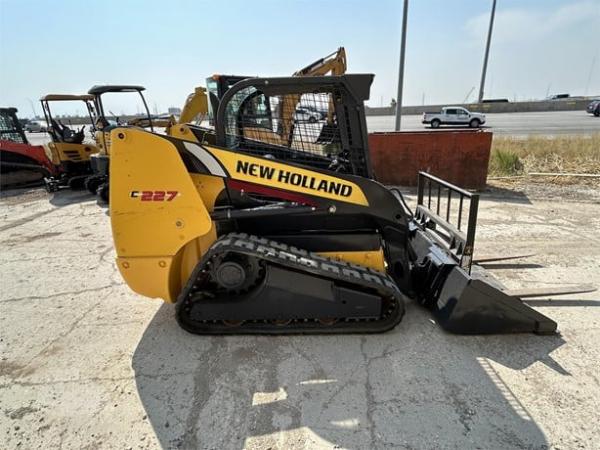
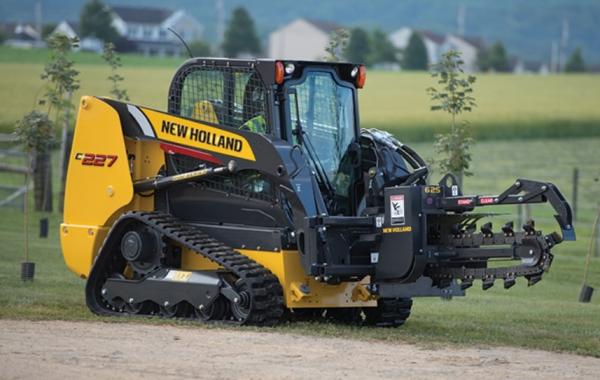
Introduction to the New Holland C227
The New Holland C227 is a compact track loader introduced in 2011 as part of New Holland's 200 Series lineup. Designed for versatility and efficiency, the C227 quickly became a popular choice among contractors and operators for various applications, including construction, landscaping, and agriculture.
Development and Design
New Holland, a brand under CNH Industrial, has a long history of producing reliable construction equipment. The C227 was developed to meet the growing demand for machines that could operate in challenging terrains while offering high performance. Incorporating features from New Holland's Super Boom® design, the C227 offers enhanced lift height and reach, making it suitable for tasks that require both power and precision.
Specifications and Performance - Engine: The C227 is powered by a 74-horsepower FPT F5H FL463A engine, providing ample power for demanding tasks.
- Operating Weight: Approximately 8,270 lbs, offering a balance between stability and maneuverability.
- Rated Operating Capacity: 2,700 lbs at 50% tipping load, suitable for lifting heavy materials.
- Hydraulic Flow: Standard flow of 24 GPM and high flow of 32 GPM, with hydraulic horsepower ranging from 43 HP (standard) to 57.6 HP (high flow).
- Dimensions:
- Length: 11 ft 9 in
- Width: 5 ft 6 in
- Height: 6 ft 7 in
- Track Width: 12.6 in
- Ground Pressure: Approximately 4.7 psi
Emissions and Compliance
The C227's engine meets Tier 4 Final emissions standards using a maintenance-free Diesel Oxidation Catalyst (DOC) system, eliminating the need for Diesel Particulate Filters (DPF) or Diesel Exhaust Fluid (DEF).
Operator Comfort and Features
The C227 is equipped with a spacious cab, offering features such as air conditioning, heat, and an optional air ride suspension seat. The machine's design emphasizes operator comfort, reducing fatigue during extended work hours.
Maintenance and Durability
Routine maintenance for the C227 includes engine oil and filter changes every 500 hours, with hydraulic oil and fuel filter replacements at the same interval. The machine's design facilitates easy access to components, simplifying maintenance tasks.
Real-World Applications
In real-world scenarios, the C227 has proven its versatility. For instance, a landscaping company utilized the C227 for a project requiring precise material handling in a confined space. The machine's compact size and powerful hydraulics allowed for efficient operation, completing the project ahead of schedule.
Market Reception and Value
The C227 has maintained strong resale value due to its reliability and performance. Used models typically range in price from $29,900 to $31,999, depending on condition and hours of operation.
Conclusion
The New Holland C227 stands out as a compact track loader that combines power, versatility, and operator comfort. Its design and performance make it a valuable asset for professionals seeking a reliable machine for various applications.
|
|
|
|
| Why Are Pilot Controls So Stiff on the CAT 335F Excavator |
|
Posted by: MikePhua - 08-23-2025, 11:40 PM - Forum: Troubleshooting & Diagnosing
- No Replies
|
|
The CAT 335F and Its Design Philosophy
The Caterpillar 335F is a mid-sized, reduced-radius excavator introduced in the 2010s as part of Caterpillar’s F-series lineup. Designed for urban and confined job sites, the 335F combines the power of a full-size excavator with a compact tail swing, making it ideal for demolition, utility work, and road construction. It features a Tier 4 Final-compliant engine, advanced hydraulic systems, and a spacious operator cab.
Caterpillar, founded in 1925, has sold millions of excavators worldwide. The F-series marked a shift toward operator comfort, fuel efficiency, and electronic integration. However, some users of the 335F have reported unusually stiff pilot controls, which can affect precision and fatigue during long shifts.
What Are Pilot Controls
Pilot controls are low-pressure hydraulic circuits that actuate the main control valves of an excavator. Instead of directly moving large hydraulic spools, the operator manipulates small joysticks that send fluid to pilot-operated valves. These valves then control the flow to the boom, arm, bucket, and swing functions.
Terminology Explained - Pilot Pressure: The low-pressure hydraulic signal used to control high-pressure circuits.
- Return Spring: A mechanical spring that centers the joystick when released.
- Detent: A mechanical notch that holds the joystick in a fixed position.
- Joystick Resistance: The physical effort required to move the control lever.
Symptoms and Operator Feedback
Operators transitioning to the CAT 335F often notice that the pilot joysticks require more force than expected. Compared to other excavators—especially those from Komatsu or Hitachi—the controls feel rigid, almost reminiscent of older mechanical linkages. This stiffness can reduce finesse during trenching or grading and increase wrist strain over time.
One operator likened the feel to a vintage Case backhoe with four-stick mechanical controls, where muscle memory was more important than hydraulic feedback. While the 335F’s controls are precise, the resistance can be off-putting for those used to feather-light joysticks.
Root Cause and Manufacturer Response
The stiffness is primarily due to the internal return springs inside the pilot control assemblies. These springs are calibrated to provide tactile feedback and prevent accidental movement. However, Caterpillar received enough feedback on the 335F that they developed a retrofit kit to reduce spring tension.
The kit includes:- Softer return springs
- Updated detent plates
- Installation hardware
The cost of the kit is modest—around $27—but installation requires disassembling the control pods and recalibrating the joystick centering. Labor time is estimated at six hours, typically performed by a dealer technician.
Field Anecdote and Practical Advice
A drainage contractor in Ontario installed the spring kit after experiencing wrist fatigue during long trenching jobs. He reported that the new springs made the controls feel “like silk,” allowing for smoother bucket curls and swing transitions. He also noted that the reduced resistance improved his grading accuracy, especially when working near utilities.
Another operator warned that overly soft controls can lead to unintended movement, especially on bumpy terrain. He recommended pairing the spring kit with a seat-mounted armrest to stabilize hand position.
Preventive Maintenance and Long-Term Solutions- Lubricate joystick pivots every 500 hours
- Inspect pilot hoses for kinks or internal collapse
- Replace worn detent plates to maintain control feel
- Calibrate joystick centering annually
Alternative Solutions and Ergonomic Upgrades
Some operators retrofit electronic pilot controls, which use sensors instead of hydraulic fluid. These systems offer adjustable resistance, programmable detents, and even haptic feedback. However, they require significant rewiring and are not supported on the 335F without major modification.
Others install aftermarket joystick grips with ergonomic contours and wrist supports. These accessories reduce fatigue and improve control precision, especially during repetitive tasks like trenching or slope finishing.
Industry Trends and Operator Expectations
Modern excavators increasingly prioritize operator comfort. In a 2023 survey of 500 equipment operators, 68% cited joystick feel as a top factor in machine preference. Manufacturers like Volvo and Doosan now offer adjustable pilot resistance as a factory option.
Caterpillar has responded by refining its control systems in newer models like the 336 Next Gen, which feature electronically assisted joysticks and customizable feedback settings. The 335F, while robust and reliable, reflects an earlier design philosophy where durability sometimes outweighed finesse.
Conclusion
Stiff pilot controls on the CAT 335F are a known issue tied to spring tension within the joystick assemblies. While not a defect, the resistance can affect operator comfort and precision. Fortunately, Caterpillar offers a retrofit kit that softens the feel without compromising safety. With proper installation and ergonomic adjustments, operators can transform the control experience—making the 335F not just powerful, but pleasant to run.
|
|
|
|
| Optimizing Sandy Material Finishing with the Caterpillar D6 Dozer |
|
Posted by: MikePhua - 08-23-2025, 11:39 PM - Forum: General Discussion
- No Replies
|
|
Introduction
The Caterpillar D6 dozer is renowned for its versatility and performance across various terrains. When working with sandy materials, operators must adapt their techniques and equipment to ensure efficient and effective finishing. This article delves into the considerations, techniques, and equipment configurations for finishing sandy material using the D6 dozer.
Understanding Sandy Terrain Challenges
Sandy soils present unique challenges due to their loose structure and low cohesion. These characteristics can lead to issues such as: - Reduced Traction: The lack of cohesion in sand can cause the dozer's tracks to slip, reducing efficiency.
- Inconsistent Material Flow: Sandy materials can flow unpredictably, making it challenging to achieve a uniform finish.
- Increased Wear on Equipment: The abrasive nature of sand can accelerate wear on the dozer's components.
Optimizing Equipment Configuration
To address these challenges, selecting the appropriate D6 dozer configuration is crucial:- Blade Selection: The Semi-Universal (SU) blade is effective for pushing uniform materials like sand. Its design allows for better containment and control of the material.
- Track Configuration: Opting for Low Ground Pressure (LGP) tracks can help distribute the dozer's weight more evenly, reducing ground pressure and improving flotation on sandy surfaces.
Techniques for Efficient Sand Finishing
Implementing specific techniques can enhance the dozer's performance on sandy materials:- Proper Blade Angle: Adjusting the blade angle can help in controlling the flow of sand and achieving a smoother finish.
- Consistent Speed: Maintaining a steady speed prevents the dozer from bogging down and ensures a uniform finish.
- Regular Maintenance: Frequent inspection and maintenance of the dozer's components, especially the undercarriage, can prevent premature wear and downtime.
Case Study: D6T LGP in Sandy Conditions
A practical example of the D6 dozer's capabilities in sandy conditions is demonstrated in a video showcasing a D6T LGP model pushing sand. The operator's skillful control and the dozer's configuration highlight the effectiveness of the D6T LGP in handling sandy materials.
Conclusion
The Caterpillar D6 dozer, when properly configured and operated, can efficiently finish sandy materials. By understanding the challenges posed by sandy terrains and implementing appropriate techniques and equipment configurations, operators can achieve optimal results. Continued innovation and adaptation to specific material conditions will further enhance the D6 dozer's performance in diverse environments.
|
|
|
|
|



