| Welcome, Guest |
You have to register before you can post on our site.
|
| Forum Statistics |
» Members: 79
» Latest member: cioCruch
» Forum threads: 47,411
» Forum posts: 47,417
Full Statistics
|
| Online Users |
There are currently 329 online users.
» 0 Member(s) | 318 Guest(s)
Ahrefs, Amazon, Applebot, Baidu, Bing, Claude, DotBot, Google, Semrush, Seznam
|
| Latest Threads |
Identifying and Sourcing ...
Forum: Parts , Attachments & Tools
Last Post: MikePhua
01-07-2026, 06:29 PM
» Replies: 0
» Views: 519
|
Cat 931B Brake Parts
Forum: Parts , Attachments & Tools
Last Post: MikePhua
01-07-2026, 06:29 PM
» Replies: 0
» Views: 282
|
Choosing Between Cat 228,...
Forum: General Discussion
Last Post: MikePhua
01-07-2026, 06:28 PM
» Replies: 0
» Views: 546
|
Hydraulic Delay When Lowe...
Forum: Troubleshooting & Diagnosing
Last Post: MikePhua
01-07-2026, 06:27 PM
» Replies: 0
» Views: 440
|
Bale Chopper and Mulcher ...
Forum: General Discussion
Last Post: MikePhua
01-07-2026, 06:26 PM
» Replies: 0
» Views: 319
|
Mini UC Maintenance
Forum: General Discussion
Last Post: MikePhua
01-07-2026, 06:25 PM
» Replies: 0
» Views: 308
|
Locating Wiring Informati...
Forum: General Discussion
Last Post: MikePhua
01-07-2026, 06:24 PM
» Replies: 0
» Views: 343
|
Case Industrial Brown Sub...
Forum: Parts , Attachments & Tools
Last Post: MikePhua
01-07-2026, 06:23 PM
» Replies: 0
» Views: 274
|
Dirt Work in West Virgini...
Forum: Construction & Urban Infrastructure Forum
Last Post: MikePhua
01-07-2026, 06:23 PM
» Replies: 0
» Views: 372
|
D207 P Hydraulic Steering...
Forum: Parts , Attachments & Tools
Last Post: MikePhua
01-07-2026, 06:22 PM
» Replies: 0
» Views: 303
|
|
|
| John Deere 655C: Troubleshooting Safety Lever and Travel Malfunctions |
|
Posted by: MikePhua - 08-11-2025, 08:45 PM - Forum: Troubleshooting & Diagnosing
- No Replies
|
 |
Introduction
The John Deere 655C is a versatile and durable compact track loader, widely used in construction, landscaping, and agricultural applications. However, some operators have reported issues related to the safety lever and machine travel, which can hinder productivity and cause frustration. This article provides an in-depth analysis of these problems, potential causes, and recommended solutions, drawing from real-world experiences and technical insights.
Understanding the Safety Lever System
The safety lever, often referred to as the "neutral-disengage" lever, is a critical component in the operation of the 655C. It serves as a safety feature to prevent unintended movement of the machine when not in operation. Typically, the lever must be engaged (in the "up" position) for the machine to move. If the lever is not properly engaged or if there's an issue with the system, the machine may fail to move or exhibit erratic behavior.
Common Symptoms and Diagnoses
Operators experiencing travel malfunctions often notice the following symptoms: - The machine does not move forward or reverse when the Forward/Reverse (FNR) lever is engaged.
- Indicator lights such as "Park" or "Low Range" remain illuminated.
- The "Electronic System" warning light is activated.
- The machine occasionally moves after restarting the engine.
These symptoms suggest that the safety interlock system, which includes the safety lever, park brake switch, and transmission control, may not be functioning correctly.
Potential Causes
Several factors can contribute to safety lever and travel malfunctions:
- Faulty Safety Lever or Switch: The lever or its associated switch may be damaged or misaligned, preventing proper engagement.
- Park Brake Circuit Issues: If the park brake switch is not properly engaged or if there's a fault in the circuit, the machine may not recognize that it's safe to move.
- Transmission Control Problems: Issues with the transmission control unit (TCU) or its sensors can lead to erratic behavior or complete failure to move.
- Electrical System Faults: Loose connections, corroded terminals, or blown fuses can disrupt the signals between components, leading to malfunctions.
- Hydraulic System Issues: Low fluid levels or contaminated fluid can affect the performance of the hydrostatic drive system.
Real-World Experiences
Operators have shared their experiences with these issues:- One operator reported that their 2005 655C became progressively worse until it would not move at all. After multiple service visits, it was determined that the Transmission Controller was faulty. However, sourcing a replacement part took over six months, highlighting the challenges of obtaining specific components.
- Another operator experienced intermittent travel issues, with the machine occasionally moving after restarting the engine. This suggests that the problem may be related to the electrical or safety interlock system.
Diagnostic and Troubleshooting Steps
To diagnose and resolve these issues, operators should follow a systematic approach:
- Inspect the Safety Lever: Ensure that the lever is properly engaged and not obstructed. Check for any visible damage or wear.
- Test the Park Brake Switch: Verify that the park brake switch is functioning correctly and is properly engaged.
- Check the Electrical System: Inspect fuses, relays, and wiring for signs of damage or corrosion. Use a multimeter to test continuity and voltage where applicable.
- Examine the Transmission Control Unit (TCU): If accessible, check for diagnostic codes or error messages. Consult the service manual for specific procedures.
- Assess the Hydraulic System: Check fluid levels and condition. Look for signs of contamination or leaks.
Preventive Maintenance Tips
To minimize the risk of safety lever and travel malfunctions:- Regularly clean and lubricate the safety lever and its components.
- Inspect and maintain the park brake system.
- Perform routine checks of the electrical and hydraulic systems.
- Follow the manufacturer's recommended maintenance schedule.
Conclusion
Safety lever and travel malfunctions in the John Deere 655C can be caused by various factors, including issues with the safety interlock system, electrical components, and the transmission control unit. By systematically diagnosing the problem and performing regular maintenance, operators can ensure the reliable operation of their machines. Sharing experiences and solutions within the operator community can also provide valuable insights and support.
|

|
|
| Troubleshooting the Genie GTH 5519 Leveling Cylinder: Causes and Solutions |
|
Posted by: MikePhua - 08-11-2025, 08:44 PM - Forum: Troubleshooting & Diagnosing
- No Replies
|
|
The Genie GTH 5519 telehandler is a powerful piece of construction equipment designed for heavy-duty lifting and maneuvering. One of the critical components of this machine is the leveling cylinder, which ensures the machine maintains proper alignment and balance during operation. If issues arise with the leveling cylinder, it can affect the machine's stability, leading to poor performance or even safety concerns. In this article, we will explore the potential causes behind leveling cylinder issues on the Genie GTH 5519, how to diagnose these problems, and the steps to take for a successful resolution.
Understanding the Role of the Leveling Cylinder
The leveling cylinder plays a vital role in the hydraulic system of the Genie GTH 5519. It is responsible for adjusting the tilt and orientation of the machine's boom, ensuring that the load remains level during operation. Without a properly functioning leveling cylinder, the machine may struggle to lift and maneuver heavy loads accurately, potentially leading to tilting or even tipping.
Common Symptoms of a Faulty Leveling Cylinder
- Uneven Lifting: One of the most common signs that the leveling cylinder is malfunctioning is uneven lifting of the boom. If the leveling system is not functioning properly, the boom may tilt to one side or fail to maintain a level position when lifting a load.
- Slow or Jerky Movement: If the leveling cylinder is damaged or clogged, the hydraulic fluid may not flow correctly, leading to slow or jerky movements when the boom is raised or lowered.
- Hydraulic Fluid Leaks: Hydraulic fluid leaks around the leveling cylinder or its connections can cause a significant drop in pressure, impacting the cylinder's ability to function properly.
- Erratic or Unresponsive Controls: A failing leveling cylinder may lead to erratic behavior when the operator attempts to control the boom. For example, the operator might notice that the boom doesn't respond as expected or takes longer to adjust than usual.
Troubleshooting Steps for Leveling Cylinder Issues
- Inspect Hydraulic Fluid Levels
A common cause of leveling cylinder problems is insufficient hydraulic fluid. If the fluid level is too low, the hydraulic system may not be able to generate enough pressure to operate the leveling cylinder effectively.- Action: Check the hydraulic fluid reservoir and make sure the fluid is at the proper level. If it's low, top up the fluid with the correct type of hydraulic oil recommended by the manufacturer. Additionally, check for signs of contamination or water in the fluid, which can affect performance.
- Examine the Hydraulic Hoses and Fittings
Leaks or blockages in the hydraulic hoses or fittings connected to the leveling cylinder can cause a significant reduction in pressure, leading to poor performance. A damaged hose or improperly sealed fitting can lead to fluid loss, which may cause the leveling system to fail.- Action: Inspect all hoses, fittings, and connections to ensure they are in good condition. Look for signs of wear, cracking, or leaks. Tighten any loose fittings and replace any damaged hoses. Be sure to check the connections to the leveling cylinder itself, as well as those leading to the hydraulic pump.
- Check for Hydraulic Fluid Contamination
Contaminated hydraulic fluid can cause the leveling cylinder to malfunction. Dirt, debris, and water can enter the system and clog filters or valves, reducing the efficiency of the hydraulic fluid.- Action: Drain the hydraulic fluid and inspect it for contaminants. If the fluid appears cloudy or contains visible particles, replace it with clean hydraulic fluid. Additionally, replace or clean any filters in the hydraulic system.
- Inspect the Leveling Cylinder for Damage
Over time, the leveling cylinder itself may become damaged due to wear and tear. Issues such as cracks, bent rods, or damaged seals can prevent the cylinder from functioning correctly.- Action: Inspect the cylinder for physical damage. Look for visible cracks, scratches, or deformation in the cylinder's body. If you notice any signs of damage, the leveling cylinder may need to be rebuilt or replaced. Additionally, check the seals and bearings for signs of wear or leakage.
- Check the Hydraulic Control Valve
The hydraulic control valve regulates the flow of fluid to the leveling cylinder. A malfunctioning valve can restrict the fluid flow, leading to inadequate performance.- Action: Test the hydraulic control valve to ensure it is functioning correctly. If you suspect the valve is faulty, consult the operator's manual for troubleshooting steps or contact a qualified technician to inspect and repair the valve.
- Examine the Boom and Linkage for Obstructions
Sometimes, the issue with the leveling system may not lie with the cylinder itself but with obstructions in the boom or linkage. Debris, dirt, or worn-out components can affect the movement of the boom, causing tilting or uneven lifting.- Action: Check the entire boom and linkage for any obstructions, worn-out components, or misalignments. Clean the components and replace any worn parts to ensure smooth and accurate movement.
Repair and Replacement Solutions
If the leveling cylinder is found to be damaged beyond repair, replacement may be necessary. Here are a few things to keep in mind when replacing the leveling cylinder on the Genie GTH 5519:
- Ordering a Replacement Cylinder: Ensure you purchase a genuine Genie replacement leveling cylinder that matches the specifications of your machine. Using the correct part will guarantee optimal performance and prevent future issues.
- Rebuilding the Cylinder: In some cases, a hydraulic technician may be able to rebuild the cylinder by replacing seals, bearings, and other worn components. This can be a more cost-effective solution if the cylinder is still in good condition structurally.
- Professional Assistance: If you're not comfortable performing the repairs yourself, consider hiring a qualified technician who specializes in hydraulic systems and telehandlers. They can accurately diagnose the problem and ensure the repairs are done correctly.
Preventative Measures to Avoid Future Issues
- Regular Maintenance: Preventive maintenance is essential for keeping the leveling cylinder and other hydraulic components in good condition. Regularly check fluid levels, inspect hoses, and clean filters to avoid common problems.
- Avoid Overloading: Overloading the telehandler can strain the hydraulic system and lead to premature wear on the leveling cylinder. Always follow the manufacturer's guidelines for load capacities to prevent unnecessary stress on the system.
- Clean the Machine: Keeping the machine clean, particularly the hydraulic system and the leveling cylinder, can prevent dirt and debris from entering the system and causing damage. Regularly wash the machine to remove dirt buildup.
Conclusion
The leveling cylinder on the Genie GTH 5519 is a crucial component that ensures the machine remains stable and operates smoothly. If you experience issues with uneven lifting, slow movement, or hydraulic fluid leaks, following the troubleshooting steps outlined in this article can help you identify the problem and find a solution. By maintaining the hydraulic system, checking for damage, and ensuring proper fluid levels, you can keep your Genie GTH 5519 running efficiently and safely on the job site. If the problem persists, consulting a qualified technician will ensure that the issue is properly addressed, allowing you to return to work without further delay.
|
|
|
|
| John Deere 310SL HL: A Comprehensive Overview of Performance, Design, and Real-World Application |
|
Posted by: MikePhua - 08-11-2025, 08:44 PM - Forum: General Discussion
- No Replies
|
|
Introduction
The John Deere 310SL HL backhoe loader stands as a testament to the evolution of construction machinery, blending robust engineering with innovative features to meet the demanding needs of modern job sites. Building upon the legacy of its predecessors, the 310SL HL offers enhanced lifting capabilities, improved hydraulics, and a focus on operator comfort and efficiency.
Engine and Powertrain
At the heart of the 310SL HL is a 113-horsepower engine, delivering peak power at 1,900 rpm. This engine is coupled with a hydrostatic transmission system, providing seamless gear transitions and optimal power delivery for various tasks. The machine's drivetrain ensures reliable performance across a range of applications, from trenching to lifting heavy loads.
Hydraulic System and Lift Capacity
One of the standout features of the 310SL HL is its advanced hydraulic system. The machine boasts a maximum digging depth of 15 feet 1 inch (4.59 meters) and a loader lift capacity of 7,552 pounds (3,425 kg). The hydraulic system's design allows for precise control and efficient operation, making it suitable for tasks that require both power and finesse.
Dimensions and Operational Specifications - Operating Weight: 16,571 lbs (7,516 kg)
- Loader Breakout Force: 11,116 lbs (5,037 kg)
- Loader Lift Capacity: 7,552 lbs (3,425 kg)
- Max Digging Depth: 15.1 ft (4.59 m)
- Transport Length: 7.37 m
- Bucket Capacity: 0.86 m³
- Travel Speed (4th Gear): 38.2 km/h (23.7 mph)
These specifications highlight the 310SL HL's versatility and capability, making it a valuable asset for various construction and utility projects.
Operator Comfort and Control
The operator's station in the 310SL HL is designed with ergonomics and functionality in mind. The machine features a spacious cab with excellent visibility, reducing operator fatigue during long hours. The control system is intuitive, with pilot-operated joysticks and optional ride control, enhancing precision and comfort.
Real-World Applications
In real-world scenarios, the 310SL HL has proven its worth. For instance, utility contractors in urban settings have utilized the machine for tasks such as trenching, lifting, and material handling. Its ability to perform in tight spaces while maintaining power and precision makes it a preferred choice for projects in congested environments.
Maintenance and Durability
John Deere has engineered the 310SL HL with durability and ease of maintenance in mind. The machine's design allows for quick access to key components, reducing downtime during servicing. Regular maintenance, such as checking hydraulic fluid levels and inspecting the undercarriage, ensures the machine's longevity and optimal performance.
Comparison with Competitors
When compared to other backhoe loaders in its class, the 310SL HL holds its ground with its superior lifting capacity and advanced hydraulic system. While other manufacturers offer similar specifications, the 310SL HL's combination of power, precision, and operator comfort sets it apart in the market.
Conclusion
The John Deere 310SL HL backhoe loader exemplifies the advancements in construction machinery, offering enhanced performance, operator comfort, and versatility. Its robust design and real-world capabilities make it a valuable asset for contractors seeking reliable equipment for a variety of tasks. Whether working in urban environments or on expansive job sites, the 310SL HL delivers the power and precision needed to get the job done efficiently.
|
|
|
|
| Diagnosing and Repairing Boom Cylinder Leaks on the Hitachi EX150 Excavator |
|
Posted by: MikePhua - 08-11-2025, 08:43 PM - Forum: Troubleshooting & Diagnosing
- No Replies
|
|
Understanding the Problem: Hydraulic Cylinder Leakage
Hydraulic cylinder leaks are a common issue in aging excavators, particularly in models like the Hitachi EX150 from the early 1990s. When boom cylinders begin to leak, it’s typically due to worn-out seals, pitted rods, or internal scoring. These leaks not only reduce lifting power but also pose safety risks and increase operating costs through fluid loss and contamination.
In the EX150, the boom cylinders are responsible for lifting the main arm. A leak in these components can manifest as visible oil seepage around the gland, sluggish movement, or hydraulic fluid pooling on the tracks.
Terminology Clarification
- Cylinder Packing: The internal seal assembly that prevents hydraulic fluid from escaping the cylinder.
- Gland Nut: The threaded cap that holds the seal pack in place at the cylinder head.
- Rod: The polished steel shaft that extends and retracts from the cylinder barrel.
- Barrel: The main body of the cylinder that houses the piston and hydraulic fluid.
- Seal Kit: A set of replacement seals, including wipers, O-rings, and backup rings, used to rebuild a hydraulic cylinder.
Disassembly and Removal Techniques
Removing a boom cylinder from an excavator requires careful planning and safe rigging. Here’s a practical method used by field technicians: - Use a strong rope or strap looped over the boom to support the cylinder rod.
- Attach the strap to a stable anchor point such as a tractor hitch, chain block, or overhead beam.
- Relieve hydraulic pressure by jiggling the joysticks with the engine off, then wait overnight before cracking lines.
- Loosen the boom pin halfway to allow partial support from the opposite cylinder.
- Lower the cylinder gently onto wooden planks laid across the tracks or into a nearby truck bed.
- Drain hydraulic oil slowly by inserting a hose into the port and retracting the rod gradually.
- Remove bottom pins and slide the cylinder out using leverage and support blocks.
This method minimizes oil spills and avoids sudden drops, especially when working without a crane.
Repair Costs and Labor Estimates
The cost of repairing a leaking boom cylinder varies based on location, labor rates, and parts availability:- Genuine seal kits: CAD $900 per cylinder (dealer pricing)
- Aftermarket seal kits: USD $50–100 per cylinder
- Labor at hydraulic shop: USD $200–600 per cylinder depending on size and complexity
- DIY labor: Requires tools like a 48-inch pipe wrench, torque equipment, and a clean workspace
The gland nut on the EX150 cylinders may require thousands of pounds of torque to loosen. Without proper tools, sending the cylinder to a hydraulic shop is recommended.
Choosing Seal Kits: OEM vs Aftermarket
While OEM (Original Equipment Manufacturer) seals are engineered to exact specifications, their cost can be prohibitive. Many reputable hydraulic shops use aftermarket kits from brands like Hercules, which offer:- Comparable material quality (e.g., polyurethane, Viton)
- Pressure ratings up to 5,000 psi
- Compatibility with Hitachi cylinder dimensions
- Significant cost savings—often under CAD $300 for both cylinders
In one case, a Canadian farmer sourced aftermarket kits for CAD $287 total, compared to CAD $950 per cylinder from the dealer.
Field Story: Excavator Repair in Rural Alberta
A farmer in Stony Plain, Alberta purchased a used Hitachi EX150 and discovered leaks in both boom cylinders. With limited dealer support and high OEM pricing, he consulted a local hydraulic shop known for servicing oil sands equipment. The shop offered seal replacements at a fraction of the cost and even fabricated custom pins for other components. The repair restored full boom functionality, and the machine returned to service within days.
Preventive Measures and Inspection Tips
To avoid future leaks and extend cylinder life:- Inspect rods for pitting or scoring before installing new seals
- Polish minor imperfections with fine emery cloth
- Use thread sealant on hydraulic fittings to prevent seepage
- Cap hydraulic lines during disassembly to prevent contamination
- Pressure test rebuilt cylinders before reinstallation
- Avoid overextending the boom during operation, which stresses the seals
Suggested Parameters for the EX150 Boom Cylinder
While exact specs may vary slightly, typical parameters include:- Rod diameter: 70–80 mm
- Barrel diameter: 120–140 mm
- Stroke length: 1,200–1,500 mm
- Operating pressure: 3,000–3,500 psi
- Seal material: NBR or polyurethane with PTFE backup rings
Conclusion: Practical Solutions for Legacy Equipment
The Hitachi EX150 remains a capable excavator despite its age, and boom cylinder leaks are a solvable issue with the right approach. Whether using aftermarket seals, leveraging local hydraulic expertise, or applying DIY ingenuity, operators can restore performance without excessive cost. In the world of heavy equipment, resourcefulness often trumps brand loyalty—and a well-repaired cylinder is proof that even a 30-year-old machine can still earn its keep.
|
|
|
|
| Troubleshooting the JLG 600S: Issues with High-Torque Drive |
|
Posted by: MikePhua - 08-11-2025, 08:41 PM - Forum: Troubleshooting & Diagnosing
- No Replies
|
|
The JLG 600S is a popular model in the aerial lift and telehandler category, offering excellent maneuverability and versatility for a wide range of construction and maintenance tasks. However, like any piece of heavy equipment, it can occasionally run into problems. One issue that some operators have faced is when the JLG 600S fails to drive in both Rabbit and Turtle modes. Specifically, when the machine is shifted into high-torque mode, it begins to move but quickly comes to a stop after a few feet.
This article explores the potential causes of this problem, how to troubleshoot it, and provides advice on what to do next if your JLG 600S exhibits similar behavior.
Understanding the Problem
The JLG 600S has a dual-speed system, commonly referred to as the Rabbit and Turtle modes. These modes control the speed and torque of the machine’s drive system. Rabbit mode is for high-speed operation, while Turtle mode offers slower speeds but higher torque for difficult tasks such as rough terrain handling or when additional power is needed for climbing or pushing loads.
When the machine won’t drive in either of these modes and only moves a short distance before coming to a stop, it suggests an issue in the drive system or associated components. This can be particularly frustrating on a job site where time and reliability are crucial.
Potential Causes and Troubleshooting Steps
- Hydraulic System Issues
The drive system in the JLG 600S relies heavily on hydraulics. If there’s a problem with the hydraulic pump, valves, or fluid levels, the machine may not get the necessary power to drive effectively. The most common hydraulic issues include:- Low Hydraulic Fluid: If the fluid is low, the hydraulic pump will not be able to provide the necessary pressure to the drive motors, resulting in the machine stalling or stopping after a few feet of movement.
- Contaminated Hydraulic Fluid: Dirty or contaminated hydraulic fluid can cause the hydraulic pump to malfunction or clog valves, limiting the flow of fluid and reducing power to the wheels.
- Hydraulic Pump Failure: If the hydraulic pump itself is failing, it may still provide some movement but not enough pressure to keep the machine moving consistently. This could explain why the machine rolls a few feet before stopping.
Solution: Inspect the hydraulic fluid levels, and check for any signs of contamination or leaks. If the fluid is clean and at the proper level but the problem persists, inspect the hydraulic pump for signs of wear or failure. You may need to replace or rebuild the pump.
- Drive Motor or Motor Controller Issues
The JLG 600S relies on drive motors that control wheel rotation. If a motor is malfunctioning or a controller is faulty, it can lead to the symptoms described. Issues with the motor can be caused by electrical problems, worn-out components, or even overheating.- Electrical Malfunctions: If there is an electrical issue such as a loose connection, blown fuse, or faulty wiring, it can prevent the motor from receiving the required signals to drive the wheels properly.
- Worn-out Drive Motors: Drive motors wear out over time, especially in high-use environments. If the motors are damaged or worn, they might struggle to provide the necessary torque to maintain movement.
Solution: Inspect the electrical connections to the drive motors, checking for loose wires, corrosion, or any visible damage. Test the motor controller and fuses to ensure they are functioning correctly. If everything looks fine but the issue persists, consider testing or replacing the drive motors.
- Transmission or Gearbox Problems
Another common cause of failure to drive, especially in high-torque mode, is an issue with the transmission or the gearbox. These components are essential for regulating the machine’s speed and torque, and if they are damaged or malfunctioning, the machine may not shift properly or provide adequate power.- Faulty Torque Converter: The torque converter regulates the amount of power sent to the wheels. If it fails, the machine might not operate properly in either high-torque or high-speed mode.
- Transmission Fluid Issues: Low or contaminated transmission fluid can prevent the gearbox from shifting properly, leading to poor performance or failure to move.
Solution: Inspect the transmission fluid and ensure it’s at the proper level and is clean. If there is any indication of contamination, drain and replace the fluid. Test the torque converter by checking if the machine responds differently in different modes.
- Control Panel or Sensor Malfunction
The JLG 600S uses a control panel and various sensors to manage the machine's functions. If any of these sensors are malfunctioning or out of calibration, it could lead to issues with mode switching, including not being able to engage Rabbit or Turtle mode correctly.- Faulty Mode Selector Switch: If the switch is not engaging properly, it could prevent the machine from entering the desired mode.
- Sensor Calibration: Sensors that monitor torque, speed, and other critical parameters may be out of calibration or faulty, preventing the machine from functioning as intended.
Solution: Check the mode selector switch and ensure it is functioning properly. If the switch is working but the machine still won’t engage the right mode, inspect the sensors and consider recalibrating or replacing them.
- Braking System Interference
While this may seem like a less obvious cause, interference from the braking system can sometimes result in the machine stalling after a few feet of movement. If the brakes are partially engaged or malfunctioning, it can prevent the machine from gaining full speed or even cause it to stop completely.
Solution: Inspect the brake system to ensure that the brakes are not sticking or dragging. Check for any signs of brake fluid leaks or malfunctioning brake components. If the brakes are causing resistance, they may need adjustment or replacement.
Additional Tips and Advice- Perform Regular Maintenance: Preventative maintenance is key to avoiding many of the problems that can lead to drive issues in the JLG 600S. Regularly inspect the hydraulic system, fluid levels, and drive motors to ensure everything is operating efficiently.
- Check for Software Updates: Modern machines like the JLG 600S are often equipped with diagnostic software. If you have access to a diagnostic tool, check for any stored error codes that could help pinpoint the issue.
- Consult the Operator Manual: Always refer to the operator’s manual for troubleshooting tips and recommended maintenance schedules. It can provide specific guidance for your model and help you avoid common pitfalls.
Conclusion
If your JLG 600S isn’t driving properly in Rabbit or Turtle mode, there could be a variety of factors at play, from hydraulic issues to drive motor problems. By following the troubleshooting steps outlined above and addressing each potential cause systematically, you can identify the root of the problem and restore your equipment to full working order. Keep in mind that regular maintenance and inspections can help you avoid these issues in the future and keep your machine running smoothly for years to come.
|
|
|
|
| Choosing Between PACCAR MX and Cummins ISX Engines: A Practical Guide for Dump Truck Buyers |
|
Posted by: MikePhua - 08-11-2025, 08:40 PM - Forum: General Discussion
- No Replies
|
|
Understanding the Engine Landscape in Heavy-Duty Trucks
When selecting a powerplant for a new dump truck—especially one paired with an Allison automatic transmission—the choice often narrows to two contenders: the PACCAR MX series and the Cummins ISX lineup. Both engines are widely available in Kenworth and Peterbilt trucks, but they differ significantly in design philosophy, serviceability, and long-term reliability.
PACCAR, which owns Kenworth and Peterbilt, has pushed its proprietary MX engines into its truck lineup, while Cummins remains a trusted third-party supplier with decades of proven performance. The decision between the two isn’t just about horsepower—it’s about maintenance, drivability, and how well the engine integrates with your operation.
Terminology Clarification
- MX13: PACCAR’s flagship 12.9-liter engine, designed in Europe and adapted for North American trucks. Known for its compact packaging and fuel efficiency.
- ISX12/ISX15: Cummins’ heavy-duty inline-six engines, available in multiple displacements and horsepower ratings. Known for robust torque and widespread service support.
- Allison Transmission: A fully automatic transmission commonly used in vocational trucks. Offers smooth shifting and reduced driver fatigue.
- EGR Cooler: Exhaust Gas Recirculation component that reduces NOx emissions but can be prone to clogging and failure.
- Aftertreatment System: Emissions control system including DPF (Diesel Particulate Filter), SCR (Selective Catalytic Reduction), and DEF (Diesel Exhaust Fluid) dosing.
Performance and Drivability
Drivers who have tested both engines report noticeable differences in throttle response and shift behavior: - The MX13 paired with an Allison transmission tends to shift at higher RPMs (around 1700), which can feel sluggish unless reprogrammed.
- The ISX12 with an 8LL manual or automated transmission delivers more immediate torque and a familiar feel reminiscent of older mechanical engines.
- Jake brake performance is strong on both, but Cummins systems tend to be more consistent across models.
Maintenance and Serviceability
Cummins engines are widely regarded as easier to work on, with simpler layouts and better access to components. PACCAR MX engines, by contrast, often present a more crowded engine bay with complex wiring and proprietary parts.
Common service observations include:- PACCAR MX engines frequently trigger engine lights due to minor electrical faults, requiring frequent shop visits.
- Cummins ISX engines have experienced oil consumption issues in some units, addressed by a temporary use of a specialized “wonder oil” formulated to seat rings and reduce blow-by.
- Cummins service intervals and costs are generally lower, with more independent shops equipped to handle repairs.
Historical Context and Engine Origins
The PACCAR MX engine is derived from the DAF MX platform used in European trucks. While refined for North American conditions, it lacks the long-term field history of the Cummins ISX, which has evolved from the N14 and ISM platforms over decades.
Interestingly, PACCAR’s PX engines are rebadged Cummins units (such as the 6.7L and 8.9L), but the MX series is entirely PACCAR’s own design. This distinction is critical when evaluating parts compatibility and service networks.
Real-World Case Study: Fleet Comparison
A Canadian fleet operating three trucks—two with Cummins ISX15 engines and one with a PACCAR MX13—reported the following:- The MX13 truck had consistent electrical issues and higher service costs.
- The ISX15 trucks, despite one requiring an EGR cooler replacement and another burning oil, were more reliable overall.
- Fuel economy was slightly better on the Cummins units, and downtime was significantly lower.
Legacy Practices and Engine Break-In Techniques
The use of “wonder oil” to address oil consumption in ISX engines echoes older practices from the mid-20th century. Mechanics once added Bon Ami abrasive powder to the intake of Caterpillar and other engines to help seat piston rings. While modern oil filtration systems make such practices obsolete, the concept of temporary abrasive additives persists in specialized break-in oils.
Recommendations for Buyers
When choosing between PACCAR MX and Cummins ISX engines, consider the following:
- If serviceability and parts availability are top priorities, Cummins is the safer bet.
- For fleets with in-house PACCAR expertise or access to dealer support, the MX13 may offer fuel savings and integration benefits.
- Always test drive both configurations with your preferred transmission to assess throttle response and shift logic.
- Request reprogramming of transmission shift points if the factory settings feel sluggish, especially with Allison automatics.
- Investigate warranty coverage and service networks in your region before committing.
Suggested Parameters for Evaluation
When comparing engine options, evaluate:- Horsepower range: MX13 (405–510 hp), ISX12 (350–450 hp), ISX15 (400–600 hp)
- Torque output: MX13 (1,450–1,850 lb-ft), ISX15 (1,450–2,050 lb-ft)
- Oil change intervals: MX13 (up to 60,000 miles), ISX (typically 25,000–50,000 miles depending on duty cycle)
- Emissions system complexity: MX13 uses integrated SCR and DPF; ISX uses modular aftertreatment components
Conclusion: Reliability Over Novelty
While PACCAR continues to refine its MX engine platform, many operators still favor Cummins for its simplicity, reliability, and extensive support network. In the demanding world of dump trucks and vocational hauling, downtime is costly—and the engine you choose can make or break your bottom line. Whether you’re refurbishing a quad-axle or spec’ing a new build, the decision between PACCAR and Cummins should be grounded in real-world performance, not just dealership inventory.
|
|
|
|
| Restoring Drive Function on the Skat Trak 1700C: Hydraulic Pump Wear, Coupler Damage, and Repair Pathways |
|
Posted by: MikePhua - 08-11-2025, 08:35 PM - Forum: Troubleshooting & Diagnosing
- No Replies
|
|
Overview of the Skat Trak 1700C Hydraulic Drive System
The Skat Trak 1700C skid steer, though not widely supported today, remains in use among small contractors and landowners due to its compact footprint and mechanical simplicity. Its drive system relies on a tandem hydraulic pump setup—typically sourced from well-known manufacturers like Sauer-Danfoss or Eaton—that powers the left and right drive motors independently. When one of these pumps fails, the machine loses mobility on one side, rendering it inoperable.
In the case of the 1700C, a common failure point is the coupler and shaft interface between the pump and the engine. Over time, the splines or teeth on these components wear down, leading to slippage, loss of torque transmission, and eventual pump disengagement.
Terminology Clarification
- Hydraulic Pump: A mechanical device that converts engine power into hydraulic energy to drive motors and actuators.
- Coupler: A mechanical connector that joins the pump shaft to the engine or motor, often using splines or keyed interfaces.
- Spline Wear: Erosion or rounding of the gear-like teeth on a shaft or coupler, reducing engagement strength.
- Tandem Pump: A dual-section hydraulic pump that powers two independent circuits, such as left and right drive motors.
Failure Symptoms and Initial Diagnosis
In one documented case, the machine operated reliably for three years before the drive pump failed. Upon inspection by a diesel mechanic, the following issues were identified: - Severely worn teeth on the coupler and pump shaft
- Inability to transmit torque from the engine to the hydraulic pump
- No visible damage to the pump housing or internal components
- Machine had been idle for over a year due to part sourcing difficulties
This type of failure is mechanical rather than hydraulic—meaning the pump may still be internally functional, but cannot be driven due to the worn interface.
Repair Options and Cost Considerations
The owner’s budget was approximately $1,500, which is sufficient for several repair paths depending on part availability and labor costs:- Replace the entire hydraulic pump with a refurbished or used unit
- Rebuild the pump using a new shaft and coupler if internal components are intact
- Fabricate a custom coupler to restore engagement without full pump replacement
- Source parts from hydraulic specialists or salvage yards familiar with Sauer-Danfoss configurations
Estimated Parameters and Component Specs
While exact specs vary by pump model, typical values include:- Coupler spline count: 13–15 teeth (SAE standard)
- Shaft diameter: 1.25–1.5 inches
- Pump displacement: 25–35 cc/rev per section
- Operating pressure: 2,500–3,000 psi
- Mounting flange: SAE A or B pattern
Field Story: Milwaukee Shop’s Coupler Fabrication
In Milwaukee, a technician faced a similar issue with a Skat Trak 1700C. Rather than replacing the pump, he measured the worn shaft and fabricated a new coupler using hardened steel and a CNC mill. The custom part restored full engagement, and the machine was back in service within days. The total cost was under $800, including labor and materials.
Sourcing Tips and Aftermarket Support
Because Skat Trak is no longer active in the skid steer market, parts must be sourced creatively:- Identify the pump manufacturer and model number from the tag or casting
- Contact hydraulic rebuild shops that specialize in Sauer-Danfoss or Eaton pumps
- Use online platforms like Loader Parts Source or surplus equipment dealers
- Search by pump dimensions and spline specs rather than brand name
- Consider donor machines with compatible hydraulic systems
Preventive Measures to Avoid Future Failures
To extend the life of the coupler and pump interface:- Inspect coupler teeth annually for signs of wear or misalignment
- Use anti-seize compound on splines during installation
- Ensure proper shaft alignment to prevent side loading
- Replace worn engine mounts that may cause vibration or misalignment
- Avoid aggressive starts and stops that stress the drive interface
Industry Insight: Coupler Failures in Compact Equipment
Coupler wear is a common issue in compact machines where high torque is transmitted through small interfaces. Manufacturers now use tapered spline designs and cushioned couplers to reduce shock loads. In older machines like the 1700C, rigid couplers without damping are more prone to wear—especially if lubrication is neglected or alignment is off.
Conclusion: Mechanical Ingenuity Keeps Legacy Machines Alive
The Skat Trak 1700C may be a discontinued model, but its hydraulic system is built on standard components that can be repaired or replaced with the right approach. Whether through coupler fabrication, pump rebuilding, or creative sourcing, restoring drive function is achievable within a modest budget. In the world of heavy equipment, legacy machines survive not just on parts—but on the persistence and ingenuity of those who keep them running.
|
|
|
|
| Changing Control Patterns on the CAT 416C: A Step-by-Step Guide |
|
Posted by: MikePhua - 08-11-2025, 08:35 PM - Forum: General Discussion
- No Replies
|
|
When operating heavy equipment like the CAT 416C backhoe loader, control pattern selection can greatly affect operator comfort, control precision, and overall performance. Understanding how to change control patterns is essential for operators, particularly when working with different machine types or switching between backhoe and loader operations. This guide provides a comprehensive look at changing the control pattern on the CAT 416C, including why it’s important, how to make the switch, and tips for smooth operation.
What is a Control Pattern?
A control pattern refers to how the joystick or levers are used to operate the machine's movements. The two most common control patterns are: - ISO Control Pattern: In this pattern, the left joystick controls the boom and the right joystick controls the bucket. The operator uses their left hand to control the backhoe boom (up and down) and the right hand for bucket movement (curl and dump).
- SAE (Standard) Control Pattern: In this pattern, the left joystick controls the bucket, and the right joystick controls the boom. The operator uses their left hand to control the bucket (curl and dump) and the right hand for controlling the boom (up and down).
Switching between control patterns can improve operator comfort and efficiency, depending on the type of work and personal preference. This is especially relevant for operators who work with different brands of equipment, as different machines might have different standard control patterns.
Why Change Control Patterns?
- Operator Comfort: Some operators may have a strong preference for one control pattern over another based on their training or familiarity with different machines. For example, backhoe operators who have experience with a certain brand may prefer a specific control pattern.
- Task-Specific Needs: Different types of work may require a specific control pattern. For instance, digging with the backhoe may be more efficient with one pattern, while operating the loader might feel more natural with a different one.
- Machine Compatibility: In mixed fleets or situations where operators are working with multiple brands of machines, switching between control patterns can help provide consistency in operation, reducing the learning curve for different machines.
- Precision and Control: The ability to fine-tune control patterns allows operators to achieve greater precision in movements. Whether it’s delicate backfilling or precise material placement, the right control pattern can make a noticeable difference in performance.
How to Change the Control Pattern on a CAT 416C
Changing the control pattern on the CAT 416C involves manipulating the control valves, which will switch the joystick functions. Follow these steps to switch control patterns:
- Locate the Pattern Selector: The CAT 416C features a control pattern changer valve, usually located on the hydraulic control valve section of the machine. This selector is typically found near the operator’s seat or within easy reach of the seat area.
- Identify the Pattern Switch: Look for the lever or switch that adjusts the control pattern. This may be marked as “ISO” or “SAE” depending on the current setting.
- Move the Lever: Depending on your model, you may need to adjust the switch either by pulling it, rotating it, or pressing a button to change between the ISO and SAE patterns. Make sure you are in a stationary position with the engine running at idle speed.
- Test the Controls: After switching, test the joystick controls to ensure the machine responds as expected. The left joystick should now control the boom or bucket (depending on the pattern you selected), and the right joystick should do the opposite. Move the levers gently to confirm their function.
- Adjust if Necessary: If the machine does not respond correctly, double-check the selector and adjust it again. If the pattern still does not change, consult the operator's manual for troubleshooting advice.
Tips for Switching Control Patterns
- Know Your Preferences: If you're new to operating the CAT 416C or are switching from another brand, spend some time practicing with both control patterns. Try both SAE and ISO patterns to determine which one feels more natural or improves your efficiency for specific tasks.
- Be Mindful of Other Operators: If you’re sharing the machine with other operators, remember that different people may have different control pattern preferences. Ensure the pattern selector is set to the appropriate setting before starting work.
- Safety First: Always ensure the machine is stationary before switching control patterns. Operating heavy equipment can be dangerous, and improper control configuration can cause jerky movements or accidents.
- Hydraulic System Health: Changing control patterns should not affect the hydraulic system’s health, but make sure to inspect the hydraulic fluid levels and seals periodically. Proper hydraulic maintenance ensures smooth operation, especially when switching patterns.
- Stay Consistent: If you're working with a fleet of machines, try to stay consistent with control patterns across machines. Switching between different patterns frequently can slow down work and cause confusion, especially in fast-paced environments.
Common Problems When Switching Control Patterns
While switching control patterns on the CAT 416C is generally straightforward, there are a few potential issues operators may encounter:
- Hydraulic Malfunctions: If the hydraulic system isn’t properly adjusted after changing patterns, the machine may not respond as expected. This could be due to a malfunctioning selector valve or a problem with the fluid system.
- Joystick Response: Sometimes, after changing the control pattern, the joysticks might not feel as responsive. This could be due to a misalignment or air in the hydraulic lines.
Solution: Bleed the hydraulic system to ensure no air is trapped. If the problem persists, check the hydraulic system for leaks or pressure issues.
- Operator Confusion: New operators or those transitioning from other machines might find it confusing to switch between patterns, especially if they are accustomed to a specific pattern.
Solution: Provide adequate training and encourage operators to practice in a controlled environment before tackling complex tasks. Familiarity with both patterns can increase overall productivity.
Conclusion
Changing the control pattern on the CAT 416C is a simple yet impactful adjustment that can improve operator comfort, control precision, and task efficiency. Whether you're dealing with backhoe digging or loader operations, having the ability to choose your control pattern based on the task at hand can make a significant difference. By following the steps outlined in this guide and considering the various factors that affect control preference, operators can ensure that they get the most out of their equipment and work more effectively.
|
|
|
|
| John Deere 450B Crawler Dozer: A Detailed Analysis |
|
Posted by: MikePhua - 08-11-2025, 08:35 PM - Forum: General Discussion
- No Replies
|
|
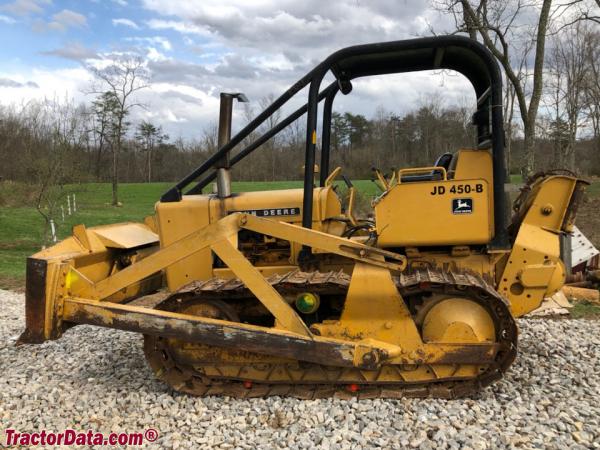
The John Deere 450B Crawler Dozer is a compact yet powerful machine that played a significant role in various earthmoving applications during its production years from 1970 to 1976. Renowned for its reliability and versatility, the 450B became a staple in construction, agriculture, and land reclamation projects.
Engine and Performance - Engine Model: John Deere 4-219, 4-cylinder diesel
- Gross Horsepower: 70 hp (52.2 kW)
- Net Horsepower: 65 hp (48.5 kW)
- Torque: 178 lb-ft (241 Nm) at 1,300 rpm
- Displacement: 219 cu in (3.6 L)
- Aspiration: Naturally aspirated
- Fuel Capacity: 31 gallons (117 L)
- Cooling System Fluid Capacity: 4 gallons (15 L)
- Engine Oil Capacity: 2 gallons (9 L)
- Final Drive Fluid Capacity: 2 gallons (6 L) per side
The 450B's engine was designed for durability and efficiency, providing consistent power for various tasks. Its naturally aspirated design ensured simplicity and ease of maintenance. The torque curve was optimized for low-end power, making it effective in pushing and grading operations.
Transmission and Hydraulics- Transmission Type: 8-speed partial power shift
- Hydraulic System:
- Type: Open-center
- Pressure: 2,250 psi (155.1 bar)
- Pump Flow: 28 gpm (106 L/min)
- Relief Valve Pressure: 2,250 psi (155.1 bar)
The 450B offered a choice between manual shift and power shift transmissions, allowing operators to select the configuration that best suited their working conditions. The open-center hydraulic system provided reliable power for attachments and implements.
Dimensions and Weight- Operating Weight: 14,500 lbs (6,577 kg)
- Length: 14 ft 3 in (4.34 m)
- Width: 6 ft 0 in (1.83 m)
- Height: 6 ft 4 in (1.93 m)
- Track Gauge: 4 ft 8 in (1.42 m)
- Ground Clearance: 1 ft 1 in (0.34 m)
- Track Width: 16 inches (406 mm)
The compact dimensions of the 450B made it ideal for working in confined spaces and on uneven terrain. Its low ground pressure allowed it to operate effectively on soft soils without causing significant ground disturbance.
Operator Station and Controls- Operator Station: Open ROPS (Roll-Over Protective Structure)
- Controls: Manual or power shift transmission controls
- Visibility: Excellent forward visibility due to the open design
The open ROPS design provided the operator with an unobstructed view of the work area, enhancing safety and productivity. The controls were ergonomically placed to reduce operator fatigue during extended periods of operation.
Attachments and Versatility
The 450B was compatible with a variety of attachments, including:- Blades: Straight, angle, and 6-way blades
- Rippers: Single-shank and multi-shank rippers
- Winches: Hydraulic and mechanical winches
- Brush Cutters: For land clearing operations
This versatility made the 450B suitable for a wide range of applications, from land clearing and grading to construction and forestry work.
Maintenance and Durability
The 450B was designed with durability in mind. Its robust construction and quality components contributed to its longevity and reliability. Regular maintenance, such as timely oil changes, proper track tensioning, and monitoring of hydraulic fluid levels, was essential to keep the machine operating at peak performance.
Legacy and Impact
The John Deere 450B Crawler Dozer left a lasting impact on the construction and agricultural industries. Its combination of power, versatility, and compact size made it a valuable asset on many job sites. Even decades after its production, the 450B remains a sought-after machine for those in need of a reliable and capable crawler dozer.
Conclusion
The John Deere 450B Crawler Dozer stands as a testament to engineering excellence and practical design. Its balanced performance, adaptability, and user-friendly features have cemented its place in the history of construction machinery. For those fortunate enough to operate or own one, the 450B continues to be a trusted workhorse in various earthmoving applications.
|
|
|
|
| Hydraulic Cylinders in Dump Trucks: Importance, Maintenance, and Troubleshooting |
|
Posted by: MikePhua - 08-11-2025, 08:34 PM - Forum: Troubleshooting & Diagnosing
- No Replies
|
|
Hydraulic systems are integral to the operation of many construction and industrial machines, with dump trucks being one of the most common vehicles using hydraulic technology. Hydraulic cylinders, in particular, play a key role in lifting and tilting the truck’s dump bed to unload materials. Proper maintenance and troubleshooting of hydraulic cylinders are crucial for the efficient operation of dump trucks, ensuring they perform reliably and avoid costly downtime.
Understanding Hydraulic Cylinders in Dump Trucks
Hydraulic cylinders are mechanical actuators that use pressurized hydraulic fluid to produce linear motion. In dump trucks, these cylinders are responsible for lifting the bed to dump its contents, such as soil, sand, gravel, and debris. When the hydraulic fluid is pressurized, the piston inside the cylinder moves, generating the force needed to lift the bed.
The main components of a hydraulic cylinder include: - Cylinder Barrel: This is the main body that contains the hydraulic fluid.
- Piston: The internal part that moves within the cylinder barrel to create the motion.
- Rod: Extends from the cylinder and is attached to the dump bed.
- Seals: Prevent leakage of hydraulic fluid.
- Ports: Allow hydraulic fluid to enter and exit the cylinder.
The size, capacity, and strength of the hydraulic cylinders on dump trucks depend on the type of truck and the specific tasks it is used for. For example, larger dump trucks used for heavy-duty work will require more powerful cylinders than those used for lighter tasks.
Key Functions of Hydraulic Cylinders in Dump Trucks
- Lifting the Dump Bed: The most important function of the hydraulic cylinders in a dump truck is to raise the dump bed. When the driver activates the hydraulic system, pressurized fluid enters the cylinder, pushing the piston and lifting the bed. This process is usually controlled by a switch or lever inside the truck.
- Tilting the Bed: Once the dump bed is raised, the hydraulic cylinders also help tilt the bed so that materials can be released. Depending on the angle and amount of material, the tilt mechanism ensures that the load is evenly discharged.
- Returning the Bed to Its Resting Position: After unloading, the hydraulic system allows the dump bed to return to its horizontal position. The hydraulic cylinders lower the bed back down by releasing the hydraulic pressure, and the weight of the load helps with this process.
- Load Holding: When the bed is raised, the hydraulic cylinders must also be able to hold the weight of the bed and the materials inside. The hydraulic pressure maintains the bed in the raised position until the operator decides to lower it.
Common Problems with Hydraulic Cylinders in Dump Trucks
While hydraulic cylinders are durable and designed for heavy-duty operations, they can still experience wear and tear, especially in challenging conditions. Below are some of the most common problems that dump truck operators face with hydraulic cylinders:
- Leaking Seals: Over time, the seals inside hydraulic cylinders can wear out due to heat, pressure, and friction. When seals fail, hydraulic fluid can leak out, leading to a loss of pressure. This results in reduced lifting capacity and can cause the dump bed to move slowly or erratically.
Solution: Regularly inspect the seals for any signs of damage or wear. If leaking occurs, replace the seals promptly to avoid further damage to the hydraulic system. Use high-quality seals designed for the specific type of hydraulic fluid in use.
- Bent or Damaged Rods: The rods of hydraulic cylinders are subjected to significant stress as they extend and retract, especially when lifting heavy loads. If the rod is bent or damaged, the cylinder may fail to operate properly, leading to jamming or misalignment.
Solution: Regularly inspect the rods for signs of damage. If a bent rod is detected, replace it immediately. Avoid forcing the bed to move when it is stuck, as this can cause further damage.
- Slow or Uneven Movement: If the dump bed moves slowly or unevenly, it could be a sign of low hydraulic fluid levels or air in the system. The problem could also be due to a malfunctioning pump or clogged filters.
Solution: Check the hydraulic fluid levels and top them up if necessary. If the fluid is low, inspect the system for any leaks. Bleed the hydraulic system to remove any air and ensure smooth operation. Additionally, check the hydraulic filter for clogs and replace it if needed.
- Cylinder Misalignment: If the hydraulic cylinder is misaligned, it can cause uneven movement or strain on the system. Misalignment can occur if the dump bed is overloaded or if the cylinder is improperly installed.
Solution: Ensure that the cylinder is properly aligned during installation. Regularly inspect the entire hydraulic system for signs of wear or damage that could cause misalignment. If misalignment is detected, re-align the cylinder to prevent further issues.
- Noisy Operation: Unusual noises, such as whining or grinding, can indicate problems with the hydraulic pump or fluid levels. If the hydraulic fluid is contaminated or the pump is malfunctioning, it can create additional stress on the hydraulic cylinders.
Solution: Check the hydraulic fluid for contamination or signs of degradation. If the fluid is dirty, flush the system and refill with fresh hydraulic fluid. Inspect the pump for damage and replace it if necessary.
Preventative Maintenance for Hydraulic Cylinders
Proper maintenance can help extend the lifespan of hydraulic cylinders and prevent many of the common issues described above. Here are some tips for maintaining hydraulic cylinders in dump trucks:
- Regular Fluid Checks: Inspect the hydraulic fluid levels and top them off regularly. Always use the recommended type of fluid for your hydraulic system. Low fluid levels can cause the system to operate inefficiently and damage the components.
- Inspect Seals and Rods: Periodically check the seals for leaks and the rods for any visible signs of wear or damage. Replace worn parts immediately to prevent further damage to the hydraulic system.
- Clean the System: Contaminants in the hydraulic fluid can cause blockages and wear on seals. Ensure the hydraulic fluid is kept clean and change it periodically. Clean the cylinder’s external parts, including the rod, to prevent dirt and debris from entering the system.
- Lubricate the System: Regularly lubricate the cylinder’s moving parts to reduce friction and wear. Use the appropriate lubricant for the environment and operating conditions of the truck.
- Avoid Overloading: Overloading the dump truck can put excessive pressure on the hydraulic cylinders, leading to premature wear and damage. Always ensure that the truck is not overloaded beyond its rated capacity.
- Professional Inspections: Periodic professional inspections of the hydraulic system can identify issues before they become major problems. A qualified technician can perform pressure tests, check for leaks, and inspect the integrity of the hydraulic system.
Conclusion
Hydraulic cylinders are vital to the functionality of dump trucks, performing essential tasks like lifting and tilting the dump bed. While hydraulic systems are durable, they require regular maintenance and attention to ensure they continue operating effectively. By understanding common problems and following best practices for maintenance, dump truck operators can minimize downtime and extend the lifespan of their hydraulic systems, leading to more efficient and cost-effective operations.
|
|
|
|
|



