| Welcome, Guest |
You have to register before you can post on our site.
|
| Online Users |
There are currently 84 online users.
» 0 Member(s) | 71 Guest(s)
Ahrefs, Amazon, Applebot, Bing, Claude, Google, MJ12, OpenAI, Semrush, Seznam, Sogou, Trendiction
|
| Latest Threads |
Identifying and Sourcing ...
Forum: Parts , Attachments & Tools
Last Post: MikePhua
01-07-2026, 06:29 PM
» Replies: 0
» Views: 527
|
Cat 931B Brake Parts
Forum: Parts , Attachments & Tools
Last Post: MikePhua
01-07-2026, 06:29 PM
» Replies: 0
» Views: 283
|
Choosing Between Cat 228,...
Forum: General Discussion
Last Post: MikePhua
01-07-2026, 06:28 PM
» Replies: 0
» Views: 555
|
Hydraulic Delay When Lowe...
Forum: Troubleshooting & Diagnosing
Last Post: MikePhua
01-07-2026, 06:27 PM
» Replies: 0
» Views: 446
|
Bale Chopper and Mulcher ...
Forum: General Discussion
Last Post: MikePhua
01-07-2026, 06:26 PM
» Replies: 0
» Views: 320
|
Mini UC Maintenance
Forum: General Discussion
Last Post: MikePhua
01-07-2026, 06:25 PM
» Replies: 0
» Views: 311
|
Locating Wiring Informati...
Forum: General Discussion
Last Post: MikePhua
01-07-2026, 06:24 PM
» Replies: 0
» Views: 344
|
Case Industrial Brown Sub...
Forum: Parts , Attachments & Tools
Last Post: MikePhua
01-07-2026, 06:23 PM
» Replies: 0
» Views: 275
|
Dirt Work in West Virgini...
Forum: Construction & Urban Infrastructure Forum
Last Post: MikePhua
01-07-2026, 06:23 PM
» Replies: 0
» Views: 374
|
D207 P Hydraulic Steering...
Forum: Parts , Attachments & Tools
Last Post: MikePhua
01-07-2026, 06:22 PM
» Replies: 0
» Views: 303
|
|
|
| Troubleshooting Engine Cut-Out Issues in Hitachi ZX470-5 Excavators |
|
Posted by: MikePhua - 08-12-2025, 07:47 PM - Forum: Troubleshooting & Diagnosing
- No Replies
|
 |
The Hitachi ZX470-5 is a robust and reliable excavator, widely used in heavy construction and mining operations. However, some operators have reported intermittent engine cut-out issues, particularly during cold starts or under load conditions. These problems can lead to significant downtime and operational inefficiencies. This article delves into the potential causes of such issues and provides a comprehensive troubleshooting guide.
Understanding the Symptoms
Operators have observed that the engine of the ZX470-5 may cut out after running for approximately two hours, resembling symptoms of fuel starvation. Notably, the engine restarts after a brief period but continues to exhibit reduced power and frequent stalling. Additionally, during cold starts, the engine may emit white smoke until it warms up, accompanied by an increase in fuel consumption, as indicated by the eco consumption gauge .
Potential Causes and Diagnostic Steps
- Fuel System Contamination
Contaminants in the fuel system, such as water or particulate matter, can obstruct fuel lines and filters, leading to inadequate fuel delivery. This can cause the engine to stall or fail to start. Inspecting and replacing fuel filters, as well as draining water separators, are essential first steps in diagnosing fuel system issues.
- Common Rail Pressure Fluctuations
The common rail system in the ZX470-5 operates under high pressure, typically around 108 MPa at 1800 RPM. Fluctuations or drops in this pressure during engine load can indicate issues with the fuel pump, pressure sensors, or injectors. Monitoring rail pressure during operation can provide insights into potential problems .
- Air in the Hydraulic System
Air trapped in the hydraulic system can lead to erratic engine performance and stalling. Purging air from the system by operating hydraulic functions can help restore normal operation. Regular maintenance to prevent air ingress is crucial for system reliability .
- Electrical and Sensor Malfunctions
Faulty sensors or electrical connections can send incorrect signals to the engine control unit (ECU), leading to improper fuel injection timing and engine cut-out. Performing diagnostic scans using appropriate tools can help identify and rectify such issues.
Case Study: Operator Experience
An operator reported that their Hitachi 470 exhibited symptoms of fuel starvation after approximately two hours of operation. Despite replacing fuel filters and rubber fuel lines, the problem persisted. The operator suspected an engine component failure, as the issue occurred predictably after a set period of operation. Further investigation revealed that a faulty fuel pressure sensor was causing the engine to cut out under load .
Preventive Maintenance Recommendations- Regular Fuel System Inspections: Periodically check and replace fuel filters, and drain water separators to prevent contamination.
- Monitor Common Rail Pressure: Use diagnostic tools to monitor rail pressure and identify any fluctuations that could indicate underlying issues.
- Hydraulic System Maintenance: Ensure that hydraulic systems are free from air and that fluid levels are maintained to prevent performance degradation.
- Electrical System Checks: Regularly inspect sensors and electrical connections for wear or damage to ensure accurate ECU readings.
Conclusion
Engine cut-out issues in the Hitachi ZX470-5 can stem from various sources, including fuel system contamination, common rail pressure fluctuations, air in the hydraulic system, and electrical malfunctions. By systematically diagnosing and addressing these potential causes, operators can restore optimal performance and minimize downtime. Implementing regular maintenance practices is essential to ensure the longevity and reliability of the ZX470-5 excavator.
|

|
|
| Choosing Poly Half Fenders for the Ford F-550: Durability, Sourcing, and Practical Advice |
|
Posted by: MikePhua - 08-12-2025, 07:46 PM - Forum: General Discussion
- No Replies
|
|
Introduction: Protecting Your Truck Without Polishing Chrome
For operators of medium-duty trucks like the Ford F-550, especially those running 19.5-inch wheels, selecting the right half fenders is about more than aesthetics—it’s about durability, debris control, and ease of maintenance. While chrome fenders dominate the market, many prefer black poly fenders for their resilience and low upkeep. This article explores the considerations behind choosing poly half fenders, sourcing options, and practical installation tips, with insights drawn from real-world users and aftermarket trends.
Why Poly Fenders Make Sense for Work Trucks
Polyethylene (poly) fenders offer several advantages over traditional chrome or stainless steel: - Corrosion Resistance: Poly doesn’t rust or corrode, making it ideal for winter road salt and coastal environments.
- Impact Flexibility: Poly fenders flex under minor impacts, reducing the risk of cracking or denting.
- No Polishing Required: Unlike chrome, poly fenders maintain their appearance without constant cleaning.
- Weight Savings: Poly fenders are lighter, reducing unsprung weight and improving fuel efficiency slightly.
For operators who prioritize function over flash, poly fenders are a practical upgrade.
Sourcing Poly Half Fenders for 19.5-Inch Wheels
Finding poly half fenders for medium-duty trucks like the F-550 can be challenging, as many aftermarket suppliers focus on Class 8 rigs. However, several sources stand out:- Fleet Engineering
- Known for high-quality poly fenders with UV resistance and reinforced mounting points.
- Offers models compatible with single and dual rear wheel setups.
- Phoenix USA
- Offers a range of fender accessories, though their website may be difficult to navigate.
- Often distributed through wrecker dealers and parts suppliers.
- AW Direct
- Popular among towing and recovery professionals.
- Primarily stocks chrome fenders, but may offer poly options through special order.
- eBay and Online Retailers
- Listings often include full dual poly fenders that can be adapted for half coverage.
- Check dimensions carefully to ensure compatibility with 19.5-inch wheels.
Installation Considerations and Tips- Mounting Brackets
- Use stainless or powder-coated steel brackets to prevent rust.
- Ensure brackets are adjustable to accommodate tire clearance and suspension travel.
- Clearance
- Maintain at least 2–3 inches between fender and tire to avoid contact during articulation.
- Consider the effects of load weight on suspension compression.
- Fasteners
- Use vibration-resistant hardware such as nylon lock nuts or threadlocker.
- Periodically inspect for loosening due to road vibration.
Suggested Parameters for Selection- Fender Width: 8–10 inches for single rear wheels; 12–14 inches for duals
- Material Thickness: Minimum 3/16" for durability
- UV Resistance: Look for UV-stabilized poly to prevent fading and brittleness
- Mounting Hole Pattern: Confirm compatibility with existing brackets or plan for custom drilling
Field Anecdote: Maine Operator’s Quest for Poly
An operator in Maine, tired of polishing chrome fenders in salty winter conditions, sought black poly half fenders for his F-550. After checking major suppliers and finding only chrome options, he turned to Fleet Engineering and sourced a set that fit perfectly with minor bracket adjustments. The result: a cleaner truck, less maintenance, and no more chrome headaches.
Conclusion: Function Over Flash
For F-550 owners who use their trucks for work—not show—poly half fenders offer a smart, durable solution. While sourcing may require digging beyond mainstream catalogs, the payoff is a cleaner, more resilient setup that stands up to real-world abuse.
Final Advice
Measure twice, order once. Confirm wheel size, bracket spacing, and fender dimensions before purchasing. And if you’re tired of polishing chrome in the snow, poly might just be your new best friend.
|
|
|
|
| John Deere 450E Crawler Loader: Specifications, Maintenance, and Troubleshooting |
|
Posted by: MikePhua - 08-12-2025, 07:46 PM - Forum: General Discussion
- No Replies
|
|
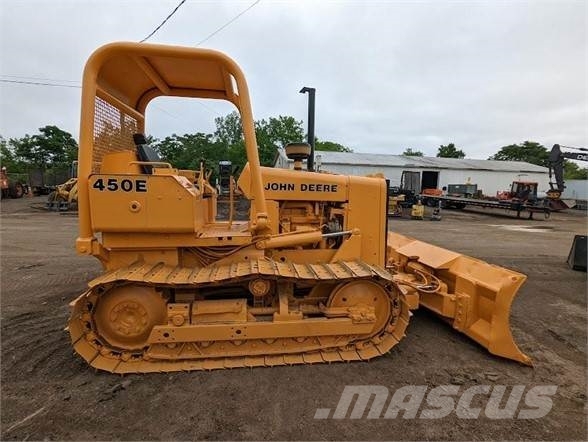
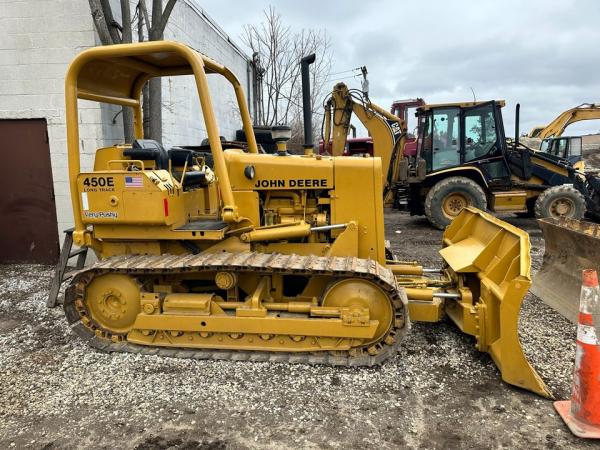
Introduction
The John Deere 450E Crawler Loader, introduced in the mid-1980s, is a versatile piece of heavy machinery designed for various construction and earthmoving tasks. Renowned for its durability and performance, the 450E has been a staple in many fleets. Understanding its specifications, maintenance requirements, and common issues is essential for operators and technicians to ensure optimal performance and longevity.
Specifications - Engine: The 450E is powered by a 4-cylinder, 219 cubic inch diesel engine, delivering approximately 73 horsepower.
- Transmission: Equipped with an 8-speed gear drive transmission, some models feature a hydrostatic option for smoother operation.
- Hydraulics: The open-center hydraulic system has a standard pump flow of 13 GPM, with an optional 23 GPM for enhanced performance.
- Blade Options: Operators can choose from straight, angle, or 6-way Power-Angle-Tilt (PAT) blades, with capacities up to 1.3 cubic yards.
- Undercarriage: Features a sealed and lubricated undercarriage with 5 bottom rollers and standard 12" shoes, ensuring longevity and reduced maintenance.
Maintenance and Service
Regular maintenance is crucial to keep the 450E operating efficiently:- Engine Maintenance: Change engine oil and filters at recommended intervals. Inspect the air intake system for blockages and clean the turbocharger regularly to maintain efficient combustion.
- Hydraulic System: Monitor hydraulic fluid levels and quality. Replace filters and inspect hoses for wear to prevent contamination and ensure optimal performance.
- Transmission: Check transmission fluid levels and condition. Ensure smooth shifting and address any unusual noises promptly.
- Undercarriage: Inspect the undercarriage components, including tracks and rollers, for wear. Proper tensioning and timely replacement of worn parts can prevent costly repairs and downtime.
Common Issues and Troubleshooting
Despite its robust design, the 450E may encounter certain issues:- Hydraulic Power Loss: Operators have reported a gradual loss of hydraulic power after extended operation. This issue often persists even after replacing components such as the main pump, control valves, and hydraulic oil cooler. Potential causes include clogged fuel filters, faulty fuel injectors, or issues with the turbocharger affecting engine performance.
- Engine Black Smoke: Excessive black smoke from the exhaust, especially under load or at low RPM, may indicate problems with the fuel system, such as clogged fuel injectors or air intake restrictions. Regular maintenance and timely replacement of filters can mitigate this issue.
- Electrical System Failures: Some 450E models have experienced electrical issues, particularly with the wire harness. Corroded or loose connections can lead to erratic behavior or complete system shutdowns. Regular inspection and maintenance of the electrical system are crucial to ensure reliable operation.
Case Study: Overcoming Hydraulic Power Loss
A construction company operating a fleet of 450E crawler loaders faced intermittent hydraulic power loss, even after replacing major components. Upon further investigation, they discovered that the fuel system had not been thoroughly inspected. Cleaning the fuel injectors and replacing clogged fuel filters resolved the issue, restoring full hydraulic functionality. This experience underscores the importance of a comprehensive approach to troubleshooting.
Conclusion
The John Deere 450E Crawler Loader remains a testament to engineering excellence, offering reliable performance when properly maintained. By adhering to regular maintenance schedules and promptly addressing operational issues, operators can ensure the longevity and efficiency of this versatile machine.
|
|
|
|
| Comprehensive Guide to Stabilizer Valve Replacement on Case 580B and 580C Backhoes |
|
Posted by: MikePhua - 08-12-2025, 07:45 PM - Forum: General Discussion
- No Replies
|
|
The Case 580 series backhoes, particularly the 580B and 580C models, are renowned for their durability and versatility in construction and agricultural applications. However, over time, components such as the stabilizer valve may require attention to maintain optimal performance. This guide delves into the intricacies of stabilizer valve replacement, offering insights into compatibility, troubleshooting, and maintenance.
Understanding the Stabilizer Valve
The stabilizer valve is a critical component in the hydraulic system of backhoes, controlling the extension and retraction of the stabilizer legs. These legs provide stability to the machine during operations, preventing tipping and ensuring safety. The valve regulates hydraulic fluid flow to the stabilizer cylinders, allowing for precise control.
Compatibility Between Case 580B and 580C Stabilizer Valves
While the Case 580B and 580C backhoes share similarities, their stabilizer valves are not universally interchangeable. The 580B typically utilizes a two-spool stabilizer valve (Part No. D62348), whereas the 580C may employ different configurations depending on the specific model and serial number. It's crucial to verify the exact part number and specifications before attempting a replacement to ensure compatibility.
Common Symptoms of a Faulty Stabilizer Valve
Operators may encounter several issues indicative of a malfunctioning stabilizer valve: - Leaking Hydraulic Fluid: Visible fluid leakage around the valve or stabilizer cylinders.
- Slow or Uneven Stabilizer Movement: Delayed or inconsistent extension/retraction of the stabilizer legs.
- Unresponsive Controls: Failure of the stabilizer controls to activate or adjust the stabilizer legs.
- Erratic Pressure Readings: Fluctuating hydraulic pressure when operating the stabilizer system.
Troubleshooting and Maintenance
Before proceeding with a valve replacement, consider the following steps:
- Inspect Hydraulic Hoses and Fittings: Check for any signs of wear, cracks, or loose connections that could cause leaks or pressure loss.
- Examine the Control Lever: Ensure the stabilizer control lever is functioning correctly and not obstructed.
- Test Hydraulic Pressure: Use a pressure gauge to verify that the hydraulic system is operating within the manufacturer's recommended pressure range.
- Check for Debris or Contamination: Inspect the hydraulic fluid for contaminants that could affect valve performance.
If these checks do not resolve the issue, a stabilizer valve replacement may be necessary.
Step-by-Step Guide to Stabilizer Valve Replacement
- Preparation:
- Ensure the backhoe is on a level surface and the engine is turned off.
- Relieve hydraulic pressure by operating all controls in the neutral position.
- Disconnect the battery to prevent accidental electrical engagement.
- Accessing the Valve:
- Locate the stabilizer valve, typically found near the rear of the backhoe.
- Remove any panels or covers obstructing access to the valve.
- Disconnecting Hydraulic Lines:
- Place a container beneath the valve to catch any residual hydraulic fluid.
- Carefully disconnect the hydraulic lines from the valve using appropriate wrenches.
- Cap the open lines to prevent contamination.
- Removing the Faulty Valve:
- Unbolt the valve from its mounting bracket.
- Remove the valve and inspect the mounting surface for any signs of damage or wear.
- Installing the New Valve:
- Position the new valve onto the mounting bracket.
- Secure the valve with bolts, ensuring they are tightened to the manufacturer's specifications.
- Reconnect the hydraulic lines to the new valve, ensuring all connections are tight and leak-free.
- Testing the System:
- Reconnect the battery and start the engine.
- Operate the stabilizer controls to test the new valve's functionality.
- Check for any signs of leaks or abnormal operation.
Case Study: Glen Weldon's Stabilizer Valve Rebuild
Glen Weldon, a seasoned operator from Autauga County, Alabama, encountered issues with his Case 580B's stabilizer valve, including fluid leakage and unresponsive controls. Upon inspection, he discovered missing O-rings in the valve's check valves, leading to internal bypass and erratic performance. After sourcing the correct O-rings and performing a meticulous rebuild, Glen successfully restored the stabilizer system's functionality, demonstrating the importance of thorough maintenance and attention to detail.
Additional Tips and Recommendations- Regular Maintenance: Implement a routine inspection schedule for hydraulic components to identify potential issues early.
- Use OEM Parts: Whenever possible, utilize Original Equipment Manufacturer (OEM) parts to ensure compatibility and reliability.
- Hydraulic Fluid Quality: Regularly check and replace hydraulic fluid to prevent contamination and ensure optimal system performance.
- Professional Assistance: If uncertain about performing a valve replacement, consult with a certified hydraulic technician to avoid potential damage or safety hazards.
Conclusion
Replacing the stabilizer valve on a Case 580B or 580C backhoe is a manageable task for those with mechanical aptitude. By understanding the system's components, symptoms of failure, and following a systematic approach to replacement, operators can ensure their equipment remains in peak operating condition. Regular maintenance and prompt attention to hydraulic issues are key to extending the lifespan of these robust machines.
|
|
|
|
| Hitachi EX200-2 Excavator: Performance, Maintenance, and Troubleshooting |
|
Posted by: MikePhua - 08-12-2025, 07:44 PM - Forum: General Discussion
- No Replies
|
|
The Hitachi EX200-2 is a hydraulic crawler excavator renowned for its robust performance and versatility across various construction and mining applications. Manufactured in the early 1990s, this model continues to serve as a reliable workhorse in many fleets.
Engine and Performance Specifications
The EX200-2 is equipped with an Isuzu 6BD1T turbocharged diesel engine, delivering approximately 131.5 horsepower at 2,050 rpm. This engine is known for its durability and efficiency, making it suitable for demanding tasks. The machine's operating weight is around 18,500 kg, with a maximum digging depth of 8 meters and a maximum reach along the ground of 11 meters, depending on the boom and arm configuration. Its hydraulic system boasts a pump flow capacity of 370 liters per minute, facilitating powerful digging and lifting capabilities.
Common Operational Issues
Despite its reliability, the EX200-2 has been reported to experience certain operational challenges:
- Hydraulic Power Loss: Operators have noted a gradual loss of hydraulic power after the machine operates for a period. This issue often persists even after replacing components such as the main pump, control valves, and hydraulic oil cooler. Potential causes include clogged fuel filters, faulty fuel injectors, or issues with the turbocharger affecting engine performance.
- Engine Black Smoke: Excessive black smoke from the exhaust, especially under load or at low RPM, may indicate problems with the fuel system, such as clogged fuel injectors or air intake restrictions. Regular maintenance and timely replacement of filters can mitigate this issue.
- Electrical System Failures: Some EX200-2 models have experienced electrical issues, particularly with the wire harness. Corroded or loose connections can lead to erratic behavior or complete system shutdowns. Regular inspection and maintenance of the electrical system are crucial to ensure reliable operation.
Maintenance Tips for Longevity
To maximize the lifespan and performance of the Hitachi EX200-2, consider the following maintenance practices:- Regular Hydraulic System Checks: Monitor hydraulic fluid levels and quality. Replace filters and inspect hoses for wear to prevent contamination and ensure optimal performance.
- Engine Maintenance: Change engine oil and filters at recommended intervals. Inspect the air intake system for blockages and clean the turbocharger regularly to maintain efficient combustion.
- Electrical System Inspections: Periodically check the wire harness for signs of wear or corrosion. Ensure all connections are tight and free from moisture to prevent electrical failures.
- Undercarriage Care: Inspect the undercarriage components, including tracks and rollers, for wear. Proper tensioning and timely replacement of worn parts can prevent costly repairs and downtime.
Case Study: Overcoming Hydraulic Power Loss
A construction company operating a fleet of EX200-2 excavators faced intermittent hydraulic power loss, even after replacing major components. Upon further investigation, they discovered that the fuel system had not been thoroughly inspected. Cleaning the fuel injectors and replacing clogged fuel filters resolved the issue, restoring full hydraulic functionality. This experience underscores the importance of a comprehensive approach to troubleshooting.
Conclusion
The Hitachi EX200-2 remains a testament to engineering excellence, offering reliable performance when properly maintained. By adhering to regular maintenance schedules and promptly addressing operational issues, operators can ensure the longevity and efficiency of this versatile excavator.
|
|
|
|
| Improving Cold-Weather Air Intake Performance: The Snow Rotary Ejector Pre-Cleaner Upgrade |
|
Posted by: MikePhua - 08-12-2025, 07:43 PM - Forum: General Discussion
- No Replies
|
|
Introduction: When Snow Dust Becomes a Mechanical Threat
In cold climates, operating motor graders and other heavy equipment during snow removal presents unique challenges—especially when fine snow dust begins to clog engine air filters. The issue becomes more pronounced in Tier IV machines, where elevated hood profiles and tighter packaging leave less clearance for air intake systems. This article explores the Snow Rotary Ejector Pre-Cleaner upgrade for Deere motor graders, detailing its installation, performance benefits, and the real-world experiences that prompted its adoption.
Understanding the Rotary Ejector System
A rotary ejector is a turbine-style pre-cleaner mounted on the engine’s air intake. Its purpose is to spin incoming air, separating heavier particles like dust, snow, and debris before they reach the filter element. The centrifugal force ejects contaminants through slots in the bowl, reducing filter clogging and extending service intervals.
Key components include: - Rotary Ejector Bowl: Houses the spinning fan that separates contaminants.
- Intake Tube: Connects the ejector to the breather box.
- Breather Box: Contains the primary air filter element.
- Snow Rotary Upgrade Kit: Includes a taller intake box and adjustable tube to elevate the ejector into cleaner air.
Why the Upgrade Is Necessary
Operators of Tier IV Deere graders noticed that the standard rotary ejector sat too close to the hood, allowing snow dust to swirl and accumulate around the intake. This led to:- Frequent filter clogging
- Reduced engine performance
- Increased cab humidity from thawing filters
- Fogged windows and poor visibility
The Snow Rotary Ejector Pre-Cleaner Kit addresses these issues by raising the intake height, placing the ejector into clearer airflow above the cab.
Installation Process and Adjustments
The upgrade involves:- Removing the original intake tube
- Installing a new elevated intake box using existing and pre-welded bolt holes
- Inserting the adjustable intake tube and clamping the rotary ejector at the desired height
The tube can be extended up to 14 inches, allowing operators to fine-tune the height based on clearance needs. One operator set the ejector just above cab level to avoid hitting a 12-foot overhead shop door, leaving 4 inches of safety margin for winter floor heave or tire chains.
Field Anecdote: The Filter-Swapping Operator
A grader operator in Missouri shared a story about a colleague who carried spare air filters in the cab. Every few hours, he’d swap out the clogged filter and let the snow-laden one thaw inside the cab for reuse. This not only introduced moisture into the cabin but also fogged the windows and reduced heater efficiency. The root cause? A seized rotary ejector fan that no longer spun, rendering the pre-cleaner useless. Once diagnosed, the fix was simple—but the impact on daily operations had been significant.
Additional Lessons: HVAC and Cab Climate Control
Many operators don’t realize that running the air conditioner in winter helps dehumidify the cab. In Deere machines, the snowflake button activates the AC compressor, which should remain on year-round. One operator noted that failing to use the AC led to fogged windows and a damp cab, while consistent AC use kept the cab dry and comfortable—even in a T-shirt during snow plowing.
Technical Recommendations and Parameters- Ideal Intake Height: At least 6–9 inches above cab roofline for optimal airflow
- Tube Material: 3/16" stamped steel for structural integrity
- Rotary Ejector Functionality: Fan must spin freely; check for seizure
- Cab Clearance: Maintain 4–6 inches below overhead doors or obstructions
- Filter Inspection Interval: Every 10–20 operating hours in snow conditions
Comparative Insight: Tractor Air Intake Issues
Similar problems occur in large 4WD tractors with cab-corner intakes. Dust and snow swirl around the cab, plugging filters rapidly. Extending the intake pipe 2 feet above the cab dramatically reduces clogging, confirming the importance of intake height and airflow dynamics.
Conclusion: Elevation Equals Efficiency
The Snow Rotary Ejector Pre-Cleaner upgrade is a simple yet effective solution for improving air intake performance in snowy conditions. By elevating the rotary ejector into cleaner air, operators can reduce filter maintenance, improve cab climate, and extend engine life. As winter operations demand reliability, this upgrade proves that sometimes, a few extra inches make all the difference.
Final Advice
Before winter hits, inspect your rotary ejector for free rotation, consider upgrading the intake height, and run your AC—even in the snow. Your machine will breathe easier, and so will you.
|
|
|
|
| When to Replace Rubber Tracks on Mini Excavators: A Comprehensive Guide |
|
Posted by: MikePhua - 08-12-2025, 07:42 PM - Forum: Parts , Attachments & Tools
- No Replies
|
|
Rubber tracks are essential components of mini excavators, providing stability, traction, and mobility across various terrains. Understanding when to replace these tracks is crucial for maintaining equipment performance and safety.
Understanding Rubber Tracks
Rubber tracks are designed to distribute the weight of the machine evenly, reducing ground pressure and minimizing soil disturbance. They are reinforced with steel cables and embedded metal links to enhance durability. Over time, these tracks experience wear due to factors like operating conditions, maintenance practices, and load-bearing capacities.
Signs Indicating the Need for Replacement
- Excessive Tread Wear
The tread pattern on rubber tracks provides traction. As the rubber wears down, the tread depth decreases, leading to reduced grip and potential slippage. If the tread has worn down to the point where it no longer provides adequate traction, replacement is necessary.
- Cracks and Cuts in the Rubber
Cracks and cuts in the rubber can expose the underlying steel cables to moisture and debris, leading to corrosion and weakening of the track. Even small cracks can compromise the integrity of the track, making replacement essential.
- Exposed Steel Cables
When the rubber layer is worn away, steel cables become exposed. These cables are susceptible to rust and breakage, which can lead to complete track failure. Immediate replacement is required when steel cables are visible.
- Uneven Wear Patterns
Uneven wear can result from misalignment, improper tension, or faulty undercarriage components. This can cause the track to operate inefficiently and may lead to further damage. Addressing the underlying issues and replacing the track is advisable.
- Frequent Track Detachment
If the track frequently detaches from the undercarriage, it may indicate excessive wear or damage to the track's internal components. This issue can compromise machine stability and safety, necessitating track replacement.
Factors Influencing Track Wear- Operating Conditions: Harsh environments with abrasive surfaces accelerate track wear.
- Load-Bearing: Overloading the machine increases stress on the tracks.
- Maintenance Practices: Neglecting regular maintenance can lead to premature track failure.
- Track Quality: High-quality tracks generally last longer than cheaper alternatives.
Maintenance Tips to Extend Track Life- Regular Inspections: Conduct daily checks for signs of wear, cracks, or debris.
- Proper Tensioning: Ensure tracks are neither too tight nor too loose.
- Clean Tracks: Remove mud and debris after each use to prevent buildup.
- Store Properly: Keep equipment in a shaded area to protect tracks from UV damage.
Case Study: Early Track Replacement
A construction company operating in a mountainous region noticed frequent track failures on their mini excavators. Upon investigation, they found that the abrasive terrain and steep inclines were causing rapid wear. By implementing a proactive maintenance schedule and replacing tracks at the first signs of wear, they reduced downtime and extended the overall lifespan of their equipment.
Conclusion
Regular monitoring and timely replacement of rubber tracks are vital for the efficient operation of mini excavators. By understanding the signs of wear and adhering to maintenance best practices, operators can ensure safety, reduce costs, and prolong the life of their equipment.
|
|
|
|
| Diagnosing a No-Start Condition on a 1999 Genie Z45/25J with Ford 425 LRG Engine |
|
Posted by: MikePhua - 08-12-2025, 07:41 PM - Forum: Troubleshooting & Diagnosing
- No Replies
|
|
Introduction: When a Lift Refuses to Lift Off
The Genie Z45/25J is a versatile articulating boom lift widely used in construction and maintenance. But when paired with the Ford 425 LRG industrial engine, especially in older units like the 1999 model, troubleshooting a no-start condition can become a complex blend of electrical diagnostics, fuel system analysis, and component compatibility. This article walks through the challenges faced when such a machine refuses to start, offering insights into wiring issues, ECM compatibility, fuel system quirks, and practical solutions.
Initial Symptoms and Observations
A technician working on a non-starting Genie Z45/25J noted the following:
• Engine cranks but does not fire.
• Fuel pump activates and delivers 55 PSI at the rail.
• Engine briefly sputters on ether but fails to run.
• No spark at plugs and no injector pulse.
• Wiring near the valve cover and crank sensor was previously melted due to proximity to the muffler.
• Coil has power on the red wire, but no ground pulse from ECM.
These symptoms suggest a deeper issue in the ignition and fuel delivery control systems, possibly involving the ECM or sensor inputs.
Common Causes of No-Start in Ford 425 LRG Engines
1. Melted Wiring Harness
• Heat damage near the muffler can compromise crank and cam sensor signals.
• Poor rewiring or exposed conductors may cause intermittent faults.
2. Failed ECM (Engine Control Module)
• No spark and no injector pulse often point to ECM failure.
• ECMs are expensive and may require Genie-specific programming.
3. Sensor Faults
• Cam and crank sensors must provide synchronized signals.
• Jumpering oil pressure and coolant temp sensors can help rule out safety lockouts.
4. Ignition Coil Issues
• Coil may test fine with an ohmmeter but still fail under load.
• Lack of ground pulse from ECM suggests control circuit failure.
5. Fuel Quality and Contamination
• Ethanol-blended fuel can degrade over time, especially in plastic tanks.
• Stale fuel may smell sour and affect combustion.
Field Anecdote: The Stinky Fuel Mystery
Multiple technicians reported a foul odor when opening the fuel cap on these lifts—described as “not like normal fuel.” One operator resorted to sealing the cap with a plastic bag to contain the smell during indoor repairs. This anecdote underscores the importance of inspecting fuel quality and tank condition, especially in older machines.
Update Kits and Compatibility Challenges
Some units received an ECM and throttle body upgrade from Zenith to Bosch systems. However, even with the $5,000 update kit, success was not guaranteed. One technician noted that Genie’s documentation lacked critical wiring details, which had to be reverse-engineered or sourced from other operators.
Key upgrade components:
• Bosch ECM
• Updated throttle body
• Revised wiring harness
• Propane-only fuel system (in some cases)
Recommended Diagnostic Steps
• Check cam and crank sensor signals with oscilloscope or multimeter.
• Verify continuity from sensors to ECM.
• Test coil ground pulse during cranking with test light (both connected and disconnected).
• Confirm fuel pressure (should be closer to 70 PSI).
• Inspect ECM for Genie-specific programming or part numbers.
• Jumper safety sensors to rule out lockout conditions.
Suggested Parameters for Troubleshooting
• Fuel Pressure: 65–70 PSI at rail
• Coil Resistance: Typically 0.5–1.5 ohms primary, 5–10k ohms secondary
• Sensor Voltage: 5V reference and signal return
• ECM Ground Pulse: Should toggle during cranking on control wires
Case Study: The $5,000 Fix That Didn’t Fix
One operator invested in Genie’s full update kit but still couldn’t get the lift running. After days of lost labor and rental income, he reached out to fellow technicians for undocumented wiring tips. Eventually, with shared notes and field improvisation, the machine was revived—highlighting the value of community knowledge in legacy equipment repair.
Conclusion: Persistence Pays Off
Diagnosing a no-start condition on a Genie Z45/25J with a Ford 425 LRG engine is rarely straightforward. Between melted wiring, ECM compatibility, and fuel system quirks, technicians must combine methodical testing with creative problem-solving. While factory support may be limited, shared field experience and careful diagnostics can bring even the most stubborn lift back to life.
Final Advice
Before replacing expensive components like the ECM, exhaust all diagnostic options. Document wiring changes, test sensors thoroughly, and verify fuel quality. And when in doubt, reach out to others who’ve wrestled with the same machine—because sometimes, the fix isn’t in the manual, but in the memories of those who’ve been there.
|
|
|
|
| ATS Control Systems on Dozers: Precision Grading Without Satellites |
|
Posted by: MikePhua - 08-12-2025, 07:38 PM - Forum: General Discussion
- No Replies
|
|
Introduction: Bridging the Gap Between GPS and Laser Control
In environments where satellite signals are unreliable—such as dense forests, underpasses, or urban canyons—traditional GPS-based machine control systems fall short. Enter ATS (Advanced Tracking Sensor) control systems, which use robotic total stations to deliver 3D grading precision without relying on satellites. This article explores the implementation of ATS systems on Caterpillar dozers, particularly the D6T LGP, and compares their performance to GPS and laser-based alternatives.
What Is ATS Control?
ATS (also referred to as UTS or Universal Total Station control) is a 3D machine guidance system that uses a robotic total station to track a prism mounted on the dozer. Unlike GPS, which triangulates position from satellites, ATS relies on line-of-sight communication between the total station and the machine.
Key components include: - Robotic Total Station: Mounted on a tripod, it continuously tracks the machine’s prism.
- Machine-Mounted Prism: Typically placed on a power mast at the center of the blade.
- Onboard Computer: Receives positional data and compares it to the loaded 3D design.
- Radio Link: Transmits data between the total station and the machine.
Advantages of ATS Over GPS and Laser Systems- Satellite Independence: Ideal for forested areas, tunnels, or urban zones with poor GPS coverage.
- High Accuracy: Down to ±3 mm, suitable for fine grading and rail construction.
- 3D Capability: Supports complex designs with changing slopes, curves, and crossfalls.
Field Application: Railroad Grading in Denmark
A Caterpillar D6T LGP equipped with ATS was deployed on a railroad project requiring precise grading with no physical stakes. The terrain included:- Curves up to 35 degrees
- Mainfall gradients between 0.9% and 1.5%
- Crossfall of 4%
- Frequent changes in slope every 30–40 meters
GPS was unusable due to tree cover, and laser control proved inefficient—requiring repositioning every 10 meters. ATS provided continuous 3D control, dramatically improving grading speed and accuracy.
Technical Parameters and Setup Recommendations- Total Station Range: 600–800 meters diameter
- Accuracy: ±3 mm horizontal and vertical
- Power Mast Type: EM400 or equivalent
- Setup Time: 15–30 minutes for calibration and lock-on
- Battery Life: Total station operates on rechargeable batteries; status monitored via onboard display
Installation and Calibration Process
- Tripod Setup: Position total station with clear line-of-sight to work area.
- Calibration: Use handheld survey prism to measure three known points.
- Machine Lock-On: Define a “search window” for the total station to reacquire the prism if signal is lost.
- 3D Design Upload: Load digital grading plan into the machine’s control unit.
- Operation: The system continuously calculates cut/fill values and adjusts blade position.
Operator Feedback and Performance Insights
Operators reported:- Seamless tracking even when dump trucks temporarily blocked the line of sight
- Automatic reacquisition of signal within 2–3 seconds
- Blade control remained stable even during material dumping and elevation changes
One operator graded 700 meters of stone with ±1 cm tolerance in just 10 hours—an impressive feat given the complexity of the terrain.
Limitations and Considerations- Station Relocation: Must be moved every 800 meters, unlike GPS systems with 8 km range
- Line-of-Sight Dependency: Obstructions can temporarily interrupt tracking
- Initial Setup Complexity: Requires survey knowledge for calibration
Comparative Insight: ATS vs. GPS vs. Laser- GPS Systems
- Pros: Long range, minimal setup
- Cons: Useless under canopy or structures
- Laser Systems
- Pros: Simple and affordable
- Cons: Limited to 2D grading; frequent repositioning
- ATS Systems
- Pros: High accuracy, 3D capability, satellite-free
- Cons: Shorter range, requires survey setup
Case Study: ATS on a Freeway Project
A Trimble-equipped grader used ATS under multi-lane underpasses where GPS failed. While the system worked well for short passes, it struggled with long turns and frequent obstructions. Manual resetting was often required. However, newer ATS systems have improved tracking algorithms and reacquisition speed, addressing many of these issues.
Conclusion: Precision Without Satellites
ATS control systems offer a powerful alternative to GPS and laser grading, especially in environments where satellite signals are blocked. With high accuracy and full 3D capability, they are ideal for complex grading tasks like railroads, urban infrastructure, and forestry roads. While setup and range limitations exist, the benefits in precision and reliability make ATS a valuable tool in the modern earthmoving arsenal.
Final Advice
If your jobsite challenges GPS coverage or demands fine grading in obstructed areas, consider investing in ATS technology. Partner with experienced surveyors for setup, and ensure your crew is trained in calibration and troubleshooting. With the right preparation, ATS can turn a difficult grading job into a showcase of precision and efficiency.
|
|
|
|
| John Deere 580K Hydraulic Filter Restriction Light: Causes and Solutions |
|
Posted by: MikePhua - 08-12-2025, 07:37 PM - Forum: Troubleshooting & Diagnosing
- No Replies
|
|
The hydraulic filter restriction light on the John Deere 580K backhoe loader is a crucial indicator of the hydraulic system's health. When this light flashes intermittently, especially during startup or in colder temperatures, it's essential to understand its implications and address potential issues promptly.
Understanding the Indicator Light
The hydraulic filter restriction light illuminates when the hydraulic oil filter becomes clogged, restricting fluid flow. This restriction can lead to decreased hydraulic performance and potential damage to the system if not addressed. It's important to note that cold temperatures can cause hydraulic oil to thicken, leading to temporary filter bypass and triggering the light.
Common Causes of Intermittent Flashing
- Cold Weather Effects: In colder climates, hydraulic oil can become more viscous, causing the filter to bypass until the oil warms up. This is a common occurrence and may not indicate a serious problem.
- Electrical Issues: Faulty wiring or poor ground connections can cause the restriction light to flash intermittently. Ensuring all electrical connections are clean and secure can resolve this issue.
- Clogged or Contaminated Filters: Even with recent filter changes, contaminants in the hydraulic fluid can clog the filter, leading to restriction. Regular maintenance and using high-quality filters can prevent this.
- Suction Screen Issues: The suction screen, located in the hydraulic reservoir, can become clogged with debris, causing restriction. Cleaning or replacing the suction screen can alleviate this problem.
Steps to Diagnose and Resolve the Issue
- Inspect and Replace Filters: Check the hydraulic filters for signs of clogging or contamination. Replace them if necessary, ensuring to use genuine John Deere parts.
- Clean the Suction Screen: Locate and clean the suction screen in the hydraulic reservoir to remove any debris that may be causing restriction.
- Check Hydraulic Fluid Quality: Ensure the hydraulic fluid is clean and at the proper level. Contaminated or low fluid can lead to filter bypass and trigger the restriction light.
- Inspect Electrical Connections: Examine all wiring and ground connections related to the hydraulic system for signs of wear or corrosion. Clean and secure any loose or damaged connections.
- Monitor Operating Conditions: Pay attention to the operating conditions, especially in cold weather. Allow the machine to warm up before engaging in heavy operations to prevent temporary filter bypass.
Preventive Maintenance Tips- Regular Filter Changes: Adhere to the manufacturer's recommended filter change intervals to prevent clogging and ensure optimal hydraulic system performance.
- Use Quality Hydraulic Fluid: Always use the recommended hydraulic fluid type and brand to maintain system integrity.
- Routine System Inspections: Conduct regular inspections of the hydraulic system, including filters, suction screens, and electrical connections, to identify and address potential issues early.
Conclusion
The intermittent flashing of the hydraulic filter restriction light on the John Deere 580K is often a sign of temporary conditions, such as cold weather effects or minor electrical issues. However, it's essential to perform regular maintenance and promptly address any underlying problems to ensure the longevity and efficiency of the hydraulic system. By following the diagnostic steps and preventive maintenance tips outlined above, operators can maintain optimal performance and avoid costly repairs.
|
|
|
|
|



