| Welcome, Guest |
You have to register before you can post on our site.
|
| Online Users |
There are currently 108 online users.
» 0 Member(s) | 95 Guest(s)
Ahrefs, Amazon, Bing, Bytespider, Claude, DataForSeo, DotBot, Google, MJ12, Semrush, Seznam, Sogou, Trendiction
|
| Latest Threads |
Identifying and Sourcing ...
Forum: Parts , Attachments & Tools
Last Post: MikePhua
01-07-2026, 06:29 PM
» Replies: 0
» Views: 361
|
Cat 931B Brake Parts
Forum: Parts , Attachments & Tools
Last Post: MikePhua
01-07-2026, 06:29 PM
» Replies: 0
» Views: 251
|
Choosing Between Cat 228,...
Forum: General Discussion
Last Post: MikePhua
01-07-2026, 06:28 PM
» Replies: 0
» Views: 380
|
Fix It or Part It Out
Forum: General Discussion
Last Post: MikePhua
01-07-2026, 06:27 PM
» Replies: 0
» Views: 322
|
Hydraulic Delay When Lowe...
Forum: Troubleshooting & Diagnosing
Last Post: MikePhua
01-07-2026, 06:27 PM
» Replies: 0
» Views: 387
|
Bale Chopper and Mulcher ...
Forum: General Discussion
Last Post: MikePhua
01-07-2026, 06:26 PM
» Replies: 0
» Views: 276
|
Mini UC Maintenance
Forum: General Discussion
Last Post: MikePhua
01-07-2026, 06:25 PM
» Replies: 0
» Views: 265
|
Locating Wiring Informati...
Forum: General Discussion
Last Post: MikePhua
01-07-2026, 06:24 PM
» Replies: 0
» Views: 306
|
Case Industrial Brown Sub...
Forum: Parts , Attachments & Tools
Last Post: MikePhua
01-07-2026, 06:23 PM
» Replies: 0
» Views: 248
|
Dirt Work in West Virgini...
Forum: Construction & Urban Infrastructure Forum
Last Post: MikePhua
01-07-2026, 06:23 PM
» Replies: 0
» Views: 328
|
|
|
| Septic Tanks in Challenging Ground Conditions: Managing Groundwater and Running Sand |
|
Posted by: MikePhua - 09-06-2025, 03:16 PM - Forum: Construction & Urban Infrastructure Forum
- No Replies
|
 |
Installing a septic system in areas with high groundwater and running sand presents a unique set of challenges. These conditions can make the installation process more complicated, requiring specialized equipment, techniques, and materials. Understanding the potential issues and solutions can help ensure the success of the installation and the long-term functionality of the septic system.
Understanding Groundwater and Running Sand
Groundwater refers to the water that saturates the soil below the surface. In areas with high groundwater levels, it can complicate the installation of septic tanks, especially when the groundwater level is close to or above the level at which the system needs to be installed.
Running sand, on the other hand, is a condition in which sand is loose and unstable. When combined with high water content, it can flow like water, making it difficult to excavate and stabilize for septic tank installation. These conditions require careful consideration and planning to ensure proper system function.
Challenges in Installing Septic Systems in High Groundwater and Running Sand
- Soil Stability
One of the biggest concerns when installing a septic tank in areas with running sand is the stability of the soil. Loose sand can shift and flow, creating potential risks for the structural integrity of the septic tank. This can cause the tank to shift or sink, leading to system failure or costly repairs.
- Proper Depth for Installation
Septic tanks need to be installed at a specific depth to function properly. In areas with high groundwater, maintaining the correct depth becomes difficult, as the water may rise and flood the installation area, forcing the tank to float or shift.
- Drainfield Functionality
The drainfield, or leach field, is where wastewater is filtered and allowed to percolate into the ground. In running sand conditions, this system can fail if the sand does not properly filter the effluent. High groundwater levels may also prevent the wastewater from being absorbed into the soil, leading to system backups or overflow.
- Water Table Fluctuations
In regions with high groundwater, the water table can fluctuate due to seasonal changes, heavy rains, or nearby water sources. These fluctuations can cause septic systems to either flood or dry out, affecting the performance of both the septic tank and the drainfield.
Solutions and Best Practices for Installing Septic Systems in Challenging Conditions
- Use of Specialized Septic Tank Materials
In areas with running sand and high groundwater, it is often recommended to use high-strength, durable septic tanks that are resistant to shifting or floating. Concrete and fiberglass tanks are commonly used because they offer greater stability compared to plastic tanks, which can be more susceptible to buoyancy issues in high water tables.
- Enhanced Drainfield Design
One way to address soil instability and poor filtration is by installing an enhanced or engineered drainfield. These systems use specialized techniques such as the installation of sand filtration beds, geotextile fabrics, or chambers to improve the absorption and filtering of wastewater. Raised drainfields may also be constructed to avoid high groundwater levels and provide better filtration.
- Waterproofing and Anchoring the Tank
To prevent septic tank flotation or shifting, tanks can be anchored into place using concrete ballast or other heavy materials. Waterproofing the tank and its components is also essential to prevent the intrusion of groundwater into the system, which can dilute the effluent and reduce its effectiveness.
- Dealing with the Water Table
If the groundwater table is consistently high, it may be necessary to adjust the depth at which the septic system is installed. In some cases, raising the septic tank and drainfield above the natural water table level can help mitigate issues. Installing a pump system to lift effluent out of the system before it reaches the water table can also be a viable option.
- Regular Monitoring and Maintenance
Systems installed in these challenging conditions require more frequent inspections and maintenance. Regular monitoring can help identify any issues before they become significant problems, such as checking for signs of groundwater intrusion, ensuring the proper function of the drainfield, and addressing any settling or shifting of the septic tank.
Case Studies and Real-World Applications
In regions with high groundwater and running sand, many contractors have had to adapt by employing creative techniques and materials. For example, in coastal areas where the water table is close to the surface and sand is abundant, contractors often use raised drainfields or specialized filtration systems to ensure that wastewater is properly filtered.
Additionally, some projects may require advanced geotechnical analysis to determine the best location and method for installing the septic system. Soil sampling and groundwater monitoring can provide valuable data to guide the installation process, reducing the risk of failure due to environmental factors.
Conclusion
Installing a septic system in areas with high groundwater and running sand requires careful planning, specialized equipment, and innovative solutions. By addressing issues like soil stability, water table fluctuations, and system functionality, contractors can successfully navigate these challenges and ensure the long-term performance of the septic system. With the right materials, techniques, and ongoing maintenance, a septic tank can provide reliable service in even the most difficult ground conditions.
|

|
|
| Ford 4500 Backhoe Torque Converter Replacement |
|
Posted by: MikePhua - 09-06-2025, 03:16 PM - Forum: Troubleshooting & Diagnosing
- No Replies
|
|
The Ford 4500 backhoe, a robust machine introduced in the early 1970s, is renowned for its versatility and durability in various construction and agricultural tasks. One of its key components is the torque converter, which facilitates smooth power transmission between the engine and transmission. Over time, this component may require replacement due to wear and tear.
Torque Converter Overview
The torque converter in the Ford 4500 operates as a coupling device between the engine and the transmission. It allows the engine to continue running while the vehicle is stationary, enabling smooth acceleration and deceleration. The converter consists of several components, including the turbine, stator, and pump, which work together to transfer power efficiently.
Symptoms of Torque Converter Failure
Signs that the torque converter may be failing include: - Slipping: The backhoe hesitates or fails to move when the throttle is applied.
- Overheating: The transmission fluid temperature rises beyond normal operating levels.
- Unusual Noises: Grinding or whining sounds emanating from the transmission area.
- Erratic Shifting: Unpredictable or harsh gear changes.
Replacement Costs
The cost of replacing the torque converter in a Ford 4500 backhoe varies based on several factors:- Parts: A remanufactured torque converter suitable for the Ford 4500 is priced at approximately $1,325.00.
- Labor: Labor costs can range between $1,000 and $2,000, depending on the service provider's hourly rates and the complexity of the replacement process.
- Total Estimate: Combining parts and labor, the total cost for a torque converter replacement can range from $2,325 to $3,325.
Replacement Process
Replacing the torque converter involves several steps:
- Preparation: Ensure the backhoe is on a level surface, and disconnect the battery.
- Draining Fluids: Drain the transmission fluid to prevent spillage during the removal process.
- Disassembly: Remove components obstructing access to the torque converter, such as the transmission pan and bell housing.
- Removal: Carefully detach the old torque converter from the engine and transmission.
- Installation: Install the new or remanufactured torque converter, ensuring proper alignment and secure fastening.
- Reassembly: Reinstall all removed components and refill the transmission with the appropriate type and amount of fluid.
- Testing: Start the engine and test the backhoe's operation to ensure the new torque converter functions correctly.
Maintenance Tips
To prolong the life of the torque converter and related components:- Regular Fluid Checks: Monitor transmission fluid levels and condition; change fluid as recommended by the manufacturer.
- Avoid Overloading: Do not exceed the backhoe's rated capacity to prevent undue stress on the transmission system.
- Routine Inspections: Periodically inspect the transmission and related components for signs of wear or damage.
Conclusion
Replacing the torque converter in a Ford 4500 backhoe is a significant maintenance task that requires careful attention to detail and proper procedures. While the costs can be substantial, ensuring the backhoe operates efficiently and reliably justifies the investment. Regular maintenance and timely replacement of worn components can extend the life of the backhoe and enhance its performance.
|
|
|
|
| Investigating Air Contamination in the Gearbox Oil of a CAT 950H Wheel Loader |
|
Posted by: MikePhua - 09-06-2025, 03:15 PM - Forum: General Discussion
- No Replies
|
|
The CAT 950H and Its Transmission System
The Caterpillar 950H wheel loader, introduced in the mid-2000s, is part of CAT’s H-series lineup designed for heavy-duty material handling, aggregate loading, and construction site operations. Powered by a CAT C7 ACERT engine and equipped with a full powershift transmission, the 950H delivers smooth gear transitions and torque converter efficiency under demanding conditions. Its transmission system relies on a closed hydraulic circuit with pressurized lubrication and torque converter flow, making oil quality and pressure integrity critical to performance.
Terminology annotation: - Torque converter: A fluid coupling that transmits and multiplies engine torque to the transmission input shaft.
- Transmission lubrication pressure: The hydraulic pressure that ensures oil circulation across gears and bearings.
- Sight glass: A transparent window used to visually inspect oil level and condition in the transmission reservoir.
- TDTO: Caterpillar’s proprietary Transmission and Drive Train Oil, formulated for high-pressure hydraulic systems.
Symptoms of Air in Gearbox Oil
A recurring issue reported in field operations is the presence of air bubbles in the transmission oil, visible through the sight glass. In the case of a 950H with fresh CAT TDTO 30 oil and new filters, air contamination persisted even after a precise refill of 34 liters. This suggests that the problem lies not in oil quality or quantity, but in system dynamics or component failure.
Air in the oil can lead to:- Erratic gear shifts
- Reduced lubrication efficiency
- Increased wear on clutch packs and bearings
- Foaming and overheating under load
Operators often notice a milky or frothy appearance in the sight glass, especially after the machine has been running for several minutes.
Pressure Testing and Diagnostic Insights
To pinpoint the cause, a full transmission pressure test is essential. In one diagnostic session, the following readings were recorded:- Torque converter inlet pressure: 900 kPa
- Torque converter outlet pressure: 700 kPa
- Transmission lubrication pressure: 0 kPa
- Transmission oil pump pressure: 2700 kPa
These values reveal a critical anomaly: while the pump is generating adequate pressure, the lubrication circuit shows zero pressure. This could be due to a blocked passage, failed regulator valve, or incorrect gauge selection. In this case, the technician used an 870 psi gauge, which may not register low-pressure readings like the expected 105 kPa (15 psi) for lubrication.
Recommendations include:- Retesting with a 30–50 psi gauge for accurate low-pressure readings
- Measuring outlet pressure with the transmission in 4th gear, brakes applied, and engine at full throttle
- Confirming oil temperature is at operating range during testing
Potential Causes of Air Entrapment
Several mechanical and hydraulic factors can introduce air into the transmission oil:- Restricted flow in the transmission cooler or radiator
- Leaking suction lines allowing air ingress
- Cavitation at the pump inlet due to low oil level or high viscosity
- Internal seal failure between high-pressure and low-pressure zones
In one documented case, a blocked transmission cooler caused oil to recirculate without proper heat dissipation, leading to foaming and pressure loss. Another technician traced air contamination to a cracked suction hose near the pump inlet, which only leaked under vacuum.
Correcting Fill Procedures and Sight Glass Interpretation
CAT’s Operation & Maintenance Manual provides approximate oil fill volumes, but the final level must be verified through the sight glass with the engine idling and transmission in neutral. Overfilling or underfilling can both contribute to aeration.
Best practices include:- Filling oil slowly to avoid trapping air
- Checking level with the machine on level ground
- Inspecting the sight glass with the engine running and oil at operating temperature
- Allowing time for air to purge after filter changes
Operators should also ensure the sight glass itself is clean and free of internal condensation, which can obscure readings.
Long-Term Solutions and Preventive Measures
To prevent recurrence of air contamination:- Replace all suction-side hoses and clamps if aged or brittle
- Flush the transmission cooler and verify unrestricted flow
- Use only CAT-approved TDTO oil with correct viscosity for ambient conditions
- Install a pressure monitoring system with data logging for early detection
- Schedule periodic pressure tests during preventive maintenance intervals
In fleet operations, some managers have added inline air separators to the transmission return line, reducing foaming and improving oil clarity. While not standard on all models, this retrofit has shown promising results in high-cycle environments.
Conclusion
Air in the gearbox oil of a CAT 950H is more than a cosmetic issue—it signals a disruption in hydraulic integrity that can compromise transmission performance and longevity. Through targeted pressure testing, careful inspection of suction lines and coolers, and proper gauge selection, technicians can isolate and resolve the root cause. The 950H remains a powerful and reliable machine, but like all hydraulic systems, it demands precision and vigilance to keep its drivetrain running smoothly.
|
|
|
|
| Comparing the Caterpillar 613 and John Deere 762 Motor Scrapers |
|
Posted by: MikePhua - 09-06-2025, 03:11 PM - Forum: General Discussion
- No Replies
|
|
Motor scrapers are essential for large-scale earthmoving projects, offering efficient material handling and transportation. Two prominent models in this category are the Caterpillar 613 and the John Deere 762. Both machines have been widely used in construction and mining operations, each with unique features catering to specific project requirements.
Caterpillar 613: A Legacy of Power and Precision
The Caterpillar 613 series, introduced in the early 1970s, has been a workhorse in the motor scraper category. The 613C model, for instance, is equipped with a Caterpillar 3208 engine delivering 175 horsepower. It boasts a heaped capacity of 11 cubic yards and a maximum depth of cut of 6.3 inches. With a top speed of 24.3 mph, it is designed for efficiency in large-scale earthmoving tasks.
Over the years, Caterpillar introduced various iterations, including the 613B and 613G models. The 613G, introduced in 2008, featured the most powerful engine in the series, the 181-horsepower six-cylinder Caterpillar C6.6, incorporating ACERT™ technology for improved fuel efficiency and reduced emissions. However, due to declining sales, the 613G was discontinued in 2010.
John Deere 762: Innovation in Earthmoving
The John Deere 762 series, introduced in the 1980s, brought innovation to the motor scraper market. The 762A model is powered by a John Deere engine producing 175 net horsepower. It offers a heaped capacity of 11 cubic yards and features a positive hydraulic full-load ejection system for efficient material unloading. The 762B model, an evolution of the 762A, continued this legacy with enhanced features and performance.
Comparative Overview - Engine Power
- Caterpillar 613C: 175 hp
- John Deere 762A/B: 175 hp
- Heaped Capacity
- Caterpillar 613C: 11 cu yd
- John Deere 762A/B: 11 cu yd
- Maximum Depth of Cut
- Caterpillar 613C: 6.3 inches
- John Deere 762A/B: Not specified
- Top Speed
- Caterpillar 613C: 24.3 mph
- John Deere 762A/B: Not specified
- Hydraulic System
- Caterpillar 613C: Standard hydraulic system
- John Deere 762A/B: Positive hydraulic full-load ejection
- Notable Features
- Caterpillar 613C: Durable design, high payload capacity
- John Deere 762A/B: Innovative unloading system
Conclusion
Both the Caterpillar 613 and John Deere 762 motor scrapers have proven their worth in various earthmoving applications. The Caterpillar 613 series is renowned for its robust design and high payload capacity, making it suitable for large-scale projects. On the other hand, the John Deere 762 series introduced innovative features like the positive hydraulic full-load ejection system, enhancing material handling efficiency. The choice between these models depends on specific project requirements, including material types, project scale, and desired features.
|
|
|
|
| Diagnosing Swing Control Issues on a 1975 Case 580B Backhoe |
|
Posted by: MikePhua - 09-06-2025, 03:10 PM - Forum: Troubleshooting & Diagnosing
- No Replies
|
|
The Case 580B and Its Historical Significance
The Case 580B backhoe-loader, introduced in the early 1970s by J.I. Case Company, was part of the second generation of the iconic 580 series. Known for its mechanical simplicity and rugged build, the 580B featured a mechanical shuttle transmission, open-center hydraulic system, and foot-operated swing pedals for backhoe articulation. It quickly became a staple in municipal fleets, small contractors, and farm operations across North America. With thousands sold during its production run, the 580B remains a popular restoration candidate and a reliable workhorse when properly maintained.
Terminology annotation: - Swing circuit: The hydraulic system responsible for rotating the backhoe boom left or right.
- Spool valve: A sliding valve inside the control block that directs hydraulic flow to specific functions.
- Check plug: A threaded plug containing a poppet and O-ring, used to control fluid direction and prevent backflow.
- Yoke linkage: The mechanical connection between the foot pedal and the spool valve, responsible for actuating swing movement.
Symptoms of Swing Failure and Initial Observations
A common issue with aging 580B units is asymmetric swing function—where the backhoe swings freely in one direction but hesitates or fails in the other. In one documented case, the boom would swing right without issue, but only moved left when the operator simultaneously nudged one of the hand levers. This behavior suggested a hydraulic imbalance or mechanical obstruction in the swing control system.
The operator suspected a faulty control valve or internal bypassing, possibly caused by worn seals or misaligned linkages. The fact that movement occurred only when another function was engaged hinted at pressure compensation or partial spool actuation.
Hydraulic Check Plug and O-Ring Failure
One of the most frequent culprits in swing circuit malfunction is the failure of the O-rings inside the check plugs. These plugs regulate fluid flow and prevent cross-contamination between circuits. Over time, the specialized O-rings degrade, allowing oil to leak or bypass internally. This can result in sluggish or one-sided swing behavior.
To address this:- Locate the swing valve block and identify the check plugs
- Unscrew the circuit relief plug and extract the internal poppet using a custom tool (often a modified bolt)
- Replace the O-ring and backup ring with OEM-grade seals from Case
- Reinstall the plug and verify sealing integrity
Experienced technicians report that once the correct tools are made and the process understood, each plug can be serviced in under 10 minutes. However, using generic O-rings may lead to premature failure due to pressure and fluid compatibility.
Mechanical Linkage Wear and Pedal Adjustment
Beyond hydraulic issues, mechanical wear in the swing pedal linkage is a common contributor to poor spool actuation. Over decades of use, the pivot pins, clevis joints, and yoke arms wear down, reducing the effective stroke of the spool valve. This can prevent full hydraulic engagement, especially in one direction.
To inspect and correct:- Remove the console cover and observe spool movement while operating the pedals
- Check for excessive play in the linkage arms and pedal pivots
- Adjust the yoke length to restore proper pedal angle—ideally with the pedals standing upright rather than lying flat
- Replace worn pins or shim the pedal mounts to restore alignment
- Ensure the spool reaches full stroke in both directions without binding
In one restoration case, a technician found that the swing pedal had worn so flat that the spool barely moved. After adjusting the yoke and replacing the clevis pin with a slightly larger diameter, swing function was fully restored.
Interaction Between Hydraulic Functions
The phenomenon where one function influences another—such as swing movement occurring only when another lever is engaged—is often due to pressure rise in the open-center hydraulic system. When a secondary function is activated, system pressure increases, allowing marginally open spools to pass fluid. This behavior is a diagnostic clue that the primary spool is not fully actuated or that internal leakage is present.
Technicians recommend:- Verifying spool stroke visually
- Checking for interaction between control levers due to elongated slots or worn detents
- Ensuring that lever stops are not interfering with adjacent controls
Some operators have modified lever slots to prevent bottoming out, but this should be done cautiously to avoid unintended consequences.
Preventive Maintenance and Long-Term Solutions
To maintain reliable swing function on a Case 580B:- Replace all check plug O-rings every 2–3 years or during major hydraulic service
- Lubricate pedal pivots and linkage arms monthly
- Inspect spool valves for scoring or sticking annually
- Use high-quality hydraulic fluid and filters to reduce contamination
- Document all adjustments and part replacements for future reference
For machines with extensive wear, consider rebuilding the entire swing valve assembly or sourcing a remanufactured unit. While costly, this can eliminate years of accumulated wear and restore factory performance.
Conclusion
Swing control issues on the Case 580B are often a blend of hydraulic seal failure and mechanical linkage wear. By methodically inspecting check plugs, spool movement, and pedal geometry, operators can restore full functionality without resorting to major component replacement. The 580B’s design, while simple, rewards careful attention to detail and thoughtful maintenance. Even after five decades, these machines continue to serve—and with the right touch, they swing like new.
|
|
|
|
| Caterpillar D9G Oil Recommendations and Maintenance |
|
Posted by: MikePhua - 09-06-2025, 03:10 PM - Forum: Parts , Attachments & Tools
- No Replies
|
|
The Caterpillar D9G, introduced in 1965, is a robust and enduring piece of heavy machinery. Its 385-horsepower engine and durable design made it a staple on construction and mining sites for over a decade. Maintaining optimal performance requires careful attention to lubrication and fluid specifications.
Engine Oil Specifications
The D9G's D353 engine, a six-cylinder, direct-injection diesel engine, benefits from specific oil types to ensure longevity and efficiency. Modern multi-grade oils, such as 15W-40, may not be suitable due to their additive packages, which can be incompatible with older engine designs. Therefore, it's recommended to use SAE 30 non-detergent engine oil, which aligns with the engine's design and operational needs.
Transmission and Final Drive Fluids
For the transmission and final drives, the D9G requires a specialized fluid that ensures proper lubrication and cooling. SAE 30-weight oil that meets the TO-4 specification is appropriate. This type of oil provides the necessary friction characteristics and thermal stability for the power shift transmission and final drives.
Hydraulic System Fluids
The hydraulic system of the D9G, which powers various implements and assists in steering, requires a fluid that offers excellent anti-wear properties and thermal stability. Cat HYDO Advanced fluids are recommended for their superior performance and extended oil drain intervals. These fluids are designed to maintain system efficiency and protect components under heavy loads.
Oil Change Intervals and Capacities
Regular oil changes are crucial for maintaining the D9G's performance and extending its service life. The engine oil should be changed every 250 to 500 hours of operation, depending on usage conditions. The transmission and final drive oils should be changed at similar intervals, with the hydraulic system oil typically requiring changes every 1,000 to 2,000 hours.
Common Maintenance Practices - Oil and Filter Changes: Regularly replace engine oil and filters to prevent contaminants from causing wear.
- Fluid Inspections: Check fluid levels and conditions frequently to ensure proper lubrication and cooling.
- System Flushes: Perform periodic flushes of the hydraulic and transmission systems to remove accumulated debris and sludge.
- Component Inspections: Regularly inspect hoses, seals, and fittings for leaks or wear.
Conclusion
The Caterpillar D9G remains a testament to engineering durability and reliability. By adhering to the recommended oil specifications and maintenance practices, operators can ensure that this classic machine continues to perform at its best. Regular attention to lubrication and fluid systems is essential for preserving the D9G's capabilities and extending its operational life.
|
|
|
|
| Setting Fuel Injection Timing on a Cummins 6BTA with Bosch VE Pump |
|
Posted by: MikePhua - 09-06-2025, 03:10 PM - Forum: Troubleshooting & Diagnosing
- No Replies
|
|
The Cummins 6BTA and Its Role in Mid-Size Equipment
The Cummins 6BTA 5.9-C engine is a turbocharged, inline six-cylinder diesel powerplant widely used in construction and agricultural machinery throughout the 1990s and early 2000s. Known for its mechanical simplicity and robust performance, it powered equipment like the Komatsu PC240-6 excavator, various Case backhoes, and even marine vessels. Cummins, founded in 1919, has produced millions of B-series engines globally, with the 6BTA being one of its most successful variants.
This engine typically uses a Bosch VE rotary injection pump, a compact and reliable unit designed for mid-range diesel engines. The VE pump is known for its internal timing offset and mechanical governor, making it suitable for applications where electronic control is either unavailable or undesirable.
Terminology annotation: - BTDC (Before Top Dead Center): The crankshaft angle before the piston reaches its highest point in the cylinder, critical for injection timing.
- TDC (Top Dead Center): The point at which the piston is at its maximum height in the cylinder.
- Plunger lift: The vertical movement of the pump’s internal plunger, used to measure injection timing.
- CPL (Control Parts List): A Cummins-specific identifier that defines the configuration of an engine, including timing specs and fuel settings.
Understanding VE Pump Timing Principles
Unlike inline pumps that rely on external timing marks and gear alignment, the Bosch VE pump incorporates its timing offset internally. The pump is installed with the timing pin engaged at TDC for cylinder #1, but the actual injection event occurs slightly BTDC, determined by the pump’s internal cam profile and plunger lift.
The timing tag on the engine typically provides a plunger lift value in millimeters rather than degrees. For example, a common setting might be 1.85 mm of plunger lift at TDC. This value is used to calibrate the pump during installation.
To set timing:- Rotate the engine to TDC on cylinder #1 using the timing pin located beneath the pump.
- Insert a dial indicator into the rear of the pump to measure plunger lift.
- Rotate the pump in its mounting slots until the dial reads the specified lift (e.g., 1.85 mm).
- Lock the pump in place using the mounting bolts.
This method ensures precise injection timing without relying on external degree markings.
Why Timing Matters for Performance and Longevity
Incorrect fuel injection timing can lead to a host of problems:- Early timing (too far BTDC): Causes hard starting, excessive combustion noise, and increased NOx emissions.
- Late timing (too close to TDC or ATDC): Results in poor fuel economy, black smoke, and reduced power.
In one documented case, a contractor in Texas noticed sluggish performance and high exhaust temperatures on a PC240-6. After checking valve lash and turbo boost, he discovered the injection timing was off by nearly 2 mm due to a misaligned pump. Correcting the timing restored full power and reduced fuel consumption by 12%.
Using CPL Data for Reference
The CPL number stamped on the engine block provides a roadmap for correct timing and fuel settings. Cummins maintains detailed records for each CPL, including:- Injection timing (in mm or degrees BTDC)
- Valve lash specifications
- Turbocharger model
- Fuel rate and governor settings
Operators can contact Cummins or authorized dealers to retrieve CPL-specific data, ensuring accurate setup during rebuilds or pump replacements.
Prestroke Adjustment and Advanced Calibration
Some VE pumps allow for prestroke adjustment, which fine-tunes the injection event relative to cam rotation. This is typically done during pump rebuilds or performance tuning. While not commonly adjusted in field settings, it can be critical for engines operating under extreme loads or altitude.
Advanced calibration may involve:- Adjusting the cam ring position inside the pump
- Modifying the governor spring tension
- Reprofiling the plunger ramp for altered injection curves
These modifications should only be performed by certified pump rebuilders with access to test benches and flow meters.
Field Tips and Common Mistakes
To avoid errors during timing setup:- Always verify TDC using the timing pin, not visual piston position
- Use a calibrated dial indicator with a magnetic base or threaded adapter
- Clean the pump mounting flange and ensure no debris interferes with alignment
- Double-check plunger lift after tightening bolts, as movement may occur
A technician in Ontario shared that he once timed a VE pump using visual crankshaft marks, resulting in a 5-degree error. The engine ran, but smoked heavily and overheated under load. Rechecking with a dial indicator corrected the issue.
Conclusion
Fuel injection timing on a Cummins 6BTA with a Bosch VE pump is a precise but manageable task when approached methodically. By understanding the relationship between TDC, plunger lift, and internal pump offset, operators can ensure optimal performance, fuel efficiency, and engine longevity. Whether rebuilding a pump or installing a new unit, attention to detail and proper tools make all the difference. In the world of diesel mechanics, timing isn’t just a number—it’s the heartbeat of combustion.
|
|
|
|
| Ford 4500 Backhoe Torque Converter Replacement: Costs and Considerations |
|
Posted by: MikePhua - 09-06-2025, 03:09 PM - Forum: Troubleshooting & Diagnosing
- No Replies
|
|
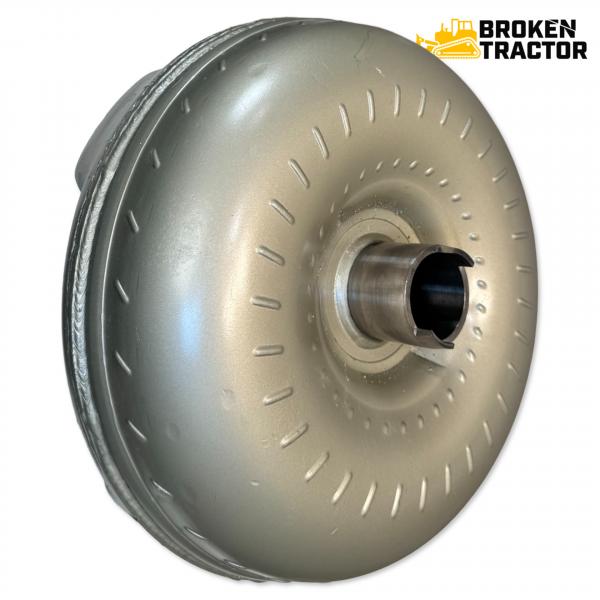
The Ford 4500 backhoe, a staple in construction and agricultural operations since the early 1970s, is renowned for its durability and versatility. Equipped with a torque converter, this model offers smooth power transmission between the engine and transmission. However, like all mechanical components, the torque converter can wear out over time, necessitating replacement.
Understanding the Torque Converter
The torque converter in the Ford 4500 backhoe serves as a coupling device between the engine and the transmission. It allows for smooth acceleration and deceleration, enabling the vehicle to come to a stop without stalling the engine. Over time, components within the torque converter, such as the pump, turbine, and stator, can degrade due to wear and tear, leading to performance issues.
Signs of Torque Converter Failure
Operators may notice several symptoms indicating potential torque converter issues: - Slipping: The backhoe may hesitate or fail to move when the throttle is applied.
- Overheating: The transmission fluid temperature may rise beyond normal operating levels.
- Unusual Noises: Grinding or whining sounds emanating from the transmission area.
- Erratic Shifting: Unpredictable or harsh gear changes.
Replacement Costs
The cost to replace a torque converter in a 1972 Ford 4500 backhoe varies based on several factors:- Parts: A remanufactured torque converter suitable for the Ford 4500 is priced at approximately $905.00.
- Labor: Labor costs can range between $1,000 and $2,000, depending on the service provider's hourly rates and the complexity of the replacement process.
- Total Estimate: Combining parts and labor, the total cost for a torque converter replacement can range from $1,905 to $2,905.
Replacement Process
Replacing the torque converter involves several steps:
- Preparation: Ensure the backhoe is on a level surface, and disconnect the battery.
- Draining Fluids: Drain the transmission fluid to prevent spillage during the removal process.
- Disassembly: Remove components obstructing access to the torque converter, such as the transmission pan and bell housing.
- Removal: Carefully detach the old torque converter from the engine and transmission.
- Installation: Install the new or remanufactured torque converter, ensuring proper alignment and secure fastening.
- Reassembly: Reinstall all removed components and refill the transmission with the appropriate type and amount of fluid.
- Testing: Start the engine and test the backhoe's operation to ensure the new torque converter functions correctly.
Maintenance Tips
To prolong the life of the torque converter and related components:- Regular Fluid Checks: Monitor transmission fluid levels and condition; change fluid as recommended by the manufacturer.
- Avoid Overloading: Do not exceed the backhoe's rated capacity to prevent undue stress on the transmission system.
- Routine Inspections: Periodically inspect the transmission and related components for signs of wear or damage.
Conclusion
Replacing the torque converter in a 1972 Ford 4500 backhoe is a significant maintenance task that requires careful attention to detail and proper procedures. While the costs can be substantial, ensuring the backhoe operates efficiently and reliably justifies the investment. Regular maintenance and timely replacement of worn components can extend the life of the backhoe and enhance its performance.
|
|
|
|
| Massey Ferguson MF50HX Tractor |
|
Posted by: MikePhua - 09-06-2025, 03:08 PM - Forum: General Discussion
- No Replies
|
|
The Massey Ferguson MF50HX is a versatile, mid-sized tractor designed to serve various functions in agriculture, construction, and general utility tasks. Manufactured by Massey Ferguson, a well-known global brand in the agricultural machinery sector, the MF50HX is equipped with features that make it reliable and efficient in demanding conditions. In this article, we will explore the MF50HX’s specifications, key features, operational guidelines, and common issues, helping users better understand this machine and how to maximize its performance.
Massey Ferguson: A Brief Overview
Massey Ferguson is one of the most recognized names in the world of agricultural machinery. Founded in 1953, Massey Ferguson’s reputation for quality, reliability, and technological innovation has earned it a significant place in farming and heavy equipment history. Over the decades, the company has produced a wide range of agricultural and construction machinery, including tractors, combine harvesters, and loaders.
The MF50HX, part of the 50 series, reflects the company's commitment to providing efficient, durable machinery for demanding environments. Tractors like the MF50HX are designed to be easy to maintain, fuel-efficient, and capable of handling a variety of tasks, from plowing fields to hauling materials.
Specifications and Key Features of the MF50HX
The MF50HX is designed to offer a balance of power, versatility, and ease of use. Below are some of the key specifications and features of the MF50HX: - Engine Power: The MF50HX is powered by a 50 horsepower (HP) engine, making it capable of handling various implements and tasks with relative ease. This horsepower allows the tractor to work with a variety of attachments, such as plows, cultivators, and loaders, effectively.
- Engine Type: It is typically equipped with a four-cylinder, diesel engine that offers both power and fuel efficiency. Diesel engines are preferred for tractors due to their superior torque characteristics and fuel economy, especially when used for long hours on the field.
- Transmission: The MF50HX comes with a manual transmission system, providing the operator with better control over the tractor's speed and power. This feature is essential for operators working in fields that require frequent gear changes or navigating uneven terrain.
- Hydraulic System: The hydraulic system of the MF50HX is another important feature. It powers implements such as front-end loaders and backhoes, offering efficient control for lifting, digging, and carrying heavy loads.
- PTO (Power Take-Off): The tractor is equipped with a rear PTO, which allows it to power various implements, from mowers to hay balers. The PTO is essential for ensuring the tractor can perform a wide range of agricultural tasks.
- Weight and Dimensions: The MF50HX has an operating weight of approximately 3,200 kg (around 7,000 lbs), making it a mid-weight tractor suitable for both fieldwork and light construction jobs. Its dimensions are compact enough to maneuver through tight spaces while still offering stability for more heavy-duty tasks.
- Drive Type: The MF50HX is available in both two-wheel-drive (2WD) and four-wheel-drive (4WD) configurations. The 4WD version provides increased traction, making it ideal for rough or muddy terrain.
Common Uses for the Massey Ferguson MF50HX
The MF50HX is primarily used in agriculture, but its versatility makes it well-suited for other tasks as well:- Plowing and Tilling: The tractor’s powerful engine and hydraulic system allow it to easily handle plowing and tilling tasks, making it an ideal choice for farmers who need to prepare soil for planting.
- Hauling and Transporting: With its towing capacity and rear PTO, the MF50HX is great for hauling trailers, manure spreaders, and other agricultural equipment.
- Mowing and Cutting: The tractor can be fitted with a variety of cutting implements such as bush hogs or rotary mowers, making it suitable for maintaining pastures, roadsides, and other areas that require regular mowing.
- Loader and Excavation Work: When paired with a front-end loader or backhoe attachment, the MF50HX can be used for moving materials, digging holes, and other light construction tasks.
- Landscaping and Snow Removal: The MF50HX is also useful in landscaping applications and can be equipped with snowplows for winter work. Its maneuverability and ease of operation in tight spaces make it ideal for small-scale landscaping projects.
Operation and Maintenance of the MF50HX
To ensure that the MF50HX operates efficiently, proper maintenance is essential. The following guidelines can help operators maintain their MF50HX:- Regular Oil Changes: Diesel engines in tractors like the MF50HX require regular oil changes to maintain performance and prevent engine wear. It is recommended to change the oil every 200 hours of operation, or as specified by the manufacturer.
- Hydraulic Fluid: Hydraulic fluid should be checked and replaced regularly, as this fluid is essential for the proper functioning of implements and lifting mechanisms.
- Cooling System: Keep the radiator clean and ensure the coolant levels are adequate to prevent the engine from overheating. The cooling system should be flushed and cleaned periodically.
- Tire Pressure: Proper tire pressure is critical for maintaining the stability and performance of the tractor, especially when working on uneven terrain.
- Transmission Fluid: Check and maintain the transmission fluid levels regularly to ensure smooth gear shifting and prolong the life of the transmission.
- Air Filters: Regularly check and clean or replace the air filters to ensure that the engine receives proper airflow and operates efficiently.
Troubleshooting Common Issues
While the MF50HX is a durable and reliable tractor, operators may encounter some common issues over time. Below are some potential problems and troubleshooting steps:- Engine Power Loss: If the tractor experiences a loss of power, check the fuel filter, air filter, and fuel lines for blockages. Also, inspect the fuel injection system for potential issues.
- Hydraulic Issues: If the hydraulic system is not operating correctly, ensure that the hydraulic fluid is at the proper level and check for leaks in the hydraulic lines.
- Transmission Problems: Difficulty shifting gears can be caused by low transmission fluid levels or worn-out components. Regular maintenance of the transmission can help prevent these issues.
- Electrical Problems: If the tractor’s electrical system malfunctions, check the battery, wiring, and alternator for any faults.
Conclusion
The Massey Ferguson MF50HX is a reliable, versatile tractor that offers excellent value for a wide range of agricultural and light construction tasks. Its balance of power, compact design, and ease of maintenance make it an excellent choice for farmers, landscapers, and small-scale construction projects. Understanding the tractor’s features, operation, and common issues will help operators maximize its efficiency and extend its lifespan.
|
|
|
|
| Diagnosing Electrical Failures in the 2006 Hitachi ZX200-LC Excavator |
|
Posted by: MikePhua - 09-06-2025, 03:08 PM - Forum: Troubleshooting & Diagnosing
- No Replies
|
|
The ZX200-LC and Hitachi’s Excavator Evolution
The Hitachi ZX200-LC is part of the ZAXIS series introduced in the early 2000s, representing a leap in hydraulic efficiency and electronic control integration. Hitachi Construction Machinery, founded in 1970, has long been a global leader in excavator design, with the ZX series replacing the older EX line. The ZX200-LC, with its long carriage (LC) undercarriage, offers enhanced stability for trenching, lifting, and slope work. Powered by an Isuzu AH-4HK1X engine delivering around 160 horsepower, it features a closed-center hydraulic system and an onboard computer for diagnostics and performance monitoring.
Sales of the ZX200 series have exceeded tens of thousands globally, with strong adoption in Asia, North America, and the Middle East. Its reputation for reliability and fuel efficiency makes it a favorite among contractors and rental fleets.
Terminology annotation: - ECU (Electronic Control Unit): The onboard computer that manages engine parameters, hydraulic functions, and diagnostics.
- Hour meter: A device that records cumulative engine run time, often linked to the ECU.
- Fuse block: A panel containing replaceable fuses that protect electrical circuits from overload.
- CAN bus: A communication protocol used in modern machinery to link electronic modules.
Initial Symptoms and Electrical Anomalies
A common issue reported with the 2006 ZX200-LC involves the ECU failing to power on during startup. The engine may crank and run normally, but the display remains blank, and no diagnostic data is available. This raises concerns about fuse integrity, wiring continuity, and ECU health.
In one case, the operator noted that the machine ran but the computer display was completely inactive. The seller suggested replacing a fuse, but the buyer remained skeptical, recognizing that fuses typically blow due to underlying faults—not random failure.
Hour Meter Functionality and Data Loss Risks
When the ECU fails to power on, the hour meter may also stop recording. On many Hitachi models, the hour meter is integrated into the ECU, meaning any power loss or circuit failure can interrupt data logging. However, some machines include a secondary mechanical or analog hour meter near the engine bay, which may continue functioning independently.
Operators should inspect:- Fuse ratings and continuity using a multimeter
- ECU power supply voltage at startup
- Grounding points for corrosion or looseness
- CAN bus termination resistors and signal integrity
If the hour meter is inactive, maintenance records become critical. Checking filter change dates, oil service intervals, and handwritten logs can help estimate true machine hours.
Fuse Ratings and Electrical Safety
Hitachi typically uses blade-style fuses rated between 5A and 30A, depending on the circuit. The ECU fuse is often 10A or 15A, located in the main fuse block under the right-side panel. Replacing a blown fuse without addressing the root cause can lead to repeated failures or even ECU damage.
Best practices include:- Using OEM-rated fuses with correct amperage
- Inspecting adjacent circuits for shorts or overloads
- Checking for water ingress or rodent damage in wiring harnesses
- Avoiding jump-starting with high-voltage sources that may spike the ECU
In one incident in British Columbia, a contractor replaced a 15A fuse only to have it blow again within seconds. Further inspection revealed a pinched wire under the cab floor, shorting intermittently during vibration.
ECU Replacement and Reprogramming Challenges
If the ECU is confirmed dead, replacement units are available through Hitachi dealers or specialized rebuilders. However, reprogramming may be required to match the machine’s serial number, hydraulic settings, and engine parameters. Some units require proprietary software and dealer access, making field replacement difficult.
Alternative solutions include:- Sending the ECU to a remanufacturing center for bench testing and repair
- Installing a used ECU from a donor machine with identical specs
- Using diagnostic tools like Dr.ZX or Hitachi’s HDS system to verify communication
Operators should document all settings before removal, including throttle calibration, hydraulic flow rates, and attachment configurations.
Preventive Measures and Long-Term Reliability
To reduce the risk of ECU and electrical failures:- Seal fuse panels and connectors with dielectric grease
- Install surge protectors or voltage regulators on battery terminals
- Perform annual wiring inspections, especially in humid or rodent-prone environments
- Keep the cab interior dry and clean to prevent condensation-related shorts
In one fleet operating in New Zealand, technicians added secondary grounding straps to all ZX200 units, reducing intermittent faults by 70% over two years.
Conclusion
The 2006 Hitachi ZX200-LC remains a capable and efficient excavator, but its reliance on electronic systems introduces vulnerability to fuse failures, ECU faults, and data loss. Diagnosing a blank computer screen requires methodical inspection of fuses, wiring, and power supply circuits. With proper maintenance and electrical safeguards, these machines can continue delivering reliable performance in demanding environments. For buyers evaluating used units, verifying ECU function and hour meter accuracy is essential before committing to purchase. In the world of modern excavators, the screen may be small—but the consequences of it staying dark are anything but.
|
|
|
|
|



