2026年8月

The Komatsu PC75UU-1 is a compact hydraulic excavator known for its reliability, versatility, and powerful performance in tight spaces. Used widely in construction, demolition, and landscaping, the PC75UU-1 offers excellent maneuverability, making it ideal for jobs that require both power and precision. However, like any piece of heavy machinery, it can experience issues over time. This article dives into common problems faced by operators of the PC75UU-1, their potential causes, and practical solutions to keep the excavator running smoothly.

Komatsu PC75UU-1

Read the rest

The issue of a Bobcat machine "making oil" is a common yet concerning problem in the heavy equipment world. When this happens, it means that the machine’s engine is somehow contaminating the oil with diesel fuel or other fluids. This can lead to severe damage to the engine and other critical components, making it essential for operators to address the issue as quickly as possible. In this article, we’ll explore the causes of this problem, common solutions, and how operators can prevent such issues from escalating.

Bobcat Making Oil Issue

Read the rest

Excavators are essential machines in construction, landscaping, and mining, used for tasks ranging from digging trenches to demolishing buildings. However, with so many sizes and types available, choosing the right excavator for your specific needs can be a daunting task. The decision often boils down to factors like the nature of the job, job site conditions, and the equipment’s capabilities.

Right Excavator Size

Read the rest

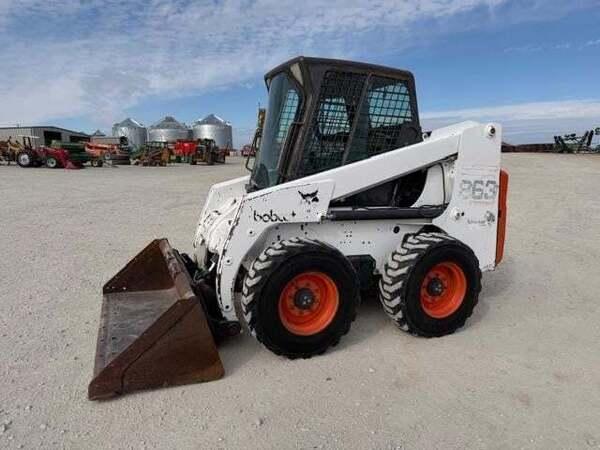
The Bobcat T180 skid steer loader is a powerful, versatile machine commonly used in construction, agriculture, and material handling. However, like all complex machinery, it’s not immune to issues that can affect its performance. One common problem that operators may face is sensor wattage issues, which can disrupt the functionality of various systems, including the hydraulic, electrical, and engine control systems.

Bobcat T180 Skid Steer

Read the rest

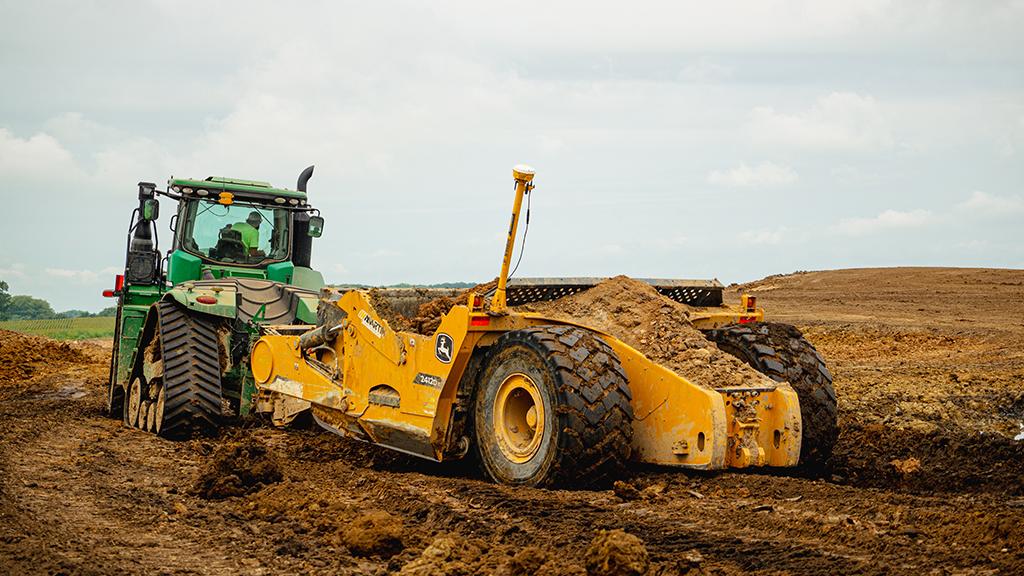
Heavy equipment, especially large machines like the CAT 631D scraper, is designed to perform under extreme conditions, moving vast amounts of earth in construction and mining sites. However, these machines are not immune to issues, and overheating is a common concern among operators. The CAT 631D scraper, specifically, has faced challenges when it comes to maintaining optimal engine temperatures, a problem that can have severe consequences if left unaddressed.

CAT 631D Scrapers

Read the rest

You might be wondering which market is actually the largest used excavator market in China.
It seems like many different regions all claim that their local market is the biggest in the country.

Let me sort this out for you, so you can have a clear overall picture.

First, let’s talk about geography.
China is a very large country, with long distances between major cities, and transporting heavy equipment is expensive.
If all used excavators were concentrated in one city, like Shanghai, transportation costs would be extremely high for buyers from other regions.

Read the rest

Recently, most of the people contacting me have been clients from Canada.
It seems that YouTube has been pushing my videos mainly to Canadian viewers.

And today, it's still the same issue: EPA.
Canada's ECCC largely refers to EPA standards, so I think this topic really needs to be clarified again.

About a month ago, Clayton came to China looking for partners.
He visited many markets. Besides evaluating machine quality and pricing, his main concern was EPA compliance.
I couldn't give him a clear answer, so he probably decided to walk away from me.

Read the rest

This is a very important warning.

North American customers will almost certainly run into EPA issues when buying used excavators from China. However, not every sales company will tell customers about this. As a result, many machines end up being detained by customs and eventually have to be sold at a lower price to other countries.

Two months ago, I told Jon that it would be better to clear customs through Florida instead of California. Clearly, that information is now outdated.

Read the rest

I’ve noticed that quite a few excavators bought by North American buyers get held at customs for various reasons. To recover their losses, people try all kinds of solutions. In most cases, the easiest way to handle it is to resell the machine to another country.

For excavators that have already been detained, I cannot help with clearing customs. But if you want to sell your excavator to another country, I can help.

This channel gets decent traffic, so you can post your resale ad here and let more people know your equipment is available.

Read the rest

A few months ago, I made a promise — I told you I'd track down units with legitimate EPA certification, and I asked my Canadian friends to hold off on buying until I figured it out.
Well, I came up empty. Completely empty.
And honestly, that's on me. I went into this way too optimistic about the Chinese market. I thought my supplier contacts were solid enough to get this done.
Here's the thing though — before I went independent, pretty much everything I knew came through Hefei. Once I was out on my own and started visiting different markets across the country, I slowly pieced together a much more complete picture. And what I found was... not great.
It's complicated in the sense that almost every layer of the supply chain is running some kind of game on the next one. But it's also dead simple: most of those EPA labels are fake, and they won't make it through customs anyway.
So I'm dropping it. I'm sorry — I couldn't deliver on that one.
That's the first thing.

Read the rest

If you were going to pick the most successful excavator families in the history of construction machinery,
Komatsu would have the PC200,
Caterpillar would have the 320,
and the machine carrying the flag for Hitachi would almost certainly be the EX200.

If Caterpillar stands for unstoppable raw power and Komatsu stands for flawless all-around balance, then in the golden age of construction machinery there was also a striking splash of orange that, on the strength of unmatched speed, became the one that so many veteran operators still carry a torch for. That machine is Hitachi’s legendary workhorse — the EX200.

Back in the day on the job site, the moment this orange streak swung the house around and dropped the bucket, the motion was so quick it looked like footage played on fast forward. So today let us kick back, pour a pot of hot tea, and talk about this loading king that once ruled job sites far and wide on speed alone.

Read the rest

The Cat 320 is like a muscle-bound, hot-tempered tough guy.
The Komatsu PC200 is like a jack-of-all-trades businessman who is especially good at making money.
And the Hitachi ZX200 is more like an engineer with glasses on.

It is not necessarily the flashiest thing on the job site, but it is often the one that works the most precisely, runs the most steadily, and sits the most comfortably under the operator.

Around 2001, Hitachi replaced the old EX series with the all-new ZAXIS series, and the name “ZX” comes straight from the abbreviation of ZAXIS. It took over from the EX200 but filled in the old weak spots like fuel consumption, comfort, and electronic control, and along the way kept stretching the family’s branches longer and longer.

Read the rest

If you ask a roomful of excavator operators to pick a 22-ton machine that is neither the most expensive nor the cheapest, but that just feels comfortable and balanced to run, the Volvo EC220 would almost certainly show up on the list.

It does not have the sweeping market share of the Cat 320. It is not scattered across every corner of the globe the way the Komatsu PC200 is. And it has not become the outright industry standard in many regions the way the Hitachi ZX200 has. Its population is on the smaller side among the big four families. And yet it has a batch of users whose loyalty is honestly startling. A lot of people who have run an EC220, even after switching to another brand years later, still find themselves reminiscing about that cab, that hydraulic feel, and that unhurried, take-it-all-in-stride composure it has when it works.

So today let us sit down and really talk about this Nordic gentleman of the construction machinery world.

Read the rest

In the world of construction machinery, if you are talking about the evergreen survivor of the 20-ton excavator class, there is one name you simply can’t get around—and that is Kobelco’s SK200. People on site usually just call it the Kobelco 200. Even if you’ve never touched an excavator in your life, if you’ve ever spotted that signature clean light blue out on the roadside—or once in a great while that rare and striking bright green—then nine times out of ten you are looking at a Kobelco.

From the moment the very first SK200 rolled out of the factory gate in the early 1980s right up to today, it has been slogging through the mud and the rubble all over the world for more than 40 years. So today let’s talk the whole thing through from start to finish: the long backstory of this legendary family across the decades, the trivia behind it, the nicknames it picked up on the job site, and all those little secrets that operators love and hate in equal measure.

Read the rest

The Doosan 225 traces its roots back to the Solar 220LC-V. From the 1990s into the early 2000s, Doosan’s excavators still wore the Solar badge, and the 220LC-V was the workhorse of that era’s 22-ton class. Later, Doosan tore up the whole product line and rebuilt it, switching everything over to the DX naming scheme, and the Solar 220LC-V became the first-generation DX225LC around 2007. From there, the family rolled on generation after generation—from the DX225LC to the -3, the -5, the -7, and on to today’s most advanced version, the -7X.
The Doosan 225 also changed its name along the way. In the early days it was the Doosan DX225, and because that was a mouthful out on site, people just shortened it to “225.” Later, when Doosan spun off its construction-equipment business, it raised a brand-new banner called DEVELON, and on the very same series the lettering on the machine’s nameplate changed accordingly. The machine was still the same machine, though—the underlying design and the performance philosophy didn’t shift much.
What follows lays out this family’s nearly two decades of history, its strengths and weaknesses, the nicknames it picked up on the jobsite, and a few things worth telling, from start to finish.

Read the rest

The Hyundai R215 is a big name in the construction-equipment world, but a lot of people only half understand it—some can’t even tell you for sure how heavy the thing actually is. So I want to walk through it from start to finish: where it came from, what it’s good at, where its weak spots are, and how it changed from one generation to the next over the years.

Read the rest

Kubota’s KX040 is a machine you simply can’t get around in the North American compact excavator market. If you’ve spent any time on job sites in the United States, you’ve seen it—that bright orange paint, the tight footprint, a little over 4 tons of operating weight, yet more punch than you’d expect from something this size. It is Kubota’s single best-selling compact excavator in North America, bar none.
Most people know it works well. What they don’t know is how it came to be, and that its name carries the trace of a rather bold naming overhaul Kubota once pulled off. All of that is worth telling from the beginning.

Read the rest

Last night I made a video about the cost breakdown of excavators, and today I want to add some details about the fees you actually pay when buying one.

So, one of my clients, who I was helping inspect an excavator, told me the dealer charged him $1,000 as a “cleaning fee.” Basically, that covered disassembly and packing.

I didn’t tell him the full truth because it might have affected the deal or his mood. I also didn’t want to make the dealer look bad. This was a normal transaction, and both sides had already agreed. Money that’s already spent is a sunk cost—we shouldn’t dwell on it. So I just replied with a little “haha.” If he got the point, he’d know what to do next time.

Read the rest

A friend from Canada sent me a very detailed inspection report for an excavator. Honestly, it’s a great job—tons of photos, every little cosmetic flaw marked, and the report was really long. But there was one big problem: the whole thing was about how the machine looks and almost nothing about how the machine works. So I feel like I should explain my own inspection process and what I focus on.
First, you need to accept one basic reality. In China, about 99.9% of used excavators have been refurbished, and most of them have had the hour meter adjusted. You also usually have no idea what kind of work they did before—pure dirt work, heavy rock breaking, demolition, whatever. Even though that makes a huge difference to wear.

Read the rest

I understand that people in the English-speaking world pay a lot of attention to engine numbers and VINs. Many consider them the primary way to verify authenticity. This is likely influenced by heavy equipment forums. Most visitors there are English-speaking users, mainly from North America. In North America, laws around used equipment are strict, so just checking the serial number can usually tell you the full history of a machine.

But that doesn’t apply in China. Chinese buyers generally don’t care much about serial numbers. There are significant legal and cultural differences. So when you’re buying an excavator from China, you might feel like no company is fully honest.

Read the rest

I have great respect for Mr. Jack Ma. He built an amazing company that made global trade so much simpler. Unfortunately, his era has passed—he’s now retired, and people often see him cycling in parks or taking walks.

Today, Alibaba is effectively a state-owned company. With Jack Ma stepping back, the company is quietly changing.

You might trust Alibaba, but what I’m about to share might change your perspective.

Alibaba’s third-party escrow system still works. Honestly, it’s probably the most useful part of the whole platform.

Read the rest

First of all, if you find this video helpful, please share it with your friends so more people can know the truth.
When I first entered this industry, my business partner told me it was full of scams. He hoped I could act as an independent third party, do things the right way, and eventually help him get out of this mess. He has 15 years of experience and shared a lot of industry secrets with me, then let me see everything for myself.

Read the rest

Let’s take a look at what a real, original machine in China actually looks like.

Is it dirty?
Does it look worn out and exhausted?

This one is from 2017, and it still has the original invoice.
Its price is $17,000.

But a so-called “refurbished 2024 excavator” is being offered for $15,000.

So why is a 2017 machine more expensive than a “2024” machine?
That’s weird, right?

Read the rest