| Welcome, Guest |
You have to register before you can post on our site.
|
| Forum Statistics |
» Members: 79
» Latest member: cioCruch
» Forum threads: 47,411
» Forum posts: 47,417
Full Statistics
|
| Online Users |
There are currently 645 online users.
» 0 Member(s) | 630 Guest(s)
Ahrefs, Amazon, Applebot, Baidu, Bing, Claude, DotBot, Facebook, GoParser, Google, Petalbot, Semrush, Trendiction, Twitter
|
| Latest Threads |
Identifying and Sourcing ...
Forum: Parts , Attachments & Tools
Last Post: MikePhua
01-07-2026, 06:29 PM
» Replies: 0
» Views: 509
|
Cat 931B Brake Parts
Forum: Parts , Attachments & Tools
Last Post: MikePhua
01-07-2026, 06:29 PM
» Replies: 0
» Views: 281
|
Choosing Between Cat 228,...
Forum: General Discussion
Last Post: MikePhua
01-07-2026, 06:28 PM
» Replies: 0
» Views: 533
|
Hydraulic Delay When Lowe...
Forum: Troubleshooting & Diagnosing
Last Post: MikePhua
01-07-2026, 06:27 PM
» Replies: 0
» Views: 439
|
Bale Chopper and Mulcher ...
Forum: General Discussion
Last Post: MikePhua
01-07-2026, 06:26 PM
» Replies: 0
» Views: 316
|
Mini UC Maintenance
Forum: General Discussion
Last Post: MikePhua
01-07-2026, 06:25 PM
» Replies: 0
» Views: 305
|
Locating Wiring Informati...
Forum: General Discussion
Last Post: MikePhua
01-07-2026, 06:24 PM
» Replies: 0
» Views: 339
|
Case Industrial Brown Sub...
Forum: Parts , Attachments & Tools
Last Post: MikePhua
01-07-2026, 06:23 PM
» Replies: 0
» Views: 274
|
Dirt Work in West Virgini...
Forum: Construction & Urban Infrastructure Forum
Last Post: MikePhua
01-07-2026, 06:23 PM
» Replies: 0
» Views: 371
|
D207 P Hydraulic Steering...
Forum: Parts , Attachments & Tools
Last Post: MikePhua
01-07-2026, 06:22 PM
» Replies: 0
» Views: 301
|
|
|
| Stabilizing Slopes with Riprap: Challenges, Techniques, and Real-World Applications |
|
Posted by: MikePhua - 08-08-2025, 11:21 PM - Forum: Farming, Landscaping, Forestry Industry Forum
- No Replies
|
 |
Understanding the Role of Riprap in Slope Protection
Riprap—also known as shot rock, rock armor, or rubble—is one of the oldest and most reliable methods for stabilizing eroding slopes, embankments, or waterway banks. Composed of large, angular rocks piled on a slope, riprap serves as a physical buffer against the erosive forces of water and gravity. It breaks up water flow, prevents soil displacement, and absorbs energy from waves or runoff. However, not all slopes or conditions are alike, and poor planning or improper installation can lead to failure—even catastrophic ones.
A Challenging Hillside: A Case of Repeated Slide Failures
In one notable case, an operator faced a persistent issue with a long, steep slope—nearly 400 feet in length—with a riprap-lined drainage swale that repeatedly slid downhill after rain events. Despite multiple attempts at stabilizing the slope, each effort failed to prevent rock displacement and soil movement.
The original approach involved laying down fabric and then placing 1- to 2-foot diameter rock on top. After every heavy rain, large portions of the riprap would shift or slide altogether, undermining the drainage channel's integrity. The slope’s steep grade, combined with water runoff from above, made it a particularly unstable and dangerous area.
Key Factors Contributing to Riprap Failure
Several interconnected problems led to these repeated failures: - Insufficient anchoring at the toe of the slope, where the rock began sliding due to lack of horizontal resistance
- Incorrect or inadequate geotextile fabric, which tore under load or allowed fine materials to wash through, weakening the slope's base
- Lack of interlocking rock structure, where smooth or round rocks slid more easily compared to angular ones
- Improper compaction or preparation of the subgrade, which allowed rocks to settle unevenly
- No check dams or energy dissipators, leading to high-velocity runoff cutting through the riprap
Engineering Solutions: Lessons from the Field
Solving complex slope failures often requires more than just adding more rock. A combination of mechanical engineering, hydrology, and common-sense field practice must come together. In this case, several potential solutions and enhancements were proposed, based on experience and practical wisdom:- Reconstruct the base with a keyed-in toe trench: By digging a trench at the toe of the slope and backfilling it with large boulders, the bottom edge of the riprap is locked in place, preventing the entire mass from migrating downslope.
- Install proper geotextile fabric or geogrid: High-strength woven fabric or reinforced geogrid can provide both separation and load distribution. Using layered fabric under compacted gravel, then topping with angular riprap, creates a better friction base.
- Use a “terraced” or “benched” slope design: Breaking the long slope into shorter vertical sections with flat benches in between reduces the total gravitational load and allows for water dissipation between stages.
- Embed large anchor rocks at intervals: Strategically placing massive boulders—known as key rocks—deep into the slope helps resist the downward shear force of the overlying rock mass.
- Add drainpipes and culverts: Internal water buildup or saturation often causes failure. Installing subdrain systems (like perforated pipe in gravel) can relieve water pressure behind the slope.
Real-World Comparisons: Mining Roads and Mountain Railways
In mountainous mining operations or along railroad switchbacks, similar challenges are met with calculated engineering. For example, the Alaska Railroad faces annual freeze-thaw cycles and landslides, counteracted by:- Rock benches with drainage pipes
- Steel mesh draped over rock faces to prevent debris falls
- Gabion baskets filled with angular rock to hold slopes in place
In many cases, crews use a combination of rock bolts and shotcrete to reinforce rock faces when gravity alone isn’t enough to hold material in place.
Alternatives and Reinforcements to Riprap
Although riprap is economical and readily available, it’s not always the most effective on steep, saturated slopes. Alternatives include:- Mechanically stabilized earth (MSE) walls, which use geogrid and compacted soil layers
- Shotcrete and wire mesh on hard rock faces
- Hydroseeding with erosion control blankets, for vegetative stabilization on shallower slopes
- Soil nails and retaining walls, for areas prone to sudden slippage or seismic activity
Each of these solutions comes with higher cost but greater control and predictability.
Aesthetic and Environmental Considerations
In some cases, riprap is not preferred due to visual or ecological concerns. For example, in river restoration projects, biotechnical stabilization using willow staking, root wads, and coir logs can achieve slope control while promoting plant growth and habitat.
However, on large, fast-draining slopes like in this case, natural methods are often insufficient. Blending structural and natural methods—such as using riprap in the drainage channel and vegetative cover on the slope sides—can achieve both durability and aesthetics.
Operator Wisdom: What Experience Teaches
One seasoned contractor advised never to lay riprap directly on soft or wet subgrade, as it leads to settling and slippage. He emphasized using crushed rock bedding or compacted gravel as a base. Another shared a story of how adding an unexpected second layer of larger rock actually destabilized the slope further because the original layer was not anchored.
It’s often said in excavation circles that "rock will follow water." Understanding the hydrology of the site—where water travels, collects, and discharges—is more critical than how heavy or big the rock is.
Conclusion: Thoughtful Design Wins Over Sheer Mass
Stabilizing a sliding slope with riprap is not merely a matter of dropping heavy rocks downhill and hoping they stay put. It requires attention to subsurface drainage, structural anchoring, rock interlock, slope geometry, and long-term maintenance.
In steep or problematic terrain, combining engineered solutions like toe trenches, benching, and proper drainage with quality material and installation will outperform brute-force rock dumping every time.
Experience teaches us that gravity doesn’t forgive carelessness, but with thoughtful design and methodical execution, even the most unstable slopes can be tamed.
|

|
|
| Removing the Control Computer from a Link‑Belt 3400Q Excavator: What You Need to Know |
|
Posted by: MikePhua - 08-08-2025, 11:21 PM - Forum: General Discussion
- No Replies
|
|
Why Consider Computer Removal?
Removing the machine’s onboard electronic control unit (ECU) might be considered for troubleshooting, retrofits, or working in environments where electronic systems are unreliable. Whether for legacy conversion, maintenance, or adaptation to remote manual control, understanding the implications and process is vital.
Terminology You Should Know - ECU (Electronic Control Unit) – The main onboard module that manages engine performance, hydraulics, and safety interlocks.
- ECM (Engine Control Module) – Specifically controls engine functions such as fuel injection, emissions, and throttle response.
- Wiring Harness – The bundled cables and connections that transmit signals between sensors, ECU, and actuators.
- Reversion to Manual Control – Switching from electronically managed systems to purely mechanical or hydraulic control modes.
- Bypass Wiring – Strategically rerouting wiring to maintain essential as functions when the ECU is disconnected.
Key Do’s and Don’ts in ECU Removal- Do inspect the wiring harness layout meticulously—you’ll need to identify connectors, sensors (like pressure, temperature, position), and their routing before unplugging.
- Do label and document every wire and plug location to ensure future restoration and prevent miswiring.
- Do plan for vital functions—such as engine idle settings, throttle signals, or emergency shutdowns—that may require manual override or temporary bypass.
- Don’t disconnect power while the machine is running—always shut down fully to protect components from voltage spikes or data corruption.
- Don’t ignore safety interlocks—some systems disable movement or engine start if the ECU is absent or sees missing inputs.
- Don’t assume functionality post-removal—the excavator may not operate intelligently without computer-managed parameters, leading to unsafe behavior or failure to start.
A Technicians’ Tale
A seasoned heavy‑equipment technician once worked on a 3400Q that had intermittent ECM failures in the field. After several resets and part swaps, the team tried temporarily removing the control computer to diagnose whether mechanical hydraulic pumps were still operating correctly. With the ECU unplugged, the machine functioned in a minimal “limp‑home” mode: swing and boom worked sluggishly, but it allowed safe movement to a service bay. That limited success underscored the value of having fallback control—but also the need to fully understand wiring, interlocks, and dependencies.
Industry Context and Trends
Excavator systems have grown increasingly computer-reliant—from implementing precision hydraulic metering to integrating telematics, diagnostics, and fuel‑saving modes. Yet, in remote or harsh environments—such as mining, Arctic construction, or post-disaster cleanup—operators sometimes prefer or require manual overrides or "failsafe" modes independent of onboard electronics.
Notably, in 2023, a Queensland-based roadwork fleet experienced repeated ECU failures due to moisture ingress. They began retrofitting simplified control circuits that allowed limited hydraulic control without the main computer—trading automation for reliability under harsh conditions.
Potential Benefits and Risks
Benefits of removing or bypassing the ECU:- Enables limited manual operation when electronics fail or are compromised.
- Assists in isolating hardware faults.
- Offers a rescue mode in emergency scenarios.
Risks and challenges:- Loss of engine management functions—creates risk of poor performance, high emissions, or damage.
- Safety systems may disengage—absence of throttle cutoff, overload protection, or alerts.
- Potential machine lockout—some functions may be disabled until computer restoration or reprogramming.
Quick Reference: ECU Removal Considerations- Preparation: Document wiring and sensor connections before disconnection.
- Essential Functions: Plan for manual override of throttle, shutdown, and hydraulic flow.
- Safety: Ensure hydraulic and engine systems remain controllable and non-hazardous.
- Operation: Expect reduced performance and lack of automated behaviors.
- Restoration: Reinstalling or reprogramming may require professional tools and calibration.
Final Thoughts
Removing the Link‑Belt 3400Q’s control computer is a significant step—sometimes necessary for diagnostics or emergency use—but it requires meticulous preparation, understanding of systems’ dependencies, and acceptance of operational limitations. Whether your goal is manual backup, diagnostic clarity, or field adaptability, planning and safety are paramount. Should you want guidance on wiring diagrams, bypass circuits, or alternative control strategies, I’m ready to help—from ethical and technical angles alike!
|
|
|
|
| Comprehensive Insight into the Case 580 Super L: Performance, Maintenance, and Field Challenges |
|
Posted by: MikePhua - 08-08-2025, 11:20 PM - Forum: General Discussion
- No Replies
|
|
Introduction to the Case 580 Super L
The Case 580 Super L (commonly abbreviated as 580SL) is part of Case's popular backhoe loader series, serving contractors, utility workers, and farmers alike. Renowned for its rugged build and dependable performance, the 580SL blends hydraulic muscle with operator-friendly features. Produced during the mid-to-late 1990s, this model carved its niche in the heavy equipment landscape for its reliability, although it is not without its quirks and age-related challenges today.
Engine and Drivetrain Characteristics
The 580SL is typically equipped with a Case 4T-390 diesel engine, a 4-cylinder powerhouse known for its balance between fuel economy and torque output. Users often note that it delivers sufficient power for trenching, loading, and material handling tasks. With a power output ranging from approximately 75 to 90 horsepower (depending on the specific year and configuration), the engine supports hydraulic systems effectively.
However, wear and tear over decades of service lead to issues such as: - Sluggish throttle response
- Occasional hard starting in cold weather
- Leaks from aged seals or o-rings, especially around the injection pump
A properly maintained injection system and glow plug circuit can significantly improve cold-weather starting. Regular filter changes and fuel line inspections are crucial for preventing cavitation and maintaining power output.
Transmission and Shuttle Shift Operation
Many 580SL units come equipped with a power shuttle transmission, providing four forward and four reverse gears. This setup allows smooth shifting between directions without using the clutch, a benefit for backhoe operations where rapid directional changes are frequent.
Some common concerns and field observations include:- Jerky transitions when shifting from forward to reverse, especially if the torque converter is worn
- Reduced hydraulic performance if the transmission fluid is low or contaminated
- Premature wear on the shuttle lever or linkages due to aggressive use
Operators often emphasize the importance of using Case-branded or equivalent transmission/hydraulic fluid to maintain optimal shuttle function. Mixing incompatible fluids can lead to sticky valves or slow responses in the shuttle pack.
Hydraulic System Performance and Maintenance
The 580SL features an open-center hydraulic system with gear-type pumps. It powers both the loader and the backhoe with ample flow rate, often around 28 GPM (gallons per minute). The smoothness of operation depends heavily on fluid cleanliness and pump health.
Reported issues and best practices include:- Loader or backhoe arms drifting down under load due to internal cylinder leakage or spool valve wear
- Sticky or unresponsive controls if water contamination is present in the fluid
- Whining noise indicating cavitation, potentially from a clogged suction strainer or worn pump
A user once described a loader that slowly settled overnight—classic symptoms of cylinder bypass, which is common with older machines. Repacking the cylinder seals often resolves the problem.
Electrical System and Dashboard Components
Given its age, electrical quirks are not uncommon in the 580SL. Some operators report intermittent gauge behavior, flickering lights, or non-functional warning indicators. This is often traced to:- Corroded ground connections, especially near the battery tray
- Aged wiring insulation leading to shorts
- Moisture ingress in the instrument cluster
Owners have successfully mitigated these issues with preventive rewiring and weatherproofing techniques such as dielectric grease and sealed connectors. One mechanic even ran new ground straps from the engine block to the frame and cabin to eliminate ghost electrical issues.
Brake System Reliability
The 580SL's inboard wet disc brakes are robust under normal use, but they are sensitive to neglect. Brake fade or weak pedal pressure usually signals:- Low or contaminated brake fluid
- Worn-out seals in the master or slave cylinders
- Air trapped in the brake lines
It’s noteworthy that in some older machines, brakes may feel strong with the engine off but lose effectiveness when hydraulic assist pressure builds. This paradox can stem from hydraulic leakage into the brake assist system, which creates a vacuum that overrides pedal resistance.
Cab Comfort and Ergonomics
While not luxurious by modern standards, the 580SL's ROPS/FOPS cab offers a functional operator environment. Key features include:- Mechanical seat suspension with moderate adjustability
- Intuitive lever layout for loader and backhoe functions
- Visibility-enhancing split-glass panels
However, age has taken its toll in many units, with issues such as:- Broken window seals leading to cab leaks
- Non-functional heater or blower fans
- Excessive cab vibration due to worn mounts
Some owners retrofit the cab with aftermarket seat cushions or modify the climate control system using universal blower kits to improve comfort.
Loader and Backhoe Structural Integrity
Both the front loader and rear backhoe are engineered for heavy-duty performance. However, persistent use over decades reveals weak points:- Loader arm pivot pins wear out, leading to slop and uneven loading
- Bucket curl cylinder seals frequently leak
- Stabilizer legs develop play at the pivot if not greased regularly
One operator recounted having to line-bore the backhoe boom pivots after decades of trenching work, a testament to how even the strongest steel fatigues over time without consistent lubrication.
Parts Availability and Modernization Options
Despite the machine's age, parts are still reasonably available. Many components—like filters, hoses, and seals—are standard and interchangeable. However, specialized parts such as shuttle valves or proprietary electronics may require sourcing through salvage yards or online parts dealers.
A growing trend is to modernize these machines with:- LED work lights for better nighttime visibility
- Quick coupler systems for faster bucket changes
- Auxiliary hydraulic kits to power attachments like hydraulic breakers
Such upgrades can extend the usefulness of a 580SL for another decade or more.
Real-World Lessons and Operator Stories
One farmer from the Midwest shared a story about how his 580SL helped him rebuild a washed-out creek crossing in the aftermath of a storm. Despite having over 10,000 hours on the clock, the machine performed without fail—reinforcing the idea that these backhoes, when maintained, can defy age.
Another contractor humorously recalled using the 580SL to lift a large steel beam into place, only to be scolded by the structural engineer who warned him, “That’s not a crane!” But the job got done nonetheless.
Conclusion: A Machine That Earned Its Reputation
The Case 580 Super L may not have the polish of today’s digital, joystick-controlled backhoes, but it offers one undeniable advantage: simplicity and reliability forged through decades of field experience. From its robust engine and hydraulic system to its repair-friendly design, the 580SL continues to be a favorite among seasoned operators.
It’s a machine with character—one that tells stories through every dent, weld, and faded decal. For those willing to maintain it, the 580SL remains a workhorse that refuses to retire.
|
|
|
|
| Converting a 1988 GMC 7000 Trim Dump Truck for Pintle Hitch Use |
|
Posted by: MikePhua - 08-08-2025, 11:20 PM - Forum: General Discussion
- No Replies
|
|
Why Convert to a Pintle Hitch?
A pintle hitch offers unmatched strength and articulation compared to standard ball hitches. Ideal for towing heavy trailers or equipment, it allows more movement and better durability—especially valuable on variable ground, rough terrain, or construction sites.
Terminology You Should Know - Pintle Hitch – A towing system featuring a hook and loop setup, where the loop (lunette ring) fits over a hook, locking securely in place.
- Lunette Ring – The circular trailer end that fits over the pintle hook.
- Frame Reinforcement – Structural strengthening—often via weld-on plates or crossmembers—to support towing stresses.
- Pintle Mount – A reinforced bracket or plate that's bolted or welded to the chassis, designed to carry the pintle hook.
- Tongue Weight – The downward force exerted by a trailer’s front end on the towing vehicle—important to balance for safe handling.
Steps to Convert the Dump Truck- Assess the truck’s rear frame, ensuring shallow rust or wear doesn’t compromise strength.
- Select the appropriate pintle mount rated for intended towing capacity (e.g., 25k, 35k, 50k lbs).
- Reinforce the frame using steel plates, welding them across the channel and adding bracing if needed.
- Align and bolt the pintle hook assembly, testing engagement with a properly sized lunette ring for snug fit.
- Balance tongue weight—ensure front axle load remains within safe limits once loaded and connected.
- Perform a test haul, watching for any signs of bending, cracking, or hitch movement.
A Mechanic’s Anecdote
One enthusiast owned a ’88 GMC dump and decided to tow a lowboy trailer loaded with vintage tractors. After reinforcing the frame and installing a pintle setup, he noticed a slight shift during his first heavy pull. Stopping and adding a diagonal brace between frame rails made all the difference: stability restored, no sway, and he towed with confidence—earning nods from fellow farmers impressed with the innovation.
Benefits of This Retrofit- Heavy-Duty Capability – Handles trailers far beyond a traditional ball hitch’s rating.
- Articulation and Flexibility – Better performance on uneven terrain like job sites or rural roads.
- Truck Versatility – The unit can still function as a trim dump while hauling gear when needed.
Challenges to Navigate- Structural Integrity – Older frames may require careful examination and thorough reinforcement.
- Weight Distribution – Offset dumps may affect balance when a trailer is attached; planning load placement becomes critical.
- Component Matching – Proper pintle hook and lunette sizes must align with trailer components for safe operation.
- Regulatory Compliance – Tow rating, lighting, and braking system compatibility need to meet local regulations.
Real-World Cases- Farm Equipment Transfer – A farmer repurposed his dump truck for seasonal machinery hauling between fields. By adding a pintle, he eliminated special trailers and shaved weeks off logistics time.
- Disaster Relief Effort – During flood recovery, a steel hauler retrofitted his truck overnight, bridging supply drops to relief sites even through muddy highways.
- Construction Flexibility – A contractor converted his site dump into a dual-purpose workhorse: dumping debris by day, towing excavators back to base by night.
Quick Reference: Pintle Hitch Conversion Checklist- Inspect and prepare rear frame
- Select rated pintle mount and components
- Reinforce frame (welded plates/bracing)
- Install and align pintle hook assembly
- Balance tongue weight and test with load
- Monitor performance and refine as needed
Final Thoughts
Transforming a classic 1988 GMC 7000 trim dump into a robust tow rig with a pintle hitch bridges utility and innovation. With careful reinforcement, proper setup, and tested load behavior, it becomes a multi-purpose workhorse—ready for loading, hauling, and hauling heavy gear with reliability and flair. If you'd like help choosing specific pintle ratings, reinforcement methods, or stories from owners who've done this, just let me know!
|
|
|
|
| Mastering the Cable Skidder: Do’s and Don’ts for New Owners |
|
Posted by: MikePhua - 08-08-2025, 11:19 PM - Forum: General Discussion
- No Replies
|
|
Understanding the Cable Skidder
A cable skidder is specialized forestry equipment used to extract logs by dragging—or "skidding"—them via steel cable. It pulls harvested timber from the felling site to a central landing or loading area. Its power, durability, and traction make it ideal for rugged, forested terrain.
Terminology You Should Know - Winch Drum – The spool around which cable is wound; enables controlled tension as logs are pulled in.
- Snatch Block – A pulley used to redirect cable, adjust pulling angle, or multiply pulling power.
- Choker Chain – A cable loop that wraps securely around a log to attach it to the winch line.
- Ground Speed Control – A system that allows smooth movement while under load; crucial for safety and drift control.
- Brake Band – A part of the winch mechanism that controls line tension and prevents runaway spooling.
Essential Do’s for Cable Skidder Owners- Regular Cable Inspection
• Check for fraying, kinks, corrosion, or broken strands.
• A substitute story: a logger once avoided a cable failure simply by spotting a sharp bend—saving both downtime and potential injury.
- Use Choker Chains Correctly
• Secure knots or loops tight around logs.
• Ensure no twisted or overlapping sections to maintain secure grip during pull.
- Plan Your Skid Paths
• Trace clear, stable routes, avoiding obstacles like roots or deep ruts.
• Real case: a small owner cleared a snaking trail ahead of time and avoided cable snagging mid-pull—game-changer for efficiency.
- Operate the Winch with Control
• Engage slowly, monitor tension, and use gradual loads on logs.
• Avoid shock loads—these can snap cables or damage logging winch mechanisms.
- Maintain Your Winch System
• Keep the brake band and clutch areas clean and well-lubricated.
• Replace worn pads on drums to preserve grip and prevent slippage.
Key Don’ts to Avoid- Don’t Overload Your Skidder
• Oversized logs lead to stalled pulls or worse—gearbox or drive train damage.
• One forest contractor remembered nearly burning apart his winch system when dragging oversized pine—he now sets load limits tightly.
- Don’t Ignore Safety Zones
• Never stand in the cable’s direct line—snapback zone is hazardous.
• One forestry team enacted a strict "bystander free zone" during pulls after a near-miss—prevents needless risks.
- Don’t Let Cables Coil Poorly
• Always reel in lines neatly to avoid kinks or layering that jam the drum.
- Don’t Skip Maintenance Intervals
• Grease pivot points and hydraulics often—intermittent slippage or stiffness might originate from neglect.
- Don’t Overlook Terrain Risks
• Steep or wet slopes can cause skidder drift or roll—use winch hold, chock wheels if needed, or avoid such terrain entirely when possible.
Operator Tale: A Lesson in Planning
One operator recounted arriving at a muddy site and immediately setting up anchor blocks—felled stumps he leveled and anchored into the terrain. When it came time to skid, the winch’s pull steadied the machine, preventing it from sliding alarmingly. The advance setup turned a potentially hazardous job into a smooth pull, with zero slips and fast cycle times.
Industry Tidbits
Forestry service providers increasingly emphasize planning and safety training. A recent equipment newsletter highlighted that engaging choker chains and planning pull angles properly can reduce cable damage by up to 50%. It’s a reminder that a few thoughtful steps upstream preserve both gear and safety downstream.
Quick Reference: Cable Skidder Safety Overview- Do:
• Inspect cable regularly
• Use chokers correctly
• Pre-plan skid paths
• Control winch smoothly
• Maintain brake band and clutch
- Don’t:
• Overload equipment
• Stand in snapback zones
• Recoil cable poorly
• Skip lubrication
• Pull on unstable ground
Final Thoughts
Owning a cable skidder opens doors to efficient timber retrieval—but with great power comes responsibility. Careful maintenance, smart path planning, cautious operating, and respect for safety zones can transform forest logs into loads with confidence and minimal wear. Whenever you’re ready, I’d be glad to walk through choosing choker types, winch spacing strategies, or safety training examples—just say the word!
|
|
|
|
| When the Parking Brake Fails: Diagnosing, Repairing, and Preventing Heavy Equipment Brake Issues |
|
Posted by: MikePhua - 08-08-2025, 11:18 PM - Forum: Troubleshooting & Diagnosing
- No Replies
|
|
Introduction: The Parking Brake—A Small Component with Big Responsibility
In heavy equipment, the parking brake may seem like a secondary system, overshadowed by hydraulic drive trains, massive engines, and high-capacity lift arms. But when it fails, the consequences can be immediate and catastrophic—runaway machines, uncontrolled rolling on inclines, or a total inability to secure equipment on trailers or job sites. Understanding how parking brakes work, why they fail, and how to fix and prevent such failures is essential for any operator or mechanic responsible for machine safety.
Types of Parking Brakes in Heavy Equipment
Heavy machinery typically employs one of several parking brake configurations. The most common include: - Drum-in-transmission (internal wet disc or dry disc) brake
- Driveshaft-mounted mechanical drum brake
- Axle-mounted spring-applied hydraulic-release (SAHR) brake
- External disc brake with mechanical actuation or hydraulic locking
Each has a unique design, failure mode, and repair method. While the principle remains the same—locking the drive system when the machine is stationary—the application and serviceability vary dramatically between models.
Common Failure Symptoms and Immediate Hazards
When a parking brake fails, symptoms usually fall into one or more of the following categories:- The brake does not hold on inclines
- The brake lever or switch feels loose or unresponsive
- A brake-related warning light is illuminated on the dash
- Audible grinding or metallic dragging noises
- Sudden lurching upon disengagement or reengagement
In several field reports, heavy equipment was seen slowly rolling downhill despite the parking brake being set. In one case, a loader ran into a tree line because of a sheared parking brake actuator pin. The operator had walked away briefly—trusting the brake to hold—and was fortunate no one was injured.
Case Study: A Broken Mechanical Parking Brake
One user experienced a total failure of the mechanical parking brake on a loader. The lever operated as expected, but the brake did not engage. Upon inspection:- The brake cable had stretched and eventually snapped.
- The lever mechanism had worn pivot bushings, creating excessive play.
- The drum and shoes were glazed and contaminated with hydraulic fluid due to a nearby leaky hose.
The repair process included:- Removing the access cover and inspecting the cable run
- Replacing the brake cable with a high-strength, OEM-spec replacement
- Rebuilding the lever assembly with new bushings and pins
- Deglazing the brake shoes with emery cloth and cleaning the drum with brake cleaner
- Fixing the nearby hydraulic leak to prevent recurrence
Post-repair testing on a 15% incline confirmed full functionality, with the brake holding the machine firmly.
Understanding Spring-Applied, Hydraulic-Release (SAHR) Brakes
One of the most reliable systems in modern equipment, SAHR brakes operate by using large coil springs to apply the brake by default. Hydraulic pressure must be applied to release it. When the system loses pressure—due to shutdown or hydraulic failure—the brake automatically engages. However, issues can still arise:- Weak springs that no longer provide enough force
- Leaky hydraulic seals allowing slow release or dragging
- Faulty solenoids or relays preventing hydraulic pressure from building
- Contaminated brake fluid causing sticky actuation or corrosion inside the cylinder
One technician shared a story where a bulldozer failed to stop on a slope. The SAHR brake had failed to apply because a relay coil burned out, preventing the hydraulic dump valve from energizing. It was only caught after a post-incident teardown revealed the electrical issue.
Drive Shaft Brakes and Their Pitfalls
Drive shaft-mounted brakes are compact and effective but prone to heat and debris exposure. Over time, brake pads wear, and contaminants can enter the housing. In one repair case:- The brake caliper bolts had backed out due to vibration
- The rotor had grooved deeply due to extended operation without pads
- The driveshaft U-joint had seized due to fluid leaking from the brake housing
The repair required disassembly of the driveline, machining of the rotor, and replacement of all wear components. The operator also installed new lock washers and threadlocker to prevent recurrence.
Electrical Parking Brake Systems
Some newer equipment models use electrically actuated parking brakes—especially compact machines or hybrid-powered units. These systems involve:- Actuator motors that clamp pads or discs
- Position sensors to detect brake engagement
- CAN bus communication with onboard ECMs
Failures can stem from:- Water intrusion in connectors
- Actuator motor burnout
- Loss of calibration after battery change or ECU reset
While these systems are smart and efficient, they also require specialized diagnostic tools, software resets, and factory parts for repair. Many smaller shops opt to retrofit a mechanical system rather than troubleshoot an electronic issue that could cost more than the machine’s value.
How to Prevent Parking Brake Failures
Preventive maintenance is key to avoiding dangerous and costly brake failures. Effective habits include:- Regular visual inspection of cables, drums, and levers
- Testing the parking brake weekly on an incline or simulated load
- Checking for leaks near hydraulic or SAHR components
- Lubricating moving parts such as pivots, return springs, and bushings
- Monitoring dashboard brake lights or fault codes and investigating them promptly
- Inspecting wiring harnesses and connectors in electric systems for moisture or corrosion
A good rule of thumb is to treat your parking brake with the same respect you give your primary brakes—it holds just as much responsibility.
Trailer Loading and Parking Brake Failure
Numerous accidents occur when machines are loaded onto trailers under the false assumption that the parking brake will hold. When a brake is worn, overstressed, or partially engaged, even a small incline can allow gravity to take over. To avoid such incidents:- Always use wheel chocks when loading or unloading
- Never assume the brake is fully engaged—verify with a manual tug or incline test
- Use auxiliary tie-downs when parking for long periods, especially on sloped surfaces
- Avoid resting the machine in high-idle or partial drive position with the brake set
A Historical Lesson from the Logging Industry
In the 1980s, several fatal accidents occurred in logging camps in Oregon due to unattended skidders rolling downhill. Investigations revealed that most machines had worn-out parking brakes that operators had learned to “compensate for” by resting the bucket or blade. When terrain or soil gave way, these workarounds failed. The industry eventually adopted stricter maintenance and inspection protocols, including mandatory brake tests before beginning work on sloped ground.
Conclusion: Brake Failure is Not Just a Mechanical Issue—It’s a Safety Risk
A failed parking brake isn’t just inconvenient—it’s dangerous. Whether mechanical, hydraulic, or electronic, every parking brake is a machine’s last line of defense against uncontrolled movement. When that line fails, the cost can be more than a repair—it can be measured in lives or lawsuits.
By combining regular maintenance, attentive operation, and respect for the brake system’s limitations, operators and technicians can ensure their machines stay safe and secure—both on the job site and in transport. A well-functioning parking brake is not optional. It is essential.
|
|
|
|
| Farm Show Spotlight: The JCB Military Engineering Beast |
|
Posted by: MikePhua - 08-08-2025, 11:18 PM - Forum: General Discussion
- No Replies
|
|
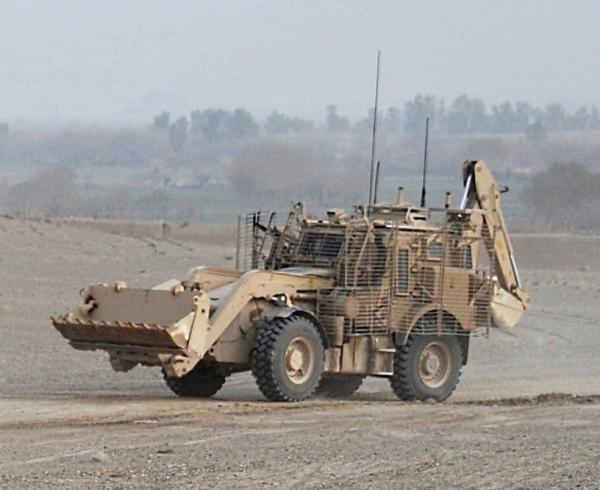
Imagine wandering through a bustling farm show: gleaming tractors, plowed fields, and—among them—a rugged, armored JCB High‑Mobility Engineer Excavator (HMEE) that appears more at home in a combat zone than a rural fair. Designed to bridge the worlds of agriculture and defense, the HMEE captivates with its unusual blend of speed, strength, and engineering finesse.
What Makes the HMEE Stand Out
Constructed to excel at military engineering tasks, this machine blends farm machinery familiarity with battlefield resilience: - Base Platform: Derived from JCB’s fast-moving Fastrac tractors—renowned in agriculture for speed and handling.
- High Speed Mobility: Capable of cruising at up to 60 mph on battlefield terrain, offering rapid self-deployment.
- Advanced Armor Kits:
- A‑Kit: Basic unarmored version.
- B‑Kit: Adds protective plating and ballistic glass.
- C‑Kit (Theatre Entry Standard): Highest protection, including blast-mitigating belly plates, slat armor, and situational-awareness enhancements.
Terminology Clarified- HMEE (High‑Mobility Engineer Excavator) – A backhoe loader adapted for military engineering with armor and rapid travel.
- Fastrac Tractor – JCB’s high-speed tractor model, known for its all-terrain capability and agricultural versatility.
- Armor Kits – Removable protective systems offering gradual levels of defense depending on expected threats.
- Self‑Deployment – Capability of traversing operational distances without external transport, critical in fast-moving theaters.
A Tale from the Field
During a regional farm exhibition, a jovial farmer marveled at the HMEE and remarked, “That’s the only backhoe here that could chase a combine and still trench for fence posts the next day.” It captured the essence of the machine’s duality: both speedy and rugged, rooted in practicality yet built for extreme conditions.
Global Reach and Real-World Deployments
Since its debut in the early 2000s, the HMEE has seen extensive use:- United States: Hundreds delivered under multiyear contracts.
- Allied Nations: Deployed by Australia, Germany, France, Spain, and others—valued for versatility in peacekeeping and infrastructure roles.
These machines handle road clearing, obstacle removal, IED cleanup, and emergency engineering near front lines—often where conventional construction equipment can’t reach.
Industry Momentum and Innovation
In recent defense and machinery circles, there’s growing recognition of hybrid platforms like the HMEE. Its agricultural origins make maintenance and logistics simpler, while its rugged build meets combat needs head-on. News from 2018 even noted plans for remote-control adaptations—redefining how engineering vehicles operate in high-risk zones.
Real Cases Where HMEE Made the Difference- Humanitarian Missions: Rapid deployment to hurricane-hit areas, assisting with road clearance and temporary structure support.
- Frontline Engineering: Installed bridges and cleared obstacles under fire, then swiftly relocated.
- Farm-and-Military Hybrid Use: Deployed in disaster-stricken rural zones, useful both for removing debris and later repurposed for heavy farm work.
Why the HMEE Shines in Farm Show Settings- Technological Crossroads: Pairing agricultural aesthetics with military toughness, it draws varied crowds—from farmers intrigued by the fast chassis to veterans admiring protective upgrades.
- Symbolic Power: Emblematic of equipment that transcends a single role—ready for farming, rescue, or rebuilding.
- Curiosity Magnet: Its presence sparks in-person stories—from engineers who admired its travel speed to mechanics recalling Fastrac platforms they maintain back home.
Quick Overview: JCB HMEE at a Glance- Origin: Fastrac fast agricultural tractor as the base.
- Capabilities: Up to 60 mph, heavy excavation, armored protection.
- Uses: Military engineering, disaster response, rapid self-deployment.
- Draw: Farm shows demonstrate its versatility and invite hands-on admiration.
Final Reflection
The sight of JCB’s armored backhoe roaming a farm exhibition blurs the line between bucolic craftsmanship and frontline engineering. It represents a powerful narrative: that innovations born for agriculture can be adapted for defense—and vice versa. If you'd like, I can share stories on armoring work tractors or explore how civilian gear crosses into military roles—just say the word!
|
|
|
|
| Can You Widen a Backhoe? Engineering, Practicality, and Field Modifications Explored |
|
Posted by: MikePhua - 08-08-2025, 11:17 PM - Forum: General Discussion
- No Replies
|
|
Introduction: Why Consider Widening a Backhoe?
Backhoes are among the most versatile pieces of construction machinery, capable of trenching, lifting, loading, and even light demolition. However, certain job site conditions—such as uneven ground, steep inclines, or unstable terrain—may demand more lateral stability than what a standard backhoe chassis offers. This has led some operators and shop fabricators to ask: Can you widen a backhoe?
The answer is complex. Technically, it is possible—but the process introduces significant mechanical, legal, and practical challenges. This article explores the realities, risks, and considerations of widening a backhoe, from axle and frame modifications to the impact on performance, safety, and resale value.
The Core Challenge: Stability vs. Structural Integrity
The primary goal of widening a backhoe is to increase stability. A wider track width (distance between the left and right tires) lowers the machine’s center of gravity and increases resistance to tipping during side-loading or while working on slopes. However, the original design of most backhoes is a carefully balanced interplay of: - Frame rigidity
- Axle load rating
- Hydraulic hose routing
- Turning radius and steering geometry
- Weight distribution over tires
By widening the stance, all of these variables are affected. Even if done successfully, the machine’s frame is now operating in a manner it wasn’t originally engineered for. Reinforcements may be needed, and components such as fenders, driveshafts, or stabilizers may require relocation or extension.
Methods of Widening a Backhoe
There are several approaches to widening a backhoe. Each has its pros and cons:
- Wheel Spacers
- Description: Bolt-on extensions that increase the track width by spacing the wheels further out from the hub.
- Pros: Reversible, relatively inexpensive, minimal fabrication required.
- Cons: Increases stress on wheel bearings and axle shafts, may void axle warranty.
- Custom Axle Extensions
- Description: Fabricated or aftermarket extensions welded or bolted between the axle housing and hub assembly.
- Pros: Permanent solution with customizable width.
- Cons: Requires high-quality welding and precision; any misalignment can lead to catastrophic failure.
- Swapping Wider Axles
- Description: Replacing the original axles with wider units from a similar or compatible model.
- Pros: Factory-strength solution, often retains OEM components.
- Cons: Expensive, may require custom brackets or steering linkage modifications.
- Full Chassis Modification
- Description: Cutting and widening the entire frame and repositioning components accordingly.
- Pros: Maximum stability, completely custom configuration.
- Cons: High cost, major fabrication, and extensive engineering required; legal implications for road use.
Engineering Risks and Considerations
Widening a backhoe affects several critical systems, and failure to account for these can result in dangerous outcomes:- Axle Load Redistribution: A wider stance may increase leverage against the center pivot point, stressing the axle bearings and differentials.
- Hydraulic System Flex: Stabilizers and swing arms rely on known geometry for effective movement. A wider stance can throw off hydraulic cylinder angles, affecting force application.
- Chassis Fatigue: Modified frames can crack if reinforcement plates aren't properly integrated. Stress concentrations often form at the edge of new welds or bolt holes.
- Steering Geometry: Widening alters Ackermann angles, turning radius, and scrub radius, leading to tire wear and unstable steering under load.
- Braking and Load Transfer: Changes in width affect weight transfer during braking or lifting, potentially leading to nosedives or rear-end lift-off during heavy operations.
Real-World Examples and Field Stories
One operator working in steep vineyard terrain modified a compact backhoe to better handle side slopes. They used bolt-on spacers and reinforced the axle housing with gussets. The result was a machine that climbed slopes confidently and resisted tipping. However, the front axle bearings failed within 200 hours due to the additional lateral load—highlighting the tradeoff between stability and component longevity.
In another case, a contractor in the Pacific Northwest fully widened a vintage Ford 555 backhoe by fabricating new front and rear axles from logging truck parts. While the machine gained impressive stability, the turning radius increased so drastically that it was unusable in tight spaces. It also became too wide for transport without special permits, significantly limiting its mobility.
Legal and Regulatory Considerations
Any major structural modification—especially to the undercarriage—can void OEM warranties and insurance coverage. In some jurisdictions, equipment exceeding a certain width (often 102 inches) must be registered as oversized and transported with escort vehicles. For contractors who rely on mobility and rental resell value, these legal challenges can outweigh the perceived benefits of the modification.
Alternative Solutions Without Widening
Before reaching for a torch or welder, consider alternatives that may provide stability without the same risks:- Use of Outriggers/Stabilizers: Most backhoes are already equipped with hydraulic stabilizers that, when properly deployed, provide excellent side-to-side support.
- Wheel Ballasting: Adding liquid ballast or wheel weights can significantly improve stability without modifying geometry.
- Track Conversions: Some compact machines can be converted to track drive, dramatically improving side-hill capability.
- Low-Profile Tires: Wider tires with lower sidewalls can improve lateral grip and reduce roll risk without changing the axle.
Lessons from Other Industries
Agricultural machinery often deals with the same tradeoffs. Tractors used for spraying tall crops frequently use adjustable-width axles, a design that allows the track width to be changed via telescoping axle tubes. However, these systems are factory-designed, built to tight tolerances, and not easy to replicate in the field.
Military engineering vehicles often feature modular suspension units that can be removed or repositioned. These are built for adaptability and durability—but also cost many times more than civilian backhoes. The takeaway? Modularity is ideal, but expensive to retrofit.
Conclusion: Proceed with Caution and Purpose
Widening a backhoe is possible—but far from simple. The process involves deep mechanical knowledge, fabrication expertise, and a clear understanding of the implications on every system in the machine. In many cases, the risks outweigh the benefits unless the modification is performed for a very specific and justified purpose.
For those who do proceed, documentation, expert consultation, and rigorous testing are essential. The backhoe may indeed become more stable—but only if the engineering holds up. If not, the cost could be far greater than the initial modification, both in safety and repair.
|
|
|
|
| Concrete Crusher Attachment for the PC200 Excavator: An In‐Depth Exploration |
|
Posted by: MikePhua - 08-08-2025, 11:16 PM - Forum: Parts , Attachments & Tools
- No Replies
|
|
Working with a PC200 excavator fitted with a concrete crusher turns demolition into a symphony of precision, power, and practicality. Let’s crank up the detail, define the jargon, and weave in tales that bring this attachment to life.
Overview of the Concrete Crusher Attachment
Transforming a standard excavator into a demolition powerhouse, the concrete crusher attachment enables efficient dismantling of reinforced structures. It typically consists of heavy-duty, hydraulically driven jaws—often with reversible steel plates—that clamp and pulverize concrete and rebar.
Terminology You Should Know - Crusher Jaws – The two interlocking plates that exert force to crush materials.
- Hydraulic Rotator – A component allowing the attachment to swivel 360°, improving reach and control.
- Reversible Wear Plates – Hardened steel elements that can be flipped once one side wears down, extending the tool’s life.
- Throat Depth – The maximum reach inside slabs or walls that the crusher can effectively grip.
- Cycle Time – The duration for the jaws to open and close—critical in assessing operational speed.
How the Crusher Works, Step by Step- The PC200 positions itself adjacent to the concrete structure.
- The hydraulic system pressurizes fluid to move the jaws.
- Reversible wear plates begin fracturing concrete under immense bite force.
- Once material cracks, the jaws retract slightly, reposition, and crush again.
- Fragmented debris is cleared away, and the process repeats.
A Real-world Anecdote
In a mid-town cathedral renovation, a demolition crew needed minimal disturbance around sensitive stained-glass windows. They deployed a crusher‑fitted PC200 to delicately nibble away sections of reinforced concrete—inch by inch—avoiding shock that could shatter the glass. The operator recounted, “It felt like sculpting marble with a torch—controlled, precise, and oddly poetic.” In just days, the structure was dismantled, while the priceless artistry remained intact.
Industry Trends and Insights
Demolition contractors today lean heavily on attachments like concrete crushers for their dual benefit of efficiency and safety. Recent trade publications highlight that using hydraulic crushers reduces manual jackhammer work by up to 80%, lowering operator fatigue and noise pollution. In 2024, several urban infrastructure projects cited significant reductions in vibration-related public complaints by switching to crusher-equipped excavators—evidence of machine innovation meeting community demands.
Supplemental Case Studies- Urban high-rise retrofit: On a building retrofit downtown, crews removed internal concrete partitions with a PC200 crusher without evacuating adjacent offices. Keeping operations quiet and contained, they maintained workflow continuity across multiple floors.
- Bridge deck replacement: An old bridge deck required partial concrete removal. The crusher attachment chewed through reinforced slabs swiftly, while minimized debris dust kept nearby waterways protected—winning praise from environmental overseers.
- Post-disaster cleanup: After an earthquake, a rescue team used the crusher to clear margins of collapsed concrete walls, creating safe paths for first responders. The speed of deployment and effectiveness saved crucial minutes in rescue operations.
Benefits of Using Concrete Crusher Attachments- Precision – Ideal for controlled breakdowns near sensitive structures.
- Efficiency – Crushes concrete faster than manual or basic methods.
- Safety – Reduces airborne dust and operator exposure to vibrations.
- Versatility – Reversible plates and rotator capabilities adjust to shape and angle.
- Cost‑effectiveness – Fewer labor hours and reduced debris removal costs.
Challenges and Strategic Considerations- Hydraulic power constraints – Ensure the PC200’s hydraulic pump can sustain continuous high-pressure cycles.
- Wear components – Regularly inspect and rotate wear plates to avoid premature failure.
- Operator training – Precision attachments demand accurate control—proper training pays dividends.
- Accessibility – For tight urban or structurally compromised settings, planning placement and positioning is key.
Quick Reference: Concrete Crusher at a Glance- Key Components: Crusher jaws, hydraulic rotator, reversible wear plates.
- Operational Steps: Position → Hydraulics engage → Crushing → Retract and repeat → Clear debris.
- Advantages: Precision, speed, reduced vibration/dust, adaptability, cost savings.
- Considerations: Hydraulics capacity, component wear, operator skill, access strategy.
Final Thoughts
Adorning a PC200 excavator with a concrete crusher transforms it into a demolition maestro—capable of executing tough tasks with finesse and speed. From preserving heritage features to clearing disaster zones, these attachments marry brute force with artistry. Let me know if you’d like help selecting a specific model, benchmarking cycle times, or stories from project managers using them—I can dig deeper!
|
|
|
|
| Supplying Used Construction Machines Worldwide: A Global Overview |
|
Posted by: MikePhua - 08-08-2025, 11:15 PM - Forum: General Discussion
- No Replies
|
|
In a world where infrastructure demand never sleeps—bridges, roads, high-rises—used construction machines have become powerful enablers. These heavy-duty units travel across continents to support rebuilding efforts, remote developments, and budget-conscious operations. Understanding how this global network functions offers insight into logistics, sustainability, and ingenuity.
How Global Supply Chains Operate
The journey of a used excavator or loader is far more complex than a simple sale: - Sourcing – Retired equipment comes from construction companies, rental fleets, government surplus, and auctions in countries with high turnover.
- Inspection & Refurbishment – Machines are evaluated, cleaned, and often overhauled: parts like hydraulic pumps, seals, and undercarriages may be refurbished or replaced.
- Logistics Coordination – Units are transported by land to ports, securely crated or containerized, then shipped via sea or air—depending on urgency and distance.
- Destination Customization – Upon arrival, units may need locomotive conversions (metric/imperial parts), right‑ or left‑hand drive adaptations, or fresh emissions-compliant engines for local regulations.
Terminology Clarified- Refurbishment – Restoring equipment to functional and aesthetic condition to extend service life.
- Under-carriage – The base part of excavators and bulldozers—comprising tracks, rollers, and sprockets—that takes heavy wear.
- Containerized Transport – Packing machinery in intermodal containers for cross-modal shipping via trucks, trains, or ships.
- Metric vs. Imperial Conversion – Altering parts or fittings to match local measurement systems, common when machines move between, say, North America and Asia.
A Story from the Field
A mid-sized contractor in Kenya once ordered three 2000s-era backhoes. When they arrived, the left-hand-drive configuration and USA-spec emission setup rendered them impractical. Local technicians worked around the clock: retrofitting right-hand controls and swapping out the engines with cleaner-burning, locally compliant ones. Within two weeks, the machines rolled onto site, proving adaptability and local know-how are as vital as the machines themselves.
Industry Trends and News
In recent years, industry analysts have noted a surge in demand for used equipment in emerging economies, driven by cost pressures and sustainability goals. A 2024 report observed that refurbishing existing machines produces up to 60% less carbon emissions than building new ones—an environmental win that aligns with green infrastructure policies. In line with this, several mid-2025 announcements highlighted new global refurbishment hubs in Southeast Asia, offering turnkey conversion capabilities to serve regional markets faster.
Notable Case Studies- South America: Contractors importing used wheel loaders from Europe reduced costs by 40% compared to buying new. Combined with local refurbishment, they achieved fleet‑ready status in under a month.
- Eastern Europe: A leasing company acquired decommissioned North American excavators, retrofitted them with metric control systems and European-standard hydraulics, then dispersed them across rural projects at a fraction of new‑machine pricing.
- Middle East: Oilfield operators purchased large-capacity used cranes, retrofitted them for desert conditions—reinforced cooling systems and upgraded dust filters—turning them into endurance-grade machines.
Key Benefits of the Global Used-Machine Network- Cost Efficiency – Savings of 30–60% allow smaller operators and developing markets access to heavy machinery.
- Sustainability – Prolonged lifespan of equipment reduces environmental impact.
- Speed – Refurbishment and shipping often beat the lead time for sourcing brand-new equipment.
- Adaptability – Machines are customized to local specs, climate, and regulations, avoiding one-size-fits-all issues.
Key Challenges to Navigate- Compliance Variations – Different countries require diverse emission and safety standards.
- Logistics Complexity – Coordinating equipment movement across borders, customs, and port handling takes careful planning.
- Spare‑parts Support – Availability of replacement parts varies by legacy brand and location.
Quick Reference: Global Used Machine Supply Workflow- Sourcing → Inspection & Refurbishing → Shipping (land + sea/air) → Local Customization → Deployment
- Add-on tasks: Metric/imperial conversions, emissions compliance, climatic adaptation (e.g. desert cooling, cold‑weather starting kits)
Closing Reflection
Transporting used construction machines globally isn’t just about buying and selling—they’re vehicles of resourcefulness, bringing heavy equipment across continents to serve new lifespans, new projects, and new challenges. Each machine carries layers of stories—from its original site to its new home—blending logistics, engineering, sustainability, and adaptability.
If you'd like to explore specifics—like how emission retrofits work, examples of refurbishment hubs, or the economics in a particular region—just let me know!
|
|
|
|
|



