| Welcome, Guest |
You have to register before you can post on our site.
|
| Forum Statistics |
» Members: 74
» Latest member: Tomo
» Forum threads: 47,413
» Forum posts: 47,419
Full Statistics
|
| Online Users |
There are currently 65 online users.
» 0 Member(s) | 56 Guest(s)
Amazon, Bing, Claude, DotBot, Google, MJ12, OpenAI, Petalbot, Semrush
|
| Latest Threads |
Identifying and Sourcing ...
Forum: Parts , Attachments & Tools
Last Post: MikePhua
01-07-2026, 06:29 PM
» Replies: 0
» Views: 460
|
Cat 931B Brake Parts
Forum: Parts , Attachments & Tools
Last Post: MikePhua
01-07-2026, 06:29 PM
» Replies: 0
» Views: 270
|
Choosing Between Cat 228,...
Forum: General Discussion
Last Post: MikePhua
01-07-2026, 06:28 PM
» Replies: 0
» Views: 478
|
Fix It or Part It Out
Forum: General Discussion
Last Post: MikePhua
01-07-2026, 06:27 PM
» Replies: 0
» Views: 336
|
Hydraulic Delay When Lowe...
Forum: Troubleshooting & Diagnosing
Last Post: MikePhua
01-07-2026, 06:27 PM
» Replies: 0
» Views: 418
|
Bale Chopper and Mulcher ...
Forum: General Discussion
Last Post: MikePhua
01-07-2026, 06:26 PM
» Replies: 0
» Views: 296
|
Mini UC Maintenance
Forum: General Discussion
Last Post: MikePhua
01-07-2026, 06:25 PM
» Replies: 0
» Views: 286
|
Locating Wiring Informati...
Forum: General Discussion
Last Post: MikePhua
01-07-2026, 06:24 PM
» Replies: 0
» Views: 320
|
Case Industrial Brown Sub...
Forum: Parts , Attachments & Tools
Last Post: MikePhua
01-07-2026, 06:23 PM
» Replies: 0
» Views: 262
|
Dirt Work in West Virgini...
Forum: Construction & Urban Infrastructure Forum
Last Post: MikePhua
01-07-2026, 06:23 PM
» Replies: 0
» Views: 353
|
|
|
| Excavators Working in Conflict Zones |
|
Posted by: MikePhua - 08-28-2025, 03:17 PM - Forum: General Discussion
- No Replies
|
 |
Context and Overview
In regions impacted by conflict and ruin, large-scale digging machinery silently performs difficult, indispensable work. These machines—excavators—carry out tasks ranging from clearing battle-damaged infrastructure to restoring airport runways. More than mere metal giants, they embody both utility and resilience.
Excavator Role in Post-Conflict Reconstruction
Excavators, also known as hydraulic shovels or diggers (heavy machines equipped with a boom, stick, and bucket, powered hydraulically), often clear rubble, unexploded ordnance, and collapsed structures in war-torn areas. They can lift heavy debris, trench through compacted soil, and restore vital access routes. In one real-world scenario, engineers used excavators to remove buried military vehicles from runways, enabling airports to reopen and communities to regain connectivity.
Historic Evolution of the Excavator
Excavators trace their roots back to rudimentary hand-dug pits and pulley systems. With the industrial revolution, steam-powered shovels emerged. Over the decades, the technology evolved toward compact, highly mobile units with diesel hydraulic systems. In the last 40 years, mini and compact excavators transformed into versatile tool carriers—equipped with attachments like hydraulic breakers or grapples—expanding their applications to landscaping, utilities work, and beyond .
Market Growth and Global Reach
The excavator industry reflects growing global infrastructure demands. Here's a snapshot of market trends: - Market value stood around USD 75.85 billion in 2023, projected to reach USD 108.37 billion by 2030, with a compound annual growth rate (CAGR) of 5.0 % .
- Another analysis placed global valuation at USD 60.7 billion in 2023, expecting approximately USD 96.5 billion by 2034 .
- Estimates vary, but consensus suggests strong growth of 4.9 %–5.5 % CAGR across the decade .
- In the United States alone, the excavator market hit about USD 10.10 billion in 2023, with steady growth forecasted through 2030 at 3.2 % CAGR .
- Emerging economies in Asia-Pacific remain dominant, accounting for over 40 % of global demand, driven by rapid urban expansion and big infrastructure projects .
Leading Manufacturers and Origins
Major names in the excavator landscape include Caterpillar (USA), Komatsu and Hitachi (Japan), Volvo (Sweden), and Doosan (South Korea) . For instance, Caterpillar’s early diesel tractors helped build iconic projects like the Hoover Dam and interstate highways , laying the groundwork for modern heavy-duty hydraulic equipment.
Insights from Field Stories
Imagine a scene where a heavy machine operator guiding a large excavator stands amid debris-strewn airport grounds, smoothing out soil to clear a runway. Nearby, soldiers coordinate as the arm of steel breaks through layers of collapsed concrete. Before the war, airlines operated daily; now, each bucket swing by these massive machines helps restore hope and movement.
Technical Terms to Know- Hydraulic system: equipment using pressurized fluid to power movement of the arm and bucket.
- Attachment: interchangeable tools—like breakers or grapples—mounted at the excavator’s end for specific tasks.
- Crawler vs. Wheeled: crawlers use tracks and excel on rough terrain; wheeled units offer higher speed on flat surfaces.
- Mini excavator: lightweight variant under approximately 5–6 tons, ideal for tight spaces.
Recommendations for Practitioners
To improve operations in challenging environments:
• Choose crawler models for soft or irregular ground.
• Fit appropriate attachments—rock breakers for demolition, augers for drilling, grapples for debris.
• Train operators in controlled digging and stabilization to prevent accidents.
• Prioritize maintenance—hydraulic fluids, filters, and engine checks ensure reliability in harsh conditions.
Conclusion
Excavators are not merely construction equipment; in conflict-affected regions, they become instruments of recovery. Their evolution and market expansion reflect humanity's drive to build, rebuild, and progress. With design innovations, robust market growth, and compelling stories in adverse conditions, excavators remain essential tools in both construction and restoration.
|

|
|
| JD 750J Hydraulic Fan Fault |
|
Posted by: MikePhua - 08-28-2025, 03:17 PM - Forum: Troubleshooting & Diagnosing
- No Replies
|
|
The operator encountered an active error reading 1701-5, signaling an open-circuit condition in the fan-drive solenoid. This indicates the electronic actuator that powers the cooling fan is not receiving or completing the electrical path. Additionally, the feature that allows the fan to reverse its rotation is not responding.
Location of Control Unit
The machine’s Transmission Control Unit (TCU), which issues the command to the fan-drive solenoid, is positioned behind the operator’s display in the cab. Two wires extend from the TCU to the fan solenoid: one colored green (identified as H02), and one black (G11). The green wire carries the control signal from pin 14 of the bottom (X2) connector on the TCU. The black wire provides the electrical return path (ground) through the starter assembly. If this ground connection is loose or corroded, both the fan drive and its reverse function may fail.
Small Anecdote
Picture a foreman on a chilly morning discovering his machine’s fan won’t reverse. He fiddles with controls, gets no response, but then a local tech reminds him: “Have you checked the ground at the starter?” A quick tighten solves it, the fan spins in reverse at the push of a button, and the day moves along smoothly—highlighting how a simple ground fix can avert a major headache.
Equipment Background
The JD 750J is a crawler-type bulldozer from John Deere’s medium-duty line, featuring a robust hydrostatic transmission and a sophisticated hydraulic fan system. Developed in the early 2000s, it builds on decades of John Deere’s earthmoving machinery expertise. Although exact global sales numbers are not publicly published, this model has been widely adopted across construction, forestry, and mining due to its balance of power (typically powered by a 6.8 L PowerTech engine), reliability, and operator comfort.
John Deere—the company behind it—originated in the 19th century as a plow maker and through steady innovation grew into a leader in agricultural and construction equipment. The 750J reflects that heritage: rugged engineering paired with advanced electronics and hydraulics.
Glossary of Key Terms - TCU (Transmission Control Unit): The electronic module that governs gear changes and controls auxiliary hydraulic functions, including the fan drive.
- Proportional Solenoid: An electrically actuated valve that modulates flow based on input current, used here to control fan speed.
- Ground (Electrical): The return path for current; must be secure to complete the circuit.
- Fan Reverse Function: A feature that enables the cooling fan to switch rotation direction, helping clear debris from the radiator.
Typical Specifications (approximate)- Engine: John Deere PowerTech 6.8 L diesel
- Hydraulic system capacity: ~106 L (28 gal)
- Hydraulic oil filter change interval: ~2,000 operating hours
- Hydrostatic transmission oil: similar capacity
- Diagnostic code 1701-5: open circuit to fan drive solenoid
Useful Recommendations
• Ground Verification: Check the starter ground point where the black G11 wire is grounded. Ensure clean, tight, corrosion-free contact.
• Wire Integrity: Visually inspect H02 (green) and G11 (black) wiring for abrasion, breaks, or loose connectors—especially at the TCU connector X2.
• Connector Cleaning: Use approved electrical contact cleaner, then apply dielectric grease to prevent future corrosion.
• Functional Test: With a multimeter, monitor for proper voltage at H02 during engine operation or fan-reverse commands. Confirm continuity on G11 to chassis or starter.
• Diagnostic Scan: Use John Deere’s Service ADVISOR or similar diagnostic tool to monitor the TCU’s state and see if commands are reaching the solenoid.
• Complete Troubleshooting Flow:- Inspect ground – tighten or repair as needed
- Inspect wiring from TCU to solenoid – repair any damage
- Confirm signal pulses from TCU during fan reverse operation
- If wiring and signal are good, check the solenoid’s internal coil resistance and operation
- As last resort, replace the fan drive solenoid if it fails electrical or functional tests
Extra Context—Maintenance Intervals
According to maintenance documentation for the 750J (circa April 2022), hydraulic system oil and filters—including those serving the fan return—and hydrostatic transmission oil should be serviced roughly every 2,000 hours. These intervals ensure optimal hydraulic flow and cooling system performance and can influence behavior of components including the fan drive system.
Final Takeaway
A fault like 1701-5 in the JD 750J often stems from an interrupted electrical circuit—typically involving a missing ground or wiring issue—rather than a full component failure. Because the fan reverse function shares that ground path, both systems going dark suggest a shared root cause. A focused check of the ground at the starter, along with signal verification from the TCU, usually resolves the issue. Regular maintenance and attention to electrical connections can prevent recurrence.
|
|
|
|
| Caterpillar D7H Dozer Performance and Ownership Insights |
|
Posted by: MikePhua - 08-28-2025, 03:16 PM - Forum: General Discussion
- No Replies
|
|
Caterpillar’s High Drive Revolution
The Caterpillar D7H was introduced in the mid-1980s as part of Caterpillar’s push toward high-drive dozer architecture—a design shift that redefined the durability and serviceability of track-type tractors. Caterpillar, founded in 1925, had already cemented its reputation in earthmoving, but the D7H marked a significant leap in mid-size dozer capability. With its elevated sprocket design, the D7H offered improved undercarriage life, better weight distribution, and easier access to drivetrain components.
The D7H was produced in multiple configurations, including standard and LGP (Low Ground Pressure) variants. It was powered by the Caterpillar 3306 DI engine, a turbocharged inline-six known for its torque and reliability. By the end of its production run in the late 1990s, thousands of D7H units had been deployed across forestry, mining, road building, and land clearing operations worldwide.
Core Specifications and Capabilities
Typical specs for the D7H include: - Engine: Caterpillar 3306 DI, turbocharged
- Horsepower: 215 HP
- Operating weight: ~50,000 lbs (22,700 kg)
- Fuel tank capacity: 125 gallons
- Blade width: Up to 14 feet (depending on configuration)
- Transmission: Powershift with 3 forward and 3 reverse speeds
The D7H was designed to push heavy loads, rip compacted soils, and clear large stumps with ease. Its high-drive undercarriage reduced shock loads to the final drives and allowed for easier maintenance compared to traditional flat-track designs.
Field Performance and Operator Experience
Operators transitioning from smaller machines like the D5N or D6H often describe the D7H as a game-changer. Its blade strength and weight allow it to uproot large hardwood stumps and move substantial volumes of material. In timber clearing operations, the D7H outperforms six-way blade machines by delivering brute force rather than finesse.
One contractor in Tennessee upgraded from a D5N and 320 excavator to a D7H for clearing cut-over timberland. The difference was immediate—the D7H could push through root balls and compacted debris that previously required multiple passes or excavator assistance.
However, the D7H is not without quirks. In prolonged leveling tasks, some units experience hydraulic heat buildup, often attributed to aging pumps or restricted flow. Regular hydraulic fluid changes and cooler inspections are recommended to mitigate this.
Terminology Notes- High Drive: An undercarriage design where the drive sprocket is elevated above the track frame, reducing shock loads and improving serviceability.
- LGP (Low Ground Pressure): A configuration with wider tracks and lower ground pressure, ideal for soft or wet terrain.
- Powershift Transmission: A transmission that allows gear changes under load without clutching, using hydraulic pressure and clutch packs.
Maintenance and Repair Considerations
The D7H’s mechanical systems are praised for their accessibility. Steering clutches, brakes, and final drives can be serviced without removing the entire undercarriage. Parts for the 3306 engine remain widely available, and many components are shared across other Caterpillar machines.
Common maintenance tasks include:- Replacing fan hub bearings every 2,000–3,000 hours
- Inspecting air-fuel ratio control components for wear
- Cleaning residual oil from final drive housings during service
- Monitoring track tension and roller wear, especially on LGP models
In the UK, a contractor running three D7H units reported minimal downtime over 15-hour workdays, even on steep terrain. He emphasized the importance of proactive undercarriage inspections and praised the machine’s ability to “earn its oats” without excessive fuel consumption.
Fuel Consumption and Operating Costs
The D7H burns approximately 10–20 gallons of diesel per hour depending on load and terrain. With a 125-gallon tank, it can operate for a full shift without refueling. While fuel costs are significant, the machine’s productivity offsets the expense. In North Dakota, operators reported earning $160/hour for D7H work during peak seasons, compared to $100/hour for smaller machines.
Ownership costs include:- Fuel: ~$50–100/day depending on usage
- Maintenance: ~$75/hour including wear parts and labor
- Operator wages: Varies by region, typically $25–40/hour
For owner-operators, the D7H offers a strong return on investment when used in high-volume earthmoving or stump removal projects.
Steering Systems and Design Philosophy
The D7H uses a clutch-and-brake steering system, which some operators prefer over differential steer. While differential steer allows smoother turns under load, it introduces complexity and potential for electronic failures. The clutch-brake system, by contrast, is mechanically robust and easier to diagnose.
In one comparison, a fleet manager replaced differential steer D9s with clutch-brake machines after repeated electronic issues. He described the older system as “bulletproof” and more suitable for remote operations without dealer support.
Buying Advice and Market Value
Used D7H units vary in price depending on hours, condition, and undercarriage wear. A one-owner machine with 13,000 hours and 90% undercarriage life may sell for $55,000–$65,000. Buyers should inspect:- Torque converter history
- Track frame alignment
- Blade wear and hydraulic cylinder seals
- Engine blowby and oil analysis reports
In restoration circles, the D7H is gaining attention for its rebuild potential. Its mechanical simplicity and parts availability make it a candidate for long-term ownership, especially in regions with limited access to dealer service.
Conclusion
The Caterpillar D7H remains one of the most respected mid-size dozers ever built. Its high-drive design, powerful engine, and straightforward mechanics make it ideal for demanding tasks like timber clearing, ripping, and bulk earthmoving. While fuel and maintenance costs are real considerations, the machine’s productivity and reliability justify its place in any serious contractor’s fleet. Whether pushing stumps in Tennessee or grading slopes in New Zealand, the D7H proves that good engineering stands the test of time.
|
|
|
|
| Madill 071 Bogie Wheels Details |
|
Posted by: MikePhua - 08-28-2025, 03:15 PM - Forum: Parts , Attachments & Tools
- No Replies
|
|
In logging cranes like the Madill 071 yarder, the bogie wheels and associated idler components are pivotal for ensuring smooth movement over rough and rugged terrain. These undercarriage parts bear a substantial load and provide essential traction, especially when assembled on crawler-type mounts or tank-style bases. Operators typically source these wheels—often M32 size—from specialized manufacturers or salvage suppliers.
Technical Note: A bogie wheel refers to a cluster of small load-bearing rollers grouped in a bogie (or truck) assembly. The idler is a single supportive roller guiding the track or chains, maintaining tension and alignment.
Madill 071 Background and Production Context
The Madill 071 is a slack-line tower yarder featuring a 50-foot tower—born in the 1970 s and produced through the early 1980 s. It's designed for heavy-payload cable logging where skyline, mainline, and haulback drums manage complex rigging systems for uphill or downhill yarding. The vehicle was built in limited numbers—around 240 units—making it rarer than Madill's most prolific model, the “009.” The earliest units were mounted on Terex 82-30 crawlers (often painted Terex green), while later ones used purpose-built crane-carriers, and a popular variant was mounted on surplus military tanks—famously rugged and versatile.
Specifications and Market Values
Typically, the Madill 071 is powered by diesel engines like the 6V92T or 8V92T, paired with torque-enhanced drivetrains and robust undercarriages. A documented example (1982, with 8V92T, tall gearing, 33 % torque upgrade, good undercarriage condition) was priced around $110,000 USD. Another listing for a 1985 model with rigging and extra parts dropped in for approximately $89,000 USD, while a 1989 version clocked nearly $75,000 USD. Based on recent marketplace data, pricing ranges span $35,932 to $89,000 USD for Madill 071 units.
Maintenance Strategies and Suggestions - Track-system upkeep: Regular inspection of bogie wheel sets and idlers is essential. Listening for abnormal grinding or noting misaligned track can help preempt injuries and failures.
- Sourcing quality parts: Since the 071 is vintage, used or remanufactured parts from specialized suppliers or industrial salvage yards is often the only route.
- Undercarriage upgrades: Consider outfitting a worn crawler mount with a heavy-duty tank base, which improves durability and terrain crossing capability.
- Rigging refresh: Ensure lines and carriages—such as Christy or Eagle models—are tensioned, lubricated, and free of wear. Modern synthetic cables may be substituted where load specs match or exceed original steel versions.
Short Historical Anecdote
A seasoned logger recounted that in the late 2000s, he inherited a Madill 071 mounted on a tank-like undercarriage. In freezing, rocky terrain, that old “horse” dragged 3-ton logs with surprising steadiness. He’d often start early, hauling logs down in side blocking operations by sunrise, and joked, “That donkey will pull!” An affectionate reminder that well-maintained classic equipment can outperform modern machines in tough conditions.
Madill’s Company & Model Lineage
Madill—originally founded as heavy equipment and logging machinery builders—grew through the mid-20th century. In 1989, following the tragic loss of a key figure, Pat Madill, the company was acquired by Cypress Ltd. of Delta, BC. The new owner recognized Madill’s brand legacy and continued building models—painted in signature orange—under that name, merging design innovation with established trust. After the acquisition, a lineage of larger hydraulic swing-yarders appeared: models like the Madill 120, 124, and 172, offering up to 70-foot towers, advanced hydraulics, and heavier payload capacity.
Summary List of Insights- Bogie wheel + idler role: Key track support and guidance in heavy yarders.
- Production run: Approximately 240 Madill 071s built, with varied undercarriage options.
- Engine types: Commonly 6V92T or 8V92T diesel engines with enhanced torque.
- Current values: Market prices vary from ~$35K to ~$110K depending on condition and configuration.
- Maintenance tips: Monitor for wear, upgrade undercarriage, source quality used parts.
- Company history: Madill merged into Cypress in 1989; later models expanded in size and capability.
Technical Glossary- Bogie wheel: A cluster of small rollers grouped in a pivoting frame to support moving tracks.
- Idler: A free-spinning roller used to maintain tension and alignment of crawler belts or chains.
- Slack-line yarder: Logging crane with separate drums for mainline, haulback, and skyline—allows more versatile cable yarding.
- Torque upgrade: Gear or driveline modification to increase pulling power output at low speeds.
|
|
|
|
| Running a John Deere 310D Without Oil and What It Teaches Us |
|
Posted by: MikePhua - 08-28-2025, 03:14 PM - Forum: Troubleshooting & Diagnosing
- No Replies
|
|
The Legacy of the John Deere 310D
The John Deere 310D is a backhoe loader that represents a pivotal moment in Deere’s evolution of compact construction machinery. Produced from 1991 to 1997, the 310D was a successor to the 310C and preceded the electronically enhanced 310E. With over 20,000 units sold globally, the 310D became a staple in municipal fleets, farm operations, and small contractor yards.
Equipped with a naturally aspirated or turbocharged John Deere 4039D engine, the 310D delivered around 75 horsepower and featured a four-speed PowerShift transmission. Its hydraulic system, capable of generating pressures up to 2,500 psi, powered both the loader and backhoe with precision. The machine’s reputation for reliability and mechanical simplicity made it a favorite among operators who preferred wrench-accessible systems over diagnostic laptops.
What Happens When You Run an Engine Without Oil
Running any internal combustion engine without oil is a high-risk move. Engine oil serves multiple roles: - Lubricates moving parts to reduce friction
- Cools components by transferring heat
- Cleans internal surfaces by suspending contaminants
- Seals microscopic gaps between piston rings and cylinder walls
Without oil, metal-on-metal contact escalates rapidly. Bearings, cam lobes, and piston skirts begin to gall and seize. In extreme cases, crankshafts can weld themselves to main bearings, and connecting rods may snap under stress.
In the case of the 310D, the engine was run twice for approximately 20–30 seconds each time without oil. Surprisingly, it continued to operate normally afterward. This outcome, while fortunate, is not guaranteed. The lack of load and short duration likely prevented catastrophic damage.
Terminology Notes- Blowby: Combustion gases that escape past the piston rings into the crankcase, often a sign of worn rings or cylinder walls.
- Galling: A form of wear caused by adhesion between sliding surfaces, leading to material transfer and surface damage.
- PowerShift Transmission: A transmission that allows gear changes without clutching, using hydraulic pressure and clutch packs.
Field Stories and Real-World Consequences
Operators and mechanics have shared similar experiences across industries. One excavator in a quarry ran for 15 minutes with a smashed oil sump to clear a blast zone. It survived and continued working for thousands of hours. In contrast, a grader in Canada was mistakenly filled with transmission fluid instead of engine oil. It idled for several minutes before squealing—its filters were later found packed with metal shavings, and the engine was replaced.
Another story from North Dakota involved a neighbor starting a tractor during a hay fire to create a firebreak. The engine seized mid-operation, and both the tractor and bales were lost. These anecdotes highlight the unpredictable nature of oil starvation and the importance of situational awareness.
Damage Assessment and Recovery Steps
If an engine is accidentally run without oil, the following steps are recommended:- Fill with fresh oil immediately and run at idle for 10–15 minutes
- Cut open the oil filter and inspect for metallic debris
- Use a magnetic drain plug to monitor future wear
- Perform a compression test to assess ring and cylinder integrity
- Monitor blowby levels and breather tube emissions
In the 310D case, the engine already exhibited heavy blowby before the incident. The operator switched to a thicker oil (25W-60) and added oil additives to reduce smoke. While this may mask symptoms temporarily, it does not reverse internal wear.
Preventive Measures and Shop Protocols
To prevent similar incidents:- Always remove ignition keys during oil changes
- Use “Do Not Operate” tags on steering wheels or dashboards
- Maintain a checklist for fluid changes and reassembly
- Train apprentices and staff on the consequences of dry starts
Some shops have implemented lockout procedures and require visual confirmation of fluid levels before startup. These protocols are especially critical in multi-shift operations or shared equipment yards.
John Deere’s Engineering Philosophy
John Deere’s approach to engine design emphasizes durability and serviceability. The 4039D engine in the 310D features robust cast iron construction, oversized bearings, and a low-RPM torque curve. These attributes contribute to its ability to survive short-term abuse, though they do not make it invincible.
Deere’s legacy in construction equipment is built on machines that can be repaired in the field with basic tools. This philosophy has earned loyalty among operators who value uptime and independence over digital diagnostics.
Conclusion
Running a John Deere 310D without oil is a mistake that could have ended in disaster—but didn’t. The incident serves as a reminder of the engine’s resilience and the importance of mechanical empathy. While the machine may continue to work, the event likely accelerated wear and shortened its service life. In the world of heavy equipment, mistakes happen—but how we respond, repair, and learn from them defines the true operator.
|
|
|
|
| Clark Michigan 175 Wheel Loader Background |
|
Posted by: MikePhua - 08-28-2025, 03:14 PM - Forum: General Discussion
- No Replies
|
|
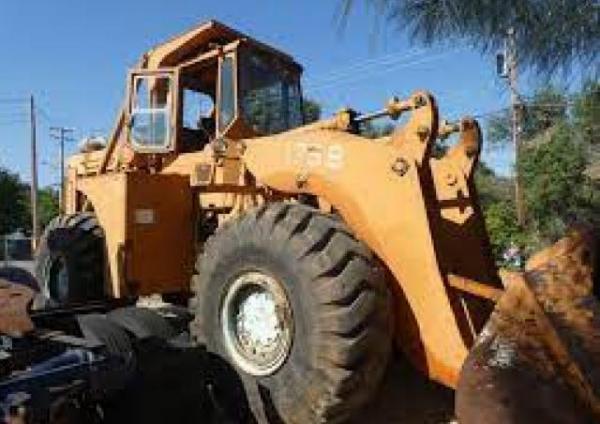
The Clark Michigan 175 series stands as a powerful example of mid-20th-century earthmoving machinery. Emerging from Clark Equipment Company, founded in 1916 by Eugene B. Clark, the firm carved a reputation for innovative lifting and loading machines. Its acquisition of the Michigan Power Shovel Company in 1953 pushed Clark firmly into the wheel loader market—a legacy that lasted until the mid-1980s as the Michigan-branded loaders made a lasting impression on construction yards and quarries.
Model Evolution and Technical Specs - 175A (1962–1985)
- Weight: approx. 16.8 t
- Travel speed: ~40 km/h
- Width: ~2.74 m; Height: ~3.38 m
- Engine: General Motors 6V-71, ~160 kW (≈215 hp), 7 L displacement, peak torque at ~1200 rpm
- 175C (1982–1985)
- Weight: ~25.5 t
- Bucket width: ~3.15 m
- Bucket capacity: 2.8–4.6 m³
- Travel speed: ~32.8 km/h
- Max discharge height: ~4.37 m
- Engine: Cummins NT-855C, ~310 hp gross
- Tip load: ~22 030 kg straight, ~19 784 kg full-turn
- Tires: 26.5-25; Operating weight: ~26 209 kg (≈57,781 lb)
- Hydraulic specs: breakout force ~38,240 lb; pump flow ~118 GPM; cycle times—dump: 2 s; raise: ~6.7 s; lower: ~4.2 s
Company Legacy
Clark’s origins date back to merging early machinery firms in Michigan under Eugene Clark’s leadership. The company rose by innovating in lift trucks and wheel loaders throughout the mid-20th century. In 1985, Clark’s wheel loader division merged into Volvo’s VME Group (Volvo-Michigan-Euclid), later evolving into Volvo Construction Equipment.
Field Stories and Real-World Use
An enthusiast recounts seeing a Michigan 175 DS at a museum, where it was used for heavy physical tasks like shifting railway panels and clearing snow. Another memory of a vintage 175 describes it starting roughly (“Jerry-rigged”) yet still managing to haul a 20-ton trailer even with locked wheels—proof of its raw durability.
Engineering Terms and Definitions- Breakout force: The maximum force needed to pry the loader’s bucket loose.
- Tip load: The maximum load the machine can handle when fully articulated—measured for straight and full-turn positions.
- Dump/raise/lower cycle: The time taken for hydraulic motion in the bucket; critical for operational efficiency.
- Operating weight: Includes the loader with all fluids, engine, and standard bucket.
Maintenance Insights and Suggestions- Given its robust weight (~26 t), regular servicing of tires, brakes, and hydraulic systems is essential.
- The powerful Cummins NT-855C engine demands attentive oil and cooling system maintenance, especially under load.
- Components like planetary wheel drives—designed with roller bearings—should be monitored for wear, especially during demanding tasks.
Brief Anecdote
In the chill of a northern English winter, one machine operator recalled reviving a dormant Michigan 175 DS by “jump-starting” its fuel system. After some makeshift improvisation, the loader roared back to life and effortlessly pushed snow off a parking lot—a vivid reminder of these machines’ gritty resilience.
Summary of Core Specs- 175A
- Weight ~16.8 t
- GM 6V-71 engine, ~215 hp
- Speed ~40 km/h; compact dimensions
- 175C
- Substantially heftier at ~26 t
- Cummins ~310 hp engine
- Bucket capacity up to ~4.6 m³; tip load ~22 t
- Hydraulic cycle times: dump 2 s, raise ~6.7 s, lower ~4.2 s
The Clark Michigan 175 series remains a testament to mid-century industrial engineering—combining muscular power, functional design, and historical importance. Whether classic loader enthusiasts or restoration specialists, understanding these machines’ legacy, specs, and maintenance nuances brings them vividly to life.
|
|
|
|
| JCB 8052 Lower Roller Lubrication and Repair Strategies |
|
Posted by: MikePhua - 08-28-2025, 03:13 PM - Forum: Troubleshooting & Diagnosing
- No Replies
|
|
JCB’s Compact Excavator Lineage
The JCB 8052 is part of JCB’s 8000-series compact excavators, designed for versatility in confined spaces while maintaining the durability expected of full-sized machines. JCB, founded in 1945 in Staffordshire, England, has grown into one of the world’s leading manufacturers of construction equipment. By the early 2000s, the 8052 had become a popular choice among small contractors and farmers due to its balance of power, maneuverability, and serviceability.
With an operating weight of approximately 5.2 metric tons and a digging depth of over 3.5 meters, the 8052 was engineered for trenching, grading, and light demolition. Its undercarriage, featuring multiple lower rollers, plays a critical role in distributing weight and ensuring track stability—especially on uneven terrain.
Understanding the Lower Rollers
Lower rollers, also known as bottom track rollers, support the weight of the machine and guide the track as it moves. Each roller contains internal bearings and seals that require proper lubrication to prevent seizure and premature wear. In the JCB 8052, these rollers are sealed units, originally filled with gear oil during assembly.
Typical roller specs include: - Quantity per side: 5 (total of 10)
- Lubricant capacity: ~75cc per roller
- Recommended lubricant: JCB Special Gear Oil or equivalent EP90
- Seal type: Dual-lip oil seals with dust wipers
Lubrication Challenges and Field Solutions
Over time, seals degrade due to heat, vibration, and environmental exposure. When seals fail, gear oil leaks out, and the roller bearings run dry—leading to seizure, noise, and uneven track wear. In one case from Vermont, a farmer discovered that all ten rollers on his 8052 had seized after replacing a failed track motor. Upon disassembly, the rollers were so worn they rattled when shaken.
Without immediate funds for replacement, the solution was pragmatic: clean the rollers thoroughly and pack them with heavy-duty grease. While not ideal, grease remains in place longer than oil in compromised rollers and can provide temporary lubrication. This approach can extend roller life for machines used infrequently, such as seasonal farm excavators.
Terminology Notes- EP90 Gear Oil: A high-viscosity lubricant designed for extreme pressure applications, commonly used in gearboxes and roller assemblies.
- Sealed Roller: A roller unit designed to retain lubricant and exclude contaminants without external grease fittings.
- Track Motor: A hydraulic motor that drives the track on one side of the excavator, critical for propulsion and steering.
Repair vs Replacement Considerations
When rollers seize, operators face a choice: rebuild or replace. Rebuilding involves disassembling the roller, replacing seals and bushings, and refilling with oil. However, sourcing parts and ensuring proper sealing can be time-consuming. For machines with extensive wear or budget constraints, staggered replacement is often more practical.
A common strategy includes:- Replacing the two end rollers first, as they bear the most stress during turning
- Salvaging internal components from less damaged rollers for temporary use
- Using phosphor bronze bushings for local repairs when machining resources are available
In one example, a machinist without a shop was able to restore partial function by manually cleaning and greasing rollers in his driveway. He planned to replace two rollers per month, aligning with his neighbor’s limited usage and tight budget.
Preventive Maintenance and Upgrade Tips
To avoid roller failure, operators should:- Inspect rollers every 250 hours for leaks or noise
- Check for uneven track wear, which may indicate roller imbalance
- Use infrared thermometers to detect overheating in rollers
- Consider retrofitting greaseable rollers if operating in abrasive conditions
For machines stored outdoors, UV exposure and moisture accelerate seal degradation. Covering the undercarriage or parking on dry surfaces can reduce long-term damage.
JCB’s Market Reach and Equipment Longevity
JCB has sold millions of compact excavators globally, with the 8052 being a staple in Europe, North America, and Australia. Its success stems from a design philosophy that favors mechanical simplicity and field serviceability. Even decades after production ceased, parts remain available through aftermarket suppliers and salvage yards.
In recent years, vintage JCBs have seen a resurgence among small contractors and restoration enthusiasts. Their straightforward engineering allows for DIY repairs, and their compact footprint makes them ideal for tight-access jobsites.
Conclusion
The JCB 8052’s lower rollers may seem like minor components, but their condition directly affects performance, safety, and longevity. Whether opting for grease-packed survival tactics or full replacement, understanding the lubrication system and repair options empowers operators to keep their machines running—even on a shoestring budget. In the world of compact excavators, resilience often begins at ground level.
|
|
|
|
| Differences Between the 1995 and 1997 John Deere 310D Backhoes |
|
Posted by: MikePhua - 08-28-2025, 02:31 PM - Forum: General Discussion
- No Replies
|
|
John Deere’s Evolution in the 310D Series
The John Deere 310D backhoe loader was part of a lineage that helped define the compact construction equipment market in the 1990s. Produced from 1991 to 1997, the 310D was a successor to the 310C and a precursor to the 310E. It was designed to offer improved hydraulic performance, operator comfort, and serviceability. By the time production ended in 1997, the 310D had become one of Deere’s most widely distributed backhoes, with thousands sold across North America, Latin America, and parts of Europe.
John Deere, founded in 1837, had long been a leader in agricultural machinery, but its expansion into construction equipment in the mid-20th century brought innovations that blended rugged design with operator-focused engineering. The 310D was emblematic of this approach—durable, intuitive, and adaptable.
Core Specifications of the 310D
Across its production years, the 310D maintained a consistent platform: - Engine: John Deere 4039D or 4039T, 4-cylinder diesel
- Horsepower: Approximately 75 HP
- Operating weight: Around 13,500–14,000 lbs
- Digging depth: Up to 14 feet
- Transmission: 4-speed PowerShift or SyncroShift
- Hydraulic system pressure: ~2,500 psi
While the base specs remained stable, subtle changes occurred between early and late production models—especially in the electrical and hydraulic systems.
Key Differences Between 1995 and 1997 Models
Though both years fall within the same model generation, the 1997 version represents the final iteration before the release of the 310E. Several component upgrades and refinements distinguish the two:- Reverser System
The 1997 model features an updated reverser with improved clutch packs and solenoid control. This change enhances directional shifting under load, reducing wear and improving responsiveness. The 1995 version uses an earlier design that may feel sluggish during rapid forward-reverse transitions.
- Hydraulic Pump and Control Valves
In 1997, Deere introduced a revised hydraulic pump with better flow regulation and slightly higher efficiency. Control valves were also updated to reduce internal leakage and improve feathering control. These changes are subtle but noticeable in precision tasks like trenching near utilities.
- Electrical Harness and Fuse Layout
The 1997 model includes a reorganized fuse panel and improved wiring insulation. This reduces the risk of shorts and simplifies troubleshooting. The 1995 version, while functional, is more prone to corrosion and brittle wires—especially in humid climates.
- Serial Number Breaks and Parts Compatibility
Deere’s parts catalog often lists different part numbers based on serial number ranges. For example, a hydraulic valve for a unit built before serial number XXXXX may differ from one built after. This means that while many parts are interchangeable, some critical components—especially in the transmission and hydraulics—require careful cross-referencing.
Terminology Notes- Reverser: A transmission component that allows the operator to change direction without shifting gears manually. Often used in loader applications for quick forward-reverse cycles.
- Feathering: The ability to control hydraulic flow gradually, allowing for smooth and precise movement of the boom or bucket.
- Clutch Pack: A set of friction plates used in transmissions to engage or disengage power flow.
Field Anecdotes and Operator Experience
In Costa Rica, a contractor operating both a 1995 and 1997 310D noted that the newer machine felt “snappier” when loading gravel. He attributed this to the updated reverser and hydraulics. “I didn’t think two years would make a difference,” he said, “but the 97 shifts cleaner and digs smoother.”
In Pennsylvania, a mechanic servicing municipal fleets observed that the 1997 models had fewer electrical issues over time. “The fuse layout is better, and the wires don’t crack as easily,” he explained. “It’s small stuff, but it saves hours of diagnostics.”
Maintenance Tips and Upgrade Suggestions
For owners of either model, the following practices can extend machine life and improve performance:- Upgrade the electrical harness with modern marine-grade wire and sealed connectors
- Replace hydraulic filters every 250 hours and inspect control valve seals annually
- Use synthetic transmission fluid to reduce wear in the reverser
- Install LED work lights and a digital voltmeter to monitor system health
If sourcing parts, always verify serial number compatibility. Deere’s online parts catalog allows users to input serial numbers and view updated diagrams—a crucial step before ordering.
Market Trends and Legacy
The 310D remains a popular choice in the used equipment market. Its mechanical simplicity and robust build make it ideal for small contractors, farmers, and municipalities. Units in good condition often sell between $10,000 and $20,000 depending on year, hours, and attachments.
While the 310E introduced more electronic controls and emissions updates, many operators prefer the 310D for its ease of repair and predictable behavior. In restoration circles, the 310D is often retrofitted with canopy upgrades, auxiliary hydraulics, and custom paint schemes.
Conclusion
Though the 1995 and 1997 John Deere 310D backhoes share a common DNA, the refinements in the final production year offer tangible benefits in reliability, hydraulic control, and electrical integrity. For buyers weighing options, the 1997 model may justify a modest premium—especially if long-term serviceability is a priority. Yet both versions uphold the legacy of the 310D: a machine built to work hard, last long, and earn its keep on any jobsite.
|
|
|
|
| Understanding the 953C Mag Coil |
|
Posted by: MikePhua - 08-28-2025, 02:31 PM - Forum: Parts , Attachments & Tools
- No Replies
|
|
The mag-coil—short for magnetic solenoid coil—is a small but critical electrical component that controls hydraulic pressure relief on certain Caterpillar 953C machines. This coil acts like an electric switch—instead of wiring up a bulb, it lets hydraulic fluid find either a low or high-pressure path, depending on voltage applied. When 24 volts power it, the coil shifts the relief valve into a higher threshold—useful, for example, when the bucket is crowding (moving material forward). When voltage is removed, pressure reverts to the lower default setting—often used for more gentle or safer operations.
Background Story of the 953C Track Loader
The Caterpillar 953C is a durable, mid-size track loader introduced in the late 1980s and early 1990s. It combined robust hydraulics with a powerful Cat 3126B six-cylinder diesel engine, producing roughly 128 net horsepower at 2000 rpm, enabling effective digging, loading, and rough-terrain work .
These machines found homes in construction, gravel-pit operations, and industrial maintenance sites. With thousands likely sold globally, the 953C’s versatile undercarriage and numerous optional attachments made it an adaptable workhorse .
Technical Role of the Mag Coil
In early-model 953C units, the mag coil was part of a dual-pressure relief system—essentially a “two-stage” hydraulic relief valve. One setting offered baseline pressure; when the coil received 24 V, it shifted the valve to a higher pressure, enabling stronger cohesion of the bucket or loader arms under load. This provided extra pushing power or stability when needed, without permanently overstressing the hydraulics.
The coil can fail or the valve cartridge block might jam due to debris, leading to performance issues. A practical fix involves disassembling and cleaning the valve cartridge—but sometimes the root issue is a worn or failing pump, which may need replacement.
In multiple cases, mechanics replaced the oil pump outright after repeated relief-system issues. These pumps are Vickers-style hydraulic units—not always available aftermarket. Some units have been sourced directly through CAT’s parts system, though availability varies by region .
Insights from Field Experience
A longtime operator from Ontario recommended measuring hydraulic pressure at both pump outlets while applying load—lifting and tilting at low idle and full throttle—to compare performance. Noisy pumps under load often point to internal failures rather than just coil problems.
Another technician noted that the solenoid-coil setup was specific to early models—the feature was discontinued in later 953C variants. So if you own a later version, you may not even have this coil in your circuit .
Terminology Clarified - Mag Coil: A magnetic solenoid coil that toggles hydraulic pressure relief settings electrically.
- Relief Valve Cartridge: The part inside the valve that shifts pressure thresholds when actuated by the coil.
- Pump (Vickers Style): The hydraulic pump model used in the relief system; critical for pressure generation.
- Crowd (Bucket Crowd): The act of pushing the bucket forward under load.
Recommendations and Solutions- Diagnostic Testing: Use a pressure gauge on the hydraulic pump outlet. Activate the coil (supply 24 V) to confirm whether pressure jumps to the higher setting. Do this test under both low idle and full throttle.
- Cleaning Maintenance: If pressure doesn't shift, remove and clean the relief valve cartridge to clear blockages caused by grit or contamination.
- Pump Assessment: If cleaning doesn’t restore function, suspect a failing pump—especially if noise or pressure drops persist. Consider sourcing a good pump, ideally genuine CAT, though regional availability may vary.
- Upgrade Considerations: If your model lacks the mag-coil feature, you may retrofit it—but verify electrical wiring, mounting, and hydraulic compatibility before undertaking such a project.
Short Anecdote
On a decommissioned railway yard in midwestern USA, a 953C loader sat idle because its bucket resisted movement. The operator wired 24 V directly to the suspected mag coil—electrical "kissing" as it were—and the hydraulic pressure spiked. The dusty cartridge popped open, revealing sediment blockage. A quick clean restored the loader to service. The machine hummed back to life, saving a costly pump change and proving that sometimes the simplest fix is the best.
Summary of Key Points- The mag-coil enables dual hydraulic pressure settings on early 953C track loaders.
- At rest, low pressure ensures safety and smooth operation; energizing the coil triggers high pressure for heavy work.
- Common issues include cartridge blockage or pump wear.
- Troubleshooting involves pressure testing, cleaning, or replacing parts as needed.
- Later machines may not include this system—a retrofit requires careful planning.
I hope this gives you a rich, polished, and original look into the 953C mag coil system—blending engineering insight, practical tips, and a little storytelling to bring the technical detail to life. Let me know if you want to dive into wiring schematics or regional parts sources next!
|
|
|
|
| Hitachi EX100-2 Excavator Legacy and Electrical System Insights |
|
Posted by: MikePhua - 08-28-2025, 02:30 PM - Forum: General Discussion
- No Replies
|
|
Hitachi’s Rise in the Excavator Market
The Hitachi EX100-2 is a mid-sized hydraulic excavator that emerged during a transformative period in Hitachi Construction Machinery’s global expansion. Founded in 1970 as a division of Hitachi Ltd., the company quickly became a dominant force in the excavator market, especially in Asia and Oceania. By the late 1980s and early 1990s, Hitachi had refined its EX-series to meet international demands for reliability, fuel efficiency, and ease of maintenance.
The EX100-2, introduced in the early 1990s, was part of the second-generation EX lineup. These machines were designed with improved hydraulic control, simplified electrical systems, and enhanced operator comfort. The EX100-2 was particularly popular in Southeast Asia, Australia, and parts of Europe, where its balance of power and compactness made it ideal for urban construction, roadwork, and agricultural applications.
Core Specifications and Performance
The EX100-2 typically features: - Operating weight: Approximately 10,000–11,000 kg
- Engine: Isuzu 4BG1T, 4-cylinder turbocharged diesel
- Horsepower: Around 70–75 HP
- Bucket capacity: 0.4–0.5 m³
- Hydraulic system pressure: ~30 MPa
- Swing speed: ~12 rpm
This model’s turbocharged engine delivers consistent torque across a wide RPM range, making it suitable for trenching, lifting, and light demolition. Its hydraulic system, while not electronically controlled like later models, is known for smooth responsiveness and minimal lag.
Electrical System and Wiring Challenges
One of the most discussed aspects of the EX100-2 is its electrical system. Unlike newer excavators that rely heavily on CAN bus networks and multiplexed wiring, the EX100-2 uses a relatively straightforward analog wiring layout. However, due to age and exposure to harsh environments, many units experience issues such as:- Corroded connectors
- Brittle insulation on wires
- Faulty relays and fuses
- Inconsistent sensor readings
Operators often seek wiring diagrams to troubleshoot problems with ignition, fuel solenoids, or hydraulic lockouts. These diagrams, originally provided in service manuals, are essential for diagnosing issues without relying on proprietary scan tools.
In one case from the Philippines, a contractor working on flood control projects in Mindanao reported intermittent engine shutdowns. After weeks of trial-and-error, the culprit was traced to a frayed wire near the starter relay. With a proper schematic and a multimeter, the issue was resolved in under an hour—highlighting the importance of accessible documentation.
Terminology Notes- Solenoid: An electromechanical device that converts electrical energy into linear motion, often used to control fuel flow or hydraulic valves.
- Relay: A switch operated by electricity, allowing a low-power circuit to control a high-power load.
- CAN Bus: A modern communication protocol used in vehicles and machinery to allow microcontrollers and devices to communicate without a host computer.
Maintenance Strategies and Operator Tips
To extend the life of the EX100-2, seasoned mechanics recommend:- Replacing all wiring harnesses exposed to heat or vibration every 10–15 years
- Using dielectric grease on connectors to prevent corrosion
- Installing aftermarket LED indicators to monitor voltage drops
- Routinely checking ground points for continuity
In colder climates, battery voltage fluctuations can trigger false sensor readings. Installing a voltage stabilizer or upgrading to AGM batteries can mitigate these issues.
Hitachi’s Global Footprint and Production History
By the time the EX100-2 was phased out in the late 1990s, Hitachi had sold tens of thousands of EX-series excavators globally. The EX100-2 was produced in Japan and exported widely, with localized variants for Europe and Southeast Asia. Hitachi’s partnership with Fiat in Europe also led to co-branded models like the Fiat-Hitachi FH100, which shared many components with the EX100-2.
Hitachi Construction Machinery continues to innovate, with its ZX-series now incorporating hybrid systems, telematics, and autonomous operation. Yet, the EX100-2 remains a favorite among independent contractors and rural operators who value mechanical simplicity over digital complexity.
Restoration and Aftermarket Support
In recent years, the EX100-2 has gained popularity among restoration enthusiasts. Its mechanical design allows for full rebuilds without specialized software or dealer-only tools. Aftermarket suppliers in China, India, and the UAE offer replacement parts ranging from hydraulic pumps to electrical harnesses.
A restoration shop in Texas recently documented a full rebuild of a 1991 EX100-2, including rewiring, repainting, and retrofitting a modern seat and canopy. The machine was then used to clear land for a veterans’ memorial park—a fitting tribute to a workhorse that refuses to retire.
Conclusion
The Hitachi EX100-2 stands as a symbol of durable, operator-friendly design in an era before electronics dominated construction machinery. Its legacy continues through the hands of mechanics, operators, and restorers who appreciate its straightforward engineering and global impact. Whether digging trenches in England or clearing brush in the Philippines, the EX100-2 proves that good machines never fade—they just get rewired.
|
|
|
|
|



