| Welcome, Guest |
You have to register before you can post on our site.
|
| Forum Statistics |
» Members: 74
» Latest member: Tomo
» Forum threads: 47,413
» Forum posts: 47,419
Full Statistics
|
| Online Users |
There are currently 47 online users.
» 0 Member(s) | 41 Guest(s)
Amazon, Bing, Claude, Google, OpenAI, Semrush
|
| Latest Threads |
Identifying and Sourcing ...
Forum: Parts , Attachments & Tools
Last Post: MikePhua
01-07-2026, 06:29 PM
» Replies: 0
» Views: 457
|
Cat 931B Brake Parts
Forum: Parts , Attachments & Tools
Last Post: MikePhua
01-07-2026, 06:29 PM
» Replies: 0
» Views: 270
|
Choosing Between Cat 228,...
Forum: General Discussion
Last Post: MikePhua
01-07-2026, 06:28 PM
» Replies: 0
» Views: 476
|
Fix It or Part It Out
Forum: General Discussion
Last Post: MikePhua
01-07-2026, 06:27 PM
» Replies: 0
» Views: 336
|
Hydraulic Delay When Lowe...
Forum: Troubleshooting & Diagnosing
Last Post: MikePhua
01-07-2026, 06:27 PM
» Replies: 0
» Views: 418
|
Bale Chopper and Mulcher ...
Forum: General Discussion
Last Post: MikePhua
01-07-2026, 06:26 PM
» Replies: 0
» Views: 296
|
Mini UC Maintenance
Forum: General Discussion
Last Post: MikePhua
01-07-2026, 06:25 PM
» Replies: 0
» Views: 285
|
Locating Wiring Informati...
Forum: General Discussion
Last Post: MikePhua
01-07-2026, 06:24 PM
» Replies: 0
» Views: 320
|
Case Industrial Brown Sub...
Forum: Parts , Attachments & Tools
Last Post: MikePhua
01-07-2026, 06:23 PM
» Replies: 0
» Views: 261
|
Dirt Work in West Virgini...
Forum: Construction & Urban Infrastructure Forum
Last Post: MikePhua
01-07-2026, 06:23 PM
» Replies: 0
» Views: 353
|
|
|
| Terex TB60: Specifications, Applications, and Maintenance Insights |
|
Posted by: MikePhua - 08-29-2025, 07:09 PM - Forum: General Discussion
- No Replies
|
 |
Introduction
The Terex TB60 is a robust, four-wheel-drive diesel-powered telescopic boom lift designed for heavy-duty aerial work. With a maximum platform height of 60 feet (18 meters) and a horizontal reach of up to 52 feet (16 meters), the TB60 is engineered to provide exceptional reach and stability in various construction and maintenance applications.
Key Specifications - Max Platform Height: 60 ft (18 m)
- Max Horizontal Reach: 52 ft (16 m)
- Max Working Height: 66 ft (20 m)
- Max Platform Capacity: 650 lbs (295 kg)
- Platform Dimensions: 72 in (183 cm) length x 36 in (91 cm) width
- Engine Options:
- Cummins 4B3.9 – 76 hp (56.7 kW)
- Deutz F4L1011 – 56 hp (41.7 kW)
- Ford LRG425 – 66 hp (49.2 kW) with dual fuel kit
- Drive System: Four-wheel drive with oscillating axle
- Weight: Approximately 23,000 lbs (10,433 kg)
- Dimensions: 27 ft 2 in (8.28 m) length x 7 ft 11 in (2.41 m) width x 8 ft 6 in (2.59 m) height
- Turning Radius: 16.9 ft (5.15 m)
- Gradeability: 30%
These specifications highlight the TB60's capability to handle demanding tasks in challenging environments.
Historical Context and Development
Terex Corporation, established in 1933, has a long history of producing heavy equipment for various industries. The TB60 model reflects Terex's commitment to innovation and quality in aerial work platforms. Over the years, the TB60 has been utilized in numerous projects, demonstrating its reliability and performance in the field.
Applications
The Terex TB60 is commonly used in:- Construction Sites: For tasks requiring elevation, such as building maintenance and installation.
- Industrial Maintenance: Accessing high structures for repairs and inspections.
- Event Setup: Assisting in the assembly of large-scale events and exhibitions.
- Telecommunications: Installing and maintaining communication towers and equipment.
Its versatility makes it a valuable asset in various industries requiring elevated access.
Maintenance and Troubleshooting
Regular maintenance is crucial to ensure the TB60's optimal performance. Key maintenance practices include:- Engine Maintenance: Regularly check and replace engine oil and filters to ensure smooth operation.
- Hydraulic System Checks: Inspect hydraulic hoses and cylinders for leaks or wear.
- Battery Maintenance: Keep the battery terminals clean and ensure the battery is charged.
- Tire Inspection: Regularly check tire pressure and tread depth for safe operation.
Common issues that may arise include:- Engine Starting Problems: Could be due to battery issues or fuel system problems.
- Hydraulic Leaks: Often caused by worn seals or damaged hoses.
- Electrical Failures: May result from faulty wiring or component malfunctions.
Addressing these issues promptly can prevent more significant problems and ensure the lift's longevity.
Conclusion
The Terex TB60 is a powerful and reliable telescopic boom lift, suitable for various high-reach applications. Understanding its specifications, applications, and maintenance requirements is essential for operators and fleet managers to maximize its performance and lifespan. Regular upkeep and prompt attention to potential issues will ensure that the TB60 continues to serve effectively in demanding environments.
|

|
|
| Understanding the Caterpillar D2 5U: Year of Manufacture and Identification |
|
Posted by: MikePhua - 08-29-2025, 07:08 PM - Forum: General Discussion
- No Replies
|
|
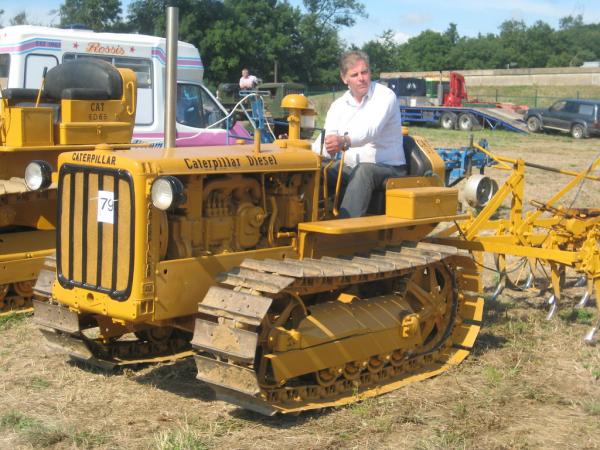
Introduction
The Caterpillar D2 5U is a compact crawler tractor that was part of Caterpillar's D2 series, produced between 1938 and 1957. The 5U model specifically was manufactured from 1947 to 1957 and is characterized by its 50-inch wide gauge, distinguishing it from the earlier 3J and 4U models, which had a 40-inch gauge .
Serial Number Identification
To determine the year of manufacture for a D2 5U, the serial number is crucial. The serial numbers for the 5U series range from 5U 1 to 5U 18894. By referencing these numbers, one can approximate the production year of a specific unit. For instance, a serial number of 5U 6448 would likely correspond to a 1951 model, as the production run for that year ranged from 5U 6672 to 5U 9170 .
Engine Specifications
The D2 5U was equipped with the Caterpillar D311 engine, a 3.6L inline 4-cylinder diesel engine. This engine provided the necessary power for the tractor's operations and was a significant advancement in diesel technology at the time.
Transmission and Clutch
The 5U model featured a 5-speed transmission, providing versatility for various tasks. It utilized a dry clutch system, which was common in many tractors of that era, offering durability and reliability.
Track and Dimensions
The 5U model was designed with a 50-inch wide gauge, providing stability and better weight distribution. The tracks were typically 12 inches wide, suitable for various terrains and applications.
Hydraulic Systems and Attachments
Many D2 5U tractors were equipped with hydraulic systems, enhancing their versatility. These systems allowed for the attachment of various implements, such as dozer blades, rippers, and winches, making the D2 5U a valuable asset for many operations.
Preservation and Collectibility
Today, the D2 5U is considered a classic piece of machinery. Many enthusiasts and collectors seek out these tractors for restoration projects. The Antique Caterpillar Machinery Owners Club (ACMOC) serves as a hub for these enthusiasts, providing resources and a community for those interested in preserving and restoring vintage Caterpillar equipment .
Conclusion
The Caterpillar D2 5U stands as a testament to mid-20th-century engineering. Understanding its specifications, serial number identification, and historical context provides valuable insights into its significance and enduring legacy in the world of agricultural and construction machinery.
|
|
|
|
| Reviving a Hough H50 Loader and the Legacy of Mid-Century Iron |
|
Posted by: MikePhua - 08-29-2025, 07:07 PM - Forum: General Discussion
- No Replies
|
|
The Hough H50 and Its Industrial Roots
The Hough H50 wheel loader was a product of the George H. Hough Company, a pioneering force in the development of rubber-tired loaders. Founded in the 1920s and later acquired by International Harvester in the 1950s, Hough machines were known for their rugged frames, mechanical simplicity, and long service life. The H50, introduced in the late 1950s to early 1960s, was a mid-size loader designed for construction, mining, and agricultural use. With an operating weight around 20,000 lbs and a bucket capacity of roughly 2.5 cubic yards, it was built to move serious material without the complexity of modern electronics.
Engine Configuration and Known Issues
Most H50s were equipped with International Harvester diesel engines, commonly the D282—a naturally aspirated inline six-cylinder known for its torque and cold-start stubbornness. Some units may have used the D239 or even Cummins swaps in later years. These engines were robust but had quirks: - Head gasket leaks were common, especially at the outer corners
- Cold starting required patience and preheating; ether use was discouraged
- Cylinder heads were prone to warping if overheated
- Fuel systems were mechanical and forgiving, but vulnerable to sediment and algae after long storage
One tip passed down from seasoned mechanics: crank the engine briefly before preheating to ensure fuel is present in the cylinders, then apply heat for a minute before starting. This method often avoids the need for ether and preserves the engine’s integrity.
Restoration Strategy and First Steps
Reviving a long-idle H50 begins with a methodical inspection:- Drain and inspect all fluids—engine oil, hydraulic fluid, coolant, and fuel
- Crack the drain plugs slightly to check for water contamination
- Replace all coolant hoses and belts, especially if dry rot is visible
- Check tire integrity; even dry-rotted tires may hold up if used on frozen ground
- Perform a leak-down compression test after warm-up to assess engine health
- Inspect the head for flatness and valve condition before replacing the gasket
- Clean fuel tank and lines, and install a fresh filter before startup
If the loader has been sitting for years, expect the tires to leak air slowly. Chains may be necessary for traction on hilly or icy terrain, especially if used for snow removal.
Cold Climate Operation and Tire Considerations
In northern climates like Ontario, where this particular H50 was stored, winter operation demands attention to traction and cold-start reliability. The loader’s weight gives it excellent pushing power, but soft spots and inclines can still pose challenges. Chains on at least one axle are recommended, and tire pressure should be monitored closely.
Older tires, even with visible cracking, often outperform modern equivalents in terms of carcass strength. However, they may not hold air reliably. Tubes can be installed to extend their life, and used chains from forestry or municipal fleets can be sourced at reasonable cost.
Parts Availability and Engine Identification
Identifying the correct engine is crucial. While some confusion exists between the D239, D282, and other IH variants, the six-cylinder configuration and casting numbers can help narrow it down. Rebuild kits, gaskets, and rings are still available from suppliers like Fel-Pro and Federal-Mogul. Castings, however, may be harder to source.
If rebuilding, consider:- Resurfacing the head and replacing valve seals
- Installing new rings if compression is low
- Replacing injector tips and testing spray pattern
- Upgrading glow plugs or block heater for winter starts
Avoid excessive use of ether, which can lead to dependency and piston damage over time.
Historical Context and Regional Stories
The Hough H50 isn’t just a machine—it’s a time capsule. In the 1970s, similar loaders were used in northern Ontario mining camps, hauling ore and clearing snow. One story recalls a D8 dozer walking 20 miles down a frozen ditch to recover a belly-dump truck that had slid off the embankment near Sturgeon Lake. These machines were built for that kind of punishment.
In places like Pickle Lake and Dryden, where winters are long and roads are remote, equipment like the H50 was often the only thing standing between a snowed-in camp and a functioning supply line. Even today, some of these loaders are still running, passed down through families or parked behind barns waiting for a second life.
Recommendations for Long-Term Use
Once revived, the H50 can serve reliably for years with basic care:- Change fluids seasonally, especially before winter
- Keep fuel fresh and tanks clean to avoid microbial growth
- Monitor head gasket condition and coolant levels
- Grease all pivot points and inspect hydraulic hoses regularly
- Store under cover or tarp to reduce UV and moisture damage
- Use it regularly—machines that sit idle degrade faster than those in motion
For snow removal, property cleanup, or hobby farm use, the Hough H50 remains a capable and charismatic workhorse.
Conclusion
Restoring a Hough H50 isn’t just about turning wrenches—it’s about preserving a piece of industrial history. With its International Harvester heart and mid-century steel bones, the H50 represents an era when machines were built to last and designed to be fixed in the field. Whether it’s pushing snow in Ontario or hauling gravel on a backroad, this loader still has plenty of work left in it—and plenty of stories to tell.
|
|
|
|
| MF 50HX Stabilizer Cylinders |
|
Posted by: MikePhua - 08-29-2025, 07:07 PM - Forum: Parts , Attachments & Tools
- No Replies
|
|
Introduction
The Massey Ferguson 50HX, a versatile piece of heavy machinery, often used for construction and landscaping tasks, comes equipped with stabilizer cylinders that are essential for ensuring stability when operating the backhoe. These hydraulic components play a vital role in keeping the machine steady during operations, whether for digging, lifting, or leveling. Understanding the importance, operation, and maintenance of stabilizer cylinders is key to ensuring the longevity and efficiency of the machine.
What Are Stabilizer Cylinders?
Stabilizer cylinders are hydraulic actuators that control the positioning and movement of a machine’s stabilizers. Stabilizers, typically deployed when the backhoe is in use, are the extended arms that touch the ground, providing support and preventing tipping. The stabilizer cylinders control the movement of these arms, allowing them to extend and retract as needed.
In the case of the Massey Ferguson 50HX, these stabilizers are critical for maintaining a balanced and steady operation, especially when the machine is on uneven ground.
Components of Stabilizer Cylinders
- Cylinder Barrel: The main housing that contains the hydraulic fluid and provides a smooth surface for the piston to move.
- Piston Rod: The component that moves in and out of the barrel to extend and retract the stabilizer arms.
- Hydraulic Fluid: This fluid, typically a specialized hydraulic oil, is used to transfer force from the pump to the stabilizer cylinders.
- Seal Kit: Prevents hydraulic fluid from leaking and maintains the pressure within the cylinder.
- Hydraulic Port and Lines: Connect the stabilizer cylinders to the machine’s hydraulic system, allowing fluid to flow in and out for operation.
How Do Stabilizer Cylinders Work?
The stabilizer cylinders on the MF 50HX function as part of the machine’s hydraulic system, where pressurized hydraulic fluid is used to move the piston rod in and out of the cylinder barrel. This action extends or retracts the stabilizer arms to raise or lower the backhoe’s stance. The operator controls these actions using hydraulic valves, which direct the flow of fluid to the cylinders based on the required position.
In the MF 50HX, stabilizers are often used when the machine needs to remain stable during activities like digging or lifting heavy loads. By extending the stabilizers, the machine's weight is evenly distributed across the ground, preventing tipping and ensuring the safety of both the operator and the equipment.
Common Issues with Stabilizer Cylinders
- Hydraulic Leaks: One of the most common issues is fluid leakage from the stabilizer cylinders. This can happen due to worn-out seals, damaged hoses, or cracks in the cylinder itself.
- Inconsistent Movement: If the stabilizer arms move slowly or erratically, it may indicate problems such as low hydraulic fluid, air in the lines, or internal damage to the cylinders.
- Cylinder Damage: Physical damage can occur if the stabilizer arms are deployed in conditions where they strike solid objects or excessive force is applied.
- Seal Failure: Over time, the seals inside the stabilizer cylinders may degrade, allowing hydraulic fluid to leak and reducing the efficiency of the stabilizers.
Maintenance Tips for Stabilizer Cylinders
- Regular Inspection: Check the stabilizer cylinders for signs of hydraulic leaks, cracks, or worn-out seals. Early detection of issues can prevent further damage.
- Change Hydraulic Fluid: Make sure to regularly replace the hydraulic fluid as per the manufacturer's recommendations. Dirty or degraded fluid can damage the cylinders and other components in the hydraulic system.
- Clean the Piston Rod: Dirt and debris on the piston rod can cause wear and tear on the seals. Keep the rod clean and lubricated to ensure smooth operation.
- Monitor Cylinder Movement: Test the stabilizers regularly to ensure they are moving smoothly and consistently. If you notice any resistance or jerky movement, it may be time to replace the seals or inspect the hydraulic lines.
Replacing or Repairing Stabilizer Cylinders
If the stabilizer cylinders become damaged or are not functioning properly, they may need to be replaced or repaired. The repair process generally involves:
- Disassembly: The cylinder needs to be removed from the machine. This typically involves disconnecting the hydraulic lines and unbolting the cylinder from the stabilizer arm.
- Inspection: The cylinder is carefully inspected for cracks, wear, or internal damage. If the barrel is damaged, it may require honing or replacing.
- Seal Replacement: In most cases, worn-out seals are replaced, and the cylinder is reassembled.
- Testing: After the repair or replacement, the stabilizer cylinder is tested to ensure that it operates smoothly without leaks or performance issues.
Conclusion
The stabilizer cylinders on the Massey Ferguson 50HX are essential for ensuring the stability of the machine during operations. By understanding how they work, common issues, and maintenance practices, operators can ensure the longevity of these components and the overall efficiency of their machines. Regular inspection and maintenance are key to avoiding costly repairs and keeping the machine running smoothly, especially in demanding environments like construction sites or landscaping projects.
Whether you are a fleet operator or an individual owner, knowing how to troubleshoot and maintain stabilizer cylinders can prevent downtime and extend the operational life of your MF 50HX.
|
|
|
|
| Brockway 147 Repower Project |
|
Posted by: MikePhua - 08-29-2025, 07:06 PM - Forum: Construction & Urban Infrastructure Forum
- No Replies
|
|
Introduction
The Brockway 147, a heavy-duty truck manufactured by Brockway Motor Company in the mid-20th century, is a testament to American engineering and craftsmanship. Known for its durability and versatility, the 147 series found applications in various industries, including construction, logging, and military logistics. Over time, as with many classic vehicles, the need for modernization and increased performance led to repower projects, where older engines were replaced with more powerful and efficient ones.
Brockway Motor Company: A Brief History
Established in 1912 in Cortland, New York, Brockway Motor Company began as a manufacturer of custom heavy-duty trucks. The company gained prominence during World War I by producing Class B Liberty Trucks for the military. Post-war, Brockway continued to innovate, introducing models like the V1200, which featured a 240hp V12 American LaFrance engine and could carry loads up to 15 tons. In 1956, Brockway was acquired by Mack Trucks Inc., continuing as a division until its closure in 1977 due to union-related issues .
The Brockway 147: Specifications and Features
The Brockway 147 was designed as a versatile workhorse. Key specifications included: - Engine Options: Initially equipped with Continental or Cummins engines, depending on the model variant.
- Transmission: Paired with Fuller or Road Ranger transmissions, offering a range of gear ratios to suit various tasks.
- Axles: Utilized heavy-duty axles capable of handling substantial loads.
- Design: Featured a distinctive cab design with curved windows and a robust chassis, making it easily recognizable.
These trucks were built to endure the rigors of demanding jobs, and their design reflected the industrial aesthetic of the era.
Repowering the Brockway 147
Repowering involves replacing an older engine with a newer, more powerful one to enhance performance and extend the vehicle's lifespan. For the Brockway 147, several repower projects have been undertaken:
- Engine Upgrade: One notable project involved replacing the original engine with a Cummins Big Cam III 400. This upgrade provided a significant boost in horsepower and torque, improving the truck's hauling capabilities and overall performance .
- Transmission Swap: Alongside the engine upgrade, the original 12-speed Road Ranger transmission was replaced with a 13-speed Eaton transmission. This change offered smoother shifting and better gear ratios, contributing to improved fuel efficiency and drivability.
- Restoration and Modernization: In addition to mechanical upgrades, efforts were made to restore the truck's aesthetic appeal. This included refurbishing the cab, updating electrical systems, and ensuring compliance with modern safety standards.
Challenges in Repowering
While repowering offers numerous benefits, it also presents challenges:- Compatibility: Ensuring that the new engine and transmission are compatible with the existing chassis and drivetrain components.
- Regulatory Compliance: Meeting modern emissions and safety standards, which may require additional modifications.
- Cost: The financial investment required for repowering can be substantial, including costs for parts, labor, and potential downtime.
Despite these challenges, the satisfaction of revitalizing a classic truck and enhancing its performance often outweighs the obstacles.
Legacy and Preservation
The Brockway 147, especially those that have undergone successful repower projects, serve as a bridge between the past and present. They represent a commitment to preserving automotive history while embracing technological advancements. Enthusiasts and collectors continue to showcase these trucks at vintage truck shows and events, ensuring that the legacy of Brockway Motor Company endures.
Conclusion
The repower of the Brockway 147 is more than just a mechanical upgrade; it's a celebration of American industrial heritage. By blending classic design with modern technology, these trucks continue to serve as functional and historical artifacts, embodying the spirit of innovation and craftsmanship that defined an era.
|
|
|
|
| Kubota or Doosan in Bobcat Skid Steers |
|
Posted by: MikePhua - 08-29-2025, 07:06 PM - Forum: General Discussion
- No Replies
|
|
Engine Choice Shapes Ownership Experience
When Bobcat introduced the S850 skid steer, contractors were faced with a critical decision: choose the proven Kubota Tier III engine or wait for the newer Doosan Tier IV final powerplant. This wasn’t just a matter of horsepower—it was about emissions systems, fuel efficiency, long-term support, and field reliability. The Kubota had a reputation for durability and simplicity, while the Doosan promised modern compliance and a non-DPF design that appealed to operators tired of regeneration cycles.
Kubota’s Legacy of Reliability
Kubota engines have powered compact equipment for decades. Known for their mechanical simplicity and consistent performance, they’ve earned trust in agriculture, construction, and rental fleets. The Tier III version used in the S850 was a 3.8L diesel with a common rail injection system and a diesel particulate filter (DPF). While the engine itself was solid, the DPF introduced complexity.
Operators who ignored passive regeneration warnings or attempted to override them often triggered engine derates—reducing power by up to 75%. At that point, only a dealer-initiated service regeneration could restore full function. This made the Kubota engine highly dependent on operator discipline and dealer support.
Doosan’s Entry into the Bobcat Lineup
Doosan, a Korean industrial giant with over 50 years of engine-building experience, acquired Bobcat in 2007. The transition marked a shift in engine strategy. By 2015, Bobcat-branded Doosan-built engines began replacing Kubota units across the lineup. The Tier IV final Doosan engine in the S850 was a 3.4L diesel, smaller than the Kubota but designed to meet emissions standards without a DPF.
This non-DPF design appealed to many contractors. It eliminated the need for regeneration cycles and reduced fuel consumption associated with DPF burn-off. However, concerns lingered about parts availability, service training, and long-term support—especially in North America, where Doosan engines were less common.
Fuel Efficiency and Performance Tradeoffs
One of the key debates was fuel burn. Reports from the field suggested that the smaller 2.4L Doosan engines used in other Bobcat models consumed more fuel than the 3.3L Kubotas they replaced. This made sense: extracting the same horsepower from a smaller displacement often requires higher RPMs and more fuel.
In the case of the S850, the Doosan’s 3.4L engine was closer in size to the Kubota, but still slightly smaller. Operators noted that while fuel consumption was comparable under light loads, the Doosan engine worked harder under full load, potentially offsetting gains from the non-DPF design.
Support and Service Realities
Dealer support played a major role in engine preference. Some technicians reported that Kubota’s technical assistance became limited after the Doosan acquisition. Others found that Doosan engines received better support because they were now the standard across Bobcat’s fleet.
The reality is nuanced. Kubota engines were often treated as “stopgap” solutions during the Tier III era, while Doosan engines were integrated into Bobcat’s long-term strategy. This meant that parts, diagnostics, and training were more aligned with Doosan going forward.
Recommendations for Buyers
When choosing between Kubota and Doosan engines in Bobcat skid steers, consider the following: - If you prioritize proven reliability and have strong dealer support for Kubota, the Tier III engine may be the safer bet
- If you want to avoid DPF-related downtime and prefer a simpler emissions system, the Doosan Tier IV final engine offers advantages
- Evaluate your dealer’s experience with both engines—support quality varies by region
- Consider fuel burn under your typical workload, not just spec sheet numbers
- Ask about warranty terms, especially regarding emissions components and service intervals
For fleet managers, standardizing on one engine type may simplify parts stocking and technician training. For owner-operators, the decision often comes down to trust—either in the legacy of Kubota or the future of Doosan.
Conclusion
The Kubota vs. Doosan debate in Bobcat skid steers reflects a broader shift in compact equipment design. As emissions regulations evolve and OEMs consolidate, engine choices become strategic decisions. Both Kubota and Doosan offer capable powerplants, but their differences in emissions systems, support infrastructure, and field history mean that buyers must look beyond the badge. In the end, the best engine is the one that fits your workflow, your service network, and your tolerance for complexity.
|
|
|
|
| Converting from Petrol to Diesel in Vehicles |
|
Posted by: MikePhua - 08-29-2025, 07:06 PM - Forum: General Discussion
- No Replies
|
|
Introduction
Converting a petrol engine to diesel is a highly complex and technically challenging process, often undertaken by enthusiasts or companies that need to make their vehicles more fuel-efficient or better suited for heavy-duty tasks. Diesel engines, known for their fuel efficiency and torque, are especially preferred in heavy machinery, long-haul trucks, and other high-performance vehicles.
While it might seem like a straightforward switch, converting a petrol-powered vehicle to diesel involves numerous modifications that affect the vehicle's entire operating system. This article explores the reasons behind such conversions, the steps involved, and the challenges encountered during the process.
Why Convert from Petrol to Diesel?
- Fuel Efficiency: Diesel engines are known for their superior fuel efficiency compared to petrol engines. Diesel fuel contains more energy per gallon, and diesel engines have a higher thermal efficiency.
- Torque and Power: Diesel engines deliver more torque, which is advantageous for heavy-duty applications, towing, or off-road vehicles.
- Long-Term Cost Savings: Although diesel engines typically cost more upfront, the long-term fuel savings can outweigh this, especially for vehicles that travel long distances regularly.
- Environmental Factors: Diesel engines can produce fewer CO2 emissions per mile than petrol engines, though they may emit higher levels of other pollutants like NOx and particulate matter.
Challenges of Converting from Petrol to Diesel
- Engine Compatibility: Diesel engines work differently from petrol engines, requiring specific components like a higher compression ratio, which means the engine block and components must be stronger. The combustion process is also different, so the whole engine architecture would need to change.
- Fuel System Modifications: Petrol engines rely on spark plugs for ignition, while diesel engines use compression for combustion. This requires changes to the fuel injectors, the fuel pump, and the overall fuel system.
- Exhaust System: Diesel engines often require more advanced exhaust systems due to their higher emissions of NOx and particulates. A diesel particulate filter (DPF) or selective catalytic reduction (SCR) system may be needed.
- Cooling and Electrical Systems: Diesel engines generate more heat and require robust cooling systems to handle the extra heat produced. Also, certain electrical systems, such as the starter motor and alternator, may need upgrading to handle the greater load.
- Transmission and Drivetrain Compatibility: Diesel engines produce more torque at lower speeds, which can require changes to the vehicle’s transmission and drivetrain to handle the increased force.
- Legal and Regulatory Issues: Many countries have strict emissions regulations that can make it difficult or impossible to legally operate a converted diesel vehicle. There could also be challenges regarding vehicle registration and compliance with safety standards.
Steps Involved in Converting Petrol to Diesel
- Engine Replacement: The petrol engine must be entirely removed and replaced with a diesel engine that suits the vehicle’s weight and intended use.
- Fuel System Overhaul: The fuel tank, lines, and pump will need to be replaced to ensure compatibility with diesel fuel. New fuel injectors and a high-pressure fuel system are also necessary.
- Exhaust and Cooling Systems: A new exhaust system will be required to handle the increased emissions and heat produced by the diesel engine. This might include fitting a DPF or SCR system.
- Transmission Modification: As diesel engines produce more torque, the vehicle’s transmission may need to be upgraded to handle the greater loads.
- Electrical Upgrades: Diesel engines often need more powerful starters and alternators, along with modifications to the vehicle’s electrical system.
- Testing and Tuning: Once the conversion is complete, the engine and vehicle must be thoroughly tested to ensure the new diesel system operates efficiently and safely.
Costs of Conversion
The cost of converting a petrol engine to diesel varies widely depending on the vehicle type and the extent of modifications needed. On average, the cost can range from a few thousand dollars to tens of thousands. While the initial cost is high, the savings in fuel efficiency and maintenance could provide long-term financial benefits.
Is It Worth It?
For certain types of vehicles, such as heavy-duty trucks, off-road vehicles, or farming equipment, converting to diesel might offer substantial advantages. However, for regular consumer vehicles, the complexity, cost, and legal implications often make such a conversion impractical.
Alternatives to Conversion- Hybrid Systems: Many vehicles now offer hybrid systems that combine petrol and electric power, offering better fuel efficiency without the complexity of a full conversion to diesel.
- Electric Vehicles (EVs): With the rise of electric vehicles, some may find it more cost-effective to switch to fully electric rather than trying to convert a vehicle from petrol to diesel.
- Diesel Generators: For heavy-duty machinery, using diesel-powered generators or auxiliary engines may be a more straightforward option than converting the main vehicle engine.
Conclusion
Converting from petrol to diesel can significantly improve a vehicle’s fuel efficiency and torque, but it comes with challenges, including high upfront costs, technical complexity, and potential legal hurdles. This conversion is best suited for vehicles used in demanding environments such as long-haul trucks, heavy machinery, and certain off-road applications. For most passenger vehicles, however, the benefits may not justify the costs and complexities involved in the conversion process.
|
|
|
|
| Dealer Service Satisfaction in the Heavy Equipment Industry |
|
Posted by: MikePhua - 08-29-2025, 07:05 PM - Forum: Rental , Leasing & Investment
- No Replies
|
|
The Dealer Relationship Is More Than a Transaction
In the heavy equipment world, the dealer isn’t just a supplier—they’re a lifeline. Whether it’s sourcing a hydraulic pump for a 20-year-old loader or diagnosing a CAN bus fault on a Tier 4 excavator, the dealer’s responsiveness, technical depth, and integrity shape the operator’s experience. Yet across the industry, satisfaction with dealer service varies wildly. Some contractors swear by their local reps, while others drive hours to avoid them.
This disparity isn’t just anecdotal—it reflects deeper issues in parts availability, technician training, pricing transparency, and post-sale support.
Parts Departments Can Make or Break Loyalty
One of the most common frustrations is parts support. Operators report that some dealers struggle to identify basic components, especially for older machines. A missing seal or misidentified bearing can stall a job for days. In contrast, dealers with experienced counter staff and robust inventory systems earn repeat business—even if their prices are higher.
Best practices for parts departments include: - Maintaining legacy parts databases for discontinued models
- Training staff on cross-referencing OEM and aftermarket numbers
- Offering real-time inventory visibility and delivery estimates
- Stocking high-turnover items like filters, belts, and wear parts
- Providing exploded diagrams and service bulletins on request
Contractors often bypass local dealers entirely if they feel unsupported, choosing to drive 40 minutes to save 30% and get accurate answers.
Service Departments Must Balance Skill and Honesty
Service quality hinges on two things: technical competence and ethical billing. When a $6,000 repair estimate balloons to $11,000 without clear justification, trust erodes. Mechanics who communicate clearly, document findings, and avoid unnecessary upselling build long-term relationships.
Key service expectations include:- Transparent labor rates and time estimates
- Clear diagnosis before parts replacement
- Use of OEM or approved aftermarket components
- Respect for customer knowledge—especially owner-operators who wrench themselves
- Follow-up after service to ensure satisfaction
Some contractors, especially those with mechanical backgrounds, prefer to do their own repairs. They expect dealers to support that choice by offering diagnostic tools, manuals, and parts—not by gatekeeping information.
Sales Departments Must Understand the Operator’s World
Sales reps who know the difference between a forestry spec and a roadbuilding spec machine earn credibility. Those who push inventory without understanding application lose it. The best reps walk job sites, ask about soil types, haul distances, and operator preferences before recommending a model.
Sales excellence includes:- Deep product knowledge across multiple brands
- Willingness to demo machines in real conditions
- Flexible financing and lease options
- Trade-in evaluations based on real wear, not book value
- Honesty about lead times and availability
One contractor shared that his best machine purchase came from a rep who spent two hours watching his crew work before making a recommendation. That machine is still in service 10 years later.
Regional Differences and Dealer Culture
Dealer satisfaction often depends on geography. In some regions, dealers are family-owned and deeply embedded in the local construction community. In others, they’re corporate branches with high turnover and limited autonomy. This affects everything from pricing to service attitude.
Fleet managers should:- Build relationships with multiple dealers, not just the closest
- Track service history and parts pricing across vendors
- Share feedback with dealer leadership—positive and negative
- Advocate for technician training and legacy support
In one case, a contractor refused to return to a dealer after poor service, despite good parts support. He now drives farther but gets consistent service and honest billing.
Recommendations for Dealers Seeking Loyalty
To improve customer satisfaction:- Invest in technician training and certification
- Empower parts staff with digital tools and legacy catalogs
- Offer tiered service packages for different customer types
- Create feedback loops with contractors and operators
- Recognize that every machine downtime costs money—and trust
Dealers who treat every customer as a long-term partner, not a one-time sale, build reputations that outlast any warranty.
Conclusion
Dealer service in the heavy equipment industry is a complex blend of technical skill, communication, and cultural fit. While some dealers excel across the board, others struggle to meet basic expectations. For contractors, loyalty is earned—not assumed. And for dealers, the path to satisfaction starts with listening, learning, and showing up when it matters most. In a business built on horsepower and hydraulics, it’s the human connection that drives everything forward.
|
|
|
|
| Identifying Unknown Attachments for Heavy Equipment |
|
Posted by: MikePhua - 08-29-2025, 07:04 PM - Forum: General Discussion
- No Replies
|
|
Introduction
Heavy equipment versatility often depends on the use of specialized attachments, which can dramatically expand a machine’s capabilities. Over decades, manufacturers like Caterpillar, John Deere, and Case have developed hundreds of attachment types for tasks ranging from digging and grading to lifting and compacting. However, in practice, operators and mechanics sometimes encounter attachments whose purpose is unclear due to worn labels, modifications, or uncommon designs. Accurately identifying these attachments is critical for safe operation, optimal performance, and proper maintenance.
Common Types of Attachments
Attachments generally fall into several categories based on their function: - Excavation Tools:
- Buckets of varying sizes for digging and loading
- Rippers for breaking up soil and rock
- Augers for drilling holes
- Material Handling Tools:
- Grapples for handling logs, scrap, or debris
- Forks and pallet handlers for lifting materials
- Ground Engaging Tools:
- Compactors and vibratory plates for soil stabilization
- Blades and graders for leveling surfaces
- Specialty Tools:
- Tree shears, mulchers, and stump grinders for forestry work
- Snow blowers and brooms for winter maintenance
- Trencher attachments for utility installation
Challenges in Identification
Identifying an unknown attachment can be complicated by factors such as:- Lack of Manufacturer Markings: Some older attachments may have worn off model numbers or brand logos.
- Aftermarket Modifications: Attachments modified by users may not match any standard design.
- Cross-Compatibility: Attachments designed for one brand may be retrofitted to another machine, leading to confusion about compatibility.
- Wear and Damage: Heavily used attachments can lose distinctive features, making visual identification difficult.
Methods for Identification
Accurate identification often requires a combination of visual inspection, measurement, and research:- Check for Stamps or Labels: Inspect all surfaces for embossed or engraved part numbers, serial numbers, or logos.
- Measure Dimensions: Record key measurements such as width, height, pin spacing, and hydraulic fitting sizes to compare with manufacturer specifications.
- Photographic Comparison: Use online databases or catalogs to match images of the unknown attachment with known models.
- Consult Experts: Engage dealers, experienced operators, or industry forums to provide insight based on visual cues and function.
Safety Considerations
Using an unknown attachment without verification can result in:- Machine Instability: Incorrect weight distribution may affect balance and lead to tipping.
- Hydraulic Failures: Mismatched hydraulic connections can cause leaks or pump damage.
- Operational Inefficiency: Using the wrong tool may slow down work or damage the attachment and machine.
Recommendations for Operators
To mitigate risks and ensure effective use:- Maintain a record of all attachments, including manufacturer, model, and specifications.
- Label attachments clearly and store them in an organized manner to prevent confusion.
- Regularly inspect attachment pins, bushings, and hydraulic connections for wear and compatibility.
- Seek professional advice if the attachment’s purpose or compatibility is uncertain.
Conclusion
Attachments greatly enhance the flexibility of heavy machinery, but unidentified or misused tools pose safety and operational risks. By systematically assessing unknown attachments through measurement, manufacturer reference, and expert consultation, operators can ensure correct usage and extend both the life of the attachment and the host machine. Regular documentation and maintenance further contribute to safer and more efficient operations across construction, forestry, and agricultural sectors.
|
|
|
|
| Understanding Semi-Truck Weight: Components and Regulations |
|
Posted by: MikePhua - 08-29-2025, 07:04 PM - Forum: General Discussion
- No Replies
|
|
Introduction
Semi-trucks, also known as tractor-trailers or big rigs, are essential for transporting goods across vast distances. Understanding their weight is crucial for safety, regulatory compliance, and operational efficiency. This article delves into the components that contribute to a semi-truck's weight, the legal weight limits, and the implications of overloading.
Components of a Semi-Truck's Weight
- Tractor (Cab): The tractor, or cab, is the front part of the semi-truck where the driver operates. Its weight typically ranges from 10,000 to 25,000 pounds, influenced by factors such as engine type, presence of a sleeper berth, and additional features.
- Trailer: The trailer is the cargo-carrying section attached to the tractor. An empty 53-foot trailer weighs approximately 10,000 pounds, while a 28-foot trailer (pup trailer) weighs around 4,500 pounds.
- Cargo: The weight of the cargo varies significantly based on the type of goods being transported. For instance, a load of electronics may weigh less than a load of construction materials.
- Fuel and Fluids: Full fuel tanks and other necessary fluids add to the overall weight. A full tank of diesel fuel can weigh approximately 6 to 8 pounds per gallon.
Legal Weight Limits
In the United States, the maximum legal weight for a fully loaded semi-truck is 80,000 pounds, as regulated by federal law. This limit includes the combined weight of the tractor, trailer, cargo, and all fluids. However, individual states may have specific regulations and weight limits, especially concerning axle configurations and bridge laws.
Implications of Overloading
Exceeding the legal weight limits can have several negative consequences:- Safety Hazards: Overloaded trucks have longer stopping distances and can be more difficult to maneuver, increasing the risk of accidents.
- Infrastructure Damage: Excessive weight can cause significant wear and tear on roadways and bridges, leading to costly repairs and potential closures.
- Legal Consequences: Drivers and companies can face fines, penalties, and potential suspension of operating licenses for violating weight regulations.
Technological Advances in Trucking
The trucking industry is witnessing innovations aimed at improving efficiency and reducing environmental impact:- Electric Semi-Trucks: Companies like Tesla have introduced electric semi-trucks capable of hauling up to 80,000 pounds. These vehicles aim to reduce carbon emissions and operating costs.
- Automation and AI: Advancements in autonomous driving technologies are being explored to enhance safety and reduce human error. However, widespread adoption faces challenges related to regulation and public acceptance.
Conclusion
Understanding the weight components and legal limits of semi-trucks is essential for ensuring safety and compliance in the transportation industry. As technology continues to evolve, the industry moves towards more sustainable and efficient solutions, promising a future where transportation is both effective and environmentally responsible.
|
|
|
|
|



