| Welcome, Guest |
You have to register before you can post on our site.
|
| Forum Statistics |
» Members: 74
» Latest member: Tomo
» Forum threads: 47,413
» Forum posts: 47,419
Full Statistics
|
| Online Users |
There are currently 200 online users.
» 0 Member(s) | 190 Guest(s)
Amazon, Baidu, Bing, Claude, Google, MJ12, OpenAI, Petalbot, Semrush, Sogou
|
| Latest Threads |
Identifying and Sourcing ...
Forum: Parts , Attachments & Tools
Last Post: MikePhua
01-07-2026, 06:29 PM
» Replies: 0
» Views: 442
|
Cat 931B Brake Parts
Forum: Parts , Attachments & Tools
Last Post: MikePhua
01-07-2026, 06:29 PM
» Replies: 0
» Views: 269
|
Choosing Between Cat 228,...
Forum: General Discussion
Last Post: MikePhua
01-07-2026, 06:28 PM
» Replies: 0
» Views: 461
|
Fix It or Part It Out
Forum: General Discussion
Last Post: MikePhua
01-07-2026, 06:27 PM
» Replies: 0
» Views: 335
|
Hydraulic Delay When Lowe...
Forum: Troubleshooting & Diagnosing
Last Post: MikePhua
01-07-2026, 06:27 PM
» Replies: 0
» Views: 412
|
Bale Chopper and Mulcher ...
Forum: General Discussion
Last Post: MikePhua
01-07-2026, 06:26 PM
» Replies: 0
» Views: 295
|
Mini UC Maintenance
Forum: General Discussion
Last Post: MikePhua
01-07-2026, 06:25 PM
» Replies: 0
» Views: 283
|
Locating Wiring Informati...
Forum: General Discussion
Last Post: MikePhua
01-07-2026, 06:24 PM
» Replies: 0
» Views: 318
|
Case Industrial Brown Sub...
Forum: Parts , Attachments & Tools
Last Post: MikePhua
01-07-2026, 06:23 PM
» Replies: 0
» Views: 260
|
Dirt Work in West Virgini...
Forum: Construction & Urban Infrastructure Forum
Last Post: MikePhua
01-07-2026, 06:23 PM
» Replies: 0
» Views: 348
|
|
|
| Champion 562B: A Detailed Overview of a Versatile Motor Grader |
|
Posted by: MikePhua - 09-02-2025, 03:16 AM - Forum: General Discussion
- No Replies
|
 |
Introduction
The Champion 562B is a motor grader that has earned a solid reputation for its rugged durability, impressive performance, and versatility in a variety of applications. Motor graders, such as the Champion 562B, play an essential role in road construction, grading, and maintenance, making them indispensable pieces of equipment in many industries.
This article provides a detailed look into the Champion 562B, its specifications, operational capabilities, and the reasons behind its lasting popularity. Additionally, we’ll examine the legacy of Champion Road Machinery and how its equipment continues to serve heavy-duty operations across the globe.
Champion Road Machinery: A Brief History
Champion Road Machinery, founded in the early 20th century, has long been a key player in the production of road maintenance and construction equipment. Initially focused on building high-quality graders, the company quickly grew to become a trusted name in heavy machinery. The Champion brand was known for producing machines that were not only durable but also efficient and easy to operate.
Over the years, Champion produced a wide variety of equipment, from simple graders to more sophisticated machines. The 562B is part of a line of motor graders that exemplify the company’s commitment to building high-performance equipment that could handle tough tasks in challenging environments.
In the late 1990s, Champion was acquired by Volvo, further cementing the legacy of high-quality road graders while also benefiting from Volvo's vast global reach and modern technologies. While production of new Champion graders has ceased, the models that were produced, like the Champion 562B, continue to be widely used in many industries.
Champion 562B Specifications
The Champion 562B motor grader is a highly versatile piece of equipment designed for a variety of roadwork tasks. Here are the key specifications that define its performance and suitability for heavy-duty applications: - Engine Power: The 562B is equipped with a reliable diesel engine that provides ample power for challenging grading tasks. The engine typically produces around 170-180 horsepower, offering a balance of power and fuel efficiency.
- Operating Weight: The machine’s operating weight is approximately 16,000–17,000 pounds, making it heavy enough to handle demanding grading tasks while still being nimble and maneuverable.
- Blade Width: The Champion 562B comes with a 14-foot blade, ideal for spreading materials, grading roads, or leveling surfaces. The adjustable blade offers a wide range of angles, enabling the operator to achieve a variety of grading configurations.
- Transmission: This model typically features a power-shift transmission that offers a range of gears and speeds for fine control, making it suitable for both high-speed and low-speed applications. This transmission also allows the operator to work efficiently on both rough and smooth terrain.
- Hydraulics: A key feature of the 562B is its advanced hydraulic system, which provides smooth, precise control over the blade and other attachments. This hydraulic system ensures efficient operation during grading and earthmoving tasks.
- Cab and Comfort: The operator’s cab on the Champion 562B is designed for comfort and visibility. With ergonomic controls, air conditioning, and a spacious layout, operators can work for long hours without feeling fatigued.
Key Features and Operational Advantages
The Champion 562B is equipped with a range of features that make it a powerful and versatile motor grader for a variety of tasks:
- Blade Control: One of the standout features of the 562B is its fully adjustable blade system. The blade can be angled, tilted, and extended, allowing operators to work in various conditions, including rough or uneven terrain. This flexibility makes the 562B suitable for road maintenance, grading, ditching, and snow removal.
- Maneuverability: The 562B is designed for easy maneuvering, even in tight spaces. The machine’s compact design and responsive steering system allow it to work in narrow corridors, such as in urban areas or on smaller construction sites, where larger graders may struggle.
- Durability: Built to withstand demanding work environments, the Champion 562B is known for its long-lasting durability. Heavy-duty components, including the frame and undercarriage, are designed to resist wear and tear, making the machine reliable even in harsh conditions.
- Fuel Efficiency: With a fuel-efficient engine and optimized hydraulics, the Champion 562B offers operators a cost-effective solution for heavy-duty grading tasks. Its fuel efficiency not only helps reduce operational costs but also contributes to minimizing the environmental impact.
- Attachment Versatility: The 562B can be fitted with a variety of attachments, from snow plows to rear blades, making it a multi-functional tool that can handle a wide range of applications. This versatility is one of the main reasons why it is favored by many contractors and municipalities.
Applications of the Champion 562B
The Champion 562B is used in a variety of sectors, including construction, road maintenance, and municipal operations. Below are some common applications:- Road Construction and Maintenance: The primary use of the Champion 562B is in road construction and maintenance. Its powerful engine and versatile blade make it ideal for grading new roads, maintaining existing ones, and clearing debris or snow.
- Agricultural Work: The 562B is also commonly used on farms for leveling and grading fields, preparing surfaces for planting, and creating drainage ditches.
- Snow Removal: With the right attachments, the Champion 562B can be used to clear snow from roads, parking lots, and other surfaces. Its ability to move large amounts of snow efficiently makes it an essential piece of equipment for winter operations in regions that experience heavy snowfalls.
- Landscaping and Earthmoving: Contractors often use the 562B for a range of landscaping projects, including earthmoving, leveling yards, and constructing berms or dikes.
Maintenance and Longevity
As with any piece of heavy machinery, proper maintenance is key to ensuring the long-term durability and performance of the Champion 562B. Regular oil changes, hydraulic fluid checks, and inspection of the blade and undercarriage are essential for maintaining the grader's efficiency. Additionally, operators should be trained in proper usage to avoid unnecessary wear on the machine and its components.
The Champion 562B, like many motor graders, benefits from a good relationship with service providers and access to readily available parts. While Champion parts may not be as widely available as those for newer brands, the 562B’s design ensures that most replacement components are easy to source and maintain.
Champion 562B vs. Modern Graders
While the Champion 562B remains a solid piece of equipment, advancements in technology have led to improvements in newer motor graders. Modern machines often come equipped with features such as GPS guidance, automated controls, and enhanced fuel efficiency. These advancements provide greater precision and reduce operator fatigue.
However, the Champion 562B still holds its ground in terms of reliability, ease of use, and lower initial cost. Many operators and municipalities continue to rely on older Champion graders due to their affordability and the fact that they are well-suited for less complex grading tasks.
Conclusion
The Champion 562B motor grader remains a popular choice among contractors and municipalities for its robust performance, versatility, and reliability. Whether used for road construction, agricultural tasks, or snow removal, this motor grader offers a solid return on investment, especially when properly maintained.
As part of the legacy of Champion Road Machinery, the 562B exemplifies the company’s commitment to quality and durability in the field of road construction and maintenance. Even as new technologies emerge, the Champion 562B continues to serve as a reliable workhorse on job sites around the world.
|

|
|
| Loading Heavy Equipment Safely for Beginners |
|
Posted by: MikePhua - 09-02-2025, 03:16 AM - Forum: General Discussion
- No Replies
|
|
Introduction
Loading heavy equipment onto trailers is a critical task in construction and transportation. For those new to the field, understanding the proper techniques ensures safety and efficiency. This guide provides detailed steps and considerations for safely loading heavy machinery.
Choosing the Right Trailer
Selecting an appropriate trailer is the first step in the loading process. Common types include: - Flatbed Trailers: Versatile and commonly used for various equipment.
- Step Deck Trailers: Offer a lower deck height, suitable for taller equipment.
- Lowboy Trailers: Designed for transporting heavy and tall machinery.
Ensure the trailer's weight capacity exceeds the combined weight of the equipment and any additional attachments.
Preparing the Loading Area
A clean and level loading area is essential:- Clear Obstacles: Remove debris and ensure the area is free from obstacles.
- Level Ground: Use wood blocking if necessary to level the trailer and prevent tipping.
- Stable Surface: Ensure the ground can support the combined weight of the trailer and equipment.
Using Ramps Safely
Ramps facilitate the transition of equipment onto the trailer:- Secure Ramps: Ensure ramps are properly secured and rated for the equipment's weight.
- Check Traction: Ensure ramps are clean and dry to prevent slipping.
- Use Spotters: Have a ground guide to assist the operator during loading.
Loading Techniques
Proper loading techniques prevent accidents and equipment damage:- Slow and Steady: Drive the equipment slowly onto the trailer, maintaining control at all times.
- Maintain Balance: Keep the equipment's center of gravity low and centered to prevent tipping.
- Use the Bucket: For backhoes or excavators, place the bucket on the ground to stabilize the machine.
Securing the Load
Properly securing the equipment prevents movement during transport:- Use Appropriate Tie-Downs: Utilize chains or straps rated for the equipment's weight.
- Attach to Strong Points: Secure tie-downs to designated points on the equipment, avoiding hydraulic lines or other vulnerable areas.
- Check Tension: Ensure tie-downs are tight and the equipment is stable.
Safety Precautions
Safety is paramount during loading operations:- Wear Protective Gear: Operators and ground personnel should wear helmets, gloves, and steel-toed boots.
- Communicate Clearly: Use hand signals or radios to maintain communication between the operator and ground crew.
- Inspect Equipment: Before loading, inspect the equipment for any mechanical issues that could affect stability.
Training and Experience
Gaining experience is crucial for safe loading:- Seek Training: Enroll in courses offered by organizations like the National Center for Construction Education and Research (NCCER).
- Start Small: Begin with smaller equipment to build confidence and skills.
- Learn from Experts: Work alongside experienced operators to gain practical knowledge.
Conclusion
Loading heavy equipment is a task that requires attention to detail, proper equipment, and adherence to safety protocols. By following these guidelines and continually seeking education and experience, operators can ensure safe and efficient loading operations.
|
|
|
|
| Snow Removal on Steroids: Heavy-Duty Snow Management Solutions |
|
Posted by: MikePhua - 09-02-2025, 03:15 AM - Forum: General Discussion
- No Replies
|
|
Introduction
Snow removal is an essential task in many regions around the world, particularly in areas with harsh winters. Cities, municipalities, and even private companies rely on specialized equipment to clear snow efficiently and safely. However, with growing demands and increasingly severe winter storms, there has been a need to take snow removal capabilities to the next level. Enter "snow removal on steroids"—a phrase that refers to innovative, high-powered machines and techniques designed to tackle even the heaviest snowfalls.
This article delves into the evolution of snow removal technologies, highlights the importance of powerful equipment, and explores some of the most advanced snow removal solutions available today. Additionally, we will discuss some of the challenges faced in snow management and how modern equipment can address them.
The Challenges of Snow Removal
Snow removal, especially in areas that experience frequent and heavy snowstorms, poses several challenges. Key difficulties include: - Snow Depth and Accumulation: As snow accumulates, it becomes harder to manage, especially if it is heavy and wet. This creates a greater need for high-powered equipment.
- Urban Environments: Removing snow in crowded city streets, where space is limited and obstacles abound, requires highly maneuverable and versatile machines.
- Time Constraints: Snowstorms can create urgent situations, and snow must be removed quickly to ensure the safety of roads, sidewalks, and public spaces.
- Environmental Concerns: Environmental impact, particularly the use of salt and chemicals to melt snow, has led to innovations in snow management that minimize ecological harm.
As these challenges grow more severe, the demand for enhanced snow removal solutions has increased, giving rise to powerful machines capable of clearing large amounts of snow at an accelerated pace.
Heavy-Duty Snow Removal Equipment
Snow removal "on steroids" often involves using machines that can clear snow with unprecedented efficiency, power, and speed. Here are some of the most advanced snow removal systems available:
- High-Performance Snow Plows
- Description: Traditional snow plows, commonly used by municipalities, are mounted on trucks or tractors. However, newer models have increased horsepower and enhanced blade design to clear snow more effectively. Many high-performance snow plows also feature multiple blade angles to tackle various snow conditions.
- Key Features: Adjustable blades, increased power, self-loading capabilities, and reinforced materials for handling ice and compacted snow.
- Snow Blowers
- Description: Snow blowers are mechanical devices used to move large amounts of snow quickly and efficiently. Large commercial snow blowers, often powered by diesel engines, are ideal for areas with heavy snow accumulation.
- Key Features: High-powered engines, large intake widths, and robust augers to handle compacted or wet snow. Some models can throw snow over long distances, preventing piles from blocking roadways.
- Snow Brooms
- Description: A snow broom is a rotating brush that is used to clear snow from roads and sidewalks. These machines are popular in airport snow removal operations, as they can quickly cover vast areas.
- Key Features: A rotating brush system that clears snow with minimal surface contact. These machines can be fitted with de-icing solutions, helping to reduce ice buildup.
- Tracked Loaders and Skid Steers
- Description: Skid steer loaders and tracked loaders are versatile machines often used in snow removal for their high mobility. These machines can be equipped with snow blades, brooms, and buckets to handle different aspects of snow removal.
- Key Features: Strong lifting power, flexibility in attachment options, and all-terrain capability make these machines ideal for clearing snow in tight spaces.
- Multi-Functional Snow Removal Machines
- Description: Some of the most advanced snow removal equipment is designed for year-round use, with multiple functions such as snow clearing, sweeping, and de-icing. These machines are designed to tackle all aspects of snow removal with a single unit.
- Key Features: Interchangeable attachments, advanced hydraulics, and increased capacity for handling a variety of snow conditions.
Technological Innovations in Snow Removal
Advancements in technology have significantly improved snow removal efficiency. Some of the latest innovations in snow management equipment include:- GPS and Automation: GPS systems and automated snow management technology have enabled more precise snow clearing. These systems can monitor snow accumulation in real-time and direct equipment to high-priority areas without human intervention. This reduces response time and ensures that snow is cleared from critical routes first.
- Electric and Hybrid Snow Removal Equipment: As environmental concerns grow, the snow removal industry is seeing a shift toward more eco-friendly solutions. Electric and hybrid snowplows are becoming more popular, reducing the carbon footprint of snow removal operations while still providing the necessary power to clear large areas efficiently.
- De-Icing and Anti-Icing Technologies: Traditional methods of snow removal often involve the use of salt or chemicals to melt the snow. However, newer systems use more efficient de-icing techniques, such as heated roadways or advanced anti-icing fluids, which minimize environmental impact and ensure better results.
Real-World Applications of Advanced Snow Removal Equipment
Snow removal on steroids isn't just a theoretical concept—it's being implemented in real-world scenarios where large-scale snow management is necessary. For example, airports, highways, and industrial zones rely on cutting-edge snow removal equipment to keep roads clear during extreme weather conditions.- Airports: Snow management at airports is critical for ensuring that runways and taxiways remain operational. High-powered snow blowers, sweepers, and de-icing systems are used to clear large areas quickly, minimizing downtime and ensuring safe takeoffs and landings.
- Municipal Snow Removal: Cities and municipalities invest in heavy-duty snow removal equipment to clear roads, parking lots, and sidewalks quickly. In addition to traditional snow plows, modern cities are increasingly using snow brooms, blowers, and multi-functional equipment to ensure that streets stay clear of snow for as long as possible.
- Private Snow Management Services: Many private companies offer snow removal services for commercial properties, such as shopping malls, office buildings, and construction sites. These companies rely on advanced equipment to meet their clients' snow removal needs in the most efficient way possible.
Future of Snow Removal Technology
The future of snow removal looks promising, with new technologies continuing to emerge. The trend toward automation, electric power, and environmentally friendly solutions is likely to continue, with companies and municipalities seeking more cost-effective, sustainable ways to clear snow.- Automation and AI: As autonomous technology evolves, we could see more snow removal vehicles operating with little to no human input, allowing for faster and safer snow management in urban environments.
- Environmental Focus: As climate change increases the frequency and intensity of extreme weather events, the demand for eco-friendly snow removal solutions will grow. Future snow removal systems will likely incorporate more energy-efficient machinery, environmentally friendly de-icing solutions, and even solar-powered snowplows.
Conclusion
Snow removal on steroids refers to the cutting-edge technologies and powerful equipment used to tackle even the most severe winter storms. With advancements in machinery, automation, and sustainability, the snow removal industry is evolving to meet the growing demands of urban areas and large-scale operations.
Whether it’s a snow blower with industrial-grade power or a high-tech GPS-enabled plow, modern snow removal solutions are designed to make clearing snow faster, more efficient, and more environmentally friendly than ever before. As winter storms continue to challenge cities and businesses, these powerful machines will play an essential role in keeping roads and infrastructure safe.
|
|
|
|
| Sourcing and Replacing the Valve Cover on a TD15C with DT466 Engine |
|
Posted by: MikePhua - 09-02-2025, 03:14 AM - Forum: Parts , Attachments & Tools
- No Replies
|
|
The TD15C and Its Industrial Roots
The TD15C crawler dozer was produced by International Harvester and later by Dresser Industries, serving as a mid-sized earthmoving machine for construction, forestry, and mining. With an operating weight of approximately 33,000 lbs and a blade capacity of over 7 cubic yards, the TD15C was designed for rugged terrain and heavy-duty grading. Its powerplant, the DT466 inline-six diesel engine, became one of the most widely used engines in agricultural and industrial equipment throughout the 1980s and 1990s.
International Harvester introduced the DT466 in 1971, and it quickly gained a reputation for durability and torque. By the time the TD15C was in full production, the DT466 had already been installed in thousands of tractors, trucks, and construction machines across North America. Its wet-sleeve design and mechanical fuel injection made it popular among mechanics for rebuildability and field serviceability.
Valve Cover Design and Variants
The valve cover on the DT466 engine serves as a protective enclosure for the rocker arms and valve train. It also plays a role in crankcase ventilation, often incorporating a breather or overflow vent tube. While the basic shape of the cover remained consistent across DT466 variants, there were notable differences between early mechanical versions and later electronic models (DT466E).
Key distinctions include: - Bolt pattern: Early DT466 covers often had bolt holes down the center, while DT466E models used perimeter bolts
- Ventilation: Some covers included a top-mounted overflow vent tube, critical for pressure regulation
- Material: Most covers were stamped steel, though some aftermarket versions used cast aluminum
- Mounting tabs and sensor ports: Later models included provisions for electronic sensors and wiring harnesses
Terminology Annotation- Valve Cover: A removable metal or composite lid that seals the top of the engine’s cylinder head, preventing oil leaks and contamination.
- Overflow Vent Tube: A breather pipe that allows crankcase gases to escape, reducing internal pressure and preventing seal failure.
- Bolt Pattern: The arrangement of bolt holes used to secure the valve cover to the cylinder head.
- DT466E: An electronically controlled version of the DT466 engine introduced in the mid-1990s, featuring electronic fuel injection and updated emissions systems.
Challenges in Finding the Correct Valve Cover
Operators seeking replacement valve covers for the TD15C often encounter compatibility issues. Many online listings cater to DT466E models used in highway trucks, which differ from the mechanical DT466 found in construction equipment. These truck-oriented covers may lack the center bolt pattern or the overflow vent tube required for proper fitment.
To avoid mismatches, technicians should:- Verify the engine serial number and build date
- Measure bolt spacing and overall cover dimensions
- Confirm the presence and location of breather ports
- Inspect the original cover for part numbers or casting marks
In one case, a dozer operator in Alabama struggled to stop an oil leak after his valve cover was bent during a service mishap. Replacement covers found online were incompatible due to missing vent tubes and incorrect bolt layouts. Eventually, he sourced a used cover from a TD15E with the same DT466 configuration, restoring proper sealing.
Alternative Sources and Cross-Industry Compatibility
The DT466 engine was used in a wide range of equipment, including:- International Harvester tractors (e.g., 1086, 1486)
- School buses and medium-duty trucks
- Agricultural sprayers and combines
- Generator sets and industrial pumps
This cross-industry usage means that salvage yards and farm equipment dealers may carry compatible valve covers, even if they’re not labeled for construction use. When sourcing parts, consider:- Farm implement recyclers
- Heavy truck dismantlers
- Online marketplaces with detailed photos
- Local machine shops capable of minor fabrication
A technician in Wisconsin once adapted a valve cover from a school bus DT466 by welding a custom vent tube and re-drilling mounting holes. The result was a fully functional cover that sealed properly and maintained crankcase ventilation.
Installation Tips and Leak Prevention
Installing a valve cover on a DT466 requires attention to detail:- Clean the mating surface thoroughly to remove old gasket material and oil residue
- Use a new gasket or RTV sealant rated for diesel applications
- Torque bolts evenly in a crisscross pattern to prevent warping
- Inspect the breather tube for blockage or damage
- Replace any cracked grommets or seals around bolt holes
Avoid overtightening, which can deform the cover and cause leaks. If the cover is slightly bent, it may be possible to straighten it using a rubber mallet and a flat surface, though this is only recommended for minor damage.
Conclusion
Finding and installing the correct valve cover for a TD15C dozer with a DT466 engine requires careful identification and cross-referencing. While many parts are available online, not all are compatible with the mechanical DT466 used in construction equipment. By understanding the design differences, sourcing from diverse industries, and following proper installation procedures, operators can restore engine integrity and prevent costly oil leaks. In the world of legacy machines, precision and persistence often make the difference between downtime and dependable performance.
|
|
|
|
| Understanding Grease Fitting Thread Sizes |
|
Posted by: MikePhua - 09-02-2025, 03:14 AM - Forum: Parts , Attachments & Tools
- No Replies
|
|
Introduction
Grease fittings, commonly known as Zerk fittings, are integral components in machinery maintenance, facilitating the application of lubricants to moving parts. The thread size of these fittings is crucial for ensuring proper installation and function. Incorrect thread sizes can lead to leaks, inadequate lubrication, and potential damage to equipment. This article delves into the various grease fitting thread sizes, their applications, and considerations for selection.
Common Grease Fitting Thread Sizes
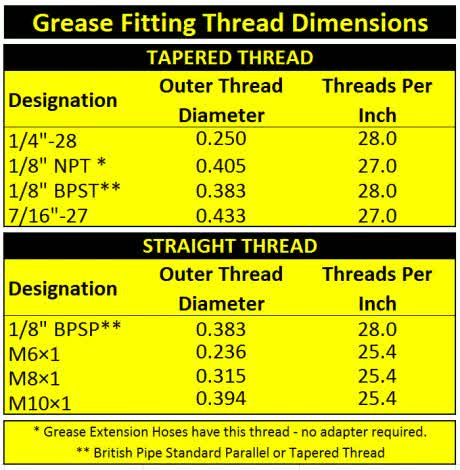
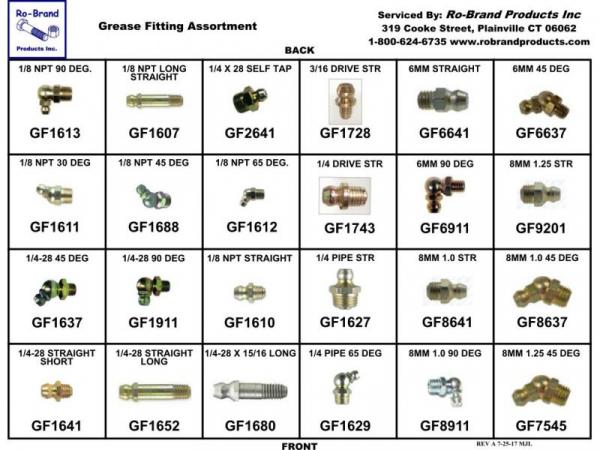
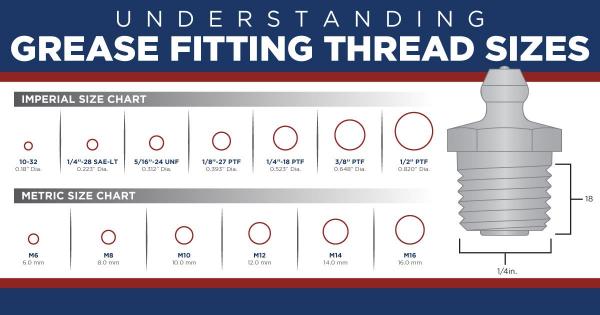
Grease fittings are manufactured in a variety of thread sizes to accommodate different machinery requirements. The most prevalent thread sizes include: - 1/8"-28 SAE: This size is widely used in automotive applications, particularly in light vehicles.
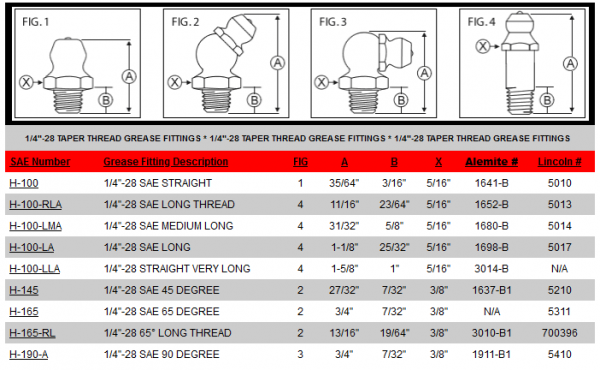
- 1/4"-28 SAE: Commonly found in heavier machinery and some automotive applications.
- 1/8" NPT: Utilized in various industrial applications, especially in North America.
- 1/4"-18 NPT: Found in larger industrial machinery and equipment.
- M6 x 1.0: A metric size prevalent in European and Asian markets, often used in smaller machinery.
- M8 x 1.25: Common in medium-sized machinery and vehicles.
- M10 x 1.5: Typically used in heavy-duty equipment and machinery.
Thread Standards and Their Significance
Understanding the thread standards is essential for selecting the appropriate grease fitting:- SAE (Society of Automotive Engineers): Predominantly used in North America, SAE threads are commonly found in automotive and light industrial applications.
- NPT (National Pipe Thread): A U.S. standard for tapered threads, NPT fittings are often used in plumbing and industrial applications.
- Metric Threads: Standardized by the International Organization for Standardization (ISO), metric threads are prevalent in Europe and Asia.
- BSP (British Standard Pipe): Common in the UK and other Commonwealth countries, BSP threads are used in various industrial applications.
Selecting the Correct Grease Fitting
To ensure optimal performance and prevent issues:
- Identify the Existing Thread Size: Use a thread gauge or caliper to measure the existing fitting's dimensions accurately.
- Determine the Thread Type: Ascertain whether the thread is tapered or straight, as this affects the sealing mechanism.
- Consider the Application: Match the thread size and type to the machinery's specifications and lubrication requirements.
- Verify Compatibility: Ensure that the selected grease fitting is compatible with the grease gun and lubrication system.
Common Issues and Solutions- Leaking Fittings: Often caused by mismatched thread sizes or worn-out seals. Solution: Replace with the correct size fitting and ensure proper installation.
- Difficulty in Lubrication: May result from clogged fittings or incompatible grease types. Solution: Clean or replace the fitting and use the recommended grease.
- Frequent Fitting Failures: Could be due to excessive pressure or incorrect fitting materials. Solution: Use fittings rated for the specific pressure requirements and suitable materials.
Conclusion
Selecting the correct grease fitting thread size is vital for the efficient operation and longevity of machinery. By understanding the various thread sizes, standards, and their applications, one can ensure proper lubrication and prevent potential issues. Always consult the equipment's manual and adhere to manufacturer specifications when choosing grease fittings.
|
|
|
|
| Evaluating the Caterpillar M316C Mono Wheeled Excavator |
|
Posted by: MikePhua - 09-02-2025, 03:13 AM - Forum: General Discussion
- No Replies
|
|
The M316C and Caterpillar’s Urban Excavation Strategy
The Caterpillar M316C Mono is part of CAT’s M-Series wheeled excavators, designed to meet the growing demand for mobile, road-friendly machines in urban and semi-rural environments. Introduced in the early 2000s, the M316C was engineered for versatility, combining the reach and hydraulic power of a crawler excavator with the mobility of a truck-mounted unit. With a mono boom configuration and a compact tail swing, it became a preferred choice for municipalities and contractors working on roadside ditches, utility trenching, and embankment maintenance.
Caterpillar, founded in 1925, has long dominated the earthmoving sector. By the time the M316C was released, CAT had already sold millions of excavators globally. The wheeled M-Series was developed to reduce transport costs, minimize pavement damage, and eliminate the need for lowboy trailers in short-distance relocations.
Performance on Uneven Terrain and Rural Sites
While the M316C excels on paved surfaces and compacted job sites, its performance on rough terrain is more nuanced. The machine features: - Four-wheel drive with oscillating axles
- Stabilizers for improved digging stability
- Optional blade for minor grading and leveling
- Hydraulic system with load-sensing capabilities
However, in soft or uncultivated land, the wheeled chassis can struggle. Risks include:- Sinking in muddy or sandy soil
- Reduced traction on steep inclines
- Skating or bogging down in loose terrain
Operators in rural Italy and the Pacific Northwest report that while the M316C can navigate gravel paths and compacted fields, it is not suitable for forested slopes or clay-heavy farmland without prior site preparation. In such cases, a crawler excavator or a compact track loader is preferred.
Terminology Annotation- Mono Boom: A single-piece boom design offering strength and simplicity, as opposed to a two-piece articulated boom.
- Stabilizers: Hydraulic legs that extend from the chassis to anchor the machine during digging operations.
- Load-Sensing Hydraulics: A system that adjusts flow and pressure based on demand, improving fuel efficiency and control.
- Rubber Duck: A colloquial term for wheeled excavators, often used dismissively due to perceived instability off-road.
Lifting Capacity and Crane-Like Behavior
The M316C is equipped with a lifting chart, typically displayed inside the cab, detailing safe load limits at various boom angles and extensions. As a lifting machine, it performs well within its design envelope:- Maximum lift capacity ranges from 3,000 to 6,000 kg depending on boom position and stabilizer deployment
- Swing torque and hydraulic precision allow for controlled placement of pipes, barriers, and culverts
- The mono boom offers better vertical lift but less reach flexibility than an articulated boom
In roadside applications, the M316C can replace small cranes for tasks like placing manhole covers or lifting trench boxes. However, lifting over the side without stabilizers can compromise safety and should be avoided.
Use Cases and Regional Preferences
In the United States, wheeled excavators like the M316C are primarily used for:- Ditch cleaning along highways
- Mulching and slope maintenance
- Utility trenching in urban zones
- Light demolition on paved lots
In contrast, European operators—especially in Italy and Germany—have mixed opinions. While the mobility is appreciated, many prefer tracked machines for rural work due to their superior stability and climbing ability. In regions with steep terrain or soft soil, wheeled excavators are often relegated to support roles or replaced by mini excavators and backhoe loaders.
Operator Feedback and Practical Advice
Operators emphasize the importance of:- Planning access routes in advance
- Using stabilizers on uneven ground
- Avoiding sharp turns on soft surfaces
- Equipping the machine with wide tires or foam-filled options for added flotation
One contractor in Wisconsin noted that his M316C was ideal for municipal ditch work, allowing him to drive directly to the site without a trailer. However, he avoided using it in wet fields after nearly tipping on a slope during spring thaw.
Conclusion
The Caterpillar M316C Mono wheeled excavator is a specialized machine built for mobility, precision, and efficiency in urban and roadside environments. While it offers impressive hydraulic performance and lifting capacity, its limitations on rough terrain make it less suitable for agricultural or forested sites without preparation. Understanding its strengths and constraints allows operators to deploy it effectively and safely. In the right setting, the M316C is not a clumsy “rubber duck”—it’s a nimble, road-savvy workhorse.
|
|
|
|
| Troubleshooting and Advice for the Case 850D TCV |
|
Posted by: MikePhua - 09-02-2025, 03:12 AM - Forum: Troubleshooting & Diagnosing
- No Replies
|
|
Introduction
The Case 850D is a well-regarded track loader often used in heavy-duty applications such as construction, roadwork, and forestry. Its versatility, power, and reliability have made it a popular choice for many professionals. However, like any complex piece of machinery, the Case 850D can encounter issues over time, particularly with its hydraulic systems, such as the TCV (Triple Control Valve). The TCV is a vital component that controls hydraulic functions, including lifting, tilting, and angling of attachments.
This article will provide an in-depth guide on troubleshooting issues with the Case 850D TCV, common problems, and potential solutions. It also includes expert recommendations for maintenance and repairs to help extend the loader's operational life and reduce costly downtime.
Understanding the TCV System on the Case 850D
The Triple Control Valve (TCV) on the Case 850D is responsible for directing hydraulic flow to various parts of the machine, controlling the movement of the loader arms, the bucket, and other attachments. The system includes multiple valves, actuators, and hydraulic hoses that work together to provide the loader with the required force and control.
Key functions of the TCV include: - Load Control: Directing hydraulic flow to lift or tilt the loader arms and attachments.
- Precision Control: Adjusting the flow rate to allow for fine control over movements.
- Pressure Regulation: Ensuring the hydraulic system operates within the specified pressure limits to prevent damage to the system.
When the TCV malfunctions, it can lead to a variety of symptoms, such as erratic movement of attachments, a lack of response from hydraulic functions, or even a complete failure of certain operations. Understanding the underlying causes of these issues is crucial for effective troubleshooting and repair.
Common Problems with the Case 850D TCV
Several issues can arise with the TCV system on the Case 850D, leading to reduced performance or complete system failure. These problems often stem from hydraulic pressure imbalances, contaminated oil, or mechanical failure of internal components. Below are some of the most common issues:
- Slow or Jerky Hydraulic Movements
- Cause: This could be caused by low hydraulic fluid levels, air in the hydraulic lines, or a worn-out hydraulic pump. Air in the system can cause the hydraulic fluid to aerate, resulting in erratic or jerky movements.
- Solution: Check the hydraulic fluid levels and top off if necessary. Bleed the system to remove any trapped air. If the problem persists, inspect the hydraulic pump and replace if worn.
- Complete Loss of Hydraulic Function
- Cause: A complete loss of hydraulic power could be the result of a faulty TCV, damaged hoses, or a malfunctioning pump. If the TCV valve itself is clogged or has a mechanical failure, the entire hydraulic system may stop working.
- Solution: Inspect the TCV for blockages or damage. Check hydraulic lines for leaks or kinks that might obstruct flow. If necessary, replace the TCV or repair the hydraulic pump.
- Leaking Hydraulic Fluid
- Cause: Leaks in the hydraulic system, particularly around the TCV or hydraulic hoses, can result in a loss of fluid and hydraulic power.
- Solution: Inspect all hydraulic connections for signs of leaks. Tighten fittings and replace any damaged hoses or seals. If the TCV seals are leaking, they will need to be replaced.
- Erratic Control Responses
- Cause: A malfunctioning control valve, such as the TCV, can lead to inconsistent or unpredictable control of loader functions. This may be due to a mechanical fault or contamination of the hydraulic fluid.
- Solution: Check the control linkage for wear or damage. Replace any worn-out seals or components in the TCV. If contamination is suspected, perform a fluid flush and replace the hydraulic fluid.
- Hydraulic Pressure Issues
- Cause: Insufficient or excessive hydraulic pressure can affect the performance of the loader. Low pressure may result in weak lifting capabilities, while high pressure can cause damage to the system.
- Solution: Check and adjust the hydraulic pressure using a gauge. Ensure the pressure relief valve is functioning properly and replace it if needed.
Step-by-Step Guide for Troubleshooting the Case 850D TCV
When diagnosing TCV-related issues, a methodical approach is essential to pinpoint the exact problem. Here's a step-by-step guide:
- Inspect the Hydraulic Fluid: Begin by checking the hydraulic fluid levels and condition. If the fluid is low or contaminated, top it off or perform a complete fluid change.
- Examine the TCV for Visible Damage: Look for external damage or leaks around the TCV. Check for any loose or broken components that could impair the system's performance.
- Check for Air in the System: Bleed the hydraulic lines to eliminate any air that could cause jerky or slow movements.
- Test the Hydraulic Pump: Ensure the hydraulic pump is functioning properly. If the pump is worn, it may need to be replaced.
- Evaluate the Control Linkage: Check the control linkage for wear, misalignment, or damage. Proper control of the hydraulic functions depends on an intact and responsive control system.
- Measure Hydraulic Pressure: Use a pressure gauge to measure the hydraulic system's pressure and compare it to the manufacturer's recommended specifications. Adjust if necessary.
- Clean or Replace the TCV: If the above steps do not resolve the issue, the TCV may need to be cleaned or replaced. Contaminated oil or internal wear could block or damage the valve.
Preventative Maintenance for the Case 850D TCV
To avoid frequent issues with the TCV and ensure the longevity of the Case 850D, regular maintenance is essential. Here are some tips:
- Regular Fluid Changes: Hydraulic fluid should be replaced every 1,000 to 1,500 hours of operation or as specified in the owner’s manual. This ensures contaminants do not accumulate in the system and cause wear.
- Check and Replace Filters: The hydraulic filter should be checked regularly and replaced if necessary. A clogged filter can restrict fluid flow and damage the hydraulic components.
- Inspect Hydraulic Lines and Fittings: Check all hydraulic hoses and fittings for leaks, cracks, or signs of wear. Tighten connections as needed to prevent fluid loss.
- Monitor System Performance: Regularly test the hydraulic system’s pressure and flow to ensure optimal performance. Early detection of issues can prevent costly repairs later on.
Conclusion
The Case 850D loader is a powerful machine that requires careful attention to maintain its performance, especially when dealing with the hydraulic system and components like the TCV. By understanding common TCV issues, following a step-by-step troubleshooting guide, and performing preventative maintenance, operators can ensure that their equipment continues to run efficiently for years.
Regular checks, timely repairs, and fluid maintenance are essential for prolonging the life of the loader and avoiding costly repairs. Proper care and knowledge of the machine's systems can help operators get the most out of their investment in heavy machinery, allowing them to maximize productivity while minimizing downtime.
|
|
|
|
| Governor Linkage Troubleshooting on the New Holland L784 Skid Steer |
|
Posted by: MikePhua - 09-02-2025, 03:06 AM - Forum: Troubleshooting & Diagnosing
- No Replies
|
|
The New Holland L784 and Its Mechanical Foundation
The New Holland L784 skid steer loader was introduced in the mid-1980s as part of New Holland’s push into compact equipment for construction, agriculture, and utility work. Powered by a Ford inline-six gasoline engine, the L784 offered reliable performance in a compact footprint. With a rated operating capacity of approximately 1,500 lbs and a hydraulic system capable of powering a variety of attachments, it became a popular choice for small contractors and farm operators.
New Holland, originally founded in Pennsylvania in 1895, became a global brand after merging with Sperry and later Fiat. By the time the L784 was released, the company had already sold tens of thousands of skid steers across North America. The L784 was known for its mechanical simplicity, but like many older machines, it relied on analog systems—including a mechanical governor—to regulate engine speed.
Understanding the Governor System
The governor in the L784 is a mechanical device designed to maintain consistent engine speed under varying loads. It operates by sensing changes in RPM and adjusting the throttle accordingly. This is especially important in skid steers, where hydraulic demand can fluctuate rapidly during operation.
The system includes: - A centrifugal governor mounted near the engine
- Linkage arms connecting the governor to the throttle plate
- Springs and weights that respond to RPM changes
- A throttle lever connected to the operator controls
Terminology Annotation- Centrifugal Governor: A device that uses spinning weights to regulate engine speed by adjusting fuel or air input.
- Throttle Linkage: A mechanical connection between the operator’s throttle lever and the engine’s throttle plate.
- Ovaled Hole: A worn-out mounting hole that has lost its round shape due to repeated movement or stress.
- Governor Weights: Internal components that move outward with increased RPM, altering the throttle position.
Common Symptoms and Linkage Issues
Operators may encounter several issues when the governor linkage is misadjusted or worn:- Engine races uncontrollably at startup
- Throttle lever binds or feels stiff
- Inconsistent engine response under load
- Reduced horsepower or sluggish acceleration
In one case, a technician discovered that the throttle linkage hole had become ovaled from years of use. This caused the linkage to bind and prevented smooth throttle movement. The solution involved welding a bead into the worn hole and re-drilling it to restore proper geometry.
Adjustment Procedure and Best Practices
Adjusting the governor linkage requires patience and precision. The goal is to ensure that the governor can freely modulate the throttle without binding or overextending.
Steps include:- Disconnect the throttle linkage and inspect all pivot points
- Repair or replace worn holes and bushings
- Reconnect the linkage with the engine off and throttle lever in neutral
- Adjust the linkage length so that the governor arm sits in its neutral position
- Start the engine and observe RPM behavior under load
- Fine-tune the linkage to eliminate hesitation or surging
Always use anti-seize compound on pivot bolts and lubricate joints with light machine oil. Avoid overtightening, which can restrict movement.
Governor Internal Inspection
If linkage adjustment fails to resolve the issue, the governor itself may be compromised. Internal weights can seize due to rust, debris, or lack of lubrication. Disassembly involves:- Removing the governor housing from the engine
- Inspecting weights and springs for freedom of movement
- Cleaning components with solvent and compressed air
- Reassembling with fresh gaskets and proper torque
A mechanic in Michigan once restored a seized governor by soaking the weights in penetrating oil overnight and gently freeing them with a brass punch. The engine returned to smooth operation, and fuel efficiency improved noticeably.
Service Manual Limitations and Workarounds
Many service manuals for the L784 omit detailed governor diagrams, focusing instead on engine and hydraulic systems. Operators may need to consult older Ford industrial engine manuals or seek guidance from experienced technicians.
Workarounds include:- Studying similar Ford inline-six governor setups
- Using exploded diagrams from aftermarket parts catalogs
- Joining vintage equipment forums for peer advice
In 2024, a group of enthusiasts compiled a digital archive of legacy New Holland skid steer schematics, including rare governor illustrations. This resource has helped dozens of owners restore their machines to full functionality.
Conclusion
Governor and throttle linkage issues on the New Holland L784 can be frustrating, especially when compounded by years of wear and undocumented repairs. However, with careful inspection, mechanical restoration, and precise adjustment, the system can be brought back to life. Whether welding worn holes or freeing seized weights, the key lies in understanding the interplay between RPM control and throttle response. In the world of compact loaders, smooth engine modulation isn’t just a luxury—it’s a necessity for safe and efficient operation.
|
|
|
|
| Oil Capacity for a 6T-590 Engine in a Case 888: Key Considerations for Proper Maintenance |
|
Posted by: MikePhua - 09-02-2025, 03:06 AM - Forum: General Discussion
- No Replies
|
|
Introduction
The Case 888 loader, powered by the 6T-590 engine, is a robust and reliable piece of heavy equipment commonly used in construction, agriculture, and other industries requiring material handling and earthmoving. A critical aspect of maintaining the engine's longevity and performance is ensuring the correct oil capacity and regular oil changes. Using the correct amount and type of oil is essential not just for lubrication but for cooling and reducing wear on engine components.
In this article, we will explore the oil capacity for the 6T-590 engine, its maintenance requirements, and the importance of proper oil management. This guide will also delve into the potential consequences of using the wrong oil amount or type and provide insights into proper oil change procedures for the Case 888 loader.
Overview of the 6T-590 Engine
The 6T-590 engine is a six-cylinder, turbocharged, and intercooled engine designed by Case to provide high performance and reliability for heavy-duty applications. It is used in a variety of Case equipment, including the 888 loader, which is well-known for its ability to handle tough tasks in construction and material handling operations.
Here are some key features of the 6T-590 engine: - Displacement: Typically, this engine has a displacement of around 5.9 liters, providing the necessary power for demanding tasks.
- Turbocharged: The turbocharging allows the engine to deliver higher power output without increasing engine size.
- Cooling and Efficiency: With advanced cooling mechanisms, the engine ensures better performance over long hours of operation, particularly in high-stress conditions.
- Fuel Efficiency: Known for a balance of power and fuel economy, the 6T-590 engine helps to minimize operational costs over time.
Oil Capacity Requirements for the 6T-590 Engine
Proper oil capacity is vital for the engine’s performance, as the right amount of oil ensures effective lubrication of internal components, cooling, and power generation. For the 6T-590 engine, the oil capacity depends on several factors, including whether or not the engine has a filter change.- Engine Oil Capacity (without filter change): Typically, the 6T-590 engine requires approximately 8 to 9 quarts (7.5 to 8.5 liters) of oil.
- Engine Oil Capacity (with filter change): When replacing the oil filter, the capacity increases slightly to around 9 to 10 quarts (8.5 to 9.5 liters).
It's important to always consult the owner's manual or service guide for the specific oil capacity for your model, as it may vary slightly based on configuration or modifications.
Choosing the Right Oil for the Case 888 Loader
Choosing the right engine oil is just as important as ensuring the proper oil quantity. The oil used in the 6T-590 engine should meet specific performance standards to provide proper lubrication and protection against wear and corrosion.
Here are some important factors to consider when selecting oil for the 6T-590 engine:- Viscosity: For most climates, a multi-grade oil such as 15W-40 or 10W-30 is commonly recommended. These oils provide good flow at lower temperatures while maintaining thickness at higher temperatures.
- Oil Type: Diesel engines, like the 6T-590, typically use heavy-duty diesel engine oil (HDDEO), which has been formulated to handle the high stresses of diesel engine operation.
- Oil Specification: Look for oils that meet API (American Petroleum Institute) specifications such as API CJ-4 or better. These oils offer superior performance for modern diesel engines, including high soot dispersancy, oxidation stability, and better protection against wear.
- Synthetic vs. Conventional: Synthetic oils tend to offer better performance in extreme temperatures and provide longer intervals between oil changes. They may be more expensive but can help reduce engine wear over time. Conventional oils are more affordable but might need more frequent changes.
Consequences of Incorrect Oil Capacity or Type
Using the wrong amount or type of oil in the 6T-590 engine can lead to several serious issues that could affect engine performance and longevity. Some of the consequences of incorrect oil management include:
- Insufficient Lubrication: If the oil level is too low, critical engine components may not receive adequate lubrication, leading to increased friction and wear.
- Overheating: Too much oil can lead to foaming, where the oil aerates and loses its ability to lubricate and cool the engine effectively. This can cause the engine to overheat, leading to potential damage.
- Engine Wear: Using the wrong oil type, such as an oil with inadequate additives for diesel engines, can result in premature wear and reduced engine life.
- Increased Fuel Consumption: An engine that’s not lubricated properly may require more fuel to operate, decreasing fuel efficiency.
- Contaminant Buildup: If the oil is not changed regularly or is of poor quality, contaminants like soot, dust, and debris can accumulate inside the engine, leading to blockages, poor combustion, and more severe damage.
Oil Change Procedure for the Case 888 Loader
Performing regular oil changes is essential for maintaining the health and efficiency of the 6T-590 engine in the Case 888 loader. Below is a general guideline for performing an oil change:
- Preparation:
- Ensure the loader is parked on a flat, stable surface and the engine is turned off and cool.
- Gather the necessary tools, including an oil drain pan, socket set, new oil filter, funnel, and fresh engine oil.
- Drain the Old Oil:
- Locate the oil drain plug at the bottom of the engine and remove it using the appropriate tool. Allow the old oil to drain into the pan completely.
- Remove the oil filter using an oil filter wrench. Dispose of both the oil and the filter in accordance with local regulations.
- Install the New Oil Filter:
- Apply a thin layer of new oil on the rubber seal of the new oil filter. This helps create a proper seal and makes it easier to remove during the next oil change.
- Install the new oil filter, hand-tightening it to avoid damaging the filter or engine.
- Refill with Fresh Oil:
- Using a funnel, pour the correct amount and type of oil into the engine. Ensure you do not overfill.
- Check the oil level with the dipstick, adjusting as necessary.
- Check for Leaks and Perform Final Checks:
- Start the engine and allow it to run for a few minutes, checking for any oil leaks around the filter and drain plug.
- Recheck the oil level after the engine has warmed up, topping off as needed.
Conclusion
Proper oil management is crucial for the performance and longevity of the 6T-590 engine in the Case 888 loader. By ensuring the correct oil capacity, selecting the appropriate oil type, and performing regular oil changes, operators can ensure their equipment runs efficiently, reduces wear, and minimizes operational downtime. Regular oil maintenance not only saves money in the long run but also maximizes the effectiveness of heavy machinery, allowing it to perform reliably in tough working conditions.
Understanding the oil specifications and maintenance needs for the 6T-590 engine helps users maintain optimal machine performance, thereby increasing productivity and extending the life of their equipment.
|
|
|
|
| CAT 245 Final Drive Sprocket Removal |
|
Posted by: MikePhua - 09-02-2025, 03:05 AM - Forum: Troubleshooting & Diagnosing
- No Replies
|
|
Introduction
The Caterpillar 245 hydraulic excavator, a robust machine introduced in the mid-1980s, has been a staple in heavy construction and mining operations. Its durability and performance are largely attributed to its undercarriage system, particularly the final drive assembly. The final drive transmits power from the engine to the tracks, and the sprocket plays a crucial role in this mechanism. Over time, wear and tear necessitate the removal and replacement of the sprocket. Understanding the correct procedure is vital to ensure the machine's optimal performance and longevity.
Understanding the Final Drive Assembly
The final drive assembly comprises several components: - Drive Motor: Powered by hydraulic fluid, it drives the rotation of the sprocket.
- Bull Gear: Engages with the sprocket, transferring motion to the tracks.
- Sprocket: The toothed wheel that meshes with the track chain, propelling the machine.
- Retainer Ring: Secures the sprocket onto the output shaft of the drive motor.
The sprocket's teeth engage with the track chain's bushings, and over time, these teeth can wear down, leading to reduced efficiency and potential damage to other components.
Procedure for Sprocket Removal
- Preparation: Ensure the excavator is on a stable, level surface. Engage the parking brake and disconnect the battery to prevent any accidental movements.
- Track Removal: Loosen the track tension and remove the track from the sprocket. This may involve removing track bolts and using a track jack to relieve tension.
- Retainer Ring Removal: Using appropriate tools, remove the retainer ring securing the sprocket to the drive motor's output shaft. This step is crucial, as the ring holds the sprocket in place.
- Sprocket Removal: With the retainer ring removed, the sprocket can be slid off the output shaft. In some cases, a hydraulic press may be necessary to ease the removal process.
- Inspection: Once removed, inspect the sprocket and associated components for wear or damage. Check the teeth for signs of excessive wear and ensure the drive motor's output shaft is in good condition.
Challenges and Solutions
Removing the sprocket from the final drive assembly can present several challenges:- Corrosion: Over time, moisture and debris can cause the sprocket to corrode, making removal difficult. Applying penetrating oil and allowing it to sit for several hours can help loosen the corrosion.
- Seized Components: If the retainer ring or sprocket is seized, using a puller or hydraulic press can provide the necessary force to remove them without causing damage.
- Misalignment: Ensuring that all components are properly aligned during reassembly is crucial to prevent premature wear.
Maintenance Tips- Regular Inspections: Periodically check the sprocket and related components for signs of wear or damage.
- Lubrication: Ensure that all moving parts are adequately lubricated to reduce friction and wear.
- Track Tension: Maintain proper track tension to prevent unnecessary strain on the sprocket and other components.
Conclusion
The Caterpillar 245 excavator's final drive sprocket is integral to its performance and longevity. Understanding the removal procedure and associated challenges ensures that maintenance is conducted effectively, minimizing downtime and repair costs. By adhering to proper maintenance practices, operators can maximize the lifespan of their equipment and maintain optimal performance.
|
|
|
|
|



